The Best (??) Of: 2020 by Brett Hochstein

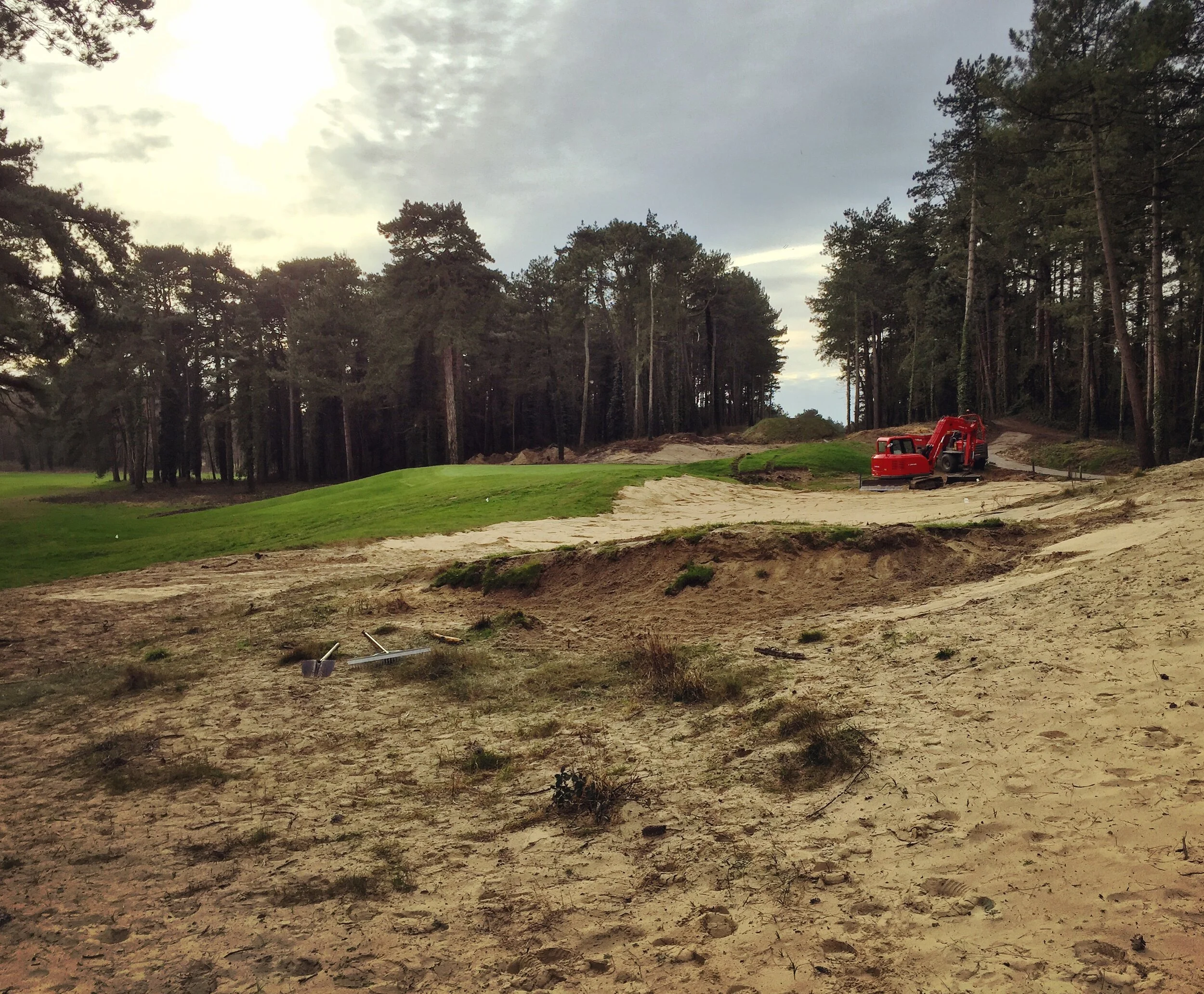
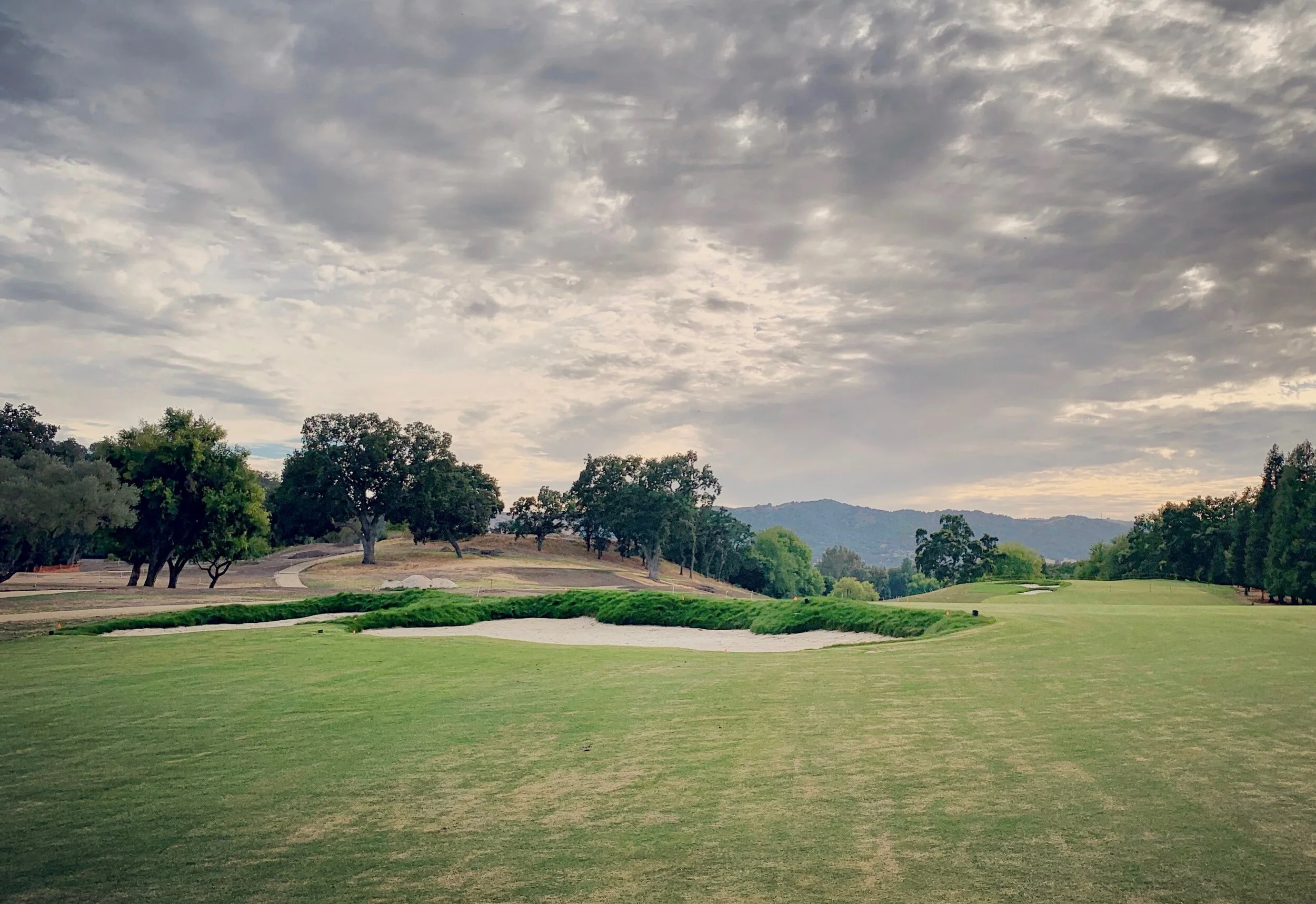
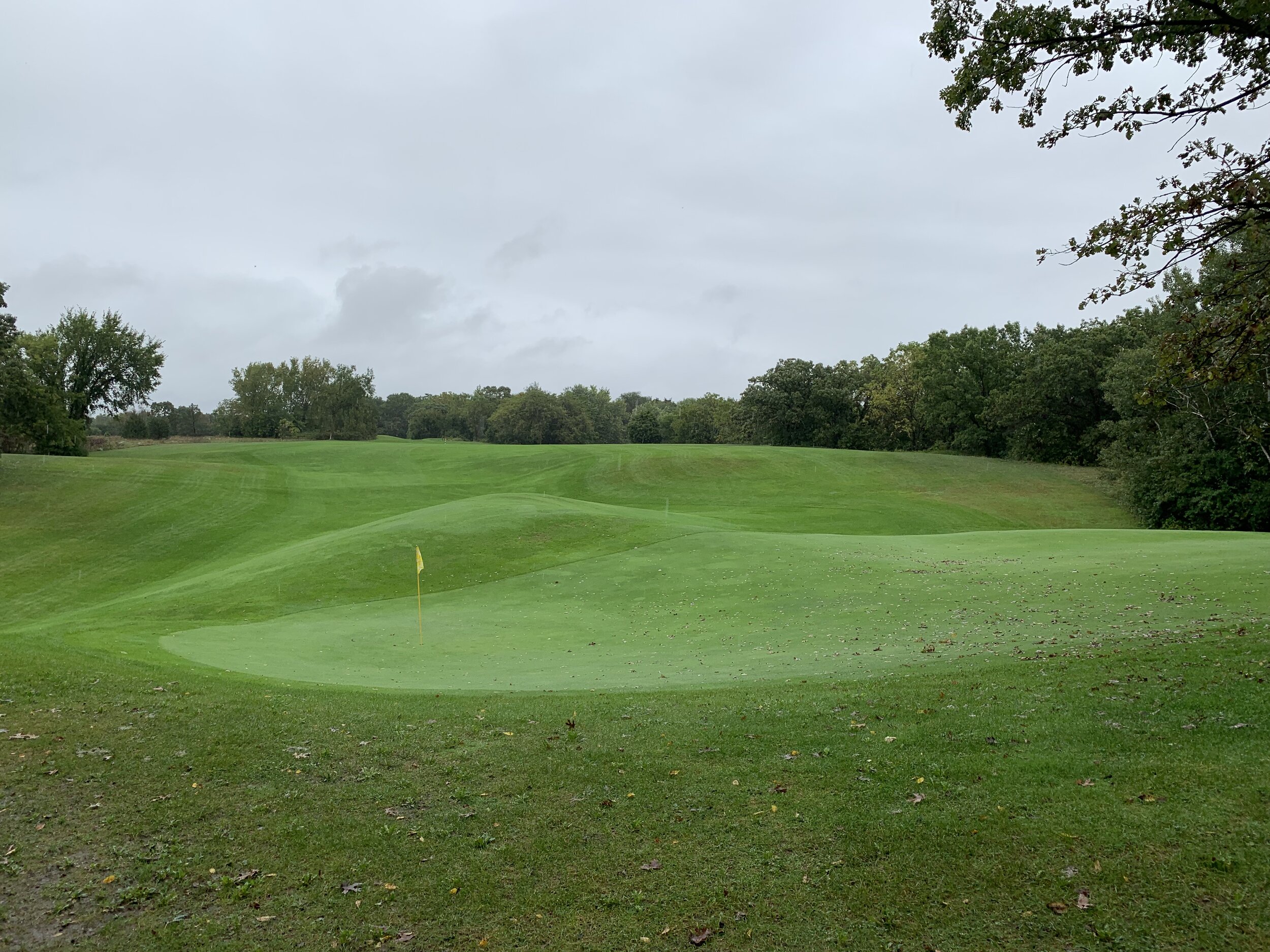
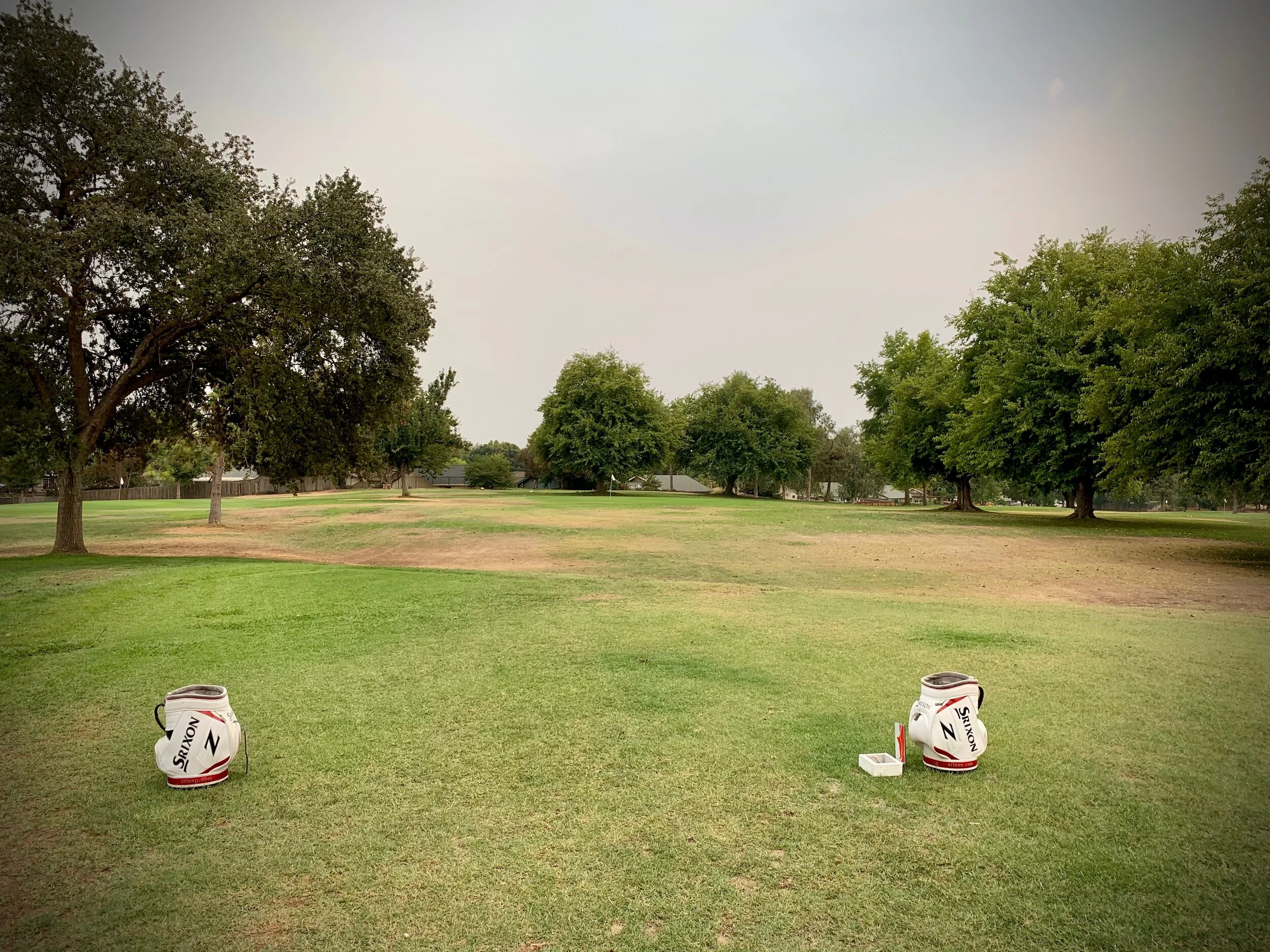
A spring Sunday morning walk through Diablo Hills, minus tee markers, flagsticks, and the usual hoard of avid golfers

A spring Sunday morning walk through Diablo Hills, minus tee markers, flagsticks, and the usual hoard of avid golfers

This may come as no surprise, but I debated if I should even put together one of these this year. I don’t need to explain the main reasons why; everyone knows 2020 was a pretty miserable experience laden with loss while pushing our collective mental stresses to the very edge. With Hochstein Design, there really isn’t that much to share either as far as completed work goes. The big shaping project we had committed to got put on long term hold, other potential shaping opportunities with new design teams were kept closed to their existing crews, travel restrictions made other jobs too complicated, and one of my small solo projects ended up getting pushed back indefinitely.

That said, it wasn’t an entirely lost year. The onset of the pandemic brought about opportunities to focus on some writing, both on this site and with others like The Fried Egg, McKellar, and Golf Course Architecture. There were a couple of podcasts that were fun to be a part of, and there was some solo design work on small projects here in Northern California, one of which actually got completed in the field. It was a time to continue developing a voice as well as my own understanding of golf architecture and the business of golf architecture. It was also a time to get our personal lives set up for the future, moving to a new home with a separate office space that I can stay busy in while also being just footsteps from the family.

While this was a most testing, trying year, we are almost through it. With the foundation laid to move forward and more calls for work coming in, I am ready to dig in and focus on what is next. Bring on 2021.

The Work

As noted, this is incredibly light this year. We only had two projects actually happen out in the field—a small stint of shaping for Todd Eckenrode at La Cumbre and a tee renovation project that we led at Sierra View CC. That makes for easily the least amount of time spent on a machine since I first went to China 8 years ago. While it was good to focus on some other areas both within Hochstein Design and at home, let’s hope that doesn’t ever happen again. Besides the need for income and new experiences, losing that time to be outside and be creative was very tough. It certainly increased my appreciation for what we get to do for a living.

Favorite Features of the Field

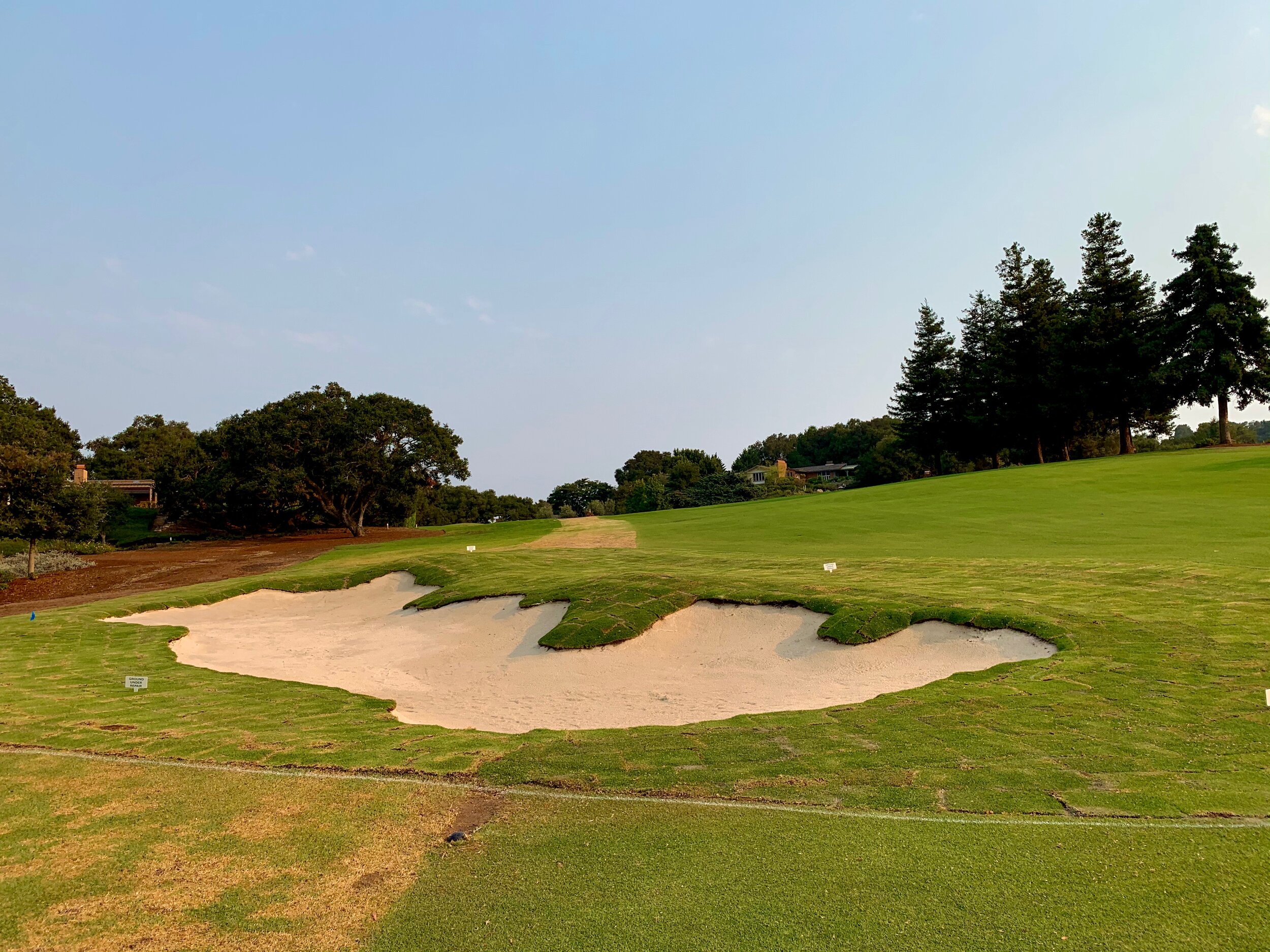
Fairway bunker shaping at La Cumbre

Fairway bunker shaping at La Cumbre

1.  Fairway Bunkers, La Cumbre

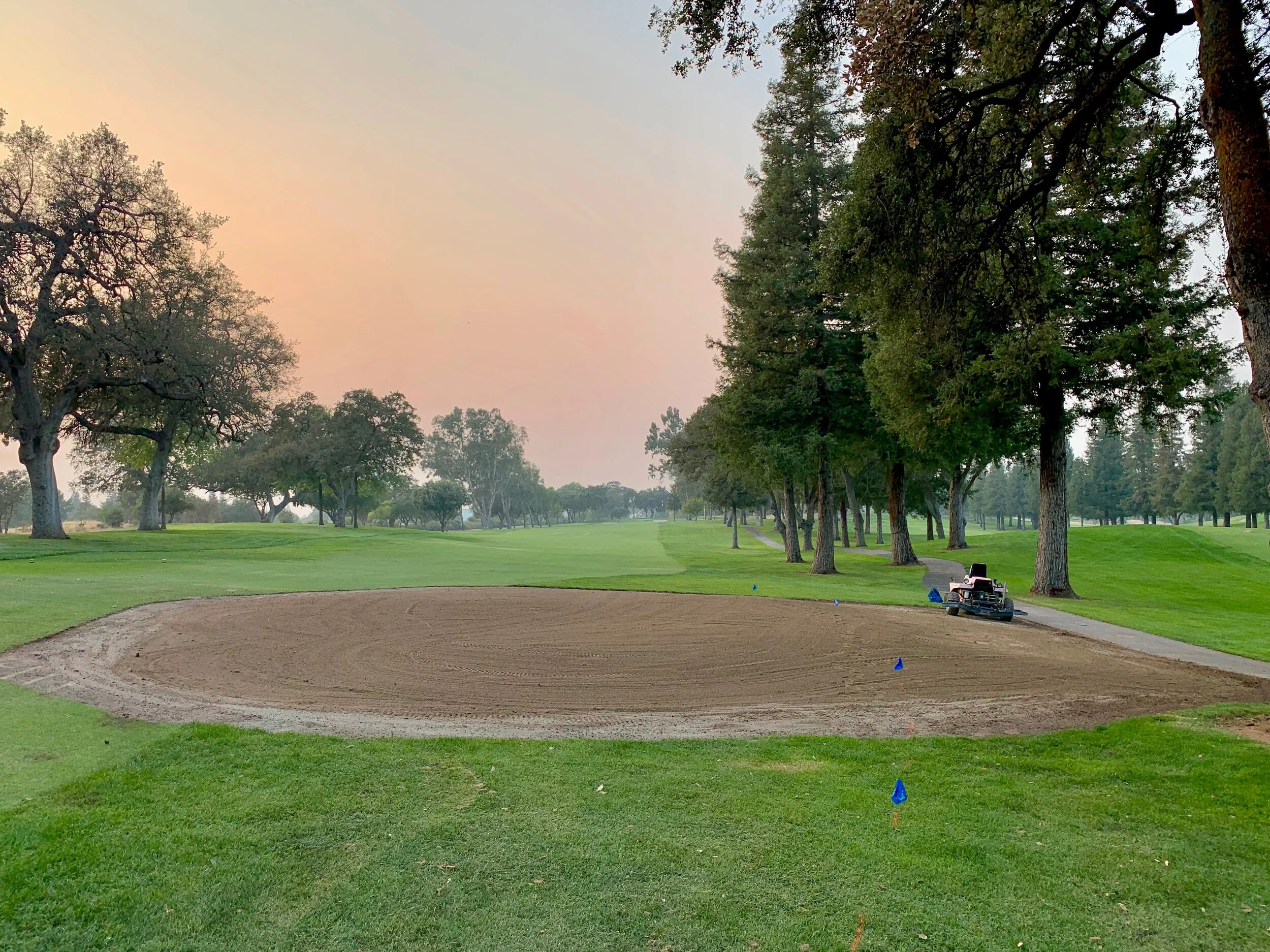
2. Hole 10 and 11 tee renovations, Sierra View

Above: images of work at La Cumbre and Sierra View

Favorite Features off the Field

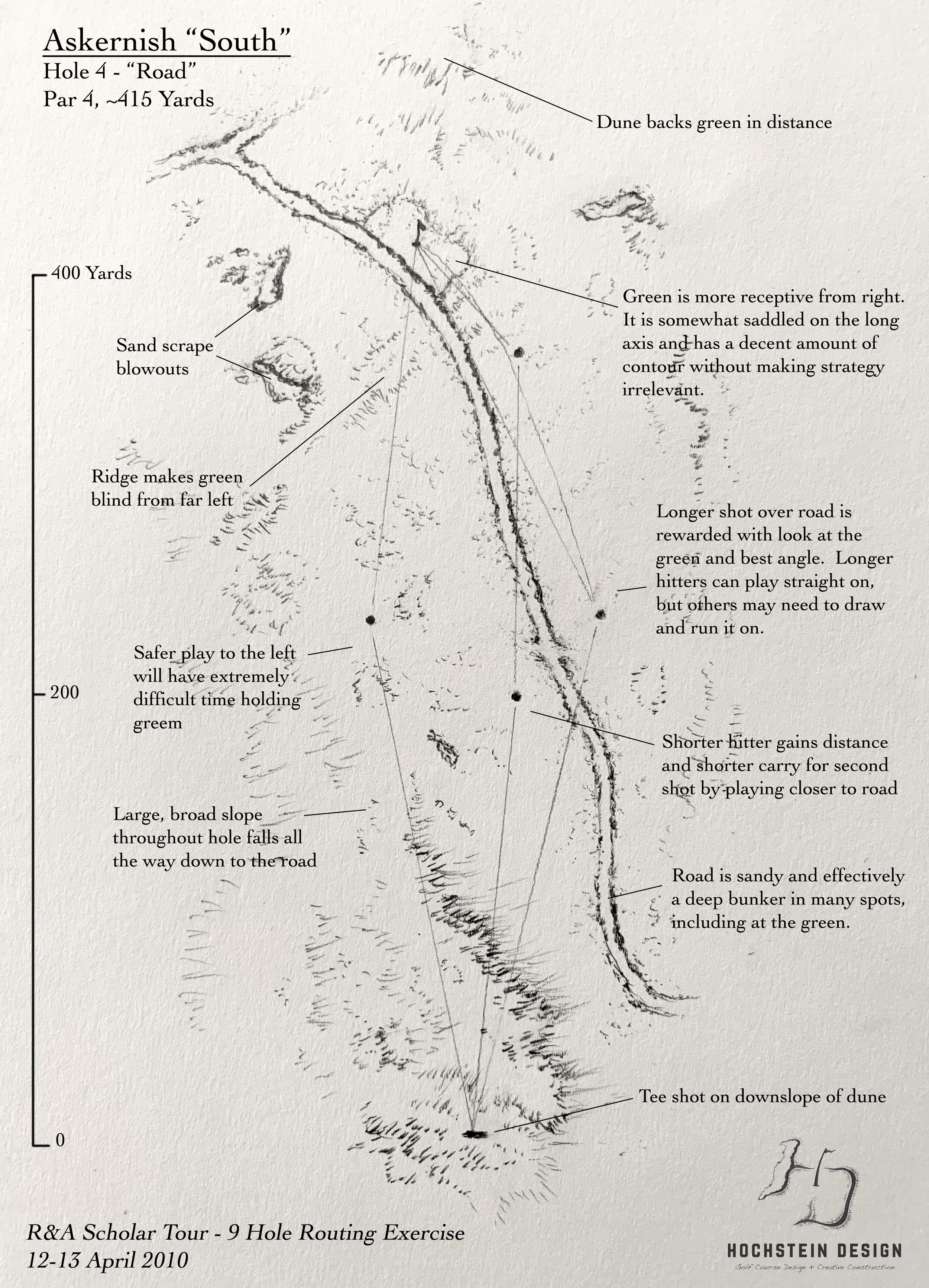
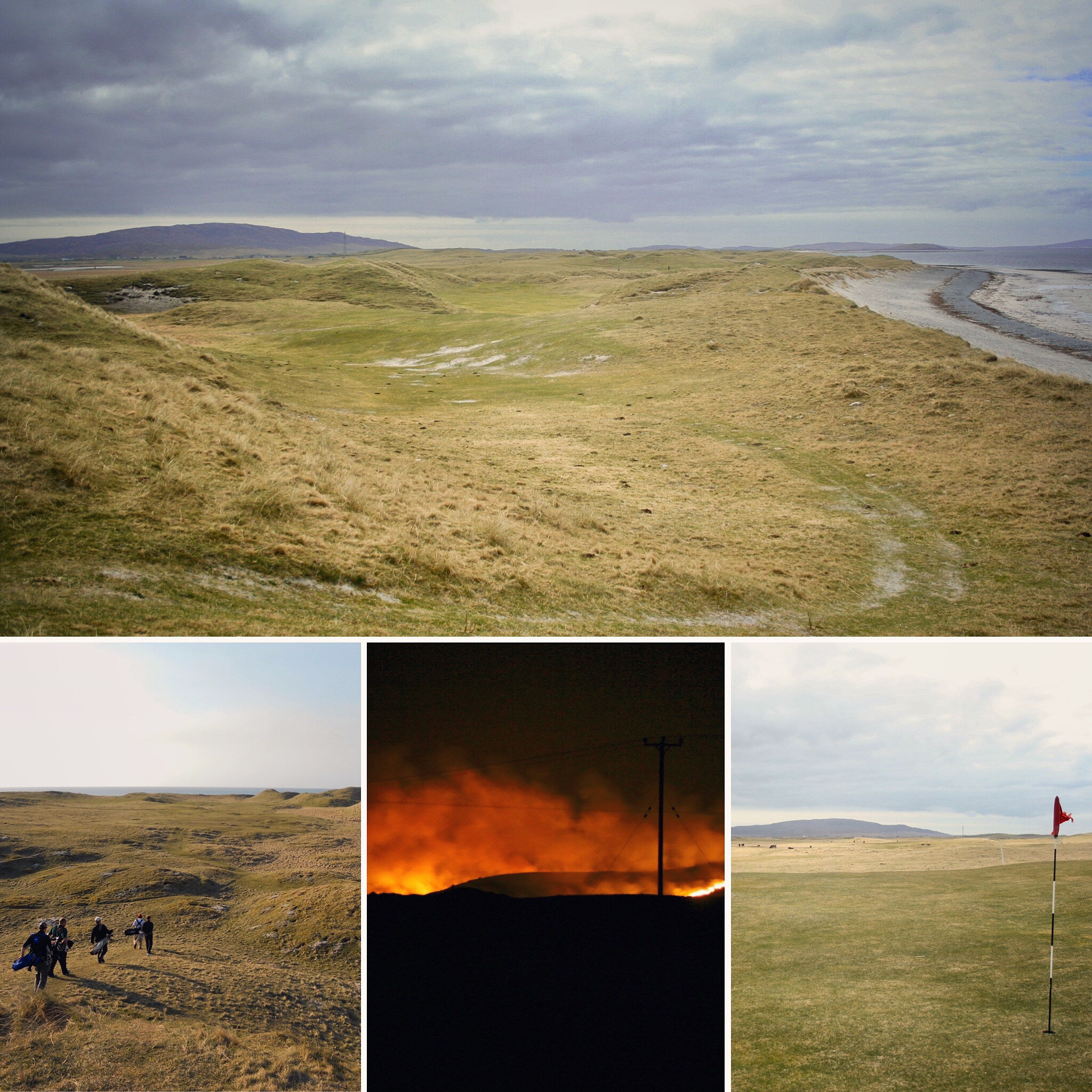
1. A multi-part ode to a week at Askernish that ended up being much, much longer and more in depth than expected

2. Finally hitting “publish” on a Pebble Beach restoration piece I had sitting in the drafts section for a couple of years.

A hypothetical selective restoration plan for Pebble Beach

A hypothetical rendering of Pebble Beach’s 7th borrowing from multiple eras

3. Proposing a practice area plan for Wente but not getting to put it into the ground…yet.
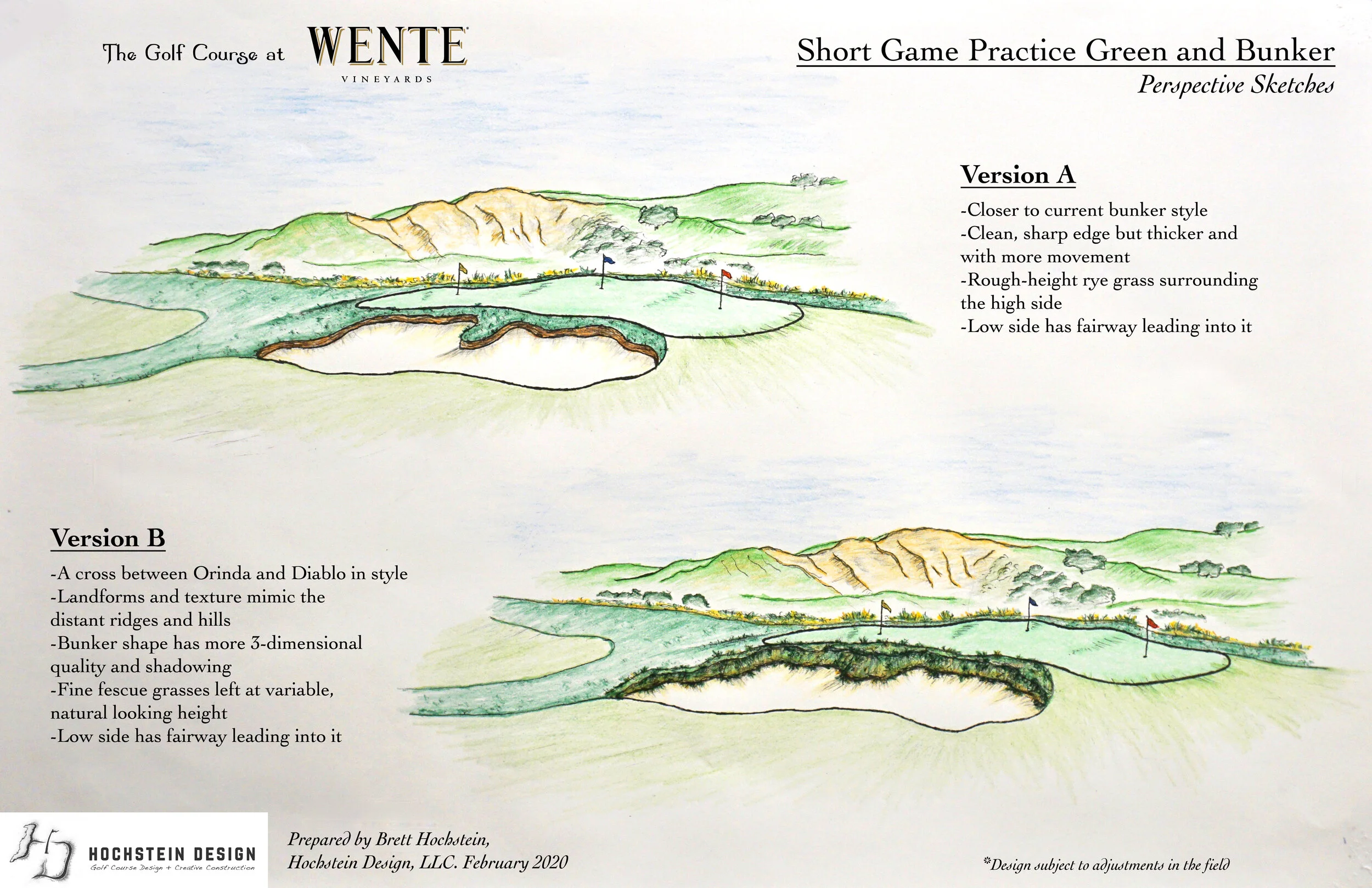
Proposed new chipping and bunker practice green at Wente Vineyards

Proposed new chipping and bunker practice green at Wente Vineyards

4. Writing the design feature piece for the 4th issue of McKellar.

5. Putting my Askernish thoughts into a more concise form for Golf Course Architecture

6. Getting a little bit involved with The Fried Egg. Hopefully there is more time in 2021 to contribute further, as I still have plenty of ideas to expound upon

7. Submitting an entry to—and then being asked to be a judge for—the Perry Maxwell Design Competition
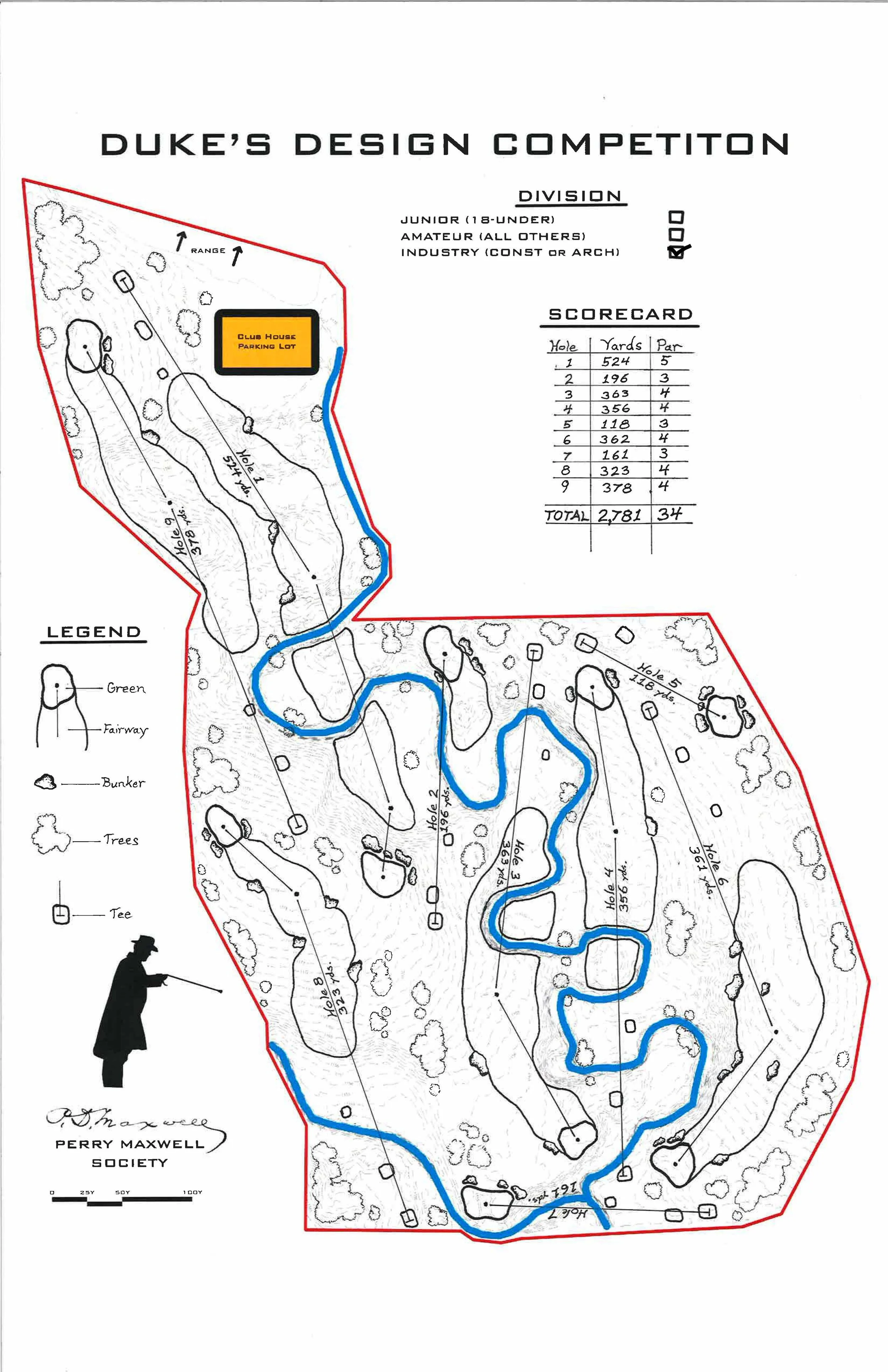
hochstein-design-best-of-2020-maxwell-design-comp

8. Chatting it up with my pal Kyle Surlow on the Golf Guide Podcast. We naturally went over time again, so he had to split it up into different parts.

9. A long awaited debut on Ru MacDonald’s Scottish Golf Podcast. This was one of the first golf podcasts out there, and I recall listening to many episodes while working in the rain in Holland 6 years ago.

10. A big increase in calls and emails from courses looking to make improvements. Here’s to hoping some of them hit!

Best Work Experiences

Almost felt like an athlete working under the lights

Almost felt like an athlete working under the lights

1.  Late afternoons digging bunkers at La Cumbre

2. Finishing the tee project at Sierra View while furiously raking under the lights of the nearby tennis courts

3. Hitting the road in August for the first time in months to look at a potential job on a private residence


The Golf

Best New-to-me Golf Courses Seen in 2020

Not surprisingly and fitting a theme you will sense throughout this post, this list is light this year, despite a renewed self-focus on picking up a club in the final quarter of the year. I resisted air travel and hotels for a long while, and by the time I got a little more comfortable with that, I was too busy working on house-related items to make a separate golf-only excursion. So, there were no major study tours, and without any projects in new regions, there wasn’t much to seek out while on the job. I still got to a few good places though that I had longed to see, including Streamsong Black and Clear Creek, and they did not disappoint. There were also the little places like the Lake Chabot Par 3 and Foothill that, while not the most architecturally engaging, prove that golf in a simple and scaled down form can be just as enjoyable.

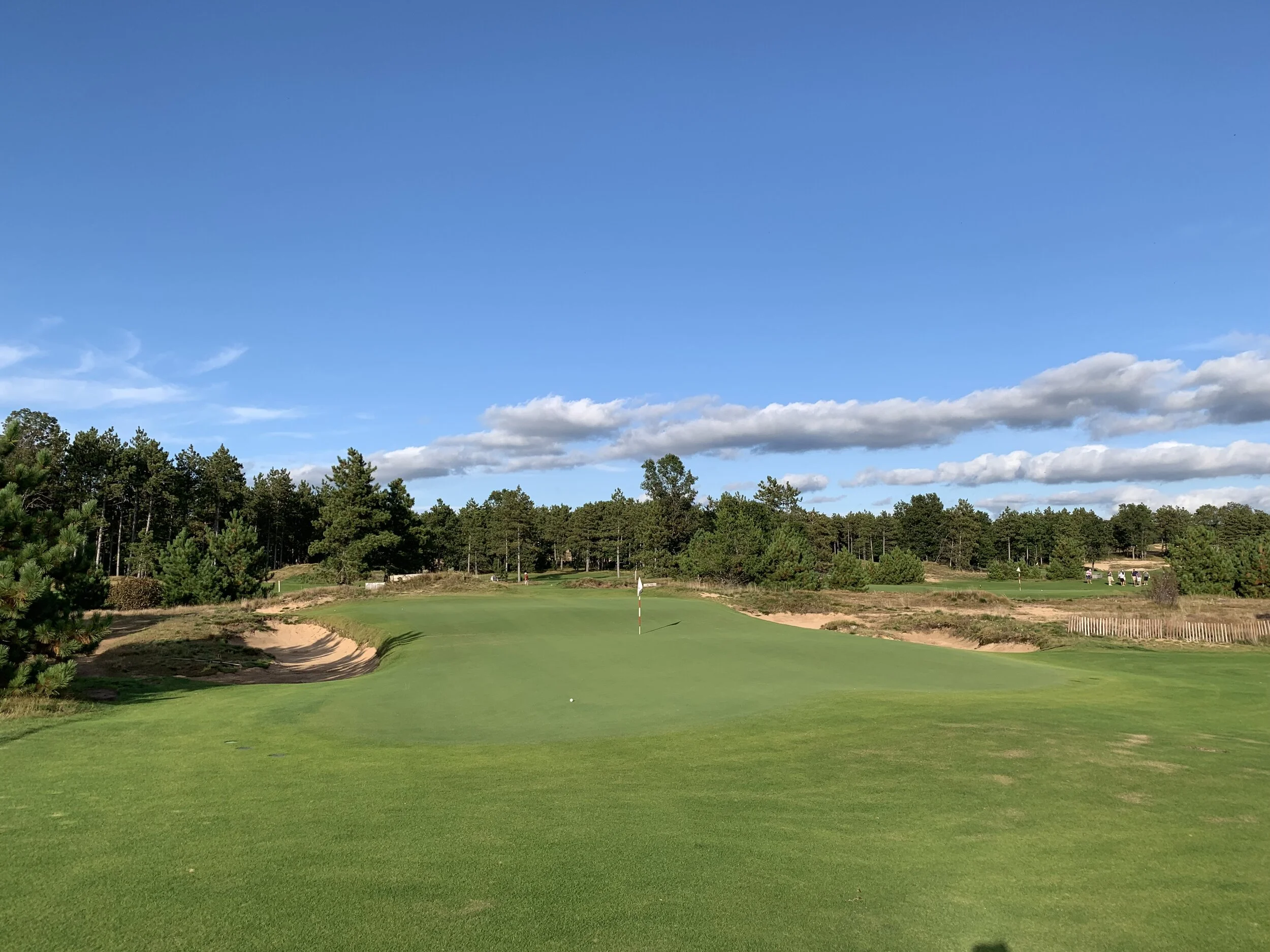
Hole 17 at Streamsong Black in the golden hour light.  Use the huge kicker slope left to approach the green, and be sure to check out the big gators lingering in the pond down below the back of the green.

Hole 17 at Streamsong Black in the golden hour light. Use the huge kicker slope left to approach the green, and be sure to check out the big gators lingering in the pond down below the back of the green.

Yearly Disclaimer: Note that this list is just a casual indicator of how good I feel a course is.  It is a combination of how I think it holds up for a range of players as well as how much I personally like it.  

The brackets [ ] indicate a "Doak Scale" rating.  It should be understood that I didn't spend the same amount of time on every place and that they were all first time visits.  These rankings and ratings are somewhat arbitrary and based on what I saw, understood, and felt about each course.  I also get admittedly swayed by firm conditions and links golf in particular; a true links course generally gets boosted by 1 or even 2 "Doak points" whenever I rate it.

Really, this should just be fun and give a general idea of what I like in a golf course.

1. Streamsong (Black) - Streamsong, FL; Gil Hanse [8]  The large and somewhat wild greens at the Black were made even wilder just off the surface, with the kinds of rumply contours that could be found around the Old Course. Originally, these areas were to be mowed a bit longer despite using a similar grass type. Eventually, everything just ended up being mowed at green height, and I don’t see too much fault in that, especially given the region and agronomy. Playing ground shots through and off these slopes is a blast. Add that in to a course loaded with width, options, and variety in the long game, and it makes for a very fun round.

2. Clear Creek Tahoe - Carson City, NV; Bill Coore and Ben Crenshaw [8] Good golf design is about making the most of a given site. I haven’t been to too many Tahoe area golf courses, but what I have seen in pictures and in driving by, most of these courses don’t play off the terrain and integrate with the beautiful natural texture the way that they should. Clear Creek does, though. The routing traverses through the rugged ground in a way that never feels burdensome to walk. The front nine makes a big dip down on the 3rd hole with its long shot into the green that begs to be bounced in from the left. It then works its way gently back up, snaking through valleys and tackling ridges, with views of the gray mountainsides just to the north reappearing at different times. The back nine begins with a flatter respite around a peaceful pond at the 11th and 12th holes before reaching the crescendo of the round at the end of the long 13th hole, with its views well out across the Carson Valley below. A series of fun shorter holes ensues before a strong finish at the 18th, complete with some peeks at those same long distance views found on 13. And none of this talks about the fun, undulating greens or the way the course blends perfectly with the native rock, sandy soil, and vegetation, which is some of the best I’ve ever experienced in golf. The variety of colors and textures among the sagebrush and needle grasses is just fantastic, and balls can quite often be found and played in it. The walking trails through these areas are perfectly done and maintained. Anyone who opts for a cart at Clear Creek is seriously missing out on a beautiful alpine hike that is rare to golf.

3. Brambles (rough shaped in the dirt) - Middletown, CA; Bill Coore and Ben Crenshaw with James Duncan [inc.; in construction] This is definitely the most exciting project in Northern California in a long time, the length of which Josh Smith and I couldn’t quite figure out but think it probably goes back to some time during the Golden Age. The site, which is a broad valley that was part of an ancient lake bed, is unlike any other in California, which tends to provide only big hilly land or dead flat parcels. Most holes play in the meat of that valley, but a few wander up into the oak-laden hillside, and a few more start or finish there. In a stylistic bit of fresh air, some of the features and holes are appropriately bold against the simpler landscape, and the 9th, which looks like nothing from the tee, is going to be one of the best holes in the state when it opens. I can’t wait to see and play this course when it opens.

4. Diablo CC - Diablo, CA; Jack Neville, with additions and alterations by William Watson; renovated by Todd Eckenrode in 2019 [6] I’m putting this here because after the renovations, the course is very much new. The routing did not change, but corridors were widened, greens were reshaped and redesigned to varying degrees, natural creek ways and native areas were restored, and bunkers were shifted around to a more strategic arrangement. The result, in combination with a new grassing scheme that is both more sustainable and encouraging of play along the ground, is a course that is more fun, more strategically varied, more beautiful, and more classic looking—appropriate of such an historic site.

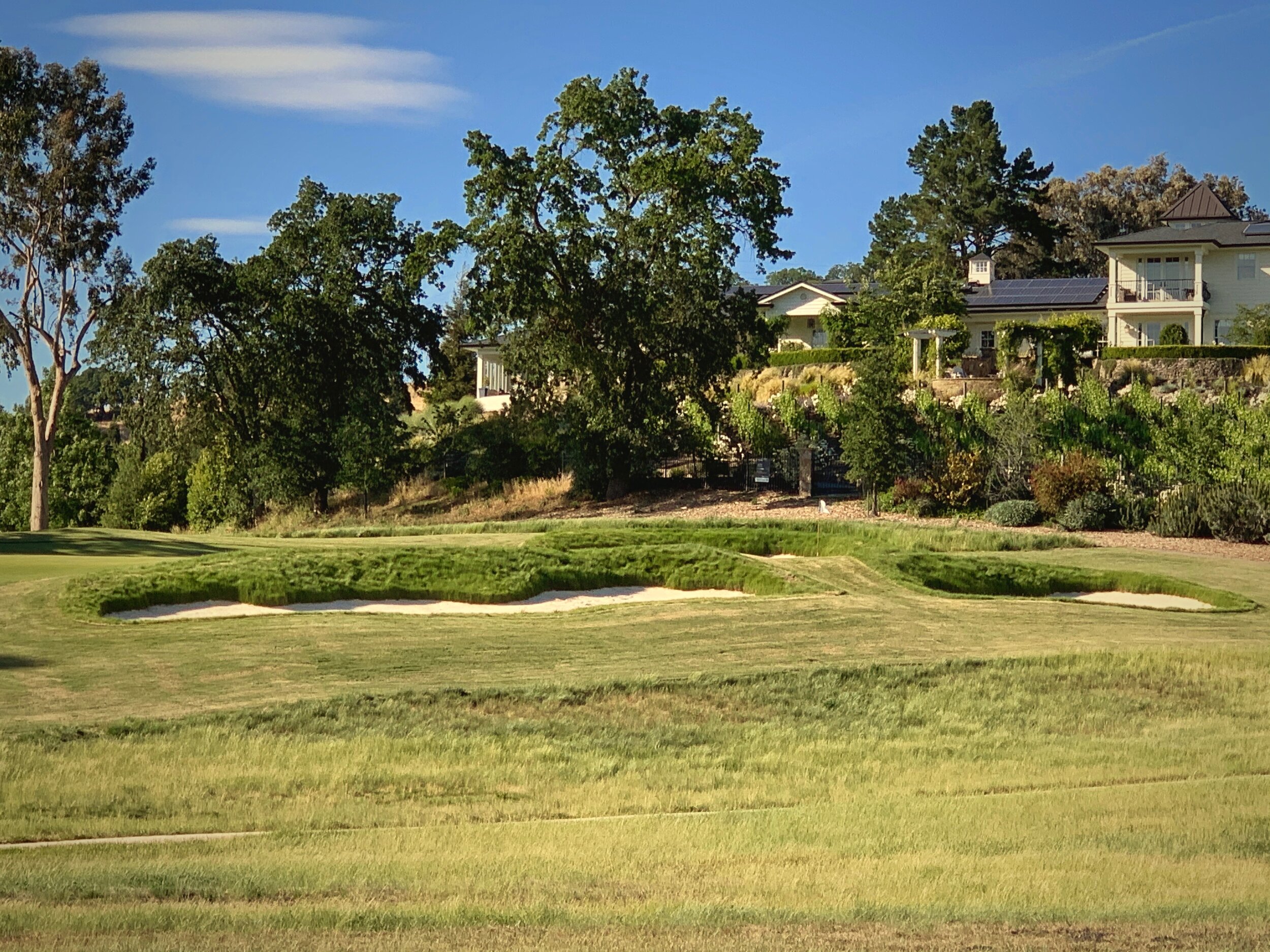
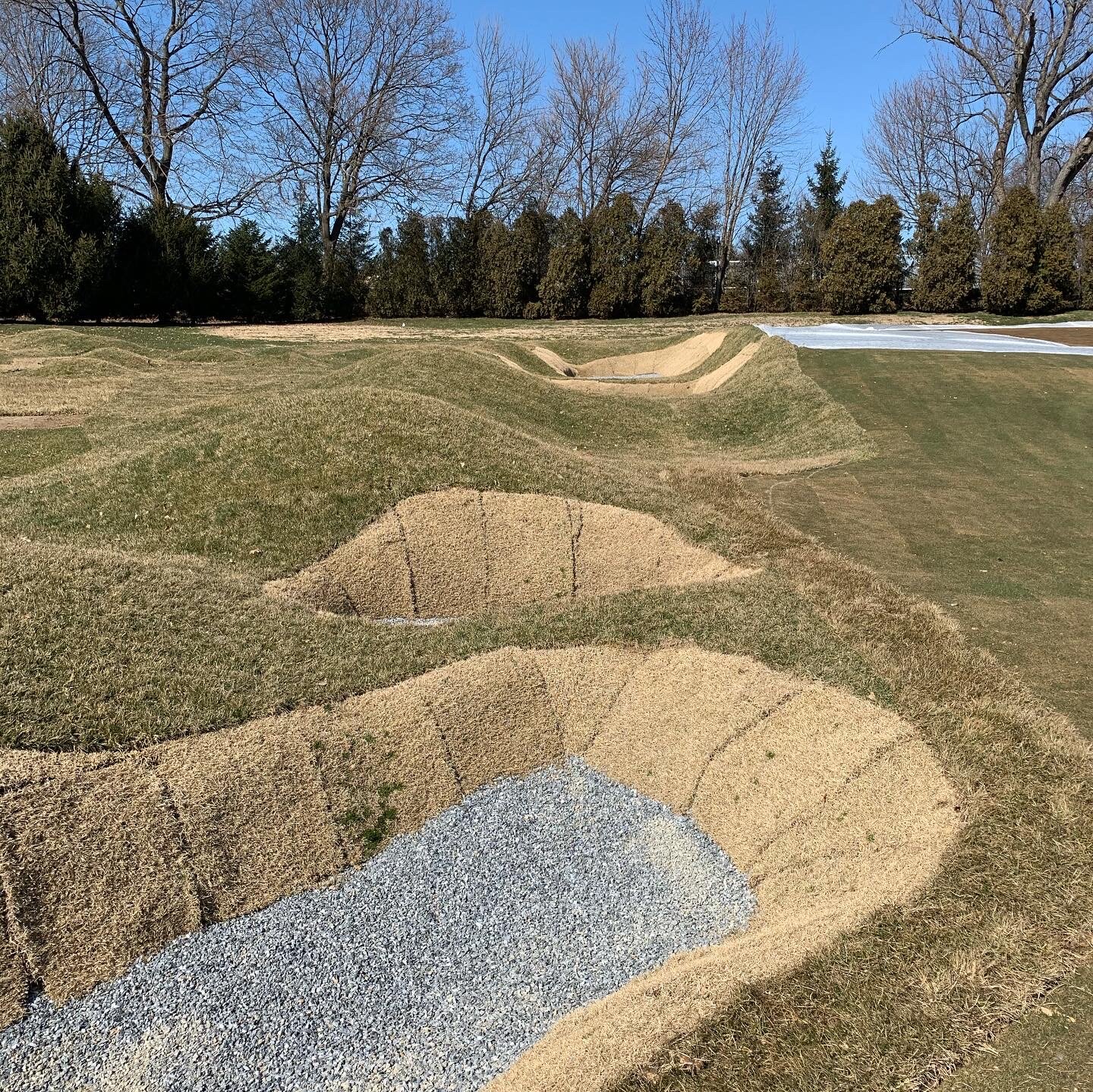
5. LLanerch - Havertown, PA; Alex Findlay, with modifications currently being made by Brian Schneider [inc.; only first 9 holes of renovation completed] One of the coolest renovation projects in recent years, I was both very excited and creatively envious of the funky bunkers and landforms that Brian Schneider and Blake Conant were laying down at this old Philly club. With snake-y berms, deep walled pits for bunkers, and a long earthen wall that conjures thoughts of old Civil War military fortifications, they have added a pre-Golden Age punch to this course that will make it stand apart from comparable clubs in the Northeast.
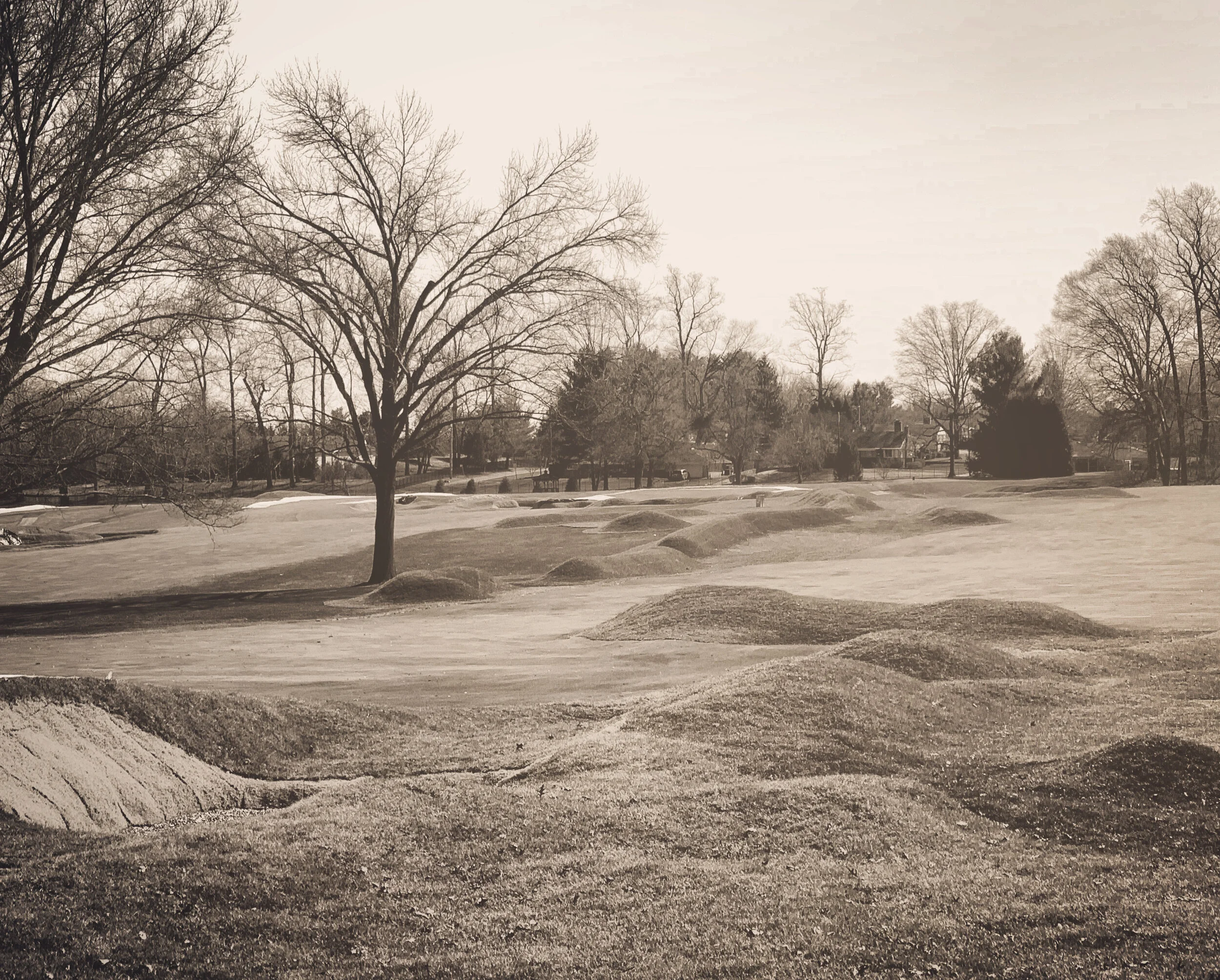
6. The Club at Ruby Hill - Pleasanton, CA; Nicklaus Design [5] A housing development private club designed in the 90s by Nicklaus’s group didn’t exactly get me excited before playing, but I found the golf and experience to be a pleasant surprise. The playing corridors were pretty wide and houses not overly imposing on the experience. Tee shots often had strategy and more difficult lines to take on that would be rewarded if found. The greens had a lot of short grass surrounds that kept approach shots and recovery shots interesting. And there were lots of good distant views of the Livermore Valley as well as a few holes that wound closely through oak-dotted creeks, including the 13th, which seems to be a mirrored version of the 8th at LACC North.

7. Presidio Golf Course - San Francisco, CA; Herbert Fowler [4] Can’t believe I had never played this course, but I finally did at the GCSANC/USGA meeting, which happened just before the pandemic shut everything down. The setting among the hills and cypresses of the historic Presidio is very special, especially as you get peeking views of the dense San Francisco urban fabric surrounding the park. The golf, while not bad, could also be a bit more architecturally interesting. It tends to be a bit of a repetitive test of execution with narrow corridors and greens often fronted by bunkering on both sides. Still, it is a wonderful spot for city golfers to escape, and I love the walking paths for hikers integrating through the course as well as the halfway house that also serves those same hikers.

The Presidio is a stunning setting to have a game. Sutro Tower looms here on the par 3 15th, one of the more interesting green complexes on the course.

The Presidio is a stunning setting to have a game. Sutro Tower looms here on the par 3 15th, one of the more interesting green complexes on the course.

8. Aviara - Carlsbad, CA; Arnold Palmer Design [4] I was slated to work here with APDC’s Brandon Johnson this spring/summer, but the project was lost for now due to the pandemic. The course weaves its way through canyons and hills as well as starting and finishing along an estuary not far from the main waters of the Pacific. A bevy of heavy landscaping work accompanies the course, which I don’t typically advocate for, but it kind of works here for the most part and adds something to the experience. Hopefully we get to work on the course and improve upon what is already a pleasant round of golf.

9. Greenhorn Creek - Angels Camp, CA; Robert Trent Jones II [4] I only played 9 here, so my rating is somewhat incomplete. Similar to the Ruby Hill experience, I came away enjoying this housing development course more than expected. The first couple of holes have some cool greens mixing sharp falloffs at the sides and one with a back section that falls away within a saddle. The “signature” 4th hole also has some cool elements, including an old kiln and stone wall from the Gold Rush days as well as a big downhill reveal at the dogleg with a nearby mountain as the backdrop. This hole (and others on the course) probably could have been better though without the restrictions of the adjacent housing, but that’s how that often goes.

10. Lake Chabot Par 3 - Oakland, CA; Jack Fleming [3] My new favorite (only?) secret golf spot in the Bay Area, a 45-60 minute stroll through the woods of the Oakland hills high above the Bay is a great way to mentally reset, hearing and smelling the sounds and scents of nature with the occasional view across the water and Lake Chabot itself. For some reason, nobody seems to play this course, which is A-OK with me as long as it stays open. With a little tree management though to open views and some money spent to enlarge and reshape the greens into something more fun and interesting, this could be one of the best par 3 courses in America.

Lake Chabot’s Par 3 course is a wonderful golfing respite

Lake Chabot’s Par 3 course is a wonderful golfing respite

H.M. Foothill Golf Course - Citrus Heights, CA; Paul Ottaviano, Sr. (?) [3] I had been intrigued with this little par 3 course since first seeing it along the freeway on my initial visit to Sierra View a couple years ago. On a small rolling property dotted with native oaks, there are a number of small greens just sitting flush upon the natural land, some of which looked to tilt or fall away from the line of play. It looked like fun to play, especially in the dried out September conditions while working on the tee project at Sierra View. I went over one evening after work, and I decided that the most fun thing to do would be to take advantage of the firm dormant ground and force myself to have to bounce it onto every green. With the natural tilts to the land mentioned before, this was a great decision and made for one of the most fun rounds I had all year. This was Cam Champ’s home course growing up (ironically, given his abilities with the driver) and is run by his family. His foundation plans to put some money into it to enhance youth golf and teaching, which could be great, but I hope in that process they don’t also lose sight of the type of golfing spirit I was able to experience that night.

Best Playing/Walking Experiences

Inspecting the work at Brambles with Bill Coore

Inspecting the work at Brambles with Bill Coore

1. Walking around Brambles with the man himself—Bill Coore. This was the first, long-awaited meeting with Mr. Coore and an experience greatly enjoyed that I won’t soon forget.

2. A solo round at Clear Creek after months of being cooped up at home

3. The 36 hole Streamsong Special (Blue at daybreak, Black after lunch) with Kyle Harris

4. Evening loop around Foothill Golf Course with a personal rule of having to land the ball short of every green and skip it on
Above: dry turf and gentle slopes just begging for ground game shots at Foothill

5. Walking around Diablo to see all of our work from last year come to life

6. Meadow Club the day after club championship with Sean Tully and Kevin Hauschel. Course was slick and setup tough—a fun challenge on a great course

7. GCSANC outing at Ruby Hill

8. Bonus holes after work on a quiet Monday evening at Sierra View, complete with the eeriness of the smokey sky and red setting sun

Smokey evening skies at Sierra View

9. Quick tour seeing all of our bunker work grown in at Saticoy with Tim Paulson.

10. Calming solo round up on Lake Chabot Par 3 Course, my new favorite quick golf getaway spot

H.M. Round at Cal Club with a new friend from SoCal; Walking with Zane Ellis around Orinda; an evening match with Kyle Harris at Winter Park and the course otherwise empty


The Everything Else

Favorite Cities

Stupid beautiful.

Stupid beautiful.

Downtown Roseville has some old charm

Downtown Roseville has some old charm

1. Santa Barbara, CA Roman Mars on 99% Invisible once said that Santa Barbara is “stupid beautiful,” and that is correct. Between the blue Pacific with the nearby Channel Islands, the massive mountain range right at its back, the perfect weather, and the historic Spanish revival architecture, the place is quite amazing. Add to that a vibrant downtown loaded with very good and diverse restaurants, all serving outside on a closed-to-traffic main street in one of the few positive side effects from COVID-19. Santa Barbara is undoubtedly one of the best spots I’ve gotten to spend some time for work.

2. Roseville, CA Roseville is an old railroad town just northeast of Sacramento. It has some historic character in its downtown area, and you can tell that there is some movement to better showcase and capitalize upon that. It will be interesting to see that play out in coming years.

Favorite food by Place

Santa Barbara - Where to begin? There is so much good stuff in Santa Barbara. Every morning superintendent Wayne Mills would ask where I went the previous night, as it was usually somewhere new. I joked with him that in order for me to get to every place I wanted to try out, we needed to do a full renovation of the golf course! Between the Thai food, dumpling houses, creative new Mexican restaurants, and Himalayan places, there was something new and exciting to try each night. The sushi places might be the best though, and what is best at those places is the local delicacy—sea urchin (uni) fresh from the waters just off the coast.

Roseville - Tacos from Morenita Market. I’d go to this place for lunch pretty much every day

MUSIC

Those who actually read this yearly have probably sensed an overall downward trend in my enthusiasm for new music, largely due to overall trends in new music. This is the most “down” year yet, but the correlation is much more to do with a lack of work, travel, and general enthusiasm. I’ve always liked to have new music accompany me on a new adventure or creative endeavor, but with little of that this year, there was also little discovery of new music. With a lot of time to reflect though and some major life events, there was a lot of revisitation of stuff from the past. Because of the dearth of new music and the importance of that old music in those situations, some of those songs made the list this year. All albums are new to me, though.

Best Albums

1. Canyon Candy - Javelin

2. Law and Order - Lindsey Buckingham

3. Women in Music - HAIM

4. Rust Never Sleeps - Neil Young and Crazy Horse

5(t). Just Lookin for a Hit - Dwight Yoakam

5(t). Juillet - En Attendant Ana

H.M. Superunknown - Soundgarden; The Layla Sessions - Derek and the Dominoes; Yoshimi Battles the Pink Robots - The Flaming Lips; Space Cadet (EP) - Beabadoobee

Best Songs

1. "Layla" - Derek and the Dominoes* - My mom’s favorite song. Not a new one to me, but it automatically slots in at number 1 this year.

2. "Long December" - Counting Crows*

3. “Los Angeles” - HAIM

4. "December" - Collective Soul*

5. "Pocahontas" - Neil Young and Crazy Horse

6. “The Day I Tried to Live” - Soundgarden*

7. “Estevez” - Javelin

8. “Ordinary World” - Duran Duran*

9. “I’ve Been Wrong Before” - Generationals

10(t). “In/Out” - En Attendant Ana

10(t). “Long White Cadillac” - Dwight Yoakam

H.M. “The Steps” - HAIM; “Cowpoke” - Estevez; “Brother Love’s Traveling Salvation Show” - Neil Diamond; “It Was I” - Lindsey Buckingham; “I Wish I Was Stephen Malkmus” - Beabadoobee

*Song not new to me, but it meant a lot to the fabric of this year in revisiting it.

Non-Golf Experiences of the Year

An exploratory drive around Flint and the deep recesses of my memory

An exploratory drive around Flint and the deep recesses of my memory

1.  My mom’s funeral  It seems strange to put this at the top, but as hard and painful as it was, my feelings of love and appreciation for her were also so strong in that moment. On top of that, the support and love felt from all those around her that day (and beyond) was an incredible thing that I won’t ever forget.

Michigan winter lake scene. Luckily made it there before the covid struck

Michigan winter lake scene. Luckily made it there before the covid struck

2. My daughter getting to meet my mom (and everyone else on a grand Midwest/Northeast tour) It was only for about 45 minutes, and it wasn't an obvious decision to even let it happen, since the baby was only 3 months old and my mom was in the hospital yet again. But wow am I glad we did, because that would be the only time they’d ever be together in person. They’d share plenty of great moments together on FaceTime though, my mom seemingly the only person my daughter would tolerate through that medium, and you can tell that they still have a special bond to this day, even after her passing.

3. Moving into our new house  A positive transition point after a long year.

4. Going on an adventurous drive with my dad to most of the bowling centers of Flint, both past and present (Warning: I go on about this topic much longer here than I expected)

While back to work on projects this summer, I spent my evenings between dinner and bed going down various rabbit holes exploring a big part of my childhood—bowling around Flint, MI. There are probably a few reasons for this—my generally nostalgic personality, finally having a kid of my own, and the growing fascination with a life that is increasingly in the rearview mirror (I’ve now lived in CA for 10 years). Our family bowling business is on the south end of the area in adjacent Grand Blanc (home of the defunct Buick Open—RIP), but every year my brother and I would also bowl in the city tournaments, of which there were 3 different formats—singles, team, and mixed doubles. This afforded lots of opportunity to bowl at the different centers around Flint. We had bowled at almost all of them at some point, nearly 20 in total, and visited the others at different times for different reasons. I always liked how each one had its own bit of character and feel. The building architecture, like most bowling centers, was often utilitarian and occasionally a jumbled mess if additions had been made over time. There would always seem to be some sort of small detail—either kitschy or cool (or both)—that set them apart though, and the jumbled mess of add-ons would always tell a story of the building’s evolution.

Flint, as many people know, has been a city in decay for a long time. This was already in process when I was a kid, but in the time since then that decay has gone to levels that reach beyond sadness and into the realm of fascination. How could we as a society allow a once-thriving community to fall apart so badly? I have some theories for that, but this is about bowling centers, many of which have also fallen victim to the dying city around them. Almost all these closed businesses and past places of recreation and escape from the factories still stand though, either repurposed or left to rot, no one wanting to put up the measly bit of money it would take to knock them down. As I searched for photos of these places in their past and present form, I also used google’s street view option to see what they looked like today. This, suffice to say, was a trip. Many of the places, once I found them (closed businesses don’t usually have google tags), blew my mind both because of seeing them for the first time in 20+ years but also by how funky some of them are. There was Colonial Lanes, which looks from the outside like either a funeral parlor or the kind of strip mall you go to buy blinds at. Town and Country added a big diamond pattern paint job to its long, 56 lane facade. Rollaway looks like a dentist’s office in the middle of a neighborhood, minus the old western themed type-face on its brown wood siding. And weirdest and wildest of all, Landmark (the old Nightingale Lanes) looks like an old elegant hotel from the 1920s with a mishmash of architectural add-ons going into the 70s—a frankenstein of a building with parts spanning some 60 years.

So, when my dad asked me to go up to work with him at the bowling lanes the Monday after a sad and lethargic weekend following the funeral, it seemed like a good idea to do so and get some fresh air while revisiting a place dear to my past. We got to talking along the way, and we came up with the idea to go take a drive around Flint and check some of these places out. This did not disappoint. As the sun started to peek through the clouds at the end of what had been a steel-gray day, we made our way north on Dort Highway with no real plan. It really is amazing how quickly the urban landscape changes heading into the city, and it is also amazing just how much more sparse and run-down everything had become in the past two decades, starting with the NLE Southmoor Golf Course and then our first two stops, the old Dort Bowl and the abandoned Eastown (AKA “Easytown” for its forgiving lane conditions). There is a particular picture on the internet of the inside of Eastown that is rather haunting, almost moreso to me that I distinctly remember the black-bordered white ceiling tile backdrop that hung above the end of the lanes and is still somehow there among the ruins today.

Our drive continued northward after jogging over to Center Road, past the abandoned Walli’s Restaurant and B’s Bowl, which is still open but couldn’t be doing too well. This road used to seem like one of the more vibrant ones in the 90s, but it isn’t so much these days. From there it was a right down Davison Road to see Landmark/Nightingale in all its abandoned, eclectic glory. Current price tag to buy the building and property: 99K. We continued up to Richfield Road (though not past Richfield Bowl, which used to be unique for its inexplicable western themed painting along the lanes, featuring the Road Runner from Looney Toons) to cross town to the northwest corridor home to the former Northwest Lanes and West Lanes. Along the way we drove past the infamous Flint Water Plant, which still has some very beautiful old brick architecture, and the unbelievably massive empty lot that used to house one of GM’s auto plants, the vacant footprint of which spans almost 2 miles long. Once done with Northwest and where our best guess at the location of West was, we said “hey let’s just go all the way out to Colonial now” in nearby Flushing, which is still doing well (and still kind of looks like a funeral parlor (but a nice one!)). We had never been all the way to downtown Flushing, which was home to a little (and little-known) center named Jack’s Place, so we continued onward. The charming and thriving old business district of Flushing felt like a world away from the city we were just in 10 minutes prior, as did the farmland south of town as we started loosely making our way back toward home. We needed to double back to I-75, so why not also stop by Town & Country Lanes over on Miller Road along the way? It turns out Town & Country had just been closed and sold in the last year or so, but as this was a busy part of town that was still busy today, it is getting redeveloped into something else. The south wall happened to be exposed as we pulled up, and that allowed for an opportunity to walk up and view the stripped down version of the interior, which is a strange sight if you can remember what was once there. Thinking we were done and headed home, my dad asked if we should head down Van Slyke and see the old Trevarrow Bowl, which was a surprise ending to me as I thought the building had been long demolished, but it turns out it is still used as some sort of card-playing hall. The big thing I had forgotten about it is that it is right across the street from the remaining GM plant, and because of that my dad says the parking lot for the bowling lanes would always be full at shift end—not with bowlers but with factory workers who just wanted to drink budweisers outside of their cars. Satisfied with a full circle of the town and almost 2 hours meandering, it was time to go home and grill up some venison steaks. After some of the toughest days of my life, this was perhaps one of the best and a memory I won’t soon forget.
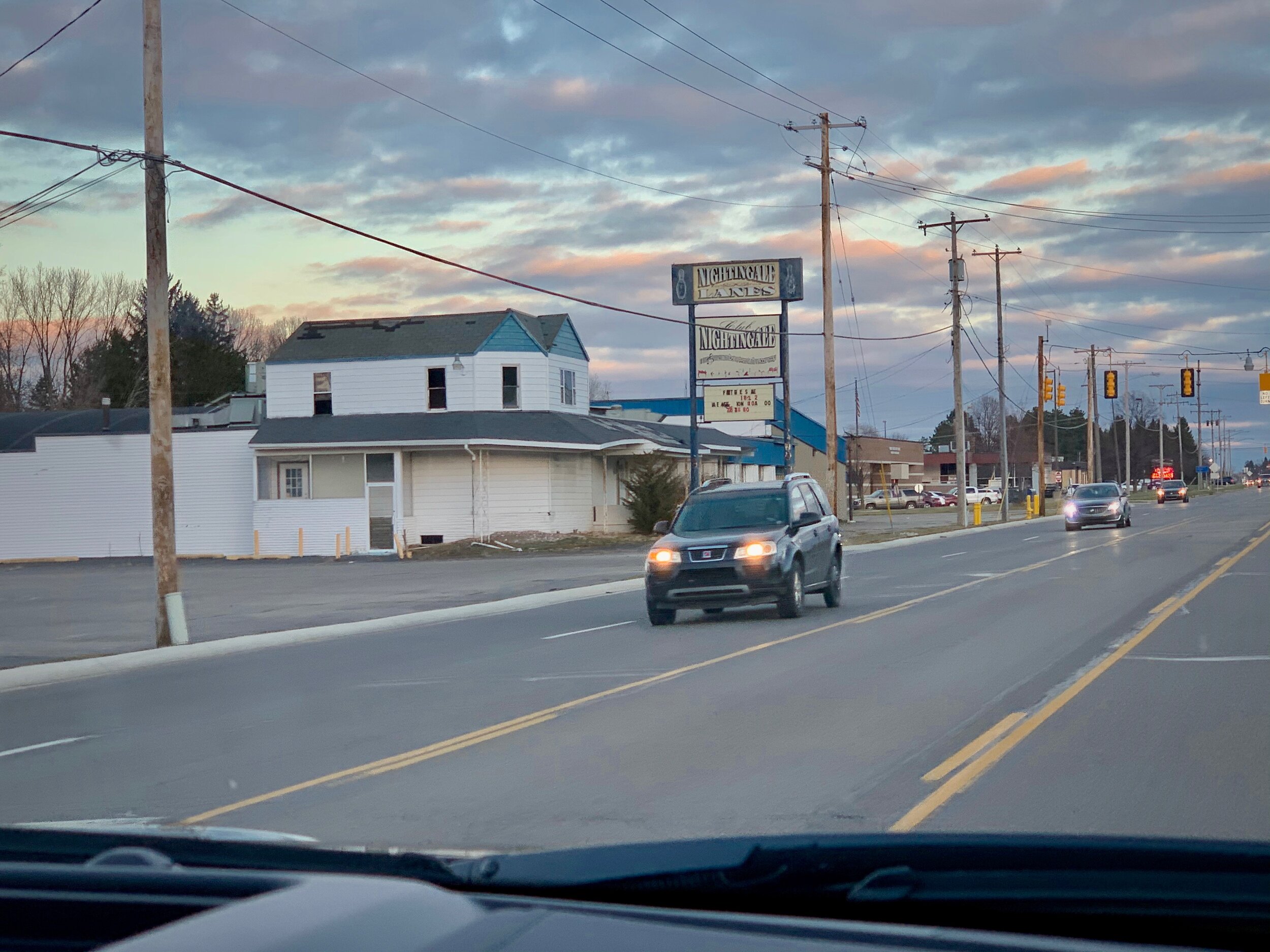
The eclectic structure that once held Nightingale Lanes (Landmark Lanes in our day).  The corner part of the building that looks like a B&B used to be a general store/nightclub, and bowling was added onto it some time in the 50s.

The eclectic structure that once held Nightingale Lanes (Landmark Lanes in our day). The corner part of the building that looks like a B&B used to be a general store/nightclub, and bowling was added onto it some time in the 50s.

Colonial Lanes with its unusual, home-like front for bowling. This was always my favorite place to bowl in Flint besides our own. Only closed in this image due to Covid.

5. San Diego road trip with the family Back in the pre-COVID times, a family road trip to a work conference was something you could do without worry, or at least the only worries were stopping to make sure the baby got fed every couple of hours. Heading down for my wife’s annual work get-together, we made the most of the trip, stopping at Firestone Walker Brewery for lunch, staying overnight in Ventura on the way there and checking in on Saticoy, staying alone up on a mountain ranch on the way back, and just hanging out in San Diego during free time. I even took the baby to a few brewery tasting rooms and taco restaurants in SD, which I’m sure she enjoyed as much as I did :)

H.M. The drive from Clear Creek down the Carson Valley and up and over Ebbetts Pass after an incredibly satisfying round; Driving back up to Sierra View during the NorCal dark orange smoke event

A final note, and a look forward to 2021...

It was a quiet year externally but a busy one internally. That still requires a lot of support from those around me. I am incredibly thankful for my wife, who goes well out of her way to support us and make this family work, and her parents who have done incredible work both supporting me and taking care of the baby while both of us were busy. It wouldn’t work without them. And I wouldn’t be here in the first place if it were for the support and belief from my parents.

Thank you also to the many of you who reached out to me during the hardest period of my life with my mother’s recent passing. I can’t believe the words of support and direct messages I got as well as who they were from. It’s a special little community of golf architecture and turf grass nerds that we have, and I am very thankful for that.

On one of the few positive sides from 2020, I got to spend much more time with my daughter than I otherwise would have. My bond with that crazy little girl is now much stronger than I ever could have imagined, and leaving now for future work reasons is going to be that much harder.

This year had been looking like it would be my most successful one yet in a number of different ways, but alas it was not to be. It still feels like progress was made though, and 2021 and the years beyond may indeed hold some very exciting new opportunities for building fun golf. I can’t wait to keep moving forward and see what those are.

Thanks for reading, best wishes to all of you, and—more than we’ve ever meant it—Happy New Year


This post, and really everything I do, is dedicated to my mom, Loretta Jean (McCray) Hochstein.

Your creative sense and Scottish ancestry lives on within me and inspires me. Rest in peace

hochstein-design-best-of-2020-Mom.jpg

Askernish After 10 Years: Part 5--Ecology and Lessons Learned by Brett Hochstein

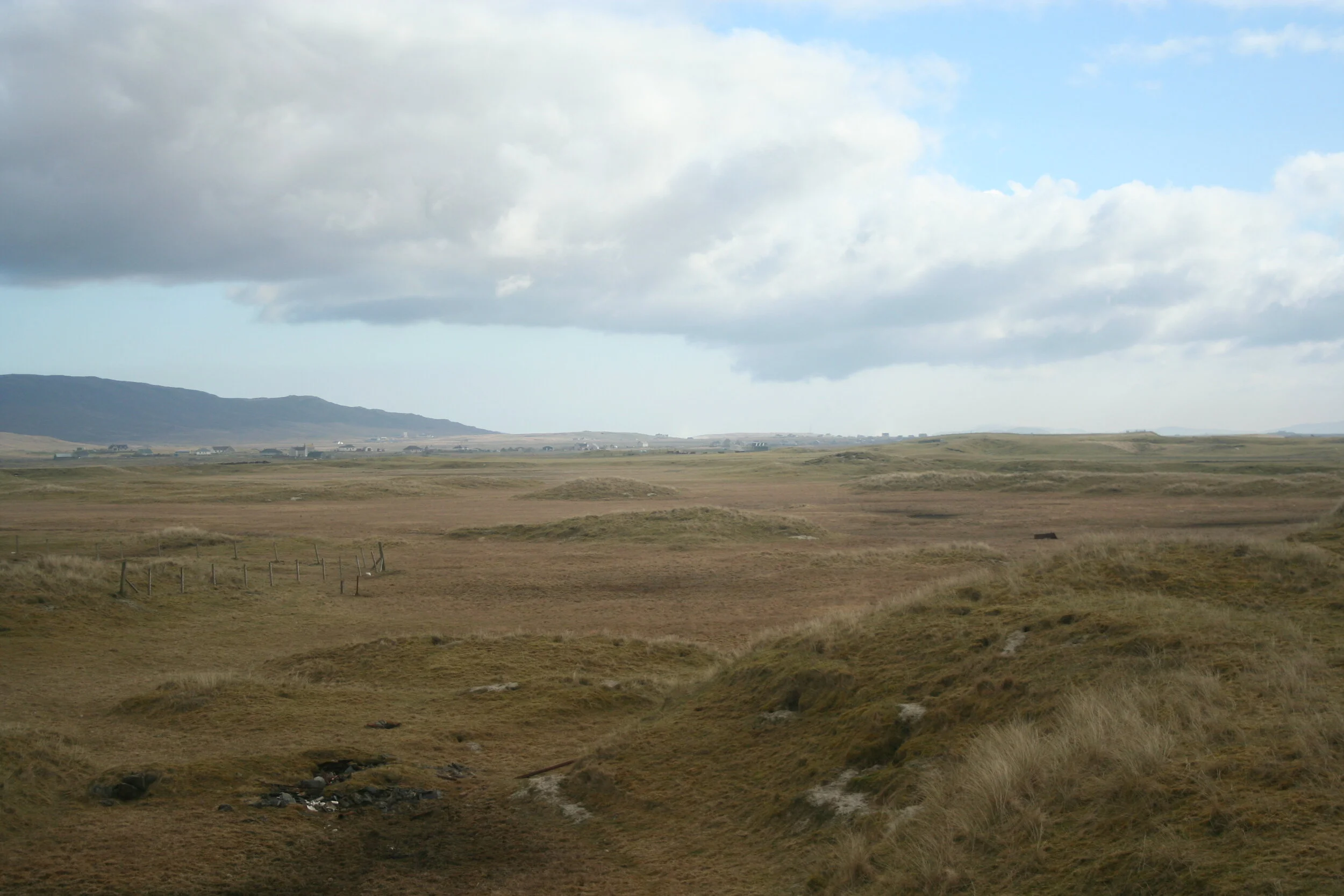
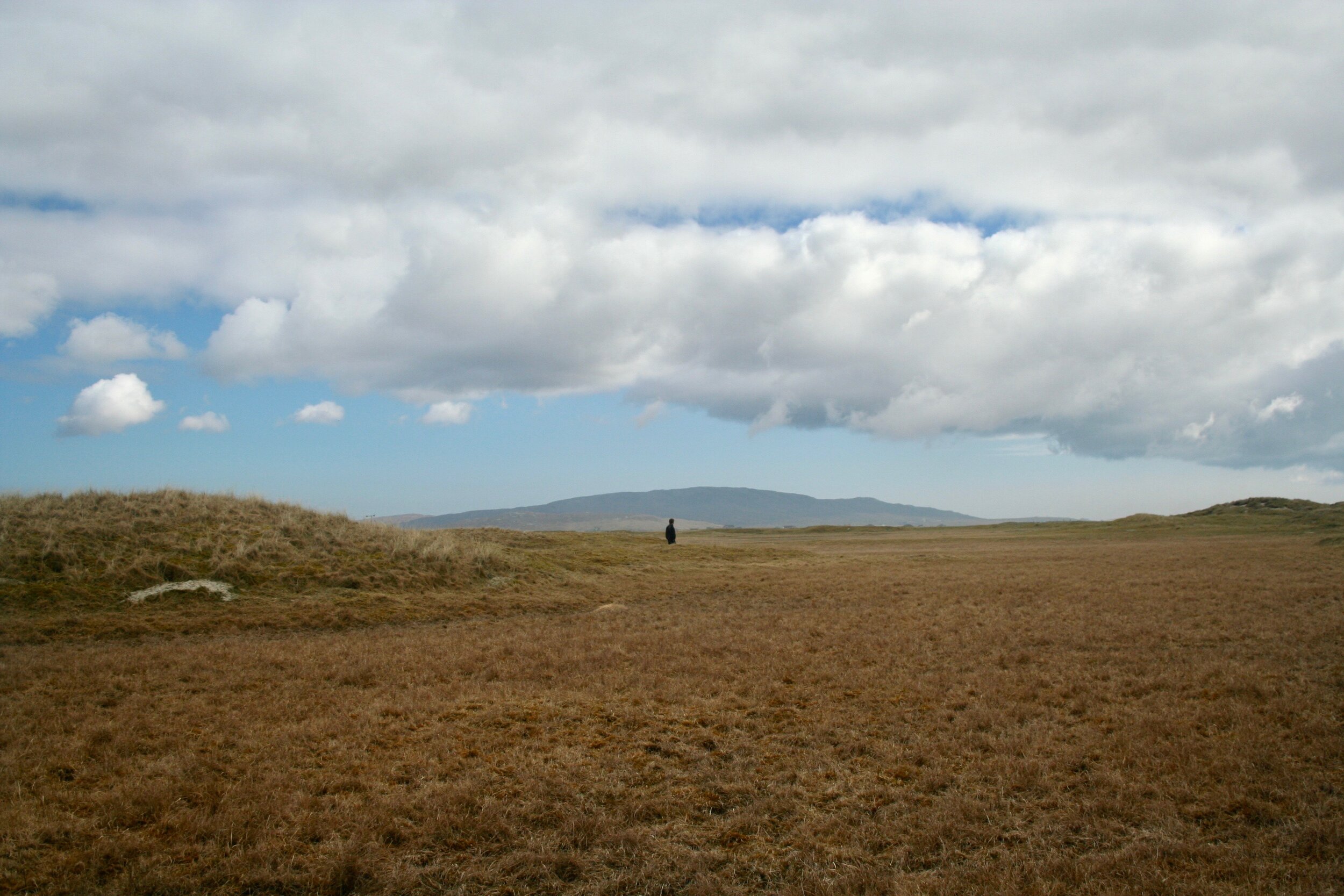
The machair environment is shared by man and beast alike

The machair environment is shared by man and beast alike

This spring is the 10 year anniversary of a life-changing trip to a golf course far away and lost in time: Askernish. To both reflect upon it as well as occupy my time during this pandemic crisis, I am rolling out a multi-part series that explores my thoughts, emotions, and lessons learned from a legendary week on the links. The 1st talks about the physical and spiritual journey of getting to this place, the 2nd is about routing holes over untouched linksland, the 3rd is about the golf course itself, and the 4th teaches a lesson on how to shore up natural links bunkers for golf. This 5th and final segment talks a little about the ecology of the place, our final days together, and the lessons I have learned from the experience and how they’ve applied to my career.

Day 5

After a night of playing out on the machair, it was time for yet another new day and new lesson. The day’s topic was a bit broader but still a very important one—the ecology of the golf course and its surrounds. We would be led by Keith Duff, a top independent ecologist who has done work with the Golf Environment Organization, R&A, European Institute of Golf Course Architects, and many others. Keith made a presentation in the clubhouse discussing how harmonious golf and the environment can be as well as well as how good it is for both sides. In times when golf so often gets (sometimes admittedly rightfully) trashed by environmentalists, it was nice to hear someone say, “hey, golf can in fact be pretty good for the environment, and here is why.” Energized by the positivity, we then we went out for a field exercise to explore and identify the different types of flora and fauna found on and around the golf course.

Rabbit holes, rock, moss, sand, links grass, beach grass. Plenty of biodiversity in one little spot

On first glance, you’d say the landscape was barren. Just a place for cows to eat grass. There is more to it though. Birds are very plentiful, the skylarks seemingly always singing (though you can never see them all the way up there). The corncrake, a rare Western Isle bird, makes its home on the machair and the Askernish logo. The rabbits still very much call the land home, as evidenced by the holes, scrapes, and burrows all over the place. Among the dunes are many seasonally wet low areas called dune slacks, and they provide water and cover for all variety of creatures. Further inland the land dips down to groundwater lochs, where otters live and the fishing is said to be legendary. And of course in the opposite direction, you have the beach and ocean itself with all that it entails. Upon closer inspection, little wildflowers dot the land with many more to come as the spring would progress. Important insects, microbes, and pollinators keep the soil and plantlife healthy. The nearby lowlands switch to a heavier, peatier, rockier moorland soil complete with rushes, sedge, and heather. The uneven ground there is perfect for sheep grazing. At the beach is the marram grass discussed in the last installment, and in between there and the moor is the wonderful ground that has given us a place to play our beloved game.

From the low moorland of the machair to…

From the low moorland of the machair to…

…the bright blue waters and white sands of the beach and Atlantic Ocean.

…the bright blue waters and white sands of the beach and Atlantic Ocean.

So, more on that in-between ground. The ground that “links” us from town or farm to sea. We’ve alluded to its qualities so far in this series, but what really makes it? For one, it starts with the sandy soil. That free-draining, wind-blown sand is what gives us our wonderful contours. It is also the perfect growing environment for the fine types of grasses that, critically, a ball will roll over. These “poverty”-type grasses—fine fescues and bents—have much smaller leaf blades and therefore have a low level of rolling friction. Because the sandy soil doesn’t hold water or nutrients as well, only these types of grasses exist. And that is perfect for golf. If we only ever had locations with thick-bladed bluegrass or kikuyu, it is hard to imagine golf even existing at all. The ability of the ball to roll is critical to the game, and this amazing natural environment provides exactly that. Add in sheep and rabbits to chew down this turf tightly to ground level, and you have the perfect ground for a bunch of bored shepherds to knock their rocks around.

The greens at Askernish and a winning soil profile for natural links turf.  The fine fescue grasses lay down flat and tight, and their needle-like leaf blade provides little friction against ball roll.

The greens at Askernish and a winning soil profile for natural links turf. The fine fescue grasses lay down flat and tight, and their needle-like leaf blade provides little friction against ball roll.

I had always thought about those moments of the game’s origins. What must have that ground been like? What were the grasses like? There must have been a true spirit of adventure, knocking your stone around aimlessly and finding the tight ground where it rolls the best. Then you challenge yourself, saying, “I should try and get this into that little rabbit hole.” You continue doing this, exploring new ground, finding new “holes,” and discovering which ones are most fun and most challenging. This continues onward, and a true game develops. Going to Askernish and exploring both the golf course and the surrounding linksland gives us a real glimpse into that initial adventure, discovery, and development.

The modern day management at Askernish does take advantage of a few tools we have now at our disposal, but I do emphasize few. Yes, they use mechanical mowers to keep the greens crisp and the fairways lower. Depending on the season and weather patterns though, these mowings can be very infrequent or non-existent, especially during the winter months when growth is slow and the animals graze. If there is nae need, then nae bother. They also carefully mow around breeding and nesting seasons for birds and insects, another example of the high emphasis on wildlife preservation. The only other modern devices used are a maintenance cart to get around and the electric shock wires around the greens to keep the grazing animals from damaging the surfaces. That’s about it. There is no irrigation, and there are no chemical pesticides or fertilizers applied. Everything has to be fully organic. The fertilizer used is either a seaweed extract collected from the beach or a mixture of dried sheep hoof, horn, and blood. When you think about that, it makes sense as both have long existed within the local ecology of linksland. Both were utilized by Old Tom Morris and the earliest greenkeepers, and both have still stood the test of time as being the best for true links turf. Even St Andrews still uses seaweed extract as fertilizer.

It’s incredibly and amazingly simple stuff. It must be said though, it is impossible for most golf courses in the world to maintain themselves at this minimal of a level. Their climates and growing environments just cannot sustain that. But what they can do in the same way is ask themselves hard questions about their critical needs and do things in a way that most minimally impacts the natural environment. Do we need to irrigate this much? Do we need to put down this amount of chemicals? Does the course need to be this green, this “prim and proper?” Do we need to install this artificial landscape when the naturally existing one would do? Do we need to mow and maintain all that short rough in the out of play areas? Do we really need all of this? These are the questions that Askernish asks itself. We should all be doing so too.

On this note, I was left thinking about our bunkers exercise the day before and the way they have evolved over time, particularly with regards to the links. At first they were wild, wooly blowouts or animal scrapes. Then some level of formalization began with Old Tom just stuffing some sod chunks in weak areas to try and strengthen them and keep the bunker from growing. He called it “revetting.” This form of revetting eventually evolved to cutting out some slightly more formal, but still somewhat rough, strips of grass and stacking them upon one another in those select trouble spots. The steepness attained by the stacking also helped to contain sand blow. That continued a trend of adding more and more of those stacked sod walls until there were entire bunkers surrounded in revetted walls. It would get more and more refined, clean, and geometric to the point that you see so commonly today on many links, especially those on the Open Rota.

The evolution also speaks to the industry at large. We tend to discover something that helps achieve a goal, and then we expand upon it, refine it,  turn it into a product, brand it, and branch out with alternatives and “The next Big Thing!™️.” Which is all fine and dandy. Our human desire for progress is innate, and that progress is good for the health of the economy and growing world.  With all sorts of fancy new bunker liners, complex irrigation systems, drainage techniques, golf carts and paths, and generally high standards though, it just makes me wonder how necessary all this stuff is. Perhaps we’ve gotten too far away from the basic principles and tactics laid out by Old Tom, and a simpler approach is better not just for the golf but the environment as a whole.

Our natural environment is important to our health and wellbeing, but we have done incredible amounts throughout history to alter it. Some of that is for good, some of it not so much. Golf is no different in this department. We have the extreme cases of mountains being blasted away or wetlands being filled, but we also have a lot of other cases where the golf is in perfect harmony with its environment, including the very place we were standing at that moment. I am a much bigger fan of the latter approach for a number of reasons.

One of golf’s biggest advantages is its connection to the natural world and the ability of such to appeal to our innermost senses. We are happier and healthier when we go outside, step through the grass, feel the changing breeze, smell the wildflowers, and hear the birds and insects. When we step out onto a course that is more in tune with these things, the experience is that much better. Shouldn’t we as an industry be striving for more of this then? I don’t see why not.

Askernish integrates well with its environment

Askernish integrates well with its environment

———

Thursday night was declared to be pub night, and we were to head as a group along with some of the Askernish members up to the Borrodale Hotel, THE spot for nightlife in South Uist. And by that I think it might be the only pub on the island. That said, it is no less than any other pub in Scotland and not a bad spot at all to hang.

As we were getting ready to leave though and hanging out in the kitchen, we heard the front door of the house open. Into the kitchen quickly walks a young man with rubber gloves carrying a green basket. In the basket are all sorts of completely fresh, completely alive shellfish, from small prawns up to a full size blue lobster. After days of wondering what the deal was, the fish monger had finally arrived and delivered. Change of plans: we needed to delay our departure to the pub and cook these fellas.

Paul grabbed a couple of the prawns and noted how cold they all were, figuring they had just come out of the water perhaps not even an hour ago. We couldn’t just play and admire them though. We had to get cooking. Luckily for us, Price, who was both a cooking hobbyist and from Maine, knew just what to do. Not that it was particularly complicated; it’s really just a matter of boiling. We needed all pots and burners on deck and had to platoon the prawns in batches. It wasn’t so much their volume but their awkward size and length that made it hard to fit into our way-too-small pots. That, and the risk of getting pinched.

We somehow made it out without any major issues or injuries, and we just had to sample a little bit before heading out. With a little bit of drawn Scottish butter, the simple flavor was just perfect. Fresh isn’t really a taste. More of an “essence,” perhaps. You absolutely know it though when you experience it, and with certain foods it seems to matter more. I never liked lobster as a kid until I first had it fresh in Maine, and then I loved it. This was probably better than that.

Quick sample feast complete, it was off to the pub for pints, bar games, and more story telling.

Day 6

It was our final day out on the links, which brought a bit of sadness that this time was coming to a close. Fittingly, the sky was a cool dark gray, perhaps mimicking my emotions but also providing some mercy to those who consumed too many at the pub the night before.

Our agenda was light with just a followup activity planned in the morning. The previous afternoon, we had broken up into groups of two to go out on a bit of an environmental treasure hunt. We were provided a map of an area of the golf course and machair, and we were to locate the different micro-environments as well as provide our management plan for them. For the most part, all of our answers were, “keep doing what they are doing” or “do nothing.” We had gone back in and discussed our maps the previous afternoon, but that morning we would go out and walk to each site and describe our plans. It was a good exercise to visually hammer home the key points being made. Following that was a brief bit of time to roam freely, which I spent by myself listening to Neko Case, looking at the sheep, and absorbing the magnificent landscape around me.

Of course, we also had to play one last round as a big group. This time, we mixed in playing with some of the key members of the club, and it was great to get a little extra perspective from them. I recall one instance on the 9th or 10th hole, trying to play a bump and run shot into the green but getting snagged by some rabbit holes and uneven ground. Thinking that the weight of my shot was pretty good, I commented, “that would have been perfect at St Andrews.” Donald MacInnes, the club captain at the time, just looked on with a half smile and said dryly, “someday.”

Out on the par 3 2nd for one last go-round

Out on the par 3 2nd for one last go-round

By a number of reports, they have come pretty close to achieving that “someday.” Eric Iverson reported to me a few years later that he was blown away by how well the course was playing. That sounds pretty good to me, just as long as they go so far as not to overdo and spoil it, relatively speaking of course. I can’t imagine though that ever happens, at least not as long as Gordon Irvine is still around, and their environmental management plan is in place. The course is spectacular and deserves some of the minor improvement I discussed before, but a real part of the charm is how natural both the ground and turf are. And there is so much to learn from that, if these ~20,000 words and 140+ images over the past month haven’t yet made that apparent.

Back to the golf. I can’t say I remember anything else specific about the rest of the round other than that it was again a load of fun. Also, it was bittersweet to hole out for the last time. What I do remember though is that long, open, 300+ yard walk from 18 green to the clubhouse that I described before. Still clinging to the golf experience, I dropped a ball, pulled out my putter, and with my clubs still on my back, I putted my way in.

After all, the native ecology allowed for it.

Why not just putt it on in?

Why not just putt it on in?

Day 7

The morning of our departure day came quickly. As my sleep debt had mounted considerably, I missed out on the scenery driving north up South Uist, through Benbecula, and to North Uist and the ferry terminal at Lochmaddy. Even though I regret not seeing what it was like, I wasn’t missing too much as it was rather dark and rainy that morning. Those paying close attention (or only happened to read Part 1 and this final part) will note that this ferry terminal is different from the one we had come in on (Gold Star for you, dedicated reader). Wisely, Paul and the R&A had devised an alternate route for returning. This had two positive benefits. One—this ferry leg was mercifully much shorter in considerably much worse weather than the one before. Two—we would get to see and experience a number of new sights and scenery. I really appreciated this move.

Again, as you couldn’t see much from the rain-soaked ferry windows, I used this 2 hour journey to chip into that massive sleep debt. This was a good call, because I didn’t want to miss out on what was ahead: the Isle of Skye.

You hear about its whisky, but you also hear about its scenery. Whatever you hear is true. It is spectacular. Winding down the twisting highway you move along and between massive, barren slopes of overly weathered mountains, all the while hovering over large lochs lying at their base. It’s a beautiful, dark, eerie scene as if you were flying through the screen of a Lord of the Rings film. It’s also a great way to feel very small, the scale of the hills and water dwarfing your tiny existence.

As we moved our way through and over the bridge off of Skye, we stopped off at Kyle of Lochalsh, named after the inter-sea loch between the mainland and Skye. I can’t remember if it was to get a spot of tea and stretch our legs, but the scenery was quite beautiful, featuring a train station that sticks out into the loch. It seemed quite odd, but perhaps that was the only flat spot they could find for a platform. Our stop may have also just been us looking for our next destination though, which was just down the road: Eilean Donan Castle.

I fully admit not knowing anything about the Castle upon our arrival, just how famous it was, or how it tied into my family’s history. My mother’s maiden name was McCray, which is an Americanized version of MacRae, of Clan MacRae. Clan MacRae were close allies with Clan MacKenzie, who occupied the castle for a number of centuries after it’s construction in the 1200s. Eventually, it would be destroyed in the 18th century by none other than the English and lie in ruin until the early 1900s when a MacRae, John MacRae-Gilstrap, devoted much energy to restoring the castle into the iconic landmark that still sits there today. At the time, I just thought it was a really cool looking castle positioned in a really cool (and defensively strategic) spot. Looking back now though, the memory becomes a bit more powerful and a little more prideful, just a bit of a fitting part to close up this incredible trip. Perhaps it provides an idea where my love of this landscape and general passion for restoration comes from.

Eilean Donan Castle. I wouldn’t until later on realize its importance, not just globally but personally.

Eilean Donan Castle. I wouldn’t until later on realize its importance, not just globally but personally.

We continued onward, stopping for a bit of lunch as well as a place to stretch our legs, hiking up a rushing glen deep in the forest. This would be our last break before connecting to the A9, the multilane highway running through the Highlands in a giant ‘S’ shape. One thing I remember was Dr. Paul talking about just how dreadful and dangerous the road was. It just looked like a regular freeway to me, albeit with much better scenery. I guess we Americans are desensitized by the regular dangers we put ourselves through.

We eventually landed back in Fife. The older guys, Price and Stuart, were dropped off at their cars at the college, and then I am next to go at my flat further into town. Not quite wanting to end the whole experience yet, the Myerscough boys invited me to stay with them in the Elmwood office and flat in St Andrews, where they were staying overnight before hitting the road the next day back to England. Not only did hanging out with them for another night in one of the greatest towns in the world sound appealing, I had been to the office before and knew that it had this view right here…

The balcony view for the evening wasn’t too shabby. Also, 2010 Open prep was already well underway.

The balcony view for the evening wasn’t too shabby. Also, 2010 Open prep was already well underway.

They didn’t have to ask me twice.

I first had to settle back in at the flat though, drop my bags, and catch up on something important I had missed over the week—Detroit Red Wings playoff games. How could I have refrained from knowing the outcomes you ask? Well, not having internet on an island in the middle of the Atlantic Ocean helps. Being preoccupied with a trip of a lifetime doing stuff you love also helps.

I skipped through the games a bit quicker than I normally would have because 1) not having ever missed any playoff games in my fandom by live tv or radio, this was the first time I had done it this way, and 2) I was eager to get back and hang out with the lads. Now having seen the Wings steal one of the first 2 games out in the Arizona desert, I could happily bus my way into St Andrews, knowing that the boys in Red would have a chance to go back home and take a nice 2-1 lead tomorrow evening after my weekly walk around the Old Course.

I get into St Andrews with my overnight backpack on my shoulder, and I walk that familiar walk down City Road, a short right up North Street, and a left down Golf Place and eventually The Links. The northern sky was a deep late-day blue, the low sun golden, and the shadows starting to cast down the 18th at St Andrews Old. This was a good idea.

I drop my bag off at the office, and we watch a few golfers coming up before going to the only logical place for that time of day—The Jigger Inn. The Jigger is little, white standalone pub sitting along the wall on the second half of the 17th hole, better known as the Road Hole. You can order pints, stand outside, and watch golfers hit their approach shots into perhaps the most famous hole in the world, all the while the Auld Grey Toon sits behind. It’s a wonderful spot.

We continued on with dinner in town, obligatory drinks at the Dunvegan, and hitting some of the trendier spots frequented by the university students. This was not something I ever got to do, the last buses running out of town by 9 PM most nights, and I was way too broke to be paying for a cab without a few buddies in it. So I was enjoying it not just for the company but also that.

We eventually decided we had spent enough money and went back to the flat for a night cap and to goof around and share some stories one last time. I realized to myself that this thing, this whole year abroad, was not just about golf, not just about exotic places, not just about seeing Scotland, not just about walking the next great links course. It was about the people too. To that point I had spent much of the year alone in this foreign land. Alone in my cold apartment, alone on the bus, alone in a B&B room. And for the most part, that’s all right with me. I generally like being alone and adventuring by myself. But it was too much. I missed this camaraderie, I missed laughing, I missed sharing ideas, I missed my girlfriend and family at home. But minus that last part, I had all those other things over the past week. It was about the people. The people you meet at a new course. The people in the classroom. The people in the green keeping sheds. The people at home. And the people I had been exploring with and learning from over the past week.

The same thing applies at Askernish. As much as it is isolated, as much as it is wild and natural and would probably look almost the same with just sheep and rabbits roaming around, it is the people that make it. It’s Ralph Thompson with his jovial welcome and passion for the place that started the whole restoration back to 18. It’s Allan MacDonald, with his love and care for the grounds even though he doesn’t play the game. It’s Donald MacInnes and the rest of the members with their dry wits and sharp games. It’s Gordon Irvine with his brilliant knowledge for links turf and endless energy to get the best of everything he does. It’s Martin Ebert, who graciously lended his time to come up with a brilliantly fun routing. It’s Keith Duff, who helps make sure the precious natural environment is kept as it should be. And it’s all the golfers, adventurers, thrill-seekers, and nut jobs who make the effort to travel and experience this special place.

I couldn’t be more grateful to all these people above who made this the trip of a lifetime. Thank you to all.

The Crew 2010.  From left: David Golding, Toby Brearly, Simon Maynard, Stuart Greenshields, Price Gendron, Brett Hochstein, and Paul Miller

The Crew 2010. From left: David Golding, Toby Brearly, Simon Maynard, Stuart Greenshields, Price Gendron, Brett Hochstein, and Paul Miller

Postlude

In the years following the trip, I always have had the Askernish experience and lessons learned in the back of my mind. Whether it’s in conversation, working on a grounds or labor crew, or working on one of the many great projects I have had the privilege to be a part of, I am always pushing for things to be simpler, more natural, more sustainable, and more fun.

At Dismal River in Nebraska—my first project with Tom Doak—we built a course about as simply as you can outside of the machair. Till the native ground, track it in, and rake up the fluff. There were some major shoves that made things more workable, but for the most part, the course is as it is. Bunkers were just scraped away, the forms already sitting there. Tees were made to blend and done with as little shaping as possible. And greens were sometimes done in a matter of hours—quite the contrast to some USGA-spec processes that can take 3 or 4 weeks from start to finish.

In China, things were much more complicated than that with some heavy duty engineering and earthmoving, but a lot of the quest for a “natural” look prevailed. The Renaissance team also pushed to do things as simply as the complicated project would allow.

At the Schoolhouse Nine, with Mike McCartin, we kept things as minimal as they could be. We only disturbed ground at the tees and greens, leaving the rest to just be scalped down and seeded into. We kept the greens a native soil instead of creating a profile. And we used irrigation only on the greens, leaving the rest of the watering to mother nature. Also, we made it as fun and playable for all as we could. With an out and back routing finishing at a pub on the edge of town, it really felt like it had a Scottish soul.

At sandy Hardelot in France, I used the same basic skills that Gordon Irvine taught us about Old Tom Morris bunker building, albeit with a 10 ton excavator. There was chunk revetting, where I took scraps I had carved out and packed them down tightly to build up a new edge and split in-two the large left bunker on the picture-worthy 7th. There was doing something similar on the 17th out in a vast, newly stripped area of sand where I built a little faux-bunker ridge to add some visual interest off the tee. And there was the greenside bunker on the 5th, where sandsplash build up had gotten out of control and made hole locations over there impossible. Instead of stripping the turf on the bunker edge and being forced to created a new one with revetting, I decided to do a collapse. With the machine, I would pull away at the sand well underneath the main roots and organic matter, which gave the grass enough strength to stay intact despite the void below. I could then, very slowly, push the grass down until it met the sand below. I did this in stages until the front right pin was restored but the edge still had some flash to it. And then the actual edge looked like it had never been touched.

And at Santa Ana, Saticoy, and Orinda, I created lipless bottom edges to create the look of sand bleeding over into a natural area, it moving either by wind or water like the natural bunkers I observed out on the links of Askernish.

I can’t wait to see where I will be able to use these thoughts or what I will be be able to do next. (sandy site please!)


Askernish is undoubtedly a special extreme in the world of golf. There is a great irony in that though too. Because if a landscape like this didn't naturally exist and turf grass like this didn’t exist, golf itself would not exist. Yet the vast majority of golf courses are so far removed from this. Largely, that isn’t their fault. Specific environments and climates like this are rare in the world, but golf is a massively popular global game. Therefore, not everything can be like this. But, what I will argue is this: golf in most places can be at least be much closer to this than it currently is. We can cut back on the artificial irrigation and the overfeeding of chemical inputs. We can allow more areas in between holes to grow and cohabitate naturally. We can select better sites where we have to disturb less ground. We can just disturb less ground in construction in general, letting natural contours guide most of the play throughout the holes and preserving the native soil and seed bank.

We can do less and ultimately have more. That is perhaps the biggest lesson learned from Askernish.

———

I want to thank you all for reading, especially those who made it all the way through. (Don’t you have better things to do ;-) ) I started this with the idea of one single post, then realized I may need to split it into 2 or maybe three. Then I thought 4 was better. Then it had to be 5. And really, I could have split this one and made it 6. It has been a lot of fun looking back on an experience so important to me and my career, and I hope you had some fun with it too.

Most of all, I really want to thank the R&A, for if it weren’t for them and their commitment to students learning about sustainability, this trip would never have happened (and I would have had to find something else to do for the past month). There is a lot of good educational work going on with the R&A, and this is just one example of it.

Cheers, and thanks again

Brett

Askernish After 10 Years: Part 4--Build it Like Old Tom by Brett Hochstein

A proper gowf bunker, courtesy of the Almichty (photo credit: Toby Brearly)

A proper gowf bunker, courtesy of the Almichty (photo credit: Toby Brearly)

This spring is the 10 year anniversary of a life-changing trip to a golf course far away and lost in time: Askernish. To both reflect upon it as well as occupy my time during this pandemic crisis, I am rolling out a multi-part series that explores my thoughts, emotions, and lessons learned from a legendary week on the links. The first talks about the physical and spiritual journey of getting to this place, the second is about routing holes over untouched linksland, and the third is about the golf course itself. This is Part 4 and gets into another fun exercise taking us back to the era of Old Tom, this time working on a naturally existing links bunker—preparing and stabilizing it for regular golf use. Come join us below as we play in the sand:


Day 4

Morning came quickly after our fire-chasing foray, but I was fresh and excited to go at the day’s prospects. Led by links turf specialist, history junkie, eternal Scotsman, and old-school extraordinaire Gordon Irvine, we would be learning how Old Tom Morris would stabilize and prepare a naturally existing sand bunker for play. As someone who eventually wanted to shape and build bunkers, loved golf history, and was obsessed with natural links ground, this activity was a (another) dream come true.

Once again, the day was perfect (is that getting old to hear?) with beaming sunshine, little wind, and warm temperatures. I thought this was supposed to be one of the harshest weather places in the world? Needless to say, I didn’t mind it.

We gathered at the clubhouse as we usually do, first getting a quick lesson from Gordon on what this would be about and why we were doing it. After that primer and getting excited for the work, it was time to take a hike, this time heading north past the first few holes on the golf course. The land up there is more subdued and simple in comparison to the heart of the Askernish routing, but it was still full of features that would make for compelling golf.

We crested a little ridge just off to the side of the current 4th hole, and from there you could see a perfect par 4 setting up over the landscape. Playing as a slight dogleg left, the fairway tilted slightly away to the right and was guarded at the corner of the dogleg by a deep crevasse. The green, which you could see off in the distance, sat up on a diagonal ridge running at a left to right angle and was perfectly situated to demand a shot from the more difficult-to-find and trouble-laden left side of the fairway. Coupling that demand was a right greenside hazard and our work site for the day—a large, nasty sand blowout.

This thing was cool and entirely the work of Mother Nature’s whipping wind. At the top was a sharp wall of sand revealing the dark striations of years of turf growth and accumulated organic matter in the sand. Just below that were massive chunks of turf and soil that had just until recently been living at that top wall. The wind had continued to undermine the edge until the matted roots of the turf could no longer support itself, causing it to rip and tumble down below to its current location. At the base and the right side was the recently blown sand, mixing into and covering the existing turf in those locations. You could see that the combination of sand migration and turf growing through it had built these areas up, providing almost a sense of containment or support.

The day’s worksite (photo credit: Toby Brearly)

The day’s worksite (photo credit: Toby Brearly)

All in all, outside of the chunkiness and general mess, you could see the outline and form of a real bunker—the wild and natural type of bunker that was currently being created and implemented by guys like Jeff Bradley of Coore and Crenshaw or the team at Doak’s Renaissance Golf Design. They in turn had gathered their inspiration from guys like Alister MacKenzie, George Thomas, and Tom Simpson, who in turn had gained their inspiration from Mother Nature herself and the very thing that lay before my eyes at that moment. It was very cool to see and mentally complete this circle.

Getting started

Getting started

It was also time to dig in. With a trailer full of shovels, spades, tamps, brushes, pitchforks, and rakes, we had our tools to get going. Before getting after it though, we stood as a group, talking about the features, how they got there, and what sort of plan of attack we should have.

The first and primary thing to do was to shore up the wall at the top. In order to do so, we used the very first form of revetting developed by Old Tom—chunk support. Back at St Andrews, the bunkers were prone to sand blow and deterioration. To keep them from falling apart and growing at an uncontrollable rate, he would take chunks of sod either from the bunker itself or nearby in the rough and pack them in, mixing in sand and soil along the way. We would do the same thing here, even digging back underneath the existing in-tact turf above to get these chunks packed in below, using both tampers and the handle end of a rake to lock the sods in.

In some places, it was necessary to try and collapse and lower the top edge. This is a very delicate process where sand has to be slowly undermined while the turf above is supported. If not supported, it will rip and leave a large indent on your bunker where you don’t want one. The supports are made by carefully lodging shovels and/or pitchforks underneath. After you adjust and prepare the new level, you very slowly remove the supports and let the sod meet the new grade. Carefully tamp down the grass to smooth it out make sure it is bound to the sand/soil below. In some cases you can do this without having the supports in place, but that is only when undermining well below the turf level and having that sand/soil above effectively act as the support.

On the bottom edges, especially on the left, the sand was really mixed with whatever was trying to grow. It was also somewhat broken. In order to create a more defined, formal bunker perimeter, an edge was cut out in some places, and the scrap sod was then used to fill in the gaps in others. Where there was no more scrap sod to use, it had to be acquired by cutting out more nearby. Everything we did and used had to be sourced within walking distance. There was no buying in materials or hauling it from afar with machines. We had to use whatever we could find to make it work.

On that note, the particular area I was working on required some imported material. We had debated as a group on how to handle the high right side where a lot of the sand had been funneling and blowing out. The practical greenkeeper side in all of them wanted to close it off and shore it up. The artistic architect side in me wanted to keep it, believing the little wing to be an important part of the bunker’s composition. As such, they let me to it.

Working quickly, feeding off that creative energy as well as trying to get something in place before anyone would change their minds and over-ride me, I set to investigating the space with a shovel. There was a lot of sand buildup on top of anything really growing. If we were to formalize this corner and contain the sand, we were going to have to find a way to stabilize the area. This meant revetting more in the style that you see today though still not as clean and formal. I had my friend Simon, a Yorkshire man, helping to generate some sods to use. Cutting them thickly but into little rectangles about 8” by 18,” they were easy to stack and adjust to shape the edge. We probably stacked the sods anywhere from 4-6 levels high, depending how far down we needed to go to reach a solid ground in the form of buried organic matter. As opposed to leaving the exposed wall as you see on many links courses, this move was purely about function and stability. We would eventually push the sand back up and cover up most of our work.

The issue of blowing sand would still remain though, and we needed to find a way to contain and slow it down. Gordon, who was very active and engaging the entire time with everyone, suggested a very natural solution: plant marram grass on the outsides above the revetting. Marram is the long, wispy golden stuff that you see out in the most active, sandy dunes. It is a pioneer species and can grow in sand with very little water or presence of organic matter. As such, it is the first thing to grow in exposed sand and the first to provide stabilization, eventually cycling through multiple generations and building up organic matter to the point that other grasses and plants can mix in and grow. Because our area in the corner was sandy and likely to continue to receive more sand from the wind, marram is the perfect plant to provide stabilization. Again getting a lot of help from Simon, who was wheelbarrowing chunks of marram over from a spot about 60 yards away, we carefully placed our chunks along the edge and filled any gaps with sand to provide more root zone.

From there it was on to finishing touches. Fill rabbit holes. Re-contour and rake the sand. Clear out any remaining chunks or scraps. Brush sand and soil into all the gaps from our sod work. Tamp over and round off the edges. And cut any odd hanging pieces along the edge. Actually, I should clarify that. Rip, not cut, any edges. To cut leaves a clean line that would stick out in a bunker like this. To rip though leaves a natural, rough edge that matches better with the other edges, which were in reality ripped themselves by Mother Nature.

In about 7 hours time including a break for the typical soup and sandwich lunch, we had our completed, formalized bunker ready for play:

All set and ready to go. It didn’t seem too different from something you might have seen fashioned at a place like Bandon or Barnbougle Dunes. (photo credit: Toby Brearly)

All set and ready to go. It didn’t seem too different from something you might have seen fashioned at a place like Bandon or Barnbougle Dunes. (photo credit: Toby Brearly)

The “before” image again for comparison. (photo credit: Toby Brearly)

The “before” image again for comparison. (photo credit: Toby Brearly)

All this left me thinking, would I have done anything differently? Would I perhaps have formalized it even less, leaving some chunks in the sand or bleeding some edges? Or would I have formally revetted a few sections of the bunker, particularly at the top? At Castle Stuart, they had done some of those very things, and I found it to be quite interesting. It was a nice little thought exercise, but in the end I was satisfied. It was time to head back in and enjoy the evening.

———

The wind-powered clubhouse

The wind-powered clubhouse

We would usually hang out in the clubhouse for a portion of each evening, pouring each other pints, sharing stories, and having a laugh. On this night though, the clubhouse lost power. “How does that happen?” you might ask. Well, it turns out our recent run of warm, calm weather was to blame. You see, the clubhouse is powered by a small wind generator, allowing for cheaper energy costs in addition to being more environmentally-conscious. It’s also incredibly reliable as this is one of the windier places in the world. It had been so calm though the past few days, the generator blew through all its reserve energy, meaning both the lights were out and the taps wouldn’t pour. As such, we had to get a little more creative to entertain ourselves. No worries though, as club chairman Ralph Thompson had us covered.

Grabbing a large bottle of whisky from the storage room, a 9 iron, and a bucket of golf balls, big Ralph summoned us all to the practice green. We were instructed to first take a nip from the bottle and then a shot at one of the holes up on the green. 3 rounds, closest to the pin, winner takes whatever remains of the bottle. Now, this was no easy shot. The green, which was formerly the 9th green on the old course, was propped up and guarded by a severe little slope covered in rough. An aerial approach was necessary and no easy task off the tight turf we had to hit from, especially after each subsequent round and nip of the brown stuff.

We all took or turns, oscillating between good-natured jabs at one another’s performance and genuine encouragement. Some shots were closer than others, and some were bladed away into oblivion. One such rocket shot from London-based David appeared to be well on its way to the great beyond until it somehow slammed into the little two foot high pin, almost dislodging it before dropping down innocently right next to the hole. Roaring laughter, clapping, backslaps, and keeling over all ensued upon this most unlikely of outcomes. The shot would hold on to “win” the prize, and the merriment would continue as well.

The aftermath of a most unlikely outcome

The aftermath of a most unlikely outcome

The wind had picked back up through all of this, and the power at the clubhouse kicked back on. Instead of taking the party back inside though, we decided to linger in the twilight and try out something Paul had been talking about all week but had not the conditions to execute: power-kiting.

You probably hadn’t heard of it, and neither had I. Basically though, it is like kite-surfing without the board and water, and you don’t let yourself get aerial as much. For the most part, it is a struggle and a great way to make your arms useless the following day. Holding on to the hearty reins with both hands and leaning well back with the weight of your body, you immediately feel the intense power of the wind. If you let up at all, it will take you on a ride, either in the air or along the ground. Armed with the warmth and courage provided by our brave juice consumed during the golf challenge, we all gave it a try, laughing and goofing around along the way.

In such a remote place like this, you have to make your own fun. When you lose one of the creature comforts like electricity, that need is even higher. On this night, with a simple club, ball, bottle, and kite, we did so in spades. While tv, internet, and technology are nice and entertaining, they rarely seem to leave lasting memories. Instead, it’s those moments together, unplanned and organic, that stay with you forever. And this was a night I would not be forgetting.

Part 5 will be the final installment and appear in the coming days, discussing the special ecology of Askernish as well as my overall thoughts and lessons gained from the experience. For now, you can view the gallery below and recall the scenes and joy of a most fun night on the machair.

Askernish After 10 Years: Part 3--The Golf Course by Brett Hochstein

Six-somes allowed. (photo credit: Toby Brearly)

Six-somes allowed. (photo credit: Toby Brearly)

This month is the 10 year anniversary of a life-changing trip to a golf course far away and lost in time: Askernish. To both reflect upon it as well as occupy my time during this pandemic crisis, I have been rolling out a multi-part series that explores my thoughts, emotions, and lessons learned from a legendary week on the links. Part 1 discusses the physical and mental act of getting there, while the second segment focuses on a fun exercise of routing a course on links land like it is 1891. This is Part 3 though, which talks about the existing golf course itself.

Day 3 (Continued)

We wrapped up our walk throughs of our routings in the mid afternoon and walked back in to the clubhouse (the actual one—not the old stone circle ruins) across the golf course. While on this walk, it was an obvious occurrence to many of us what we should do with the rest of our time on this clear, calm, blue-bird afternoon—play the golf course!

Besides going around a couple of the first few holes the night before, we had not yet had time to experience the full course, especially not the part that people travel far and wide to play—the middle stretch from 7-16. As it was a perfect, warm, and bizarrely calm and quiet afternoon, I absolutely couldn’t wait to get out and knock it around this natural golf ground that I had been thinking about for over a year.

People talk about how the course doesn’t really get started until the 7th hole and even go so far as to describe the early holes as “boring” or a “cow pasture.” While technically that second part is true, I really like the early holes, and the cow pasture part only enhances the experience, not detracts. What is also true is that this land in the early holes around the clubhouse was in fact more subdued, the reason being that much of it was bulldozed flat in the 1930s for landing planes at the onset of WWII. There was still much beauty it in though, especially in providing a contrast for what was to come.

We teed off out into the wide open field of short grass that is the par 5 first hole. Well, almost wide open. Occupying various parts of the fairway, about 20 cattle stood in the way, almost like fielders on a baseball diamond. It was a surreal experience to say the least hitting into them, next to them, and walking by. Again, there was almost no wind on this day and therefore almost no noise, outside of the occasional grunt or “moo!” For this, it goes right up there with the 1st and 9th of St Andrews for most memorable flat holes I have ever played.

The author heading straight into the opening hole’s main hazard: cattle. (photo credit: Toby Brearly)

The author heading straight into the opening hole’s main hazard: cattle. (photo credit: Toby Brearly)

When you get to the green and its large left-to-right kicker, you realize just how different and cool this whole thing is. For one, you have to carefully step over an electric shock wire that helps keep the cows and sheep off the greens. There are also the putting surfaces themselves, which have a variety of micro-undulation at a frequency, sharpness, and scale that I have never seen. A twenty foot putt could break 5 different ways. While some may think that is goofy or gimmicky, I think it is fun and also helps separate the better and more intuitive players from the rest.

The second hole is a cool little par 3 with the green tucked halfway around a small dune-form on the right. It also runs away from you and to the right, so a clever player can work it around. If you haven’t noticed yet, the ground game is prominent here.

The next few holes work in a little counter-clockwise loop before heading back to the clubhouse and eventually the bigger dunes. The 3rd hole is a little teaser dogleg. At 270 yards, the green is tempting for a longer hitter. Plenty of bad lies or even a lost ball await a miss though, and I would just as soon play safely out into the fairway and leave a wedge or a bump shot in.

4 turns back northward and is quite a cool hole with a wide fairway that gradually narrows and falls away on both sides at the pinch point. You want to take on that pinch point as much as you can though, as the green is one of the more difficult to hit with a number of small falloffs surrounding it.

We started out the round in separate groups, but by the 5th hole, we decided to all join up and play together. Despite slowing down the pace of play, this was a good idea and would turn out to make the post round discussions much livelier and on point.

The 5th hole itself is easier on your game and your eyes in comparison to the 4th. The tee shot is elevated on a dune, offering a great view across the simple plain of the opening holes as well as the Atlantic Ocean. The gentle dogleg curls to the left and finishes at a saddle-like green that also has a lot of back to front tilt. Even simpler holes like this are very compelling because of how strong the contouring is. Overall, the greens throughout the course have a very nice mix of both big and small contour. In a lot of places they fall away from the golfer. Keeping them at speeds of 8 or lower on the stimpmeter helps allow for this and makes the golf both more fun and more interesting. Listening to the most recent “Salon” on Derek Duncan’s Feed the Ball podcast, Bill Coore talked about modern green speeds and how they are “putting the cart before the horse.” In many cases of modern golf design, we have been letting green speeds dictate contour and shape on the greens instead of contour and shape dictating speed. How is that right? Why would you want to limit the one aspect of golf design that has the greatest impact on interest and over the smallest area? It does not make sense. Visiting and playing Askernish and its wild natural greens is a refreshing departure from that.

Another benefit and reason for the reduced speeds is that it also keeps from damaging the natural grass that makes up the greens. Remember, these were all just simply chewed or mowed down. No sodding, no seeding, no USGA sand and gravel profiles. This is the real thing.

The wonderful pastoral landscape around the clubhouse is a nice warmup for what is to come.

The wonderful pastoral landscape around the clubhouse is a nice warmup for what is to come.

Back to the golf. Hole 6 was a long par 5 playing back along the simple ground that used to be a runway for prop planes. The green finished at a ridge and fell away, which was kind of clever if a little goofy compared to convention. Shots both long and short would have to be expertly judged to get close to the hole. If it was a long shot played along the ground, you would want to pace it to just barely crest the ridge and then trickle down over it. If it was a short shot played in the air, you would want to land it as closely to the ridge as possible and have it trickle down. Being too aggressive leaves a long but reasonably friendly recovery shot; being short means trying to accomplish the same thing again.

I use the past tense above because it was a clever green but has since moved closer to the beach edge as per Tom Doak’s suggestion. I haven’t seen the hole since that change, but I loosely remember the ground that the green would get moved to and think that it could be a good change that further engages the natural advantages of the course—the bright blue Atlantic Ocean the advantage in this case.

The approach and arrival at the 7th tee is the “A-ha!” moment of the round where everyone stops and goes silent with mouth agape, perhaps miming the word “wow” to themselves before going to reach for the camera. As Erik Anders Lang eloquently states upon his first sight of the hole, “It was like the acid kicked in and everything became colorful.” I can’t speak to the details of hallucinogenics, but, yeah, that sounds about right. All of a sudden, the land is completely different. Heaving dunes tumble as far as you can see while the ocean and white sand beach sit on the right with the mountainous Isle of Barra in the distance. The golf plays down through a large dune valley, winding its way about to the green as if it were truly designed. And I suppose it was, just not so by any men or machines. It is a magical golf hole and moment of experience.

Not only is the hole easy on the eyes, the golf itself also really works strategically. To get a visible angle into the green and avoid the sharp dune on the left, you need to take on the dune on the right. Longer hitters can clear it, while shorter hitters will have to try and get their ball to stop on the top of it where the fairway rides over. A running shot with of careful judgement and speed can then make its way up to the green, which falls from right to left and is guarded on the right by a sharp ridge (which was too sharp at the time but has since been softened by the talented hands of Eric Iverson). If trying to fly the ball onto the green though, you will want to avoid that right greenside ridge and come in more from the left, taking on the big, wooly dune in the process. That will help to hold the ball on the right-to-left tilting surface. No matter your game and skillset, the hole will hold your interest.

The big reveal at the 7th tee

The big reveal at the 7th tee

Gotta play it off the beach

Of course, you can make all that above strategy moot and pop a huge fade out onto the beach, as some golfers do (see photo on right or above). One of the charms though of Askernish is there is no out of bounds. All land is in play, and that just connects you even more to the natural setting. So when I see my ball sitting 40 feet below on the beach, did you think I was going to play it? Hell yes I was going to play it! I don’t remember exactly what happened with the shot (which means I probably chunked it into even worse position), but I will always remember the fun and thrill of going down and trying it.

Hole 8 is a drivable (270 yard) par 4 high on the bluff with a crevasse intruding upon the right side of the fairway. The green, which is partially tucked behind a large dune on the left, is also guarded by a couple of the few formal bunkers on the course. While the bunkers on the other holes were natural sand scrapes and there were numerous small sandy spots throughout the course made by the rabbits, these bunkers were actually the result of cleaning up some rubbish areas. As the team cleared out the junk and were left with thin turf coverage, the most sensible thing was to formalize them into the course’s first bunkers. Off the tee, you will want to take on the intruding crevasse and trouble on the right, either clearing it or, if the wind is really strong, getting close to it. This will help get you a better angle into the green, as the bunkers and a large dune guard the left side of it.

Take on the trouble to the right to get an angle around the first bunkers on the golf course.

Take on the trouble to the right to get an angle around the first bunkers on the golf course.

9 and 10 both continue outward along the seaside. 9 has a rising tee shot playing straight out toward the ocean, and those who play too carelessly may just find it. Like the 8th, the angle is also better playing close to the danger on the right, which I understand is much more in play now with the fairway being mowed closer to the bluff edge. That angle over there on the edge increases visibility and gives a longer look down a green that sits precariously on a very narrow shelf. Being short isn’t great, but being long is death. While the hole is only 341 yards, it is very demanding, even rating as the 3rd most difficult according to the handicap stroke index.

The 10th turns back inland a bit, but we aren’t ready to fully head back yet. It tees off marvelously near the ocean and out over a crevasse to the fairway beyond. The target is narrow but friendly in shape as balls hit out to the sides will feed back toward the middle. Blow one out to the right over the edge of the ridge though, and you might as well concede the hole to your partner. The green is also in kind of a saddle, but shots coming up a bit short will find themselves trickling back toward the golfer. All the holes are obviously natural, but this one really feels that way as the green is a true continuation of the fairway.

11 is a par 3 that gets a good amount of attention, and deservedly so. With views of the Atlantic, the long one-shotter to a tabletop green demands a good play over a deep valley. It’s a long, unsettling shot, and when I was there I found it a bit too penal as most short shots would either snag up in a small dune or catch a depression that fed into a steep road that would suck your ball down into a 40 foot deep pit. There is a bailout to the right, but it falls away and can kick your shot off over the bluff top. I think there has since been a little work to the approach on this hole, but I cannot fully comment on it without having seen it. With the length on shot and many needing to bounce the ball on though, it would be a beneficial spot to do some gentle alteration, at the very least cutting off the feeder into the road.

This might be a good place for some commentary on that topic: is alteration at Askernish a good thing? This was hotly debated during the week when we were there with the “new” course not even being a year old yet. It was so much a debate that I also knew my former (though not yet for another year and a half) boss Tom Doak was involved with some additional consulting.

Obviously, the course had been “found” and, outside of some small shaping work for the tees, simply mowed down to playable golf height. It was completely natural and unaltered, and that made for both an intriguing story and great study into the origins of golf before land was alter-able. But there were admittedly some places on the course that were a bit rough and sharp and didn’t work as well you would hope for the types of golf shots you would want to play in a given situation. The 6th, with its green set away from the land edge, and the 7th, with its very sharp greenside ridge, have already been discussed. I just mentioned the 11th, and later on I will talk about the 16th, which was maybe the fiercest ongoing debate of all. The common theme among all of these holes (outside of the 6th) is that they have/had very sharp, dramatic features that impede ground game shots, the ground being too steep or rugged for anything to run through without a very lucky bounce.

I have to state here that I LOVE the romanticism of the untouched ground story, and there is so much there that all factions of the industry can learn from it. I have to also agree with the suggestions eventually made by Doak to soften a few things. Askernish is not just a cool place and cool story. It’s also a really damn good golf course. And if you can make just a few small tweaks, keeping the ground generally in place and just making it more amenable to a ball rolling through it, you can make it that much better. The key is having a very soft hand, deeply understanding the types of contours found throughout the course, and re-turfing with the same native grass. Fortunately, all of that was in place with Eric Iverson shaping and plenty of sods available.

Because it was to be done like this in the right way, I was in favor of the tweaks, despite it maybe ruining a little bit of the purity of the story. It is all for the better of the golf experience though. It certainly isn’t change for the sake of change, which would be disastrous on such sacred ground. A part of me also thinks that Old Tom very well might have done the same things—shovel, spade, and wheelbarrow in tow. After all, he altered many spots out on The Old Course, including the 18th green where he built up the entire “flat table-land.” Who is to say he wouldn’t have done the same to Askernish? When put this way, maybe it isn’t as much of a deviation from the story as I first thought…

Getting back to the golf and the 12th hole, which is probably my favorite on the whole course. Many of the holes have a “choose your adventure” element to them, especially when the grass is chewed down by the animals like it was during our visit. The 12th though is very much that, moreso than any other hole out here. The long, downhill par 5 tees off from the edge of the sand bluff and plays over perhaps the best golfing ground on the whole course before finishing beautifully at the low-land edge of the machair, the reflective water of the nearby lochs shimmering in the distance. It should be noted also that these are the same type of golf-scale dunes talked about in Part 2 and where our 2nd and 3rd holes were routed.

I am a huge fan of the way this hole experiences every landscape type found throughout the course on one single hole. You have the ocean and white sand beach to your back. The most dramatic dunes are still there off to the left while you play over the intermediate ones through the hole. The mountains and distant Barra are still present, and then you finish on a wonderful green slightly perched over the flattest lowest section of the machair, which bleeds off into moorland and eventually the water of the lochs within it. The landscape value of the hole is incredible, but the golf is fantastic too.

The 12th green sits in a stunning spot that is a remarkable contrast from where the hole started. Photo taken from and courtesy of Askernish Golf Club

The 12th green sits in a stunning spot that is a remarkable contrast from where the hole started. Photo taken from and courtesy of Askernish Golf Club

At the tee, you have your first choice on the hole. Try for the longer carry and narrower fairway out to the left, or play more safely to the shorter and wider one on the right. If you bail right, you are left with a blind shot over a big ridge and another decision to make: play a shot of about 150-170 yards to the left fairway but have a tougher angle to the green, play the same yardage shot straightaway to leave a little bit better angle but still 160 to the hole, or rip a 3 wood and hope to find the approach fairway about 210-230 yards away and have 100 or less to the hole. If you go left off the tee, your options are similar, but finding the approach fairway is much easier as well as visible. Brave, long hitters may even try to have a crack at the green, but because of a fronting ridge and a greenside bunker (this one wholly natural) on the left, it is a very tough shot to pull off. Overall, it is a brilliant, fun, rollicking hole and one you can play a different way each time you tee it up.

13 is bit of a breather and a nice little connector hole with more of the wonderful views out across the machair on the right. Its reverse-cant fairway wraps to the left uphill to a tucked green that has some surprising danger at its back. That danger is a sharp falloff and a return to the dramatic dunesland, which the par 3 14th plays right into the teeth of. The dangerous, mid-length par one-shotter plays across a valley to a little tabletop green just sitting there beautifully. Seeing this flat oasis with falloffs all around and knowing it was unaltered makes similar versions you see on other links courses that much more believable.

The 14th is a wonderful and challenging par 3 that was awaiting perfectly for the team to claim as a hole.

The 14th is a wonderful and challenging par 3 that was awaiting perfectly for the team to claim as a hole.

15 is a shorter par 4 playing through similarly choppy ground. A pinching, crowned fairway makes it effectively play longer though, with the smart play leaving about a 150 yard shot for the second. Originally Martin and Gordon were looking at a par 5 hole with a green further along over a big ridge, but they instead settled on something much shorter and what is my favorite green on the whole course—a shallow little halfpipe that is a blast hitting shots into. The fronting slopes are highest on the left and right, and in between them is a bit of a downhill halfpipe running perpendicular to the green that can be used to help funnel shots through. Even though the shot into the green might only require a higher lofter club for some, it is perhaps a safer play to land it short and bounce it into the bowl. Trying to fly it onto the green and coming up just shy could see you catch the downslope and have your ball rocket on through the green and into the long grass at the back. This is one of those greens though where the recovery shots are so fun, it is almost more enjoyable to miss it on the approach.

Above gallery: the awesome 15th green as seen from the front (left) and right (right)

On to 16 and the controversy mentioned before. The par 4 doglegs slightly right and finishes at a pretty extreme elevated green. The approach to it is very steep and wall-like, which kills just about any sort of running shot. At the top of the wall-like ridge sits a very shallow shelf where, when we played it, the hole was often placed. Beyond the shelf, it falls very steeply in undulating fashion.

As we debated the hole back in the clubhouse, I could see its merits as a true “adventure” type hole and how it functions for match play, but in the end I just thought that trying to land on the top section crossed the threshold of deft skill into daft luck. I said that as well even after getting a 4 iron to stick up there (it required a perfect, speed killing bounce just off the top of the wall in front of the green). Indeed, Eric Iverson and Tom Doak, along with Martin Ebert, did some work on it shortly thereafter, moving the green down to more of a full time position in the back area below and making that more receptive. All the comments I have heard from everyone since have been glowing, and I am quite interested to see how it now plays.

Looking back over the 16th green with the 9th fairway in the distance. The green for 16 is now located in the low section closer to this perspective.

Looking back over the 16th green with the 9th fairway in the distance. The green for 16 is now located in the low section closer to this perspective.

I can’t really speak much to the par 3 17th, as it has been moved to a different location from a tough-to-get-close high spot on the right down to a longer but lower and more protected green on the left. It’s another change I would like to see and experience.

Returning home on the par 5 18th is also a return to the simpler ground surrounding the clubhouse, and some may find it to be something of a let down compared to the previous stretch. I disagree though. For one, the views across the broad landscape to the right and straight ahead are beautiful. It also plays around an old cattle pen, its earthen cops still prominent and intruding upon play to the left on the inside of the dogleg. The approach to the large finishing green is perfect for a bouncing shot, the land much simpler yet still slightly tilted and containing plenty of wrinkle to keep your attention, especially on the green itself. After the preceding long stretch of holes meandering the massive dunes, I felt this open, subdued finish to be a nice, relaxing sort of come-down to complete the round. Just as it started slow and easy, it now does the same over the very ground you began upon, the round tying together full circle.

The walk back to the clubhouse is actually a bit long, but it is perfect. Strolling along this same, grazed-down ground, it gives the golfer plenty of time to recall what they just experienced as well as soak up the landscape upon them. It makes me realize that many rounds of golf end too abruptly. All of a sudden you walk off the last green and find yourself immediately in the clubhouse or worse yet, the parking lot changing your shoes. The discord from one space, both mentally and physically, is jarring. Just as we allow ourselves a moment to digest after a fine meal, we could use more the lengthy, reflective post-round walks after experiencing a fine course like that at Askernish.

We could use more contemplative walks like this after the 18th. Of course, if you aren’t of that mindset and easily get bored, just drop a ball and chip your way back.

We could use more contemplative walks like this after the 18th. Of course, if you aren’t of that mindset and easily get bored, just drop a ball and chip your way back.

———

As we headed back in and recalled our round, we noticed some smoke streaking across the sky coming from some nearby hills. It continued to grow, and the trail of it shifted to obscure the sun for the first time in hours, turning it a deep pink/red behind the streaky black smoke. It was rather stunning.

We also asked Paul to help us on a grocery run. We needed food (and beverages). At the Co-op (a common small-scale Scottish grocery chain), we loaded up on supplies for that night as well the next few. Some guys planned to cook a dinner together. I don’t know if it was subliminal messaging provided by the many sheep or my own penchant, either real or imagined, for living locally off the land, but I went rogue from the group and got myself a little leg of lamb to roast.

In that same vein, the other American, Price, kept asking the club members to put him in touch with a local fish monger to get some fresh shellfish from the nearby waters. On night two, still no luck or word despite being told they’d be able to come up with something.

My perfectly medium-rare lamb rather disgusted the Brits, who for some reason like their meat gray and dry. It was perfect for my tastes though and would provide some good leftovers for the following night. We wrapped up our meals and walked outside to bask in the twilight. As we did, we noticed the smoke was more intense. As we turned around toward the mountains, we also noticed that the fire was now visible in the waning light, and it was impressive.

The fire from the mountains was calling, and we must go…

The fire from the mountains was calling, and we must go…

With some wine from dinner and a few pints of Tennant’s in us, we got the wise idea to take a walk and chase the fire, not knowing whether it was a controlled burn or a wildfire. Remember that youthful idiocy I described at the end of Part 1? Turns out two days was not enough time to grow out of it. The walk started out with 3 or 4 of us, dressed in warmer clothes and armed with a few more silver cans for the walk. I also brought my camera, even though I knew capturing shots without a tripod was going to be tough.

As we walked out to the island’s main road, a paved one-lane highway, we realized this thing was actually some distance away. At that point it was close to full darkness, and a couple of the others bailed, leaving just Toby and myself. We were committed and determined at that point. As we walked along, we gained ground but not nearly at the pace we would have thought. Eventually, we realized the fire was burning away from us and that this truly was a game of chasing. Still, despite our beers running out some 20 minutes ago or so, we decided we were too close not to press on and reach it.

And reach it we did. The flashing lights from the fire trucks spun through the peat-smelling smoke. The firefighters were scattered all about, but there was no sense of urgency in their movements. This was a controlled burn under control, and it was nearing the end of its run. Perhaps a bit disappointed but still happy with taking on the adventure, we headed back down the one lane highway toward the house, tired and weary-eyed. As it was approaching 1 AM with still a ways to go, I stuck out my thumb to hitchhike for the first time in my life. If it weren’t for the overwhelming friendliness of the islanders, I might not have done it, but it seemed well worth the extra 30-40 minutes of sleep we’d get. Needless to say the two cars we saw on the whole walk did not stop for us, but that was all fine. Walking back the whole way gave a sense of completeness to the journey.

Once again, I had stayed up way too late in order to gain a new experience, and while it was exhausting it was also worth it. After all, you don’t write on your website about the early bed time and good night sleep you got ten years prior. You write about the time you walked 4 miles down the road in pitch black on a remote foreign island to chase down a fire that may or may not be controlled.

Morning came, and opening the eyes and standing up out of bed were as hard as could be imagined. There were very few things that could get me up and moving with motivation that morning, but our activity for that day was certainly one of them: building a links bunker using the methods of Old Tom Morris. I couldn’t wait to get back out there.

Part 4 will get into some nitty gritty bunker work and should appear later this week. Stay tuned, and thanks for reading!


Askernish After 10 Years: Part 2--Route it Like Old Tom by Brett Hochstein

“A canvas awaiting…”

“A canvas awaiting…”

This week is the 10 year anniversary of a life-changing trip to a golf course far away and lost in time: Askernish. To both reflect upon it as well as occupy my time during this pandemic crisis, I am rolling out a multi-part series that explores my thoughts, emotions, and lessons learned from a legendary week on the links. This is Part 2, a look at a wildly fun exercise in which we hypothetically route nine holes over virgin links land, playing by the same rules that Old Tom Morris would have.

Day 2

Have you ever traveled somewhere new and arrived in the darkness of night? Remember what it was like to wake up the next morning and see a brand new scene and landscape?

It is a completely different sensation from traveling and arriving by day, where the landscape and scene slowly morphs and changes to the one that awaits you at your final destination. Instead of a slow buildup, it’s more like going into a theatre and having them pull up the curtain not to reveal the stage but rather the new world you’ve ventured to. It’s intense, wonderful, and fleetingly exciting. It’s like waking up on Christmas morning and opening every present at once.

My first daylight reveal of Askernish was no different. Out my bedroom window, there it all was, basking in yet another golden sun and deep blue sky. The great grazing plain of the machair is broad and low-lying, dipping down to ground water levels in many places before rising back up into the heaving dunes along the beach. Colors and textures are varied, sheep are quite present, structures are few, and trees are completely non-existent—the soil too poor and typical wind far too strong to support any of them. There was no wind though on this exceptionally pleasant day.

The machair and links waiting to be explored. The small white building is the Askernish clubhouse.

The machair and links waiting to be explored. The small white building is the Askernish clubhouse.

We started off the week with an incredibly fun task that was very on point with my intended career: routing 9 holes over virgin links land just to the south of the golf course. Martin Ebert of MacKenzie & Ebert International Golf Architects was our instructor for the two day assignment. He was also the lead architect that helped to find the Old Tom Morris routing, or at least route/design the course just as Old Tom would have. This meant simply finding the key features and green sites as they were in the ground. Outside of some handwork to build small tee grounds, this meant no earthmoving. Instead, it was simply just mow it down, and on ye go—play away. For this service, Martin charged a handsome design fee of 9 GBP, the same amount that Old Tom charged back in his time.

How close this version of the course is to Old Tom’s time can never be completely proven, but what is left is an extremely fun, tumbling, varied routing that harkens back to when golf truly was an adventure. Knowing that, this routing exercise with Martin was going to be a lot of fun.

The clubhouse: somewhere between 2000-6000 years old

We were teamed up into groups of 2, myself being paired with Toby, the South African. Our constraints were simple—stay south of the existing Askernish course and assume a locked-in clubhouse site that also happened to also be a prehistoric ruin of a small village. Maybe it’s just the American in me with our really old stuff being 200-300 years old, but when I come across something that humans built before Jesus’s time, I kind of freak out a little. This place just continues to amaze in both its beauty and its history.

Toby and I set off in search of golf holes, which were not hard to find. I always liked the notion of a routing being the way you might instinctually walk the ground of a property. With that, we headed straight toward the beach and ocean in a northwesterly direction. There was a fun short par four to be had it seemed and would serve as a fun and beautiful opener. Our instinct was to tuck the green between the beach access road, which was just sand, and a tall dune. This would leave us with a very short opener of about 260 yards and an early decision to make—go at this green or lay back? It would actually be a tough one to pull off due to both the road crossing and the prevailing wind in the face, but I’m sure many would enjoy at least trying. Even though the green is a bit shallower between the dune and road from the left, that is probably the better angle because the green is more receptive from that direction. I don’t necessarily love a forced carry on the opening hole, but it plays a short length, The Old Course does the same thing, and there would be plenty of ground game shots to come during the rest of the round, including at the next hole.

View from the fairway of the short par 4 1st. This is one of the few spots that the dune ridge is low enough to see the ocean. The yellow and red flag has been added to indicate the approximate location of the green.

View from the fairway of the short par 4 1st. This is one of the few spots that the dune ridge is low enough to see the ocean. The yellow and red flag has been added to indicate the approximate location of the green.

Heading to the beach and northward also allowed us to easily utilize the narrower, but highly desirable, property between the “clubhouse” and the north border. The ground going back inland from just north of the first green was some of the choppiest dune land available to us, but it was not so extreme as to be unplayable. Not having a hole or two in here would be a real missed opportunity. From a bluff edge over the beach that made a nice spot for a tee, we just walked out into the dunescape without any ideas of par or yardage, instead waiting for an ideal green site to appear. And one did. A wild one.

Tucked in a shallow dell flanked by two large dunes, our green had a large, pointy mound fronting it, which left two “V” slots to its left and right. Some days you would get a peek at the flag on the left and play down that side of the hole. Some days you would see it on the right and favor right-center. Other days you might not even see it at all and assume it is smack dab behind the mound, in which you want to play to the far outsides of the fairway to get a clear shot. Failing that, you’d want to hit a running shot off one of the outsides of either V in order to work it around the mound. No matter what, the hole presents fun and unusual challenges and is a highlight even without the beauty and drama of the ocean.

Left and right flags visible through the “V” slots but still half hidden due to the fallaway bowl that is the green.

Left and right flags visible through the “V” slots but still half hidden due to the fallaway bowl that is the green.

Hole 2 from 200 yards in. This rendering shows the variety of shots that can be played off and through the fronting slopes.

Hole 2 from 200 yards in. This rendering shows the variety of shots that can be played off and through the fronting slopes.

We followed up with a nice little naturally-sitting par 3 with some foreground dunes criss-crossing and framing the green. The green sat nicely in a low with medium contour and a strong back to front tilt, which set it apart from the previous fallaway green. The intimate setting of the hole had a very good feel that was different from the rest of the routing.

After that was one of my favorite holes: a simple yet highly strategic par 4 down into a valley where the road to the beach ran through. This design exercise was all about using what you have, and I intended to use this road, which was sandy and sharply walled in most places—effectively making it a very long narrow bunker—to my advantage. With a slight diagonal, it was a no brainer to place the green tight to it on the opposite side and force a crossing at some point. That crossing could come with an aggressive play off the tee, clearing the hazard or at least nuzzling up very close to it to get the better, longer angle down the green. Or it could come on the second shot from down the left on the safe-line, but that leaves a partially blind shot over the road to the green that is just about impossible to hold on the putting surface. This was effective, fun strategy just using a simple access way.

Diagram of hole 4 showing the optional routes of play. The road must be crossed at some point. The question for the player is “when?”

Diagram of hole 4 showing the optional routes of play. The road must be crossed at some point. The question for the player is “when?”

The 5th was a hole that in truth was probably not possible because during that week we were seeing it in a different light. A large majority of it sat in a seasonal floodplain where groundwater would breach the surface at times of heavier rain. It was completely dry though when we saw it, and what we saw was also a very interesting and strategic golf hole.

The tee shot played off a dune down into a broad, low lying flat. In the foreground, there was a medium sized dune to clear. In the distance, views of habitations. In the middle of the hole, a large, pesky mound that must be dealt with. That dune-mound acts like a center-line bunker, dictating play and strategy, especially as we placed the green halfway behind another dune mound further down the hole. This greenside mound isn’t too dissimilar from the hill guarding the 16th hole at Lundin Links, which is the inspiration for Charles Blair MacDonald’s “Leven” template. I knew little of that hole or the Leven template at that time, but I knew that this would be a brilliant spot for the green here. It would guard all play from the left side of the hole. Any shot that clears it will have a hard time holding the green and run on for quite a ways on the flat firm ground; any that lands short is likely to end up hung up in the shaggy grass of the dune. Tee shots that take the longer, narrower route out to the right of the centerline mound, however, will be met with an open view of the green and a chance to bump and run it on. It’s very much an inverse of the second hole at Pacific Dunes, except instead of bunkering it uses mound-y dunes as the guarding hazards. Again, this is effective, fun strategy with no artificiality or man’s imposition attached.

A simple mound and well-placed green provide all the interest on the 5th hole.

A simple mound and well-placed green provide all the interest on the 5th hole.

Hole 6 was where it really starts to get into that old time-y links territory. The tee sits in the middle of a vast, grazed-down flat area. You really could put it anywhere you wanted. As such, we didn’t place it until walking the entire hole and figuring out what everything was and where the green would be. What was certain either way was that the tee shot would be blind over a low lying ridge and play out to a generally flat field slowly rising upward toward the dune ridge at the edge of the beach. One problem awaits though, especially for the big hitter—a large, blind sandy blowout that resembled a slightly smaller version of the original Hell Bunker at the 14th at St Andrews. It was rugged and penalizing, and with that we decided that the green should lie directly beyond it at the toe of the beachside dunes. For most players, it would be unreachable, especially against the prevailing westerly wind, but for the aggressive hitter trying to get close (or being careless), finding it could ruin the hole. In the most severe winds, the bunker may actually come into play on the second shot, and that is where it may get the most interesting. Do you go left, right, or over it? It all depends on the circumstances, which in a nutshell is the beauty of links golf. Whereas the previous two holes have strategic quirk, this one has more of just the odd, “it is what it is” quirk you find at some old links, where there was no other good way to connect holes or alter the land to make it better. The weather, the seasonality, the turf, and your own play all provide the variety and interest, which can be different every time you play. And that’s what makes links golf, and holes like this odd one, so enduring.

From the 6th green, it was time to go say hi to the Ocean again. It was too obvious and easy to climb up the ridge and put the tee right on the edge of the bluff, leaving a 360 degree view with the white beach and bright blue, Caribbean-like water on one side and the machair and distant mountains on the other. It was brilliant and beautiful stuff.

This also happens to be the part of the round where my memory, and the routing itself, gets less clear. From this furthest point away from the clubhouse, we had a few options for how to get back there. We could turn back inland at a 45 degree angle and play toward a some dunes and a blowout, then either work our way back toward the beach and up to the clubhouse or just go back to the clubhouse. Or we could ride along the coast and the dune ridge there. Either way, a big stretch of pretty benign land had to be crossed.

Luckily, we still had the first part of the morning to figure it out before doing our walk throughs with Martin. For now, it was time to go in for supper.

Day 3

The view away from the golf on the 7th tees isn’t too bad at all

The view away from the golf on the 7th tees isn’t too bad at all

‘Twas another bonnie day out on the links upon waking, and I wanted to quickly get back out and figure out the rest of these holes before doing the walk through. Even though I can’t completely remember the final 3 holes in full detail, here’s what I think happened:

We made a par 3 for the 7th playing down and slightly away from the beach ridge. There was some interesting ground there for a green site but not much for a ways beyond, so this made sense. I can’t help but think that the 10th hole at North Berwick was in the back of my mind too, because spatially this felt exactly like that. We reach the farthest point on the property after crossing flatter ground, go up to the ridge to place a tee with a view of the sea, and play down to a par 3 at nearly the same angle from the beach as North Berwick 10. This green though is a bit more receptive than that one with a dune bank up the left and some smaller support on the right. A bump in the left ridge allows the green to go around it and have some truly tucked holes in the back left. In that way, it’s actually not too different from some William Watson greens we’ve worked on at Orinda and Diablo.

From there, we finally get a par 5. We set the tee behind the dune next to the green to hide it, but like number 6, there is plenty of elasticity and open ground to lengthen the hole or change the angle. What doesn’t change though is the finishing half of the hole, which plays right along the beach in a long, rumply sort of half pipe. To get into that half pipe though and have a view at the green requires an uneasy blind second shot over a ridge and into it. Add to that what is likely to be a strong left to right wind off the Ocean, and the shot is even more difficult. The payout for finding it is good though, and those 2nd shots that reach it will be rewarded with a view of the green and the option of keeping the ball on the ground and out of the wind, those running shots corralling in a friendly way off the sides of the flanking ridges as they tumble up to the bowl-like putting surface.

The final hole again gets a bit weird, as we kind of got stuck. I’m pretty sure it was a blind shot over some severe dunes and pits, one of which has the shell of an old burned car at the bottom of it. If you carried all that though, you ended up at a pretty friendly green in a bowl up near the clubhouse site. Really though, holes like these are in the spirit of links golf, especially that in the west of Scotland. Prestwick, Shiskine, and others all have odd connectors like these, and many of them are a lot of fun, creating that excitement to run up to the top of the hill and see where the shot ended up. This would be no different from that.

In truth, this section of the links near the “clubhouse” was always going to be tough to figure out. A lot of it is a higher plateau with extremely deep valleys. Golf doesn’t really “work’ for much of it, which is a bit frustrating since it is otherwise interesting compared to the broader flat areas. We are doing this like it’s 1890 though, so it stays as it is. And really, that’s probably all for the better. Grab your mid-iron, bash on, and pray to ye gowf gods!

———

Our routing as laid over satellite imagery. The light blue lines indicate a less-advantageous alternate route.

Our routing as laid over satellite imagery. The light blue lines indicate a less-advantageous alternate route.

We did the walk throughs with Martin and eventually came to ours. He thought there was some interesting stuff but was also concerned about back to back short holes to open as well as overall length. I could see that point and thought of a few ways to remedy it, but I really liked the green sites and some of the strategy. I also was embracing the old school, golf-as-adventure spirit and just wanted there to be interesting shots and situations.

If I had a self criticism though, it would be that I don’t know if I maximized usage of the most dramatic dune areas or the beach frontage. Could there be more holes in those dunes, and did I venture out too far with 5 and 6? Could I have had some greens that had ocean views? Could I have done something interesting and quirky with the cemetery? What would I have done differently if I had known hole 5 would be unplayable for part of the year? I actually sought to remedy a few of these things with some free time later in the week and came up with a mostly different routing. Unfortunately though, both my notes and memories of that have been lost, only some barely-descript photos of unmarked links land giving me vague and frustrating clues as to what I was thinking. I guess that just means I have to go back there and figure it out.

I also still don’t love how the final hole ended up, and I think there is a good par 5 that could come in at a 90 degree angle to the same green site that we ended up with. You would end up losing the 8th though, which is a pretty interesting par 5 close to the ocean. This kind of push-and-pull is the fun though as well as the challenge of golf course routing. There are way more than 18 potential holes out there (or in this case, 9), and the best architects figure out how to parse out the best final combination that balances flow, experience, strategy, and overall quality. Sometimes that means sacrificing one great hole to elevate three other ones. Sometimes it means breaking convention, like Pacific Dunes’ back to back par 3s, to get the best overall quality. These decisions are all critical. So, was my routing the best it could be? Probably not. After all, it was my first time really doing it on the ground, and it was only over a day. With more time to walk the ground as well as the experience gained from 10 more years of studying and living golf, another crack at it would surely be better. That might just have to be a different post though for another day…

Day 3 will be continued in the next part of the series—Askernish After 10 Years: The Golf Course.

Below: images the author, Martin, and the group walking the land and finding golf holes.

Askernish After 10 Years: Part 1--The Journey by Brett Hochstein

hochstein-design-askernish-journey-scottish-flag-header.jpg

This week is the 10 year anniversary of a life-changing trip to a golf course far away and lost in time: Askernish. To reflect upon it as well as occupy my time during this pandemic crisis, I am rolling out a multi-part series that explores my thoughts, emotions, and lessons learned from a legendary week on the links. I will dive into the learning activities we took part in, including doing a 9 hole routing over virgin linksland and shoring up a natural bunker blowout—both in the style and limitations of Old Tom Morris’s time. I will also get into what a place like this really means for golf and the lessons that we can learn from it. This is Part 1 though—the journey of getting there, both that from that first day and the year preceding it.

Prelude

At some point during one of my autumn class lectures at Fife’s Elmwood College, one of the instructors brought up a trip to Askernish for the following spring. It was to be sponsored by the R&A and offered to their many scholar students, complete with a variety of teaching seminars and last a full week. I missed some of those initial details, hung up on and mentally salivating over the word “Askernish.” That was all I had needed to hear.

About 6 months earlier, in the heat of my post-college purgatory living in my parents house (this was 2009, after all), I came across a New Yorker article about a “Ghost Course” out on the far western isles of Scotland. Old Tom Morris was said to have originally been there and designed it, but the version of the golf course at that time seemed to be far from anything resembling an Old Tom layout. For one, there were 9 holes when the original had been 18. Secondly, it played almost entirely along a flatter section of the Machair (the vast, shared grazing grounds utilized by the island’s few inhabitants) that also doubled for landing airplanes, avoiding some obvious dramatic dunes right nearby. No way Old Tom would have stayed out of those.

There was a lingering curiosity though about the legend of the old course. Eventually the curiosity turned to action as a team of devoted locals, links turf specialist Gordon Irvine, and golf architect Martin Ebert set out to find the “original” course. The results of those efforts are the spectacular, rumbling, tumbling golf adventure that still exists today. Furthermore, no ground was altered to create the course, and maintenance was completely minimal and heavily reliant on grazing, meaning the turf was also like that of Old Tom’s time. This story completely captivated me, and I immediately starting dreaming about visiting Askernish, wondering when and how I would ever get there.

Rewinding back another 8 months, I get an email while working on a drawing in the upstairs office of architect Mike DeVries’s house. It was not a good one. The director of the Golf Course Architecture masters program at Edinburgh College of Art was reaching out to inform me that funding had been cut by the school and that the program was to be discontinued immediately. Just like that, my dream of getting to Scotland that fall was crushed. I was supposed to be leaving in 8 weeks.

Back to April and the Askernish article. I had stuck with the pursuit of getting to Scotland, my most recent gambit trying to get a caddie license at St Andrews. After a few months of being told it should be no problem by the caddie master, the Links Trust changed course and decided they no longer wanted to allow internationals a license and instead keep them for locals (again, this was 2009—economic struggles, etc., etc.). Strike 3—a failed Dreer proposal, canceled grad program, and rejected caddie license—seemed to indicate I was done. Askernish, and the rest of the links, would have to remain but a dream, and my career in the golf design business would continue on long-term hold, if it ever took.

Then I came across a small school and turf program near St Andrews—Elmwood College. The program was completely hands-on and practical, even having a focus and coursework on golf architecture (because these are the things the Scots find important—there is little separation between proper design and proper turf). It may not have had the prestige or pedigree of Edinburgh College of Art nor the cultural experience of living in the capital, but in many ways it was a better fit for what I wanted to do. Perhaps most importantly though, they were happy to have me, and they weren’t going anywhere. I was on my way, and as I would find out a few weeks into the school year, Askernish was no longer but a dream.

———

Day 1

Early Sunday morning arrived as did the van that was to take us on our journey from Central Fife to what would seem like the middle of the Atlantic Ocean. Inside were the other students from Elmwood as well as the lads from the English equivalent, Myerscough College. Captaining the ship was Dr. Paul Miller—professor, agronomist, historian, Scotsman, and avid links-lover. Paul is one of those people with a passion for many things in life, someone I always will try to block out a chunk of time for to wax on anything golf, sports, soil, history or whatever-related. It was going to be an asset to have him leading us along the way.

It was also going to be fun having the other guys on the trip. There were two very different Englishmen (a Londoner and a Northerner from Yorkshire), a South African, a Scotsman, and two Americans—myself and a Mainer who had defected to Scotland a couple years prior. We had all met up at the Elmwood Golf Course the night before to start the week early, and it was easy to tell in those introductory moments that there was going to be a lot of fun with plenty of good back-and-forth.

The sun shone brightly that day as we wound our way northwest. The early spring greenery of the Central Lowlands was rich and verdant, the brown-maroon of the heather-covered hills of the Highlands golden, the water of the many lochs a very rich and reflective blue. I feel I remember The Beatles being the main, most agreeable choice of music in the van, and it was enough to take me away at times from the Neko Case refrains serenading me on my own headphones, her long howling voice the perfect anthem for the vast, solitary places we were going.

Our first stop would be at the edge of the mainland in Oban to board the car ferry, stretch our legs, and get some lunch. The boat ride that awaited us would be a long one—almost 7 hours in total. As such, we loaded up on some provisions for it. It being a warm, calm, sunny day that would likely be enjoyable out on the ship’s top deck, I went for some crackers, salami, aged Scottish cheddar, and a budgetary bottle of red wine. We gathered out there for much of the ride, especially the first section through the Sound of Mull, one of those long, almost fjord-like waterways that are oh-so-common to Western Scotland. The pace of the boat seemed slow as it churned through the unusually calm, almost glassy water. On a day like this, with the air crystal clear and sky deeply blue, a slow pace was perfectly fine.

The Sound snakes its way out to the Sea of the Hebrides, its surrounding landscapes both near and far being highly varied. In the far distance toward the main land, snow still dotted the peaks of the Highlands and Ben Nevis, Scotland’s highest peak. Arable slopes directly along the water eventually gave way to forests of Scots pine which eventually gave way to more rugged, rocky, and barren lands even further out.

Leaving the mainland behind

Leaving the mainland behind

As you exit the Sound and head into the Sea, you realize just how far you are going and how crazy this all seems. The rocky hills of heather and gorse stand to your sides as you look ahead and see nothing but water, that nothingness being exactly where the boat was heading. Had it been a rough weather day, this moment in time would seem daunting. As it was, onward we sail.

Eventually the distant isles of the Outer Hebrides came into view, jagged mountains sticking straight out of the ocean water. It was an unbelievable scene made more unbelievable as we slowly, surely approached them, those mountains growing at an exceeding rate. The sun was starting to lower as we approached the Isle of Barra, a stop along the way to our final destination of South Uist. Across the sky were streaks of smoke from heather and peat fires on the island, and at one point the sun hid perfectly behind them, glowing the deepest of reds imaginable.

Approaching the island and the village of Castlebay was like nothing I’d ever experienced before. With the lighting cool blue yet glowing, the boat slowly entered the nearly still harbor, the reflective water doubling the Gaelic scene. The smell of peat filled the air as the smoke rose gently from the hills like a mist. There was an incredible quiet as the village slid into view, the hum of the boat and light splashing of water at its sides providing the only sounds. Cottage houses organically-spaced up the sides of the grassy, rocky slopes dotted the barren land. An old stone church stood upon high, looking down ominously over your sins. A castle—an honest-to-God old stone castle—sat right in the middle of the water in the harbor.

I have never been “in” a movie, as in actually living the fictitious scene of a movie. None of us have. It’s impossible. But this felt exactly like that—being transported to both a world away and a time of the distant past. It was powerfully haunting and wonderful.

The movie-set of Castlebay: approaching Barra was like entering not just a different place but a different time.

The movie-set of Castlebay: approaching Barra was like entering not just a different place but a different time.

———

After departing Barra, it would be another hour or so up to Lochboisdale, the port of South Uist and a short drive from Askernish. We were treated to a vivid sunset behind the silhouette of Barra. The long northern twilight period eventually gave way to total darkness as we docked at Lochboisdale and packed back into the van for the short drive to Askernish, the first time the wheels had turned in hours but certainly not the first time they moved.

The dark (and I mean dark) drive to the course clubhouse was mixed with both travel-fatigue and excitement. After all, it was close to 11 PM on a Sunday and hour who-knows-what of travel. So, why would we go to the clubhouse then at 11 PM on a Sunday and not just call it a night to rest up for the week? That’s because final round of The Masters was on live, and no one wanted to miss that. The darkness and peace quickly became brightness and cheery banter as we walked into the front door, meeting a number of club members, including Ralph Thompson, the larger than life caretaker of the course and reason we were really here. It was Ralph, after all, who spearheaded the whole campaign to restore the Old Tom course and whose energy was driving its newly re-found legend.

We were poured pints from the “bar” and positioned ourselves accordingly in the all-purpose room to just catch the leaders rounding Amen Corner. As the holes played on, two men started to distance themselves—Lee Westwood and Phil Mickelson. The room slowly and naturally started to divide, us two Americans sloughing off into the corner as we cheered for our countryman against the home (UK) favorite Westwood. This was properly noticed and called out, and a good laugh was had by all. A good time was had by all as well, even with Mickelson prevailing.

We headed back over to our lodgings—a house about a par 5’s distance down the trail from the clubhouse. As us young kids had a lot of that dumb youthful energy and were still abuzz from the Masters finish, we decided to hang a little more at the house and have a night cap. At one point, we stood outside in the darkness to chat, only a faint tungsten light somewhere in the distance and the stars providing the light. Or so it seemed. As my eyes started to adjust, I noticed a broad glow out toward the northwest sky. It wasn’t just that other light. This glow seemed to have greens, reds, and maybe even a little blue. It turned out that our youthful idiocy and future exhaustion were rewarded with Aurora Borealis, the “Northern Lights.” I got my camera, set it up on the sturdiest thing I could find, and took a few long exposures to make sure I wasn’t crazy. A couple somehow turned out ok.

The rewards of future sleep deprivation

The rewards of future sleep deprivation

I’m not sure how much more could have possibly happened in day one, but I couldn’t wait to see what was in store for the rest of the week. This was already incredible, and we had yet to even see the golf course.

It was time to finally get some rest. We would need it for a week that would contain very little of it.

Look for Part 2 in the coming days, which will get into the first two days on the links and we imagining all sorts of golf holes that are literally just sitting there waiting to be mowed and played. In the meantime, click on the gallery images below to better see the magical places described above


The Best Of: 2019 by Brett Hochstein

The reward for a long hot day in the dust and mud was always a golden view of Mt. Diablo

The reward for a long hot day in the dust and mud was always a golden view of Mt. Diablo

For those familiar with these annual write-ups, this year’s version may seem a little bit boring compared to years past. There were no exploits overseas, work or otherwise. Airplane trips can be counted on a single hand. And all work, present and prospective, was located within driving distance, including our main project of the year—shaping on a major Todd Eckenrode renovation at Diablo Country Club, just a nice 20 minute ride from home.

That isn’t to say that the year was boring though, especially from our perspective. There’s the aforementioned Diablo project, which saw us getting back into the dozer to rebuild and reimagine greens—the most enjoyable and creatively satisfying type of work. There’s our continued progress in the pursuit of project work on our own. There’s an amazing trip to Chicago and Wisconsin to explore architectural styles that we have yet to experience in person. And on a personal level, there’s the new family that we started this November with the birth of our baby girl.

It’s been a simpler year for us, but thrilling nonetheless.

THE WORK

Diablo Country Club was our only major shaping project this year, but it kept us occupied full time from April all the way until mid-October. The project, led by SoCal-based architect Todd Eckenrode, was a significant one with complete re-grassing of the whole property, a new irrigation system, re-shaped greens (of various impact/significance), re-shaped and shifted bunkers, the restoration/addition of natural creek ways, and the addition of lower maintenance “native” areas. The project was driven not just by a desire to improve the playing interest of the course and restore it to its historic pedigree, it was also implemented to sensibly move forward into the future by switching to much more environmentally and drought friendly turf grasses that should see a significant reduction of water and other inputs.

The course itself is one of the most history-rich in the region, having been originally designed by Jack Neville in 1914 and expanded by William Watson later in 1920. This is the only known property where both Neville and Watson worked, which made it an especially exciting project to be a part of.

The course is still in the late grow-in stages, so coverage at this time is limited. More to come as things mature and the course re-opens.

Favorite Features of the Field

Hole 11 at Diablo just after sodding. The course plays over a gentle, pastoral landscape that is seemingly uncommon for golf in California, where the hills are either heaving or don’t exist at all.

Hole 11 at Diablo just after sodding. The course plays over a gentle, pastoral landscape that is seemingly uncommon for golf in California, where the hills are either heaving or don’t exist at all.

1.  Hole 2 Main Green, Diablo Ironically, this might be the hole that is least different from the previous version to the new one. We just simply enhanced what was there, bringing the green out to the edge of the creek-way and giving the bunkers more teeth and character. What was there was dead simple—a green that falls away to the back and right and is guarded by bunkers on the left and the back, meaning you want to bounce a shot softly in from the left near the bunker to keep from rolling off into the back bunker or creek on the right. It is subtle and simple strategy that was worth preserving.

2. Hole 16, Diablo The spot where it all came to a close. This par 3 is special, as it plays inside of giant eucalyptus trees that marked the border of a former horse-racing track. We ended up re-introducing some historic elements based off of that, including some front cross bunkers and a Watson bump that eats into the left side of the green, which ended up being one of the more interesting and contoured ones of the project.

3. Hole 15, Diablo The spot where it all began. I’ve always liked this up-and-over hole that finishes at the historic halfway house with a view of the mountain to the left. The green really didn’t have much to it, however. Instead of a total blow up though, we focused on a couple of small moves, shifting the bunkers to open the left, adding front left contours that can help or hurt you, and angling the green a bit more to the right—all while keeping the low-profile feel of the complex, which sits in a big low flat spot on the property. It’s an example of doing just enough to make something more interesting.

4.  Hole 18, Diablo This is probably my favorite trees-down-the-middle hole anywhere, so it was an honor to get to work on it. As such, not much was changed except for emboldening/tweaking the existing green and fairway bunkers and moving the greenside bunkers back out to a historic location, which opens the front entry for a running approach on this short par 5. Should be an even more fun finish now.

5 (t). Hole 11, Diablo The orientation of this hole sets it up for beautiful views to a central oak knoll and the distant ridgeline. The beginning of the fairway to the bend might be my favorite spot on the property, and I like it even more after building a pair of bunkers that are an homage to a set of four that used to exist historically. The green, which sits up on a hill top, received a few tweaks, enhancing a dip to the left behind a bunker, losing the right bunker and adding one short left, and redoing the back mounding to something more Watson-like while making the long shot into the green more visually intimidating.

5 (t). Hole 7 Alternate Green and Creekway, Diablo As part of an alternative routing for when a temporary range is open, this is an intimidating little short par 3 that sticks out into the newly enhanced creek way. I really like the way that we were able to fit it into the space and make it feel like a natural landform, and playing it will be a true test of bravery. Take on the trouble, or bail out into the acres of the 7th fairway on the right.

H.M. Hole 1 Bunker Edging - Cal Club, Hole 2 Alternate Green - Diablo, Hole 6 - Diablo, Hole 8 - Diablo

 Above: before and after of re-edging a large fairway bunker at Cal Club. It is amazing how much the grass grows down and thickens over time, even when actively trying to keep it lean.

Favorite Features off the Field

1. iSeekGolf Podcast (https://podcast.iseekgolf.com/106)

2. Some thoughts on the trends of bunker styles

3. The continued pursuit of solo work

Best Work Experiences

1.  Working the 11th green at Diablo, which sits on a nice precipice with views all over the back nine.
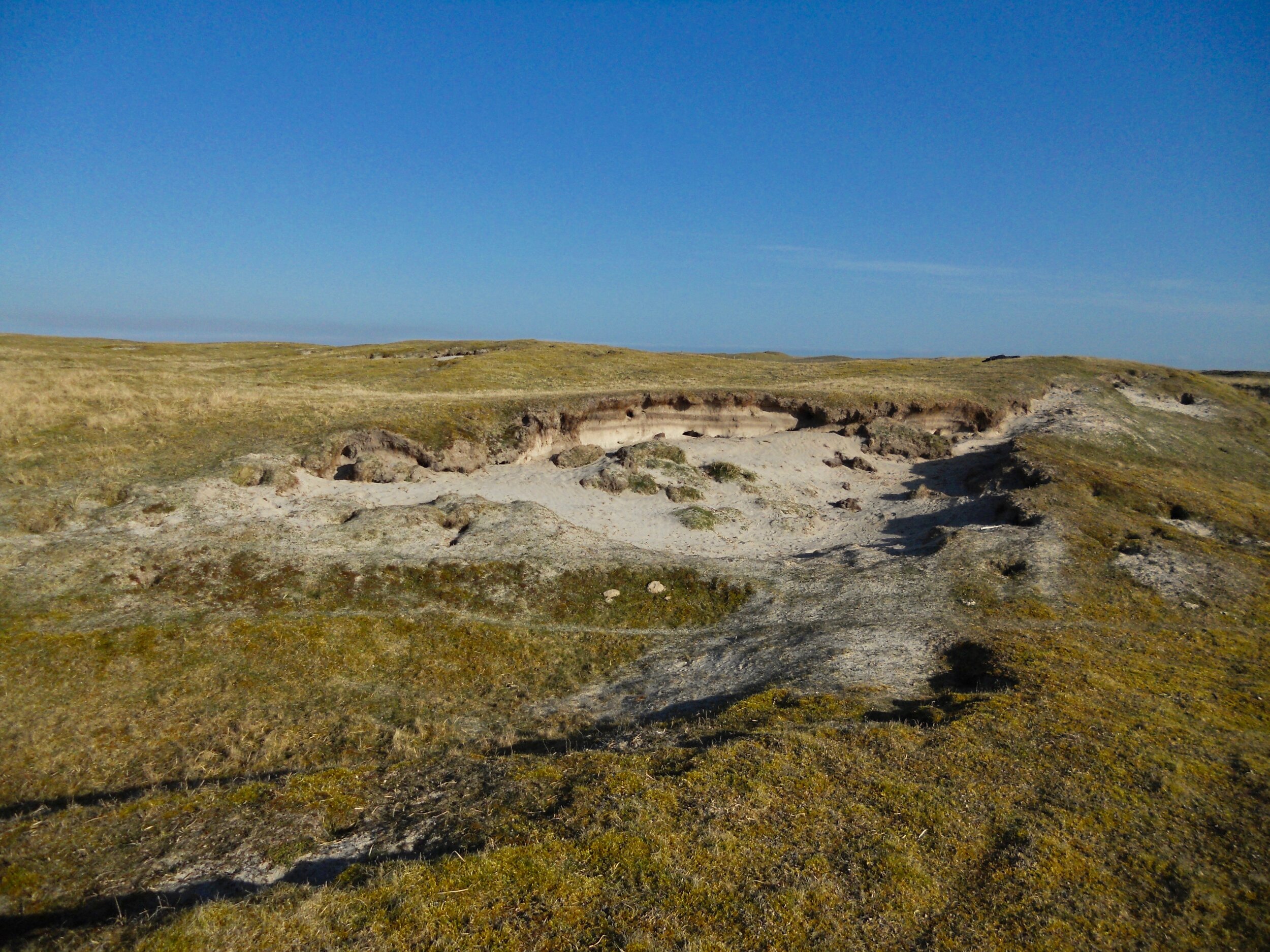
2. Beginning work on the 15th green at Diablo amidst the greenery and lingering drizzle of early Spring, knowing that the hot dry heat was only a few short weeks away. Mt. Diablo many mornings would remind me of the Scottish hillsides/mountains during summer.

3. Feeling like I’m back to working a European winter on the 8th hole with surprise rains in mid May. Yes I was enjoying working in the rain. Just work a couple summers in California sun and clay (dust), and you will understand where I am coming from.

4. The final float on the 16th green at Diablo. Time to call everyone over and share a Pliny!

5. The instant satisfaction of bunker edging at Cal Club and Orinda. The achy joints might get old, but seeing a refreshed edge never does.

THE GOLF

Lawsonia is bold and beautiful. It’s undoubtedly engineered but still naturally fits, which is something I am still wrapping my head around.

Lawsonia is bold and beautiful. It’s undoubtedly engineered but still naturally fits, which is something I am still wrapping my head around.

I don’t play much golf these days, but when I do, the quality—whether it be the course or the people I am with—certainly makes up for the lack of quantity. And really, I’d prefer it to be that way. I enjoy walking and learning from a great design as much as I do just playing, and the inspirational benefits from that are great, especially when seeing something new, as I did a few times this year.

This year’s big study trip took us to Wisconsin, where the focus would be to see the new Sand Valley courses as well as introduce myself to some different architectural styles that I have long wanted to see—the bold, engineered designs of William Langford and Seth Raynor. As I looked into flights to the Badger State, I found it just made more sense to fly SFO to O’Hare, and at that point it was too hard not to add visits to Chicago’s great courses in Chicago Golf Club and Shoreacres. I ended up having to cut the trip a day short and miss Shoreacres, unfortunately, but overall it was a successful and fun journey that opened my eyes further to the possibilities in golf course design.

Best New-to-me Golf Courses Seen in 2019

Sand Valley is the landscape and type of golf I always imagined for Northern Michigan, but Wisconsin beat us to it.

Sand Valley is the landscape and type of golf I always imagined for Northern Michigan, but Wisconsin beat us to it.

Let's start by noting that this list is just a casual indicator of how good I feel a course is.  It is a combination of how I think it holds up for a range of players as well as just how much I personally like it.  

The brackets [ ] indicate a "Doak Scale" rating.  It should be understood that I didn't spend the same amount of time on every place and that they were all first time visits.  These rankings and ratings are somewhat arbitrary and based on what I saw, understood, and felt about each course.  I also get admittedly swayed by firm conditions and links golf in particular; a true links course generally gets boosted by 1 or even 2 "Doak points" whenever I rate it.

Really, this should just be fun and give a general idea of what I like in a golf course.

1. Chicago Golf Club - Wheaton, IL; Seth Raynor redesign from Charles Blair MacDonald original  [9]  My first thought when glancing over the beautiful, simple, open, pastoral landscape of the Chicago Golf Club was “why don’t more golf courses look like this?” I mean, seriously. Half close your eyes, and it looks just like some of the nearby abandoned farm meadows with varied color and texture on the ground, a few groves of mature specimen trees, and golf holes that do not impose upon the gentle, broad tilts of the land. Almost any other course of the last 80 years would have lined every hole with trees and cut back the native grasses and flowers, and that would be a shame. But that is just the course’s landscape.

The golf is also excellent with a history even more impressive. Seth Raynor re-designed Charles Blair MacDonald’s original course with his blessing, routing the holes with more variety of directionality and tailoring his typical template holes and green complexes to the land. The tilts of the greens are impressive, especially the Redan 7th (really incredible to see in person), but the variety and micro contouring really stood out to me as well. A hole like the 9th is a simpler one with a square green, but two little ridges run parallel down the length of the green, creating a couple of separate troughs that demand extra accuracy on the approach if you are to make birdie or par. Other greens that stood out like this were 5 (Leven), 15 (Ginger Ale), and 16 (Raynor’s Prize).

I’ve long argued that one does not need a “spectacular” piece of ground to have great golf architecture. Respect the land for what it is and make shrewd, well-thought out design moves, and the golf as well as the experience can be great. Chicago Golf Club is an excellent example of this.

2. Lawsonia (Links) - Green Lake, WI; William Langford and Theodore Moreau [8] Everything said about Lawsonia is true, and it does have to be seen to be believed. The scale is truly incredible, and the greens are full of interesting internal contours that reward playing to the proper section of the green. I got very giddy when I noticed the lower back shelf on the 5th hole with steep dropoffs for the overly greedy play. I just about lost it when I saw the 6th green, which falls off to both the back and left, again with (literally) steep penalties for the over-aggressive. And then I saw the 7th green…

I now get why the 7th green is often photographed

I now get why the 7th green is often photographed

The back nine gets all the love and photographs, but this stretch on the front nine is as good as any on the course. Speaking of the back nine, it really is a special place to be and play, especially as the sun starts to lower in the west and the shadows of Langford’s bold shaping start to grow and darken. I can’t believe what these guys were able to build in the 1920s with those awkward steam shovels. Impressive.

3 (t). Sand Valley - Nekoosa, WI; Bill Coore and Ben Crenshaw  [8]  Growing up in Michigan, I was well aware of the sandy nature of “Up North,” that vacationland full of lakes and golf courses. As I grew older and my knowledge and exposure of good golf design expanded, I began to realize how drastically far from its potential the region is. Pine Valley type courses, at least in aesthetic style, could abound. Alas, it took Mike Keiser and a remote pine plantation to finally take advantage of this sandy type of landscape, though over in our neighbor state across Lake Michigan instead. And it really is stunning and beautiful as the spacious routing takes you on a peaceful journey across the land. The golf itself is really fun too, with all sorts of different ground game shots and approaches.

3 (t). Mammoth Dunes - Nekoosa, WI; David McLay Kidd  [8]  I will admit being somewhat skeptical of Mammoth Dunes prior to playing it, concerned that the massive width and greens may be a stretch too far and lead to an almost dull affair. Not so. For one, if you are erratic off the tee, as I was at the end of a long week, there is no guarantee you will find the short grass. Looking further though, I could often see that there were much smaller windows along or up against a sandy expanse or centerline bunker that you would want to try and hit if you were to have a markedly better angle of attack into the green. This effect is immediately felt on the second hole, which has a green guarded by a large short grass hill on the front left of the green that is certain to be Ejection City for anyone coming in from that side of the hole. Off the tee, you want to do one of two things to open up your angle: hit it deep and skirt the centerline bunker along its right side, or play way out right, which is a longer distance carry the more right you go. I found these conundrums present throughout the round.

On top of that, there were a number of very fun greens and approaches where the aiming line was well away from the hole. The routing was also brilliant in the way it took you to and around a large oak-laden ridge at the far end of the course, a natural feature not experienced on the other course. I also quite liked the emotional experience of walking the fairways on the holes nearest the clubhouse, particularly 17 and 18. I don’t know if I’ve ever felt so small on a golf course.

We probably shouldn’t be building every new golf course on such a large scale, but in the sake of macro-variety, it is good to have a few like this to experience and enjoy. I’m sure I will like the small-scale Doak counter to this just as much for that very reason.

5. Blue Mound - Wauwatosa, WI; Seth Raynor [7]  The only other Raynor I had seen to this point was Chicago Golf Club the day before, but still I felt like this was a good example of his work. The double-plateau 2nd is actually bolder than at Chicago, and the Redan and Punchbowls are both just as strong and bold. I also liked how the routing begins on the flatter section nearer the urban setting but slowly works its way into a beautiful natural section laden with hills, forest, and water. Bruce Hepner has done a great job with a long term restoration of the course, and new superintendent Alex Beson-Crone is working diligently already to increase the firmness of the conditions which will only make Raynor’s well-thought slopes matter that much more. Excited to see this course continue to progress into the future.

6. The Sand Box - Nekoosa, WI; Bill Coore and Ben Crenshaw with Jim Craig [7] This has to be one of the most fun settings in all of golf, especially toward the end of the day. Groups as big as 12 go around this wild 17 hole par 3 course, typically wielding an adult beverage of choice though sometimes not wielding shoes. You will hear music playing from portable speakers, plenty of laughs, and some mighty roars when someone drops a bomb for a birdie. This faster paced party atmosphere is the perfect complement to a round on one of the big courses, which is a slow and peaceful stroll across the land.

The golf itself is also really fun and quite varied too, with miniature-sized takes on such famous holes like the Road Hole, Lion’s Mouth, and Alps. Don’t miss the Sand Box.

7. Milwaukee Country Club - Milwaukee, WI; C.H. Alison  [7]  I often like to look at Google Earth before visiting a place to get a feel for what I might see. This can be misleading sometimes though, and that is certainly the case at Milwaukee, which is on a much grander scale than can be seen from 10,000 feet. Wide corridors, large flashed bunkers, and ample short grass just make the place feel big, especially for still being a tree-lined parkland course. The interaction with the Milwaukee River on the back nine is another highlight, as I can’t recall too many other golf holes that play over and along a river of such size and flow.

The pleasing grand scale and tight turf of Milwaukee CC

8. Eagle Springs - Eagle, WI; A.G. Spaulding [6]  Since Andy Johnson of The Fried Egg first started posting photos of this course, I really wanted to see it. Finally getting there in person did not disappoint, and the fun starts right away on the first hole, which has one of the coolest, boldest, and natural settings for a green that I have ever seen. It continues with what might be the most extreme volcano hole anywhere. I also liked the understated simplicity and gentle tilt away on greens like the 3rd and 5th as well as the mental respite from the holes that precede and follow them. The 4th, which sits hidden down to the left and has more extreme trouble further left, is another highlight. The remaining greens all have a very classic, old feel to them and present different challenges. I seriously loved this golf course and wish I had something like this near my house. It would certainly get me to play more.

9. Spring Valley (partial tour) - Salem, WI; William Langford and Theodore Moreau [5] I was losing daylight on a rainy evening, so I only got a look at a few holes. I was able to get the general idea though—lots of Langford and Moreau greens and landforms much in the same style of Lawsonia, though scaled down a bit. More discussed in the “Restoration Opportunities” section.

10. San Diego Country Club - Chula Vista, CA;  William Watson, with revisions by Billy Bell [5]  The land on this course is very “golf scale” with a series of smaller up and down hills and valleys. Whereas most of California courses are on big heaving slopes or flatlands, this “in between” land reminds me a lot of the glacial forms you’d see at courses where I grew in Michigan—places like Oakland Hills, Franklin Hills, and Orchard Lake. Throw in the Watson and Bell heritage, and there is a lot of potential here.

H.M. Goat Hill Park - Oceanside, CA: Ludwig Keehn; Downers Grove - Downers Grove, IL: Charles Blair MacDonald, with numerous revisions over the years

Best Greens: Design, Interest, and Sensibility

The clean horizon Double Plateau at Blue Mound gives a real sense of unease about the potential trouble behind.

The clean horizon Double Plateau at Blue Mound gives a real sense of unease about the potential trouble behind.

1.  Chicago Golf Club

2. The Sand Box

Aside: gallery of the fun variety of greens at the Sand Box. Also, no shoes required.

3. Lawsonia

4. Mammoth Dunes

5 (t). Sand Valley

5 (t). Blue Mound

H.M. Eagle Springs, Spring Valley

Above: The amazingly creative, diverse, and wildly fun greens at old Eagle Springs

Best Bunkering: Playing Importance, Aesthetics, and Context

Sand, bunker, and native texture blend beautifully at Sand Valley. That sandy native is particularly beautiful and diverse in color and texture, and it is remarkably playable as I never lost a ball. I’ve never seen it where all those ideals were ach…

Sand, bunker, and native texture blend beautifully at Sand Valley. That sandy native is particularly beautiful and diverse in color and texture, and it is remarkably playable as I never lost a ball. I’ve never seen it where all those ideals were achieved so well.

1.  Sand Valley Sand Valley is what I always thought golf in Northern Michigan ought to be. Wild, sandy, natural. I particularly liked the way sandy expanses and harder edged bunkers blend with the native plants and texture, which is also the best version of “native” that I have ever seen anywhere in the world. It’s colorful with varied texture and density, and I never lost a ball once in it, despite many attempts to do so.

2. Mammoth Dunes The aesthetics of the bunkers and sand areas on Mammoth don’t have quite the same natural appeal to me (less blending, more formally defined, a lot of repeated islands), but I thought they often impacted play in a brilliant way. Known for its extreme width, I often found myself wanting to cheat closely alongside the sand (down the right on number 2) or place a shot as close to a crossing hazard as possible (par 5s 7 and 11). There are advantages to be had out there, and I can see why David Kidd can get a bit testy when people bring up the course’s width for the thousandth time.

3. Chicago Golf Club Chicago’s trench bunkers are remarkably close to original. Their depth exacts a true penalty, especially at the greens, where they are extremely tight to the surface. A very light-handed restoration is forthcoming to reclaim some size and depth, and that along with some fairway re-widening should reclaim a lot of strategy in fairway bunkering. Those simple moves could possibly be enough to bump this set to the top of the list.

4. Lawsonia Obviously big and bold, but also often set at angles where an advantage can be gained by taking on the longer side. I found there is a beauty in their simplicity as well, and many follow the simple aesthetic principles of having a high side falling to a low side. Nevermind that you often can see little or no sand—the landforms give no doubt that you are looking at a bunker*.

*Except for the ones that have been converted to a grassy bottom over the years, presumably for pace of play. The land wall is often so big though that the playing effect is often the same whether there is sand in it or not.

5. The Sand Box Classic Coore & Crenshaw bunkering at a smaller scale, and they play well into the shot risks and strategy involved with the greens. Also fun to try and recover from with a putter. More on that later…

H.M. Blue Mound, Milwaukee, San Diego

Milwaukee has surprisingly large scale, which is well-exemplified by this large fairway bunker that perfectly guards the open angle into the green.


Best Routings

1. Sand Valley

2. Mammoth Dunes

3. Chicago

4. Milwaukee

5. Blue Mound

H.M. Lawsonia, Sand Box, Eagle Springs

Champions of Fast and Firm--Best Turf + Conditions

Indeed it is with conditions like these

1(t). Sand Valley  I had worked for Rob Duhm when he was an assistant at Kingsley Club and I a summer intern, so I knew that the fine fescue turf at Sand Valley was probably going to be pretty good. Even with lofty expectations, the playing conditions were better than I could have imagined. Despite some rain that morning and the course being more “lush” than normal heading into winter, a putter or a bump and run was always an available option. Also, when a ball would land on the green or approaches, the ground offered that most delightful of golfing sounds, the “thud.” Fine fescue is simply the best, especially when you have someone who knows how to manage it and resist the urge to add water and inputs.

1(t). Mammoth Dunes  See above

3. Chicago  Scott Bordner had the fairways very tight and firm, and this was despite a relative wet period. I can only imagine what it really gets like when drier. Also, it was great to see the greens literally maxed out to the very edge of their pads. The club is working on a plan to restore fairway widths, which will be very exciting to see as it adds variety and strategy to angles of approach.

4. Sand Box See above, but also special shoutout to their efforts to manage against ball mark damage on the small surfaces

5(t). Milwaukee  As mentioned, there is very tight bent grass everywhere, which not only makes the design play much more interestingly, it also makes for great presentation, especially around the beautiful old building architecture of the clubhouse.

5(t). Lawsonia The emphasis on the ground game is also present at Lawsonia, where Mike Lyons does a great job of keeping the ground fast and firm. They’ve also done a great job of bringing the greens out to the edge of their landforms, which allows for the widest variety of hole locations and some especially scary ones up next to large drop-offs. Special shout-out as well to the crew tasked with fly mowing the huge Langford banks using a rope system. That is not easy work and often thankless, but I’m here right now to say thanks to them and their efforts so that we can enjoy such bold architecture without it getting overly penal.

H.M.  Blue Mound As mentioned before, this already improved Raynor is about to get better with the efforts of new superintendent Alex Beson-Crone, who on the day I visited was busy getting hands-on helping the crew to pull plugs and spread sand on the approaches and surrounds. That is dedication and someone who is truly setting out to do what they say.

Best Playing/Walking Experiences

Quite the scene for a putter-only showdown

Quite the scene for a putter-only showdown

1. Putter-only match with Brian Schneider as the sun sets at the Sand Box

2. Lawsonia! Was lucky enough to play alone in a nice gap of play on a busy day. Allowed for time to look at angles and take photos as well as save some embarrassment from all the gawking and giddiness

3. Walking around Chicago Golf Club for the better part of a day. Preceding it was a wonderful history lesson from club historian John Moran.

4. A round with Joe Hancock, Sean Tully, and Kevin Hauschel at Pasatiempo. Not sure if the banter or architecture was better.

5. My rounds at Sand Valley and Mammoth Dunes that were with a good group of guys from Michigan, of all places

6. Running into Andy Johnson on a beautiful evening walk around Milwaukee CC, talking architecture and taking photos

7. First time playing a Raynor at Blue Mound

Just a couple of photo geeks (Patrick Koenig and Ben Peters) doing their thing

Just a couple of photo geeks (Patrick Koenig and Ben Peters) doing their thing

8. Solitary walk in a drizzle around the incredible Eagle Springs—solitary as in I didn’t see a single other person the entire 9 holes, which I found quite peaceful

9. Officially getting in on Patrick Koenig’s RGV tour at Orinda along with “The Golf Hawk” Ben Peters

10. The best superintendent post-meeting golf yet at Claremont. Josh Clevenger pulled out all the stops with beer on tap and post-round hors deuvres. Also, the golf at funky old Claremont is always good.

H.M. One of the best up-and-downs I’ve ever had, played around a bunker on the 15th at Sand Valley. Inspired by the Road Hole Bunker, I pulled out my putter as one of the caddies proclaimed “bold move, Cotton.” Luckily it worked out, but it was way too fun not to try.

Cool Curiosities, Awesome Oddities: The Most Enjoyable Unusual Features

1. The many old landforms from the original course scattered around Chicago Golf Club. These make me really curious to see what C.B. MacDonald’s original course of parallel out-and-back holes, which were inspired by the Old Course, looked like.

This old ruin is not only cool to incorporate, it also is perfectly located to give pause for those pondering a long running shot into the green.

2. Gigantic falloffs around the greens at Lawsonia. Unbelievably large. Somehow constructed in the 1920s.

3. Crossing the Milwaukee River at Milwaukee CC. The course gets awfully close to a fairly major river. Seems like that would be hard to pull off these days!

4. Basement Bunker at Mammoth Dunes I don’t know the backstory on this or how they found it, but it’s pretty cool and right in play.

5. Stables and barracks on the 3rd hole at Lawsonia Cool building architecture to complement the cool golf architecture

H.M. Decorous bathroom on 8th hole at Milwaukee CC

Best Restoration Opportunities

Because I can never just relax and play golf...

It’s all right there at Spring Valley

It’s all right there at Spring Valley

1. Spring Valley This one is too easy. All the Langford greens and landforms from the bunkers are still there. The greens just need expanding, the bunkers getting sand, and trees removed to restore playing corridors and vistas. Easy.

2. San Diego CC While the landforms are great, it’s obvious things have evolved over time with the greens and bunkers. Also, there are way too many trees throughout the course, most of them smaller and younger in age too.

3. Downers Grove Only number 3 because it is impossible to completely restore. You could certainly do some of it and then turn the rest into C.B. MacDonald’s original style, drawing inspiration from some of the old landforms still present at Chicago Golf. This would be serious fun to play around with.

THE EVERYTHING ELSE

Not surprisingly, this is especially light this year. Our main project was at home, and our only trips away were to the Golf Industry Show in San Diego and the study trip to Wisconsin/Chicago. There were some big personal highlights, though…

Favorite Cities

1. Madison, WI The state capital has a perfect mix of size, culture, and college energy. Also, it sits between two lakes, which offer beauty and year round recreation whether water or ice.

2. San Diego, CA Tons of bars and restaurants in close quarters, a great ballpark right downtown, awesome craft brews, and even some old brick architecture, rare in California.

3. Walnut Creek, CA Home!

Favorite food by Place

Above: Wisconsin.

Wisconsin - Fresh cheese curds from the state capital market. Broiled lake perch from Adam’s Rib in Green Lake.

San Diego - Fish tacos, obviously

Walnut Creek - Home cookin’!

Favorite Sights Seen

Not the result I was hoping for (or close to it), but still a great experience. Definitely recommend sitting upper deck midfield—view of the game is incredible

Not the result I was hoping for (or close to it), but still a great experience. Definitely recommend sitting upper deck midfield—view of the game is incredible

1. Camp Randall Stadium and the Badger tailgate scene. Madison, WI  Might be the best gameday experience in the Big Ten, and I say that after witnessing my team get crushed.

2. Ship Rock, near Sand Valley. Wisconsin.  A bizarre rock formation that literally sticks up out of nowhere. I had to double back in the car to check it out further.

3. Ehlenbach’s Cheese Chalet. DeForest, WI. A cheese lover’s dream store. Went with the beer cheese curds. Did not disappoint.

MUSIC

Anyone in this business who spends a lot of time in a machine out in the field knows how valuable a companion the art of music is.  It is easy as well to draw parallels between the two, a great golf course acting as a great album with the component pieces—the holes and songs—standing individually while contributing to the work as a whole.  

I still find myself listening to podcasts more these days, but there was some decent stuff put forth this year, including that by a few regular favorites and a return from an old one.

Best Albums

1. How to Leave Town - Car Seat Headrest I tend to gravitate to Will Toledo’s inner musings whenever I go back to the midwest, and especially so when I have longer drives through the countryside. I admittedly start with the second track on this album, but it is the best one and followed up by another very good one. Will packs in a lot of sounds and types of musical structure not just within his albums but also individual songs. You probably won’t “get it” on the first listen or two or if not in the right mindset, but after it starts to grow on you, it will continue to grow. This is probably my second favorite album of his now only after Teens of Denial.

2. In the Morse Code of Brake Lights - The New Pornographers The New Pornos keep with their brighter, more colorful, and more spacious sound that they began with on Brill Bruisers, though the songs on this album don’t “hook” you as strongly as the previous two albums. I still liked it a lot though, and fast paced dreamy sounding songs like “One Kind of Solomon” would perfectly complement the colorful sky during a sunset drive along the Wisconsin countryside.

3. New Songs for Old Problems (EP) - Middle Kids If this were a full length album, it could have competed for top billing. Middle Kids follow up well on their debut album Lost Friends, which was my personal album of the year one year ago.

4. Help Us Stranger - The Raconteurs So good to have The Raconteurs back, who originally debuted way back when I was a turf intern at Kingsley Club in the summer of 2006. The opening track kicks you right in the face and gets me personally a bit more excited with its references to both California and Detroit, the two places I’ve called home in life. The rest of it is solid rock and roll, which we just do not have enough of in this world anymore.

5. Gallipoli - Beirut Normally I reserve Beirut albums for stints in Europe, but this came out just after our trip to Spain last year. As fall/winter finally arrived in California in late November, I found myself getting back into this album as the scenery of the countryside reminded me of that Spain trip a year prior. I didn’t listen to this much while doing actual golf work, but its spacious, beautiful sound is worthy of a spot in the top 5.

6. The Lamb - Lala Lala I really like the edgy, dreamy, reverb-laden sound of this album and am looking forward to seeing what else she puts out in the future.

7. Twin Fantasy - Car Seat Headrest Yep, two Car Seat Headrest albums in one list. Will’s most recent album didn’t connect with me like How to Leave Town, but it is still really good.

8. Descended Like Vultures - Rogue Wave. No Rogue Wave album is as good as Asleep at Heaven’s Gate, but this preceding album has some of that sound and feel from it. I particularly like the opening two tracks.

9. Anodyne - Uncle Tupelo I always liked listening to this early version of alt-country toward the end of the day when the wind would calm down and the lighting turn golden, illuminating Mt. Diablo and its foothills.

10(t). Starlite Walker - Silver Jews Having been a fan of this band but not listening to them for a few years, I was inspired to download this album immediately after listening to the “Feed the Ball” podcast featuring Tom Dunne. I’m glad for that.

10(t). Let it Bleed - The Rolling Stones August is always “Rolling Stones Season” for me. Something about the heat and dust and late day glow that their rough, twangy sound seems to accompany really well. This year’s new addition was Let it Bleed, which perfectly fits the above description. The only reason it isn’t higher on the list is because of my long familiarity with 60% of the album’s songs.

H.M.  Pony - Orville Peck;  Future Me Hates Me - The Beths;  Days of the New - Days of the New;  Innerspeaker - Tame Impala;  Don’t You Think You’ve Had Enough? - Bleached

Best Songs

1. "Beast Monster Thing (Love isn’t Love Enough)" - Car Seat Headrest

2. “Needle” - Middle Kids

3. "Kimochi Warui (When? When? When? When? When? When? When?)" - Car Seat Headrest

4. "When I Die" - Beirut

5. "One Kind of Solomon" - The New Pornographers

6. "Siren 042" - Lala Lala & Why?

7. “You’ll Need a Backseat Driver” - The New Pornographers

8. "All I Know" - The Mailboxes

9. "War is Placebo" - Blitzen Trapper

10. “Bored and Razed” - The Raconteurs

11. "Love in Vain" - The Rolling Stones

12. "Turn to Hate" - Orville Peck

12. "Trains Across the Sea" - Silver Jews

13. “The Surprise Knock” - The New Pornographers

14. "Publish My Love" - Rogue Wave

15. “Bodys” - Car Seat Headrest

16. "The Sidewinder Sleeps at Night" - R.E.M.

17. "Slate" - Uncle Tupelo

18. "Hard to Kill" - Bleached

19. "Feed the Tree” - Belly

20. "Leather on the Seat" - The New Pornographers

H.M.  "America (Never Been)" - Car Seat Headrest, "Desire Be Desire Go” and “Lucidity” - Tame Impala,  “Destroyer” - Lala Lala, “Black Gold” - Soul Asylum, “Salt Eyes” and “Real Thing” - Middle Kids, “Bird on a Wire” - Rogue Wave, “My Boy (Twin Fantasy)” - Car Seat Headrest, “Somedays (I Don’t Feel Like Trying)” and “Thoughts and Prayers” - The Raconteurs

Non-Golf Experiences of the Year

No words needed

No words needed

If you can believe it, golf isn't the only important thing in life.  Visits to special places, once-in a lifetime events, and time spent with your best people is a huge part of the picture.  These moments contribute to personal happiness and indirectly serve as inspiration to what we do out on the golf course site.  

1.  The birth of my first-born daughter  The most obvious number one of all time. I knew parenting would be a lot of work, but I had no idea that the love and emotions that I would feel toward her would be so wonderfully intense.

2. Visiting my newborn nephew as well as participating in his baptism My younger brother beat me to the baby game with his fun little guy, who really isn’t so little and rather shaping up to eventually start at left tackle for the Wolverines. It’s been special so far to see him at a week old and get to be a part of his baptism in the church we grew up in and went to school at.

3. Seeing a game in Camp Randall for the first time  It was the perfect accompaniment to a golf study trip, until it wasn’t on the scoreboard. Still, experiencing Madison on game day was amazing. Between the farmers market on the State Capitol, seeing the parties on frat row (which is amazingly right next to the stadium), and the bar scene nearby, where the marching band came playing right through the bar crowd and gave me all the feels, it really is a great place to experience a game day, especially when visiting an old college buddy who has now made Madison his home. The stadium is also cool, and I elected to go for the high middle view in the upper deck since we don’t have that at Michigan Stadium. The view was indeed great and worth it, the gameplay by the Maize and Blue not so much.

4. Finally getting to the new Red Wings arena with my Dad In 2017, we closed down the Joe together in what is still probably the best sporting experience of my life. Thus, it was extra cool to experience the new arena for the first time together. I still miss the old and often intangible charms of the Joe, but for a modern arena the Illitches and Red Wings really did an incredible job, mixing technology, history, style, comfort, sight-lines, and home-ice advantage. The concourse is a big atrium connecting outer buildings and restaurants to the arena structure, which is draped in a giant LED screen called the “jewel-skin.” It also features the original lettering from the old Olympia Stadium marquee, which was extra cool for me to see as I have had a picture of Olympia in my room or office for many years, always wondering what the Old Barn must have been like. The seating, which is the most important thing to me, is steep and pushed in toward the action, leaving the upper sections with a “hovering” feel over the game below. It also doubles in function in making the atmosphere louder and more intimidating for opposing teams. I can’t wait to see what the playoffs will be like in this building, whenever that day comes. Come on Stevie Y, make us great again!

5. Summer weekend getaways to the NorCal coast with the wife The SoCal coast gets all the attention for its weather and beaches, but I might like the NorCal coast more for its beauty, peace, and low-key vibes. We spent time near Point Reyes, Bodega Bay, and much further up north of Fort Bragg on a ranch that has a piece of coast line better and more dramatic than that of Pebble Beach. I wasn’t there to think about golf, but I couldn’t help but start imagining holes over the massive cliffs and bright blue waters.

As much as I was trying to take a break from golf stuff, it was impossible not to imagine hitting shots over and along these cliffs north of Fort Bragg.

As much as I was trying to take a break from golf stuff, it was impossible not to imagine hitting shots over and along these cliffs north of Fort Bragg.

A word of thanks, and what’s up for 2020...

She’ll be wearing this one soon!

She’ll be wearing this one soon!

Thank you to everyone who helped make this year what it was.

To Todd Eckenrode and Origins Golf Design, Ryan Nicholson, Javier Campos, the staffs at Diablo and Cal Club, Joe Hancock, Matt Flint, Scott Clem, Trevor Hansen, and the hard-working crew at Landscapes Unlimited: it was a pleasure working with you all.

To all the superintendents, club pros, historians, and design fans who welcomed me to your courses: it was a real pleasure making your acquaintance, and experiencing your properties will shape my design sensibilities for years to come.

To my extended families, friends, wife, and now my baby daughter: thank you for all the support and understanding that make this unusual career possible.

To you, the reader: I appreciate your interest in us and passion for the game, as well as your patience to get through this entire post!

We are looking forward to this year, which is shaping up to be a busy and exciting one, including some small projects of our own. It should only be getting more fun from here.

Thanks for reading, and cheers,

Brett