
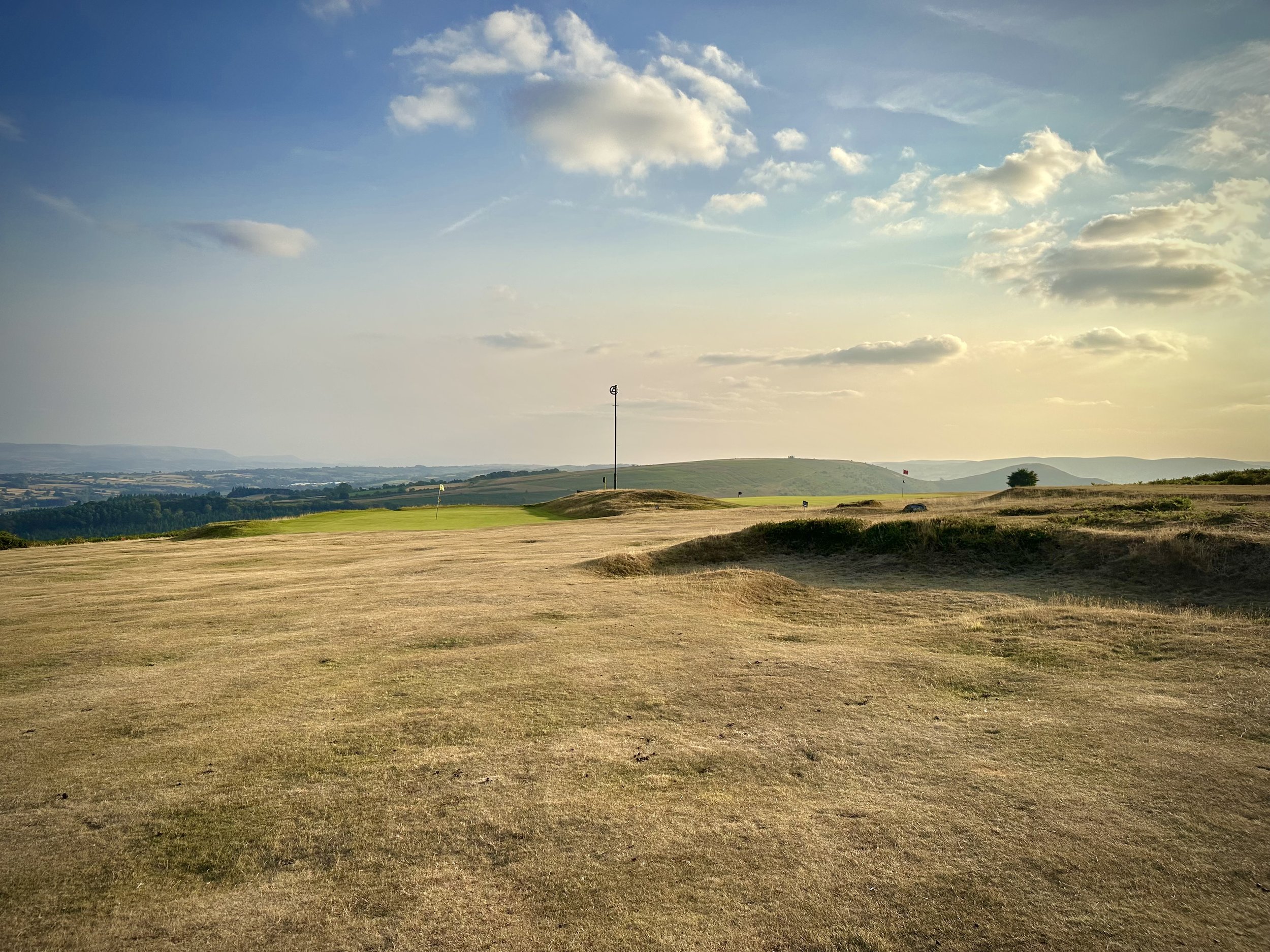
Crispy Kington, one of the many highlights of a year filled with inspiring golf course visits and plays
This year’s recap, minus the golf-courses-seen section, may read a little light this year. That’s not to say we weren’t busy. It’s more that we’ve shifted our focus to new opportunities strictly under the Hochstein Design umbrella (versus helping out one of the many other talented and great architects we’ve been fortunate to enough to work with over the years). As such, there is often not much to talk about with these types of projects because A) we aren’t officially signed up yet, B) there isn’t all that much to say yet, C) (for various reasons) it’s too soon to share specific design ideas, and D) nothing tangible has been built yet. That’s largely where we are.
What we can say, though, is that we’ve signed up two new clients—Santa Maria Country Club (concept development) and Northwood (consultation and course improvement projects)—and there are numerous others we are at various stages of “talking.” We’ve also continued to carry out our work with the Morton team in Sacramento, working on more detailed plans at Haggin Oaks (MacKenzie Course) and starting to chip away at the Land Park Master Plan with small projects and hopefully a little bit bigger one next year.
We also finished off assisting Clyde Johnson on his project at Hadley Wood in London (my lone bit of excavator work this year, amazingly), and we kept busy during a summer home stretch doing some plan drawings of a few pretty cool courses for a private client. Overall, it was an exciting and promising year for the future, but I’ll be excited to get in some more creative muck shifting time next year.
The following is a recap of our work throughout the year as well the sights, sounds, and people that made it special along the way. Hope you enjoy!
Design Highlights
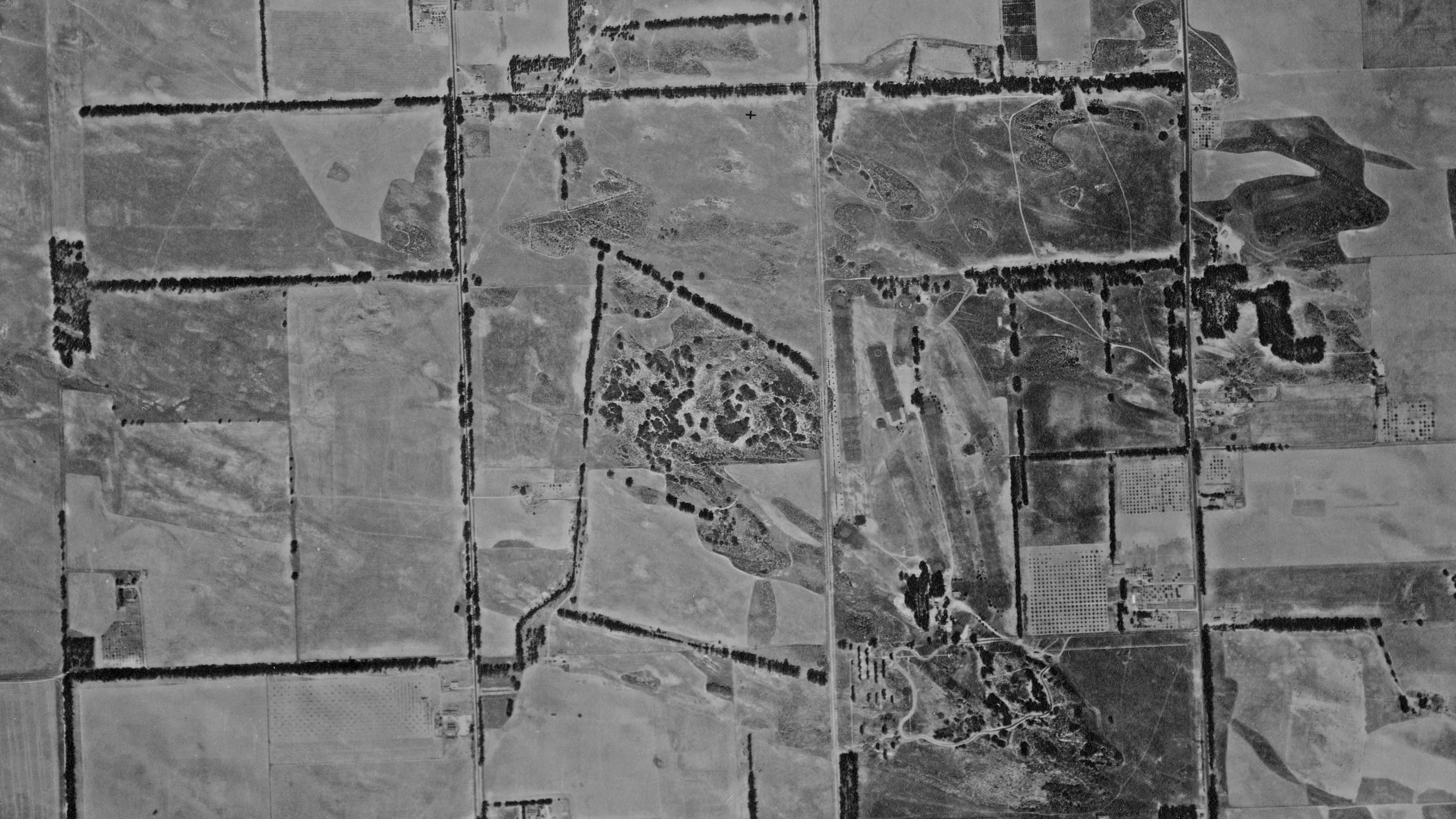
The 1930 aerial at Santa Maria shows an early rudimentary layout and lots of sand dune formations in the surrounding area and where the current holes 9-16 reside (just up and left from the holes shown here).
Santa Maria Country Club Early Concept Development
Late this summer, I signed on with Santa Maria to evaluate their golf course and look at the ways in which it can improve, from bare minimum moves all the way to having a maximal hand. The site is tricky with a small, divided, and unusual footprint, and there are lots of the other usual challenges that come along with a 100 year old facility. There is a great opportunity however with the sandy soil sitting beneath it, sand blown in from the nearby Pismo and Nipomo Dunes systems. We shall see what exactly we may be able to do with that, but it’s a great starting point from which to work.
Northwood Consultation and Tee Expansion Project
Around the same time, we also signed on as consultants at Northwood. With the course’s recent success from a blow-up in exposure, it has also taken a bit of a beating from all the additional traffic. Teeing grounds in particular cannot keep up in recovery with the rate of wear, recovery that is especially slow due to the ever-present shade cast by those famous redwoods. As such, we’ve been primarily tasked to address that as best as possible and look at other infrastructure improvements. Of course, especially when out there, you can’t help but look at the numerous MacKenzie relics and wonder about those too…
Land Park Hole 6 Tee Redesign
Because of severe crowning to the existing tee (which was bad enough to close and use a temporary instead), the team at Morton decided it to be worth doing this year. Ideally, you would redo a tee after the rest of the features of the hole had been rebuilt in order to set the proper angle. Despite a future angle shift and widening of the hole to a reverse-version of Riviera’s 10th, we were confident enough that the shape would be big and simple enough that we wouldn’t have to worry about that. This was a rare project where I didn’t do the shaping myself, instead relying on Lloyd Zastre to provide that support while I provided guidance and set the angles and periphery. The results have been a success so far, and the tee should be large enough to handle an increase in future divots, as golfers may no longer just want to blindly rip away at tee shots with the new hole.
Haggin Oaks (MacKenzie) Master Plan Development
We’ve presented an initial concept for a master plan and are still deciding as a group what the next courses of action may be. There is no doubt about the potential for this special piece of Alister MacKenzie golf history at what is already a highly valued Sacramento golf property.
Bonus/Not Really Design:
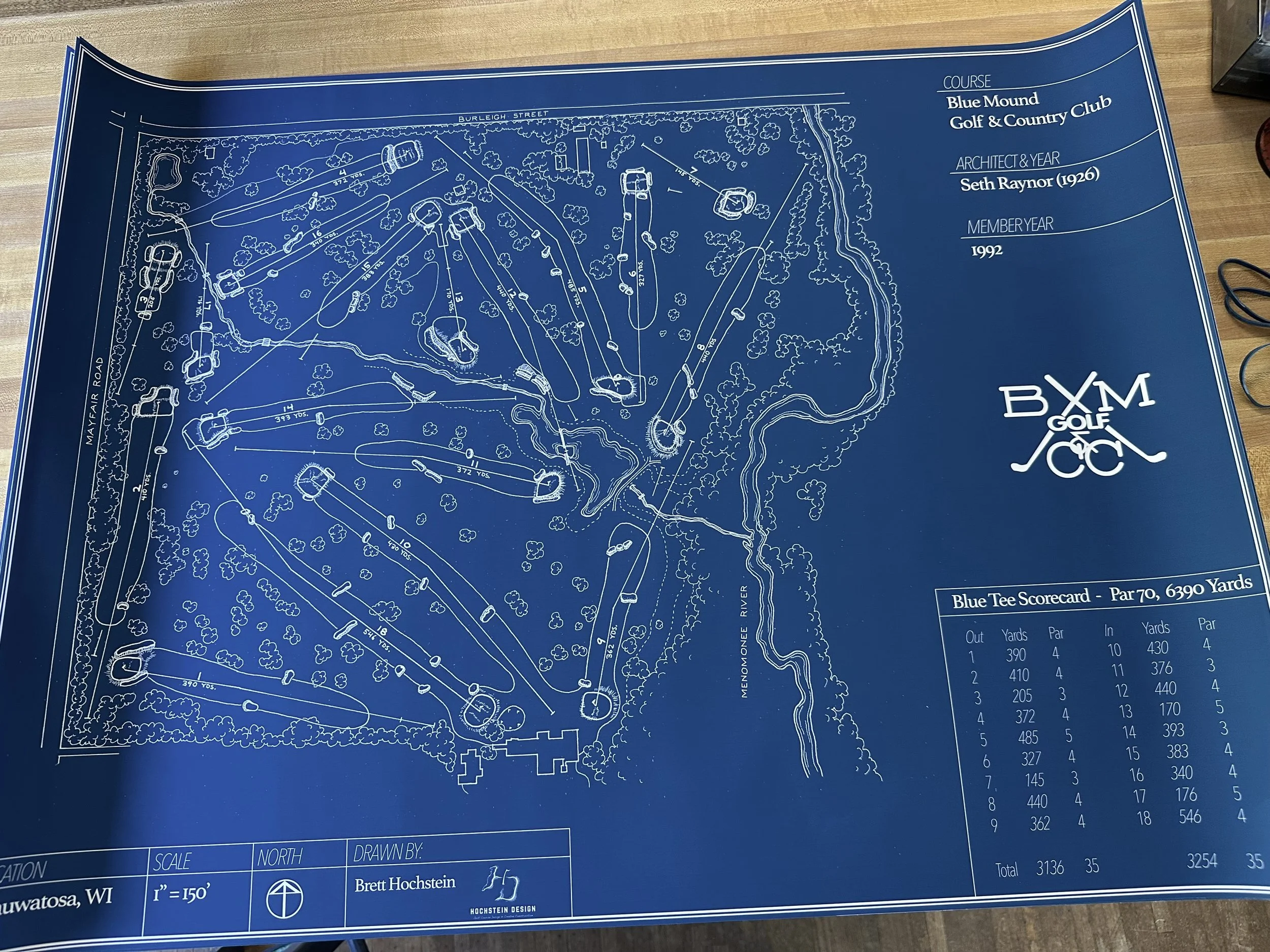
The Blue Mound blueprint hot off the press. The style is simplistic and based off various Raynor drawing styles, especially one version of his for Blue Mound itself.
Plan Drawings for Individual Client
I received an interesting call this spring from someone who was a member at a number of clubs and wanted to have some drawings done of those courses. They were a pretty cool set of courses (Blue Mound, Lawsonia, Sand Valley, and Concession), and I had a little “slower” spot in the schedule forthcoming, so I decided to help him out. Also, it would be great to keep my drawing skills sharp as well as try my hand at some different styles, since we decided to give each drawing/course its own character. He also liked the idea of making them blueprint style, so they had to be drawn and edited with that type of color inversion in mind. It was a very fun exercise, and it brought back a lot of good memories visiting those great Wisconsin courses six years ago.
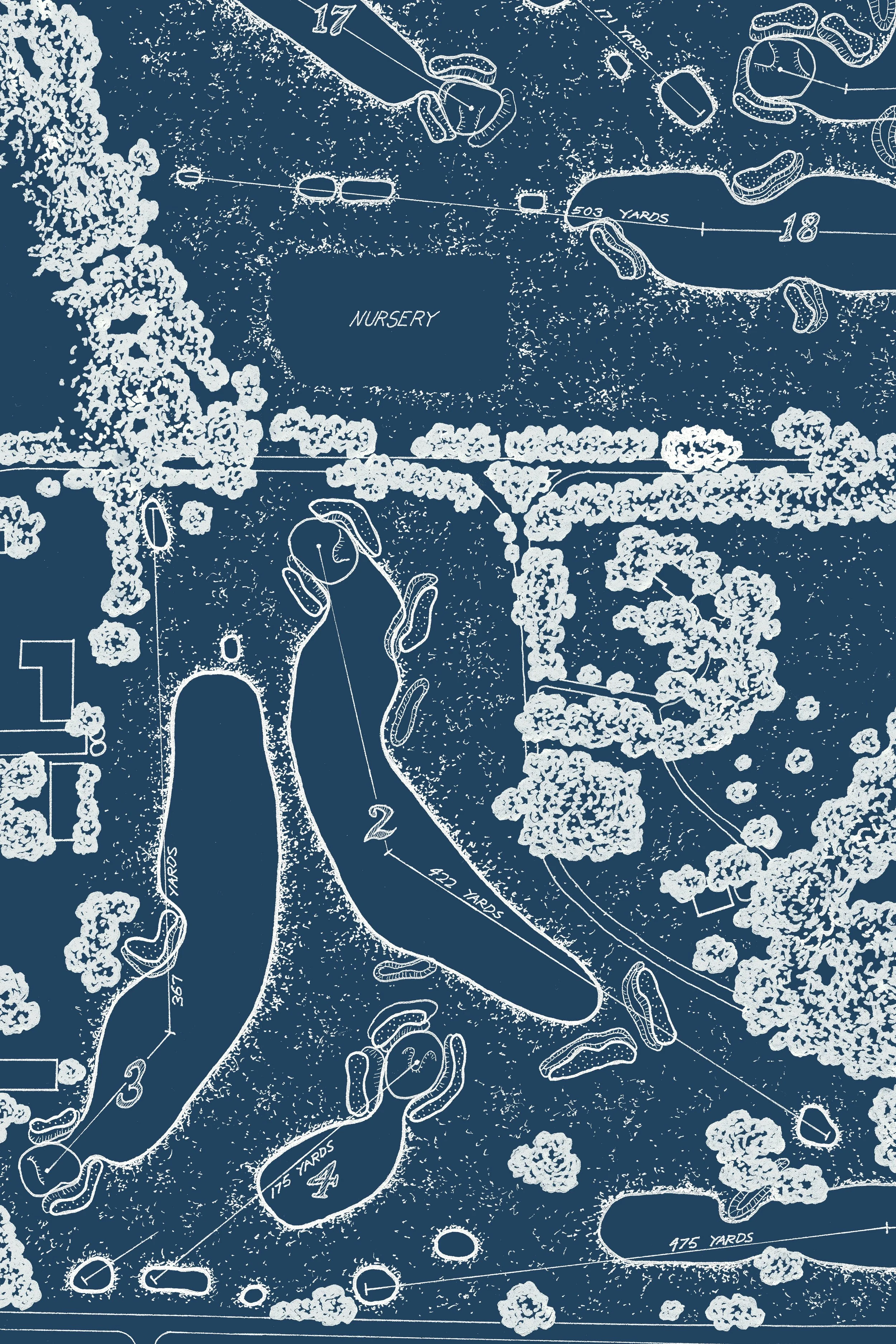
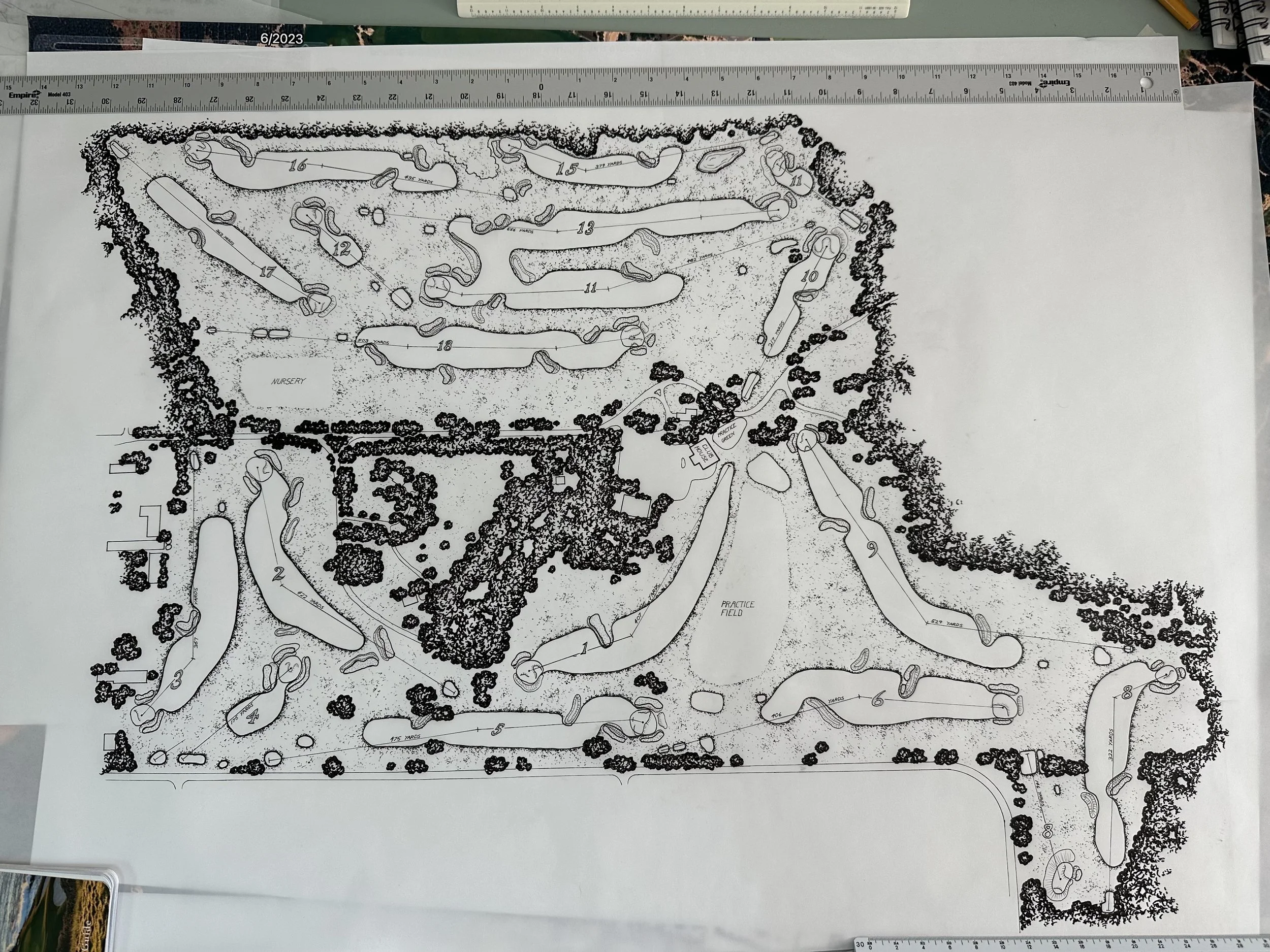
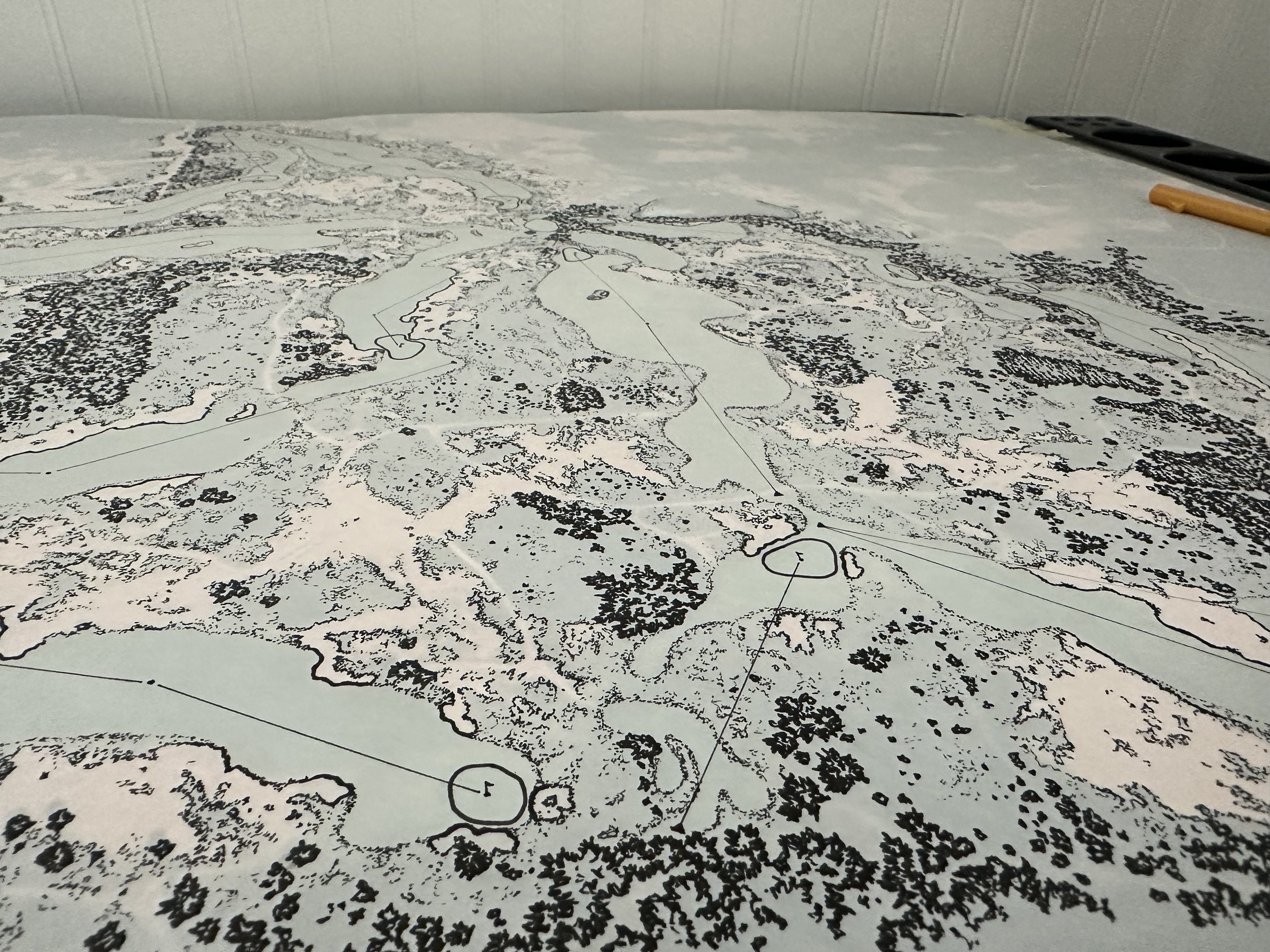

Above: Lawsonia (top 2) and Sand Valley (bottom 2) in both blueprint detail and the raw pen form on the table
Shaping Highlights
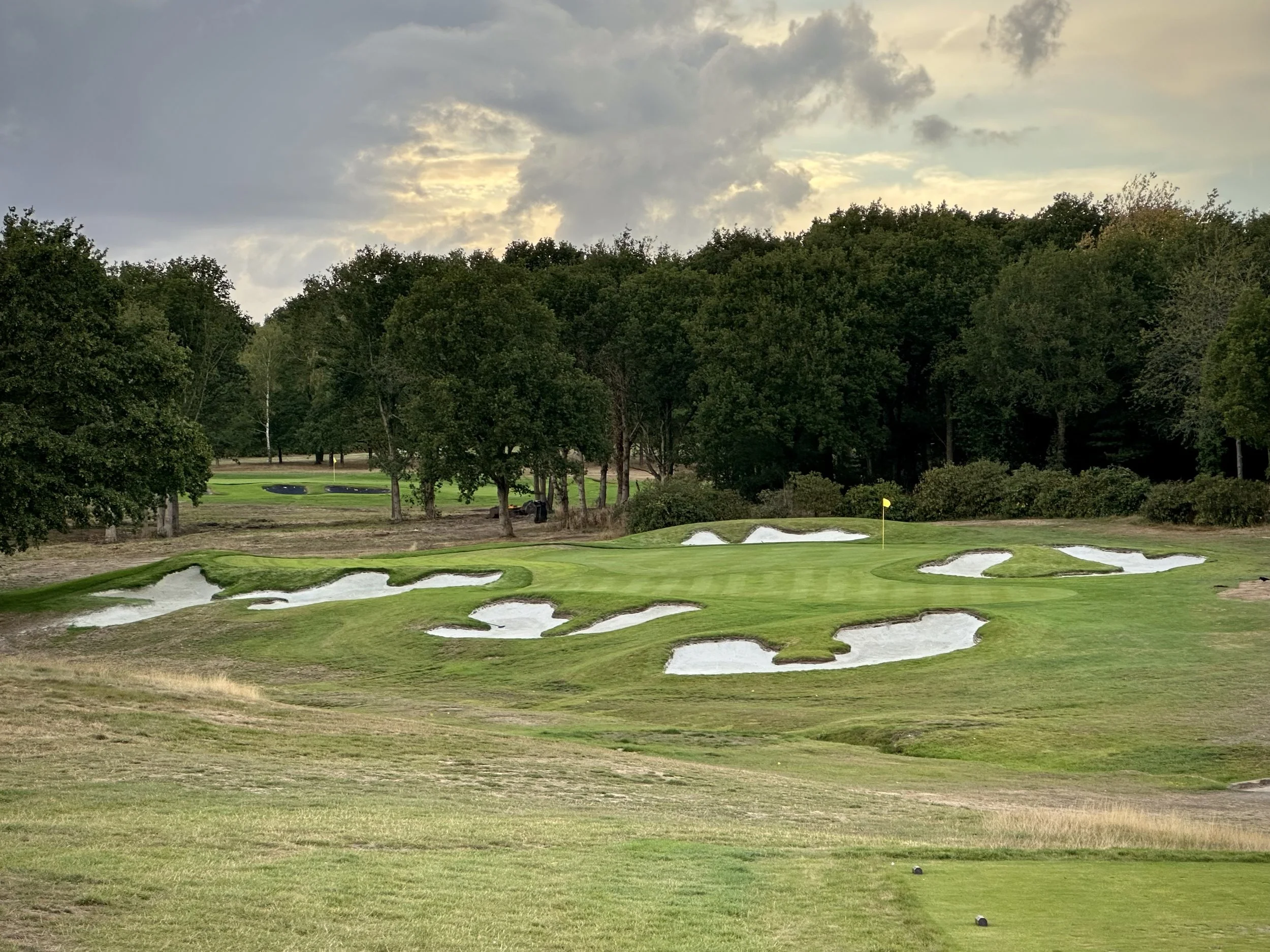
The penultimate hole at Hadley Wood, (mostly) restored to MacKenzie’s greatness.
Outside of working the Northwood tees in a skid steer, there was only one significant bit of shaping, that a continuation of the Hadley Wood project with Clyde Johnson. While it was nice to be tasked with some different stuff this year—planning for exciting new projects under the HD umbrella—it was also really good to get back in the machine at Hadley, and at the end of each stint, I felt myself longing for a few more holes to do. There should be some more feeding that of that creative itch in the coming years.
Hadley Wood Barnet, Hertfordshire, England—Clyde Johnson renovation
With the front nine completed after last year’s 6-hole project, the club was keen to knock out the entire back nine while still keeping the same 6-7 week summer closure window. With that, we ended up splitting the work, braving the wet English winter weather and infamous London Clay to push forward with 3 holes of work in January and February.
It was indeed wet. And muddy. And very difficult to get around. Yet we persisted and were able to get the shaping done on those 3 holes as well as most of the secondary steps, which, with the Blinder liner system, includes editing of a stone base layer, painting “code” for the number of sod revets to rebuild the edge, and editing the re-applied topsoil to the area. Because the weather got so bad at the end, we weren’t able to fully oversee the final topsoiling. But with pictures, notes, and the help of hands-on head greenkeeper Peter Thompson, Andy Appleby and his Finish Golf crew were able to do fine work in our absence.
This was particularly notable on the 17th hole, which was the only hole I did any shaping on this phase (Clyde handled holes 10 and 18 as well as tag-teaming what I’m about to discuss at 17). The 17th was a really fun one and one of the few where we could do some true restoration, thanks to some great ground photos from the earliest days of the course. Four bunkers of the five-bunker array were fully restored, and a 5th was brought back to scale in a compromise. The reason for this was the location of the original, which was down the slope closer to Green Brook and completely detached from the current green. It was agreed by everyone the reason for that was that the green was all the way down to the edge of the ridge drop-off there, just above that original bunker. It would’ve been cool to put that all the way back, but it also would’ve been impossible at modern green speeds, given the dramatic amount of elevation change. There was, however, still a desire for more green surface and pinnable area, a theme at a number of holes on the course and this one particularly also. Clyde thus came up with a solution to bring a part of the green back out to the Brook, but at a higher elevation that balls could still be rolled down towards the edge but not rocket off the green. The bunker could then be built into that new green area while also chasing halfway down the slope to the Brook, regaining its once grand scale while remaining high enough out of the flood zone. The end result, especially when coupled with some great tree work to the rear, is one of the more dramatic transformations of the project and a hole that feels distinctly ‘MacKenzie.’
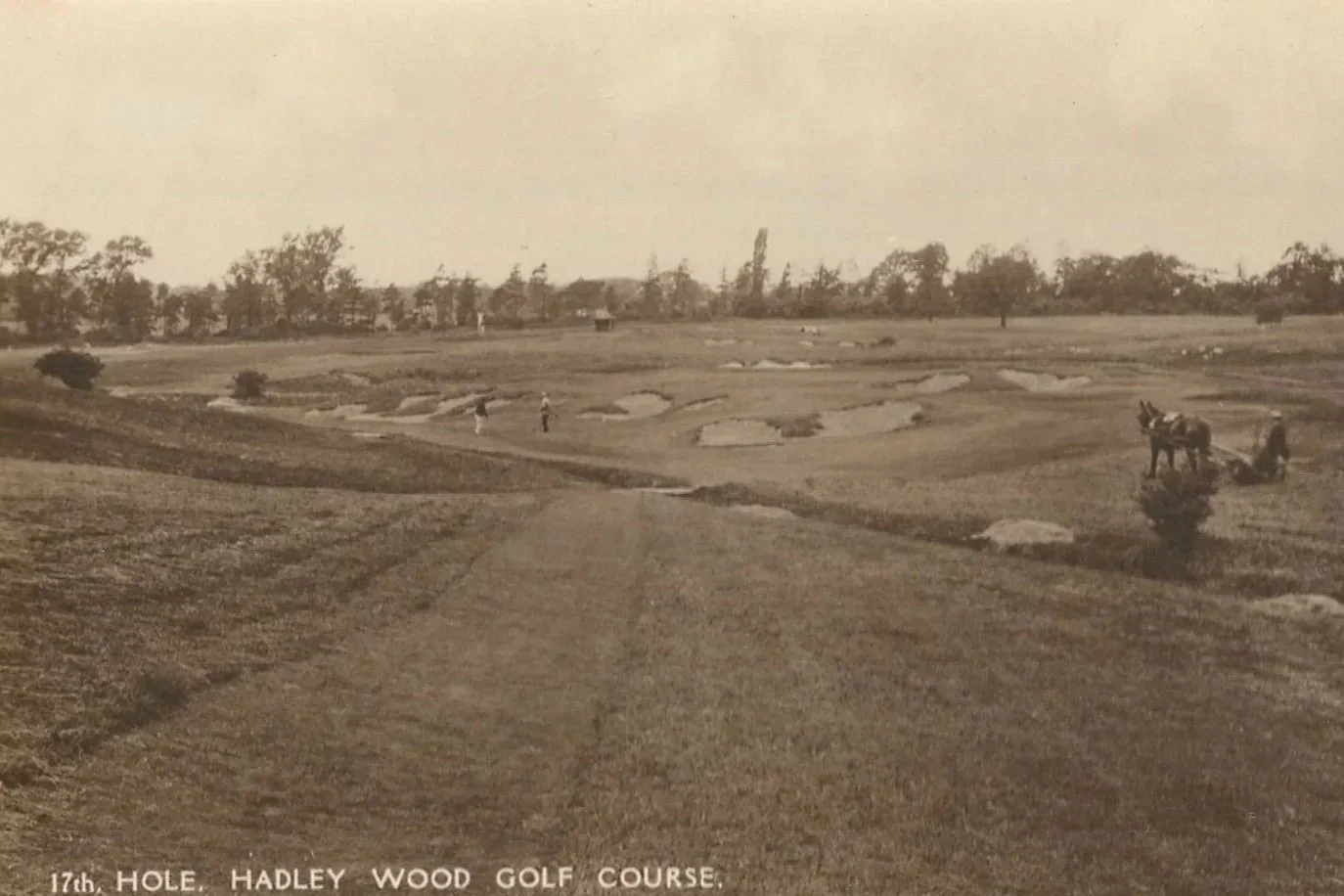
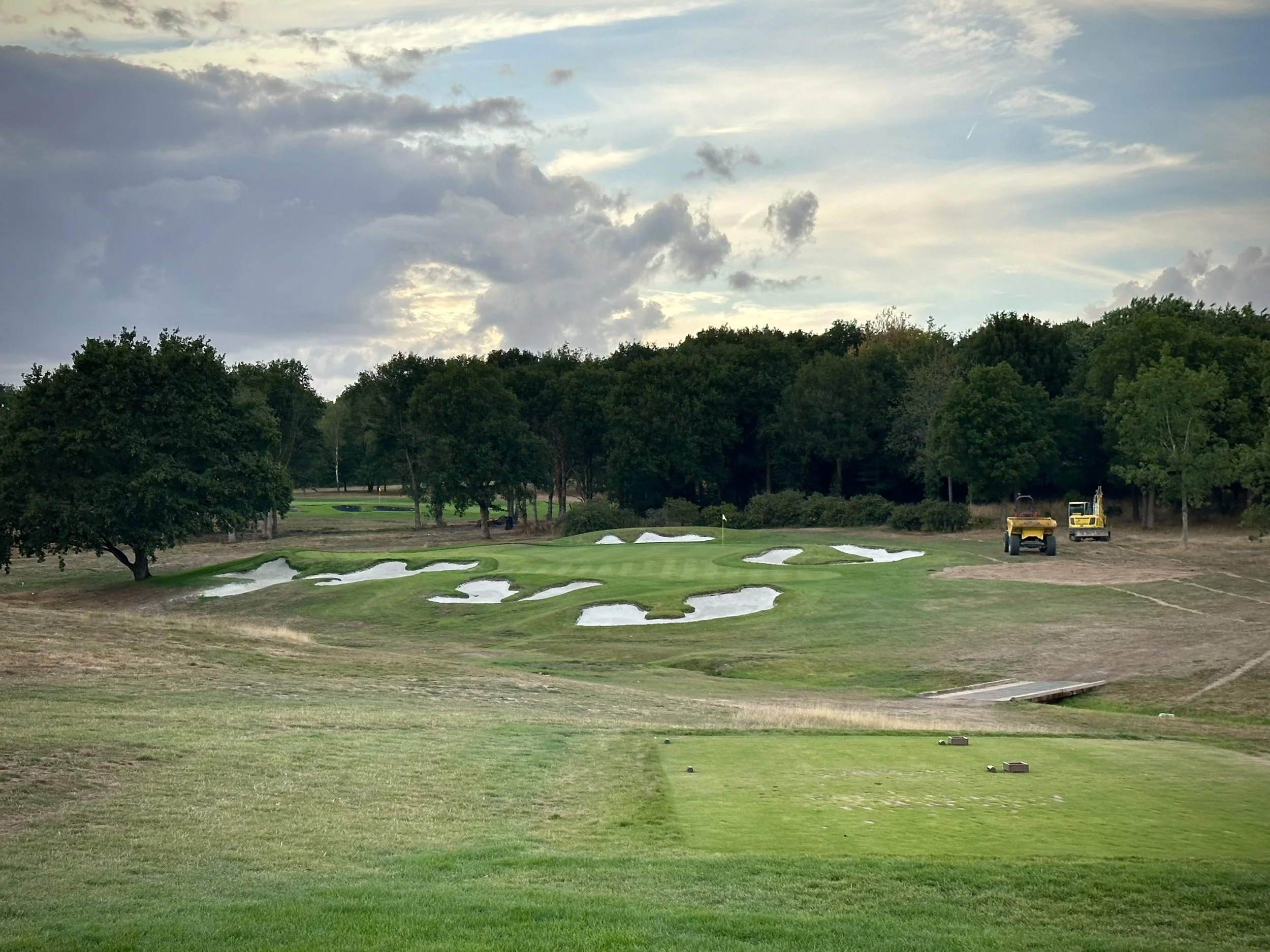
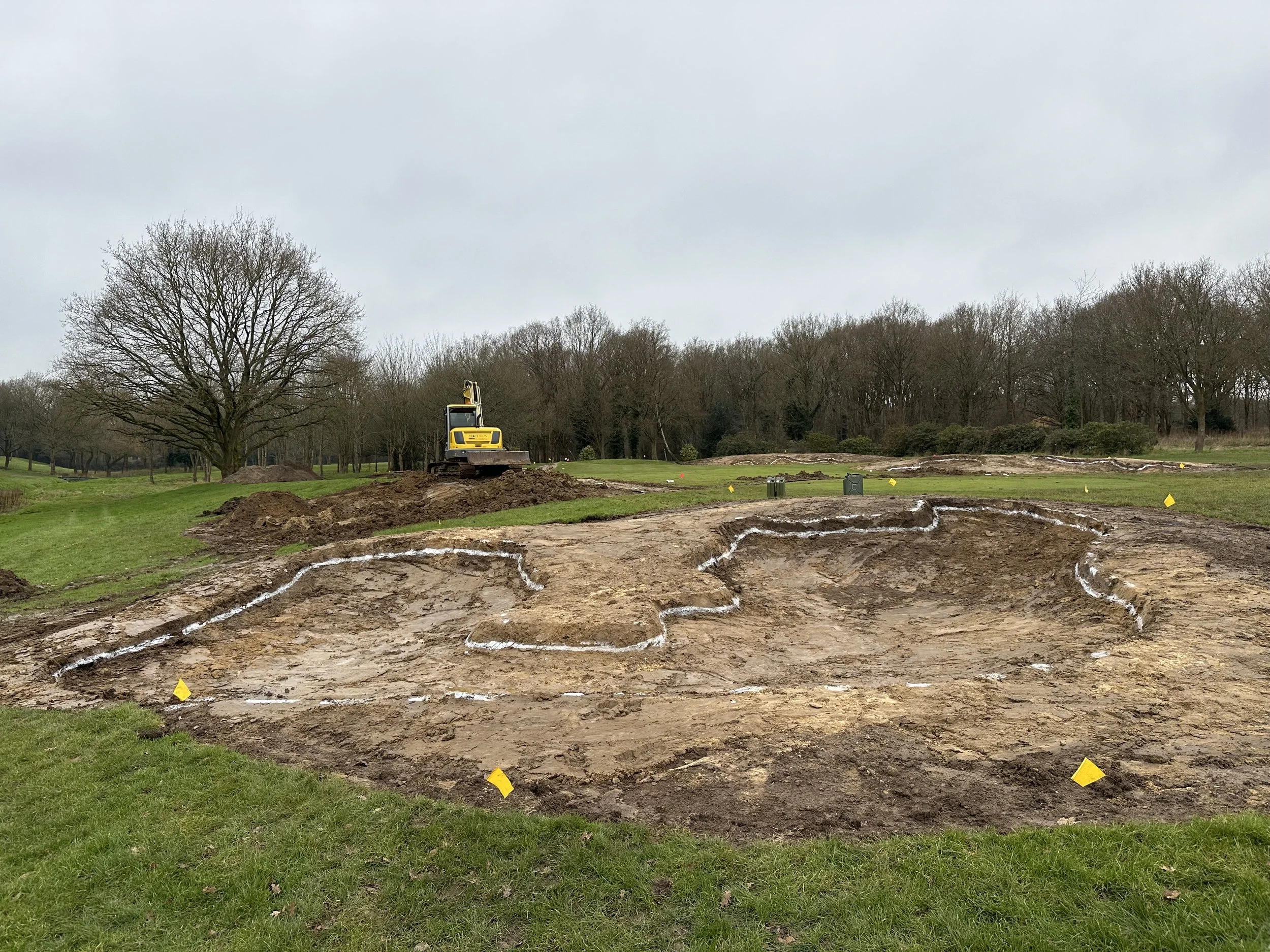
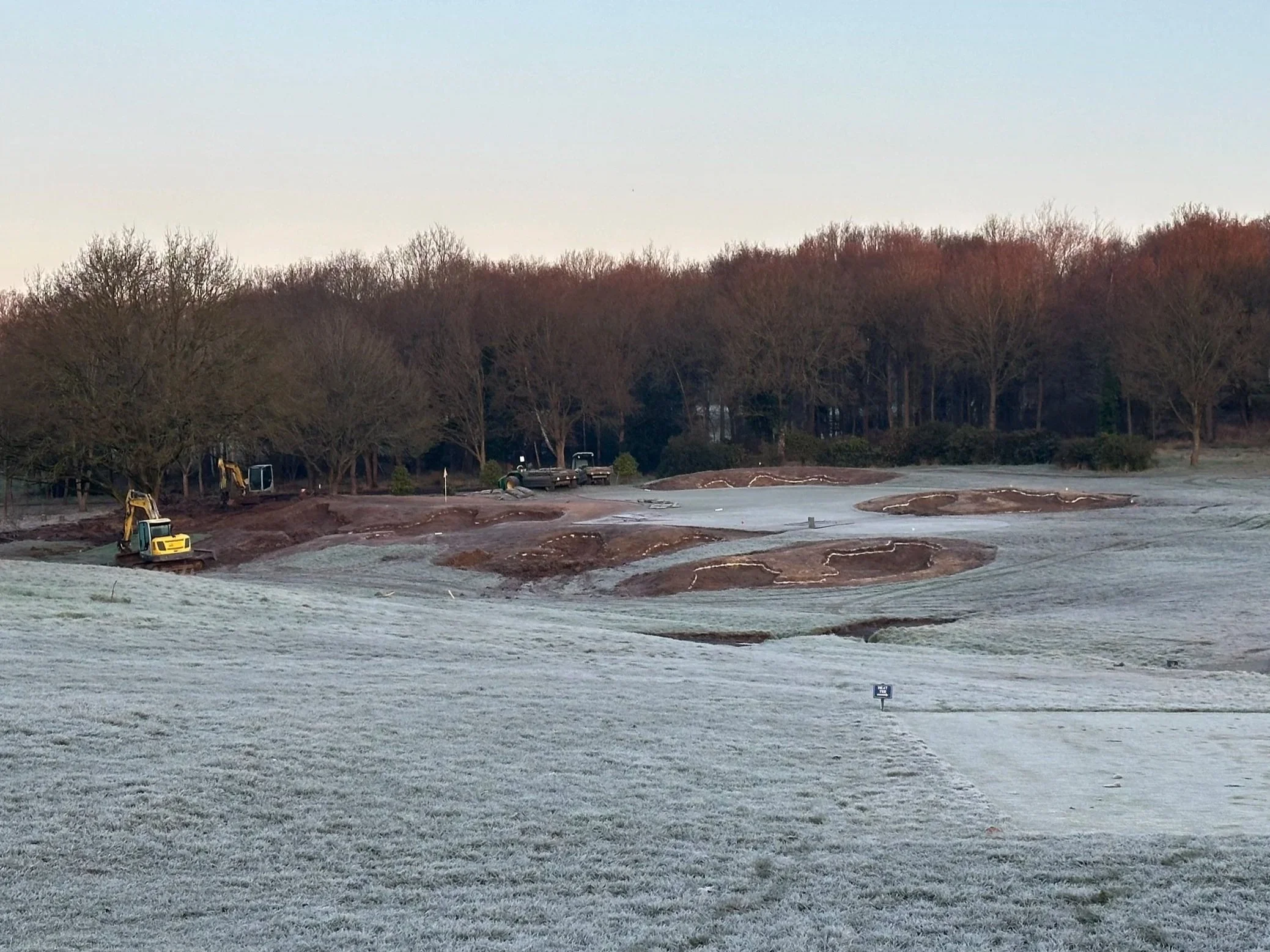
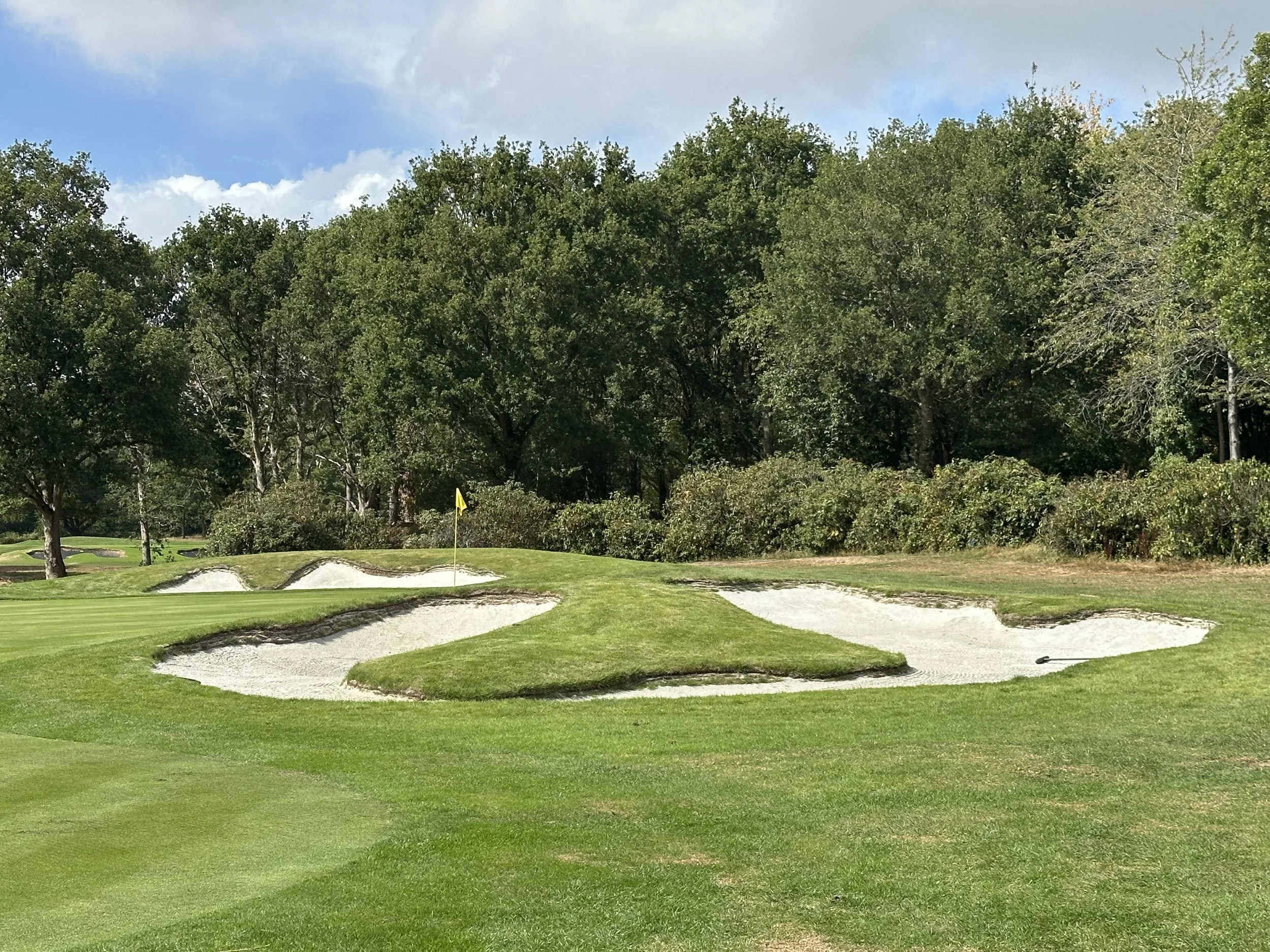
Above: a comparison of the original 17th with the newly restored version, working in the mud, and some close up details highlighting the edge-variation and MacKenzie’s unusual flair
In the summer, the work was able to flow fast and efficiently, especially continuing to split duties with Clyde. I worked on holes 11, 13, and 15, while he knocked out 12, 14, 16, and the green expansion on 13. 11 and 12 also received green expansions, the latter a clever one just sitting on the ground waiting to happen.
On 11, a big serpentine fairway bunker that once sat in the foreground (the base landforms for which still sit out there but filled in and softened) got moved up into the spot of a smaller abandoned bunker. I used the aerial for that to fit it in as best as possible, occasionally referencing that other relic landform for a sense of scale and angle. At the green, we shifted the balance of an equal ‘bunker left-bunker right’ scheme more to the left, making the left greenside bunker larger and adding a smaller foreground bunker following the same angle to visually cross over the green more, especially when seen from the left side of the fairway. The right bunker was then shrunken and shortened to allow more weak shots to be pushed right and wind up short of it (something that will happen more now with the short left bunker), leaving the need to pitch over the sand, especially at a sneaky new tucked pin back right.
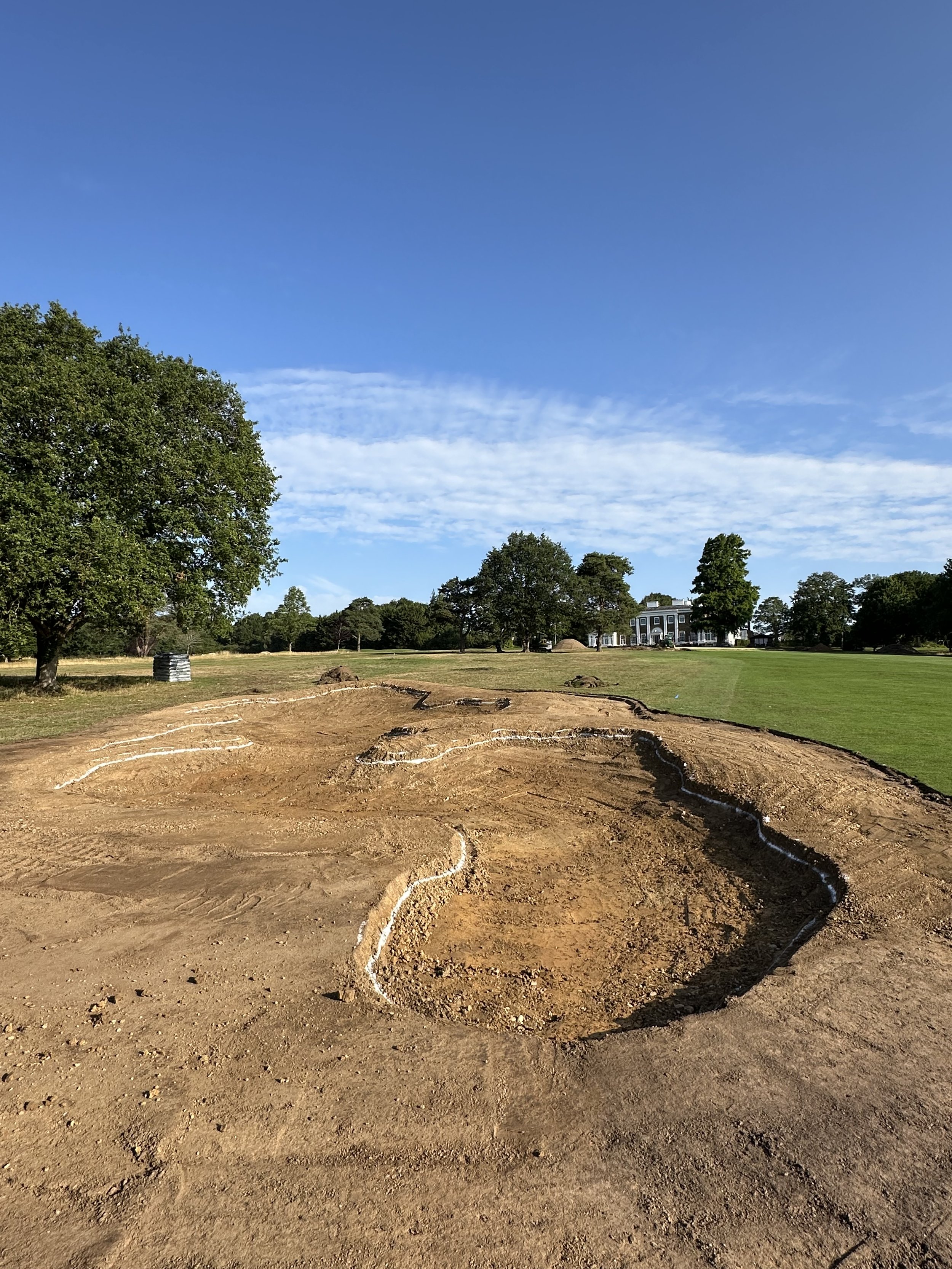
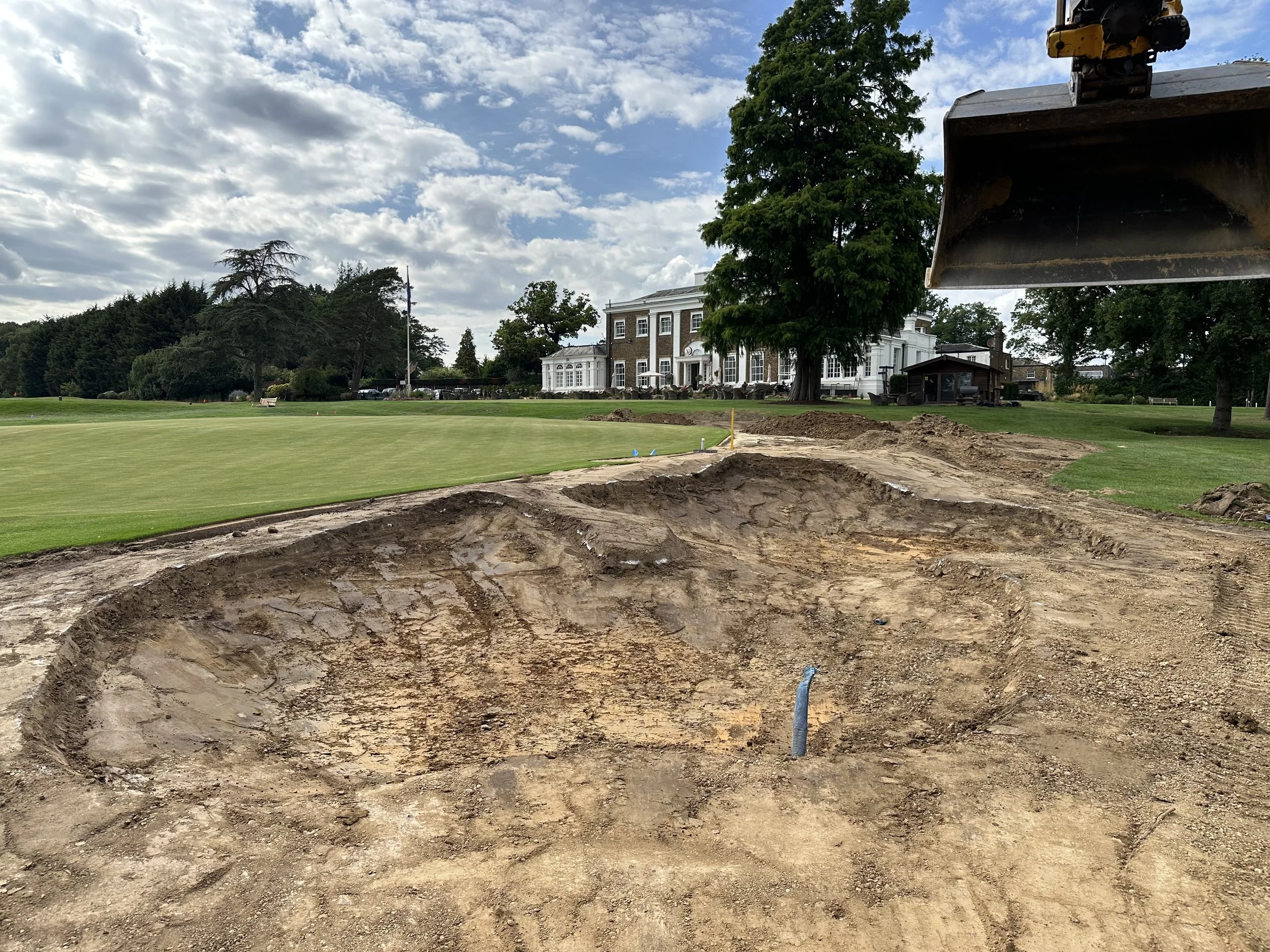
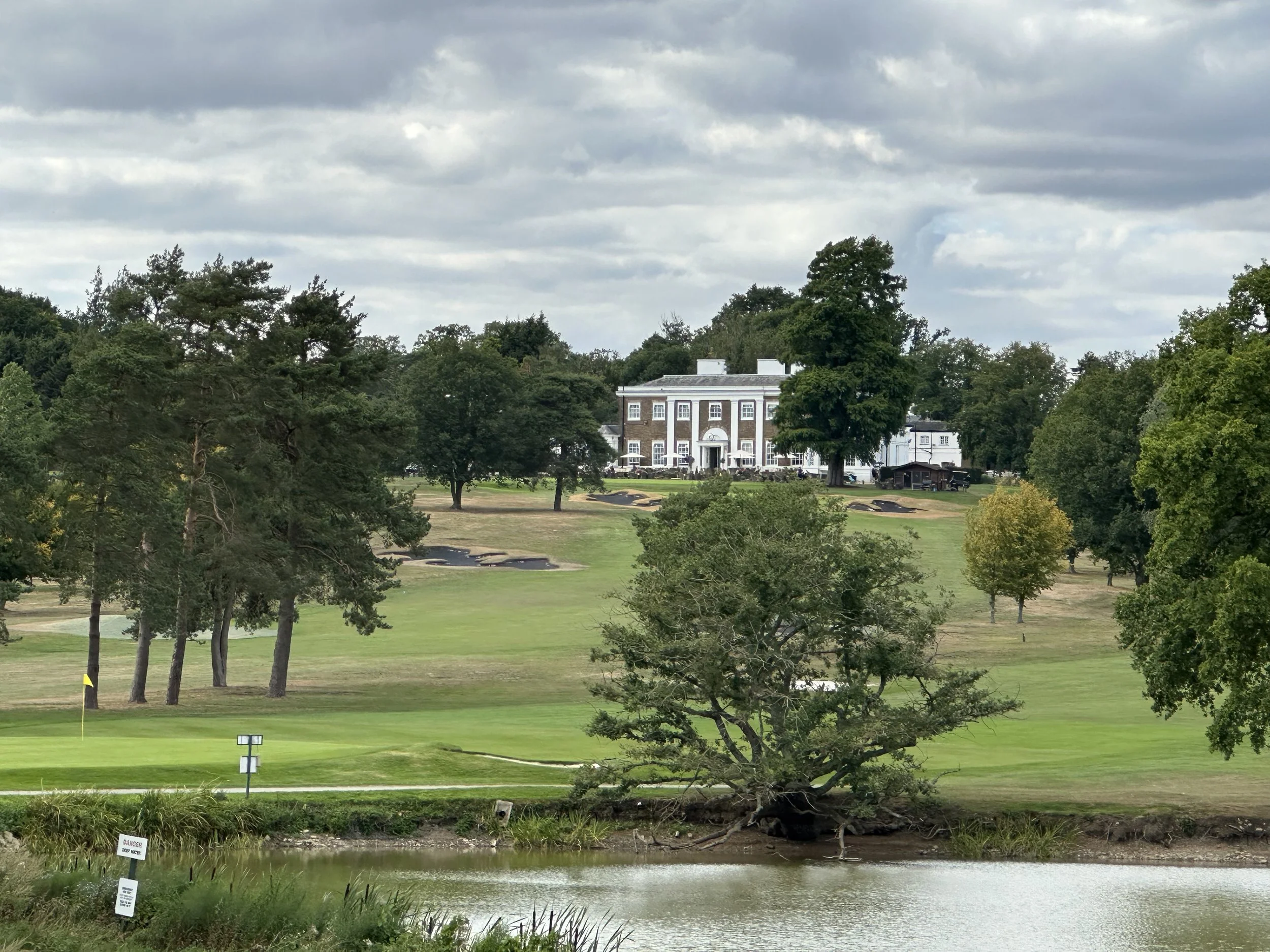
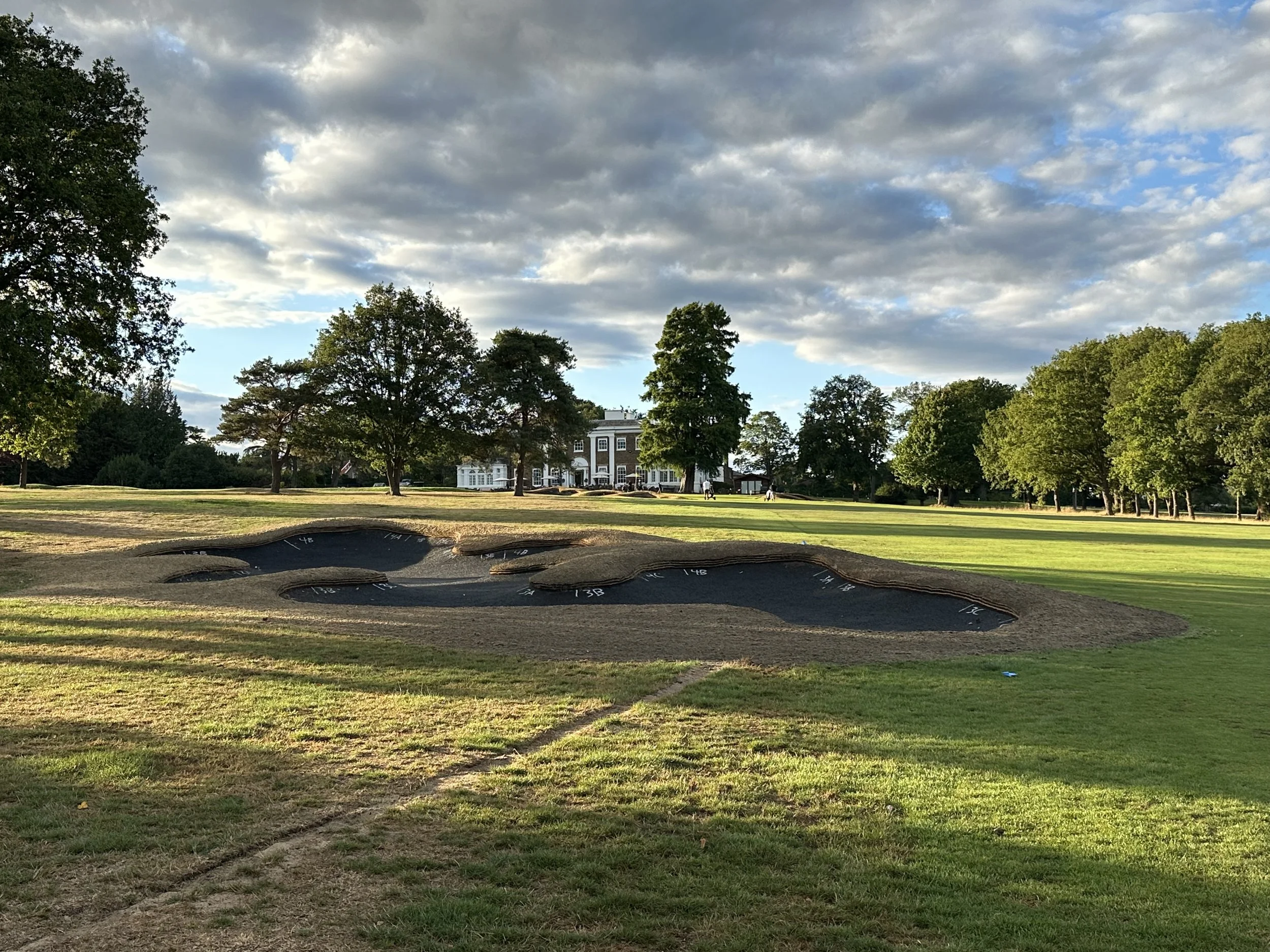
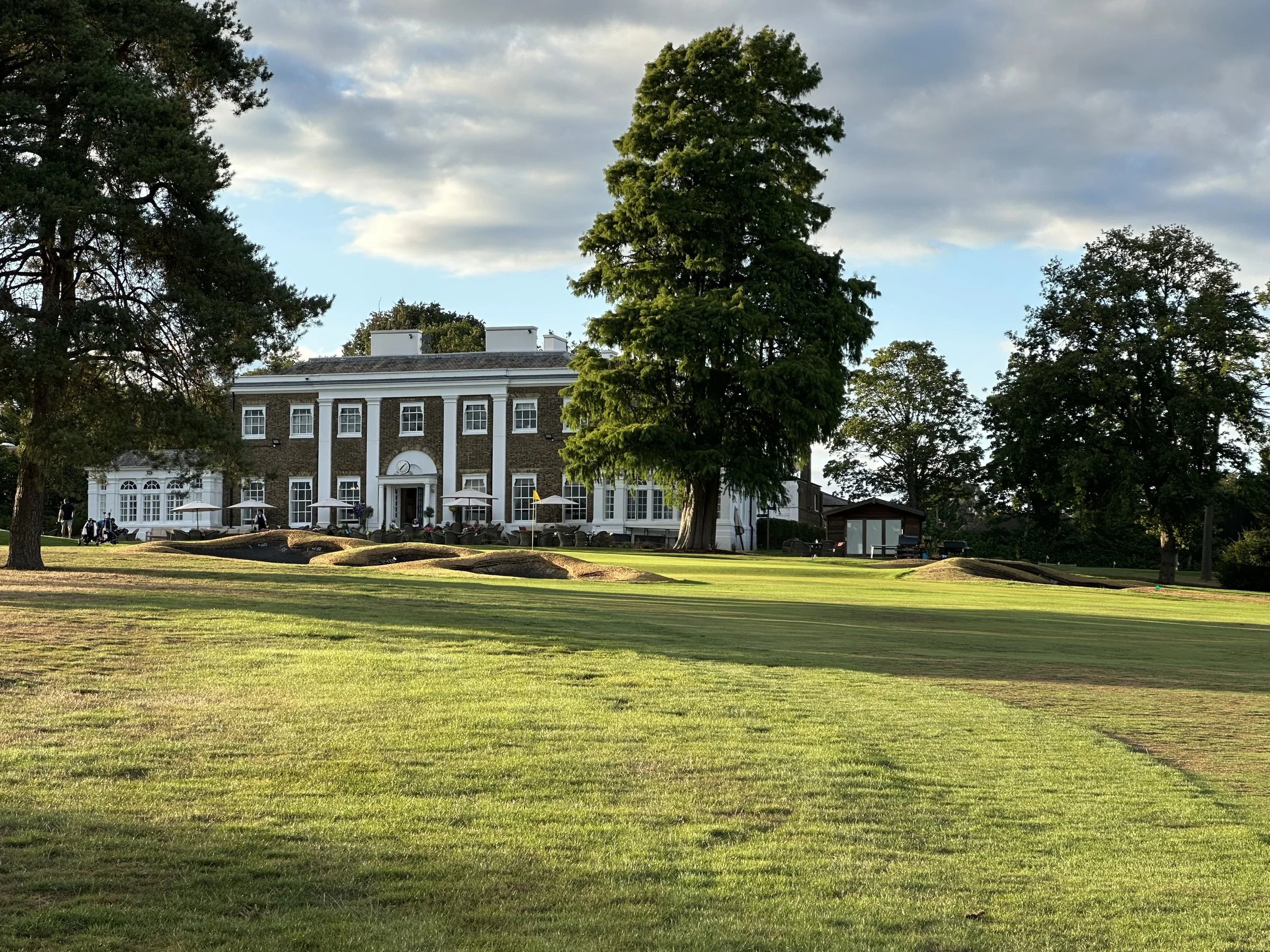
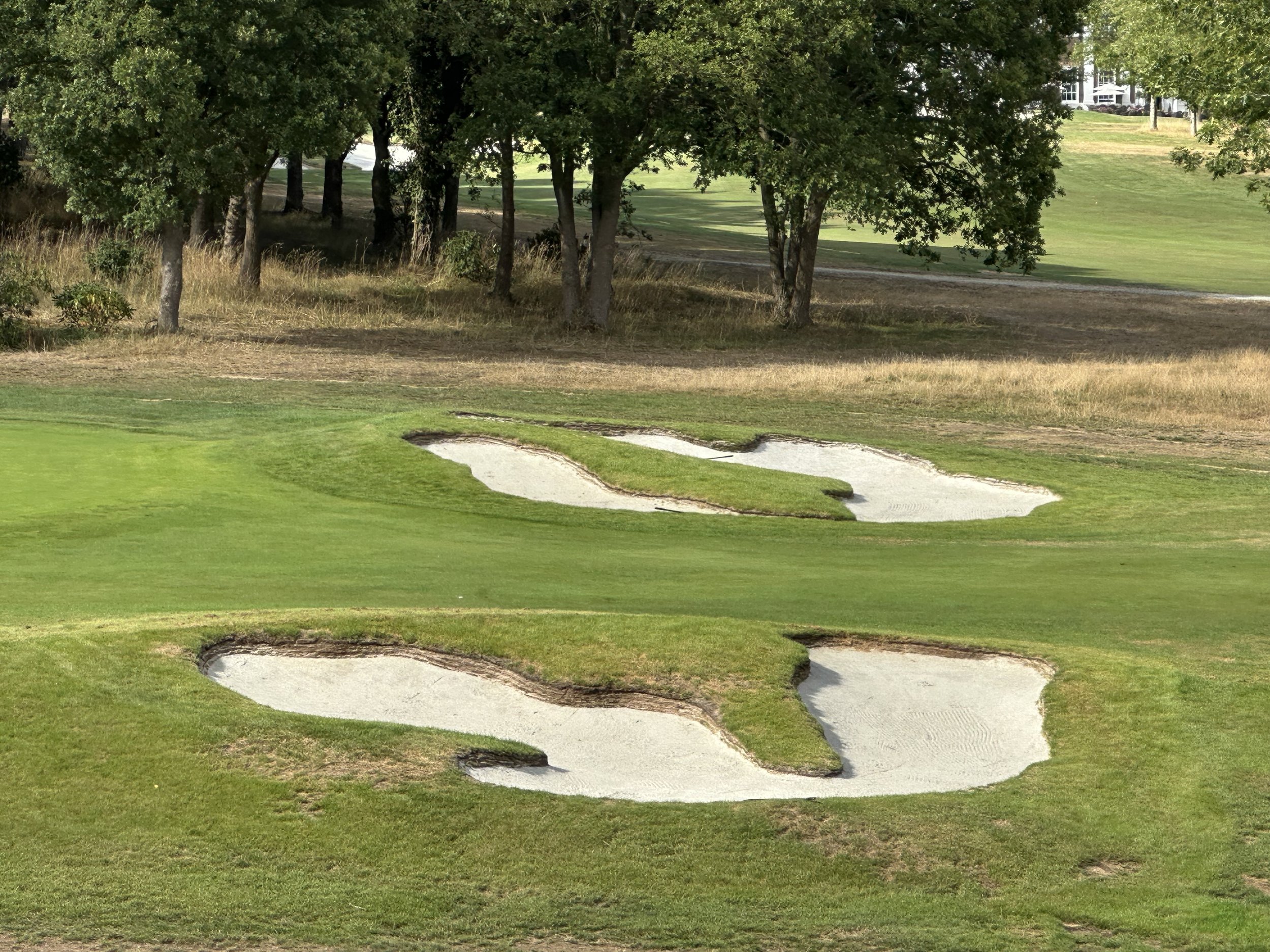
Hole 13, like 17, was another restoration effort plus green expansion. The three bunkers were all put back to opening day photos, including a skinny, snaking little guy wrapping around a back central mound that was still there. I haven’t ever quite shaped one like it before, which was cool. The green was also expanded to the rear and out to the right behind the restored right bunker. Tree removal in this area also made for a dramatic transformation, allowing airflow, sunlight, and the ability to shift the 16th tee. It also opened views between the holes in this corner—13, 14, 15, 16—making for a feeling of being in a big enclosed room in this corner of the property (a room that also has a window looking down the Brook all the way to holes on the distant front 9, with several flagsticks in sight highlighting MacKenzie’s great ability to maximize a natural feature).
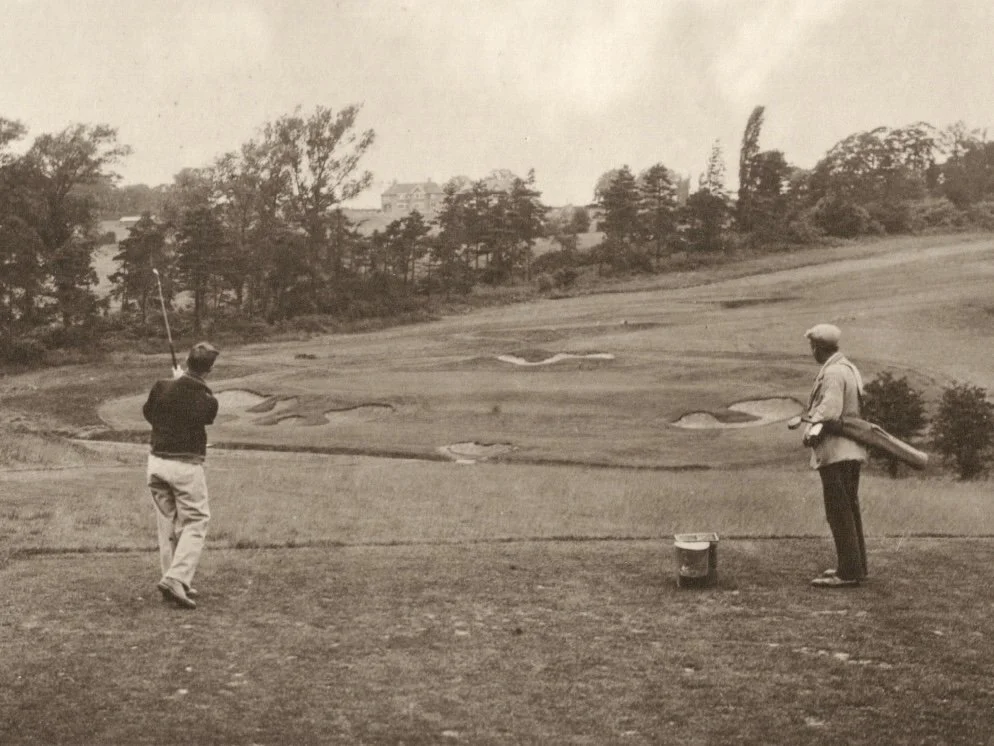
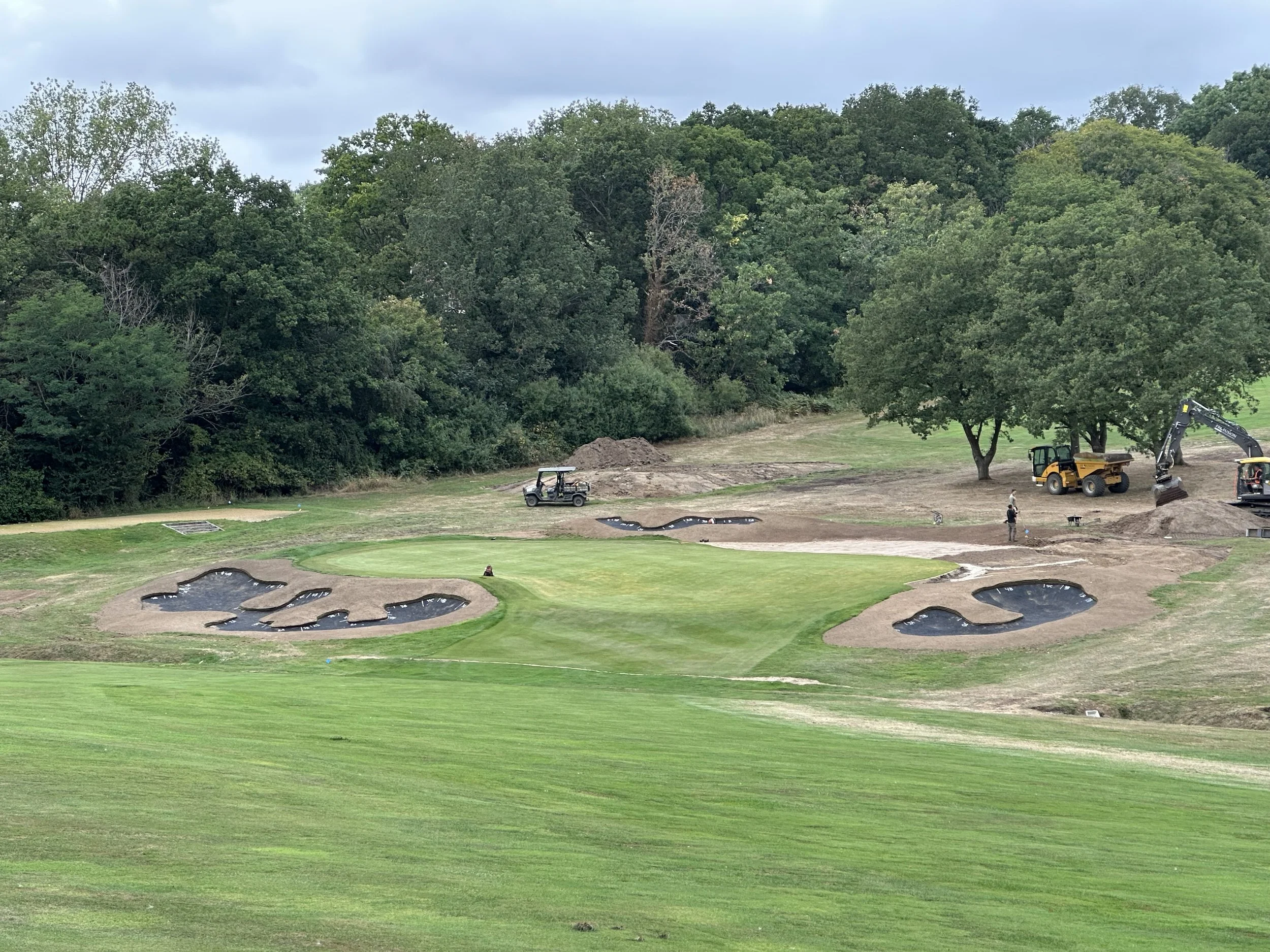
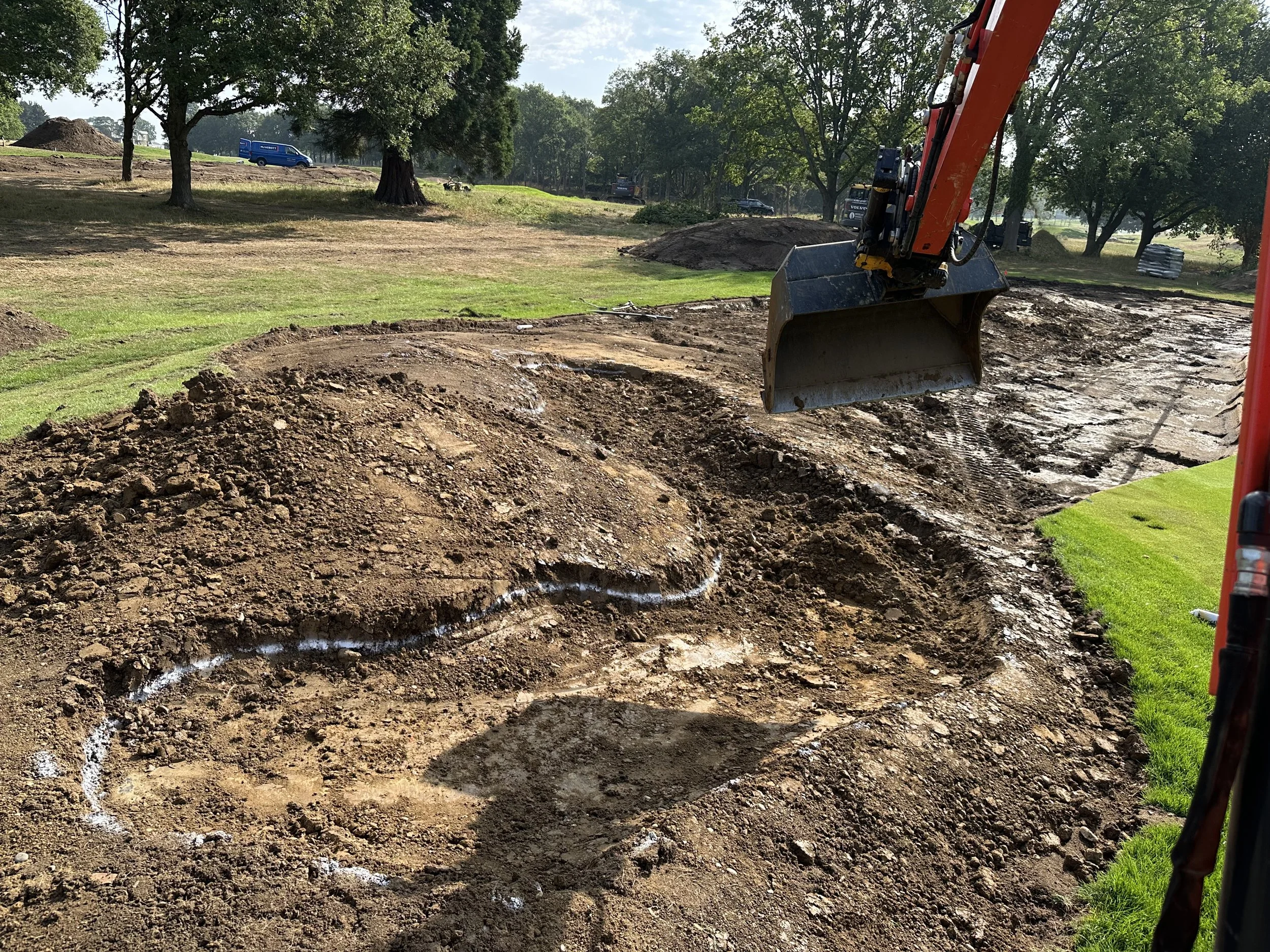
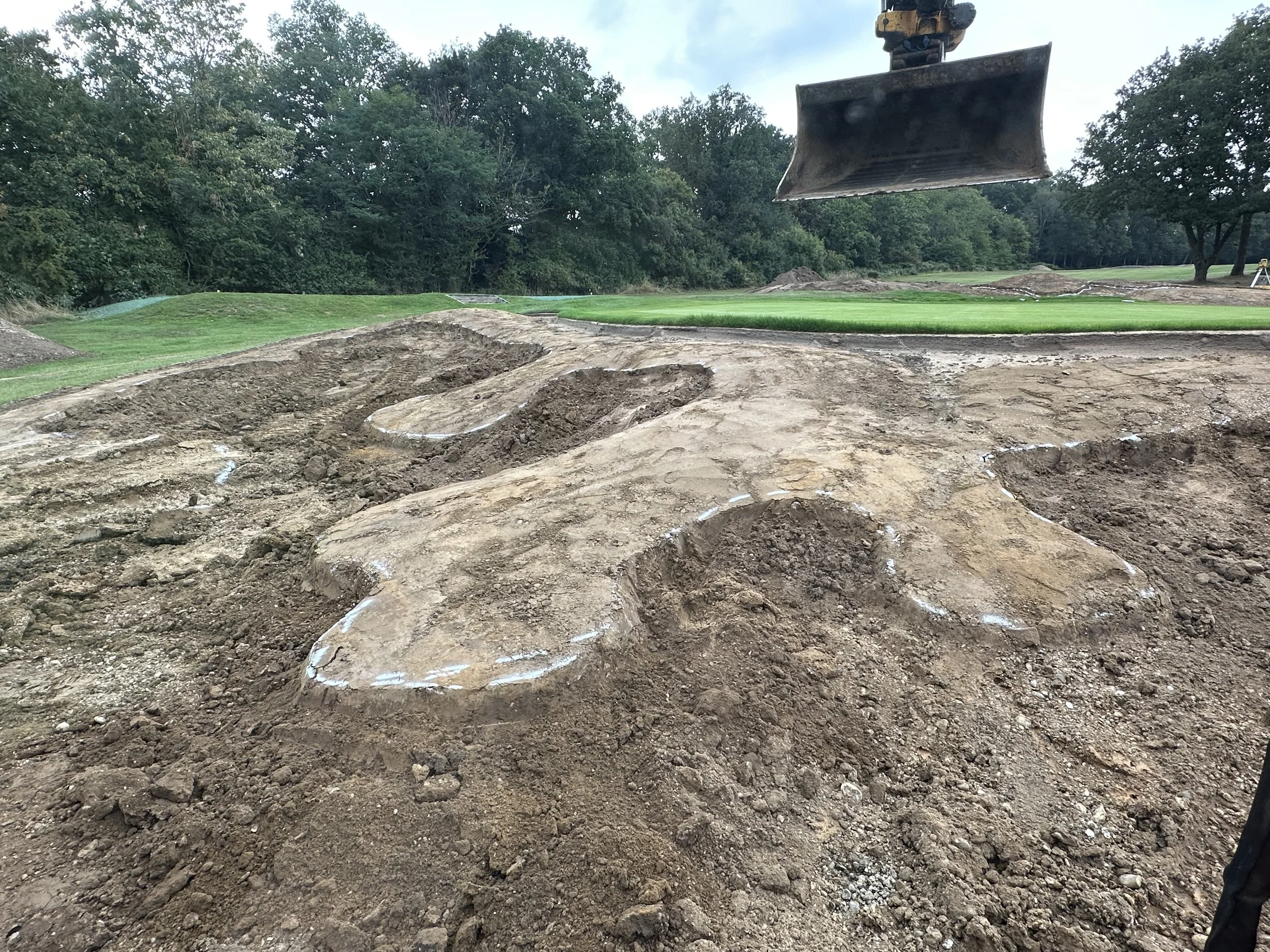
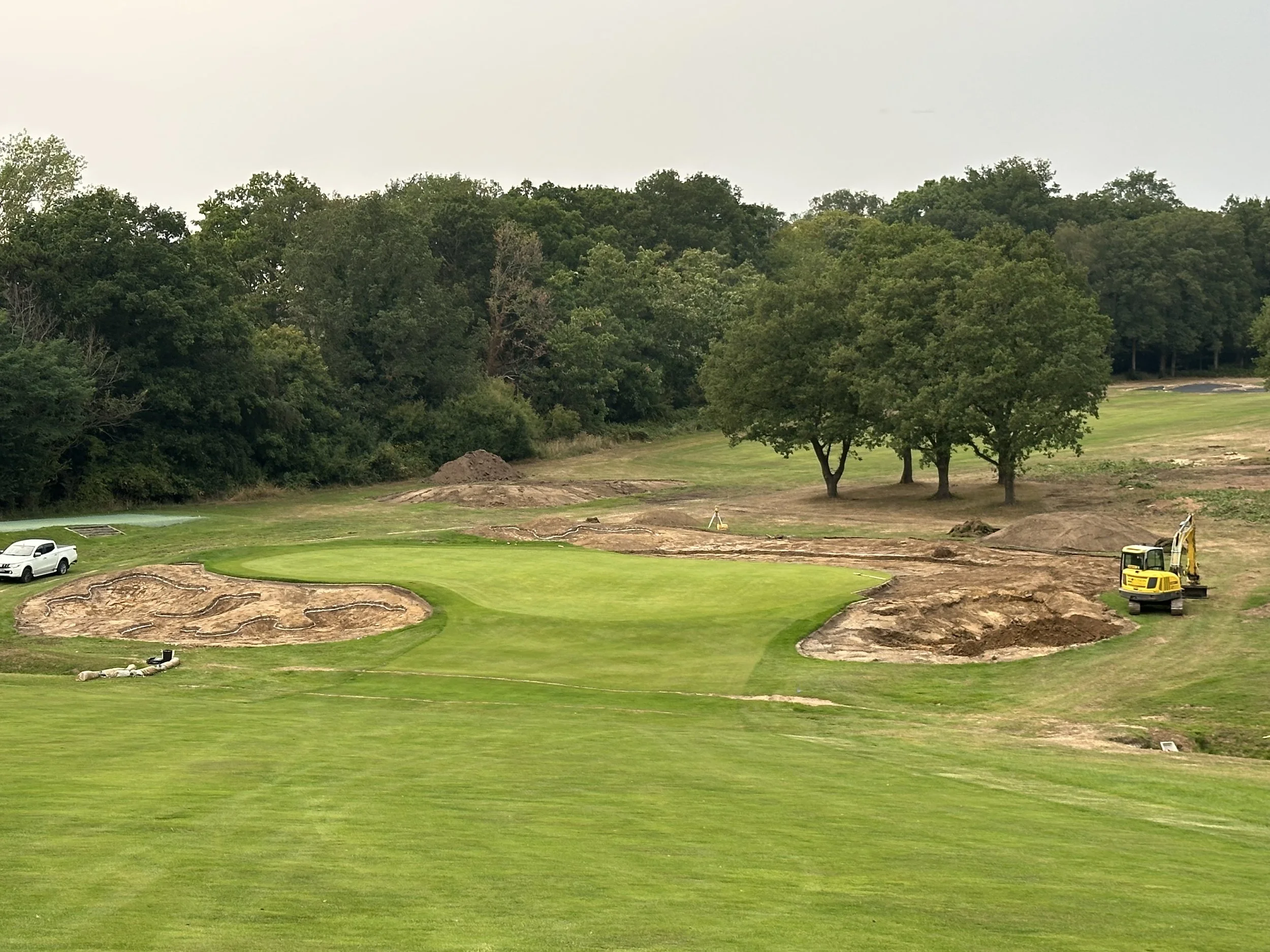
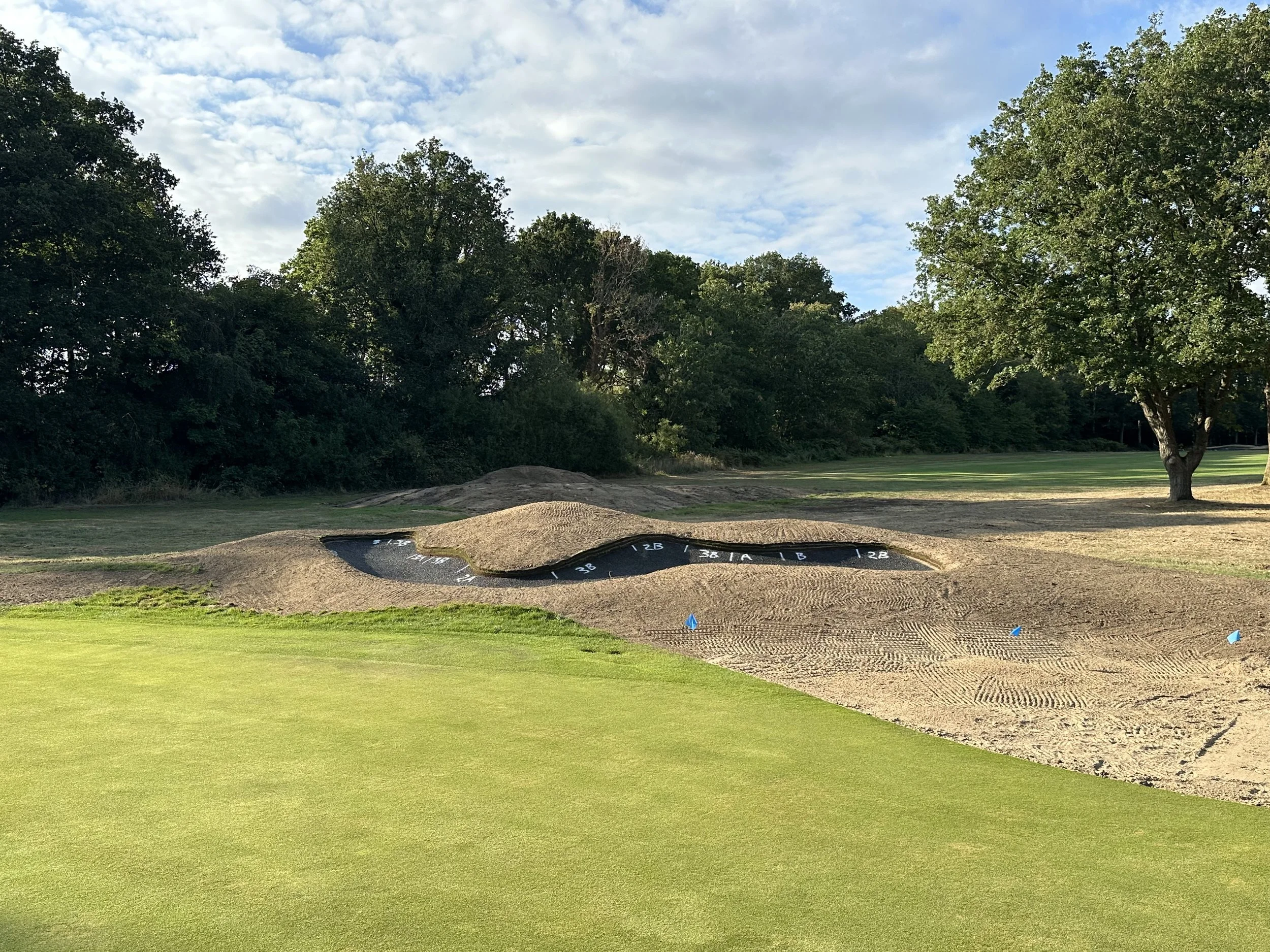
Above: the original green next to the freshly-finished restored bunkers before grassing, mid-shaping images, and a closer detail of the funny little back bunker
Hole 15 was more subtle/small work yet impactful in its own way. Where a single bunker left of the green was not visible before, there are now two over there that show themselves all the way back up to the tee. Another little pot-like bunker was added in a little depression in the high-kicker zone short right of the green. Additionally, a field decision was made to add another small pot-like bunker on a ridge about 20 yards short right of the green. This should only affect those longest hitters giving it a go at the green and is placed in the spot right about where you want your ball to run through to follow the slopes onto the putting surface.
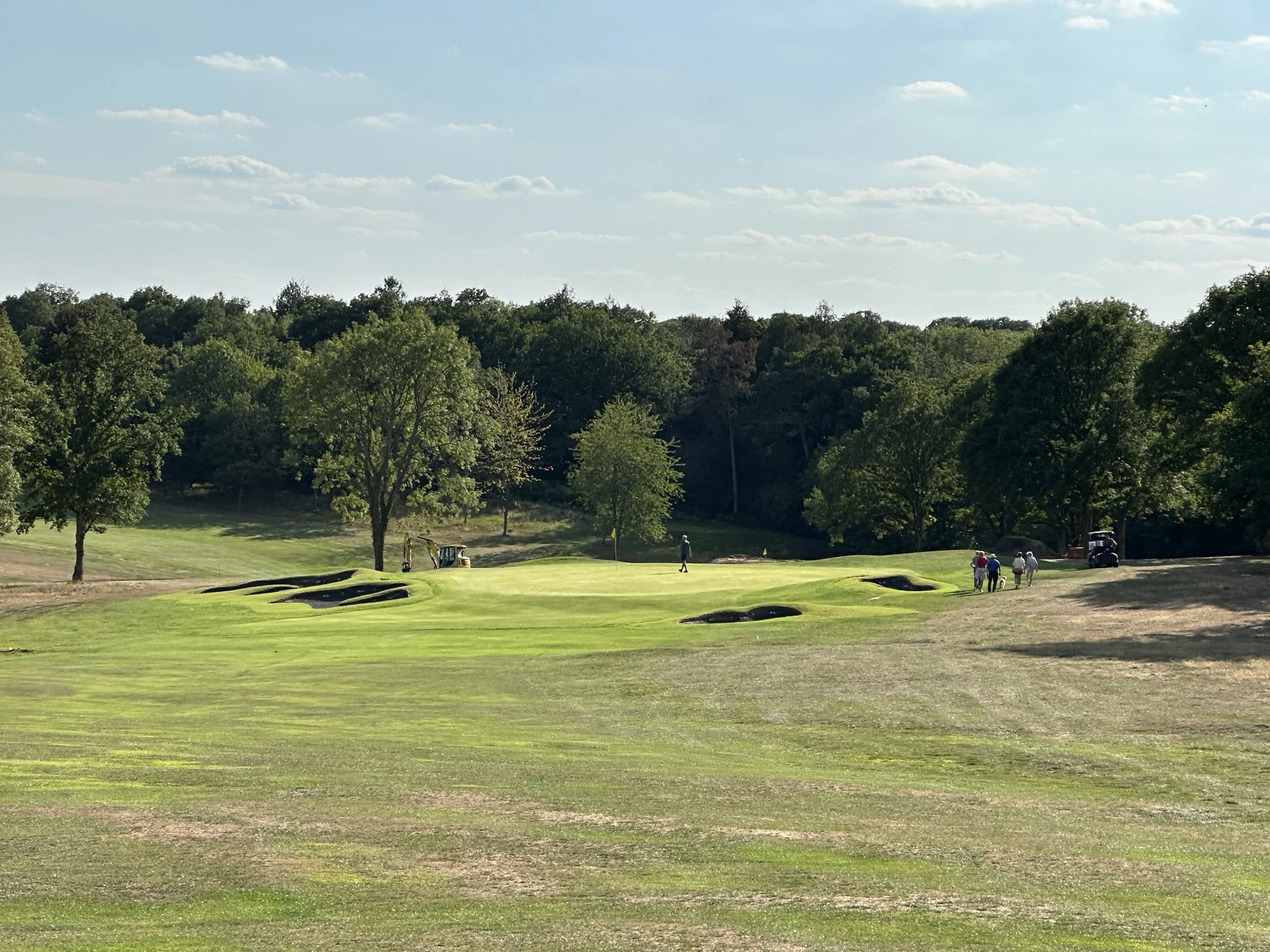
Much more sand both present and visible at the 15th. Also views up into the 13th fairway behind following tree work.
On the other holes, Clyde did some really neat and flashy work, carefully layering bunkers in MacKenzie-like compositions. These holes will be real showstoppers and are big improvements upon their previous iterations.
I really enjoyed my time working at Hadley Wood, and I wish there were more phases to do so I could come back to help. The work was a lot of fun, but the people there, both at the club and on the project, were even better. Great lunch specials, also :)
Northwood GC Monte Rio, CA
As mentioned in the Design section, we started working with Northwood and assessing their various project needs. Superintendent Trevor Schaap had his list of priorities, and with that we wasted no time getting to work on the most pressing issue: tee space and surface quality on holes 2 and 6. Both holes suffered from lumpy, small tees with hardly any grass on them. We wanted not just to level them but to expand them, which, as you can imagine when you think about all the trees constricting space at Northwood, can be limiting. Still, we saw some spots and opportunities to grow.
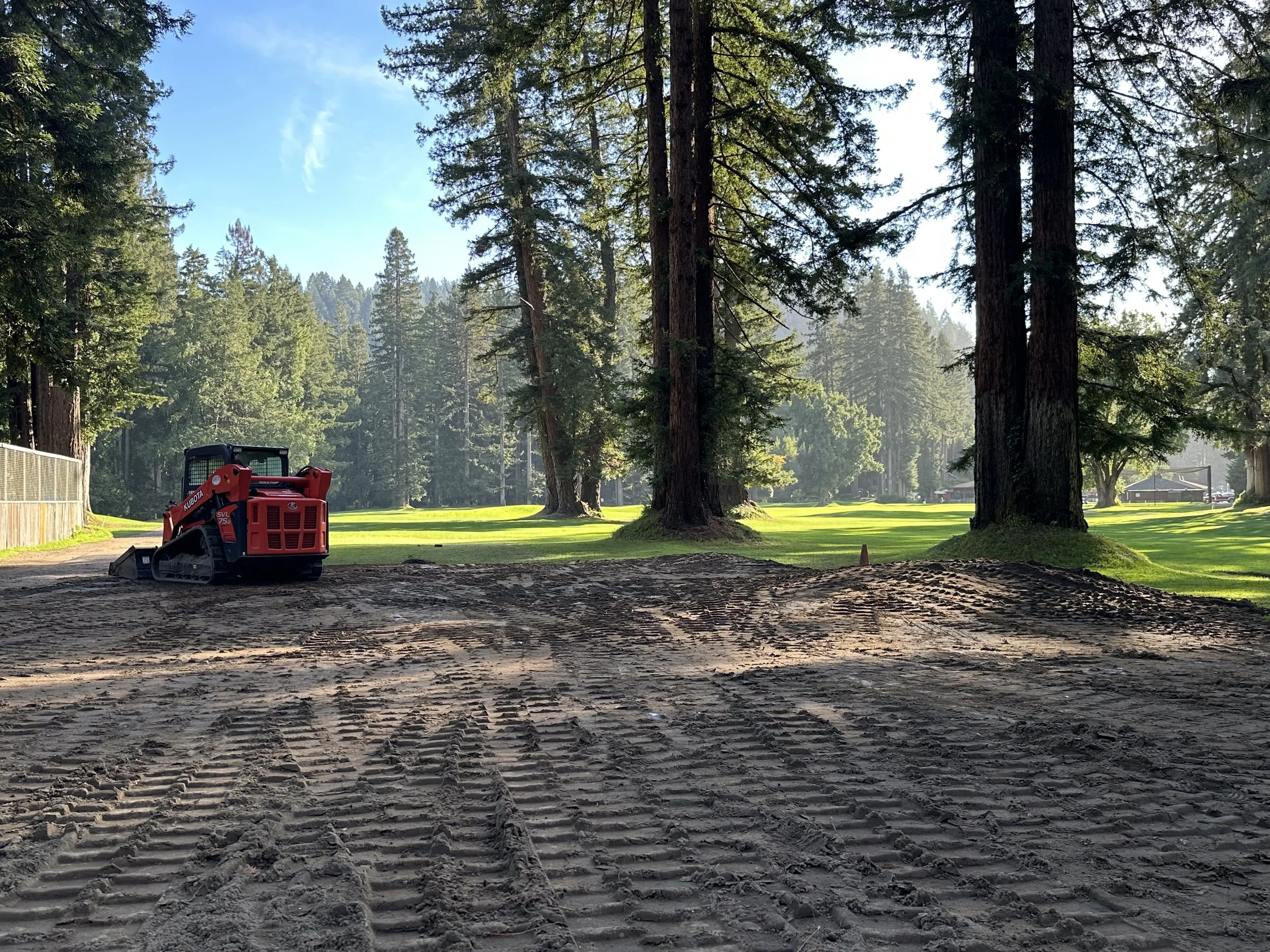
Hole 6 tee expansion and reshaping at Northwood
On hole 2, there were two big opportunities to get bigger. One was to lower the back deck and fill left as far as we could toward the ditch without disturbing the bottom of it. The other was to formalize the lower middle pad, which to this point was uneven natural ground and make it as big as we could. The end result was increasing tee square footage from about 2000 square feet of formal tee space (plus whatever you get out of the lumpy lower section) to well over 5000 square feet of formal tee space. That includes 3000 on that main back deck, where the increased width now allows side to side movement of the tee markers, a huge benefit to reducing wear and tear (as well as slowing down the long term crowning effect caused by divot filling).
On hole 6, it was more of the same, but we were a bit more limited there, mostly with trees further out in the line of play. Still, we definitely got bigger, and a large reason we did so was turning it into two tiers just past the path-side redwood, the lowering of the forward area allowing the tee to grow left all the way to the path while generating enough soil to expand it forward. With a little bit of extra material, we built in a little MacKenzie mound on the right side of the tee to naturalize it a bit and also help to visually (and physically, if you hit it thin) steer you away from a play down the 1st fairway.
As part of the project and already being mobilized, we threw in the tees on hole 5 as well, since they would be relatively easy and grow back in quickly with the sunlight in that location. Trevor’s brother Justin, who was helping us the whole project, handled most of the shaping on this hole and did great work making these left-right split decks bigger and level.
I’ll be looking forward to future projects at what is a most special place to spend time.
Media Highlights
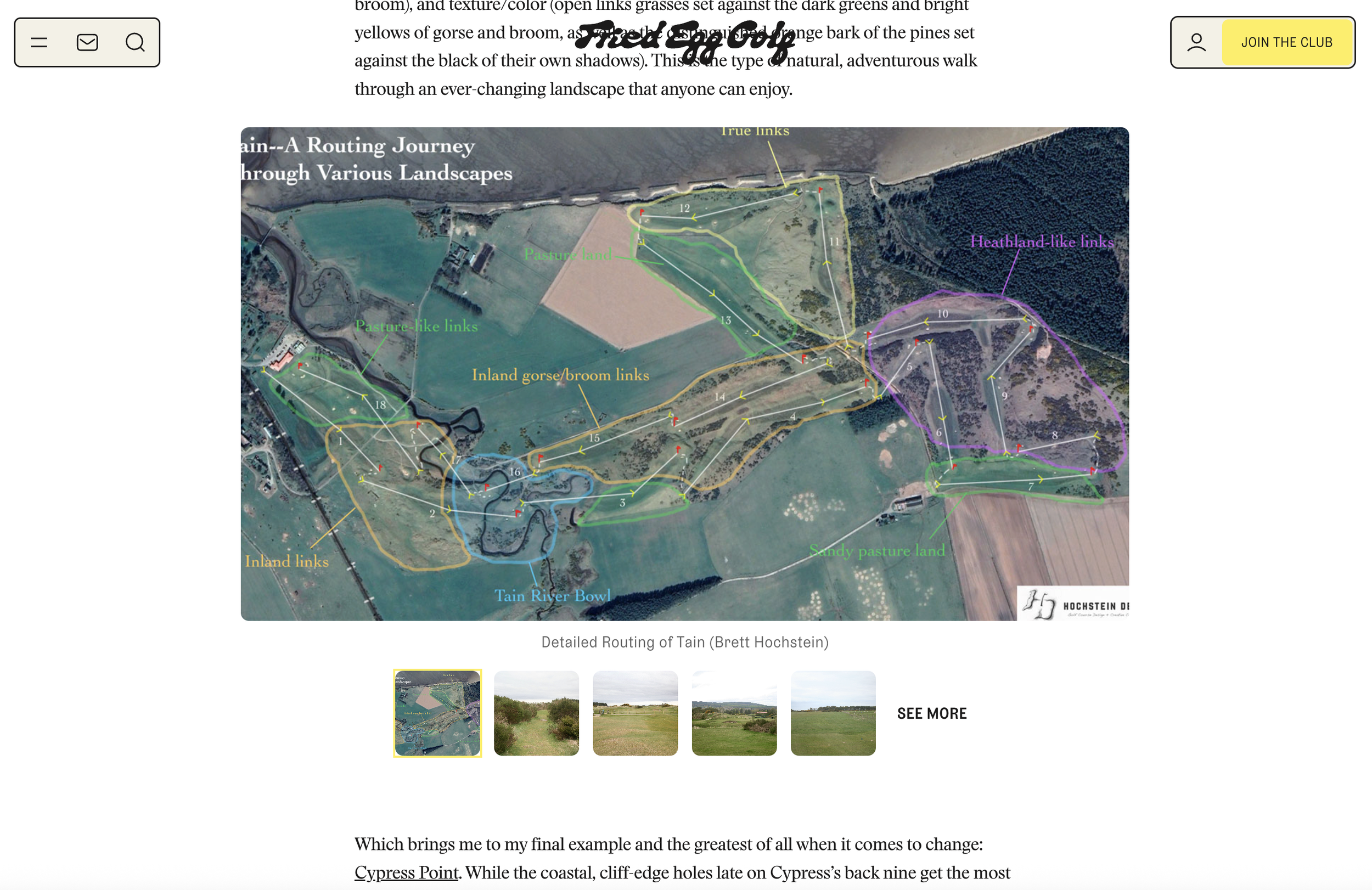
An article for Fried Egg Golf exploring the impact of experiencing change, especially in golf and routings. Pictured here is a diagram of the routing at Tain, which constantly changes landscapes and keeps the golfer’s experience fresh.
Top 100 Clubhouse podcast discussing my career to date with host Jasper Miners. apple podcast link
Cookie Jar Podcast on Pasatiempo with Jim Urbina and host Sam Williams. episode link
Fried Egg Golf article on the positive element of “Change” in golf and life. article link
Pasatiempo restoration article on the HD Blog highlighted by comparison imagery of original course pictures with the project results. article link
Cypress Point article on the HD Blog discussing how the course has the world’s greatest multi-hole stretch of designed bunkering. article link
Analytical diagram of what makes the bunker composition of Cypress Point’s 3rd so great.
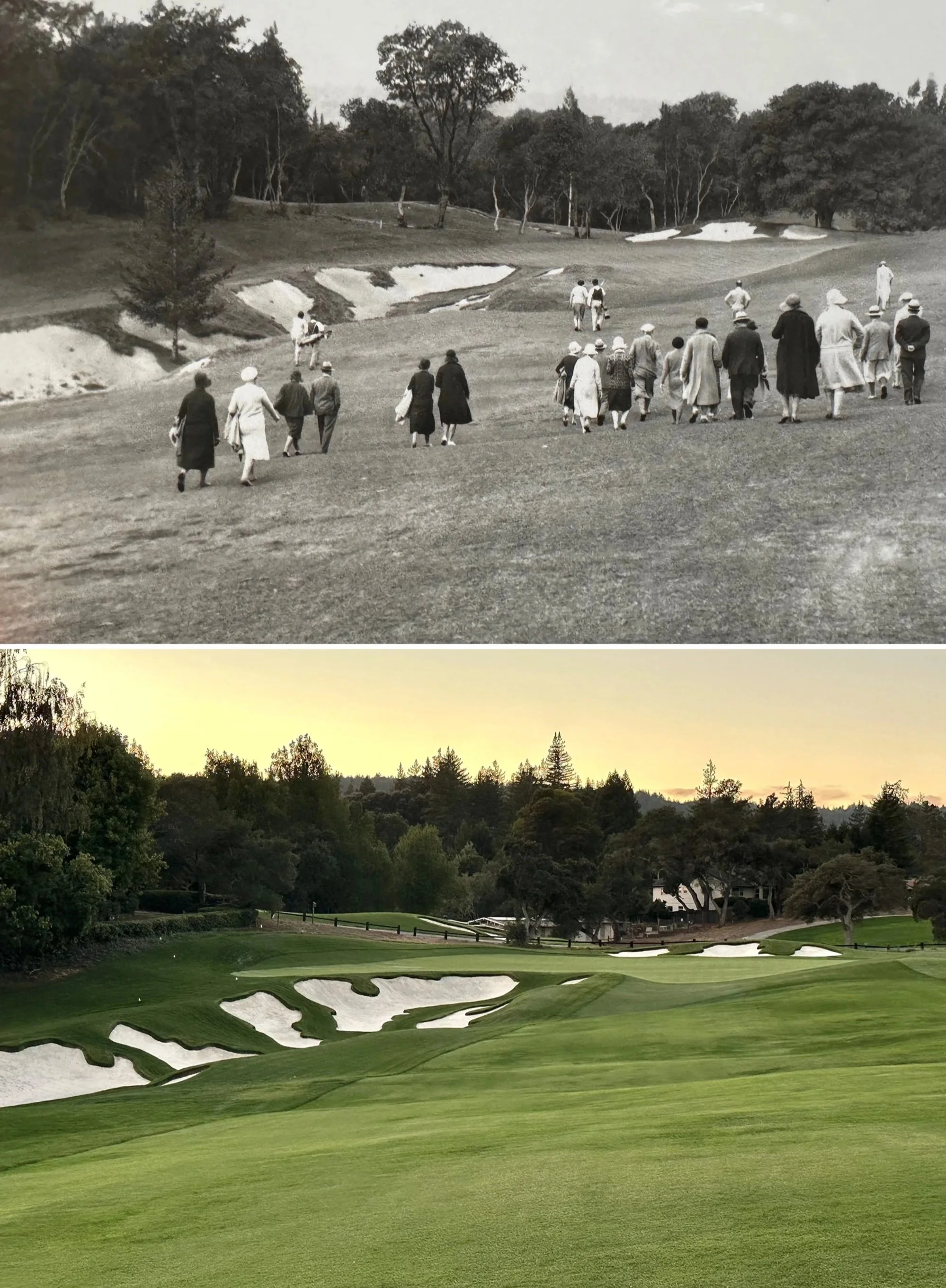
The unusual arroyo fairway bunker array on Pasatiempo’s 10th, comparing the original photo to the re-created most recent version
Top New (to me) Courses Seen
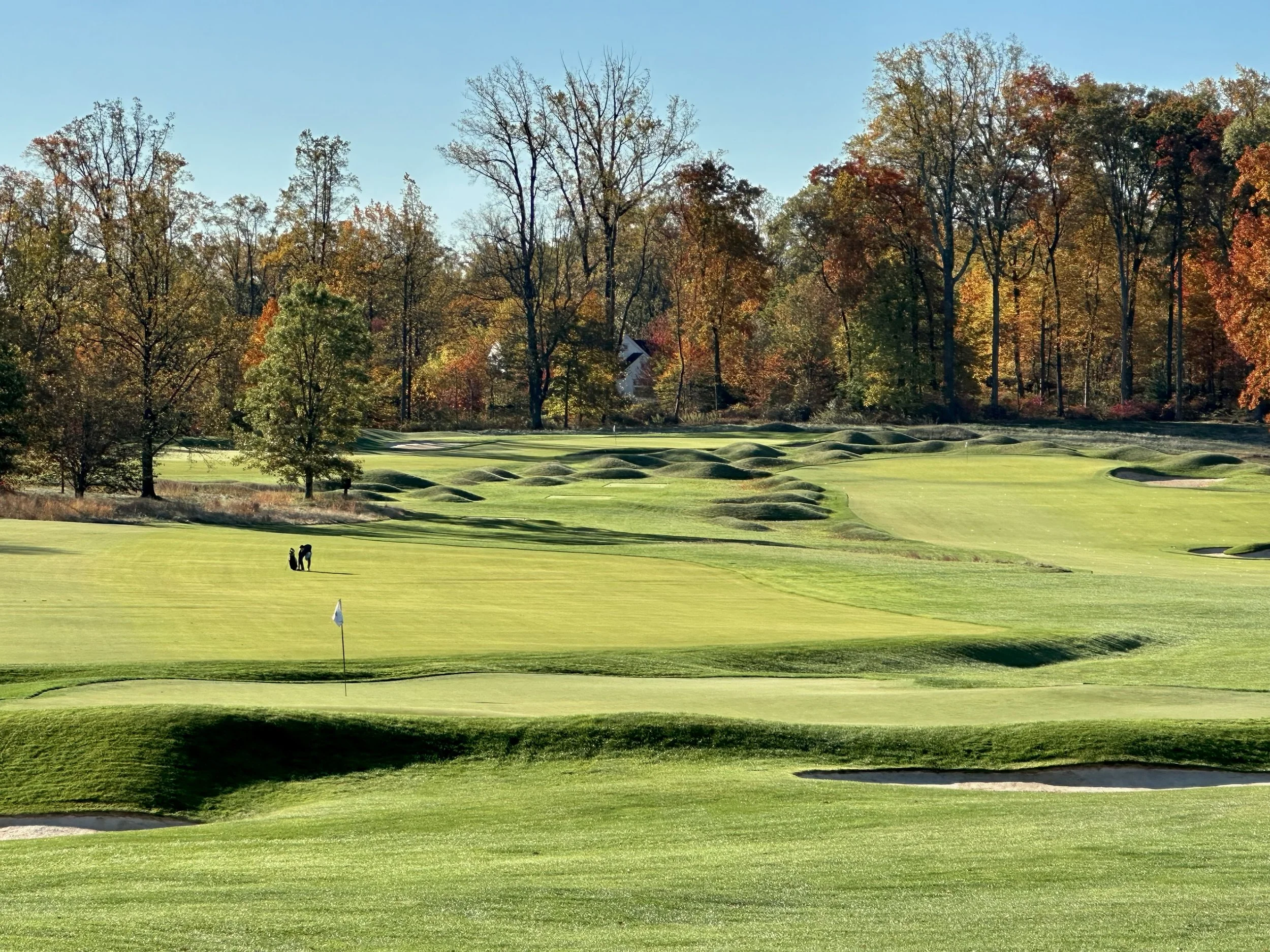
Somerset Hills: a sublime mix of pleasant landscapes, historic elements, and creative early-Tillinghast design features.
This is the most substantial section of this year’s review and probably what will interest most who are reading this. Between numerous trips back over to England and finally making a golf-exclusive pilgrimage to the New York Metropolitan Area, my courses-visited list is both high in quality and quantity. Anything on this list is a very good course and something worth seeking out. I felt myself saying “really? here? this low?” at almost every slot, as normally each course would seem to be higher in my yearly ranks. You’ll see this starting right with number 4, which was an all time experience it itself. It was just that good of a year seeing new golf. I consider myself very fortunate (as well as full of new ideas :-) )
As with all rankings, they’re subjective and not too serious. Really, it’s more a way of conveying what I like and prioritize in my golf, and by proxy, my designs. With these rankings, I try to evaluate less on my experience and more on how I feel about the course’s various design merits. (The “experience” thing is a different list entirely). My own “Doak rating,” (which, for those unfamiliar, is effectively logarithmic where each increase of number rating is increasingly rare) is noted in [brackets]. Enjoy!
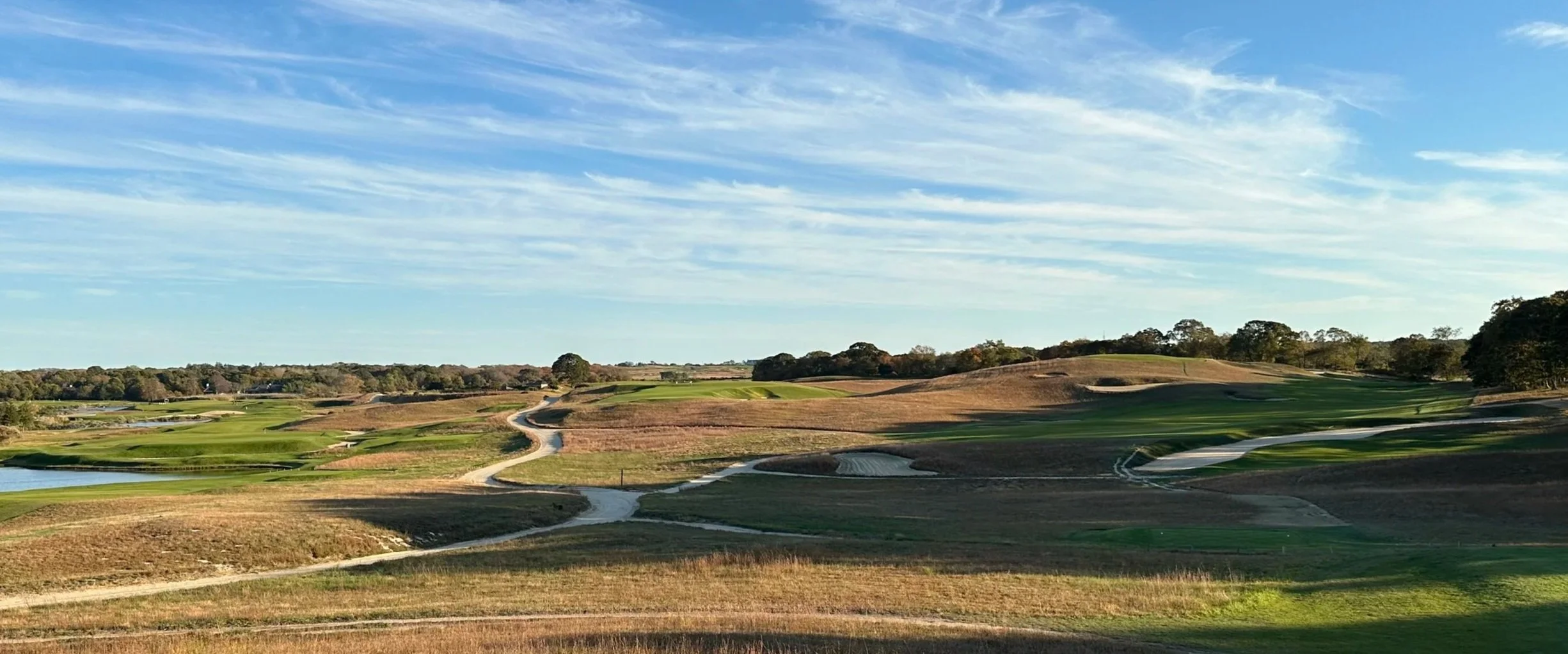
A landscape and routing as good as the hole concepts themselves
1. The National Golf Links of America [10] Southhampton, NY. Charles Blair Macdonald. Number 1 on my global “need to see” list, and it did not disappoint. People love the templates and their strategies, and the story and idea by Macdonald in the first place is a great one. But where National really succeeds is its combination of land, width, and ambiguous playing corridors. The latter two qualities are hallmarks of what makes the Old Course so endlessly fascinating, but the Old does not have the former, at least not from an elevation change standpoint. Right off the bat, you have a choice to make on where to play based not just on hazards but on big shapes in the natural landscape. There’s risks, there’s rewards. There’s often separation to be gained by being a better/stronger player, but there’s occasional ways to gain advantage by being crafty and experienced to the course’s nuance and tendencies. It’s an endlessly fascinating type of golf course, one that I spent nearly 5 hours and 9.5 miles walking on my first loop trying looking at different angles and checking breaks on the greens. It’s one I could loop around 8 times in a day and tell you something new from each one. And that’s just walking. Playing—and the randomness and inevitable predicaments that arise from it—would certainly reveal even more of the course’s charms. That is golf design at its best and what we as architects aspire to create.
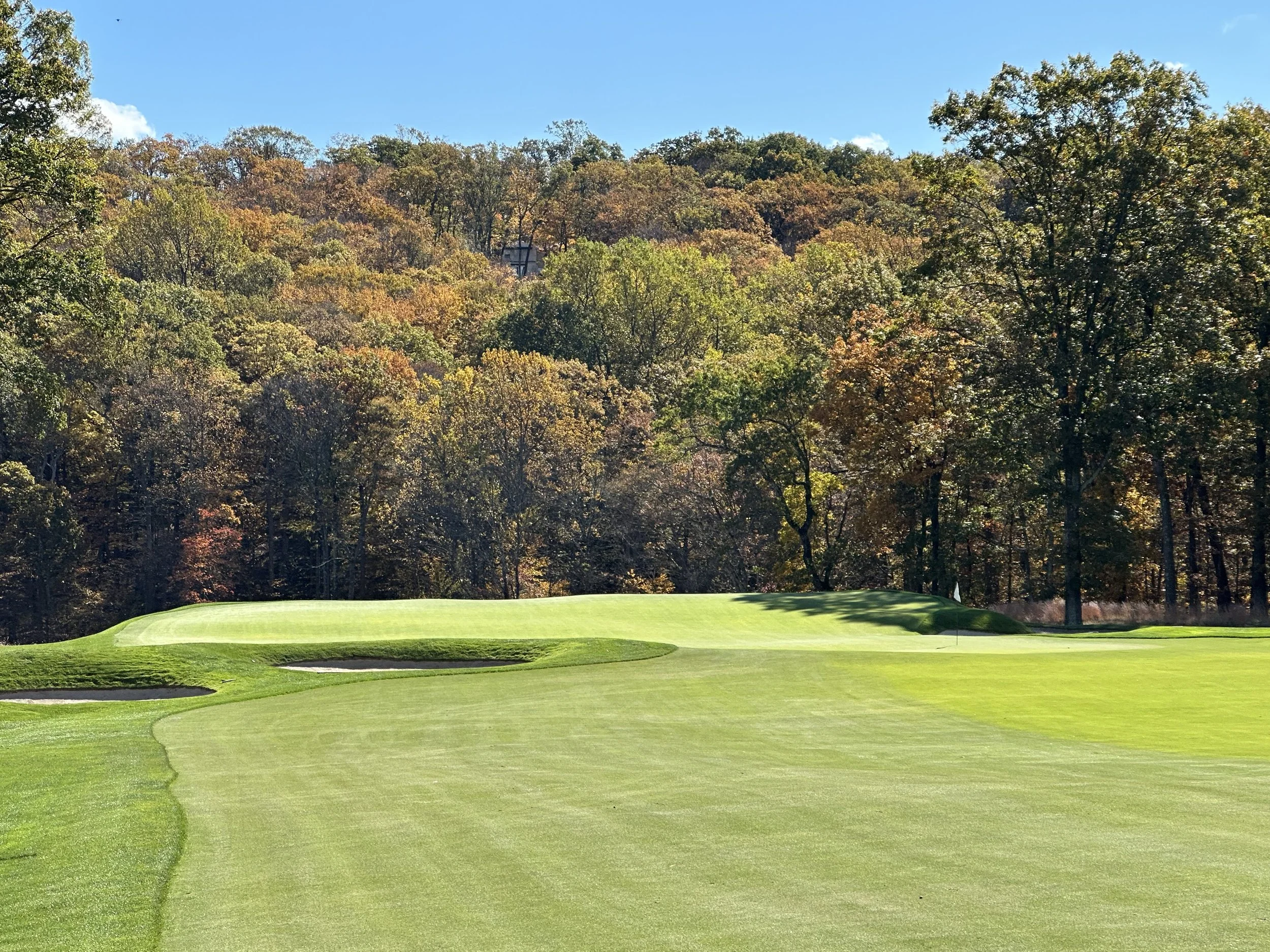
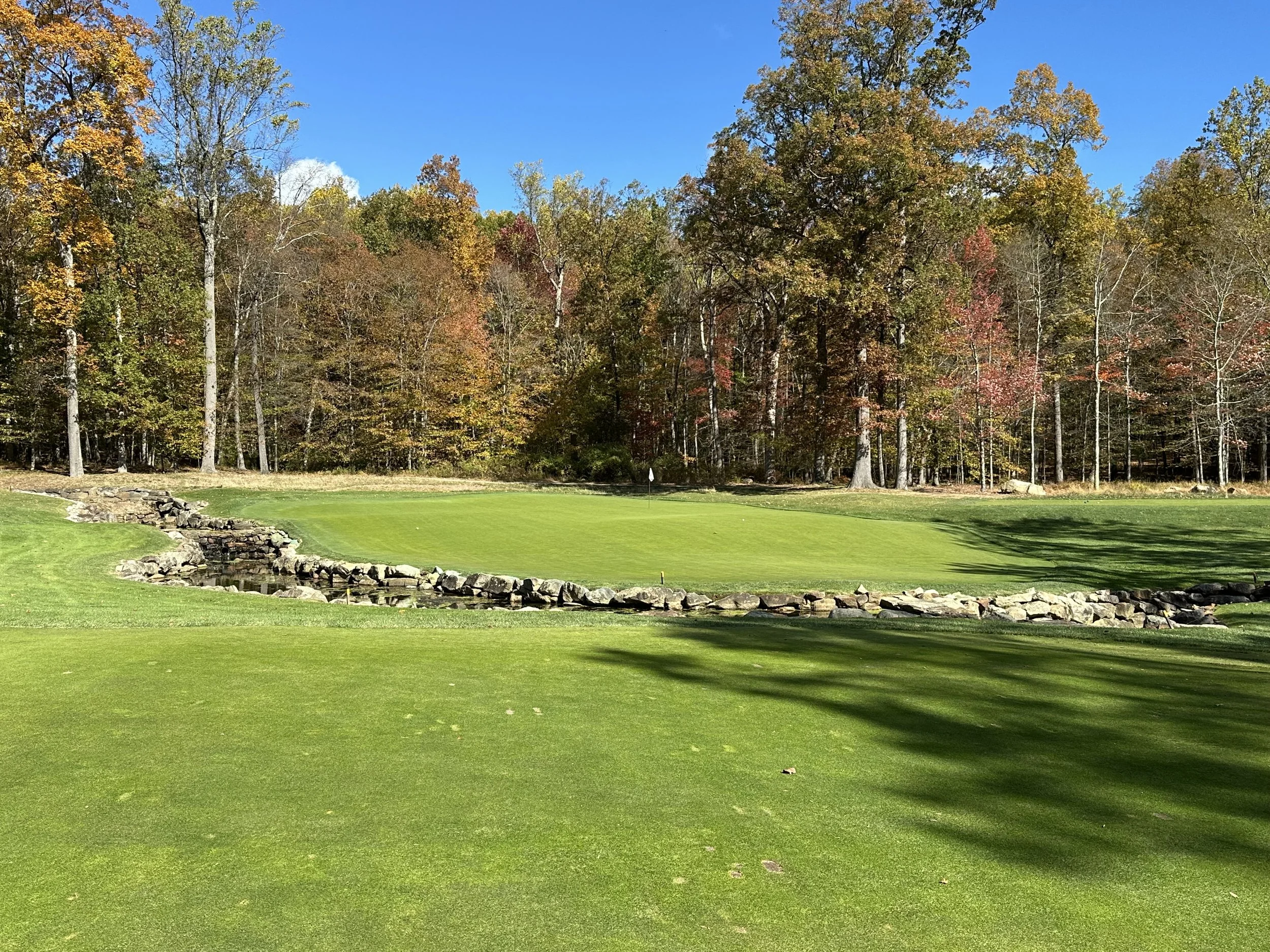
2. Somerset Hills [9] Bernardsville, NJ. A.W. Tillinghast. There’s just something about Somerset Hills. I’ve been ruminating on this and might have my answer as to what that “thing” may be, but that’s a full-length article for another day. What I will say now though is that Somerset has a wonderful blend of history, naturally varied landscapes, diversely strategic holes, and charming early-Tillinghast shaping and features. It’s not just Tillie’s best course; it’s one of the best in all the Northeast.
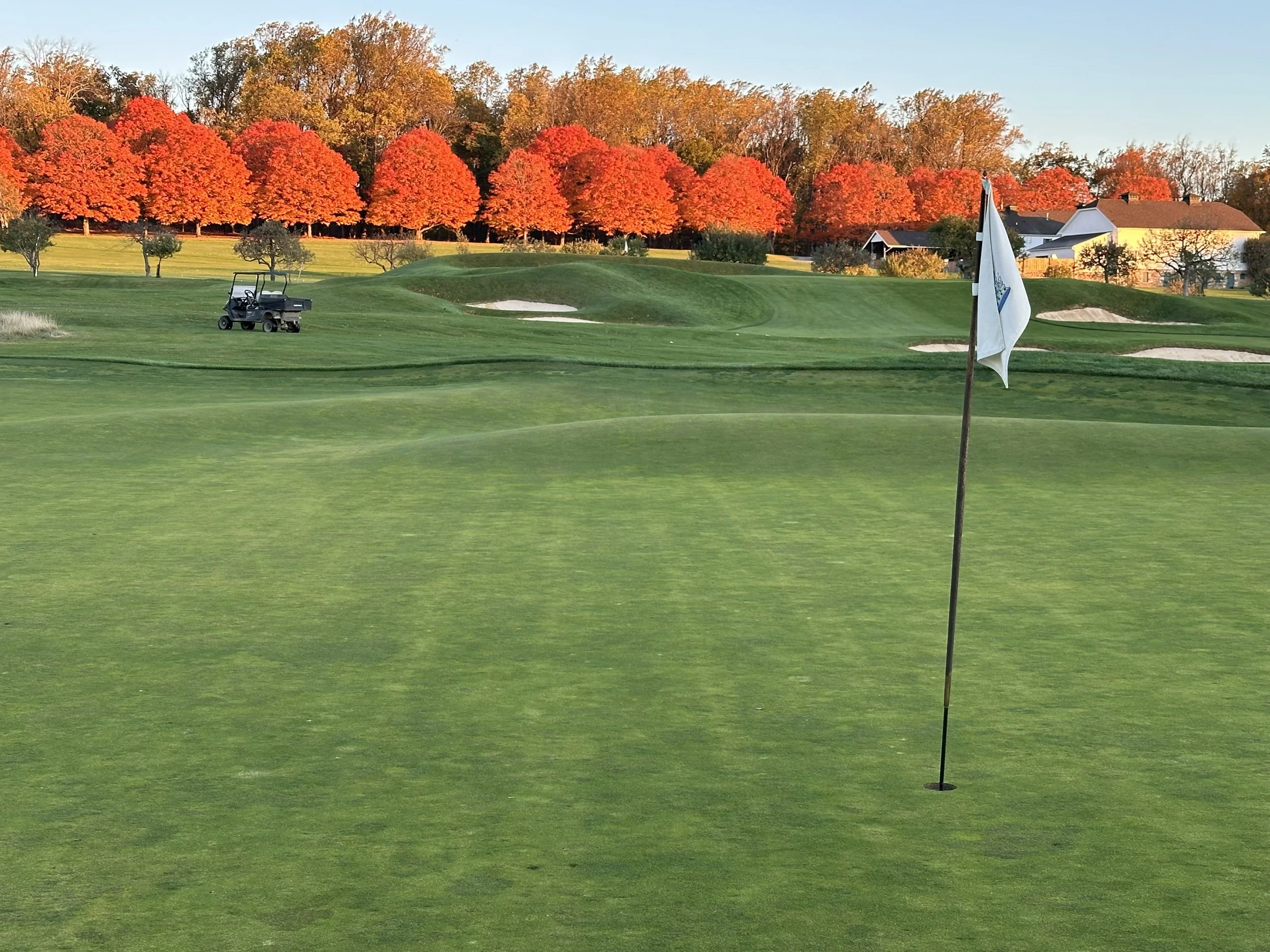
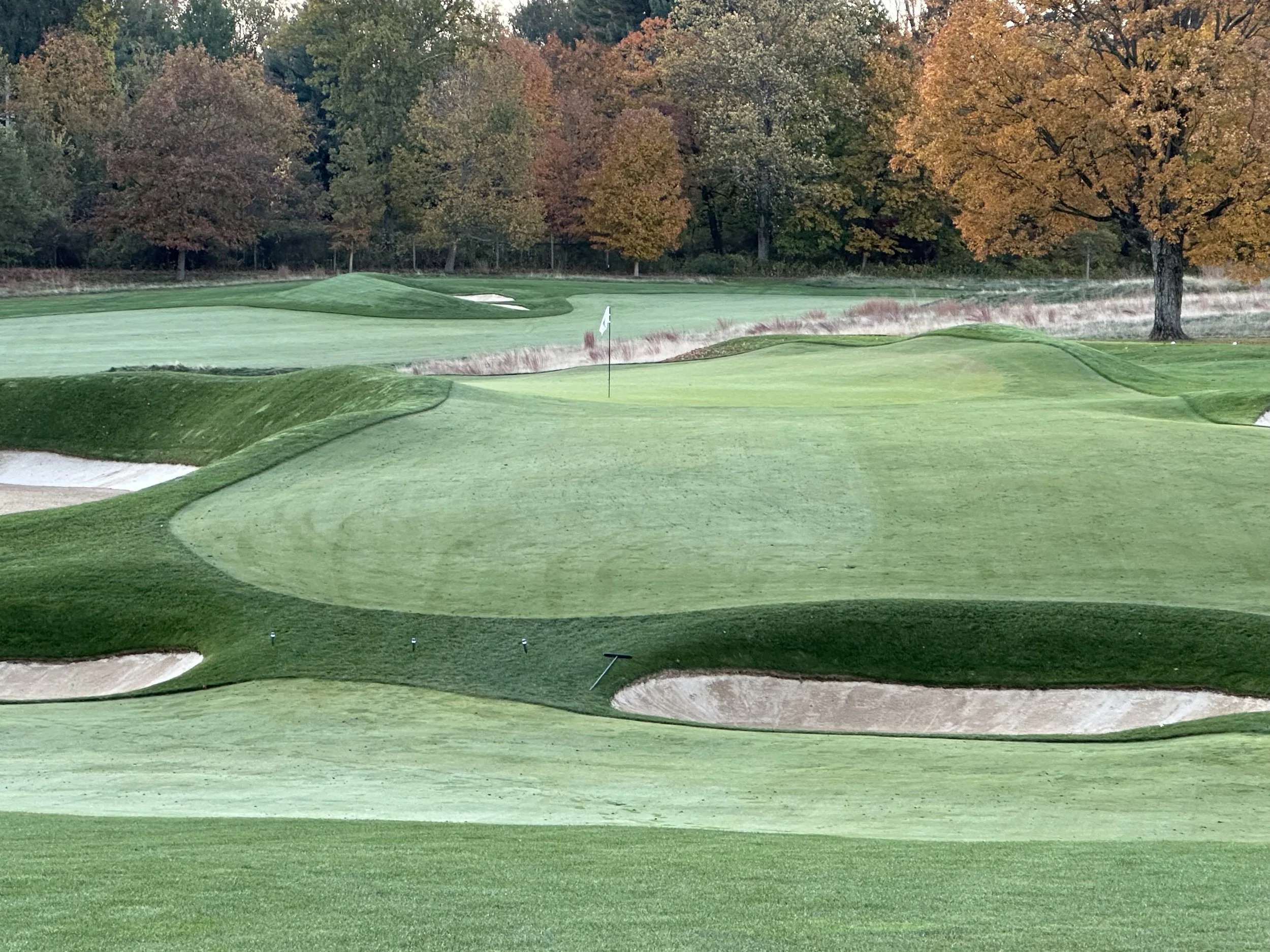
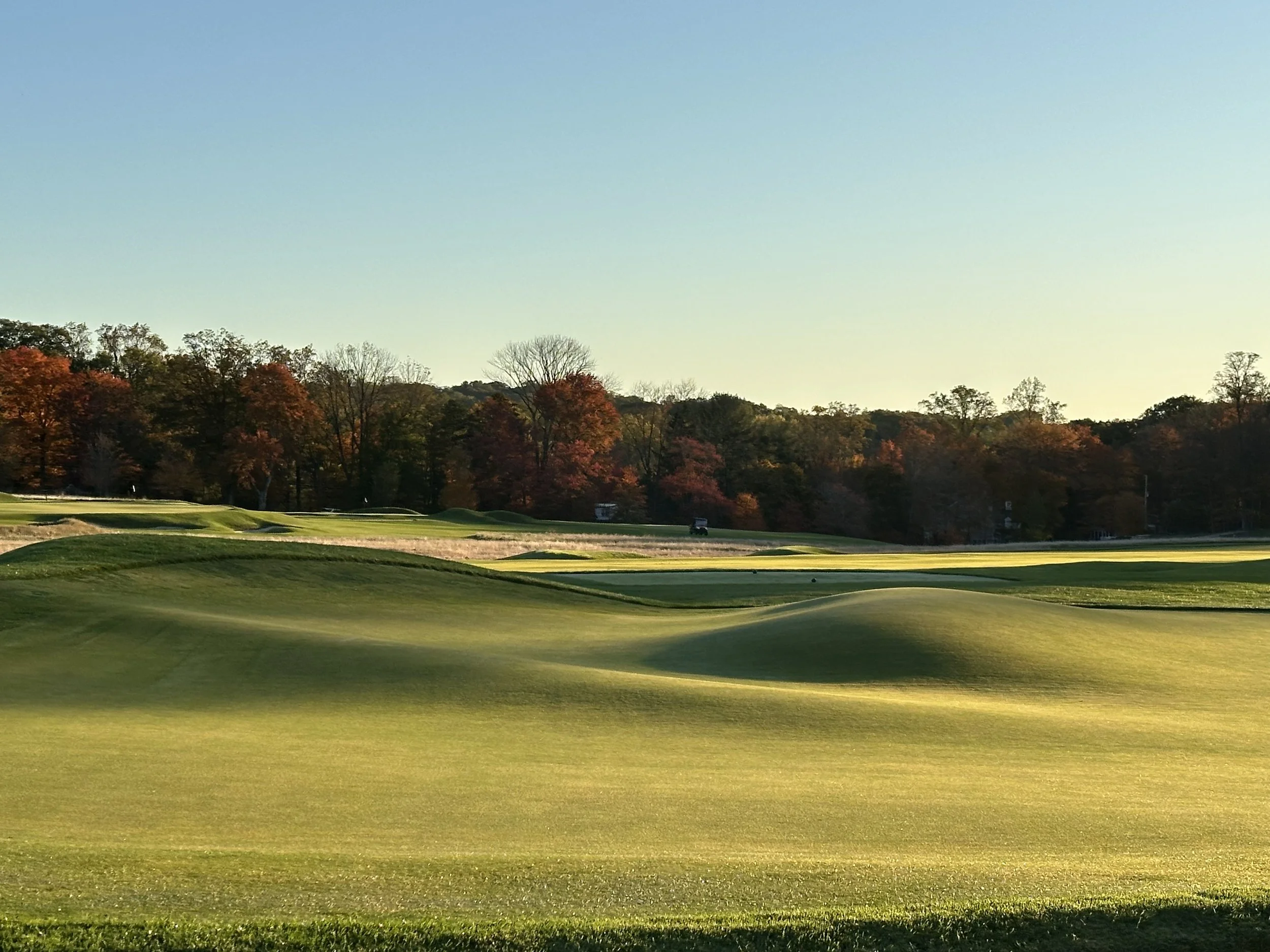
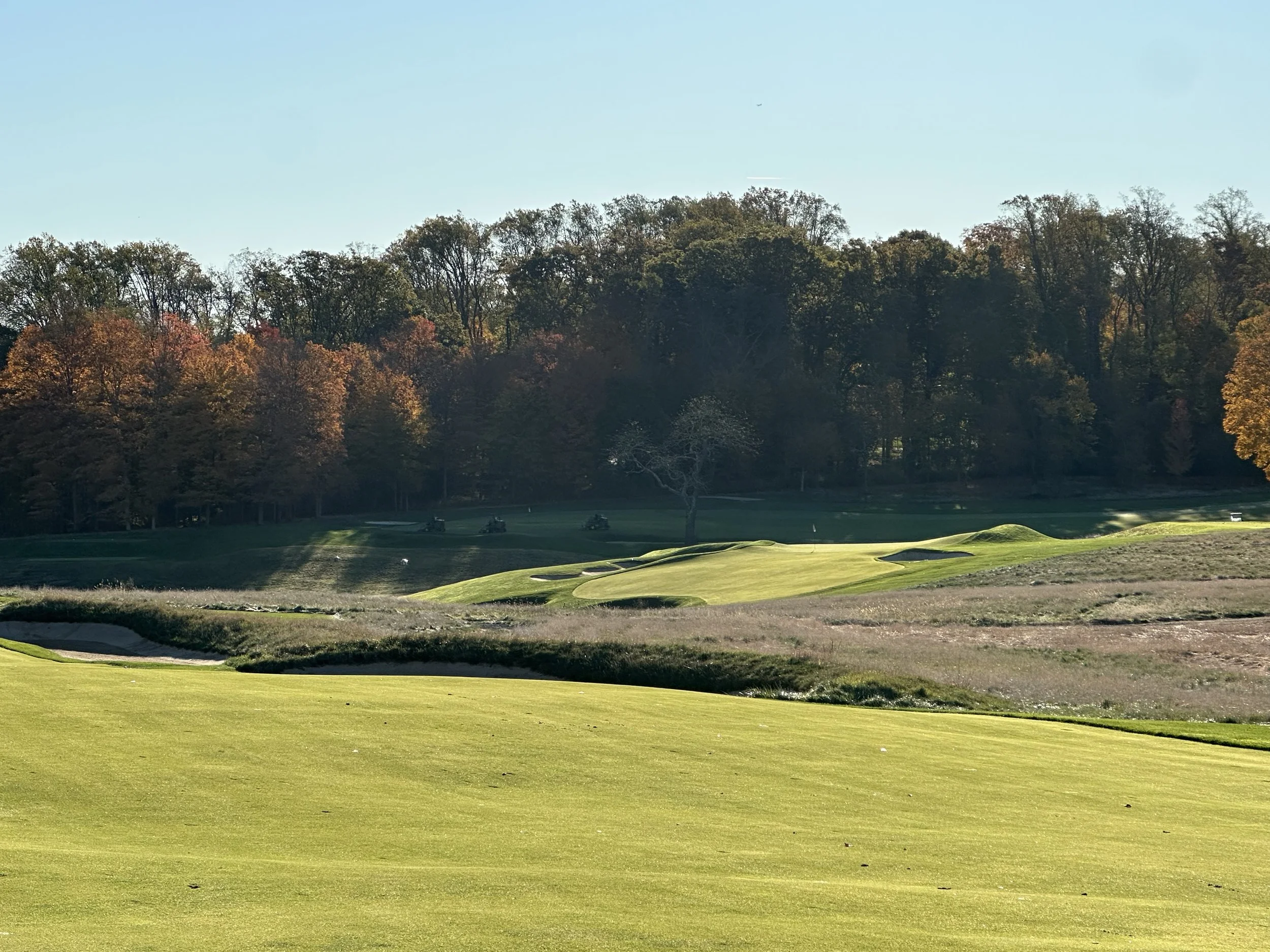
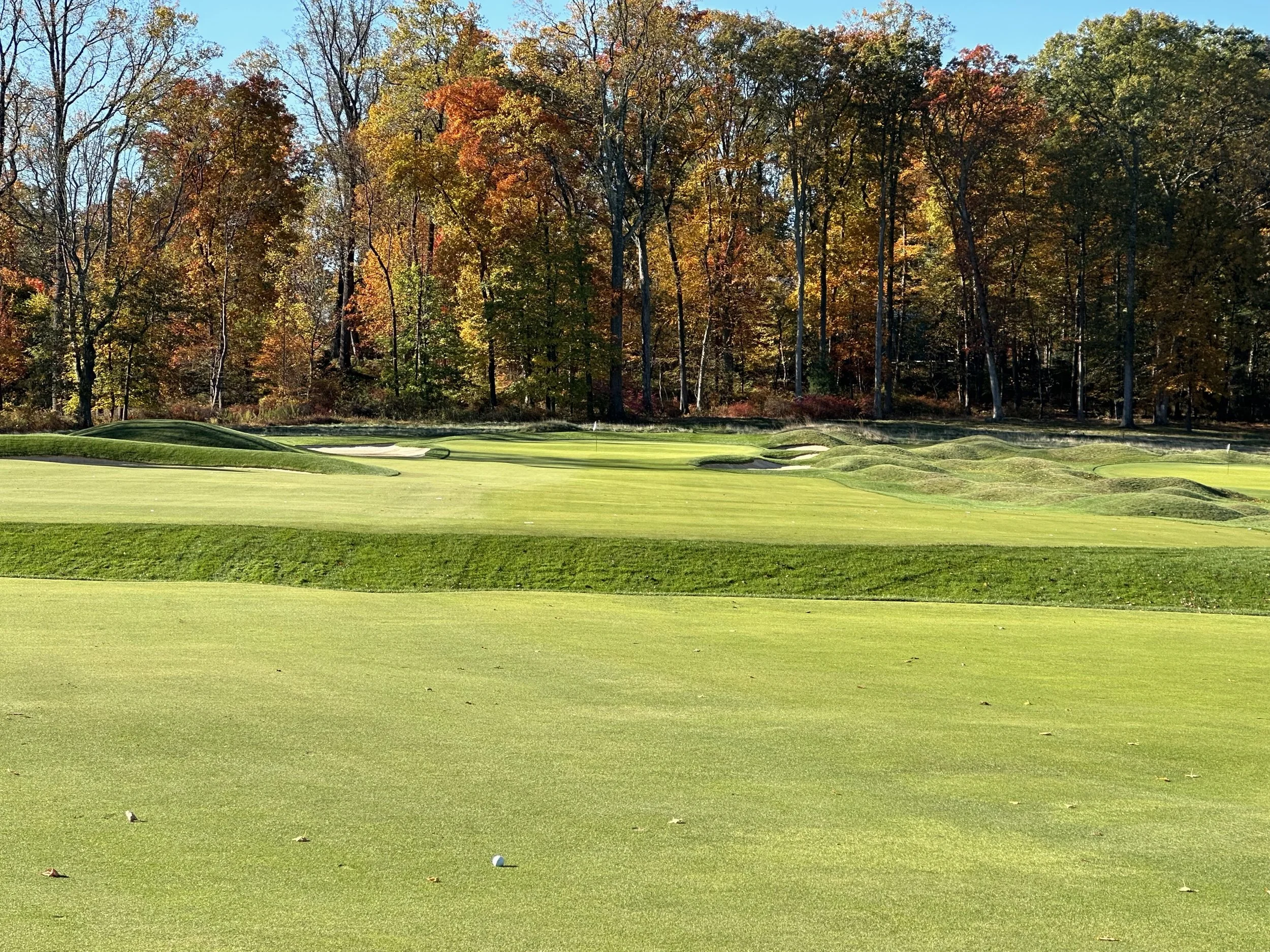
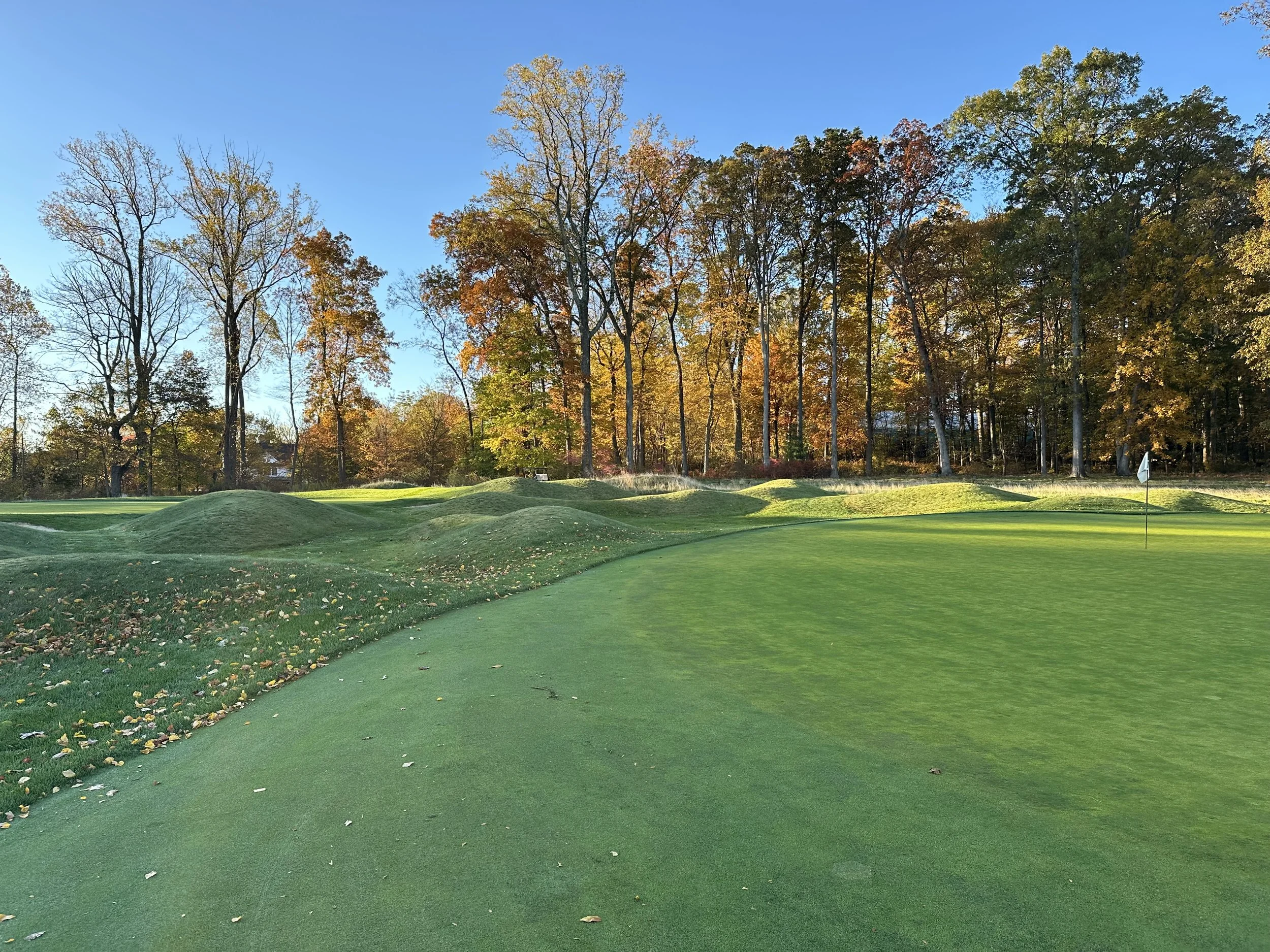
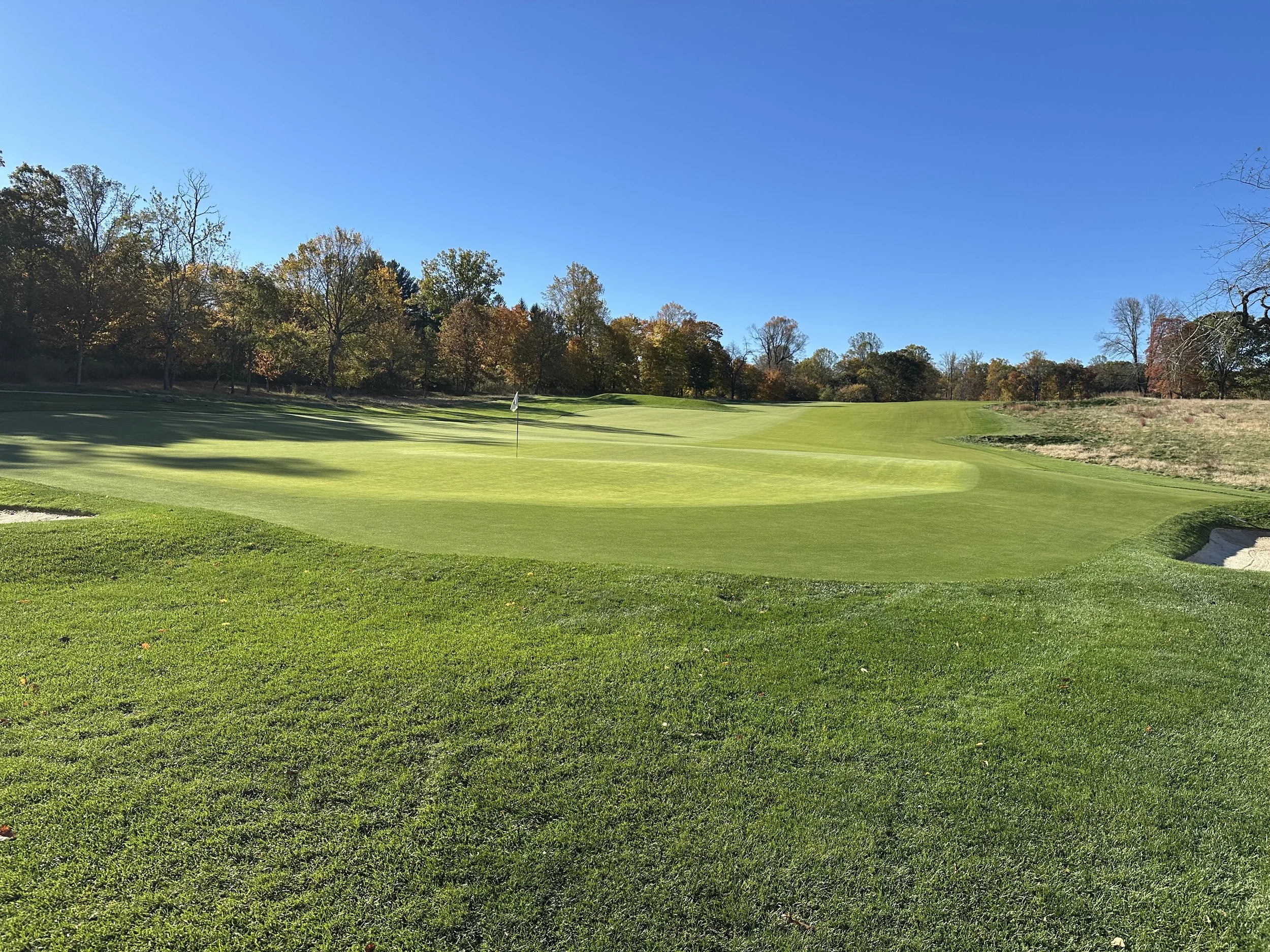
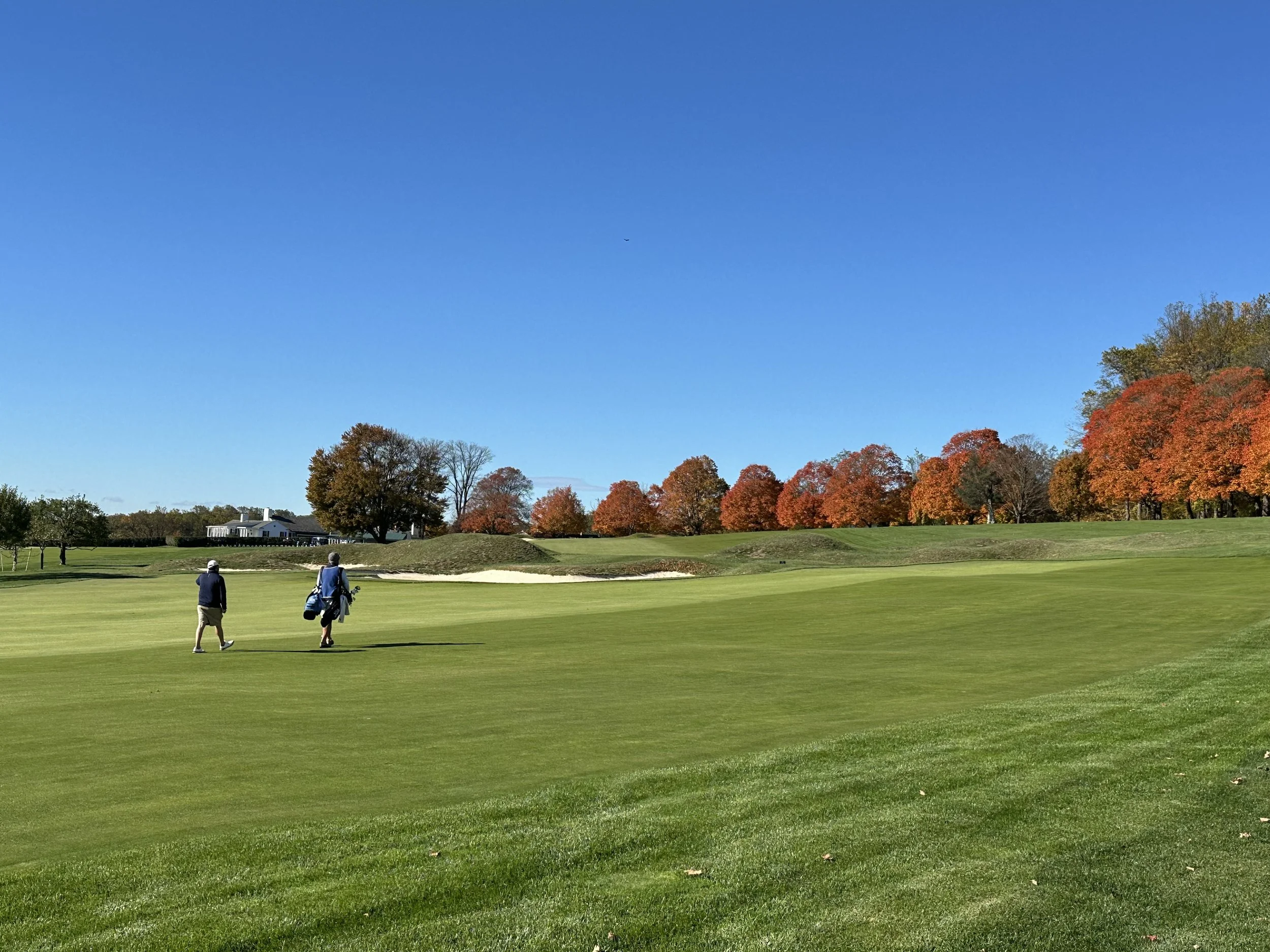
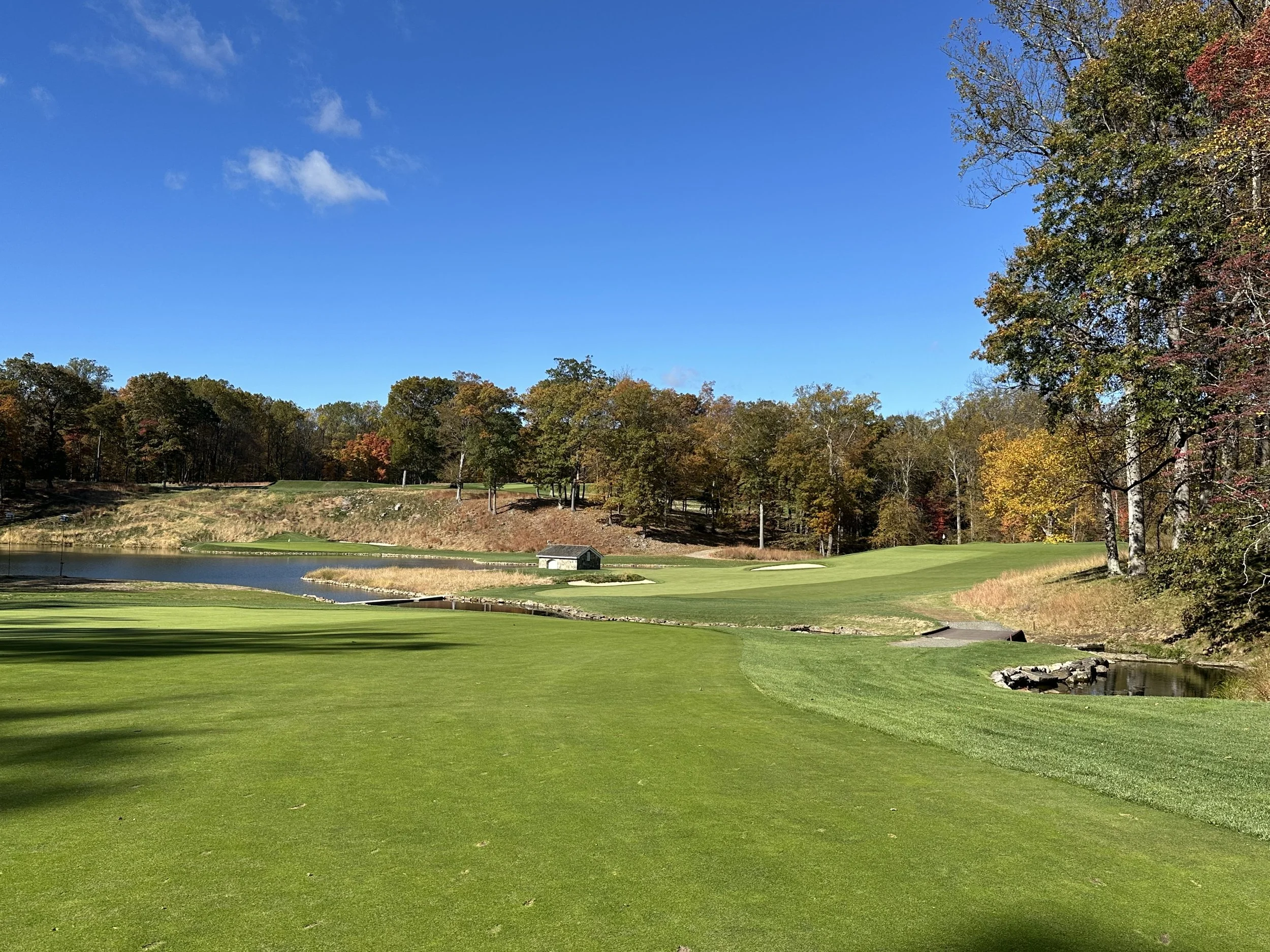
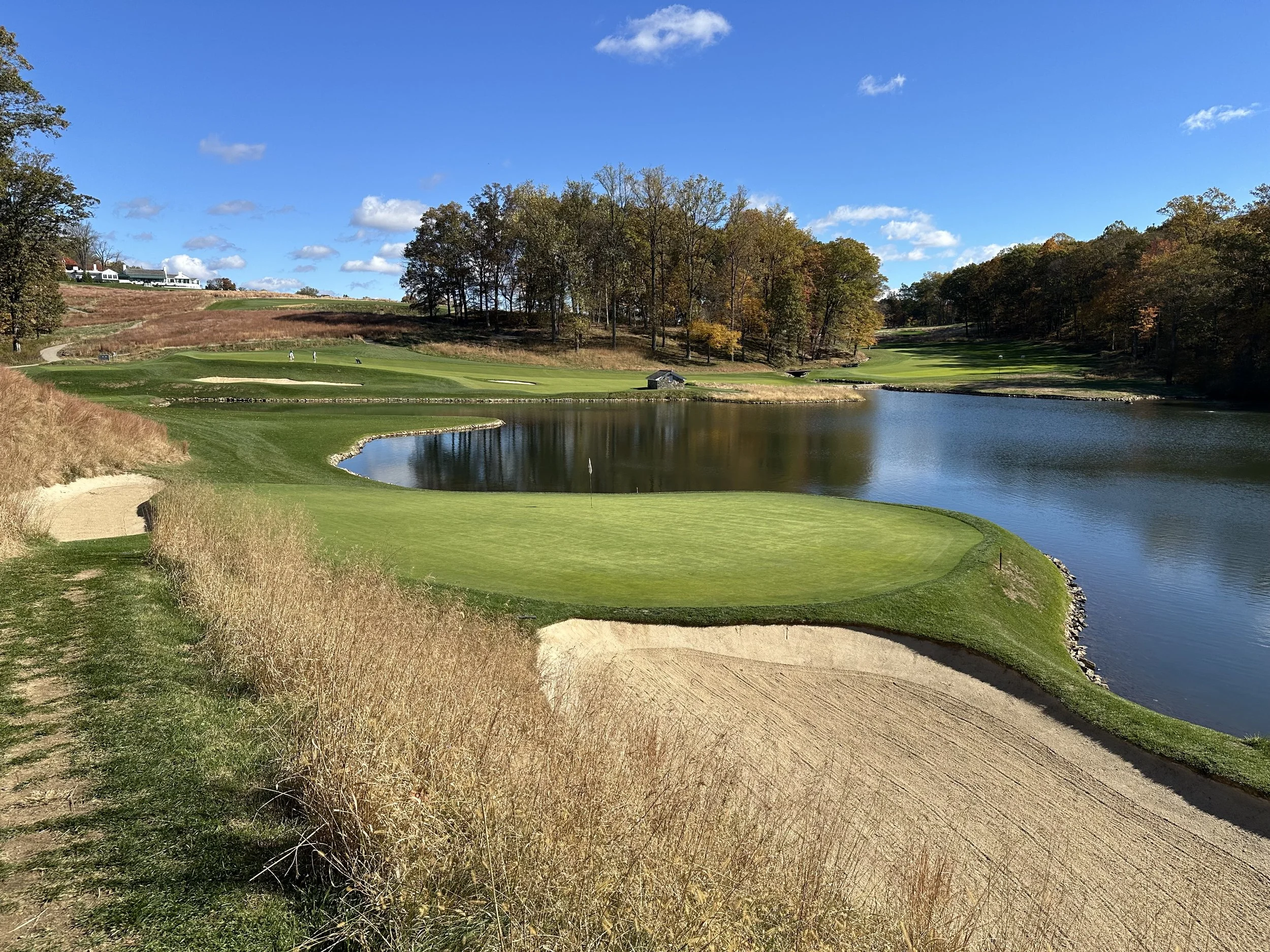
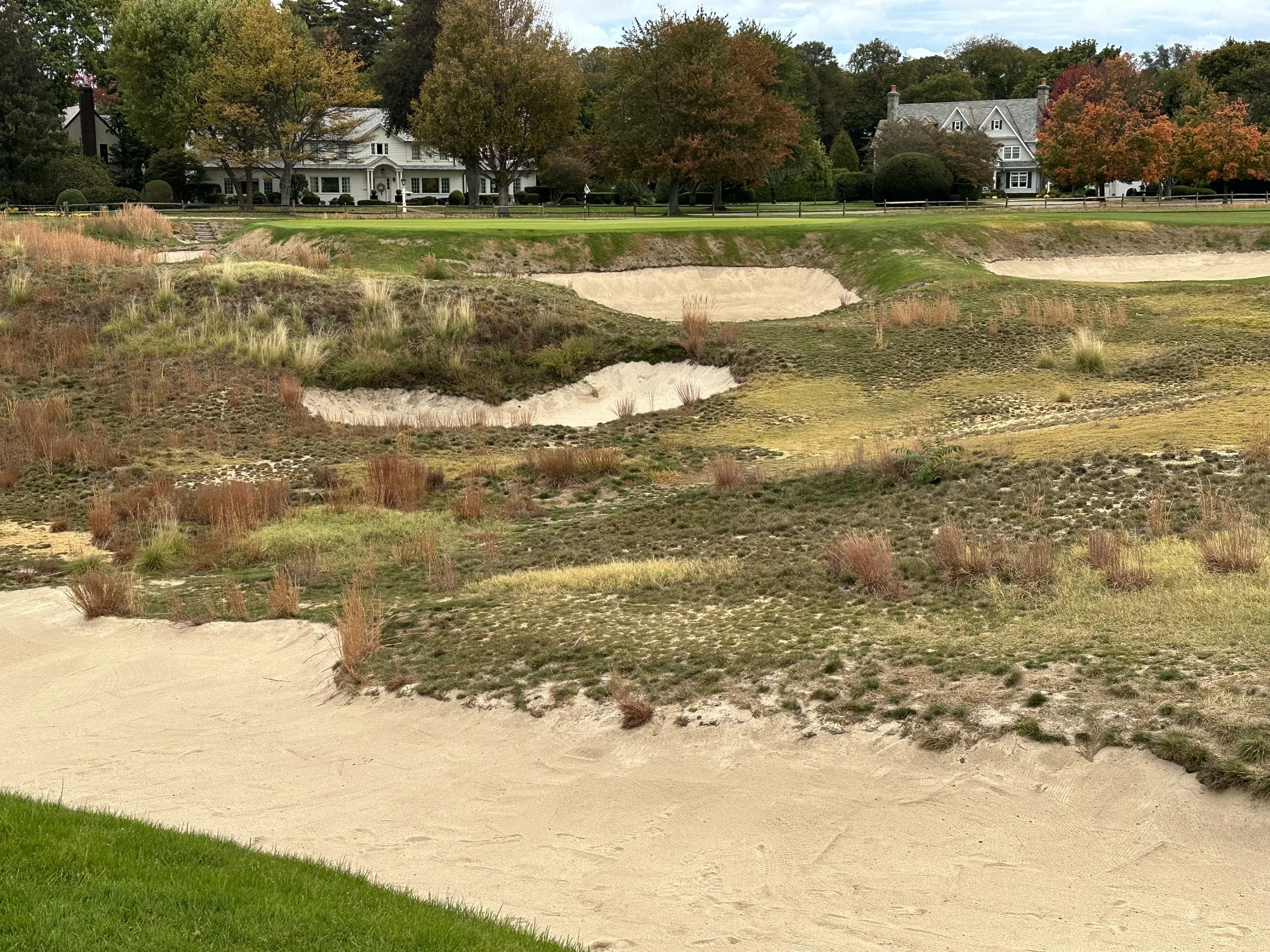
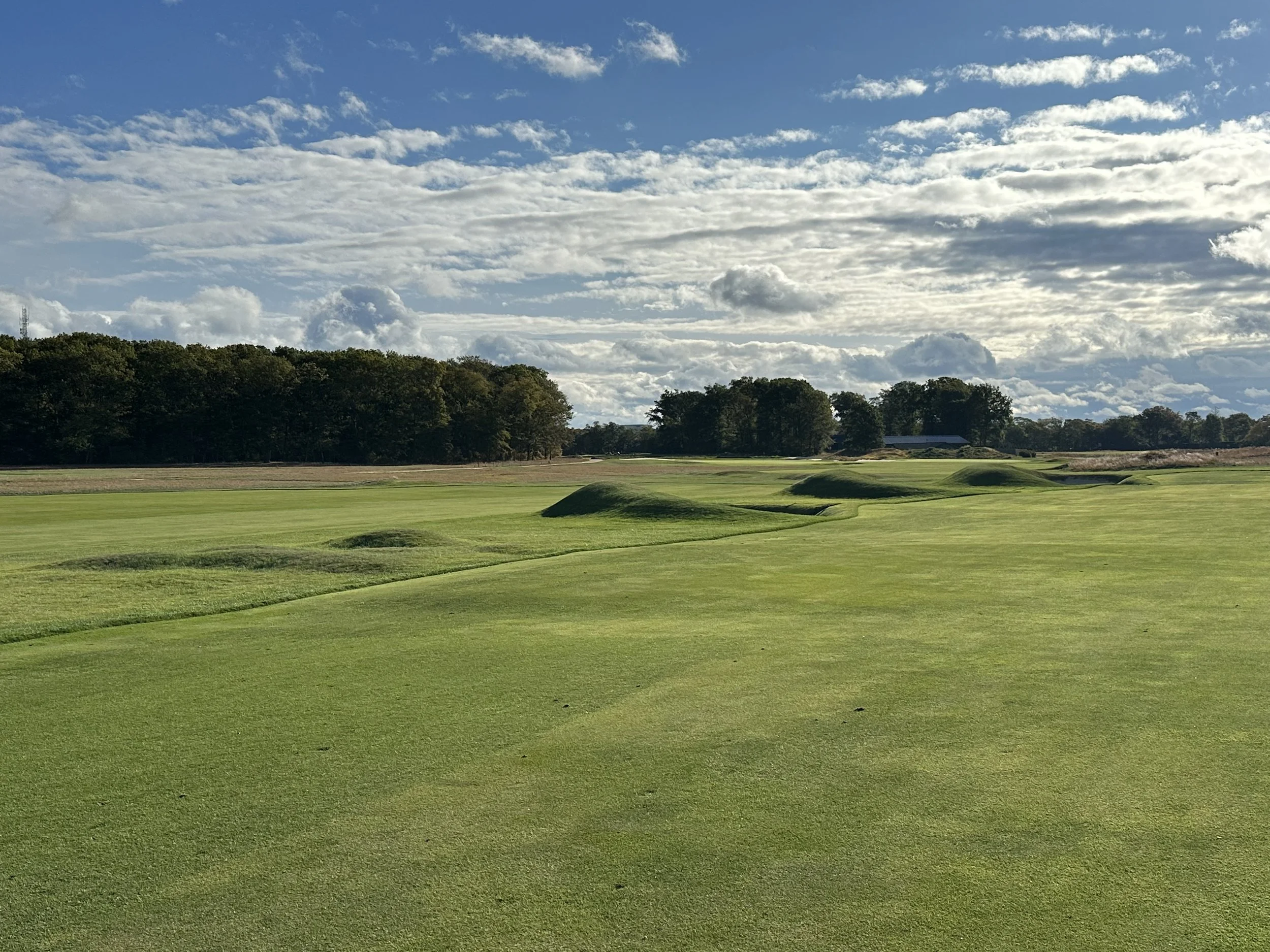
3. Garden City Golf Club [9] Garden City, NY. Devereux Emmet, with revisions by Walter Travis. I’ve been fascinated with Garden City since first coming upon Ran Morrissett’s golfclubatlas writeup over 20 years ago. Its quiet-appearing landscape, rugged textures, subdued-but-tilted greens, and deep pit bunkers looked to be a brilliant combination of simple yet compelling golf. Having seen a lot more pictures since and now having walked it in person, that estimation of simplicity was probably overstated. There’s a lot going on and a lot to take in. The greens tilt harder than you might think (and, unusually, probably makes them a beneficiary of the greens-speed race, excepting the amazing 15th, which unfortunately can only hold a shot on the left 1/3rd of the green at peak speeds.). The fairways are wider and offering more options to attack those tilted greens. And, the collection of fascinating early Golden Age features and shapes is almost overwhelming, especially for someone like me who’s more recently been obsessed with that very sort of thing. The charm factor is pushed to the max, and the quality of strategic golf is not far behind.
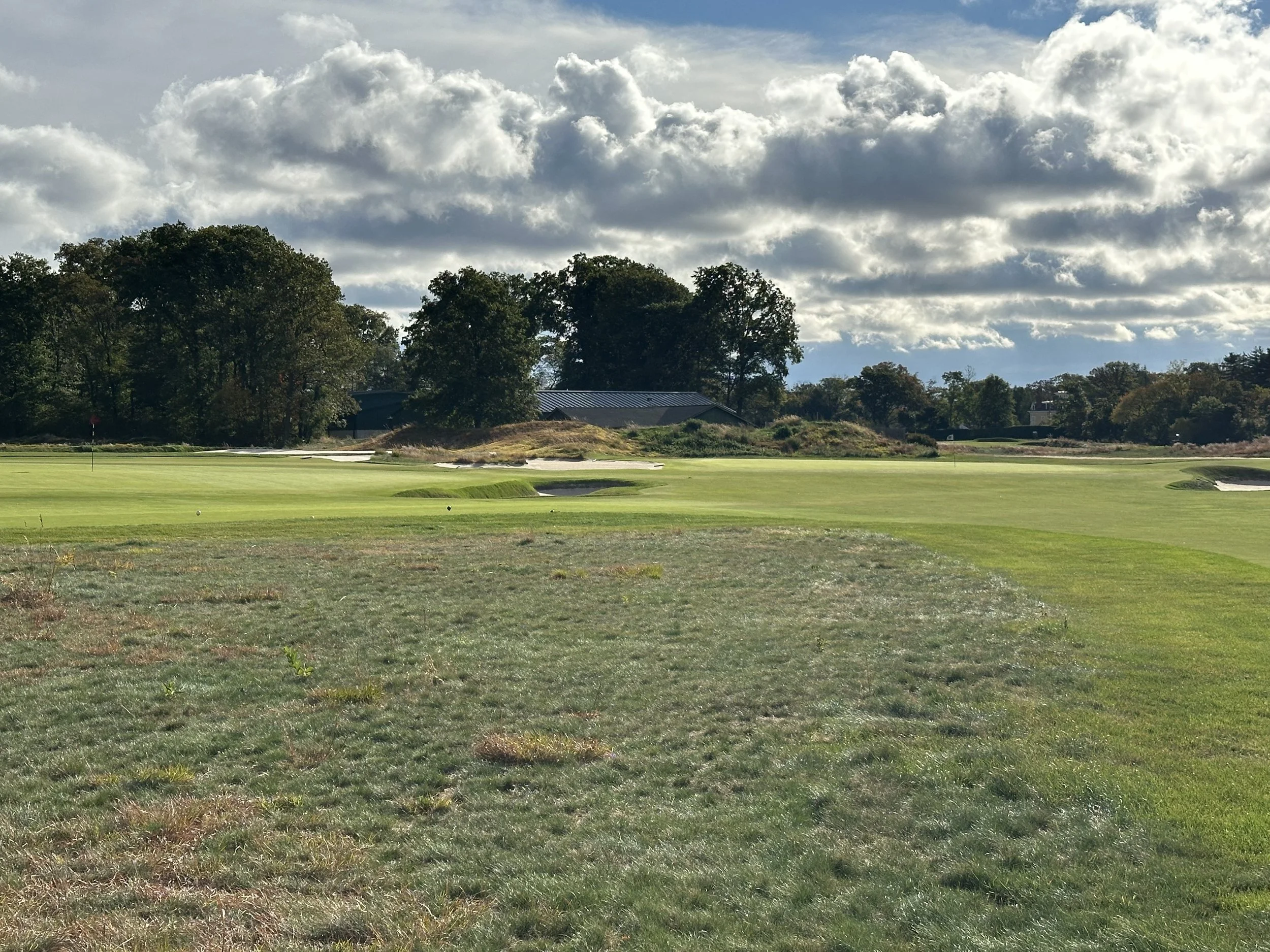
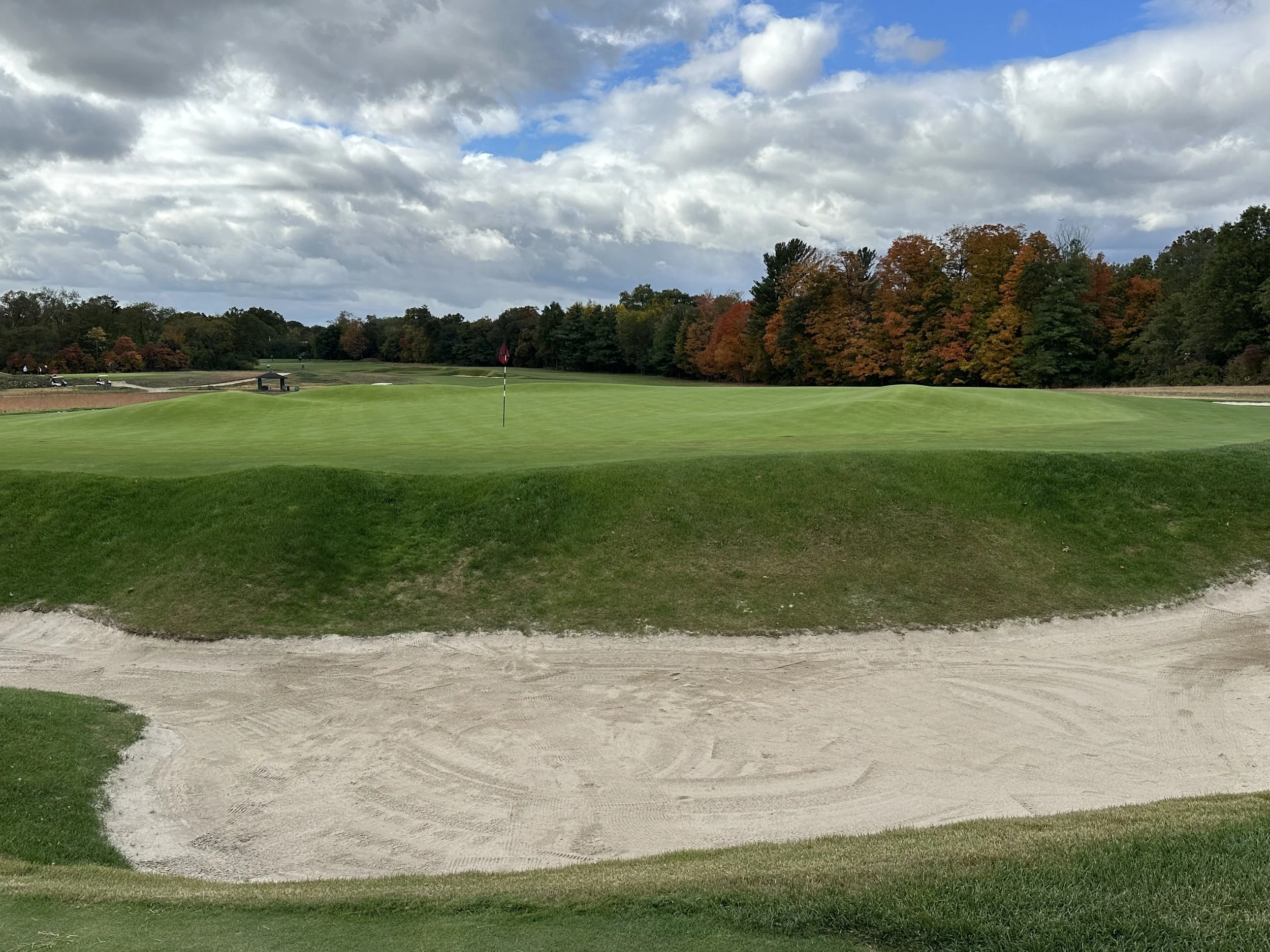
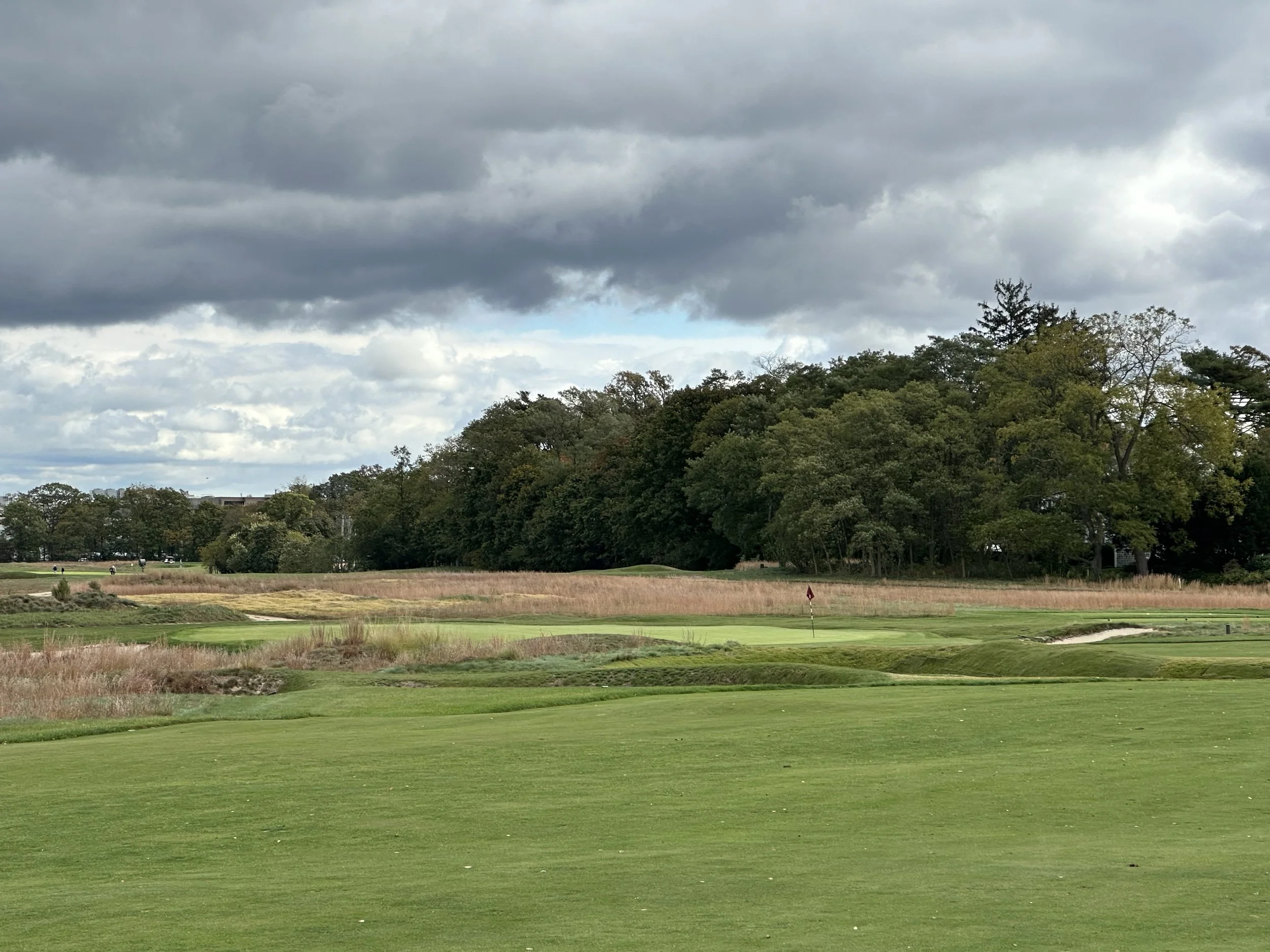
4. Pebble Beach [9] Carmel-by-the-Sea, CA. Jack Neville and Douglas Grant, with revisions by H. Chandler Egan. It’s a popular thing among our snobby golf architecture circles to rag on Pebble Beach. And some of that is fairly justified, as the course isn’t really the best version of itself at the moment (I’ve argued for a hybrid version over multiple eras but centered around the 1929 U.S. Am iteration). That said, it’s still very good and a truly special experience to play, especially if doing it with someone important to you in golf, as I did with my father. The setting is hard to beat; I’ve never been so unbothered to stand around and wait to hit my shot as I was on holes 4-10. The history is also hard to beat, as you can’t help but think of of all the previous big moments and shots played over these grounds as well as just strangely finding yourself playing golf among something so familiar (yet unattainably distant and mythical). Beyond all that, though, the golf is really good. Better than I thought it would be, especially inland, and especially as I’m not all that fond of small greens. But, I constantly found myself hedging away from the high-number sides of holes and then ultimately paying a small-number penalty with a more difficult-to-hold angle into those small tilted greens. And, I found the recoveries around those greens to be more compelling than expected despite almost always requiring one of my 2 wedges. The challenge of each—where exactly to land it, how much break to play, how high to arc the shot—was both enticing and hope-inducing. So, while Pebble Beach absolutely could use a refresh—I can’t unsee those collar dams and other sand buildups, especially after working the Pasatiempo project—it is still a class golf course to go along with the special experience.
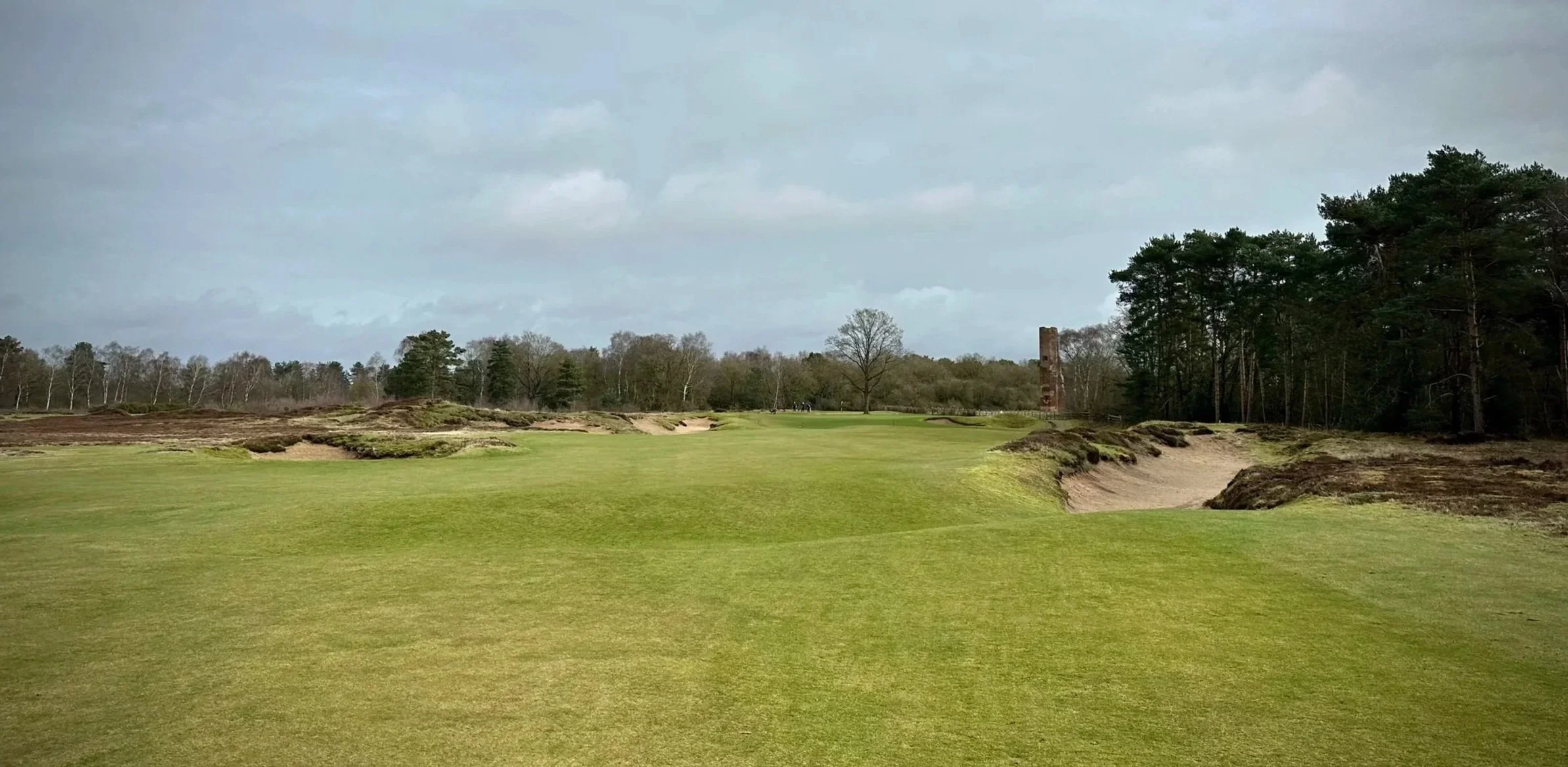
Woodhall Spa—as brilliant and charming of a flatland golf course as you will find
5. Woodhall Spa [8] Woodhall Spa, Lincolnshire, England. S.V. Hotchkin and C.K. Hutchison. This is one of those courses that stays with you—one of those courses I just find myself thinking about every couple weeks or so. The reason for that is there isn’t anything quite like it. The ground is relatively flat, but it is sandy. This means two things—excellent turf (and the only real fast bouncy conditions experienced during my very wet winter visits) and the ability to easily dig big holes and build features from the spoils. And that’s what Woodhall has in spades—giant rugged sand bunkers awaiting careless or overly greedy play, with charming little hillocks and ridges breaking up the landscape here and there. The golf is good and uses angles in compelling ways, and the landscape is delightful—pastoral yet highly textured, with the old hunting tower ruin haunting over the proceedings. I got to experience it with Richard Latham, who was highly involved in the restoration works and a delightful host full of knowledge about it. I can’t wait to get back again someday and play it again; it’ll be worth the inevitable detour no matter which way I’m heading.
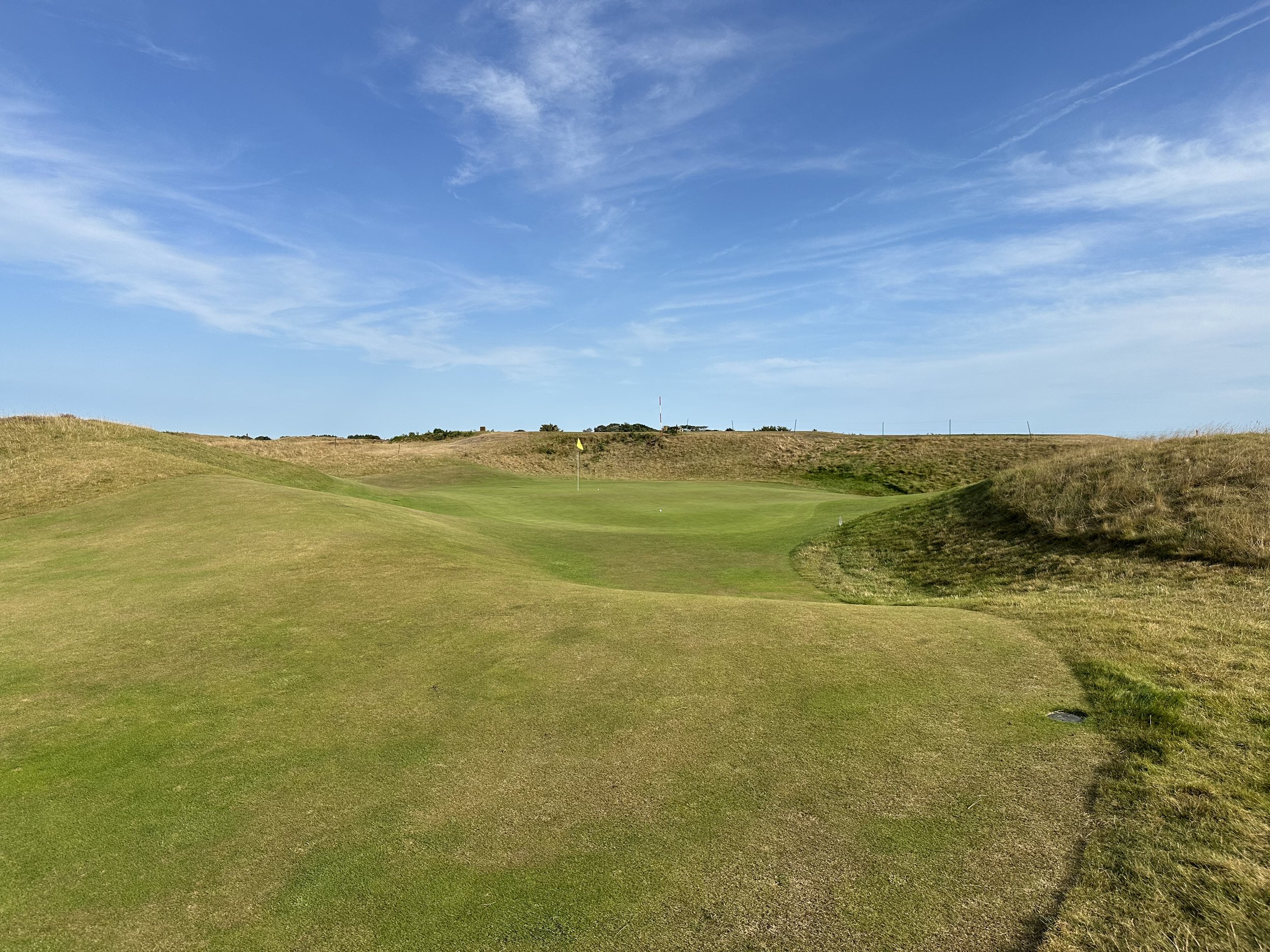
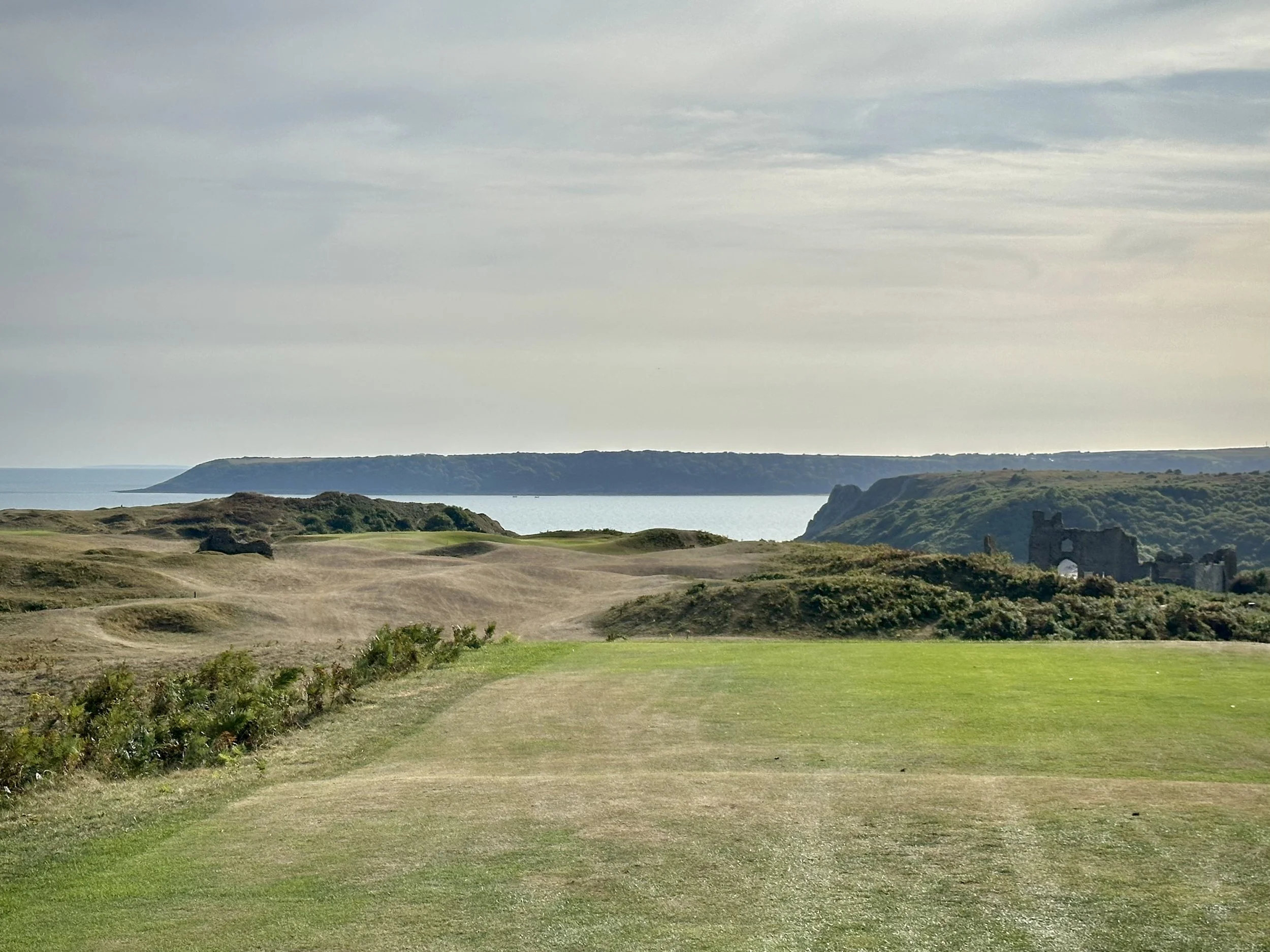
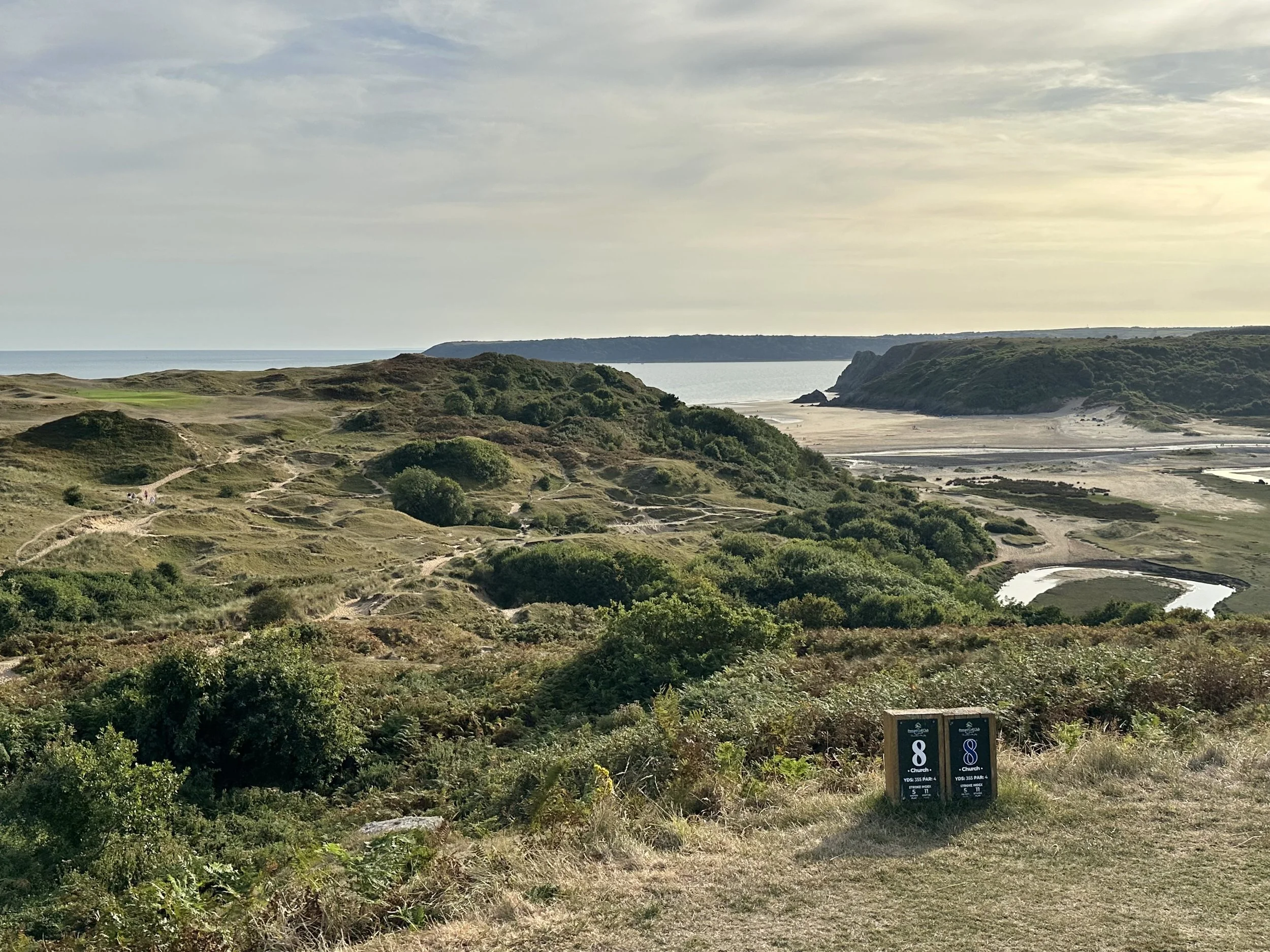
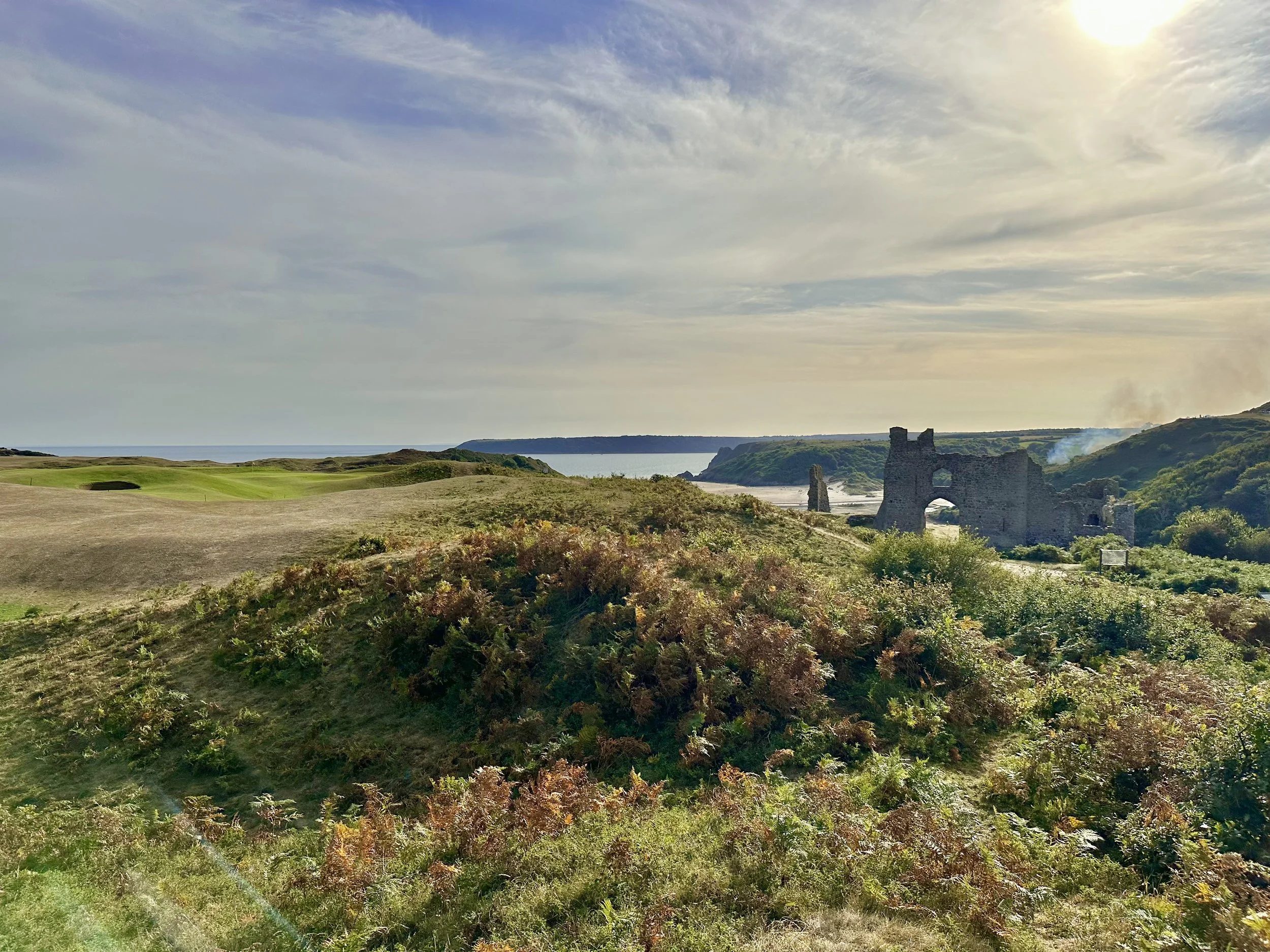
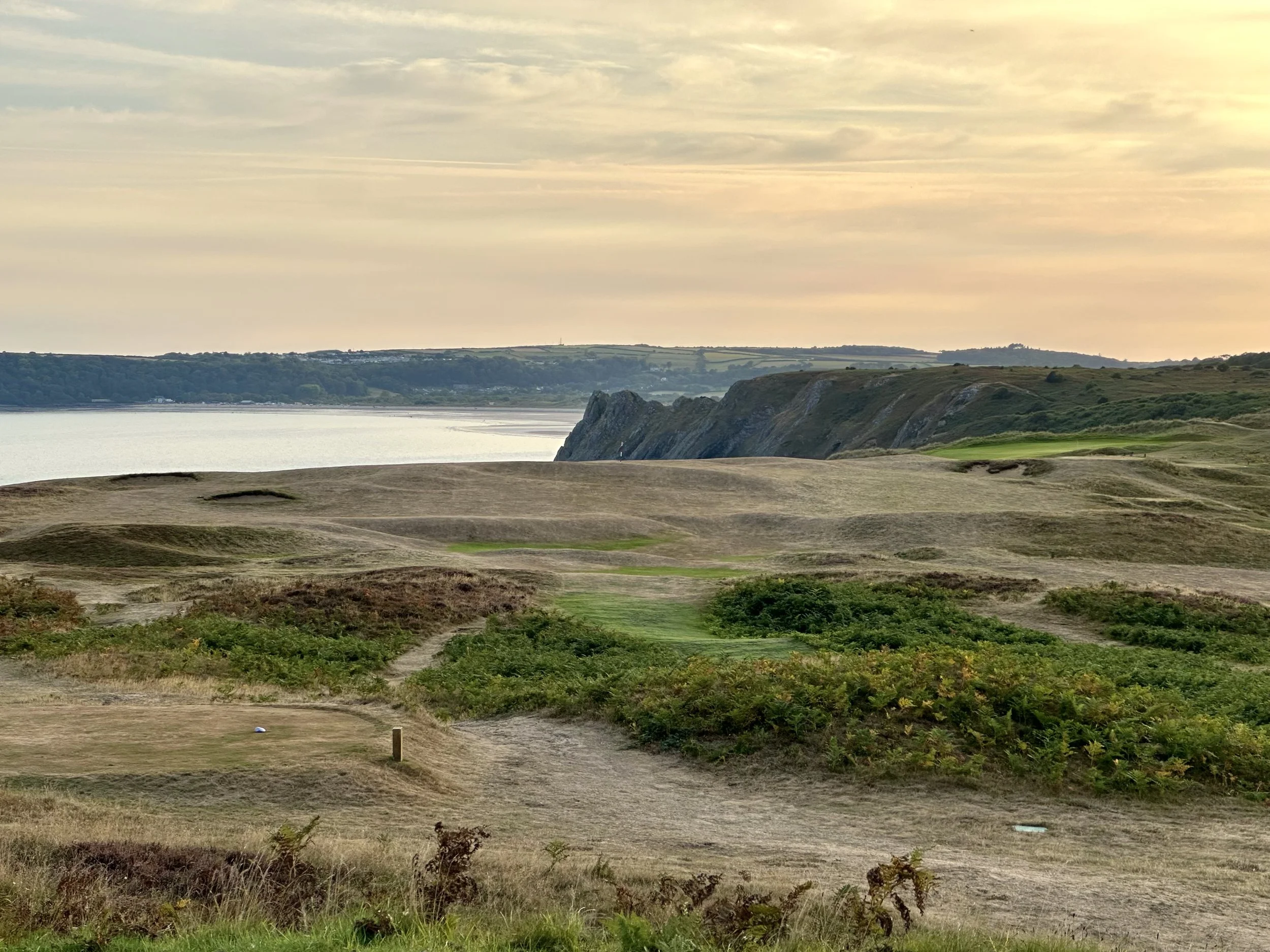
6. Pennard [8] Southgate, Swansea, West Glamorganshire, Wales. Original links from 1896, with modifications by James Braid and C.K. Cotton. The “links in the sky” is very much that—links contours big and small with some of the fastest turf I’ve ever encountered, all towering up above Three Cliffs Bay and the Bristol Channel. Walking around this piece of land feels like floating in a dream. Adding to these other-world sensations is the presence of ancient castle and church ruins as well as a low-lying beach, river, and bit of linksland with grazing cows and horses, all with dramatic cliffs and see views in the backdrop. Truly amazing. The golf is very good too with a few outstanding holes such as the long par four 6th with its green in a little dell, the castleside short par four 7th with an excellent green and options galore, and the dramatic 16th playing straight out to the water and its big tilted green surface at the end. If not for a weak, manufactured green at the 15th or a t00-narrow finish at 17 and 18, this place could push for a solid-to-high 9 on the Doak scale and a top 3 spot on this particular list.
7. Walton Heath (Old) [8] Tadworth, Surrey, England. Herbert Fowler. In second place for “surprise course of the year,” Walton Heath amazed me way more than I expected. Its big, bold, creative, rugged shaping was unlike anything I had seen to that point, and the charm of venturing out from the cozy clubhouse area and 1st hole par three to the open heath across the road was to me a charming asset, not a detraction. The history at this place is about as deep as any in golf, with James Braid’s workshop on site, a collection of clubhouse memorabilia and signatures as historically amazing as any I’ve seen, having famous members such as Winston Churchill, being home to Herbert Fowler, and the greatest personal library of anyone in golf basically located on property, that of Philip Truett. My day at Walton was an all-timer in many ways.
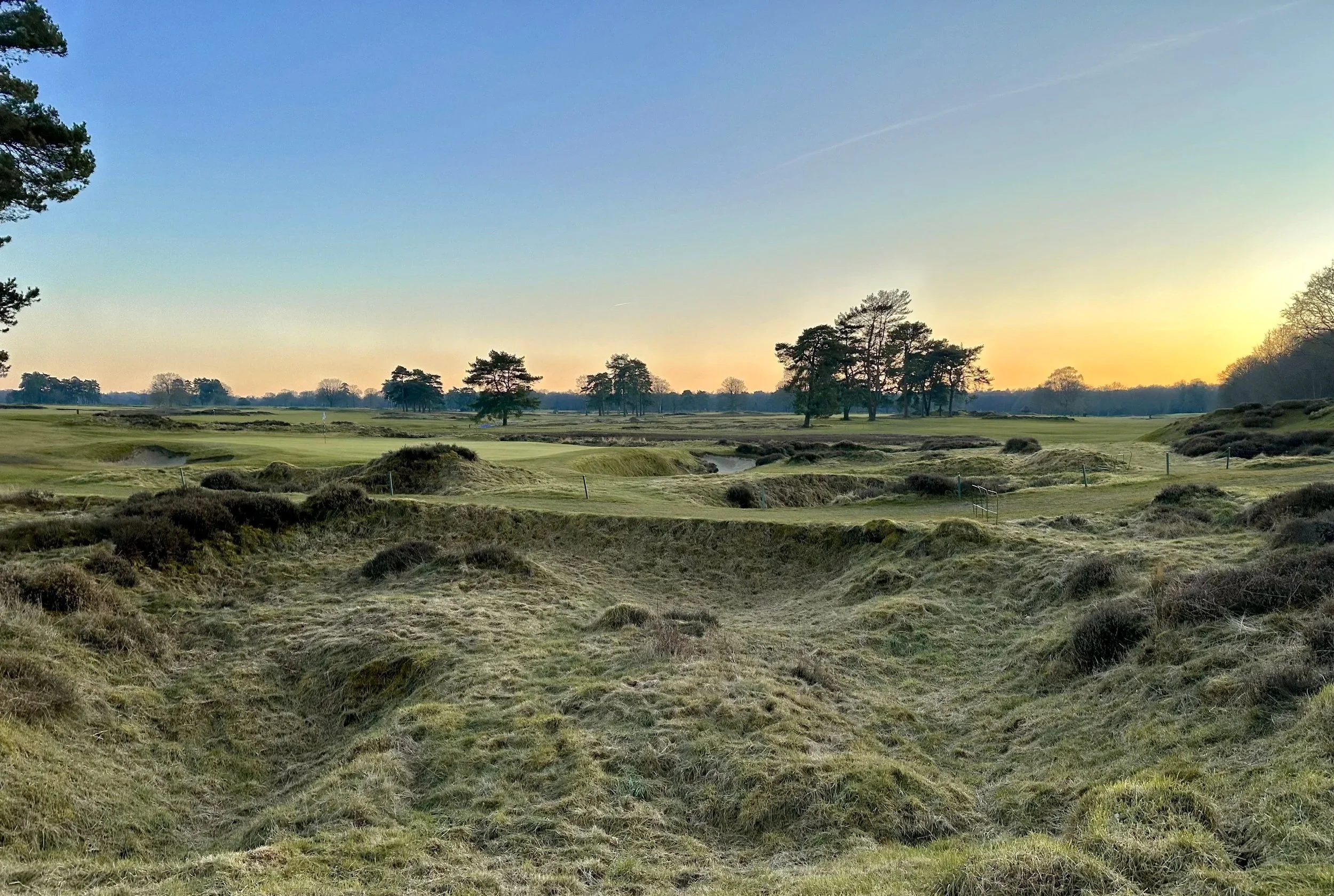
Walton Heath, a spectacular and expansive setting with eclectic old features and sound golf architecture
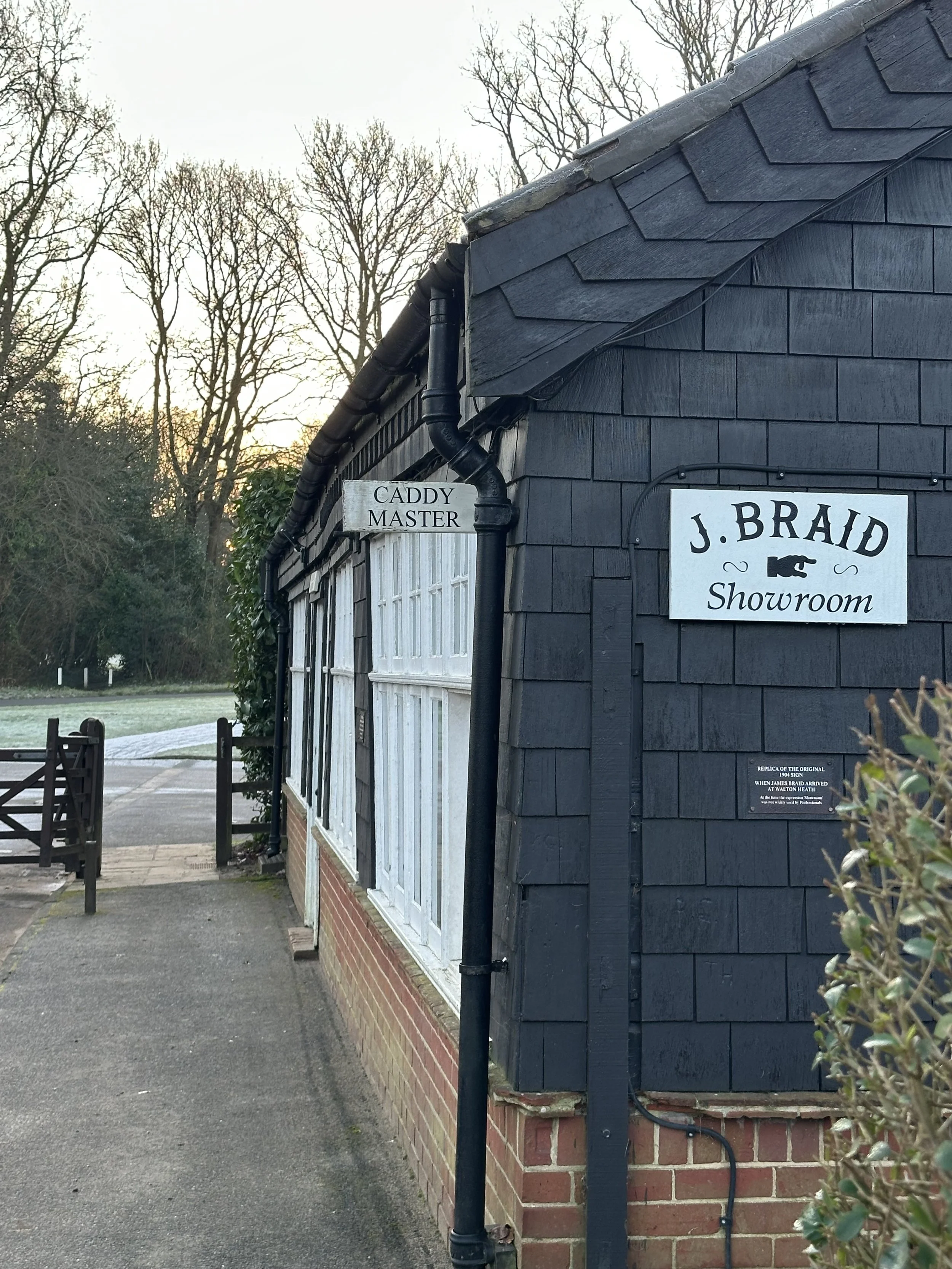
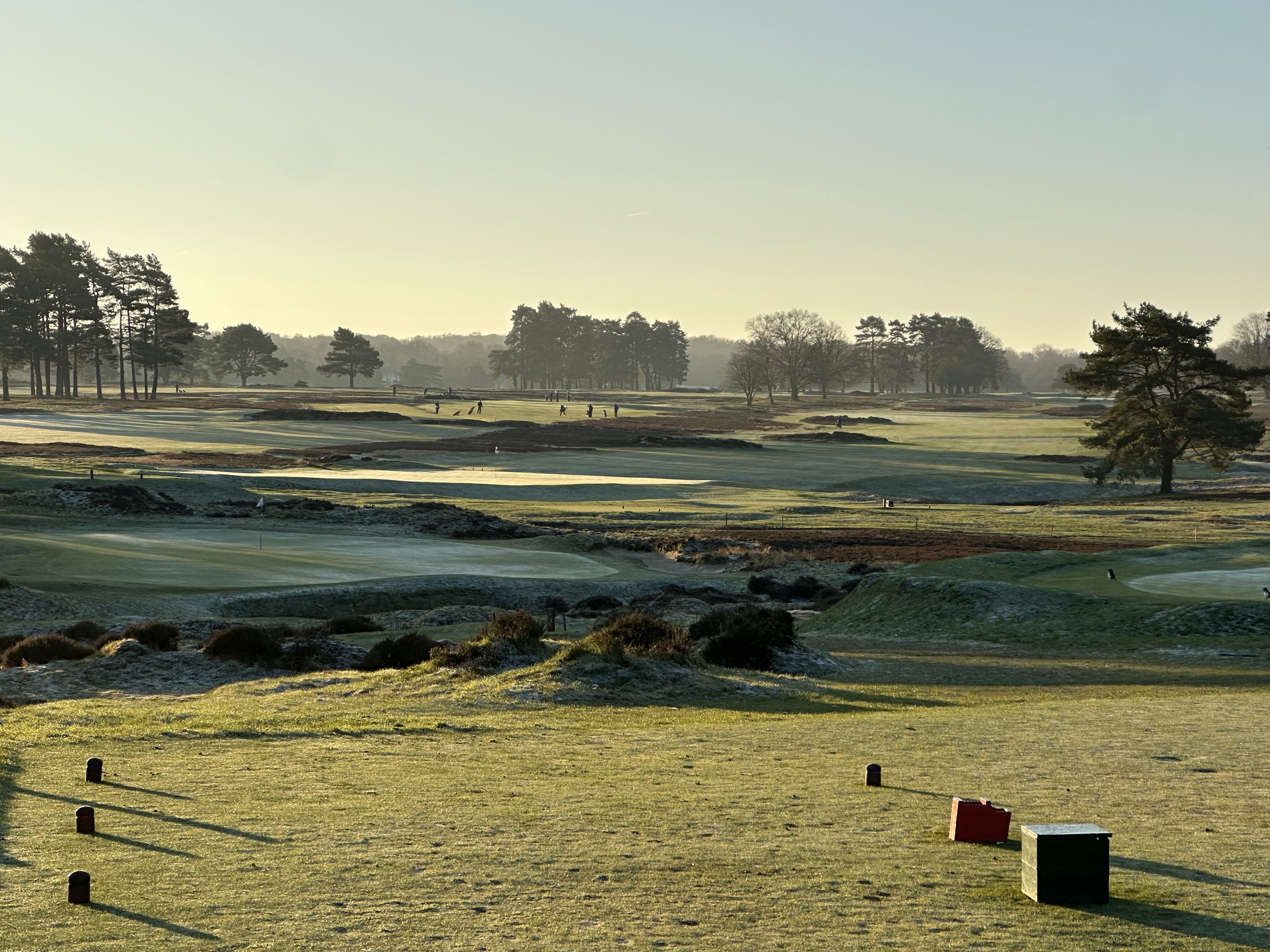
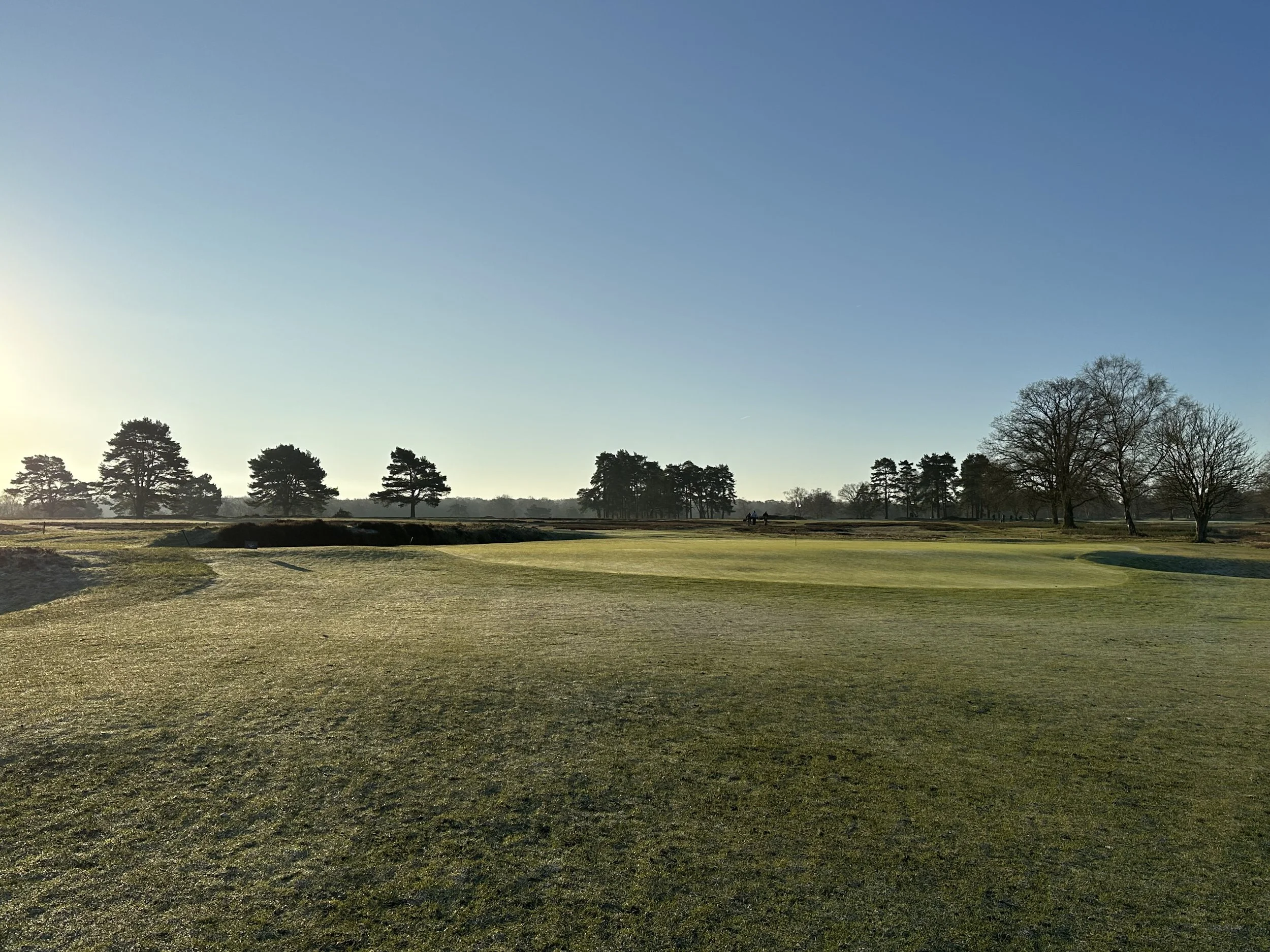
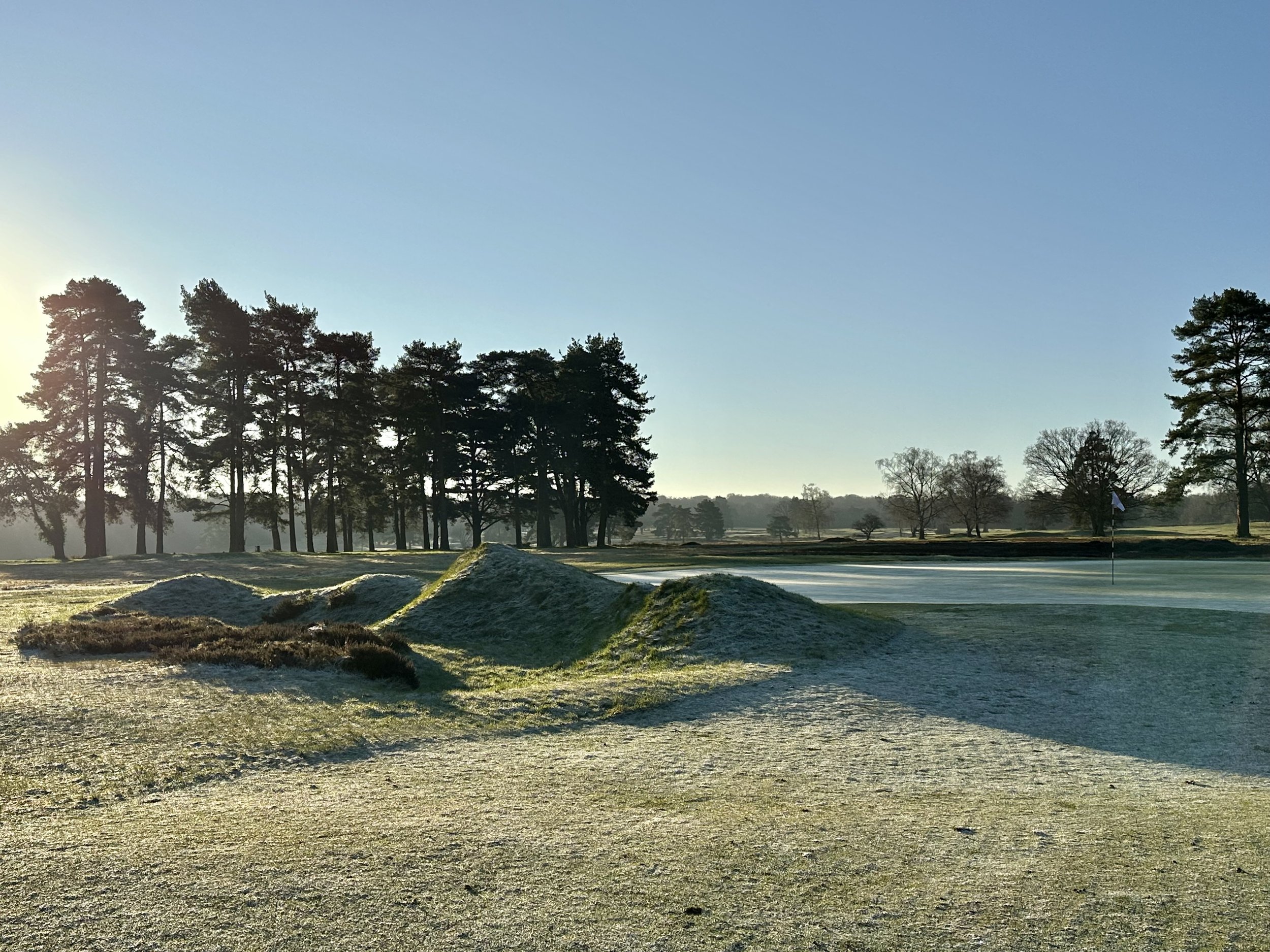
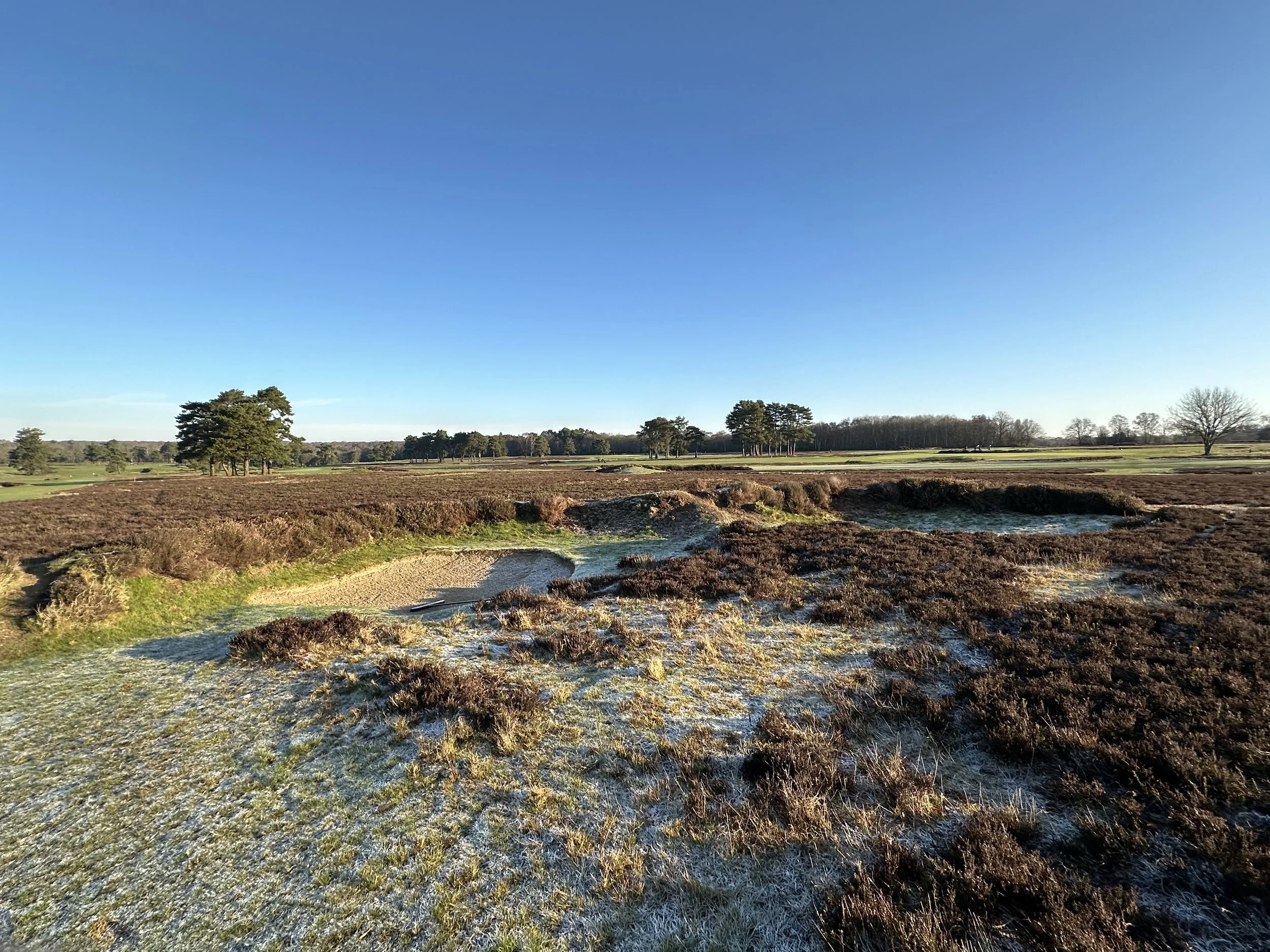
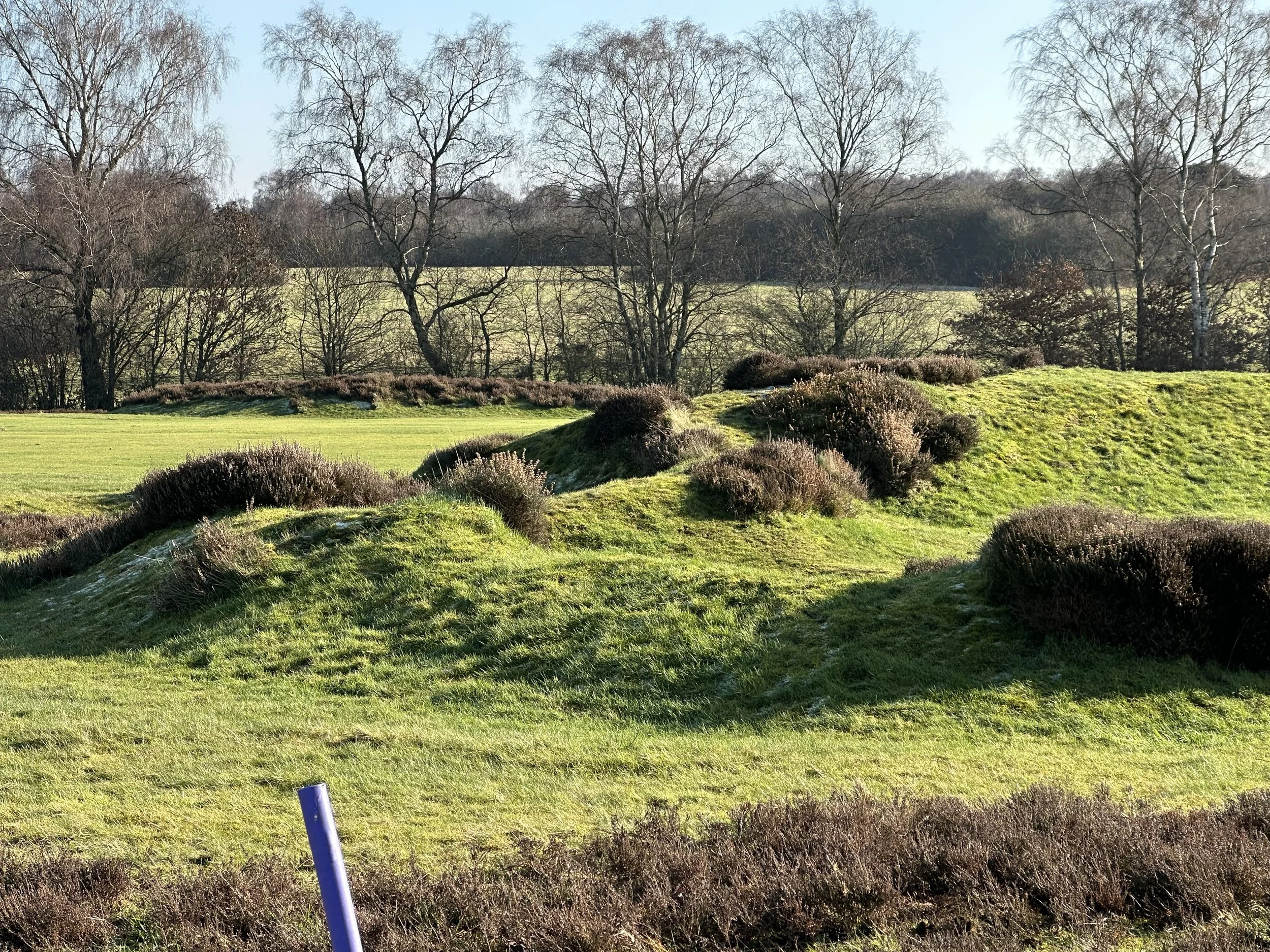
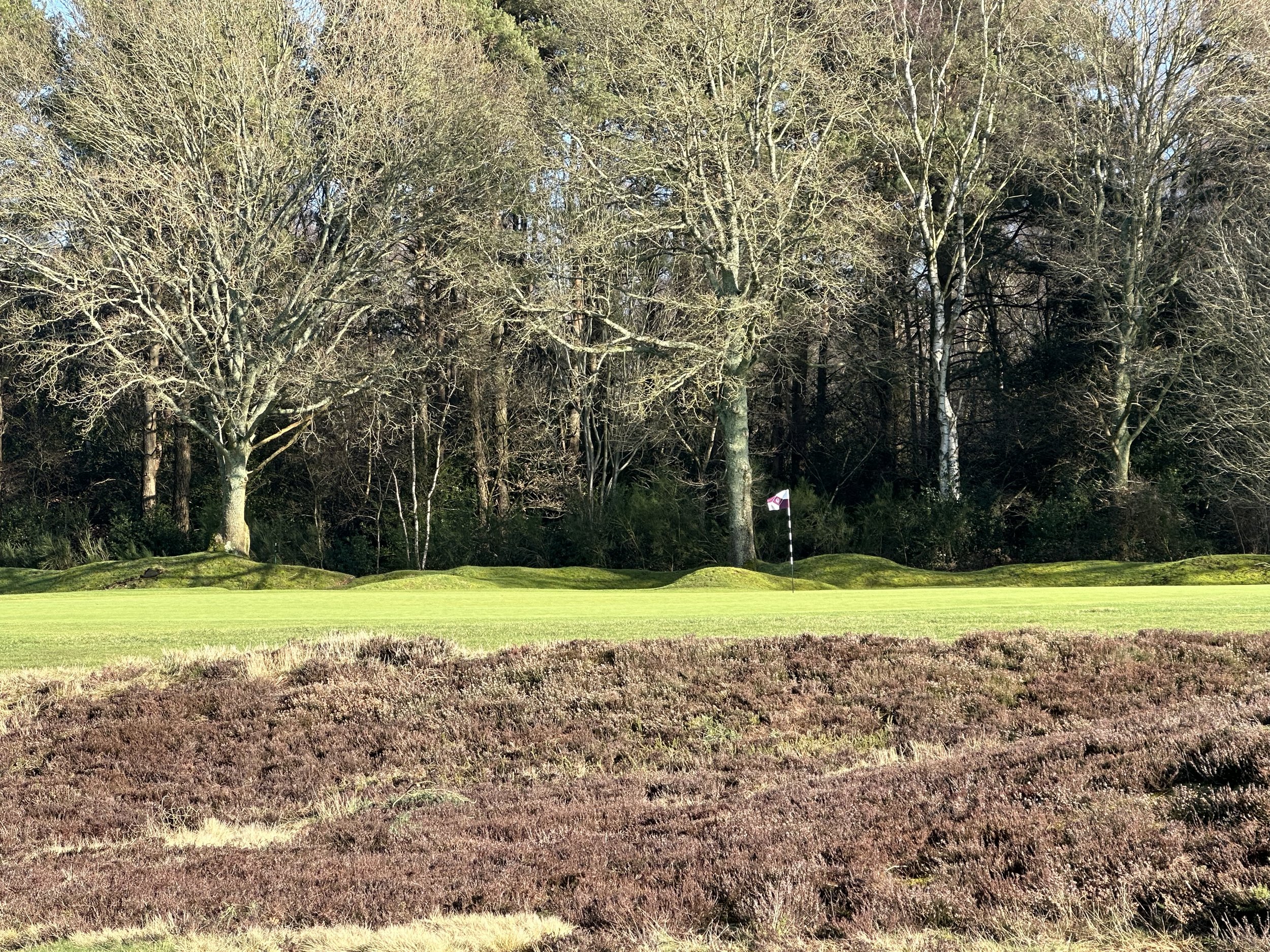
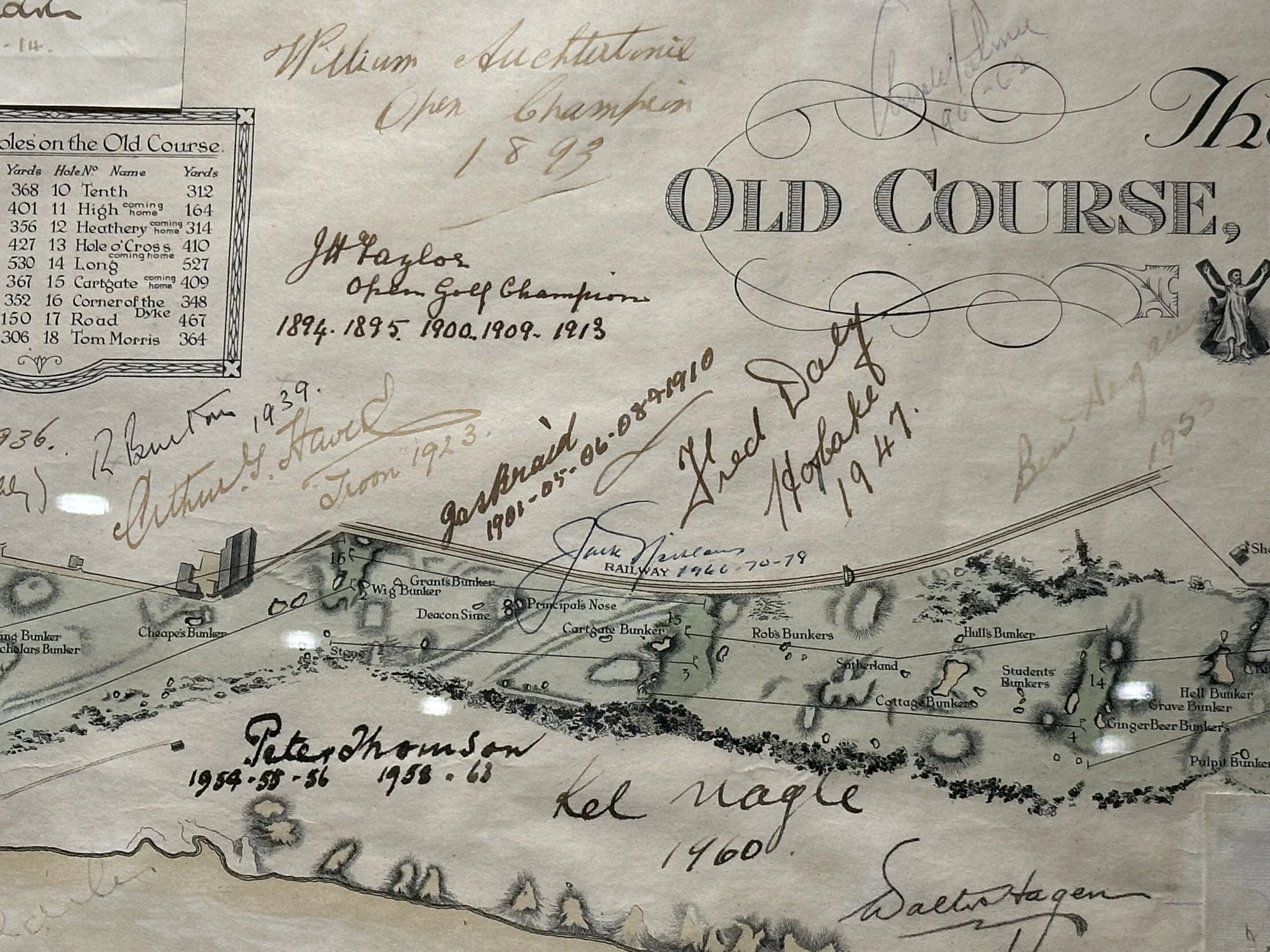
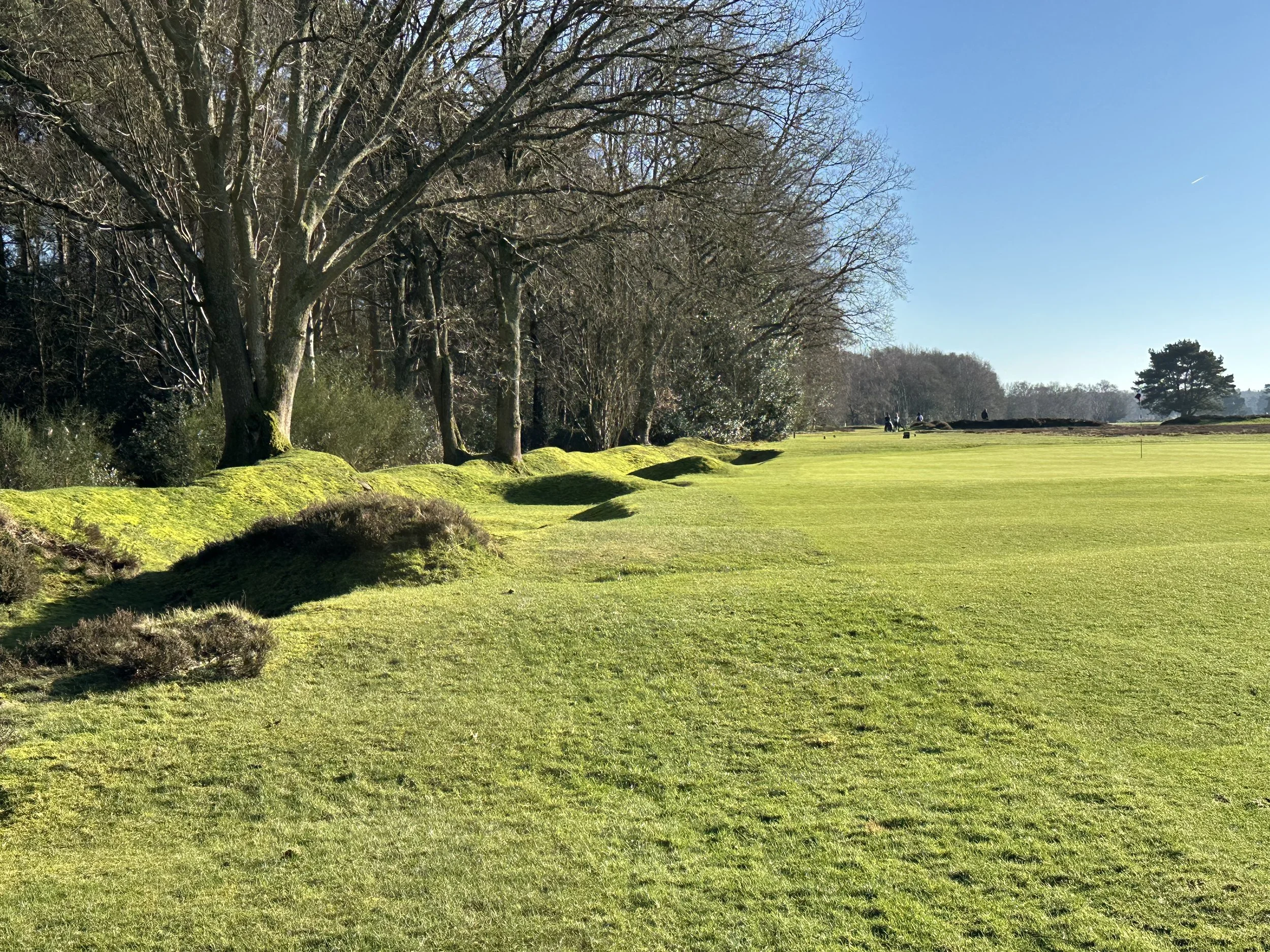
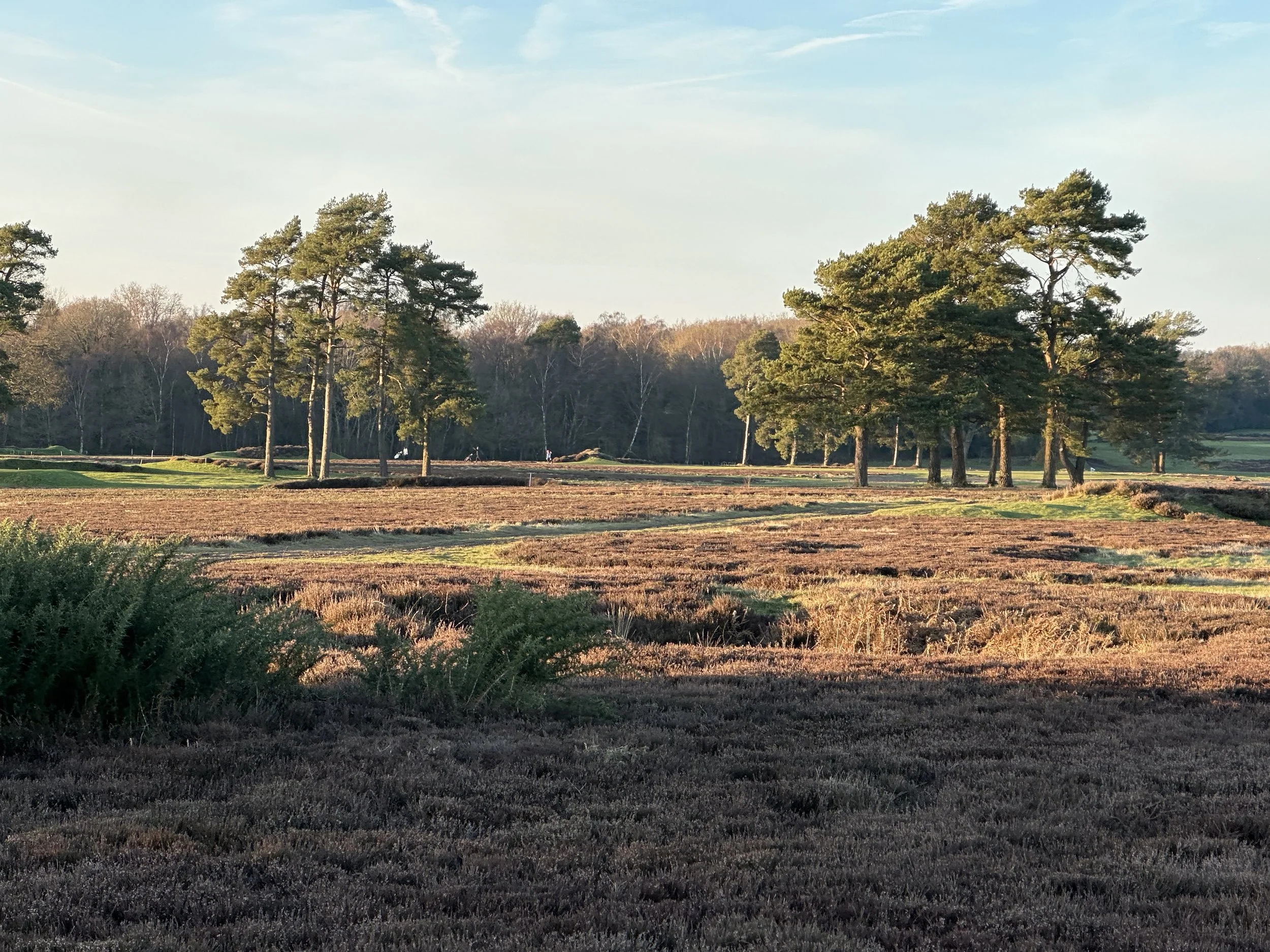
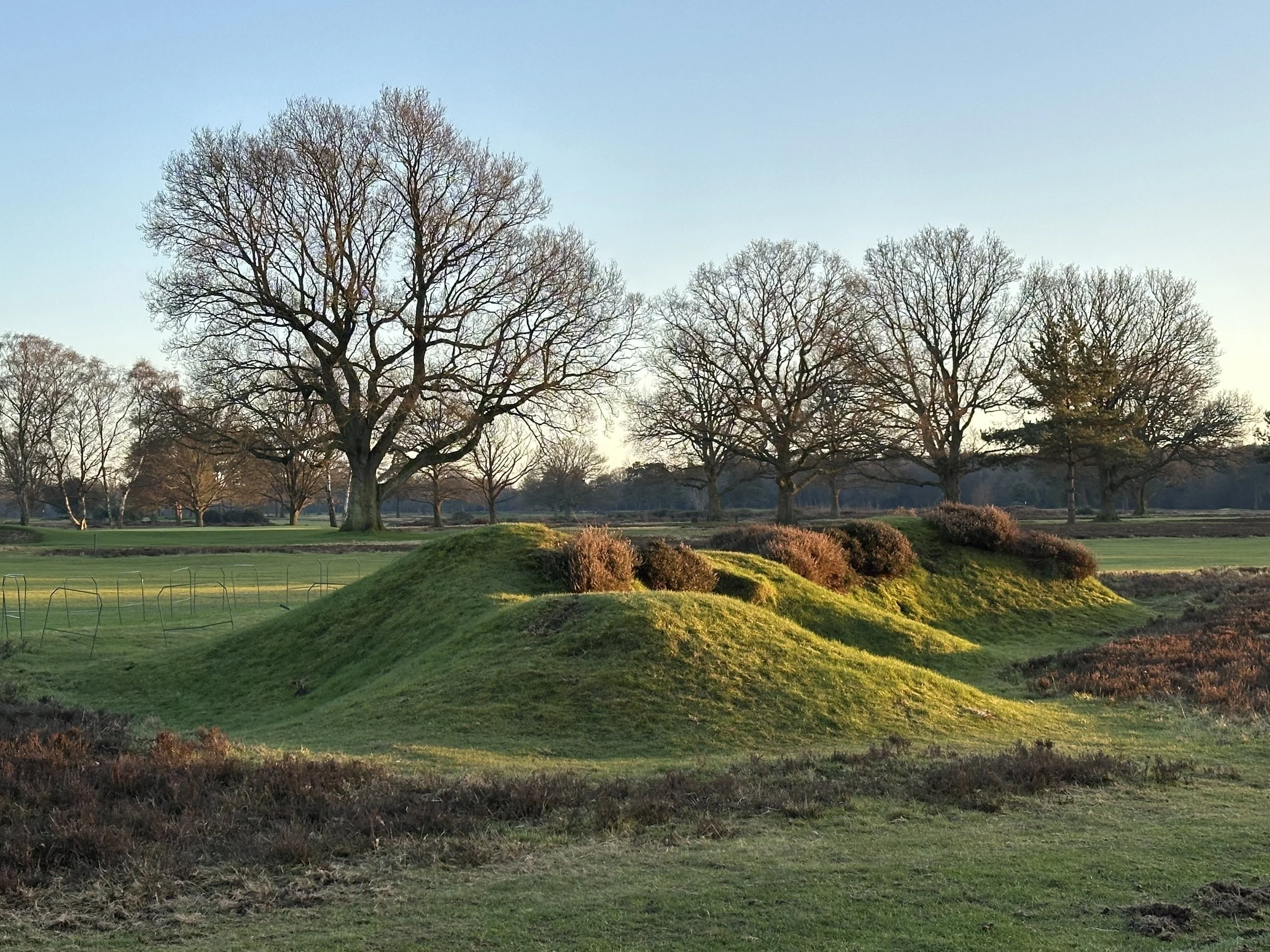
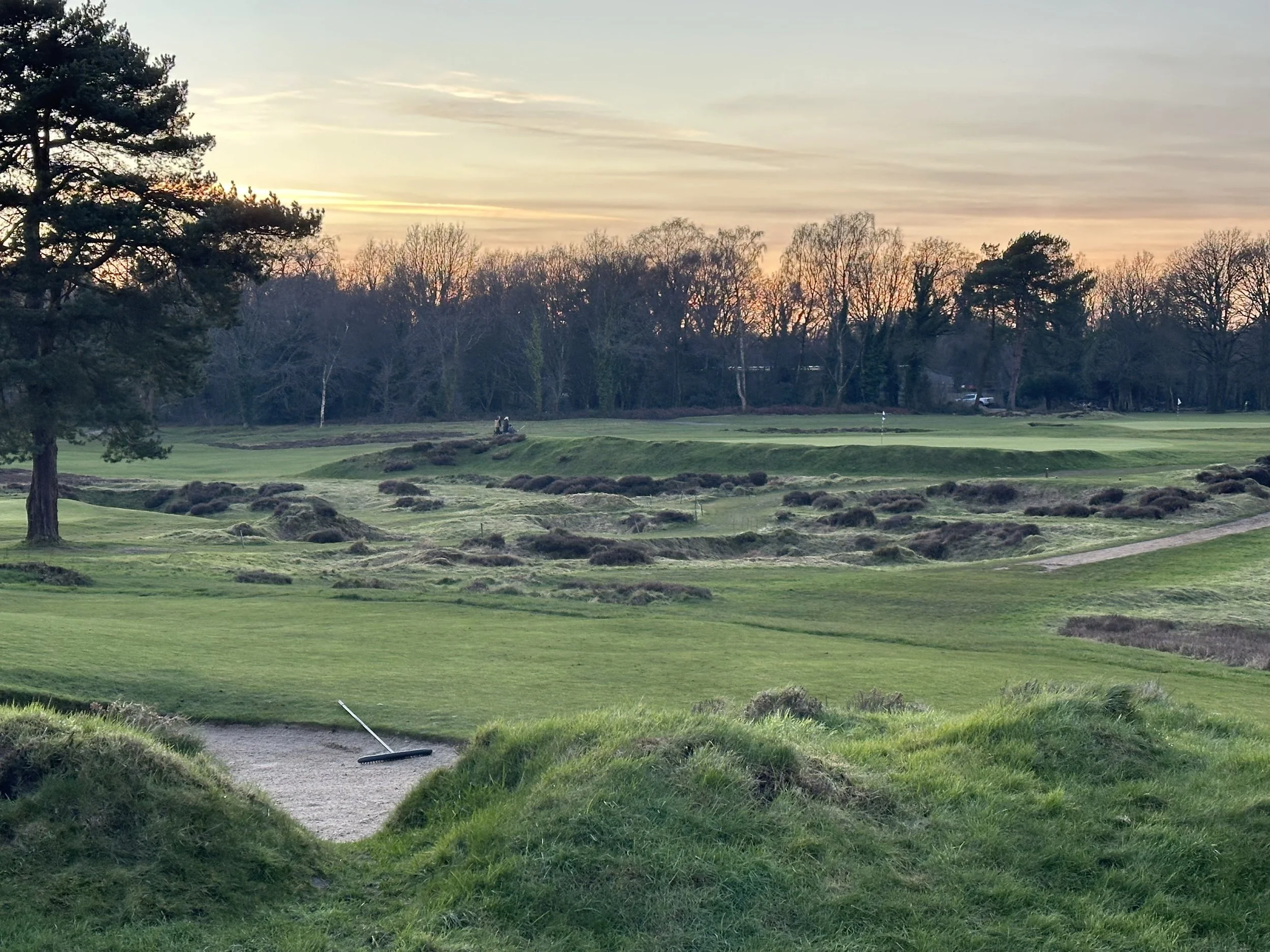
Above: an assortment of Walton Heath images of both the Old and the New Courses and other historical pieces
8. Swinley Forest [8] Ascot, Berkshire, England. Harry Colt. Swinley Forest has had my attention for a long time, its mystery, par of 69, and Harry Colt’s self-proclaimed “least bad course” statement being a siren song of sort. Its difficulty of access only added to that desire to get there, but I finally made it for an evening walk—on my final overall night in England, no less. The appeal of the place is pretty immediate with its historic clubhouse, quiet low-key feel, and majestic forested setting that only increases in majesty as you traverse into the property. There were some particular feature highlights I loved—the benched green 4th, the back left ridge guarding the 9th, the offset hazards on the 12th, and the cross hazards on the 14th. I’ve got it a bit further down the list than I’d expected, though, as I noted a number of design changes and renovations that seem to be evolving away from Colt’s work, when the opposite careful, restorative approach should be the modus operandi at such a truly special, beautiful, and historic place.
9. The Addington [8] Croydon, Surrey, England. J.F. Abercromby. The Addington is another one of those sub-70 courses that punches well above its weight, with numerous lengthy par 4s playing their way over brawny terrain. The views from what is the highest point in Greater London are stunning, as most of the course offers peekaboos of the city’s skyline. That’s all thanks to excellent, aggressive, historically detailed restoration work headed by owner Ryan Noades and his architects Clayton DeVries and Pont. Many trees have been felled to open views, improve airflow, and regenerate the site’s native heather. Greens have been expanded carefully, and tees have added new angles. The most impressive part about the course by far though is Abercromby’s greenside contouring. It is as wild, artistic, and varied as you will find anywhere, and it must be a joy (or terror!) to watch what the ball does when played off of them.
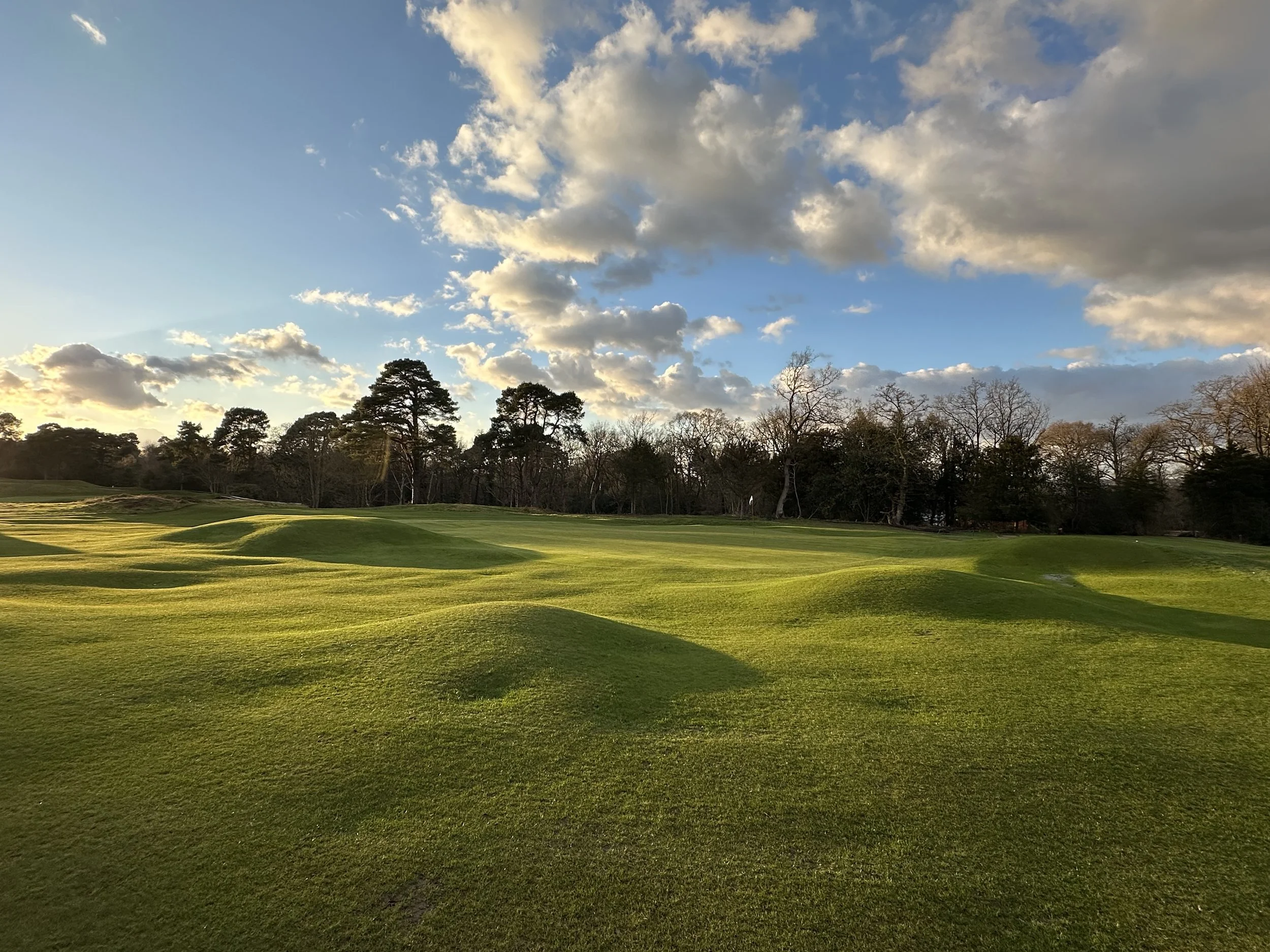
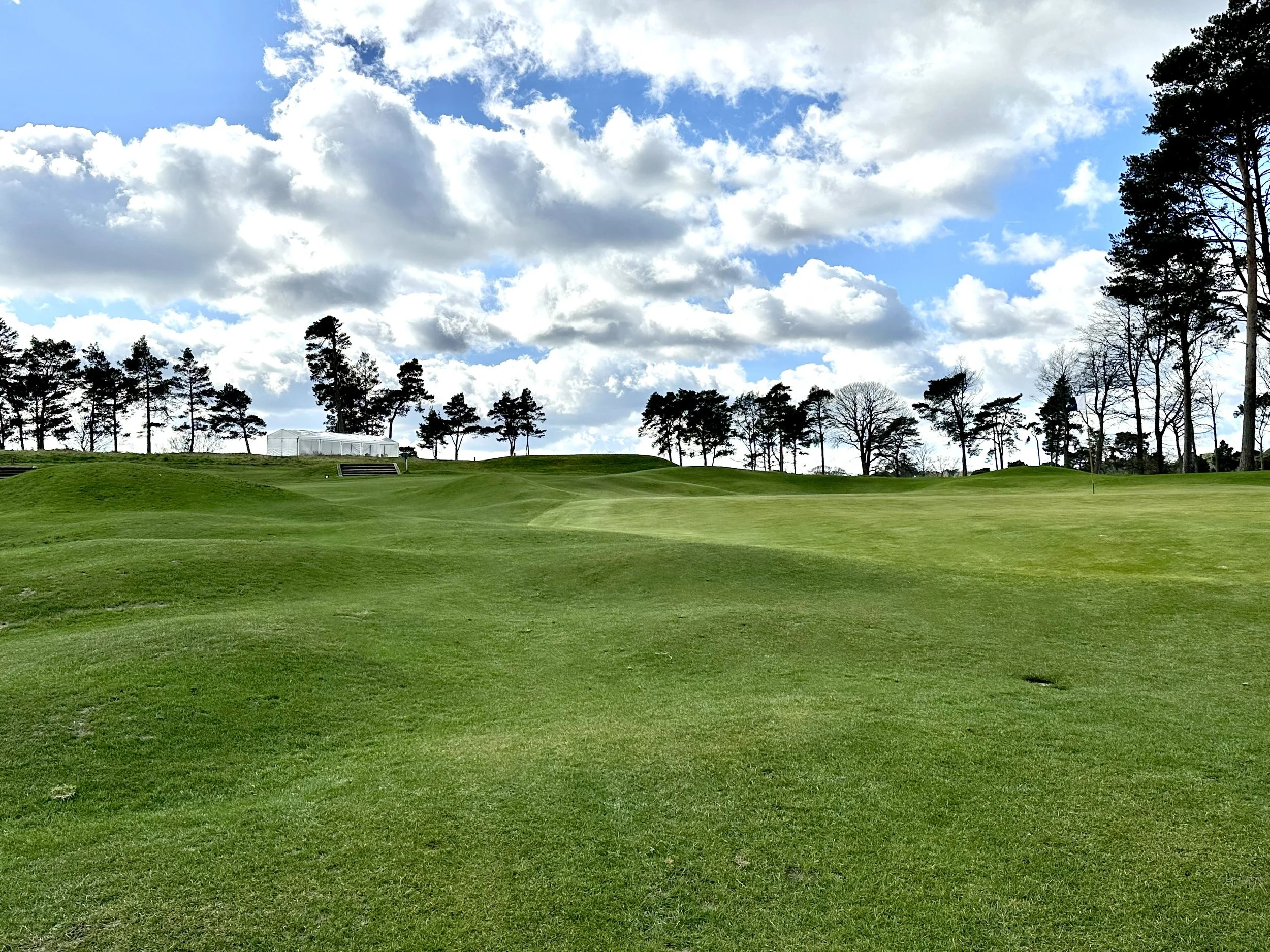
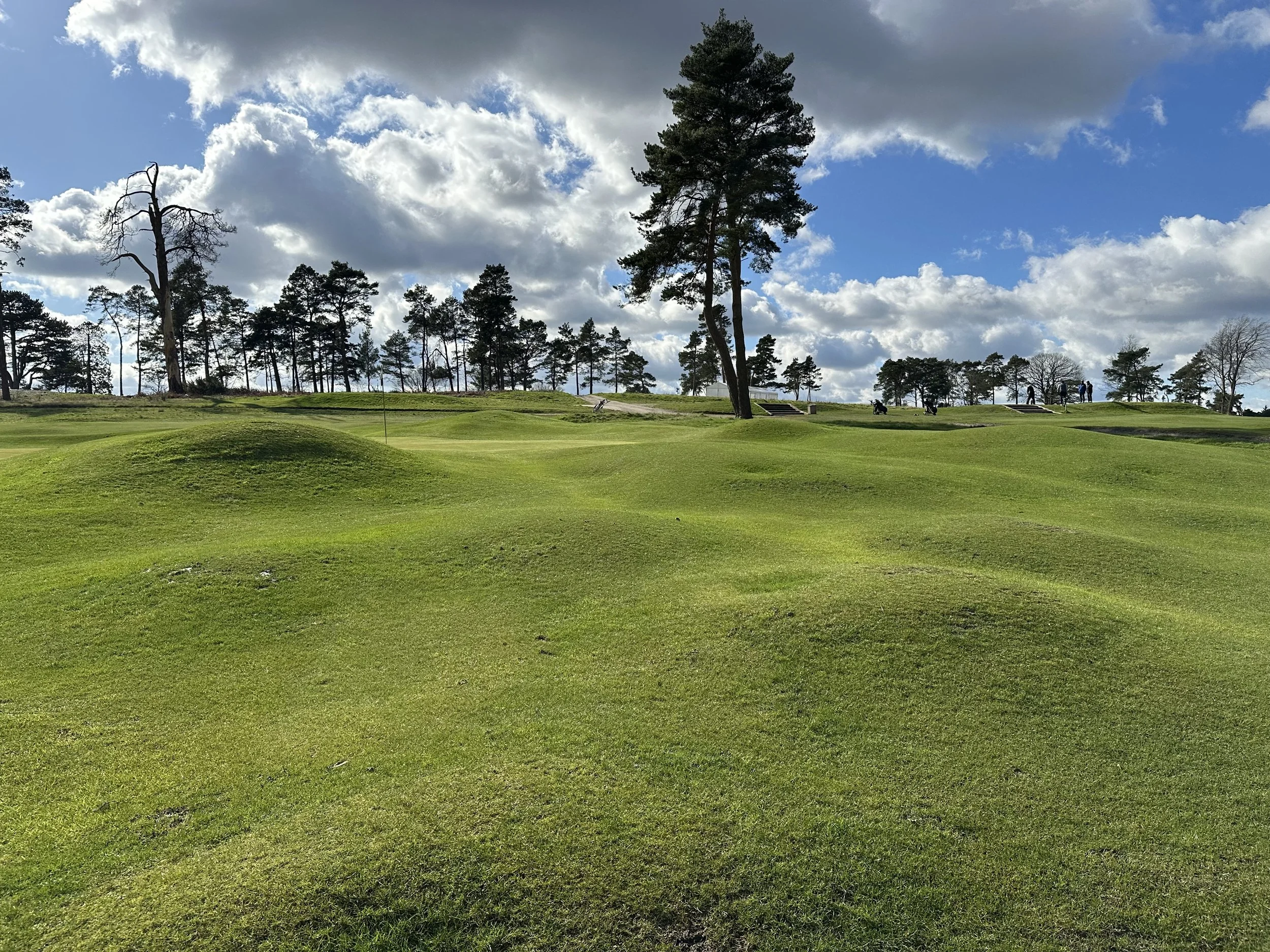
Above: brilliant greenside contouring at The Addington
10. Winged Foot (East) [8] Mamaroneck, NY. A.W. Tillinghast. I’m really not trying to be hot-take-y here, as I find both courses at Winged Foot to be excellent with superb greens complexes. The East traverses a few of the “lesser” spots of the property (mainly the eastern boundary), but on the whole I really liked the increased space out there and “room to breathe.” That, plus a little more diversity of green types, gives it a slight nod over the famous West for me, but you could easily argue for the opposite.
11. Winged Foot (West) [8] Mamaroneck, NY. A.W. Tillinghast. That said, the West has some sneaky interesting reverse camber tee shots that don’t really show up on tv or pictures. Getting to see greens like 1, 2, and 18 in person was a real treat. Those contours, big and small, are the envy of our profession.
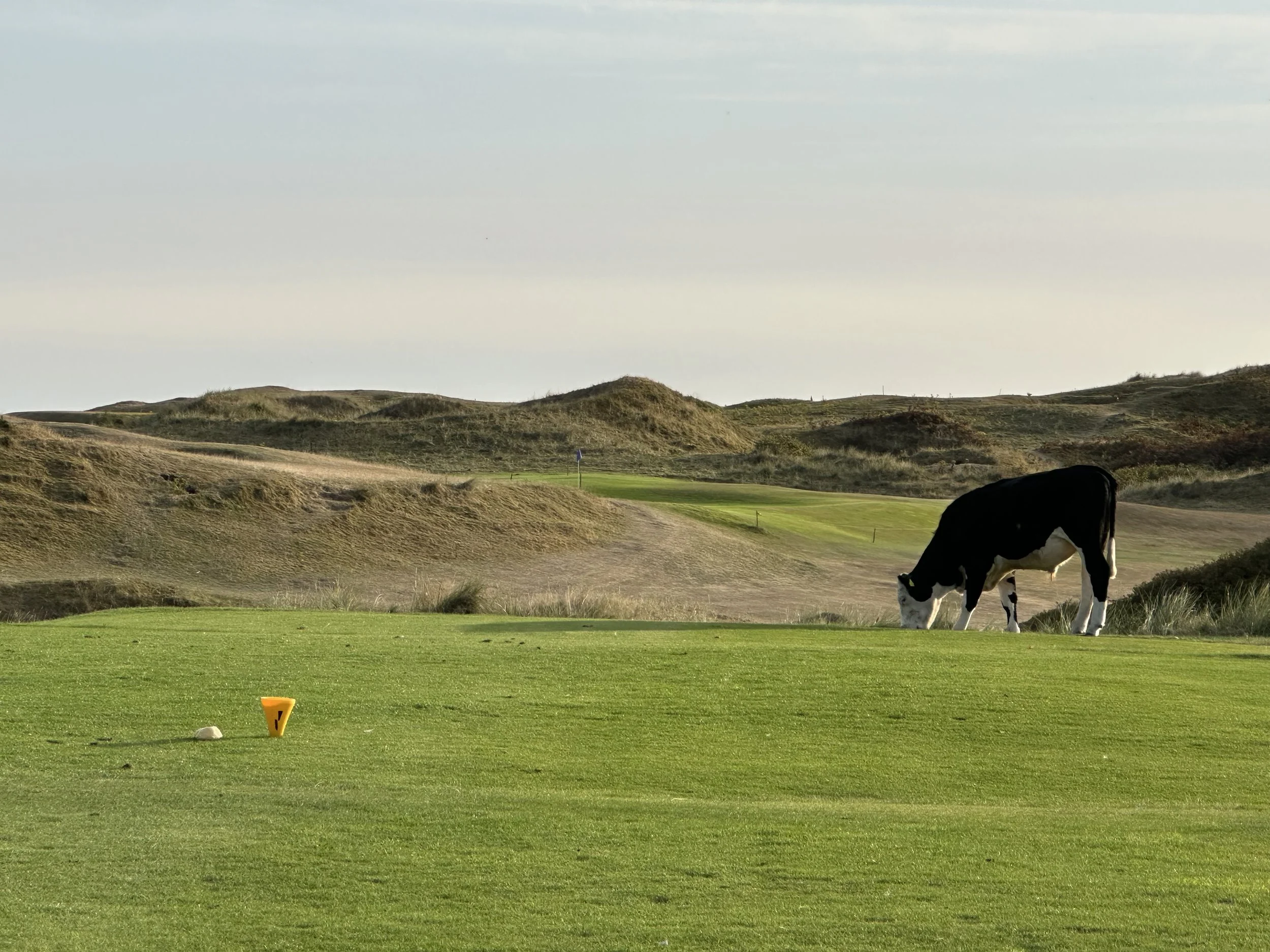
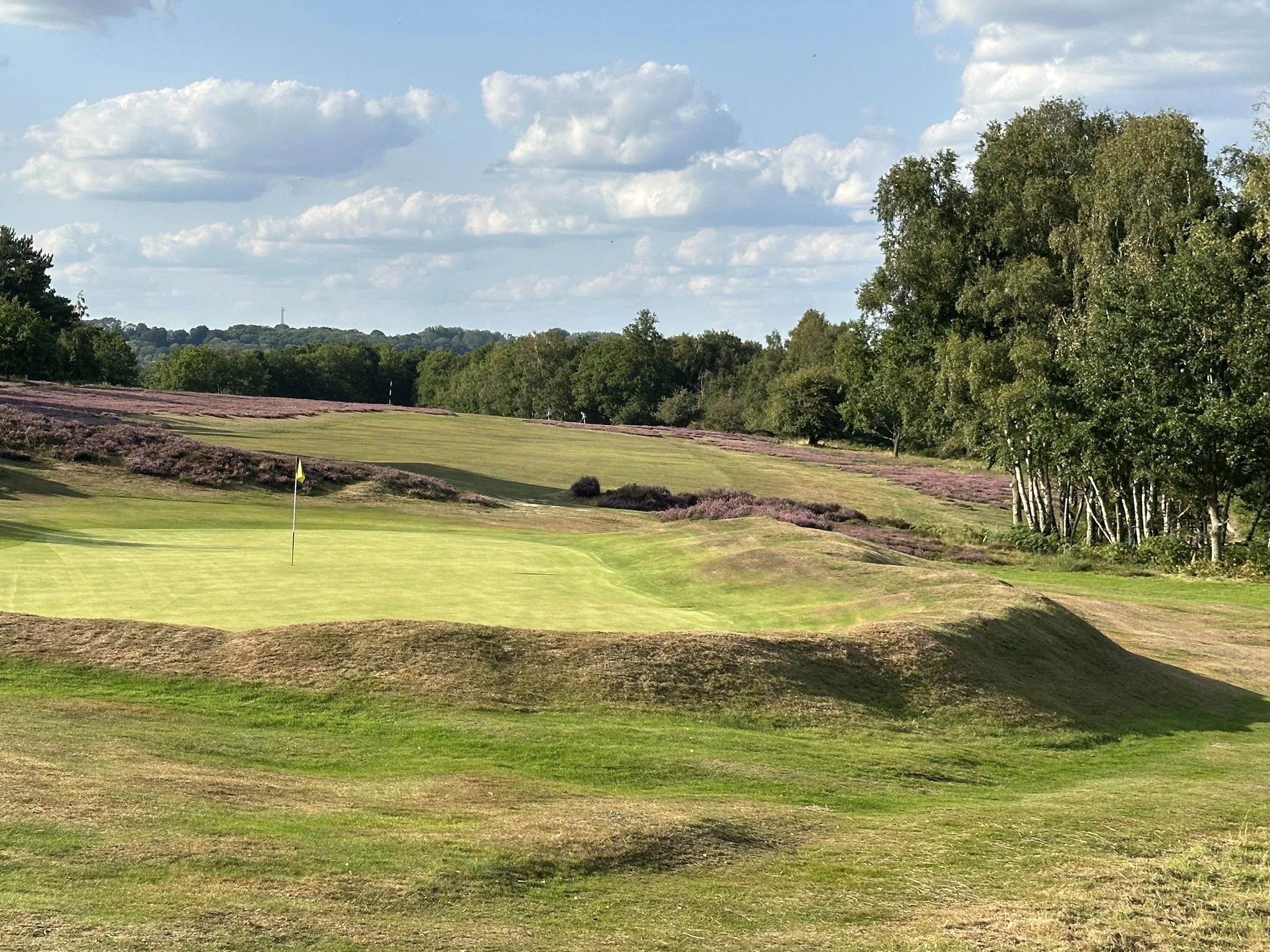
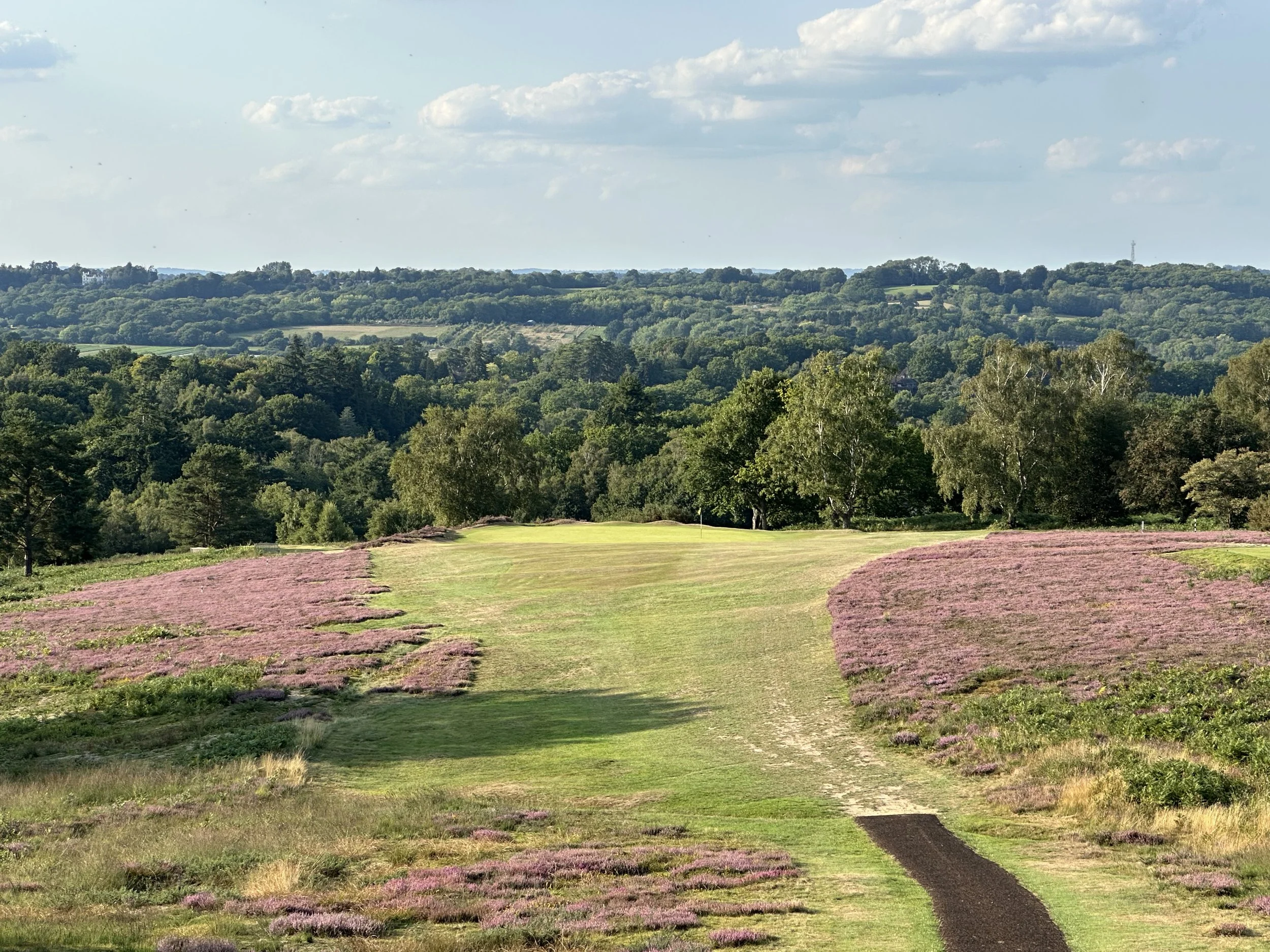
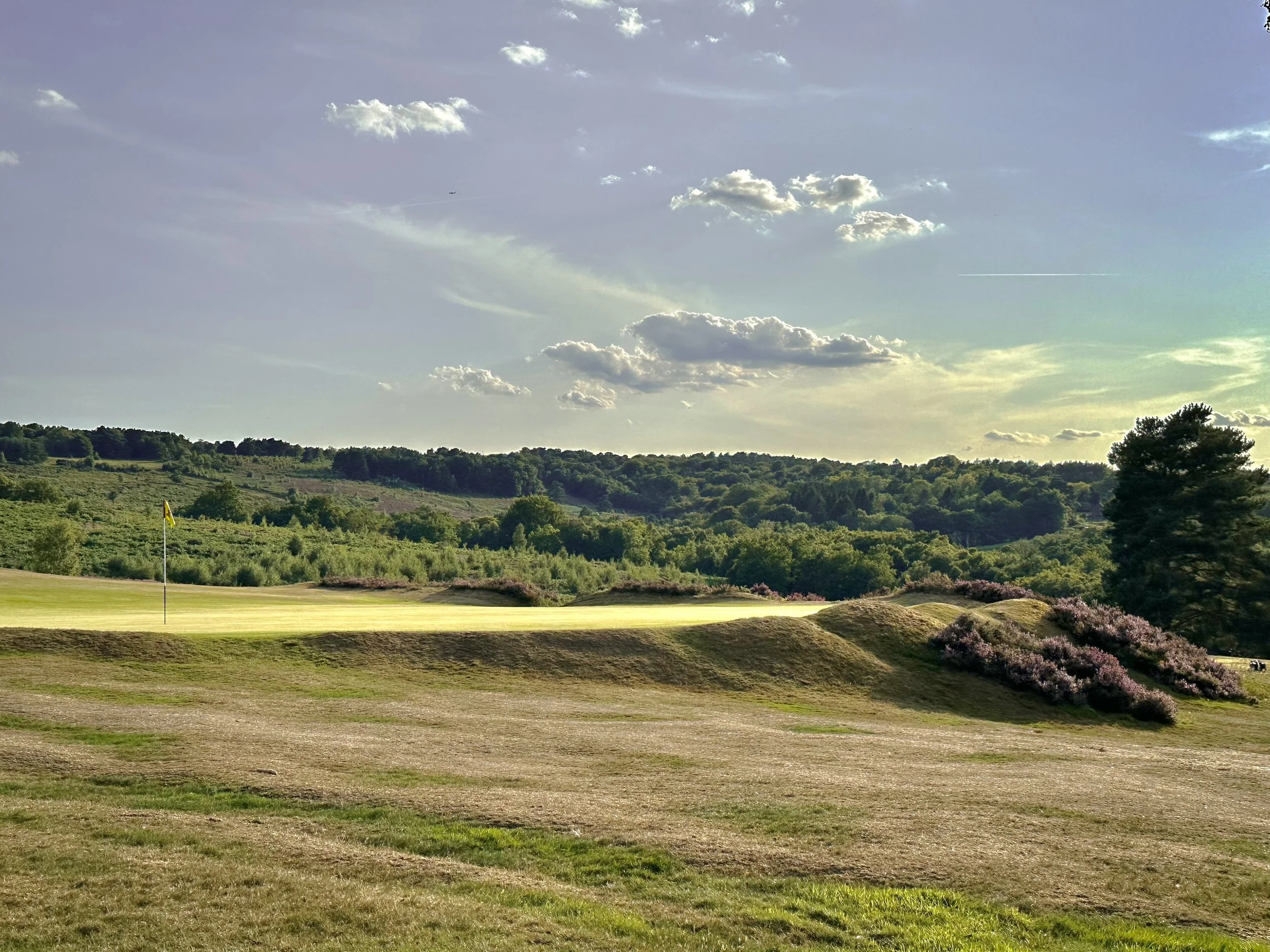
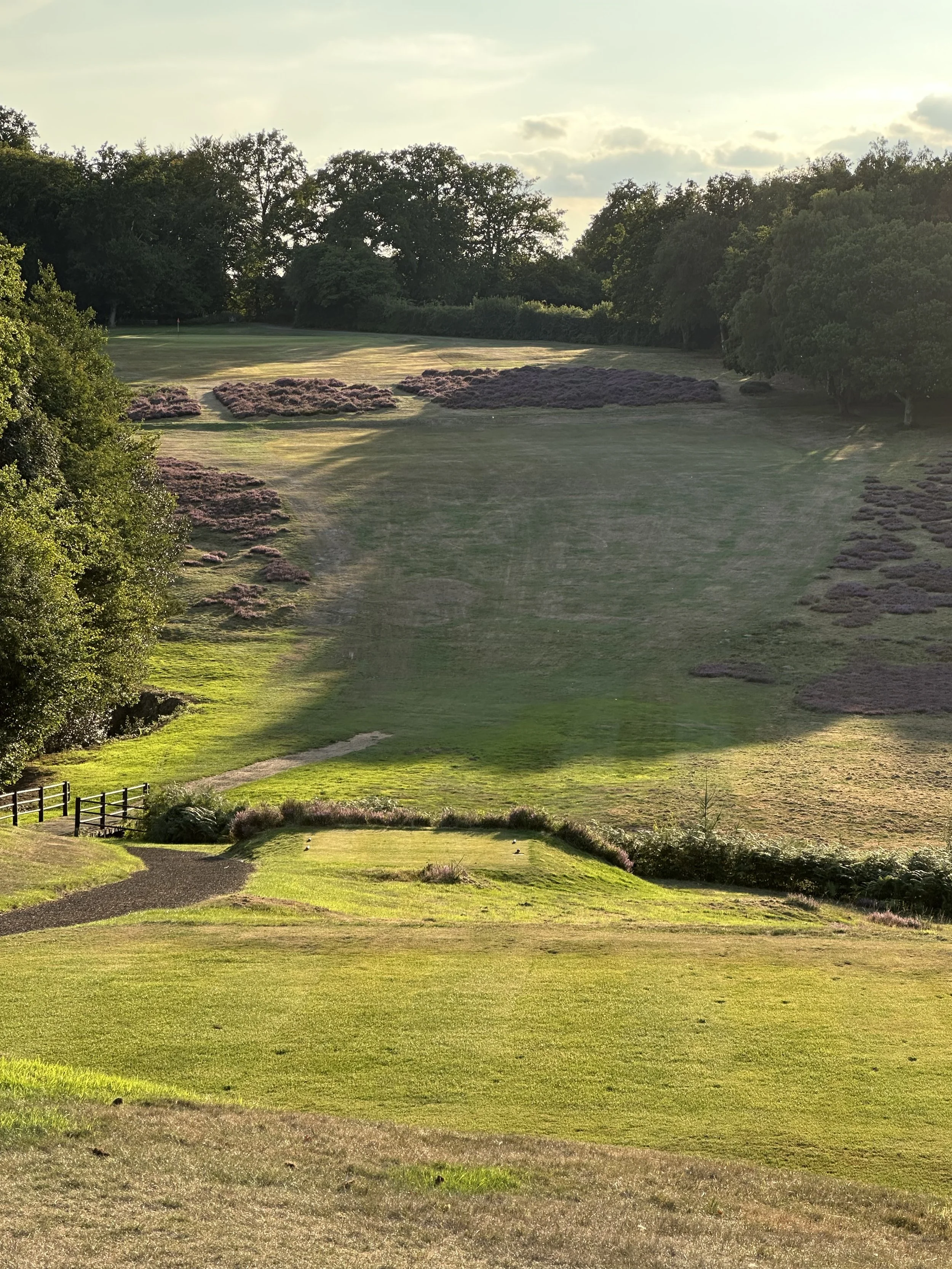
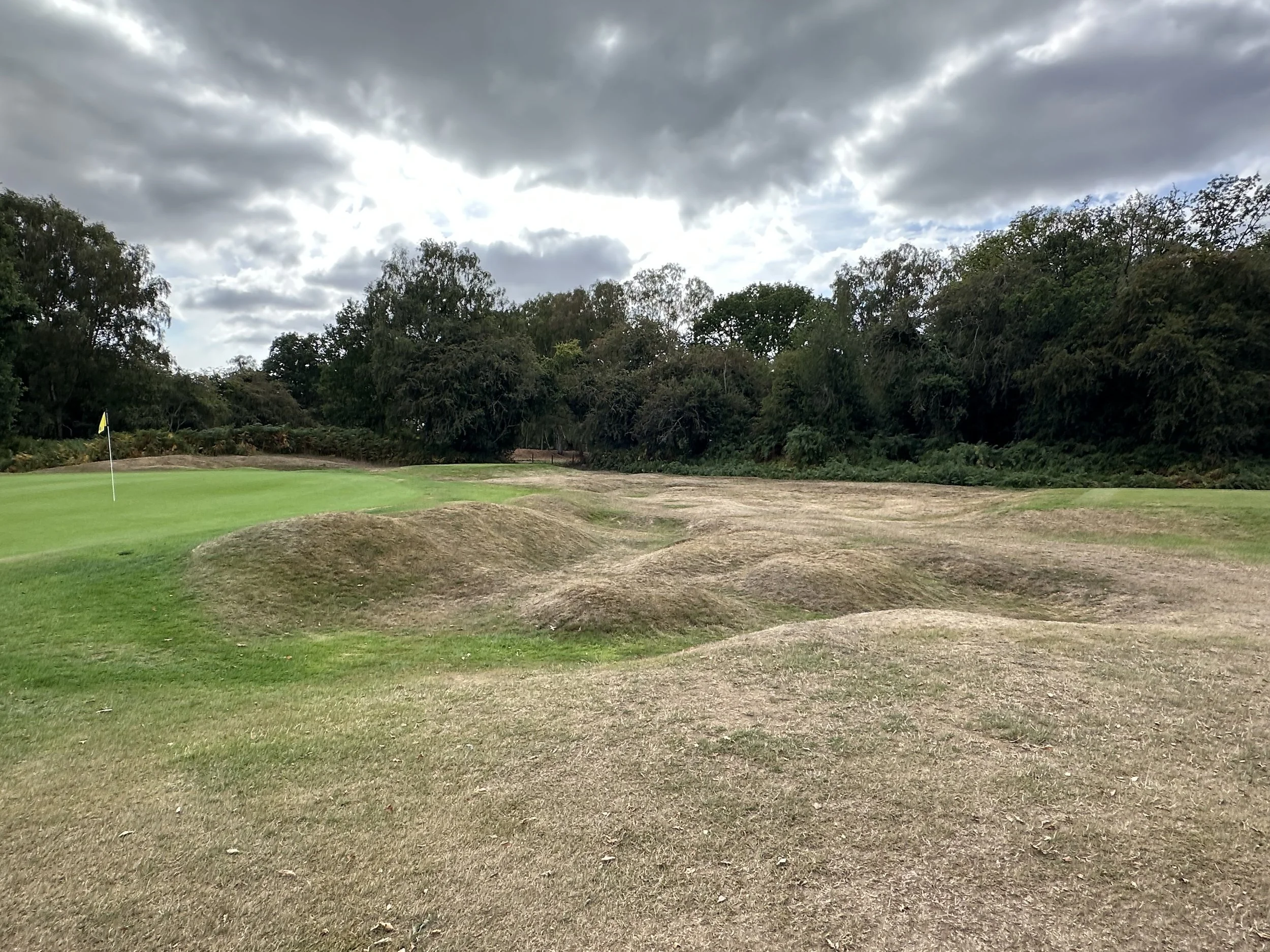
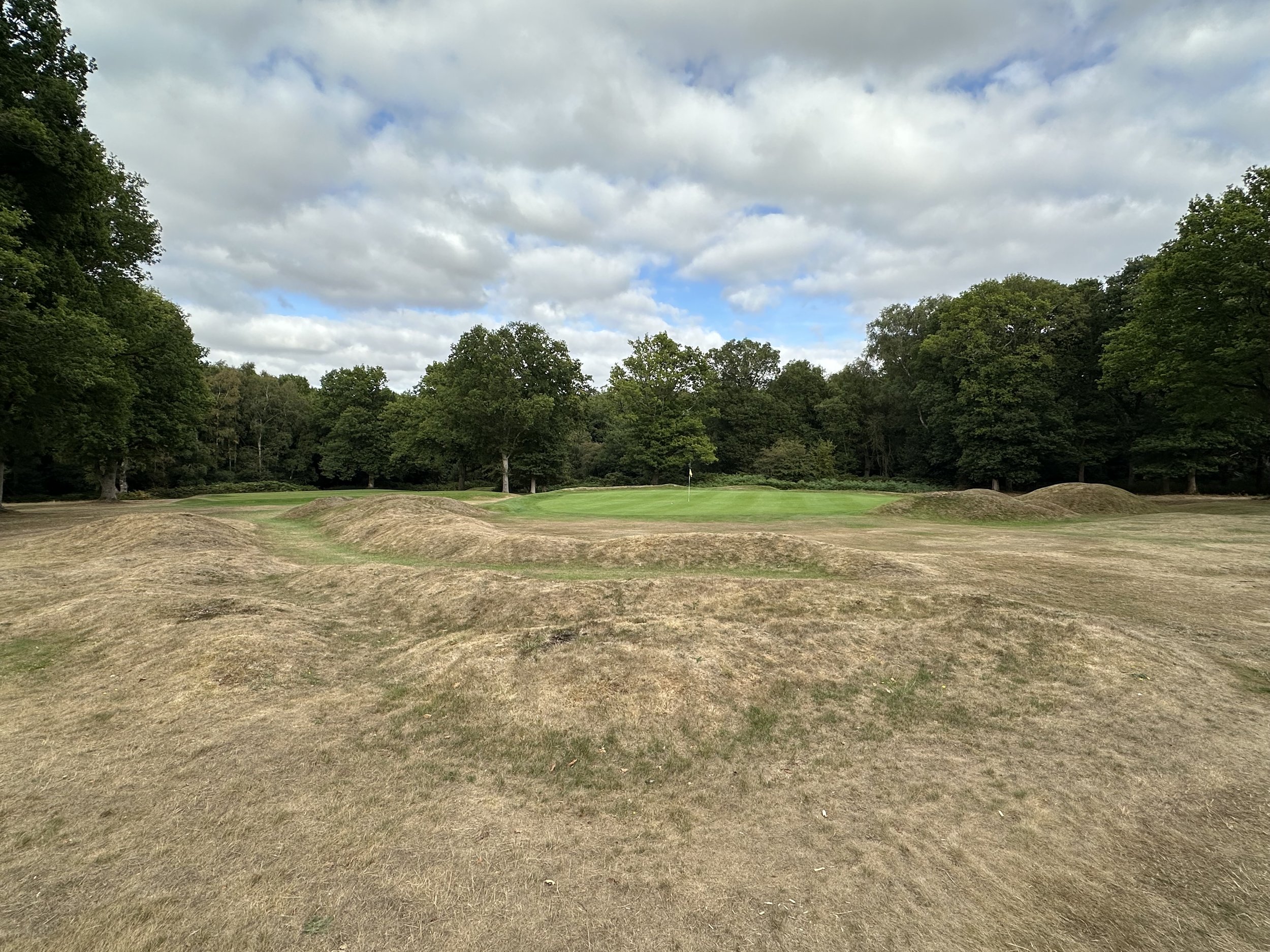
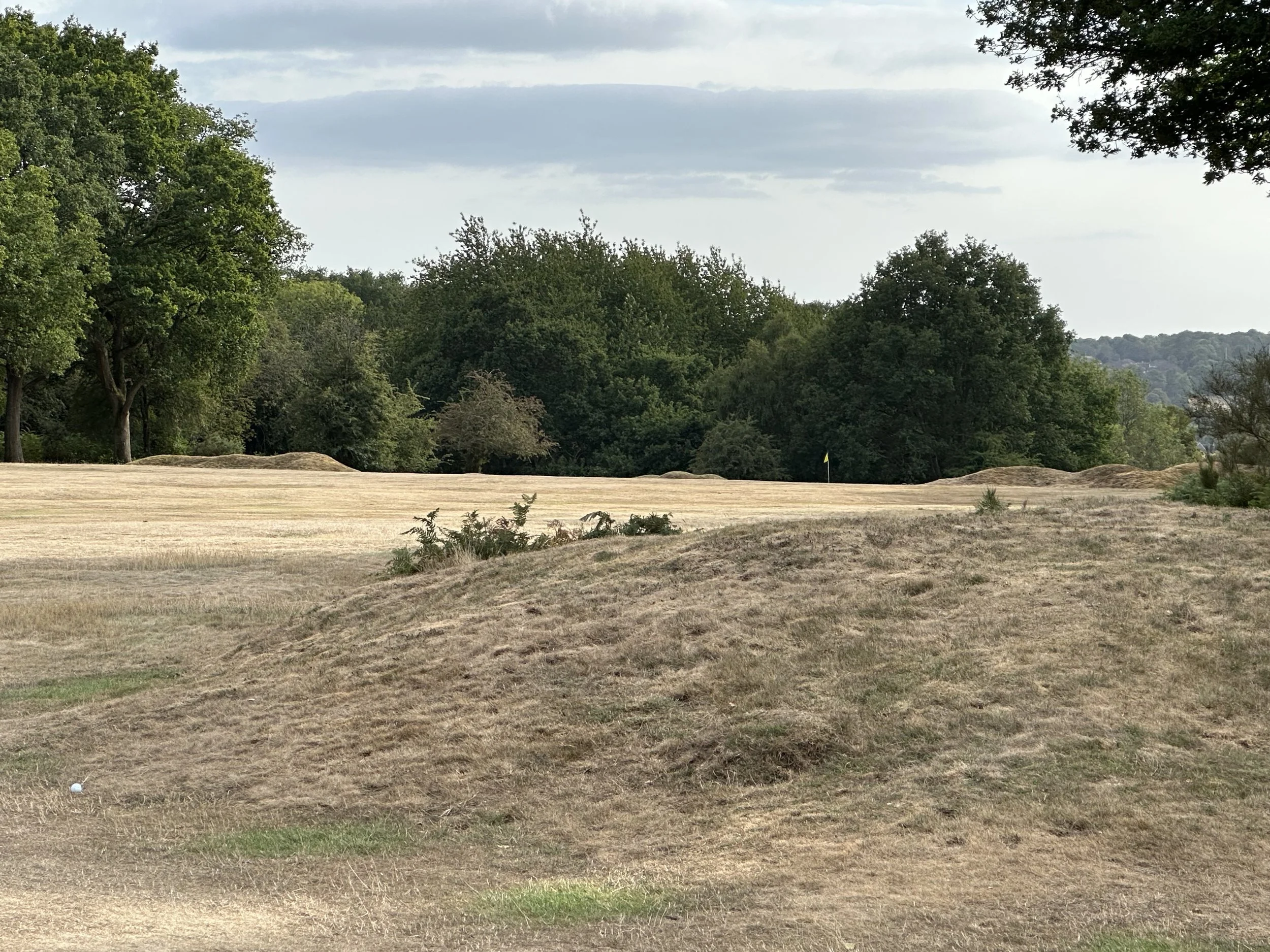
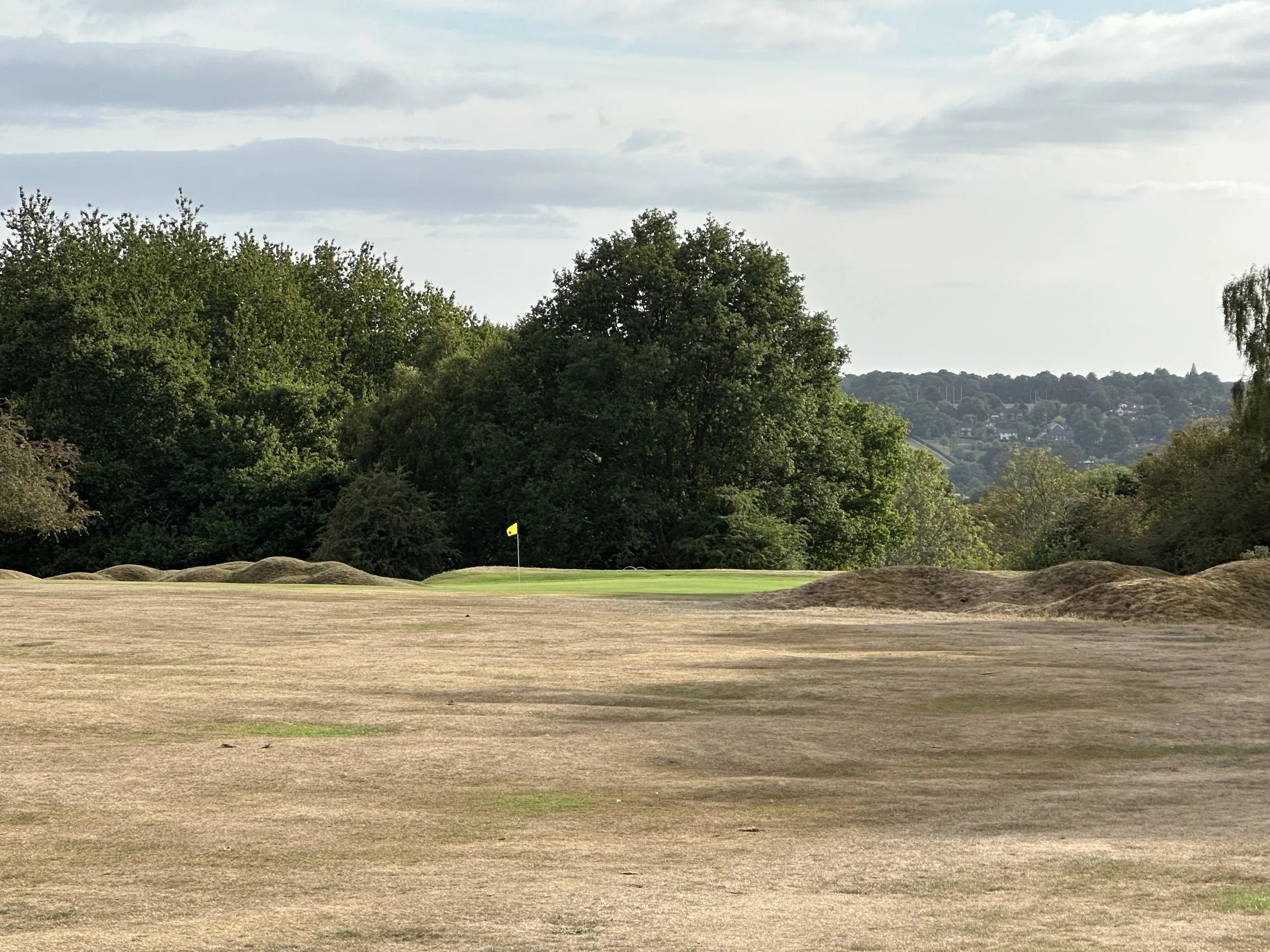
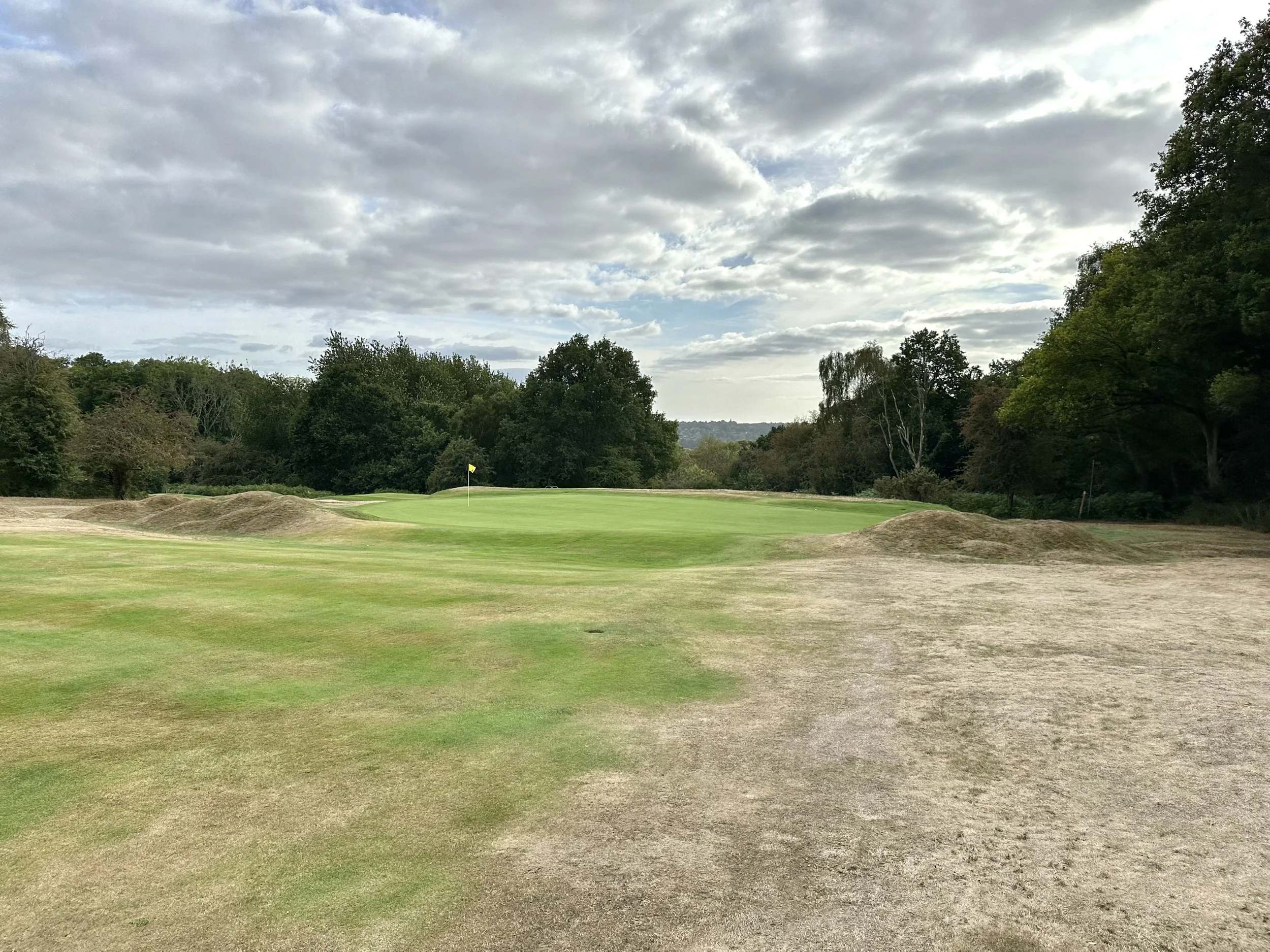
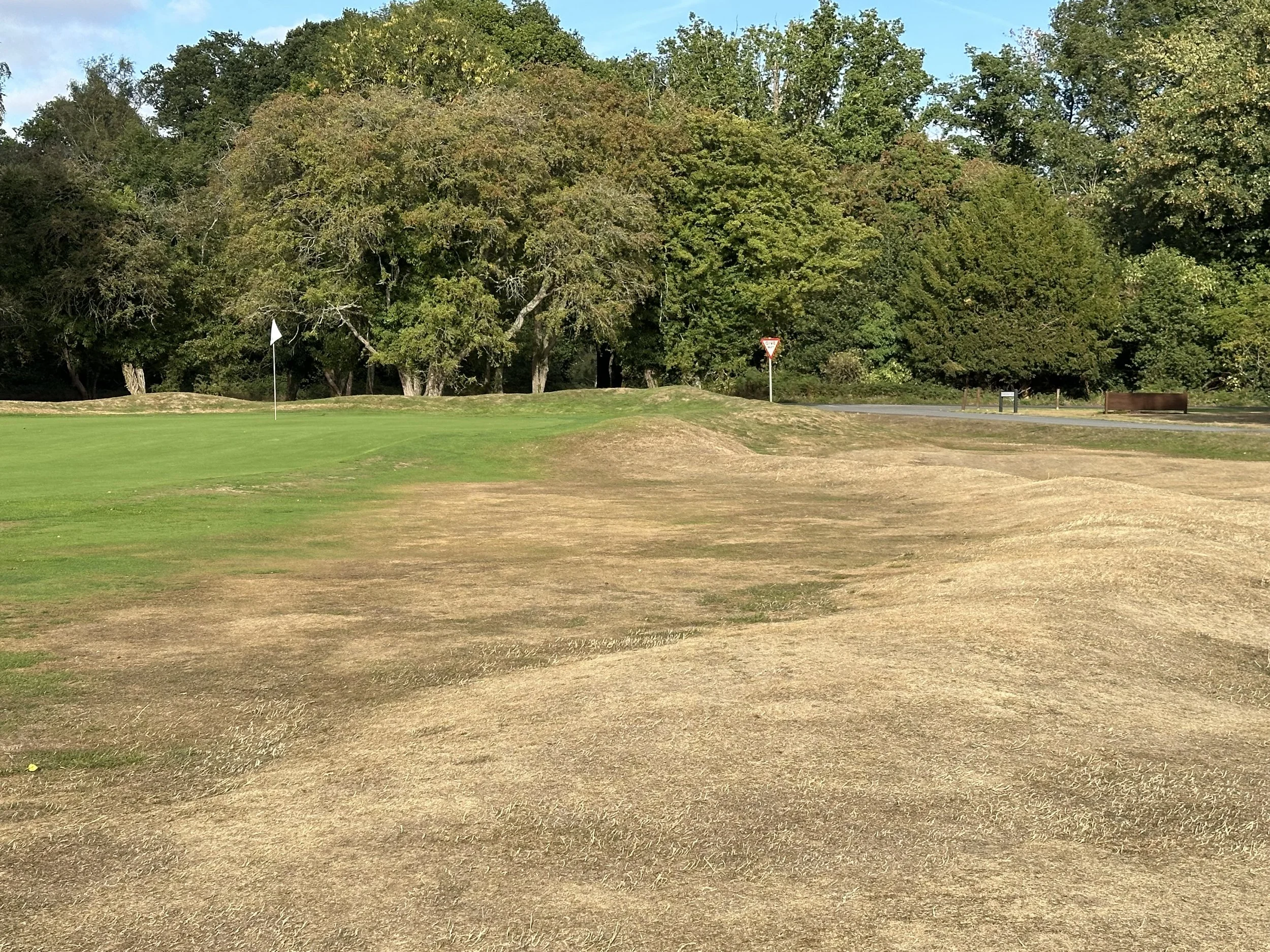
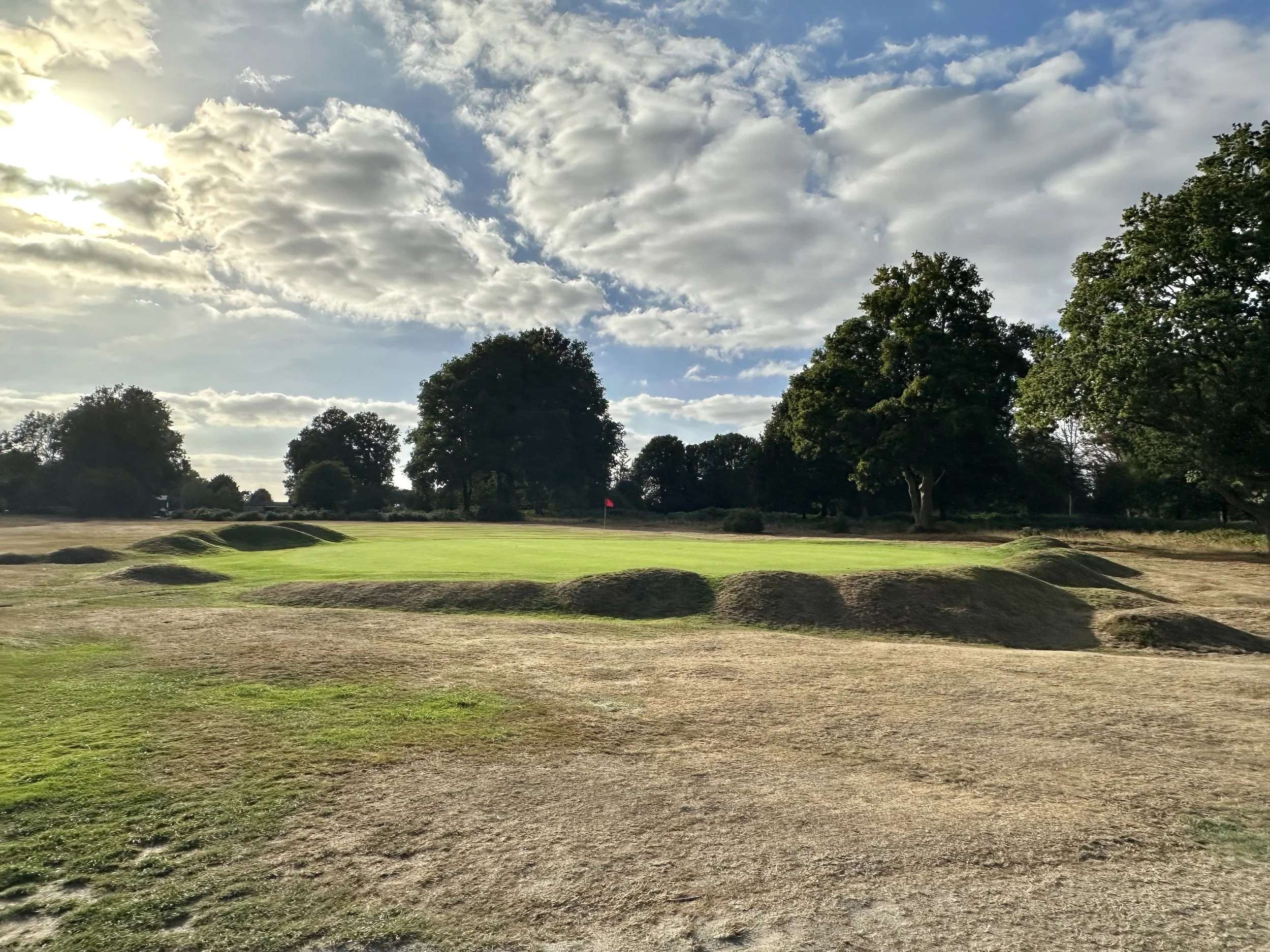
12. Kington [7] Kington, Herefordshire, England. C.K Hutchison. Given that the sheep in the car park were the only lifeforms keeping me company as I changed into my golf shoes on this warm Saturday evening, it was immediately obvious that this would be my kind of golf experience. This was duly confirmed as I stepped up onto the yellowed 1st tee and nearly slipped on my practice swing—the grass had lost all tensile traction after months of miniscule rain. It would hardly stop a ball, either, as I quickly found out, tossing one out casually on the 1st fairway to watch it bounce and roll, only to see it roll, and roll, and roll all the way down and across the adjacent 18th fairway and into the bracken. These were certain to be the fastest and firmest conditions I’d even encountered. Coming up to the green, I’d be even more impressed by the shapes that made it, all sorts of pointy mounds and grassless bunker shapes holding up the long narrow surface benched into the hillside. These sorts of shapes—none of them with actual sand—would impress throughout the round. Given the thinness of the turf and the help of the grazing sheep, ground shots could be played through these steep shapes with some success, and I could not help myself but constantly try to do so. I don’t think it’s exaggeration to say I hit over 300 golf shots during the round, often emptying my bag from the most fun spots and pitching 4 irons along the rumply, frictionless terrain. I’d say I’d about died and went to heaven, and given the incredible views in all directions from this hilltop perch, I don’t think I was all that far away.
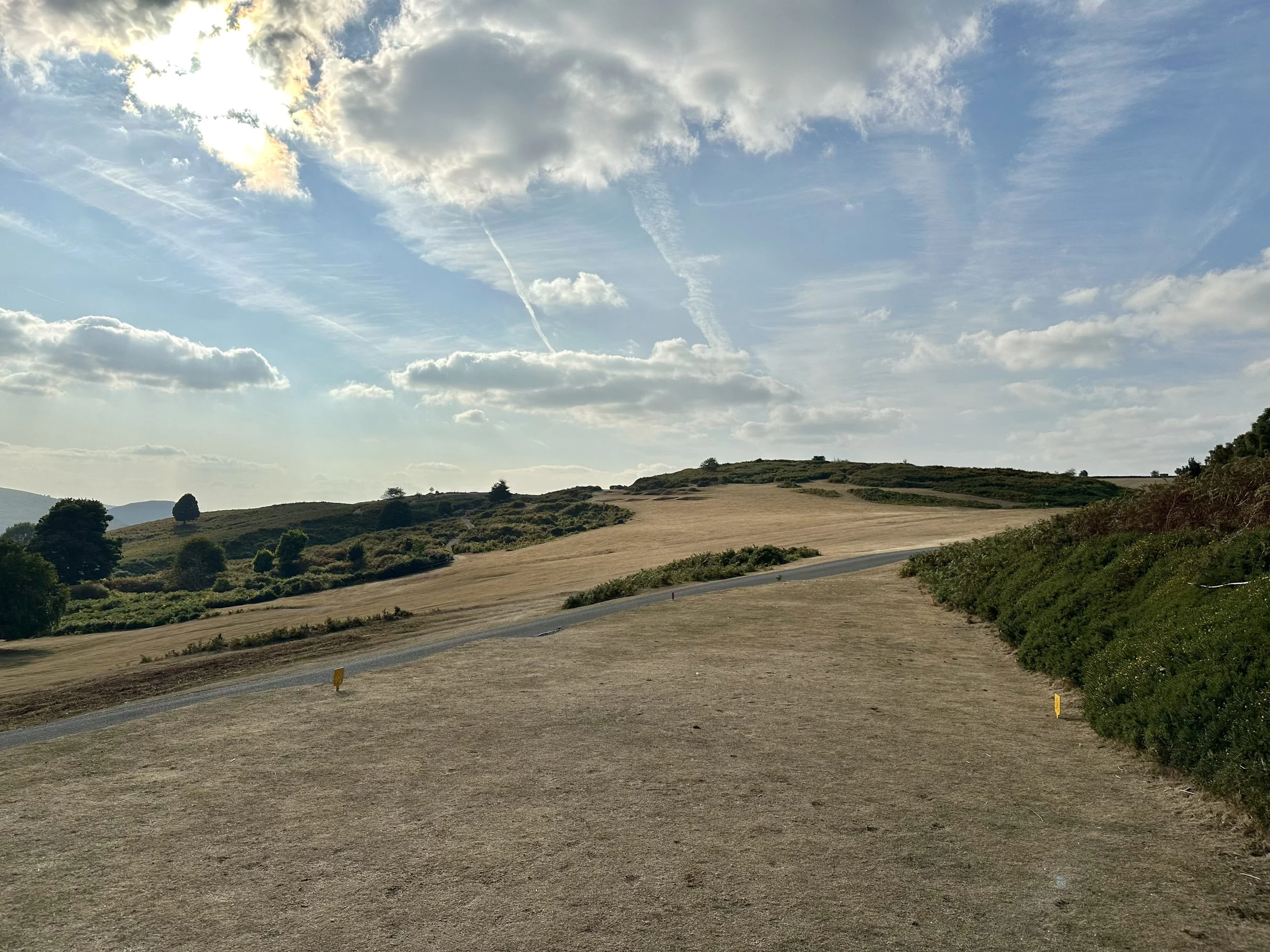
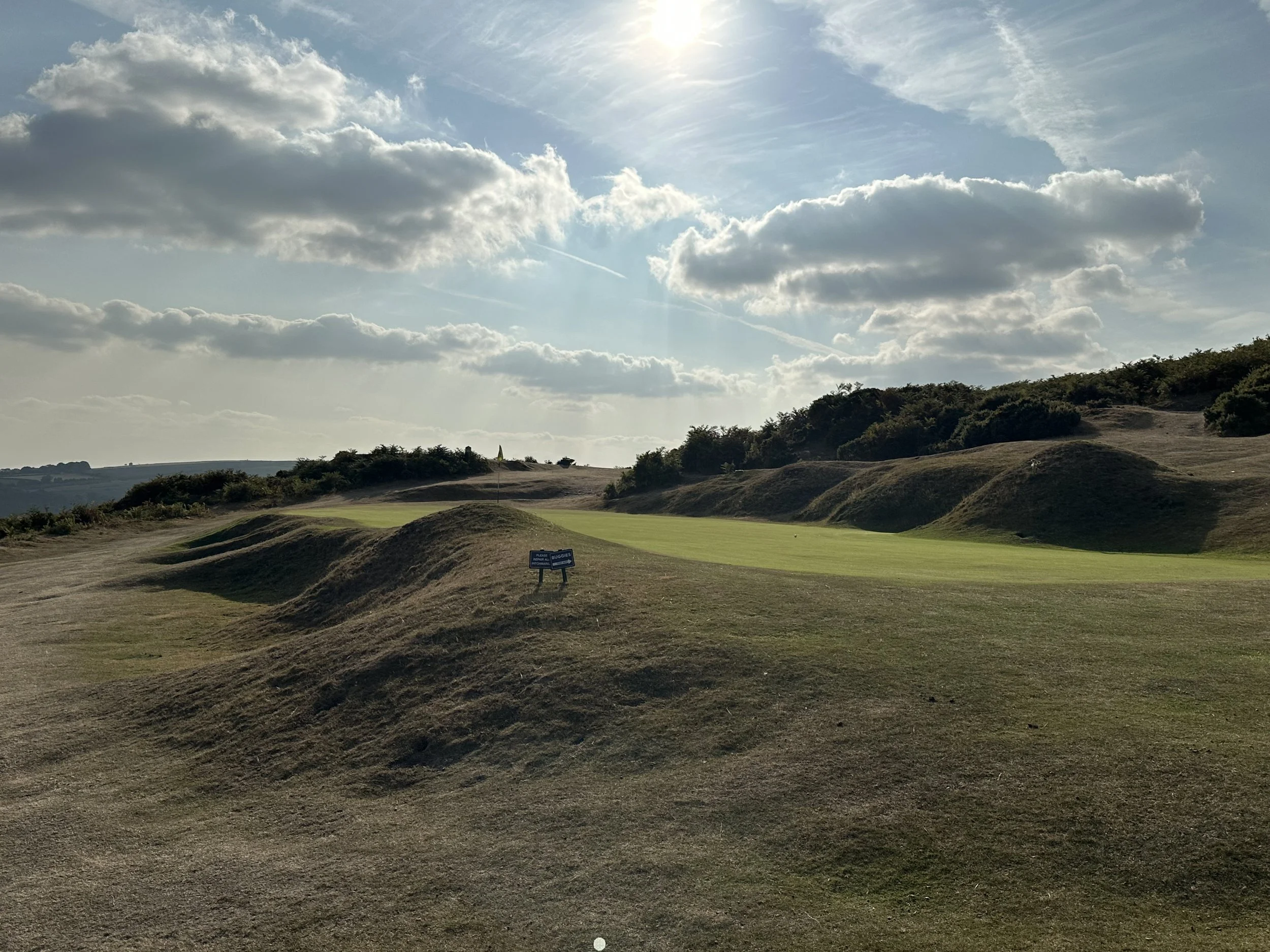
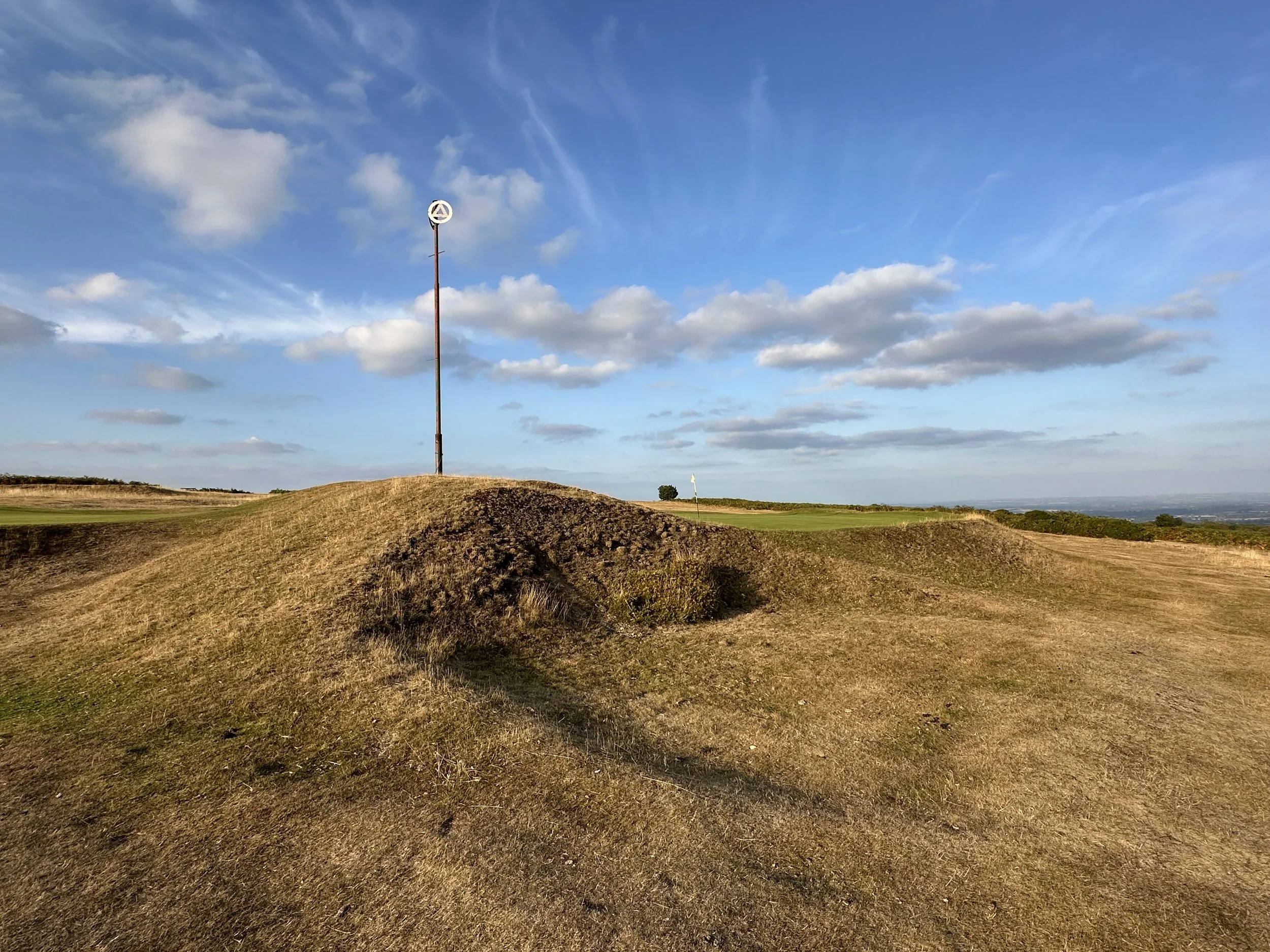
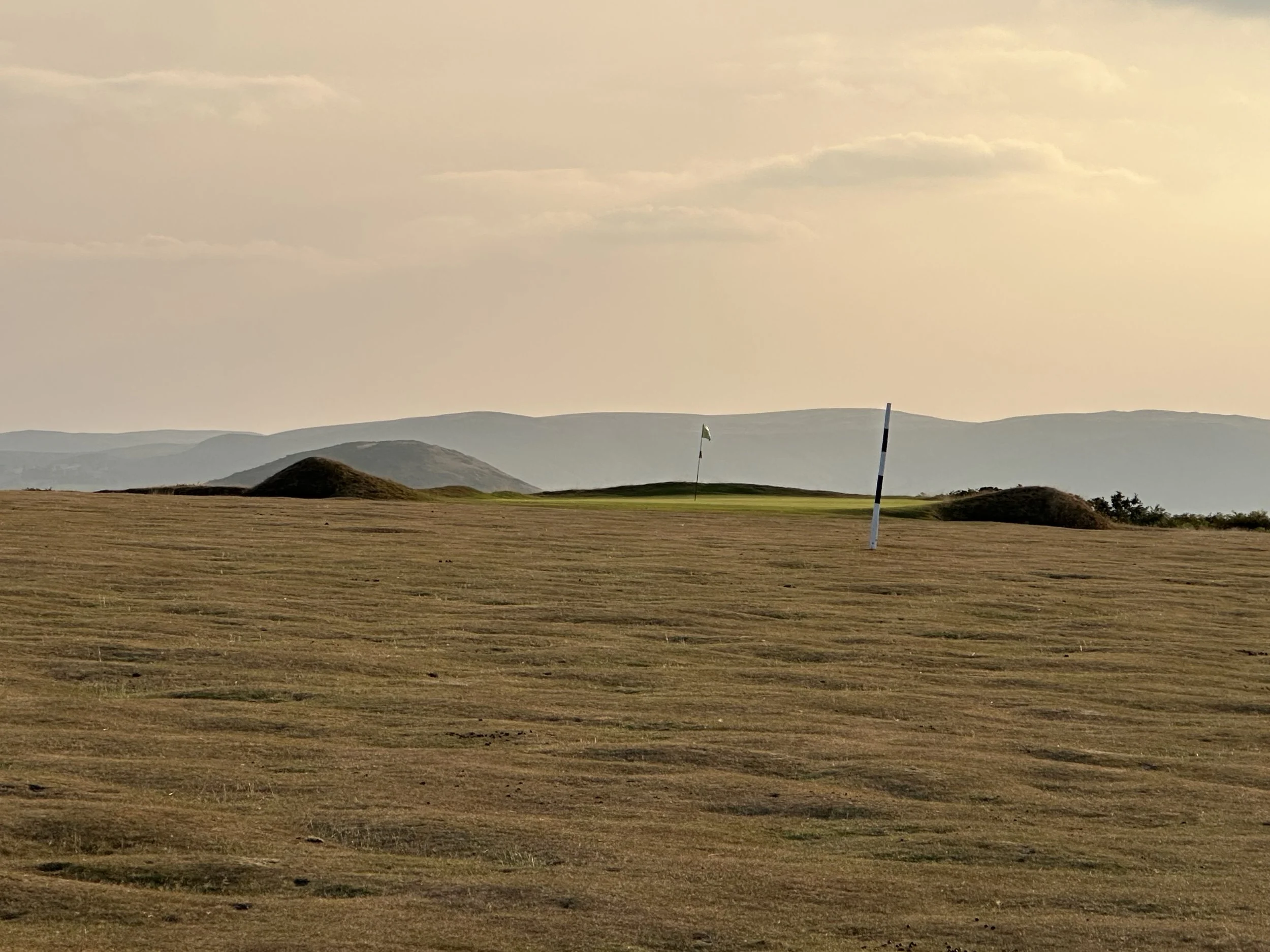
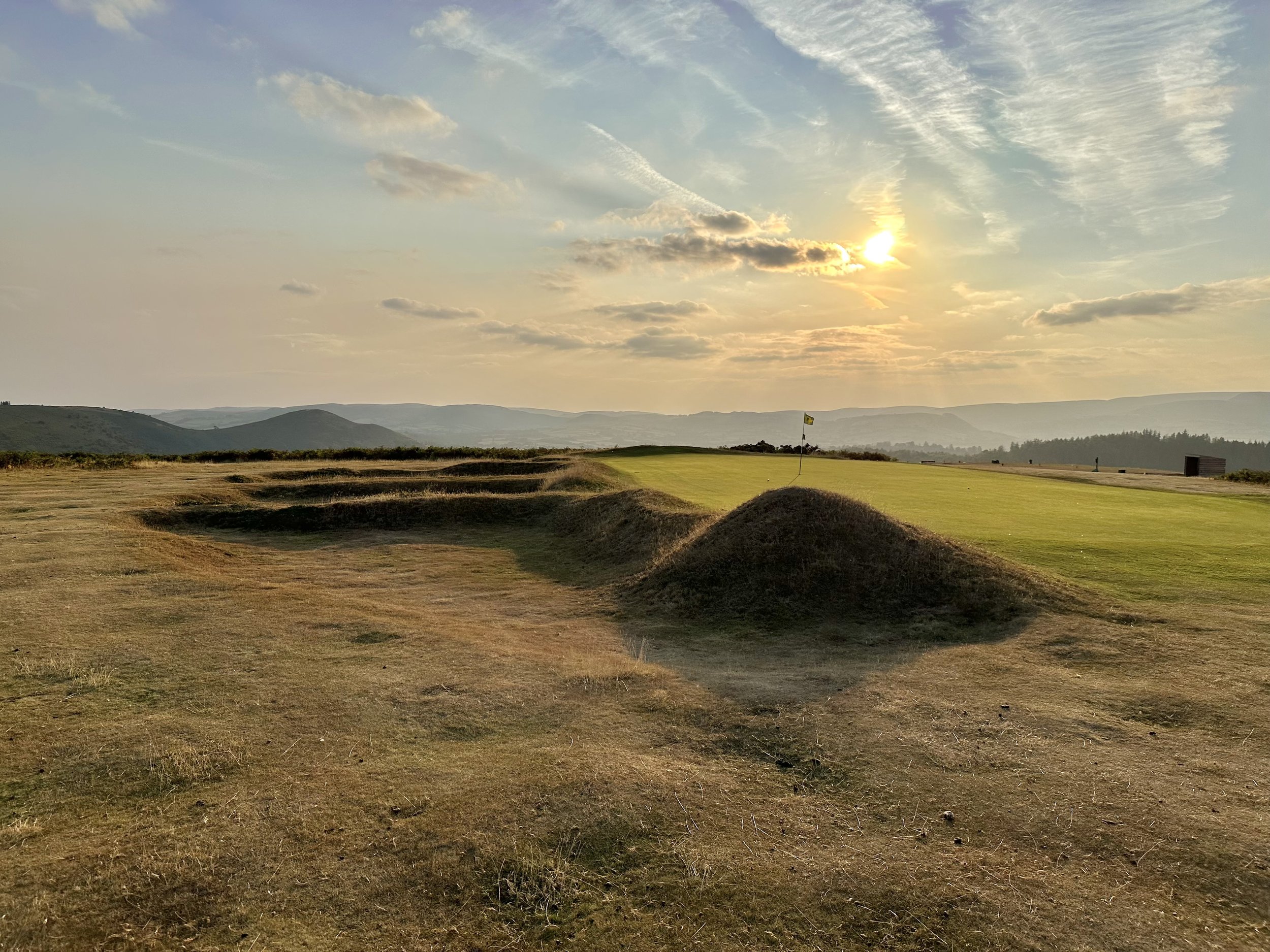
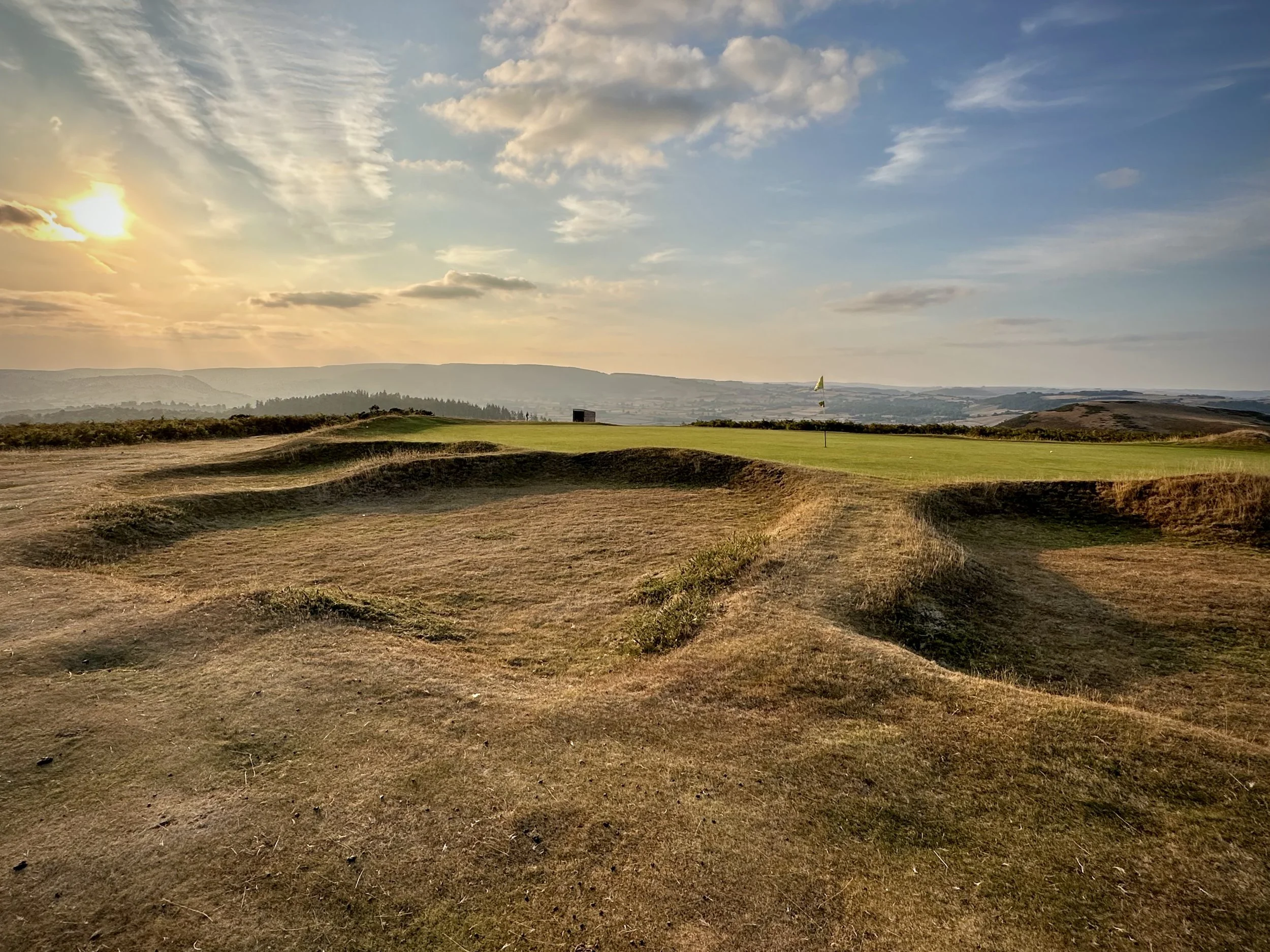
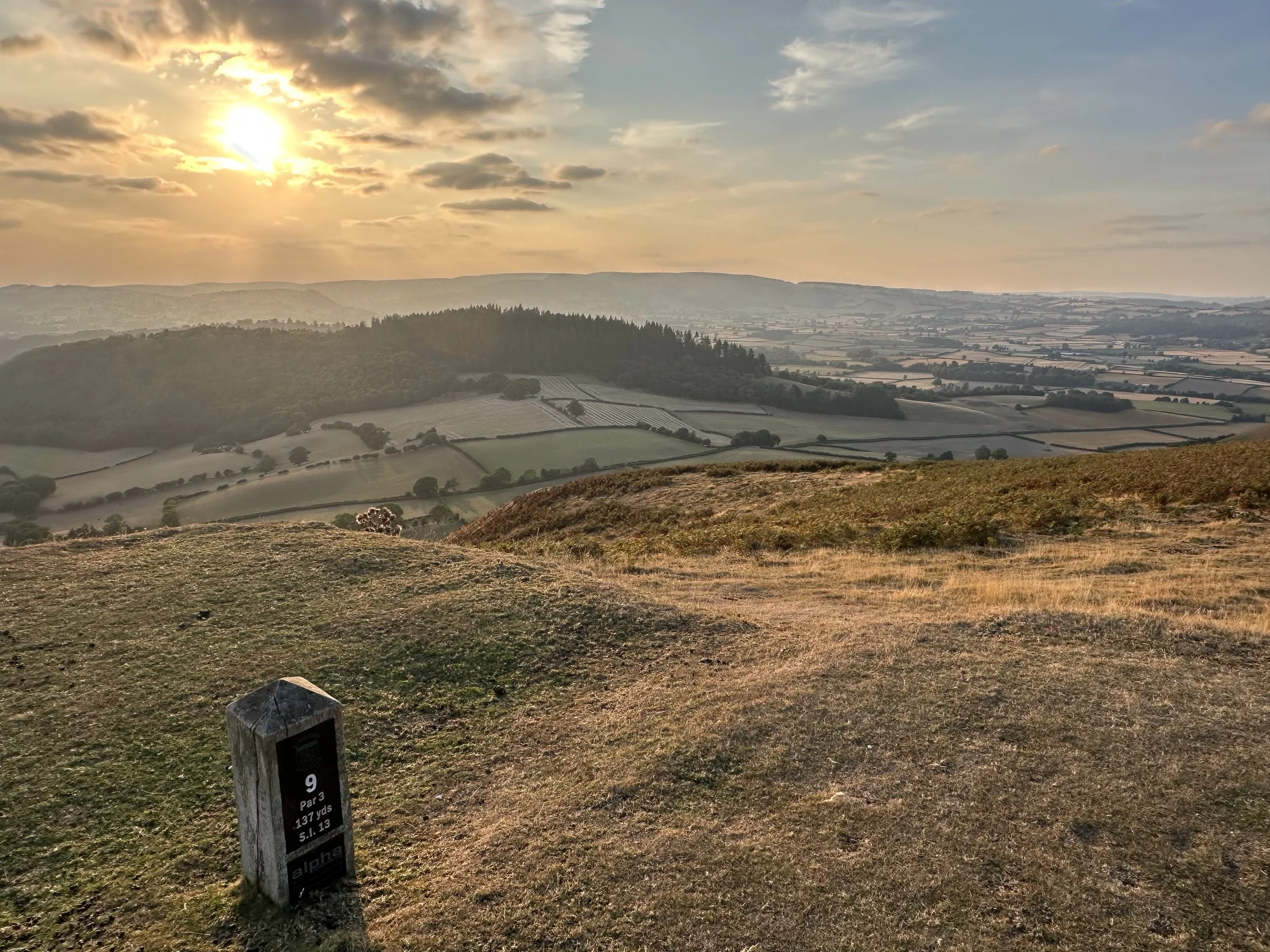
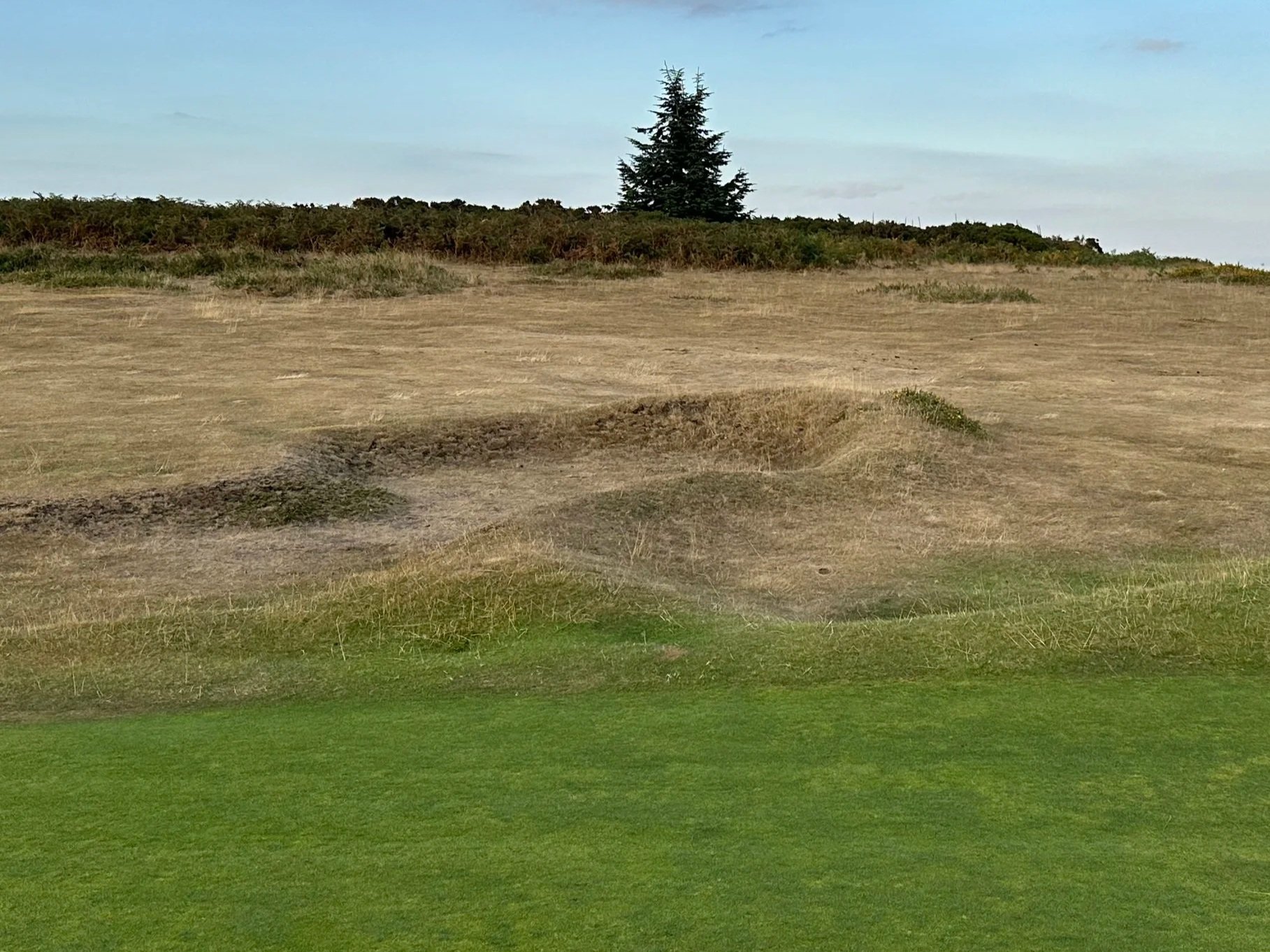
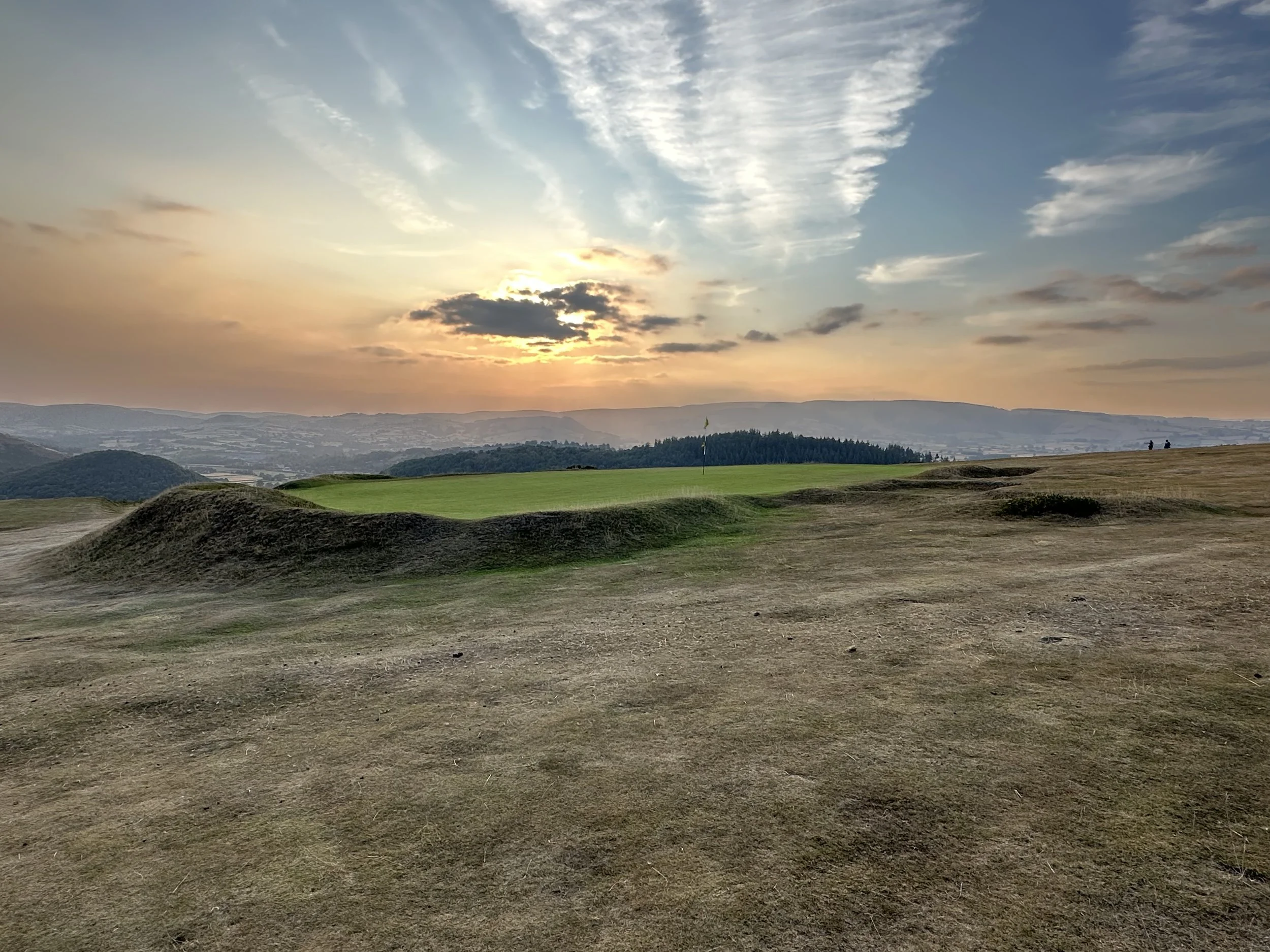
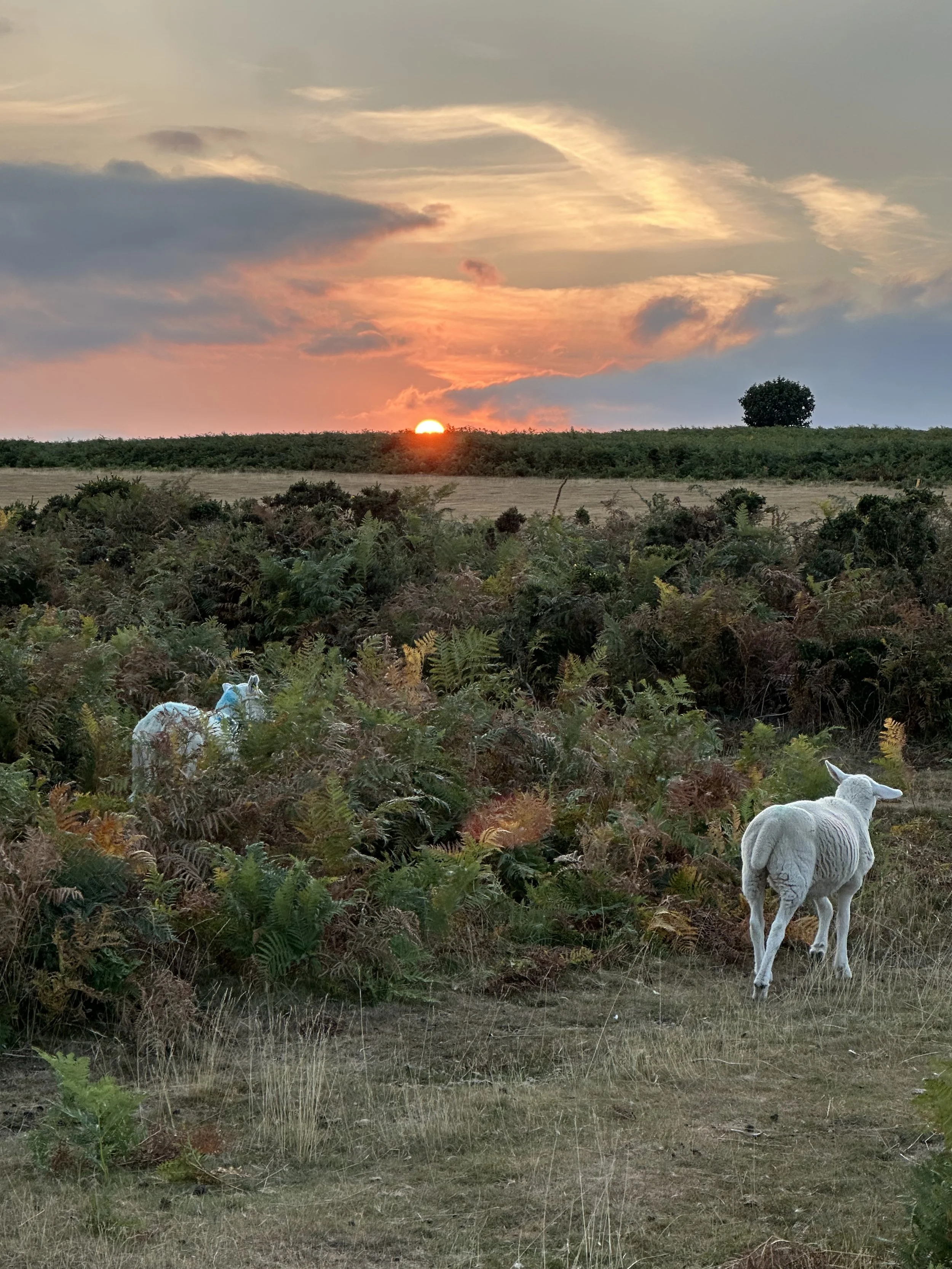
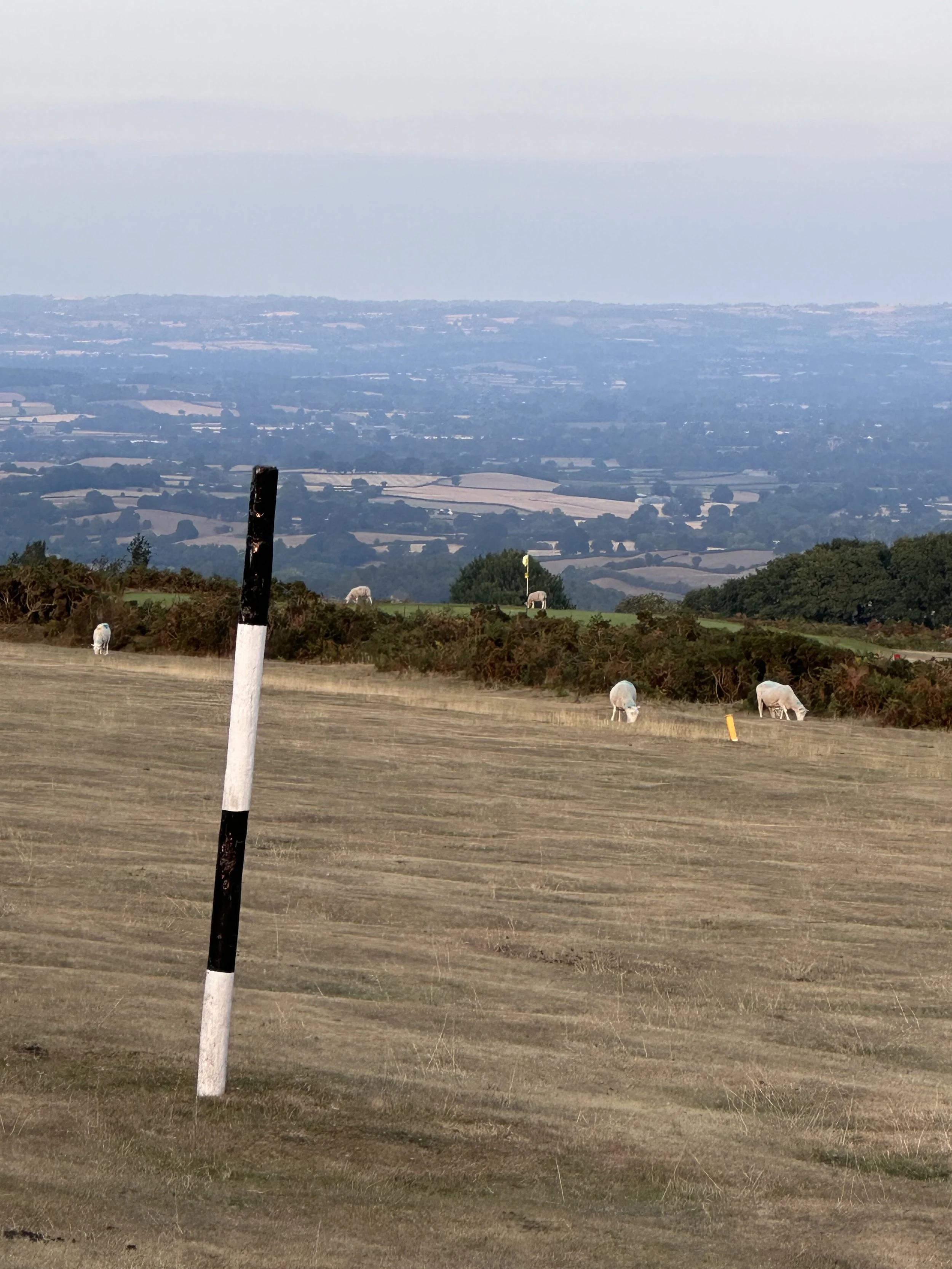
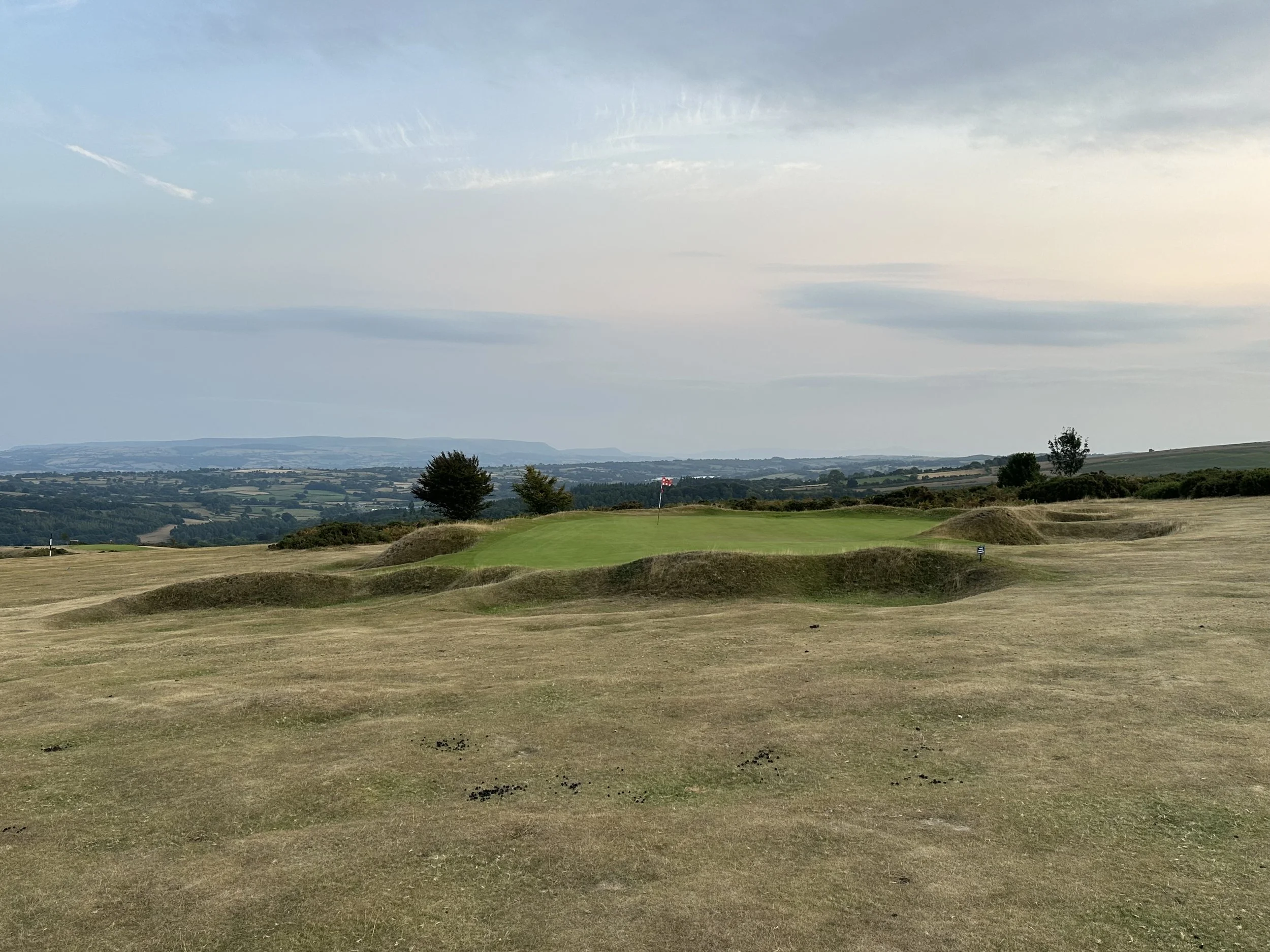
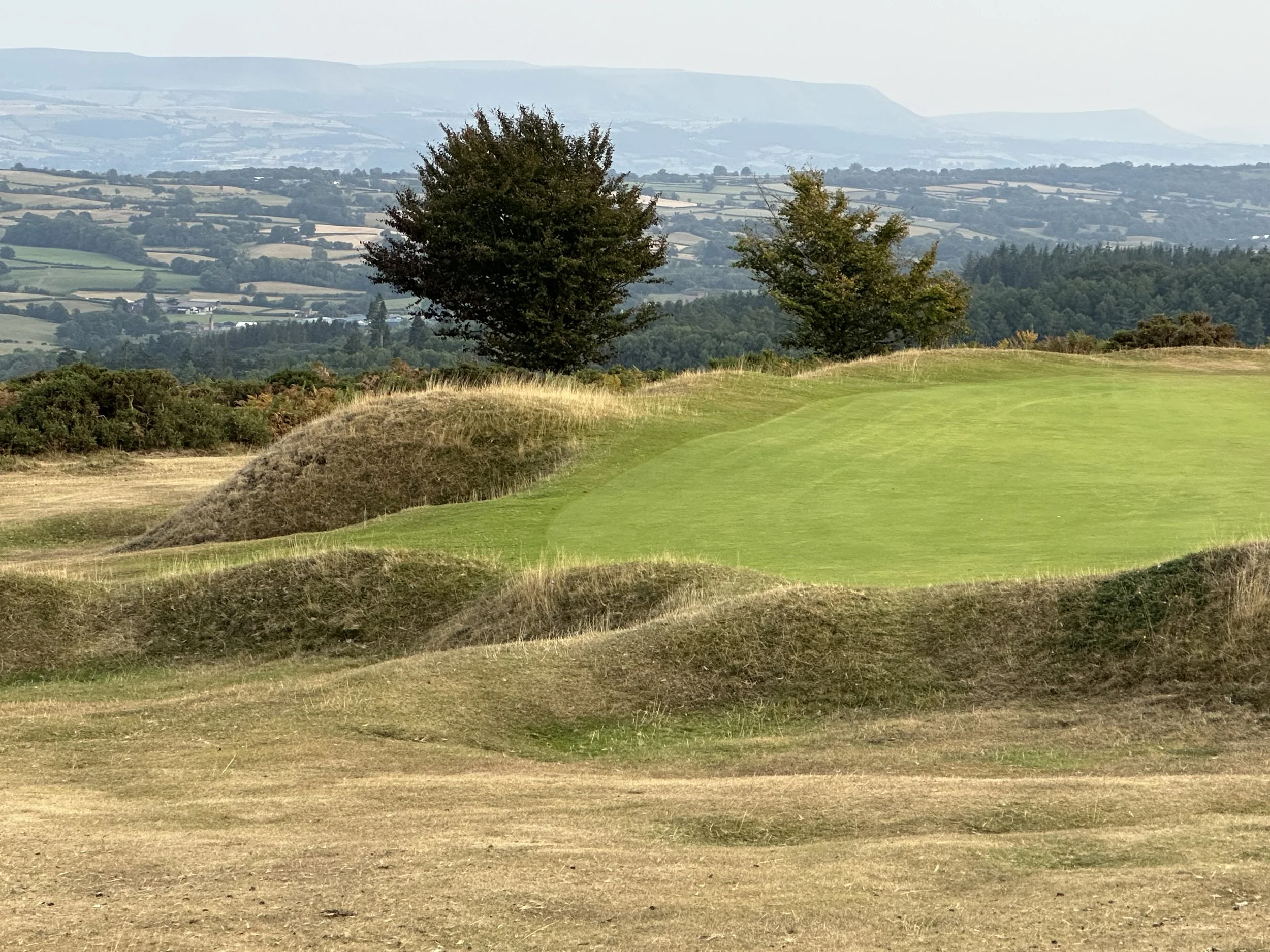
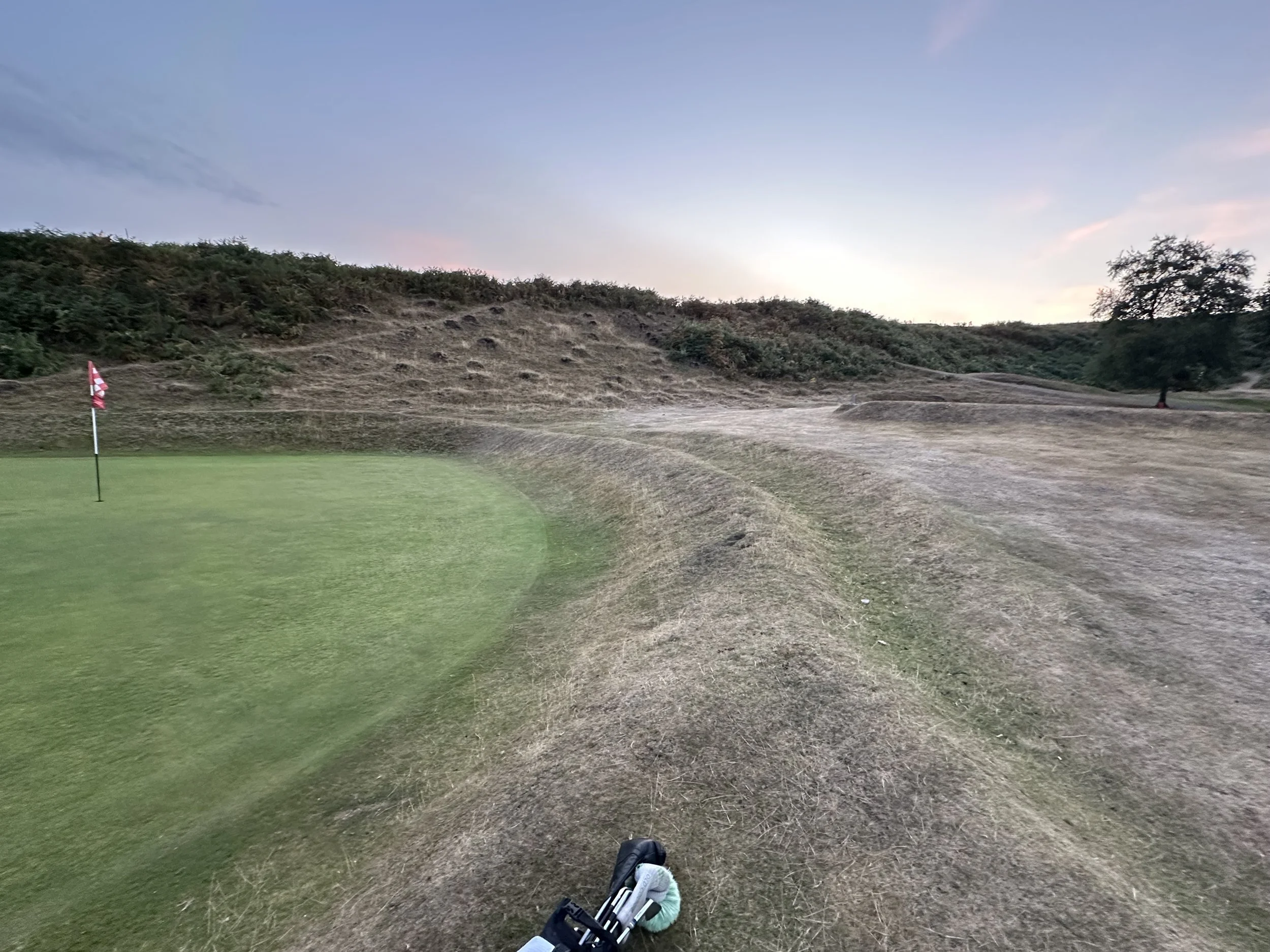
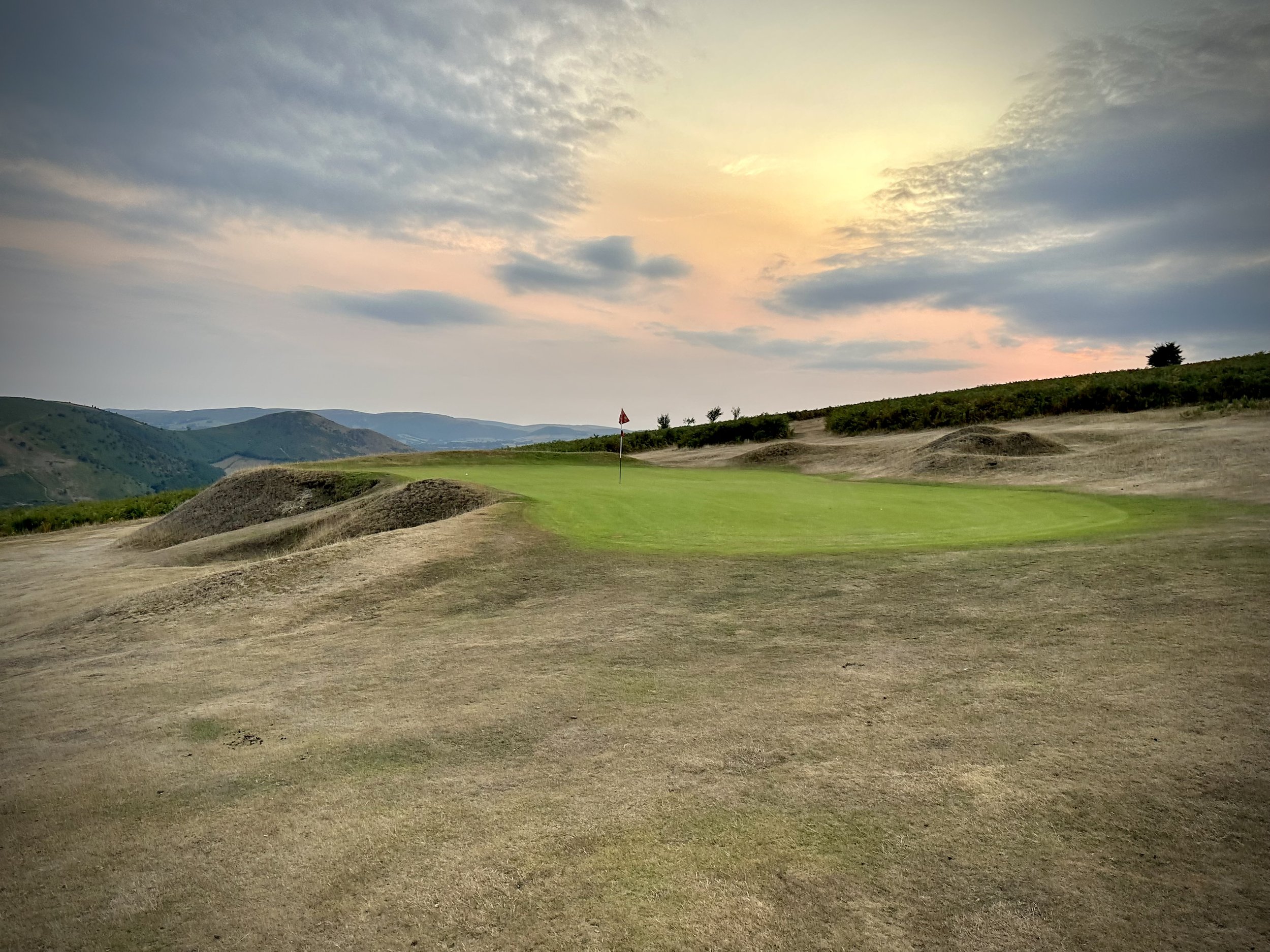
Above: a chronological tour of a heavenly round at Kington
13. West Sussex [7] Pulborough, West Sussex, England. Sir Guy Campbell and C.K. Hutchison. West Sussex, or “Pulborough” as more commonly known, is definitely one of those “vibes” kind of places. It just feels right. I attribute this largely to its mix of landscapes, very good tree management that properly mixes views and spaces, and course that just really fits the land well and never feels crammed despite its par of 68. Speaking of, while playing it, you would absolutely never realize it was sub par 70. The holes have plenty of challenge and “teeth,” if you will, and you are too busy enjoying yourself anyway to notice. It’s yet another case of par being overrated and not actually noticeable to the playing experience. As the course was a relatively late Golden Age addition (1930), there is a lot less of the sharp funky sort of stuff you see around the rest of the region, offering a nice bit of variety in that way. Instead, bunkers and features are bigger, more deliberate, and a bit more polished. It almost feels like a 1920s vintage MacKenzie course in that way, and I think it’s what contributes to that feeling of fitting the land as mentioned above. It’s a really well designed, beautiful, pleasant play to play golf.
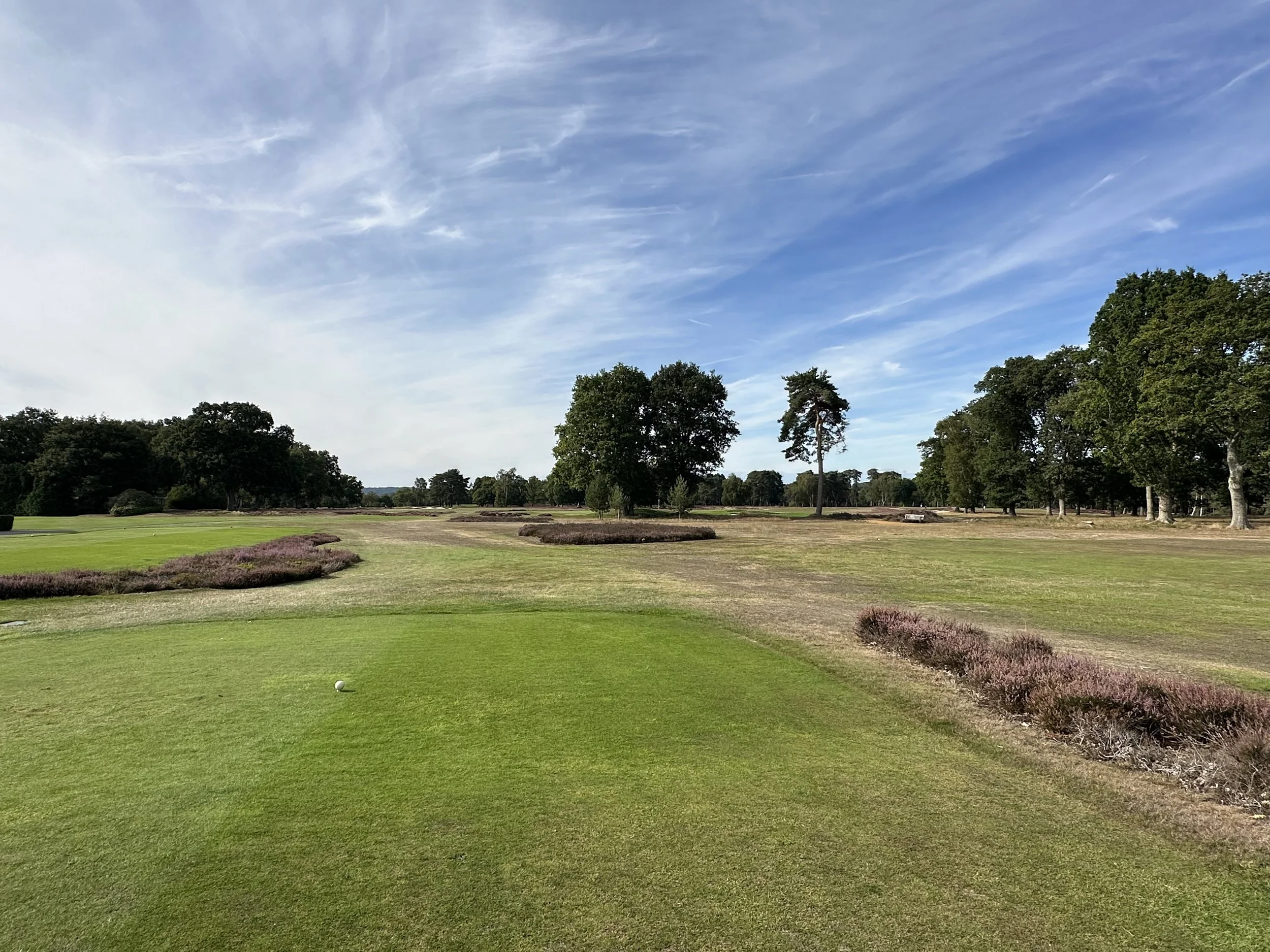
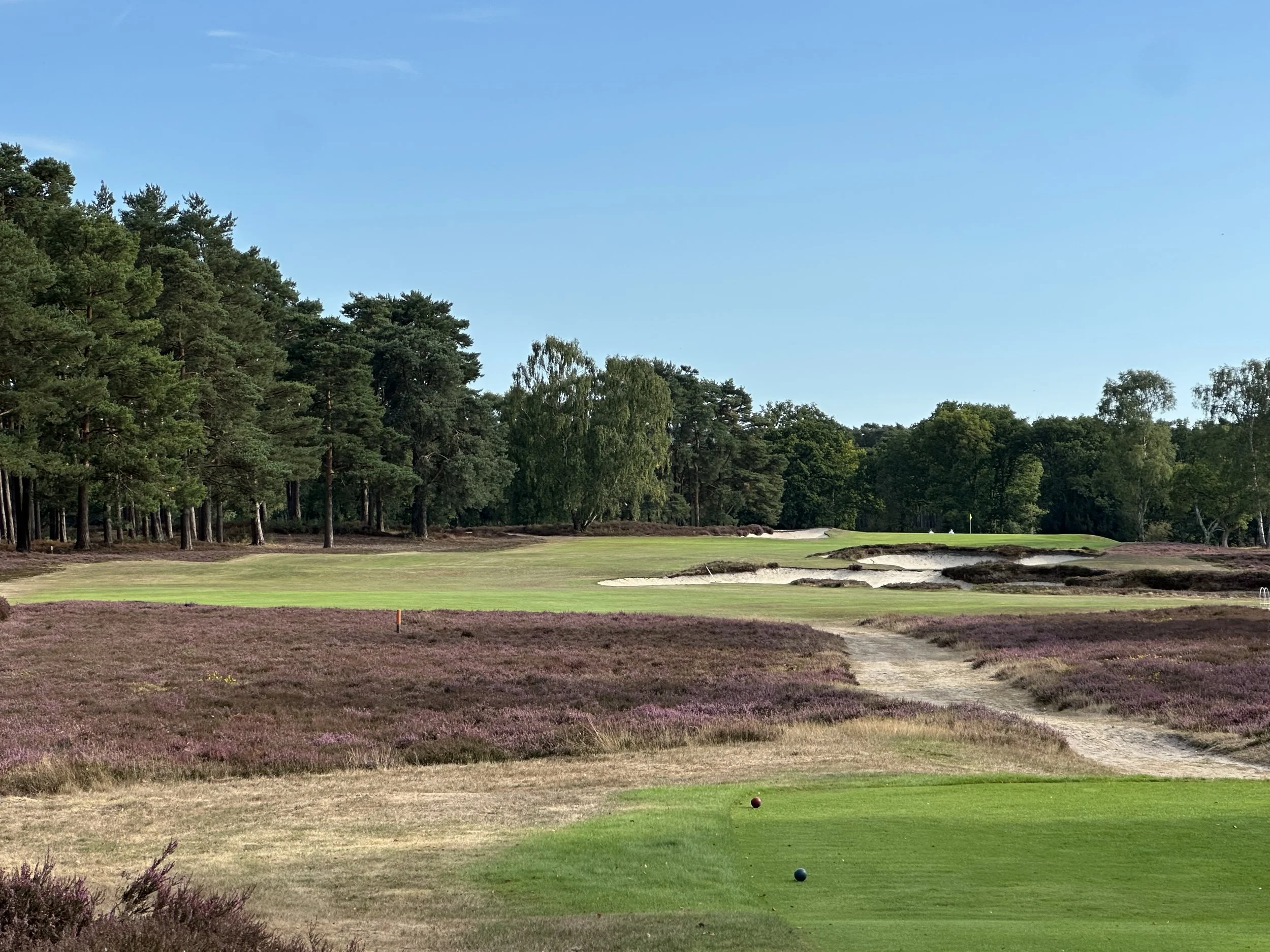
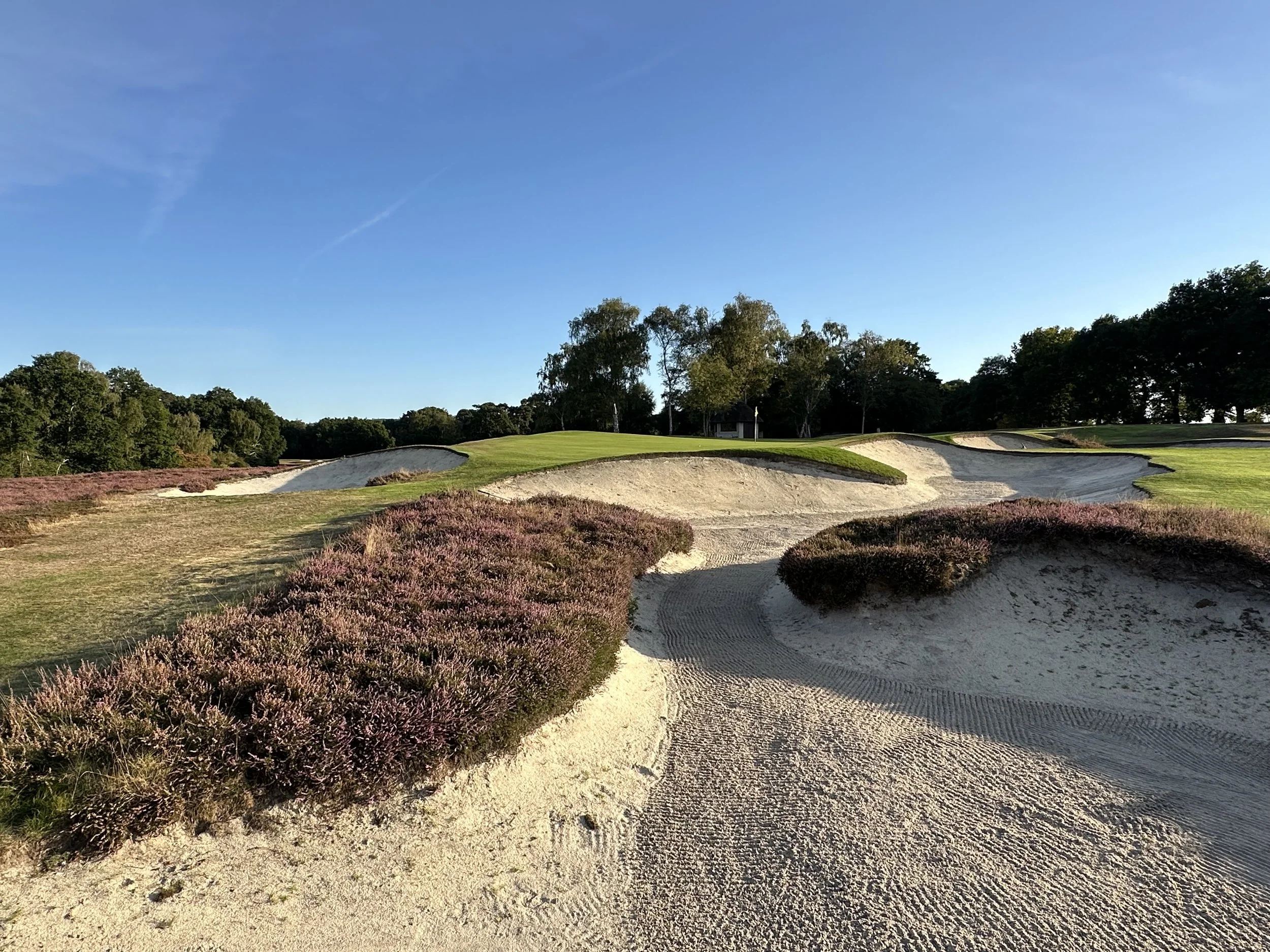
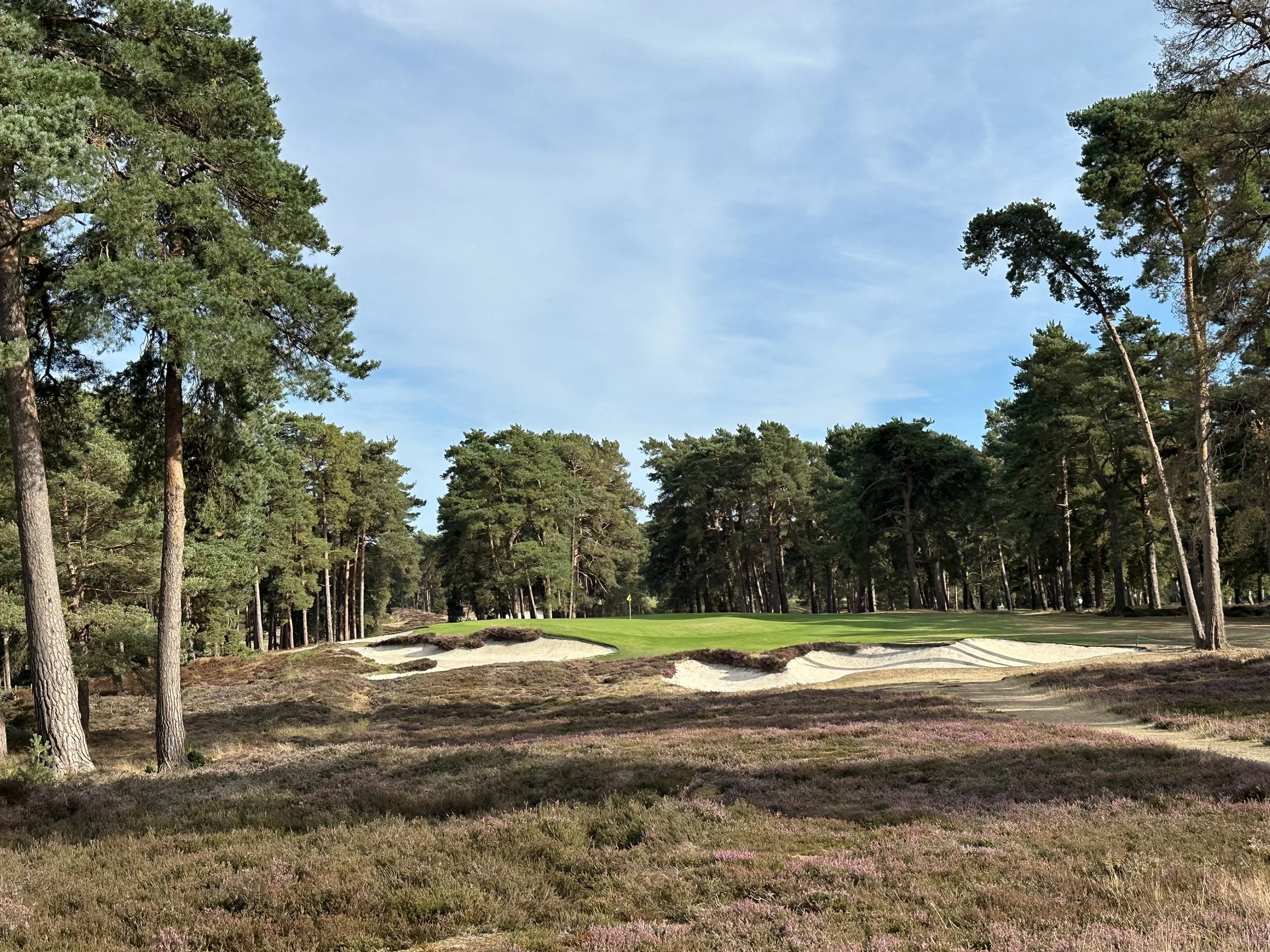
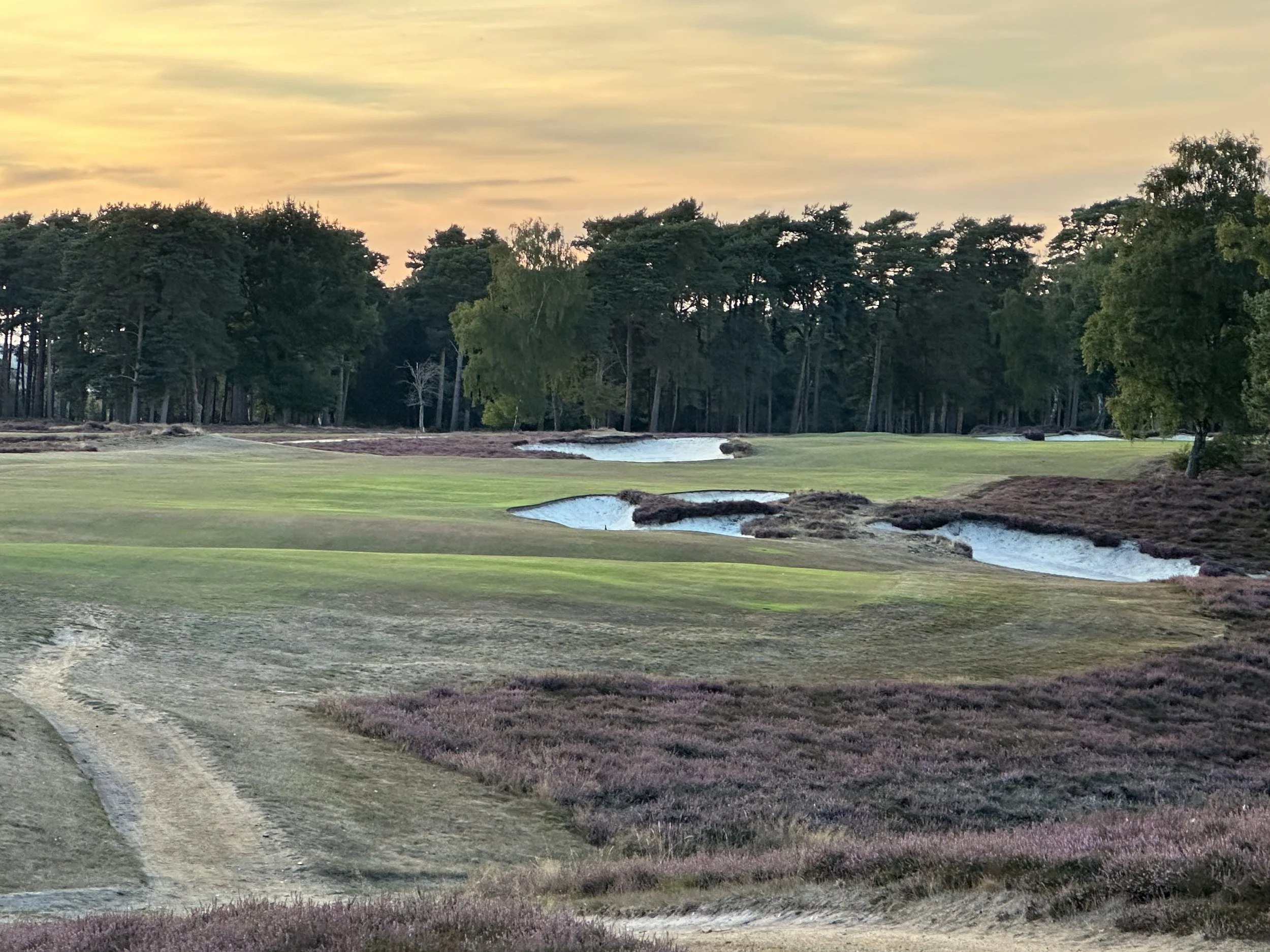
14. Alwoodley [7] Leeds, England. Alister MacKenzie and Harry Colt. I expected to see some cool early MacKenzie features at Alwoodley and soundly designed holes, but I did not expect to see as big and open a heathland landscape as it has. It was a bit disappointing to learn right away that the greens had been rebuilt to USGA specs many years ago (before scanning technology), probably leading to the loss of some fine details, but the overall ideas—big tilts that tilt harder at certain corners and open, flowing approaches—were still present and impressive. Despite a poor weather day that led us (myself with members and committee men Jonathan Taylor, Eugene Reddington, and Neil Stoddard) to walk sans clubs, it was obvious that the place has that same sort of charm and feel like West Sussex does in the previous entry, starting with the out-and-back routing anchored at the end to its castle-like clubhouse. Early-period MacKenzie—to be discussed more below—is exceptionally fascinating to see and study while also being underrated, Alwoodley being the all-around posterchild for such.
15. Royal Ashdown Forest (Old) [7] Forest Row, East Sussex, England. A.T. Scott. Clyde Johnson was rather envious I’d be heading down to RAF on a warm sunny Friday evening that he (accurately) projected would see the course mostly to myself. It didn’t take long to see why with a number of charming holes to start, but it was cast in stone by the time I reached the spectacular far end of the property, crescendo-ing with the 249 yard par 3 11th and its commanding views out over the Royal Ashdown Forest and well beyond. And, what a thrill to find the green with a bunt 3 wood, the ball landing some 60 yards short and chasing onto the putting surface that feels like it hangs over the edge of the earth. On top of the serenity and thrilling golf shots, the feature construction at RAF contained elements of what I saw on other area courses like Walton Heath or Swinley Forest, but it tended to have its own flair, particularly long berms or green embankments with ruffled top lines, a charming early attempt at a naturalistic look. Famously, none of these features have sand in them, leading many to call it the world’s greatest bunkerless course. I honestly didn’t think about that at all while playing; seems I didn’t really miss the sand.
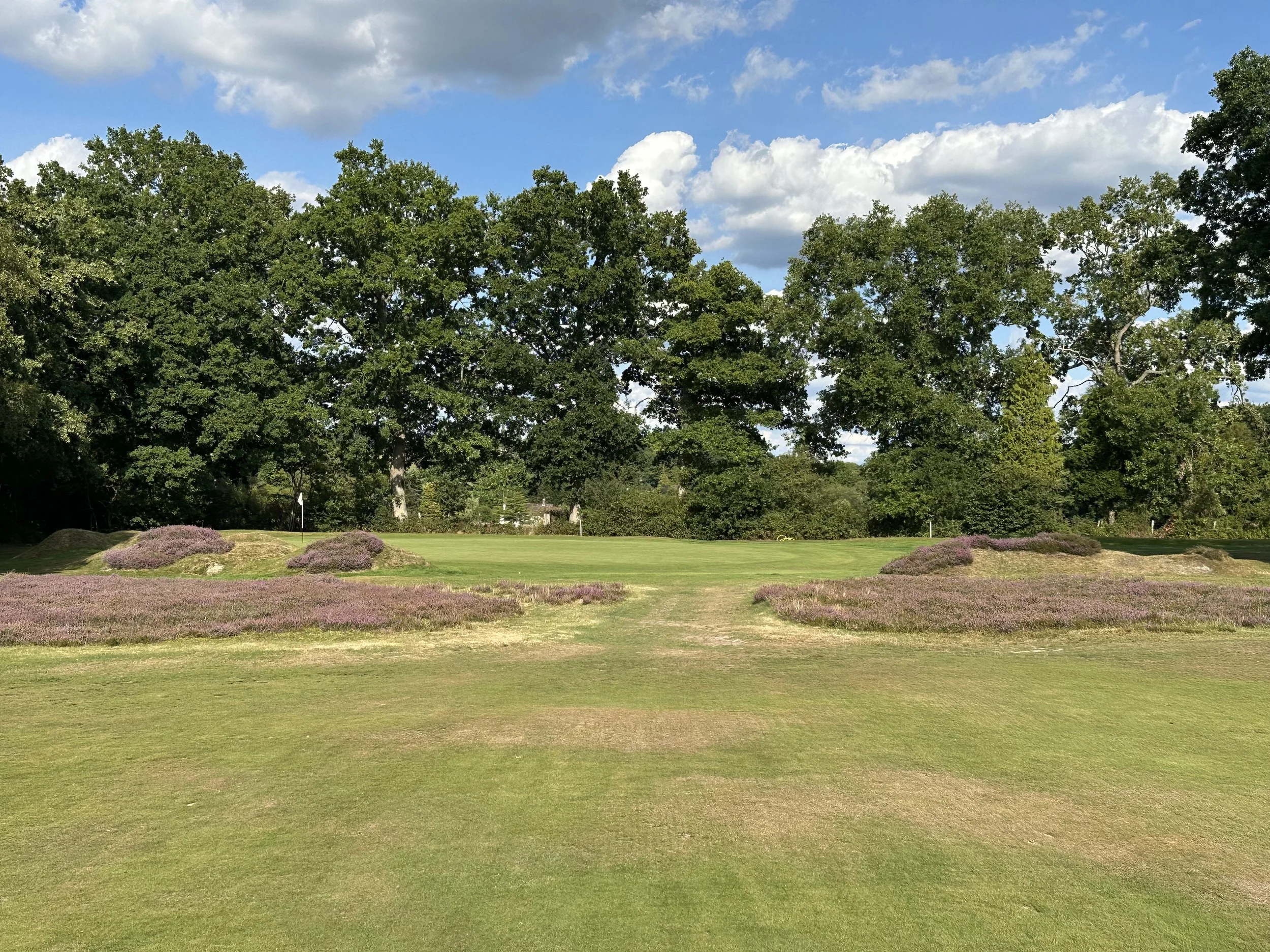
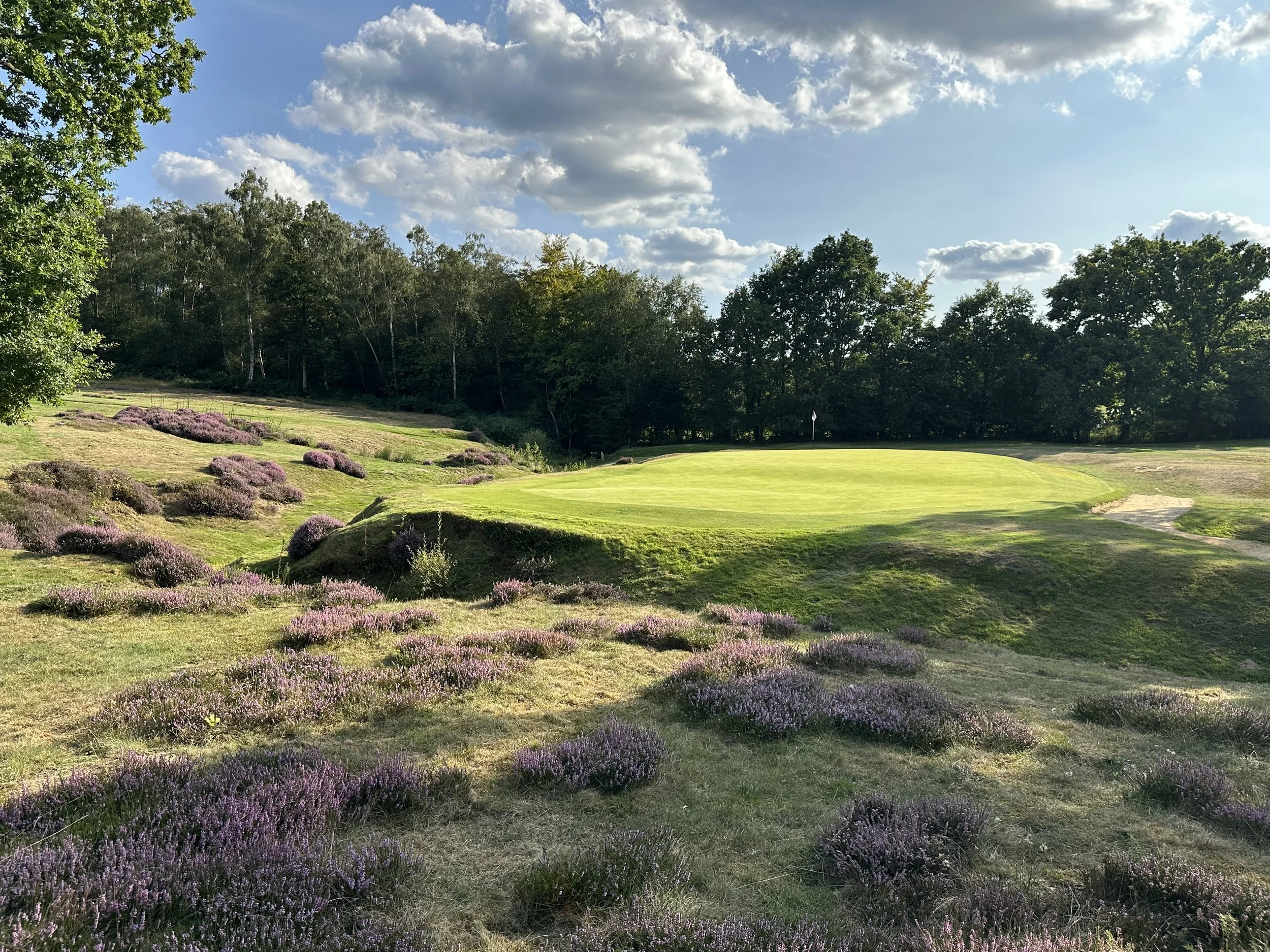
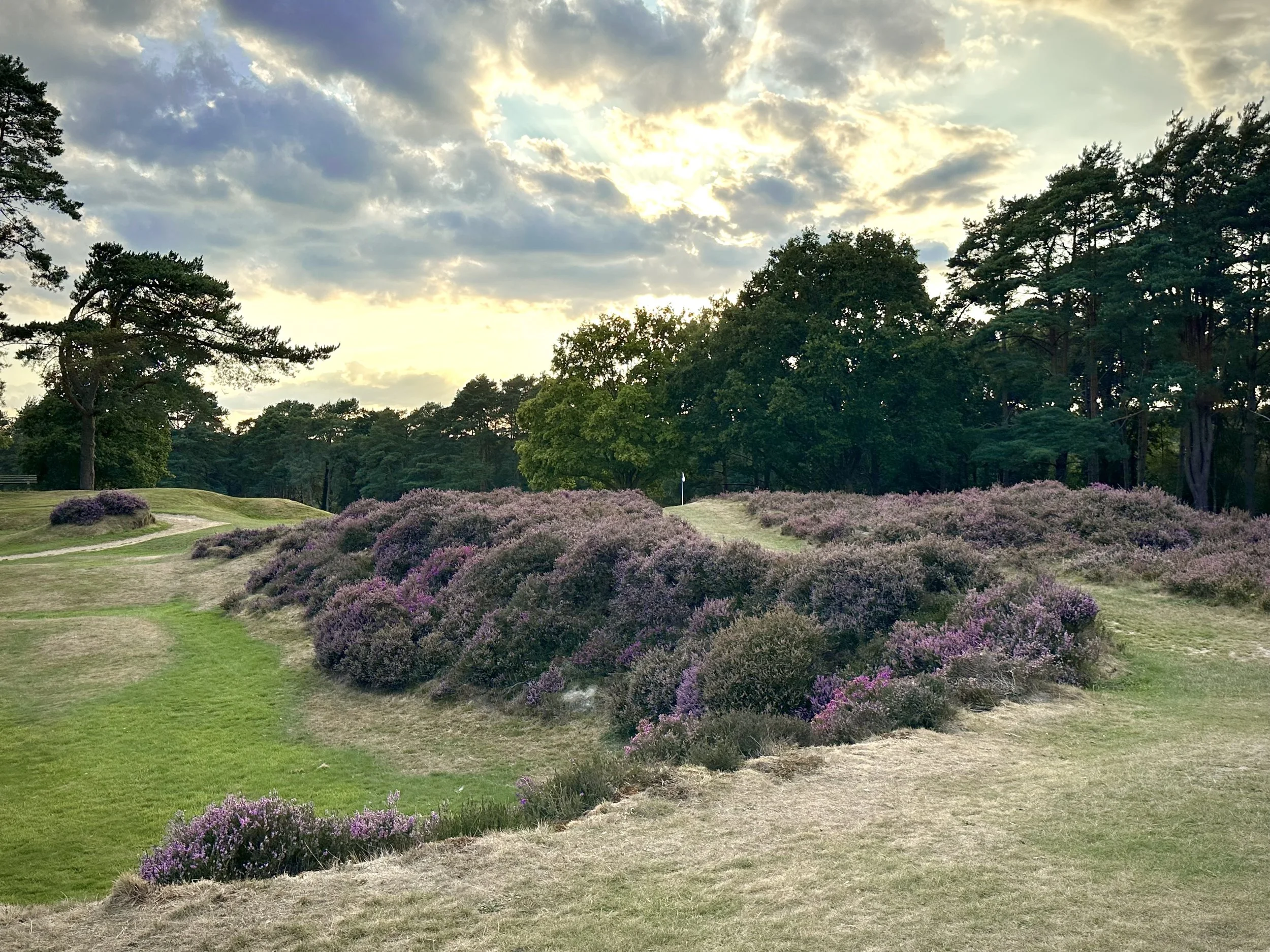
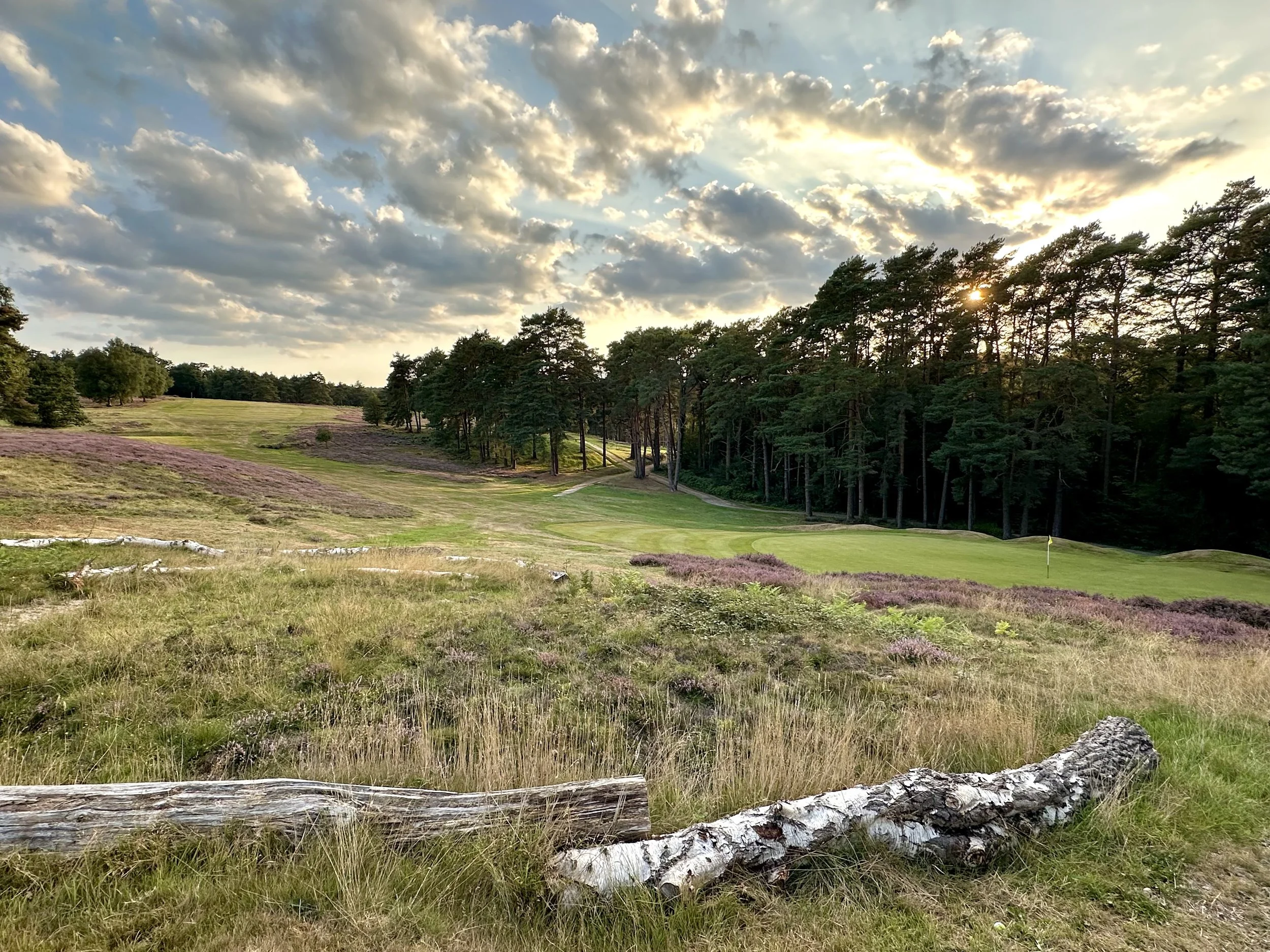
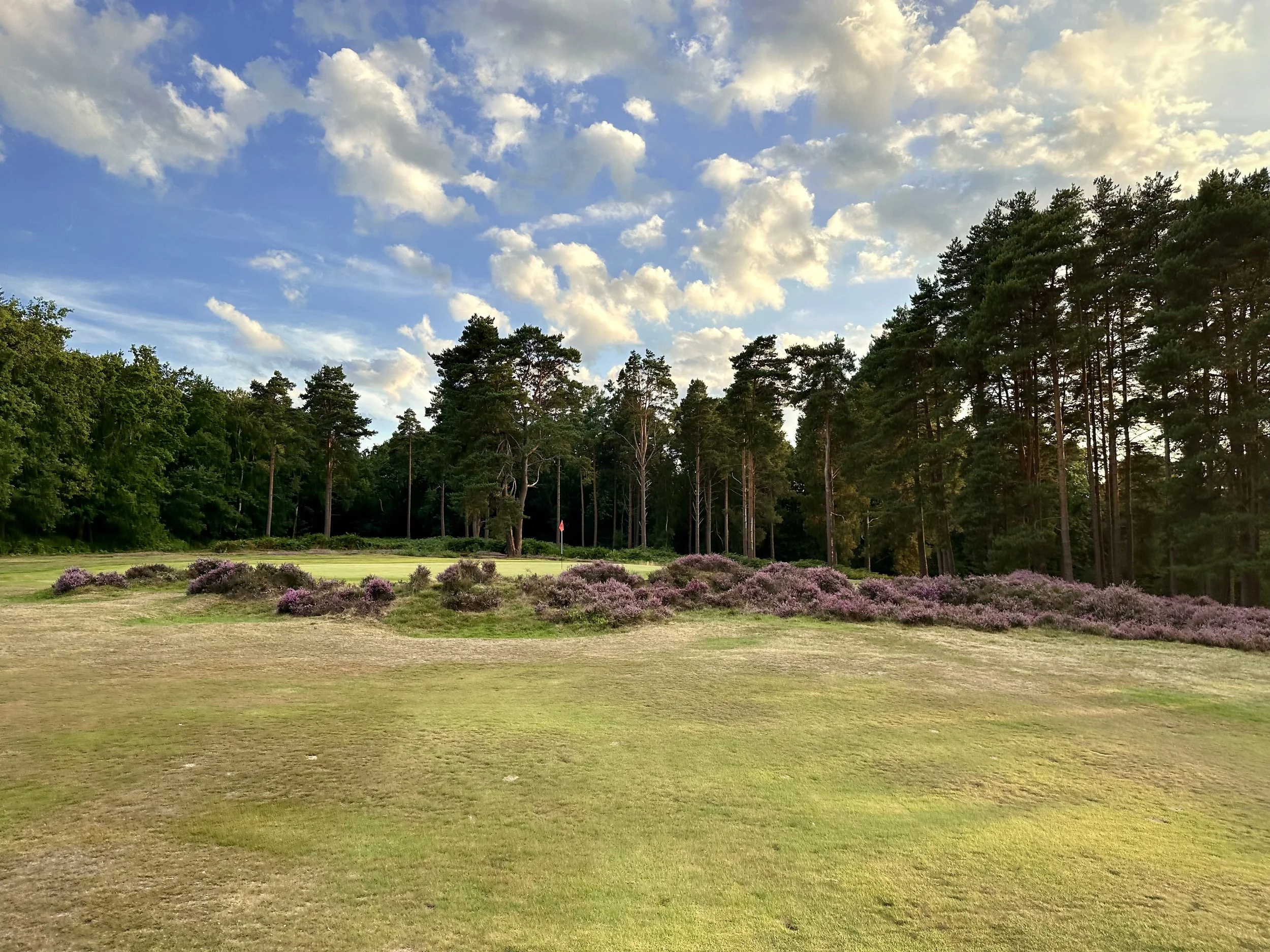
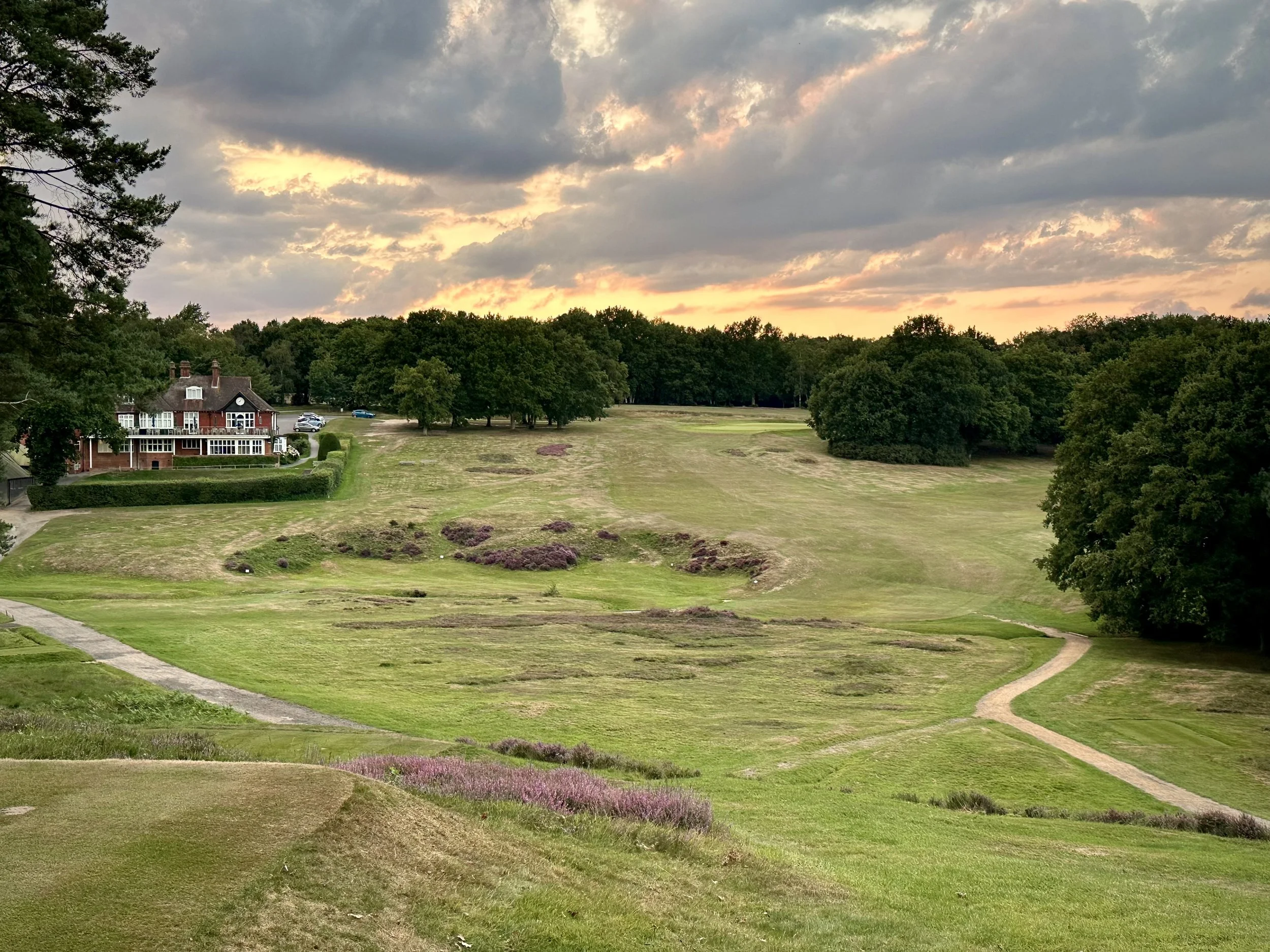
16. St. George’s [7] East Setauket, NY. Devereux Emmet. The land is dramatic at St. George’s, as are some of the design moves by Emmet, who made this his home and masterpiece to tinker with, a la Ross and Pinehurst. Where the land was less dramatic, particularly on the plateau of the front nine across the street, Emmet created some fascinating and original greens complexes, particularly the 4th, which has a blind trench bunker between two faux dunes waiting to snag a ground approach. I only got to tour around here quickly on a cart with the emminently kind and enjoyable historian John Ammerman, and that has got me eagerly wanting to get back and tee it up.
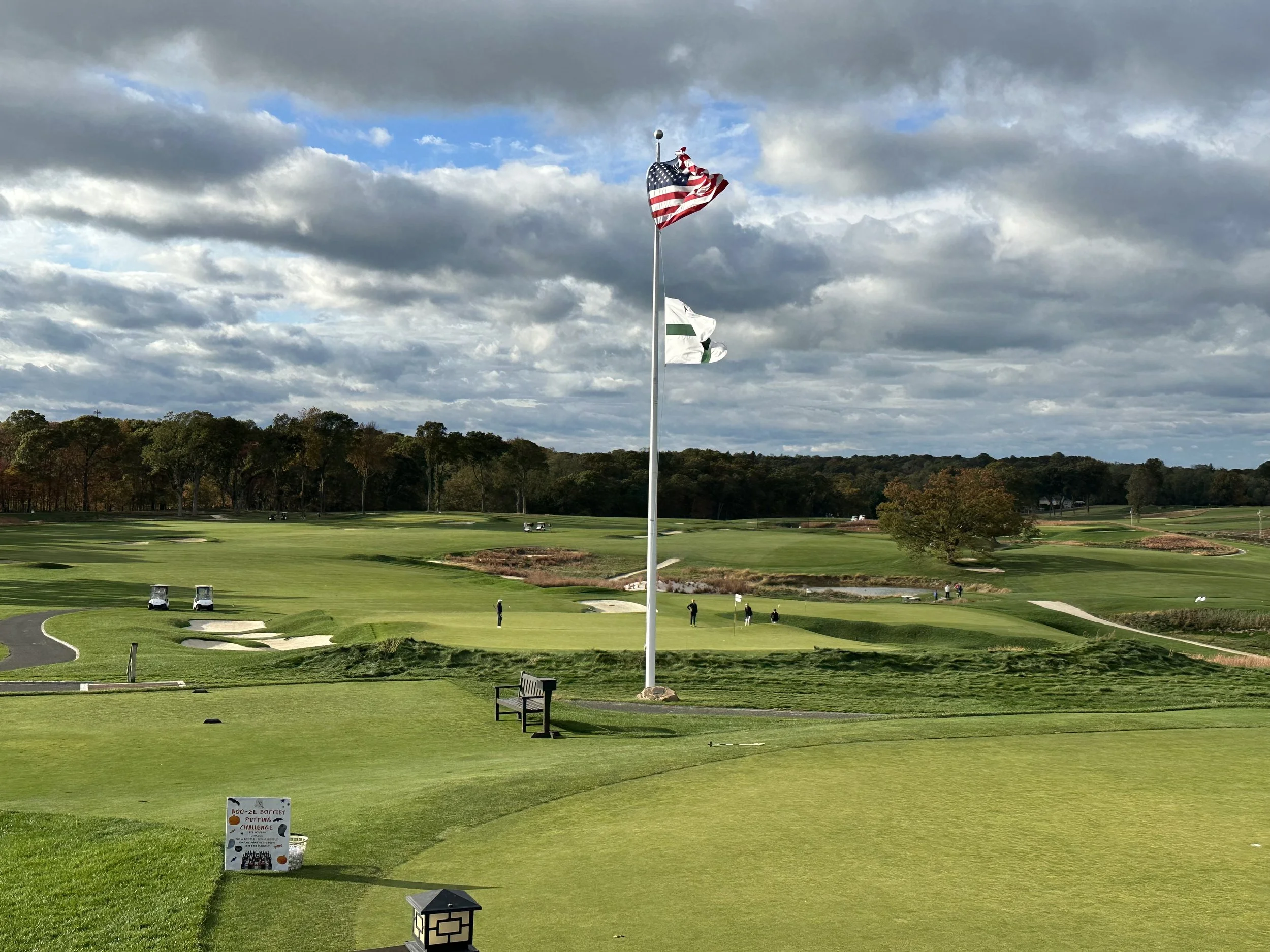
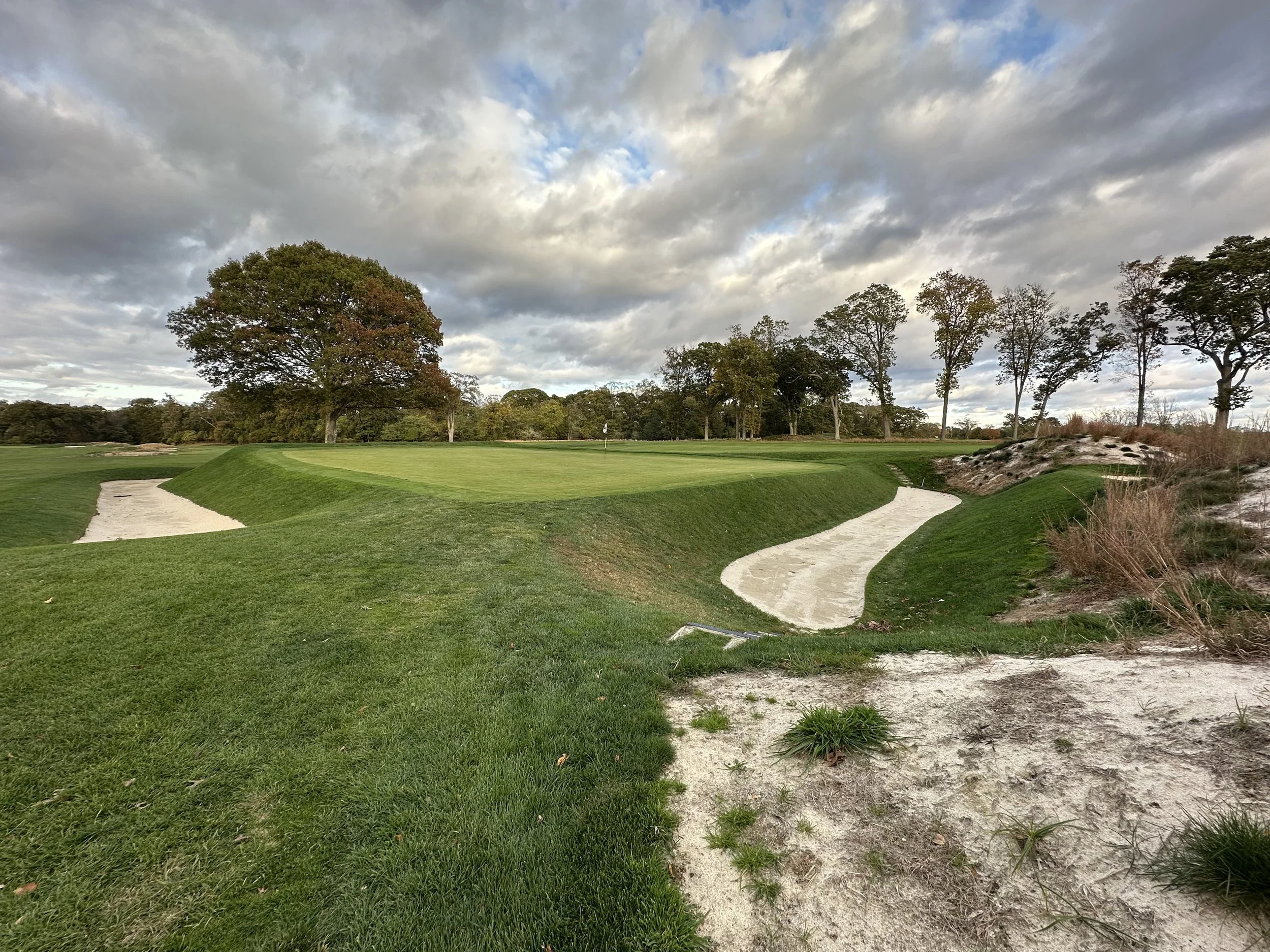
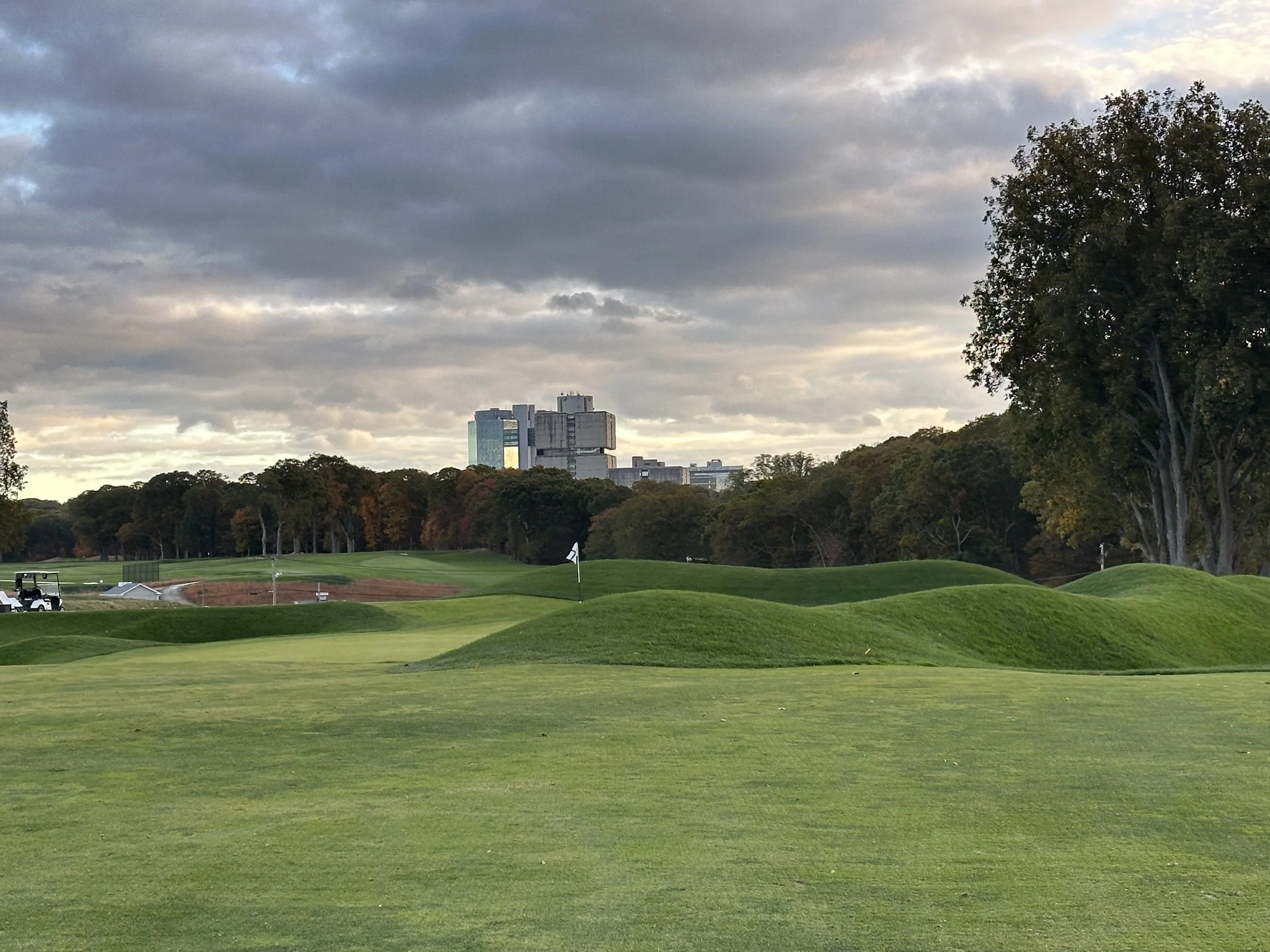
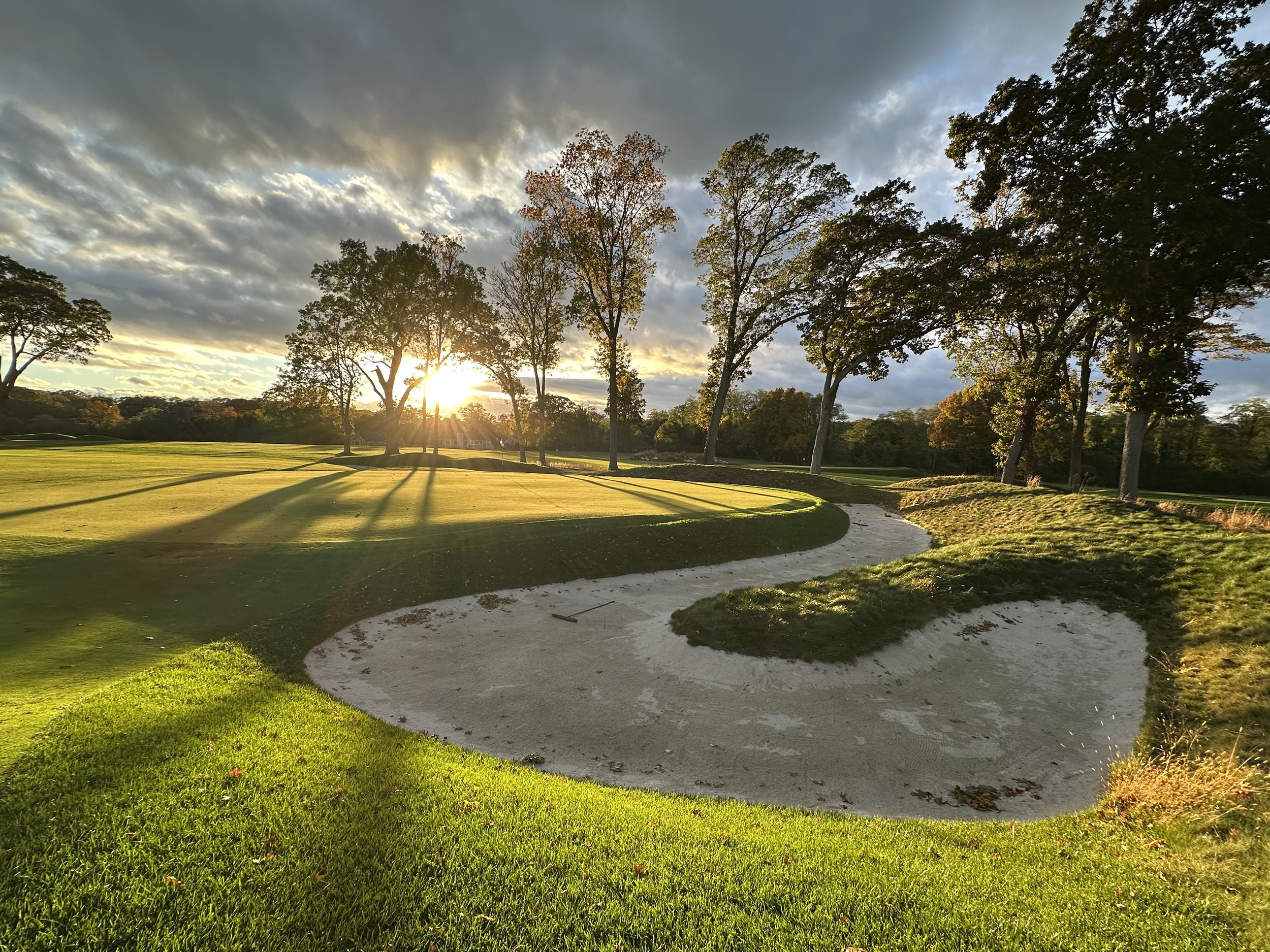
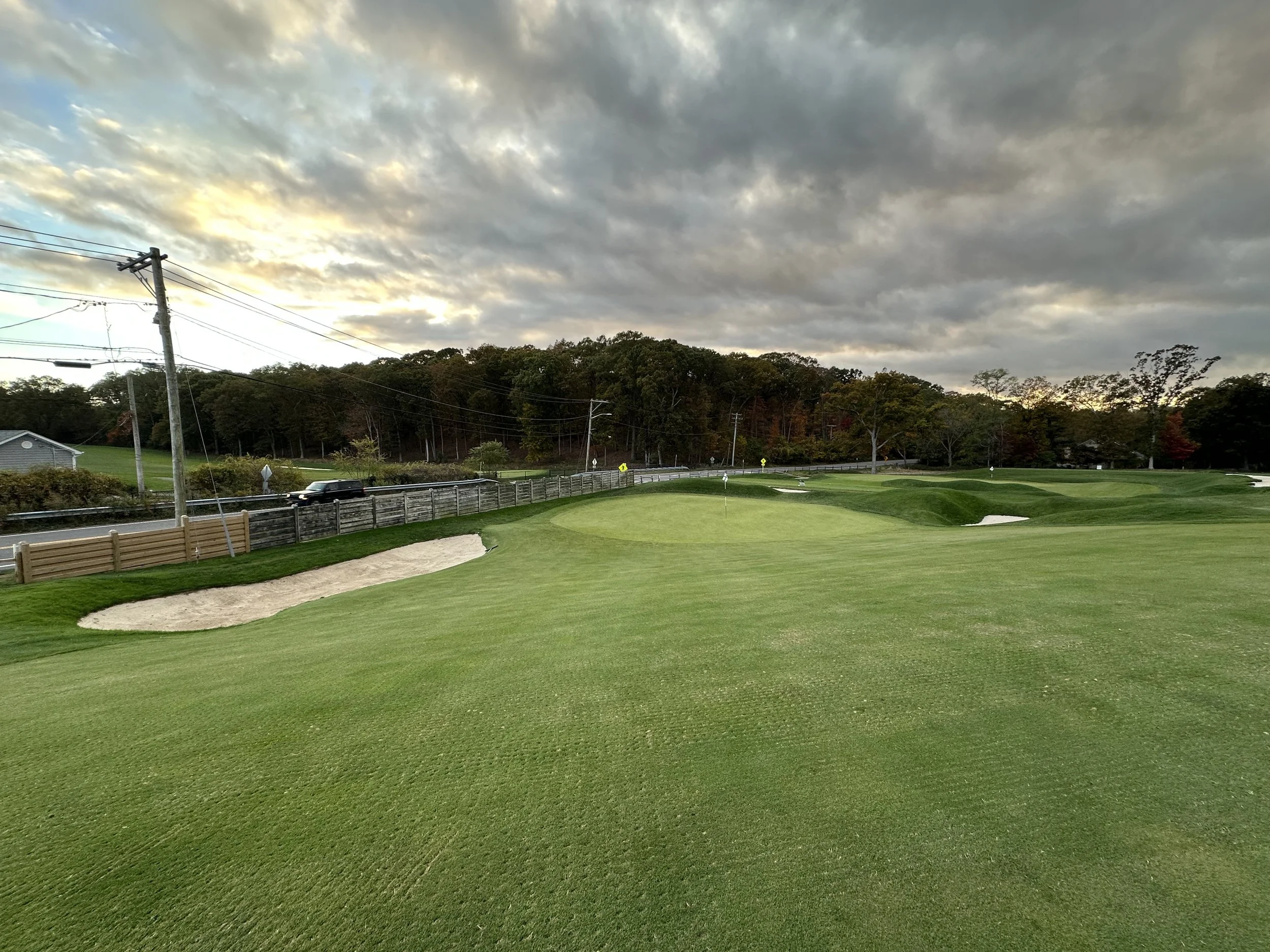
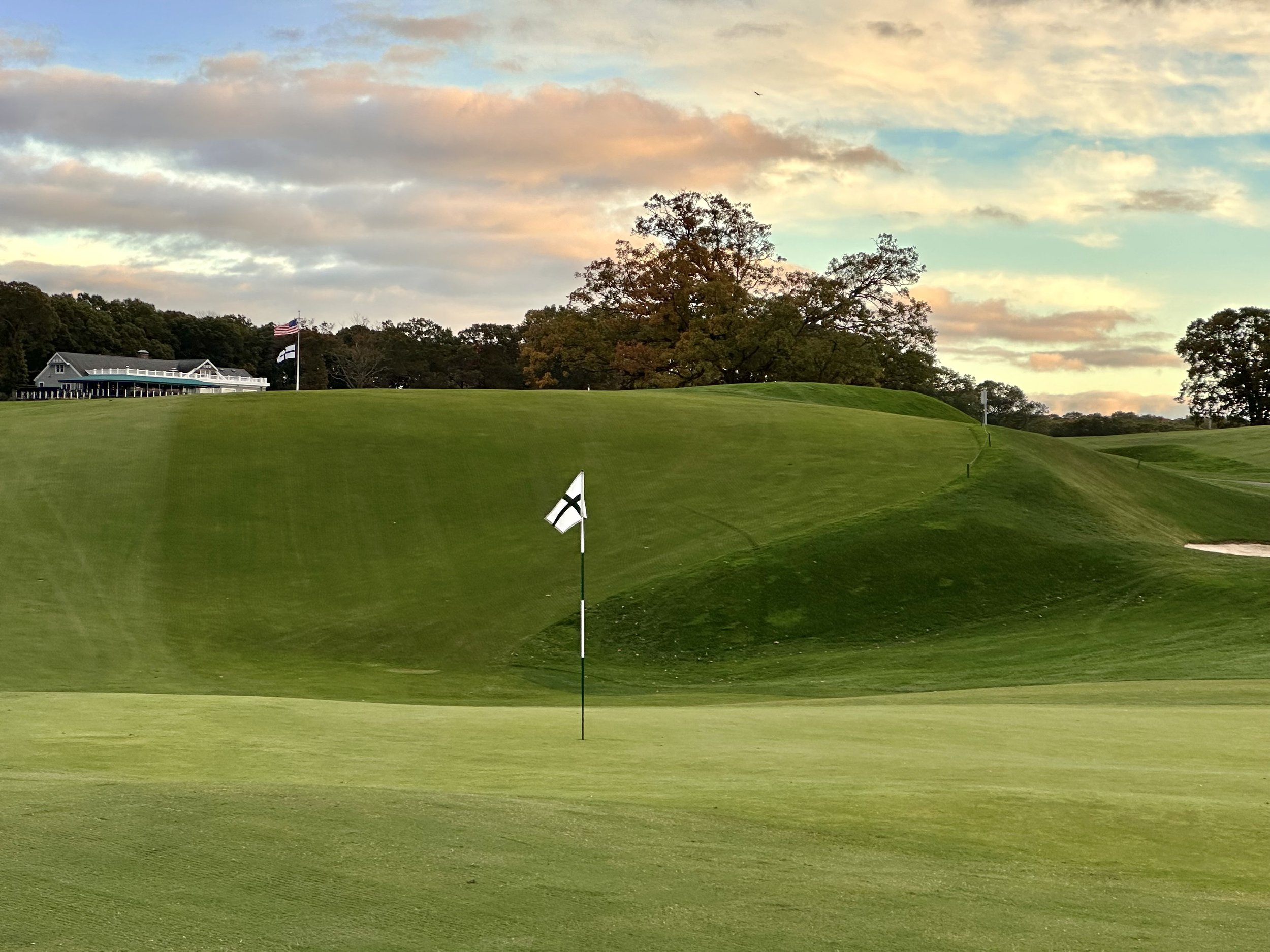
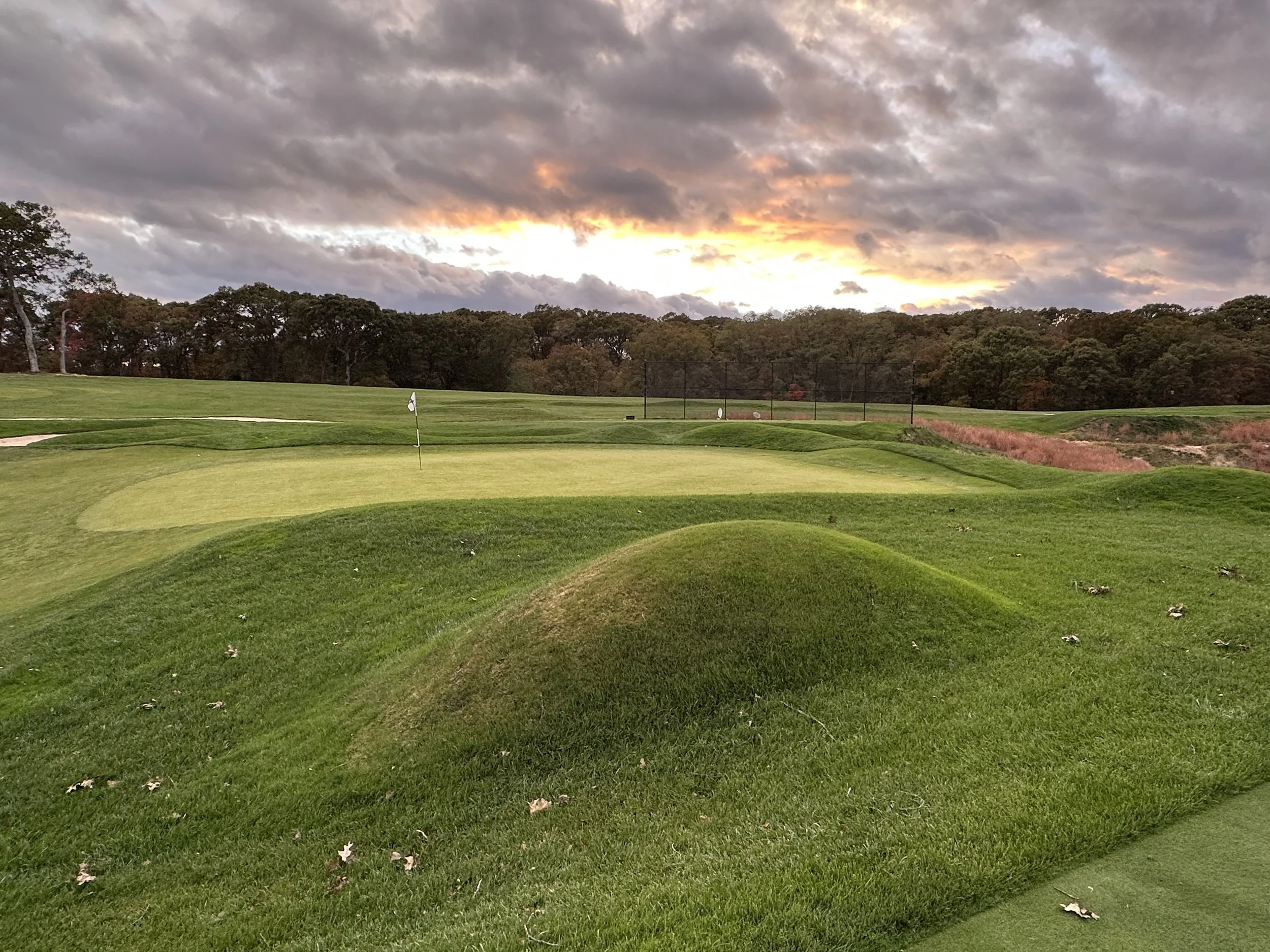
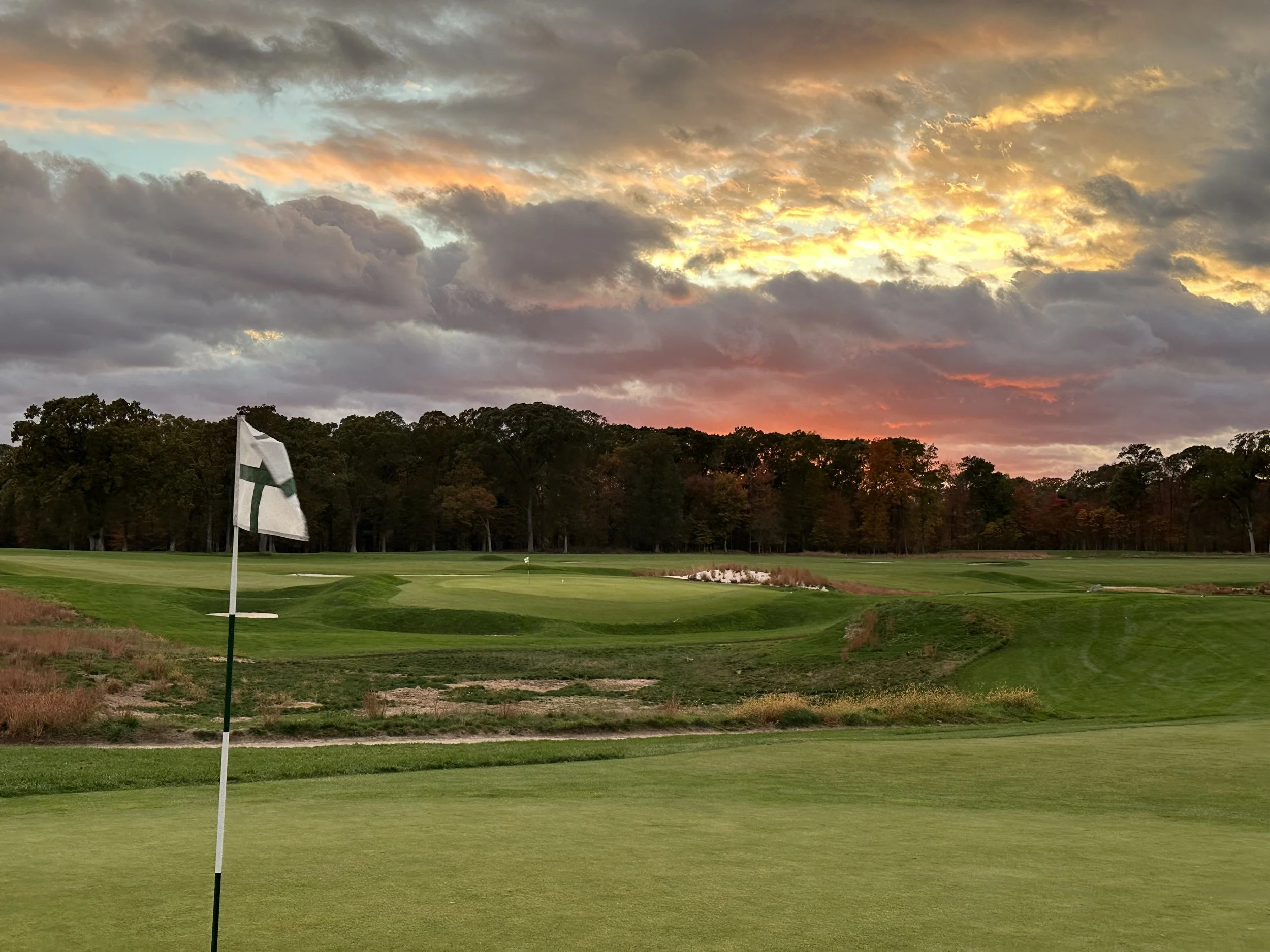
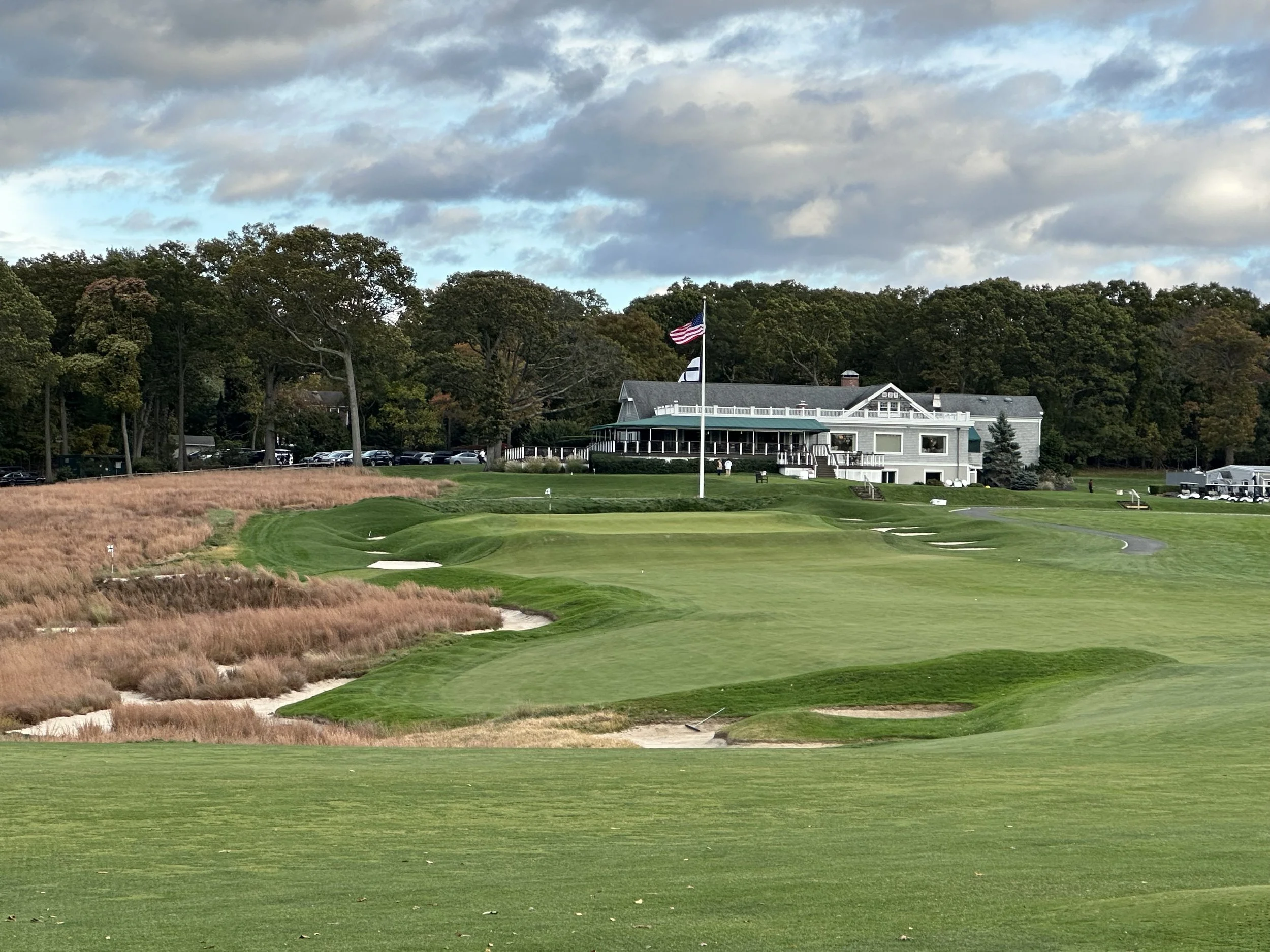
Above: cool Emmet features and dramatic land at St. George’s
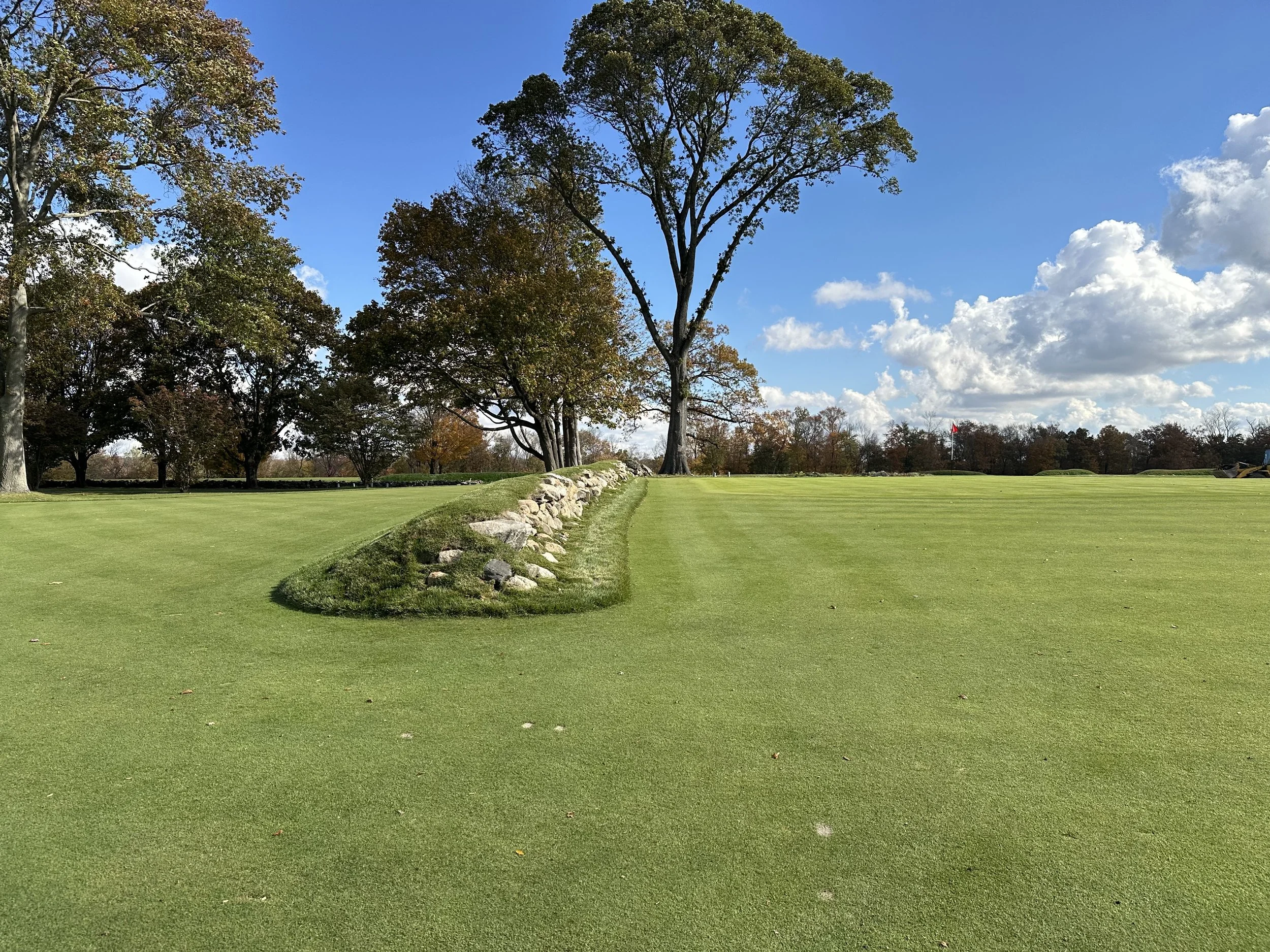
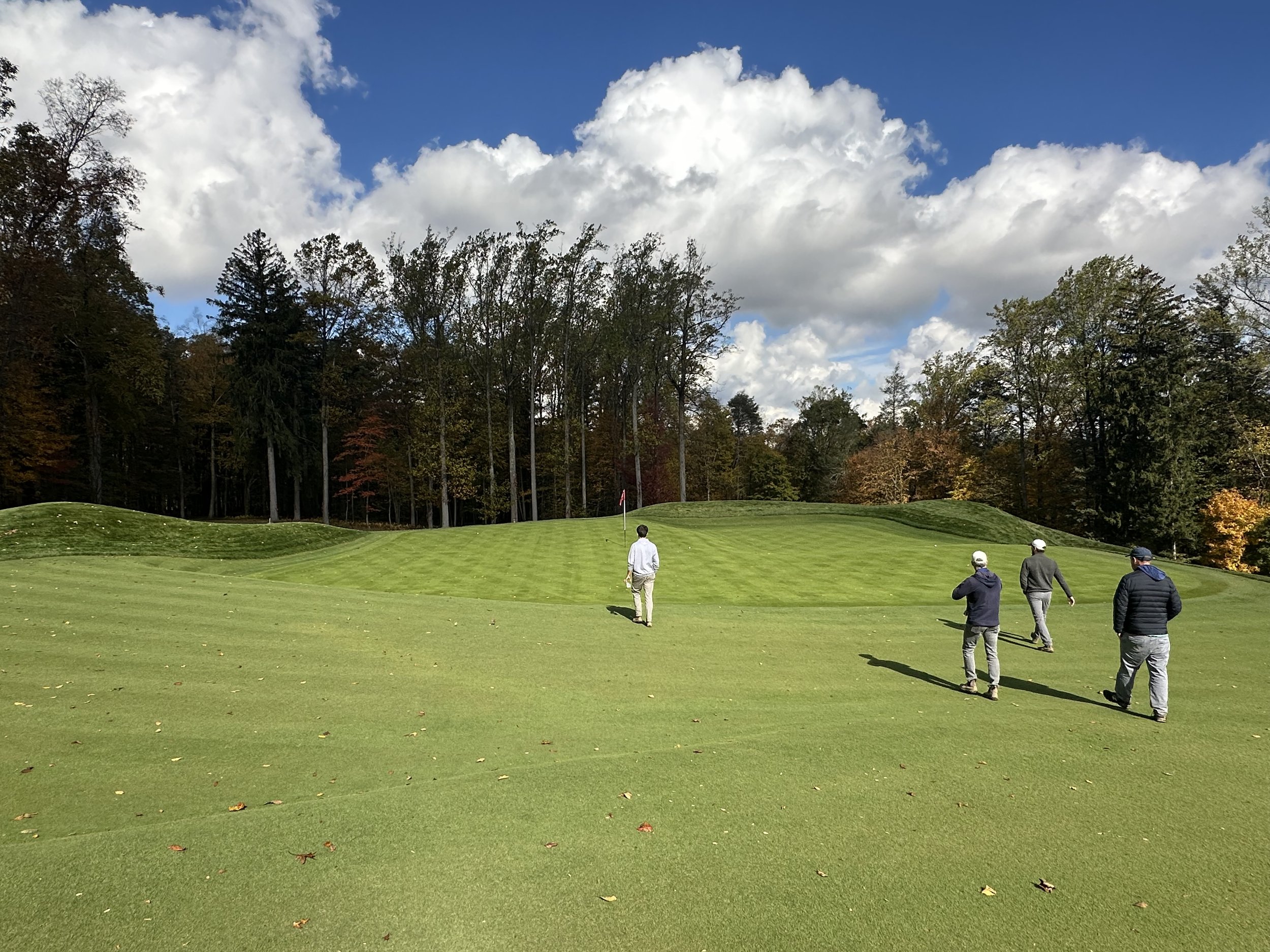
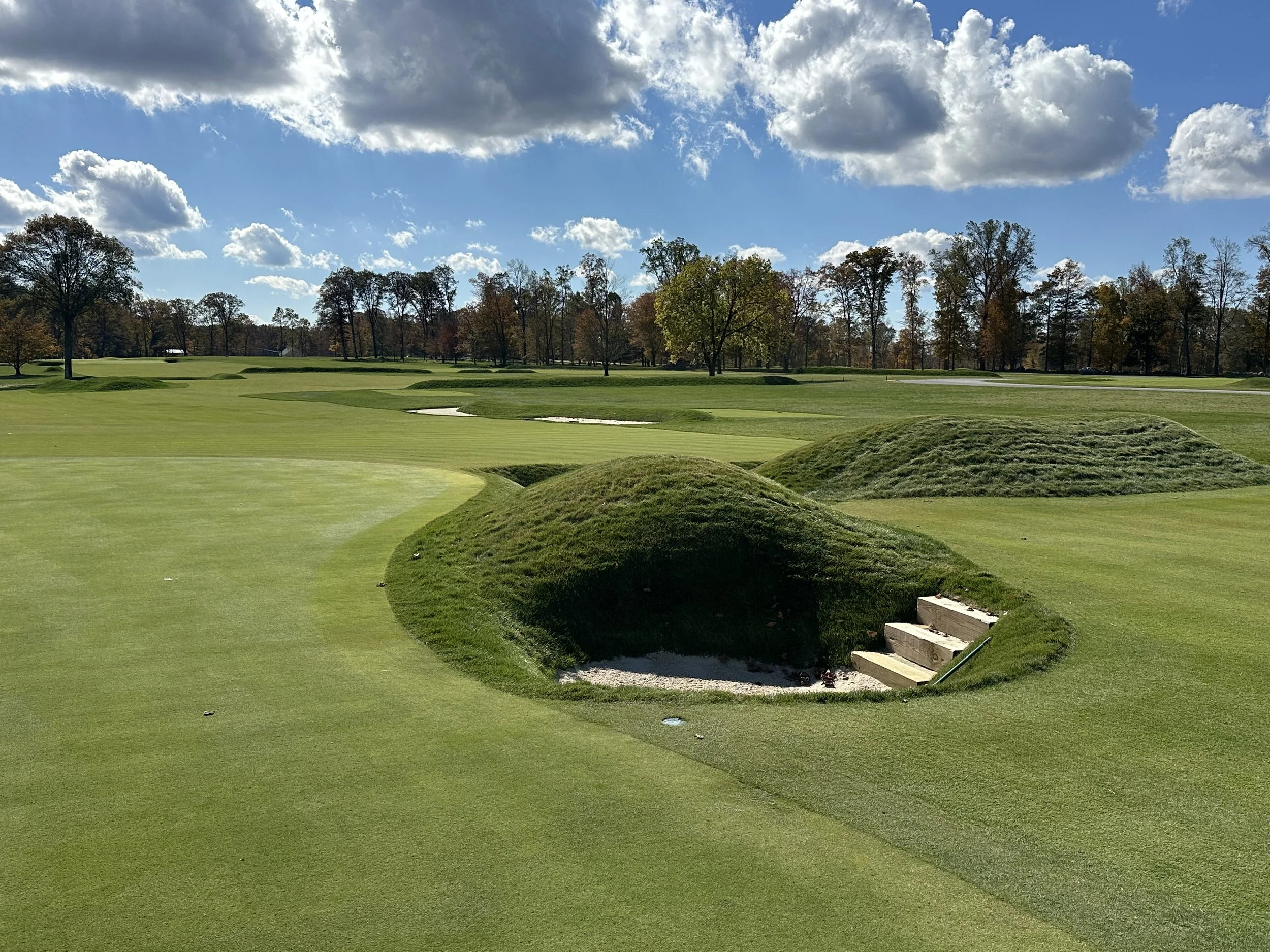
17. Silver Spring [7] Ridgefield, CT. Brian Schneider redesign from Robert White original. I’m typically a big fan of Brian’s work, and Silver Spring is no exception. Walking the site with Brian, his crew members Gray Carlton and Andrej Buchko, and friend and writer Tom Dunne, I observed what appeared to be a fascinating and very well-executed transformation of this tranquil Connecticut property. Flat fallaway greens mix with others that are heavily and sharply contoured on the interior. Victorian Era cops break up the broad parts of the landscape, but do so in strategic and organically composed ways. Walls angle to guard greens and reinforce tee-shot strategy. Bunkers sometimes sit blindly into the ground. It’s an eclectic mix of old-style design elements but done so in strategic and well-balanced ways. I’ll be interested to see how the work is received, but I personally think it’s elevated to the point where it can be talked about as among Connecticut’s best.
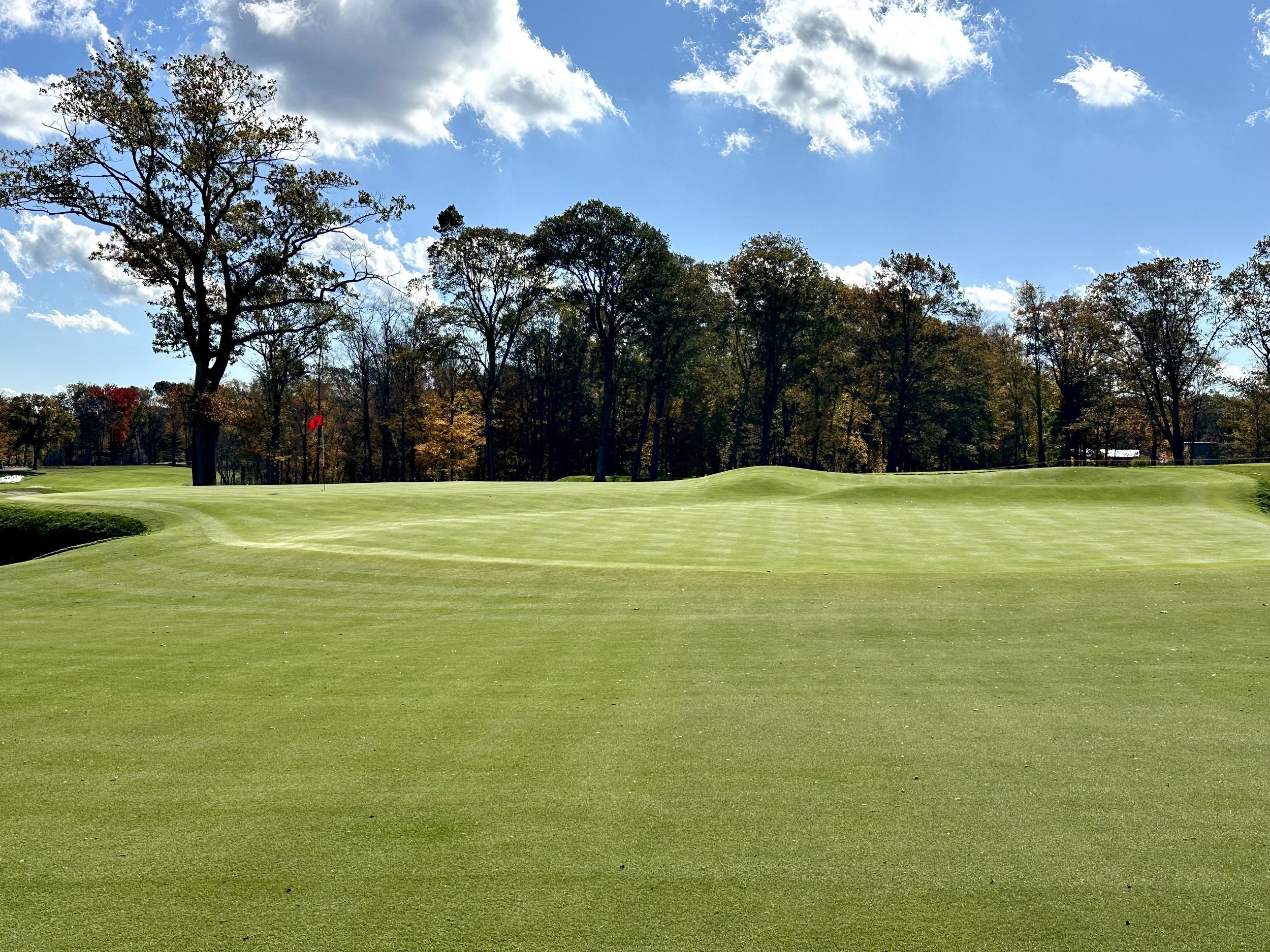
18. Poppy Ridge [7] Livermore, CA. Jay Blasi complete redesign of Rees Jones original. After walking this course with Jay Blasi during grow-in, I signed back up for the NCGA to get the discounted member rates to play here. With fast-playing bermuda turf, a bucolic CA wine country setting, and fun strategic mix of golf holes, I do not regret my decision.
19. North Jersey [7] Wayne, NJ. Walter Travis. I’ve followed Brian Schneider’s restoration work closely over the years at this cool Travis course, and I’ve been keen on getting there to see it the whole time, especially envisioning elements of the greens for Land Park in Sacramento. I’m sort of glad it took me a couple years longer to get up there, as the work is now almost complete. About half the greens are original and the other half Schneider re-interpretations, and I honestly would struggle to tell which ones are which. Truly amazing, especially if you understand the complexities of Travis shaping, both bold and subtle.
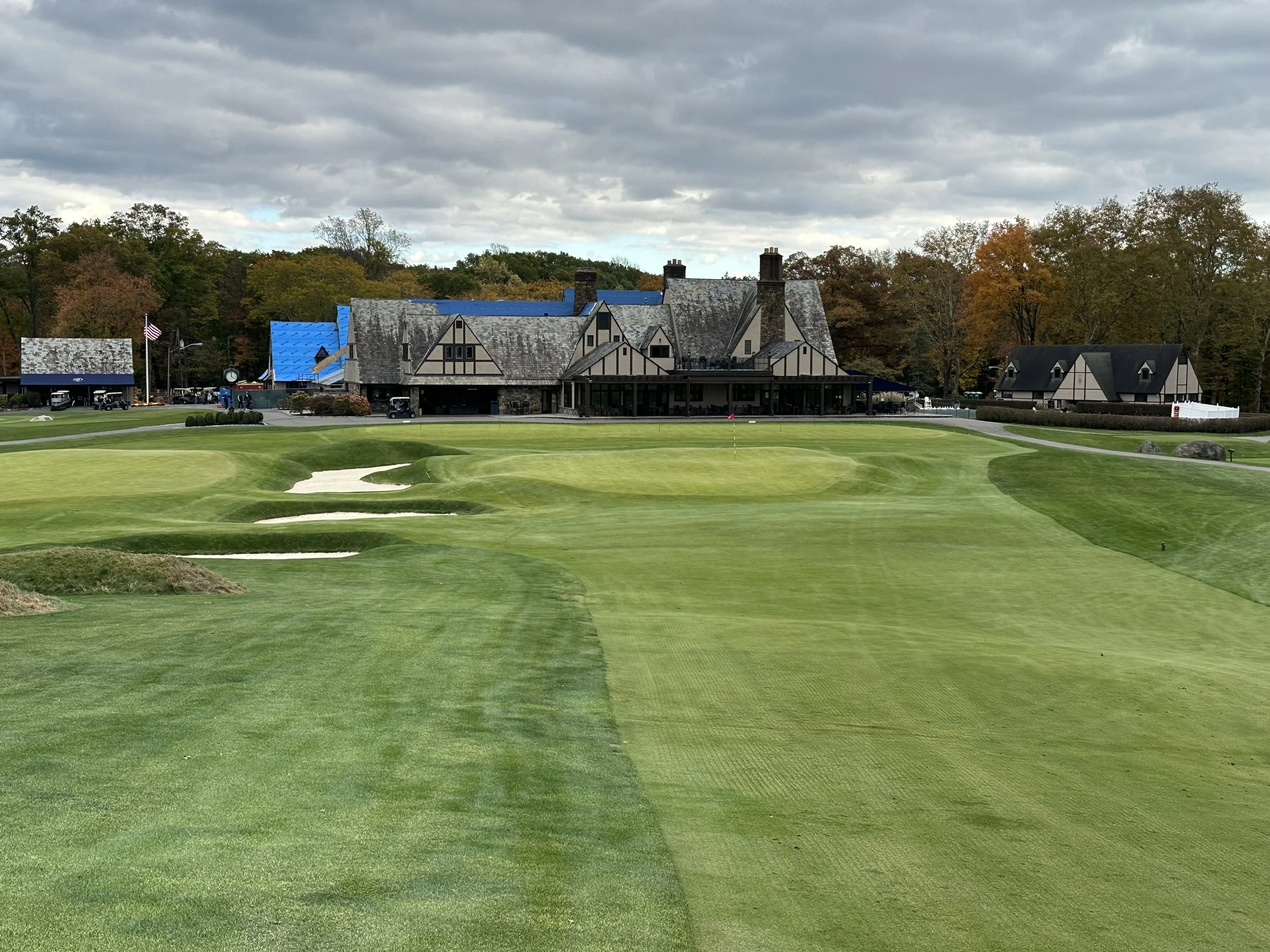
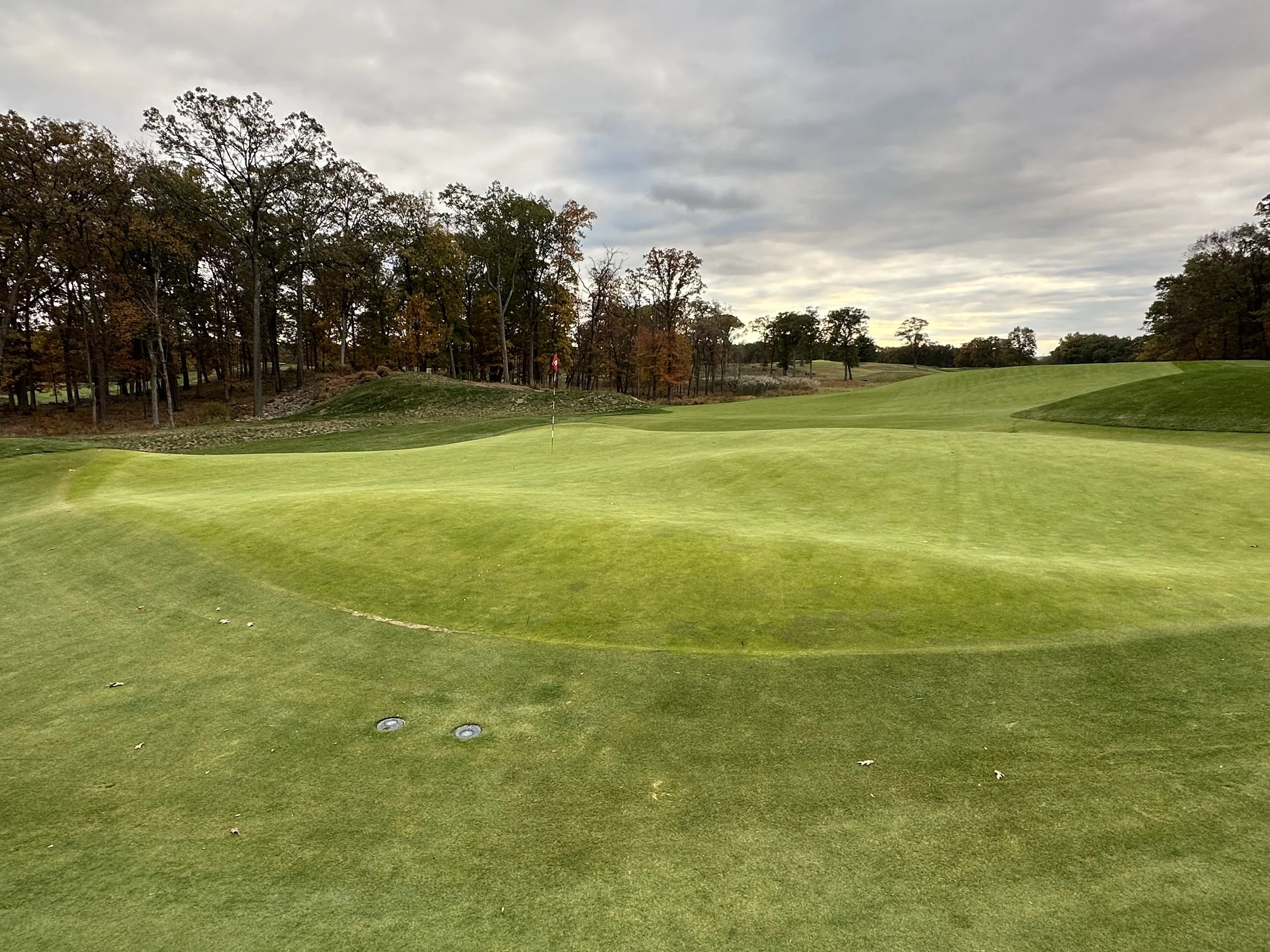
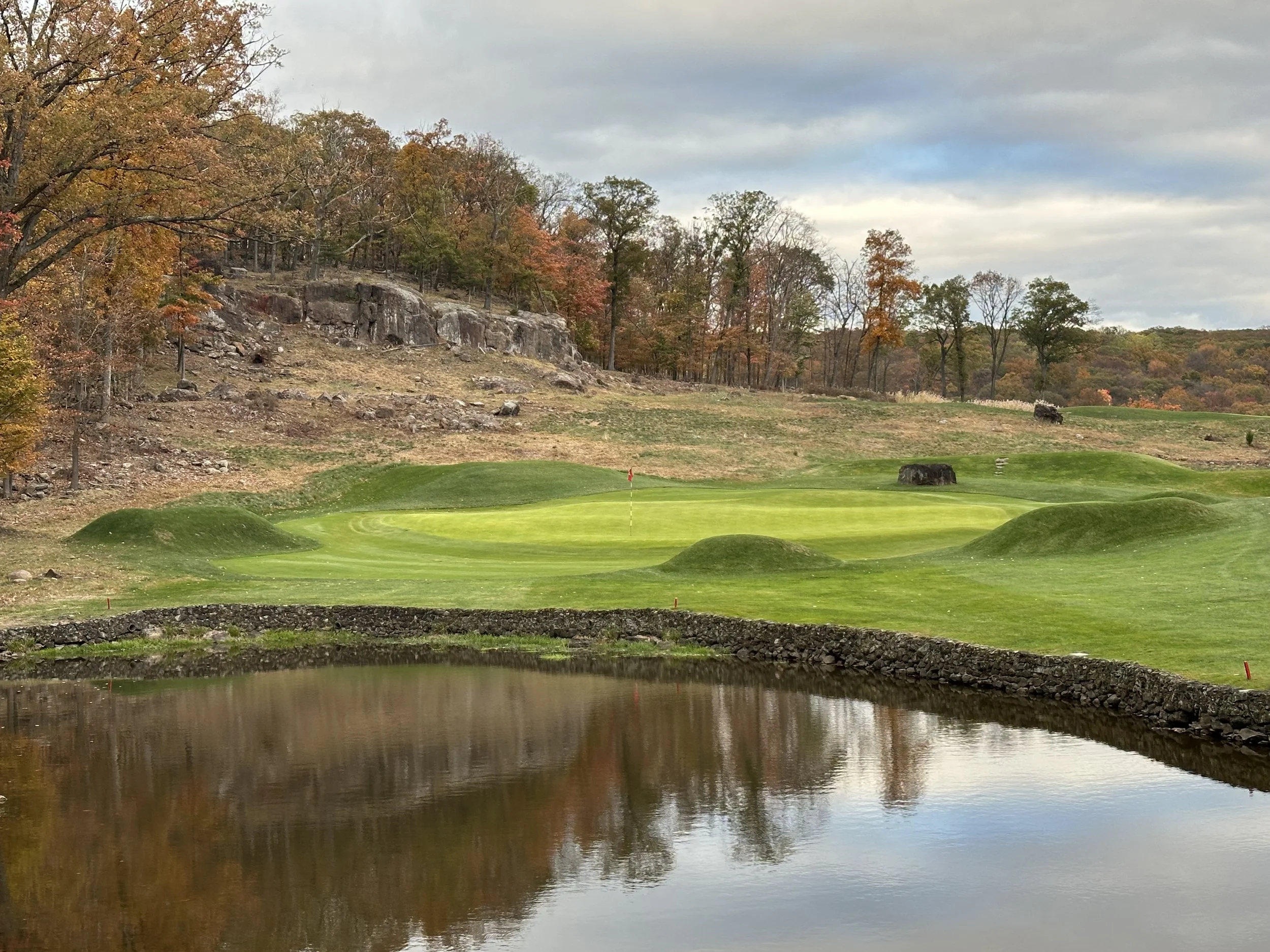
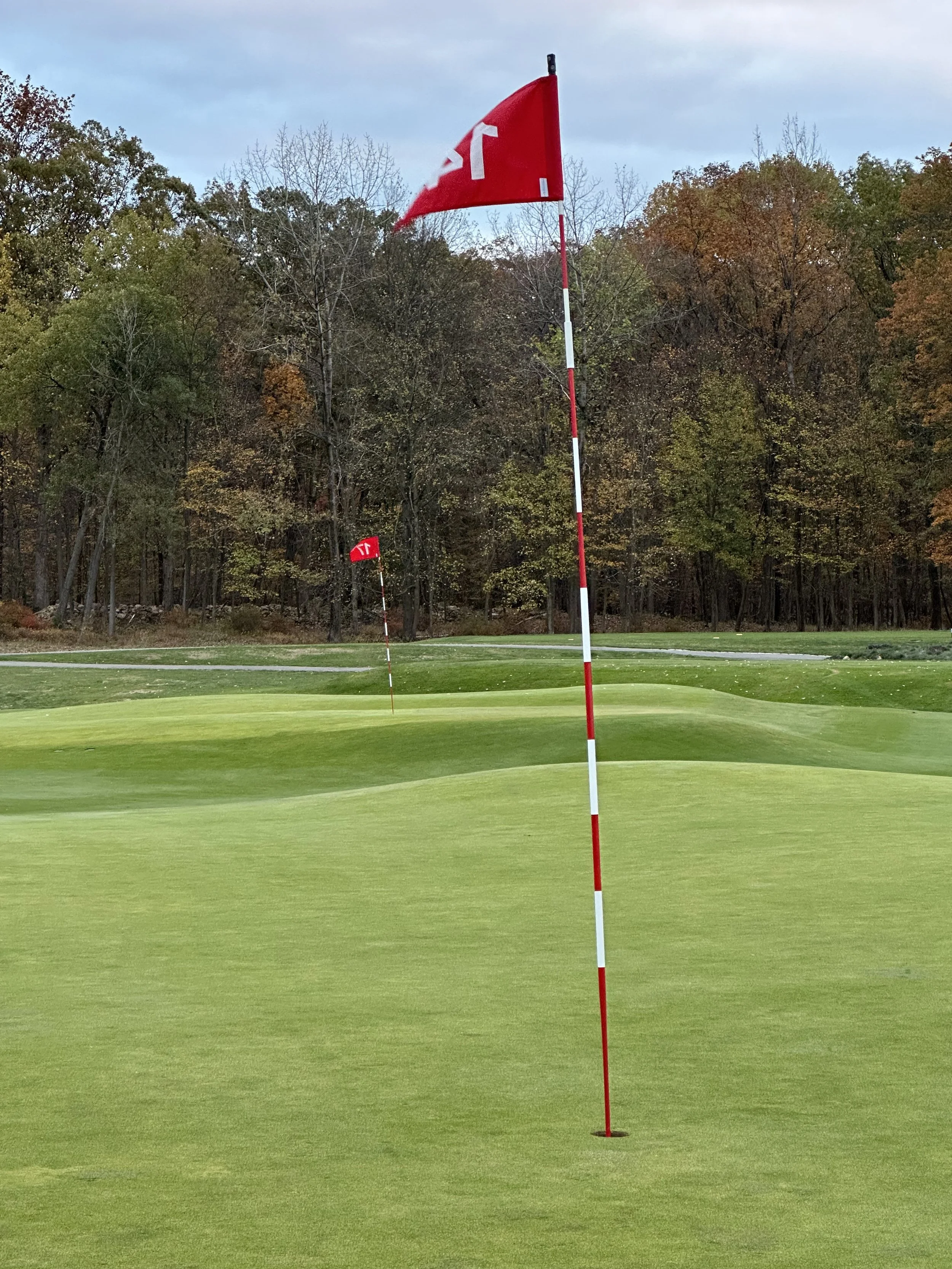
Above: it’s all about the greens at Walter Travis’s North Jersey, but a dramatic and secluded landscape is a nice add-on to the experience.
20. Moortown [6] Alwoodley, Leeds, England. Alister MacKenzie. Getting to see MacKenzie’s first true solo work was really something, not just for tying together the history I’ve studied so closely in recent years between Haggin Oaks, Pasatiempo, and Hadley Wood but also just by how cool the features are out there that remain from his time. What is really neat is that they are still very much of that time period—sharp, funky, somewhat geometric—but also distinctly MacKenzie in character—flashy, flowing, artistic, and attempting “natural.” The ‘Gibraltar’ is a true standout hole, as are the propped up bunkers and hummocks scattered throughout the course, nothing moreso than the pile of rocky rubble that he carved an intricate, finger-y bunker into and thought enough of to include a picture in his first book, Golf Architecture.
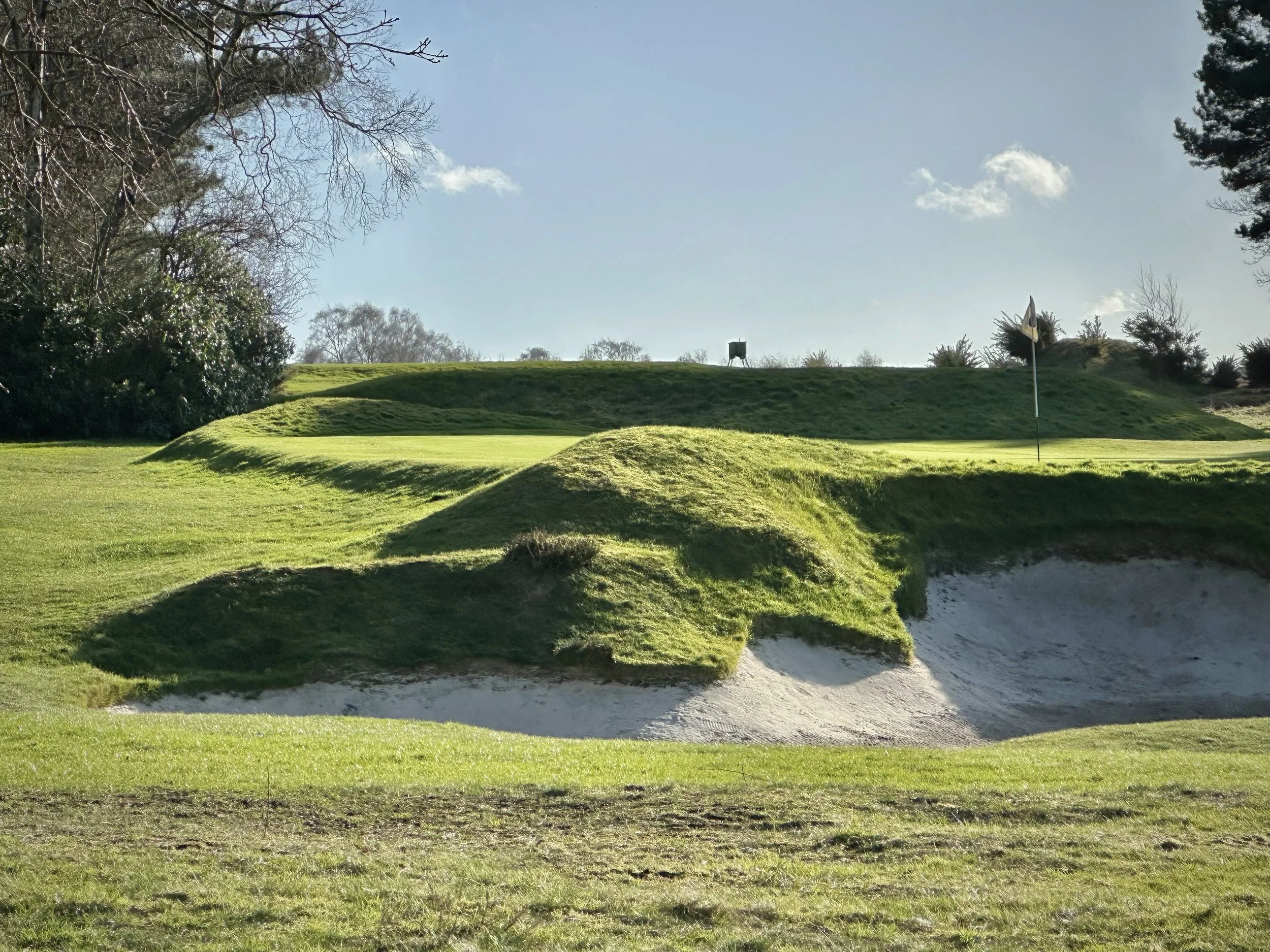
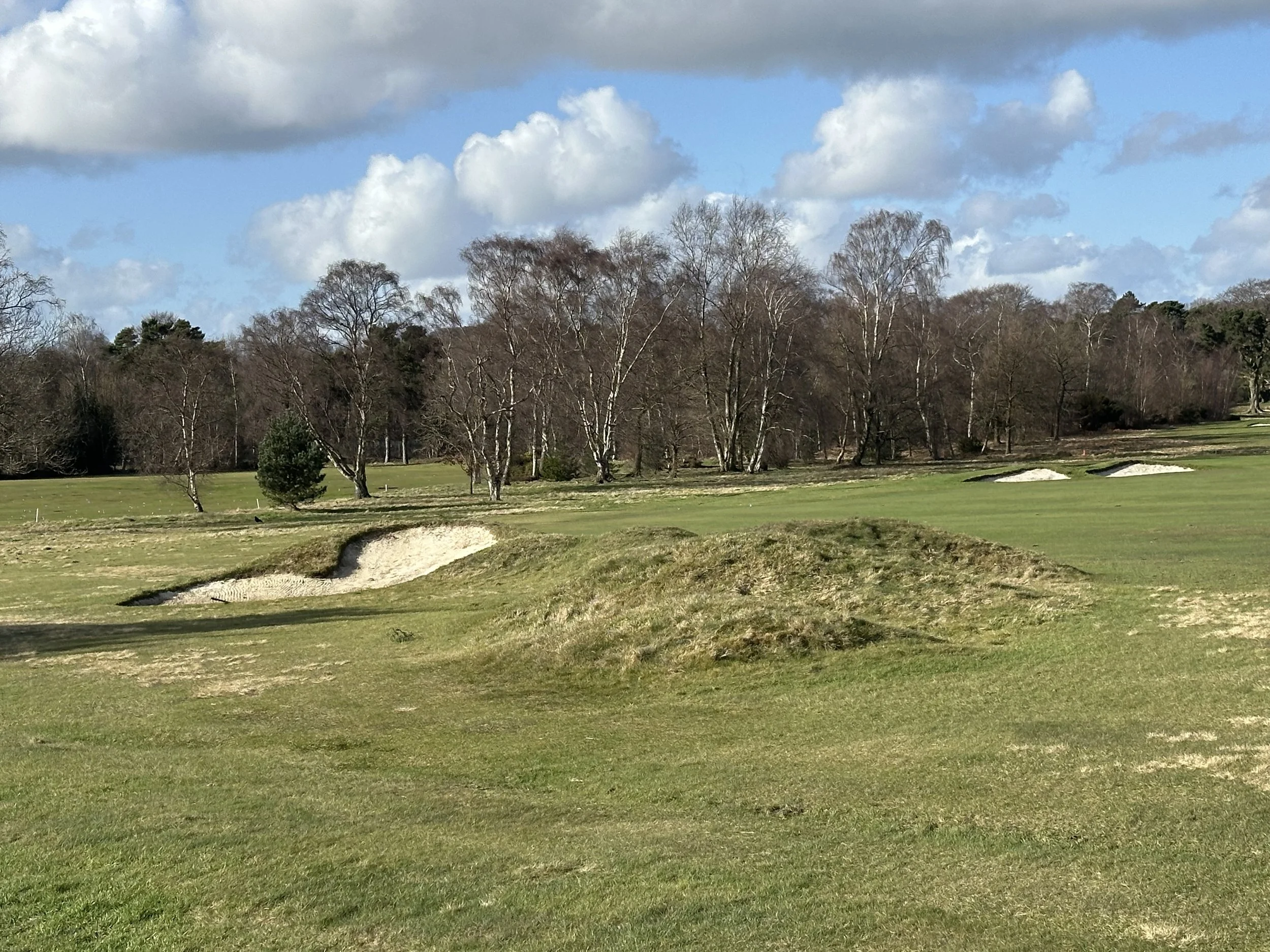
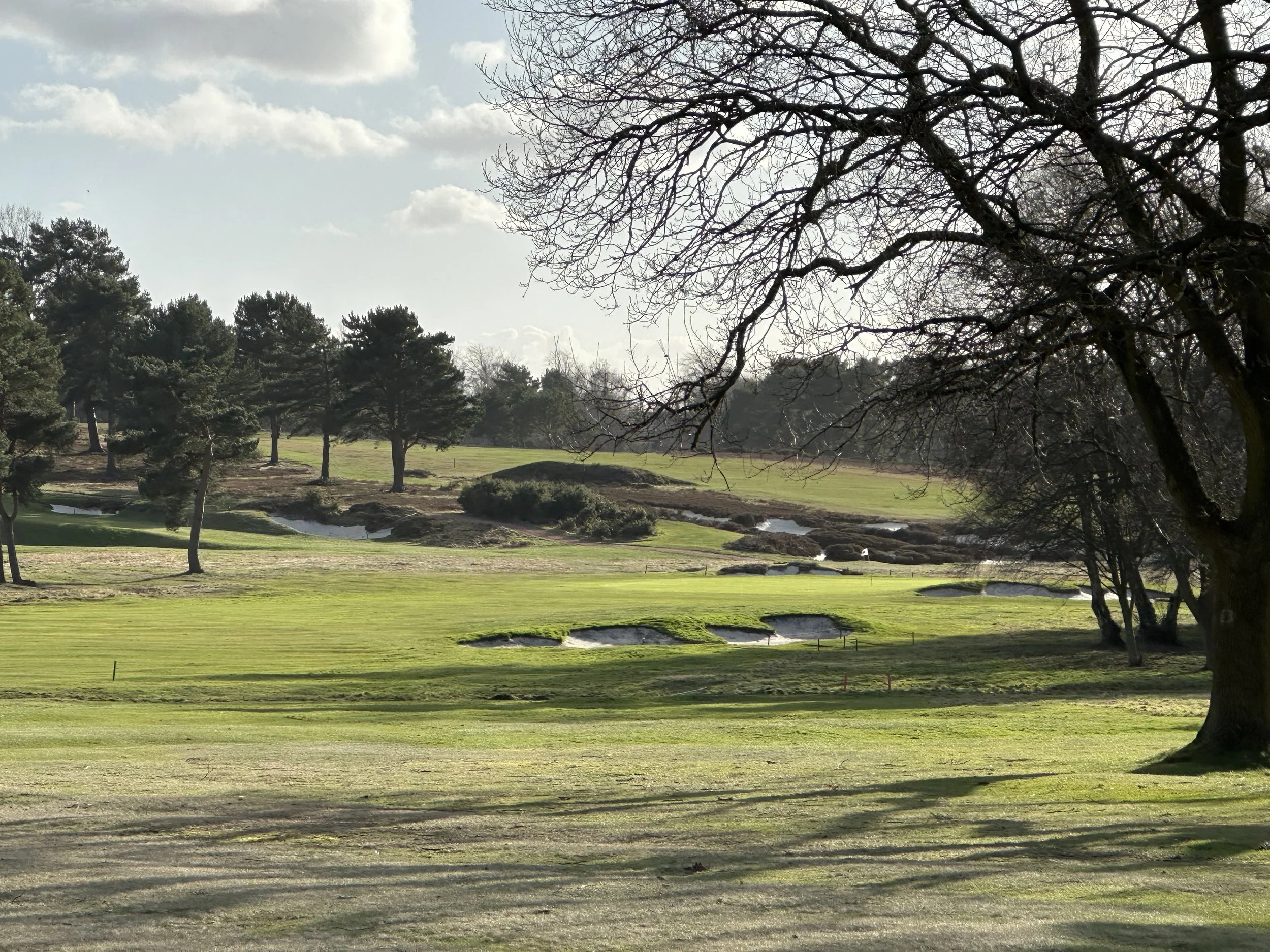
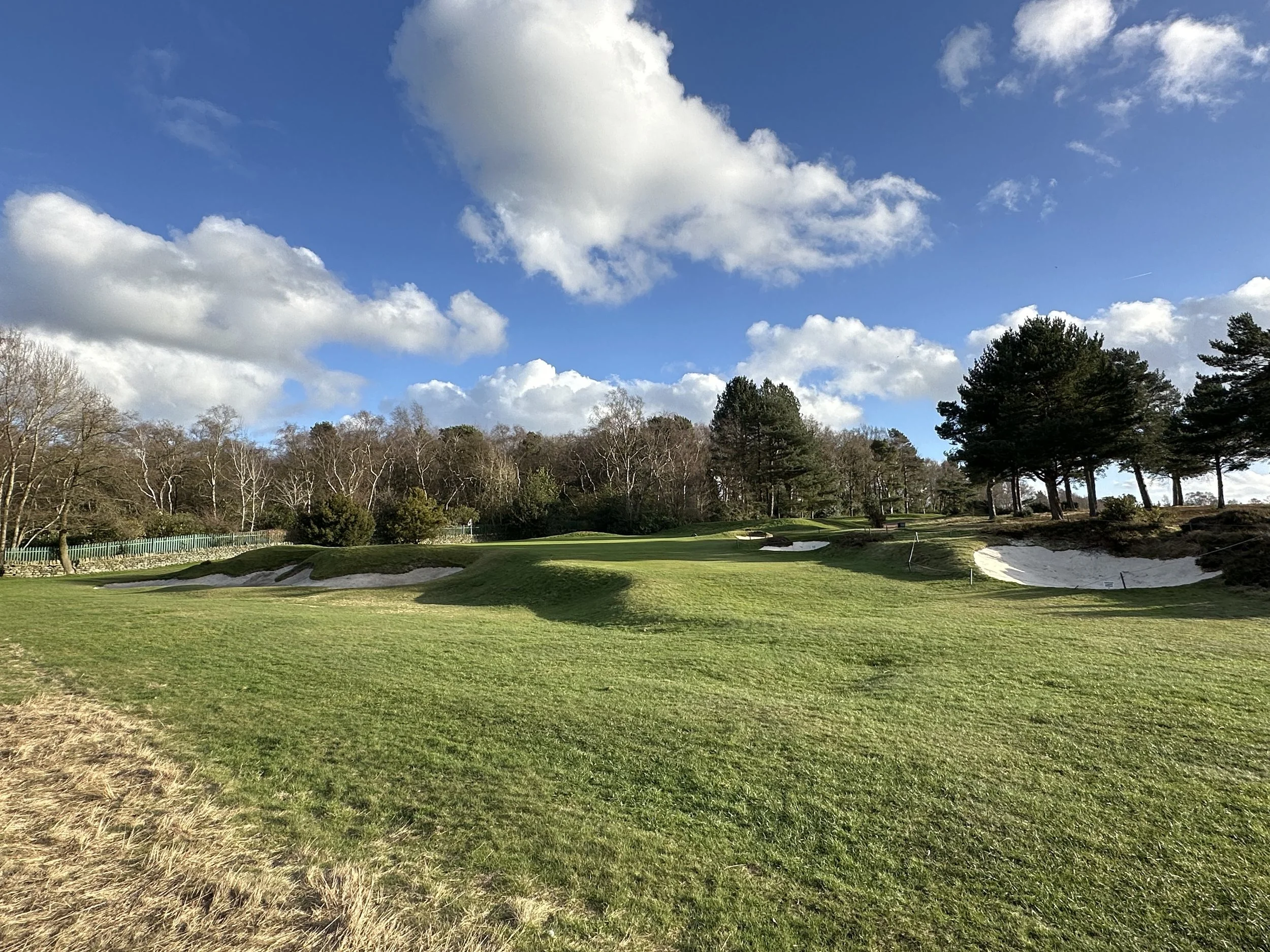
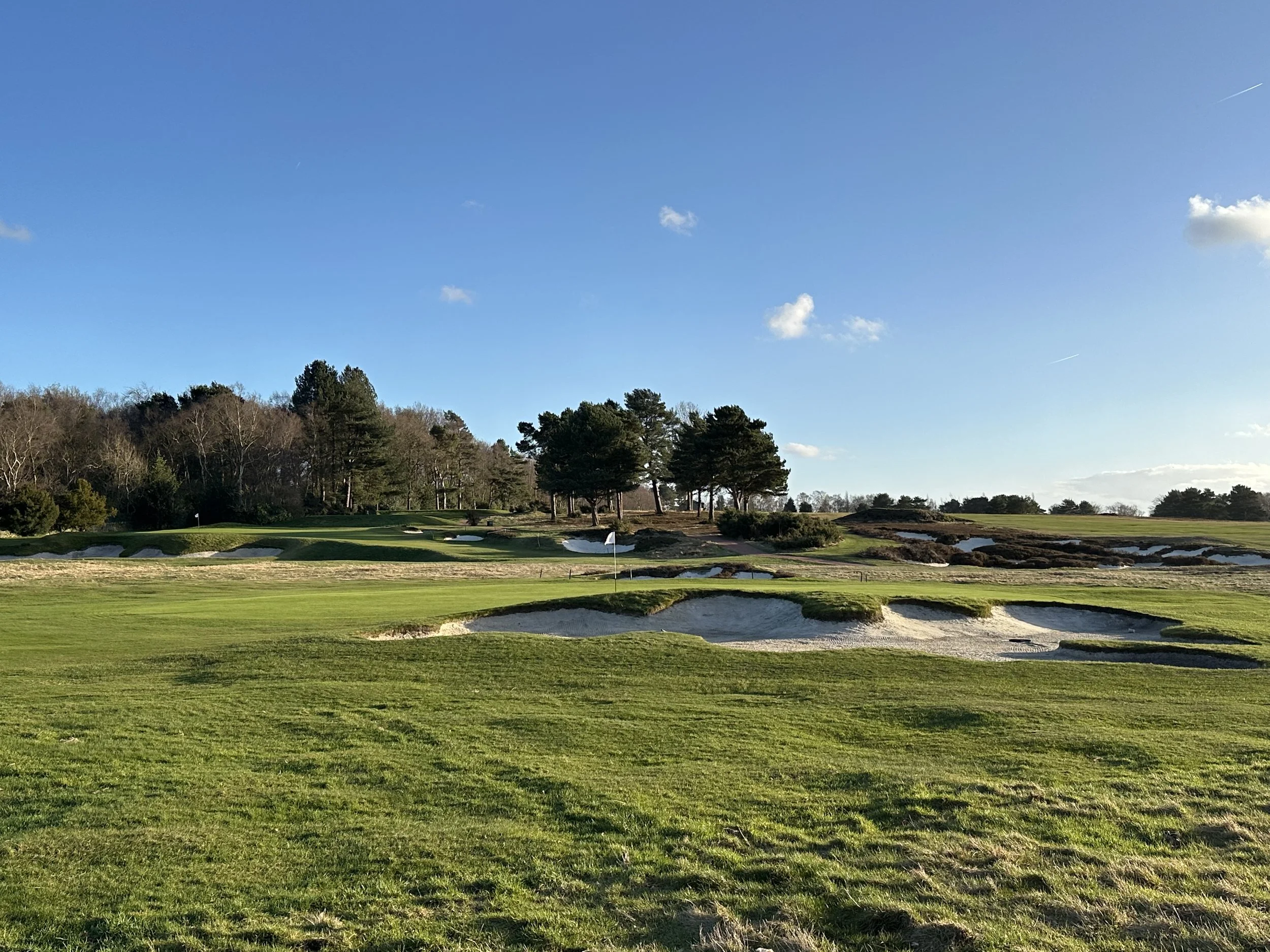
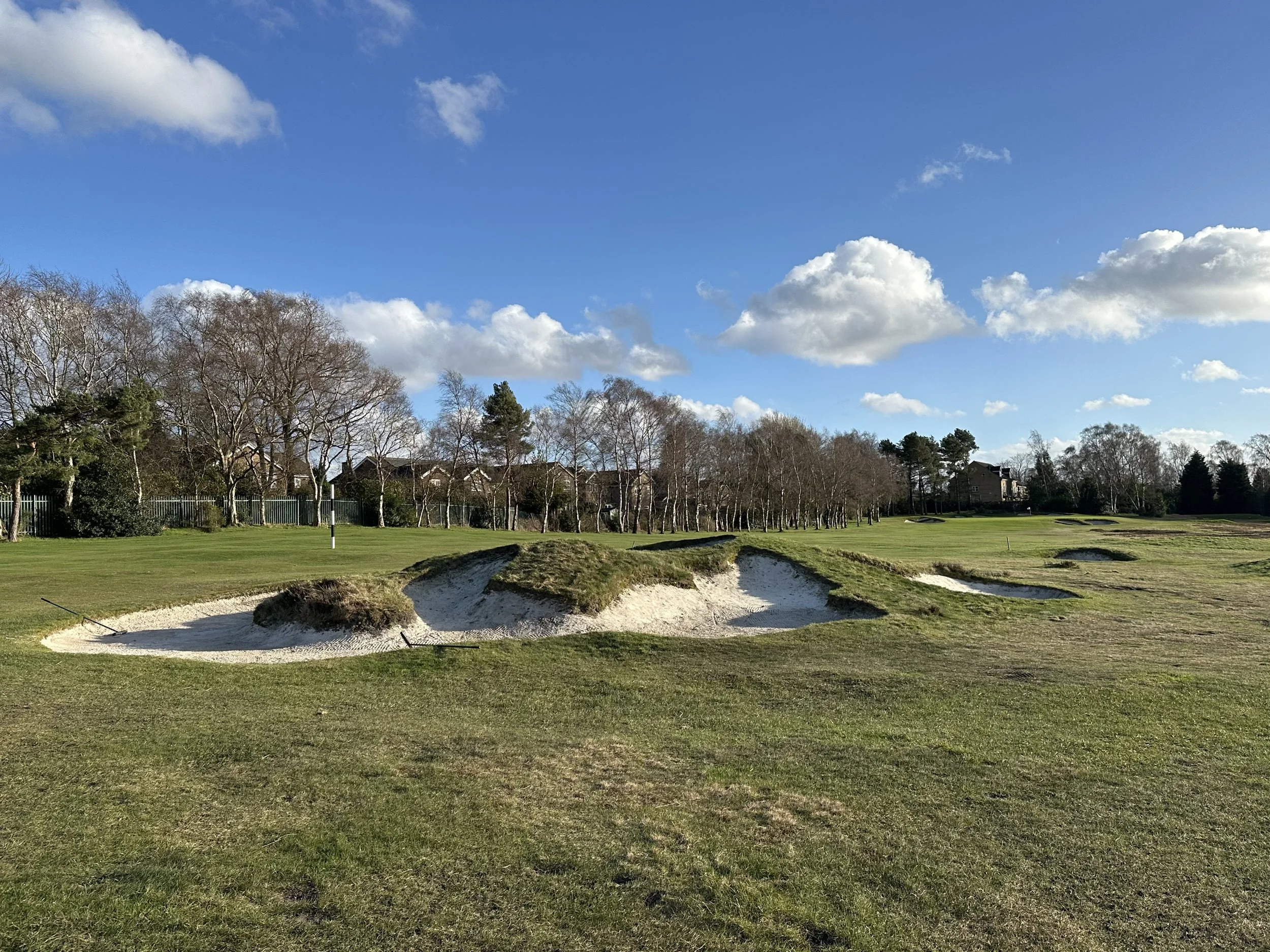
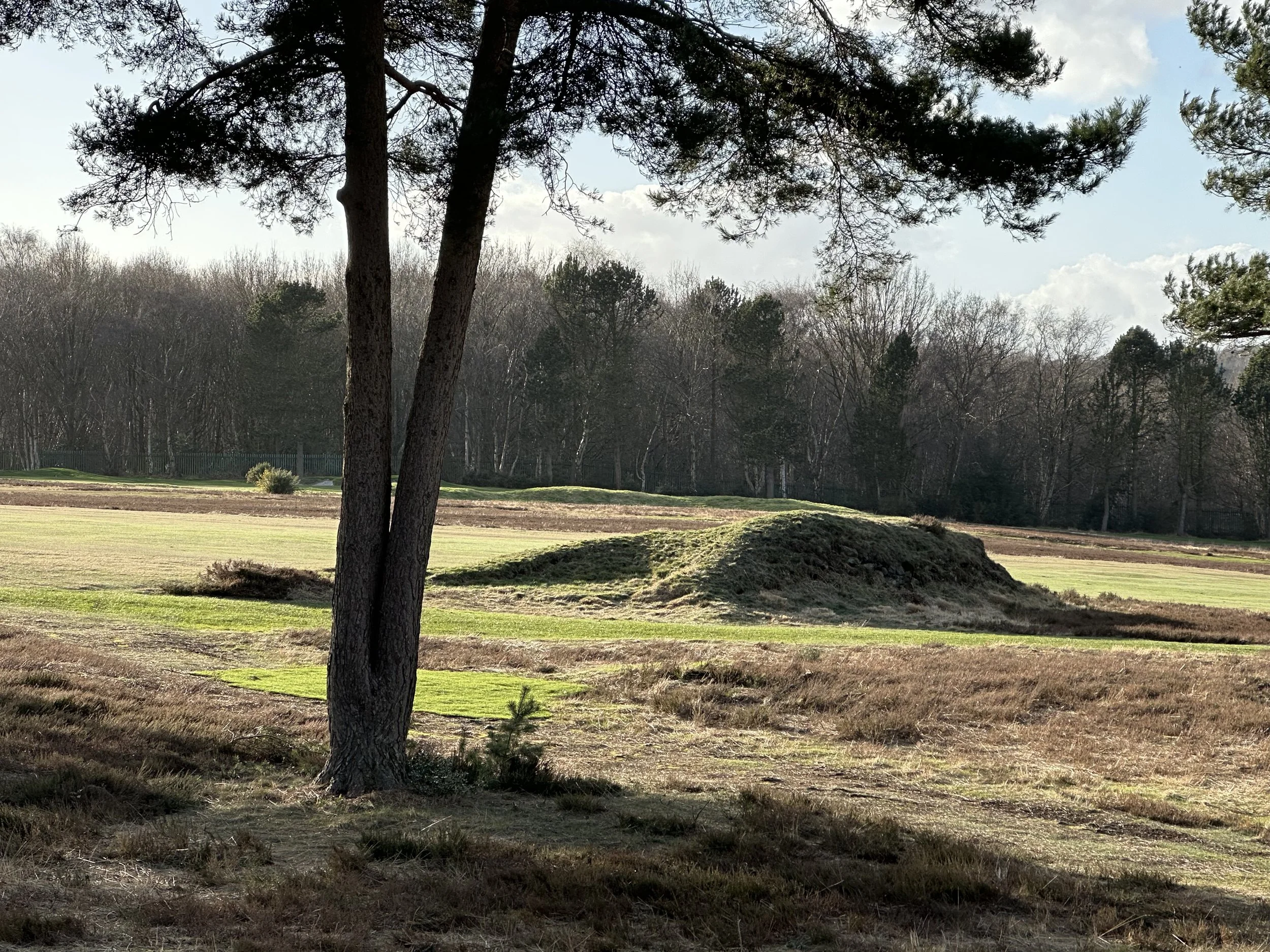
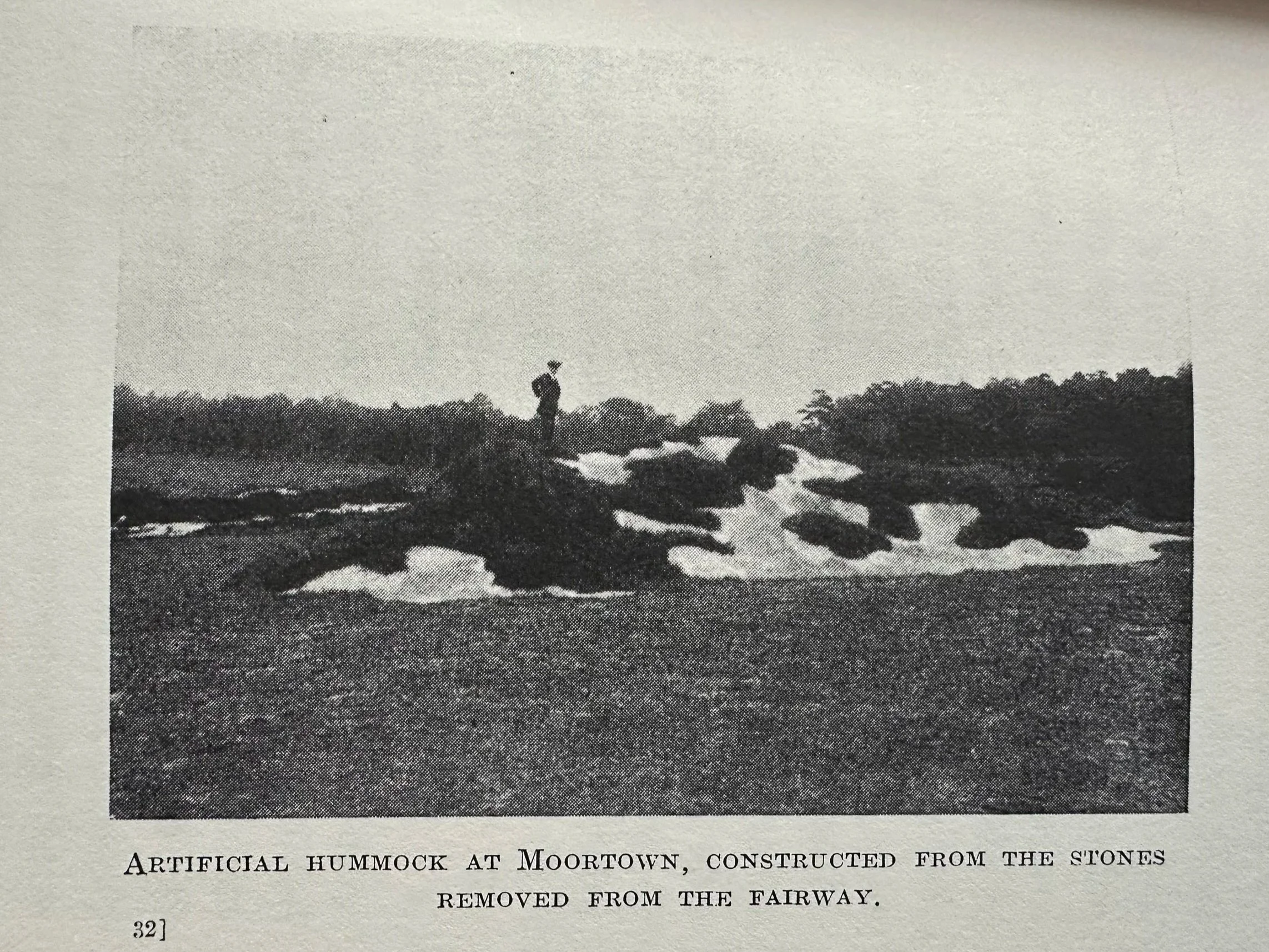
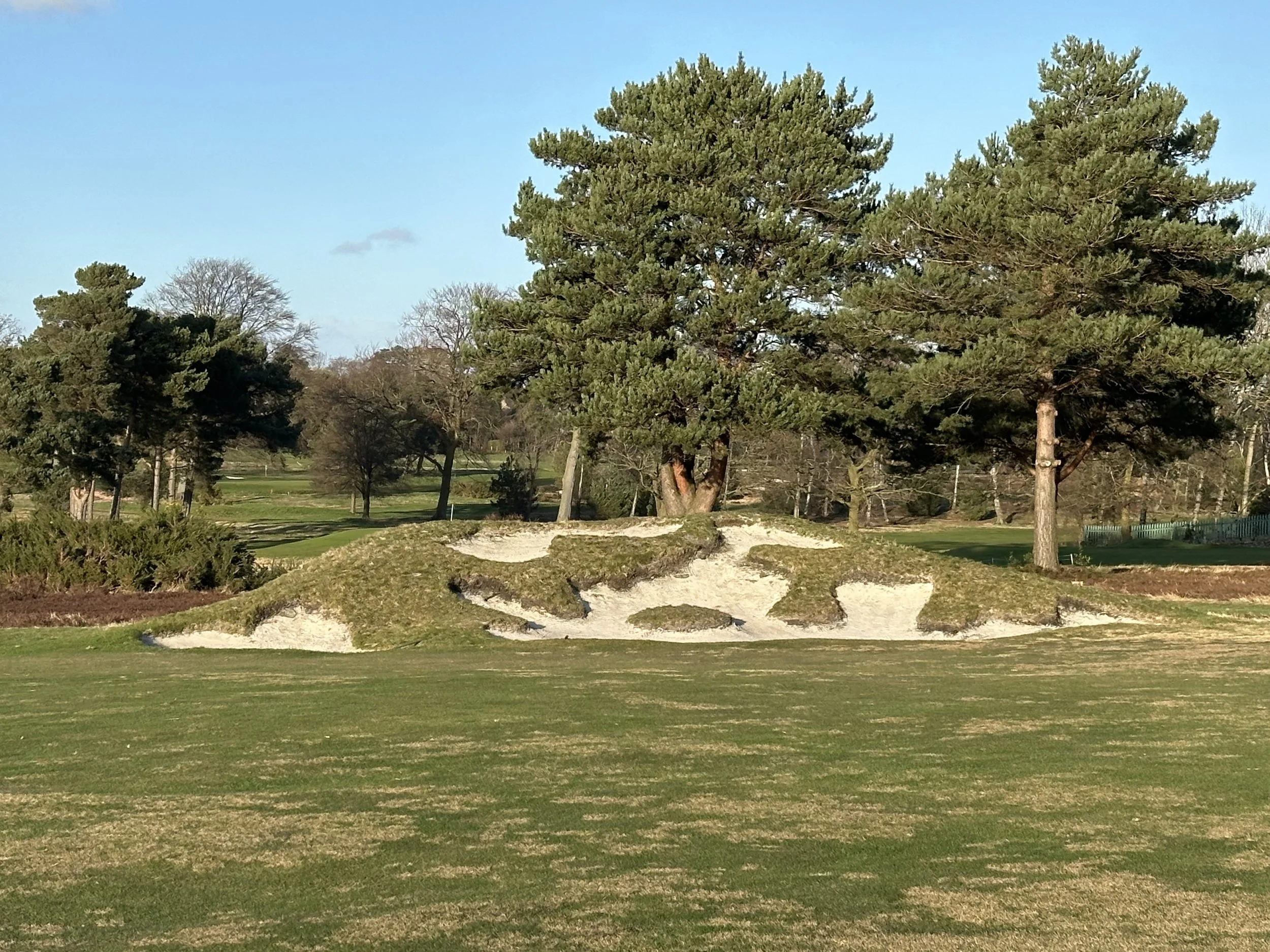
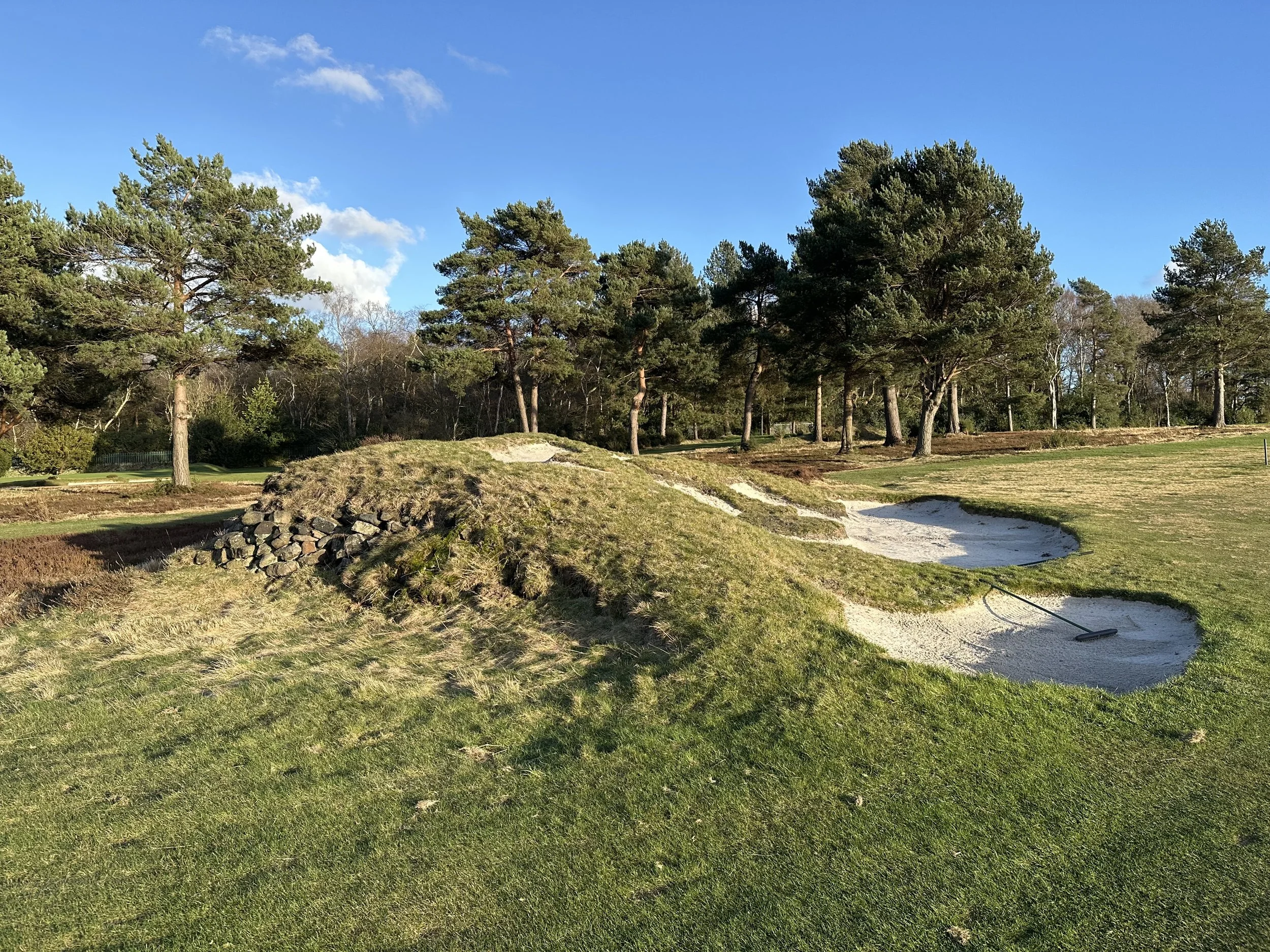
Above: the charmingly archaic early-MacKenzie features of Moortown
21. Walton Heath (New) [6] Tadworth, Surrey, England. Herbert Fowler. This is definitely one that feels like it should be higher, as I really loved the New. It has the same types of fascinating features as the Old, traverses some of the same land, and has some very captivating approach shots, such as the 3rd, which needs to hug a high left coffin bunker to hold the hard-tilting left to right green.
22. Hayling [6] Havant, Hampshire, England. Unknown, with later revisions by J.H. Taylor and Tom Simpson. I found this links to be underrated from what I’d heard about it. Lots of solid holes with a few really neat ones mixed in, such as the 12th, which plays up to a plateau fairway with water views both directions and down to a blind green at the base of a big slope. I recommend playing the ground shot and running up after it to watch. The course played the best of everything I saw this summer, its greens the only ones that could match up well in firmness with the rock hard approaches (most everywhere else had been more irrigated at the greens, lending to some softness on the actual surfaces). Greenkeeper Graeme Roberts is responsible for those excellent conditions as well as a lot of the distinct hybrid bunker look that mixes natural textured edges with varied-height revetting.
23. Southerndown [6] Bridgend, Ewenny, Wales. Willie Fernie, with revisions by Herbert Fowler, Willie Park, and Harry Colt. This downland course feels more linkslike, albeit up in the sky with views over the River Ogmore and out to the Bristol Channel. Pretty stunning. Its tilted greens and relic remnants of shaping at the edges reminiscent of those great architects listed above are notable as well. However, those greens would also be great candidates for careful scraping away at the sand buildup on their interiors, as they have clearly elevated over those outer shapes, with contours very likely to have smoothed out over time. It would be really cool and really fun to discover what lies beneath.
24. Denham [6] Denham, Uxbridge, England. Harry Colt. SURPRISE OF THE YEAR! I had thought everyone was telling me to go see this place because Clyde had done a bunch of work there. There may have been some of that, but I actually think it is more that it has a very good and underrated Harry Colt course, replete with a good set of greens, multiple holes playing across old quarries, great (and varied) one-shotters, and a journey across multiple types of landscapes. The clubhouse and adjacnet landscaping also make for an enchanting sort of setting, one I’ve found myself thinking about way more than I ever expected before visiting.
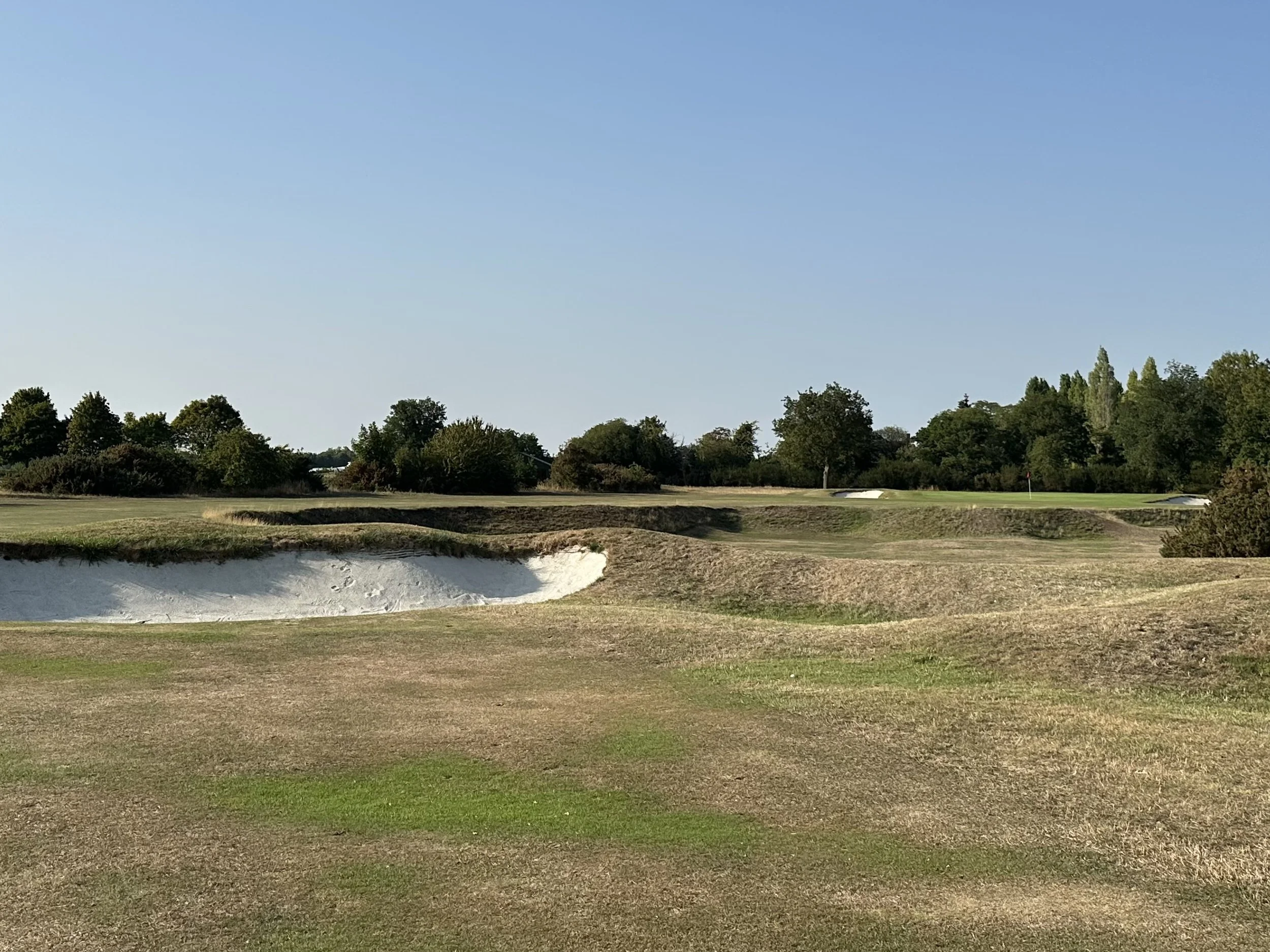
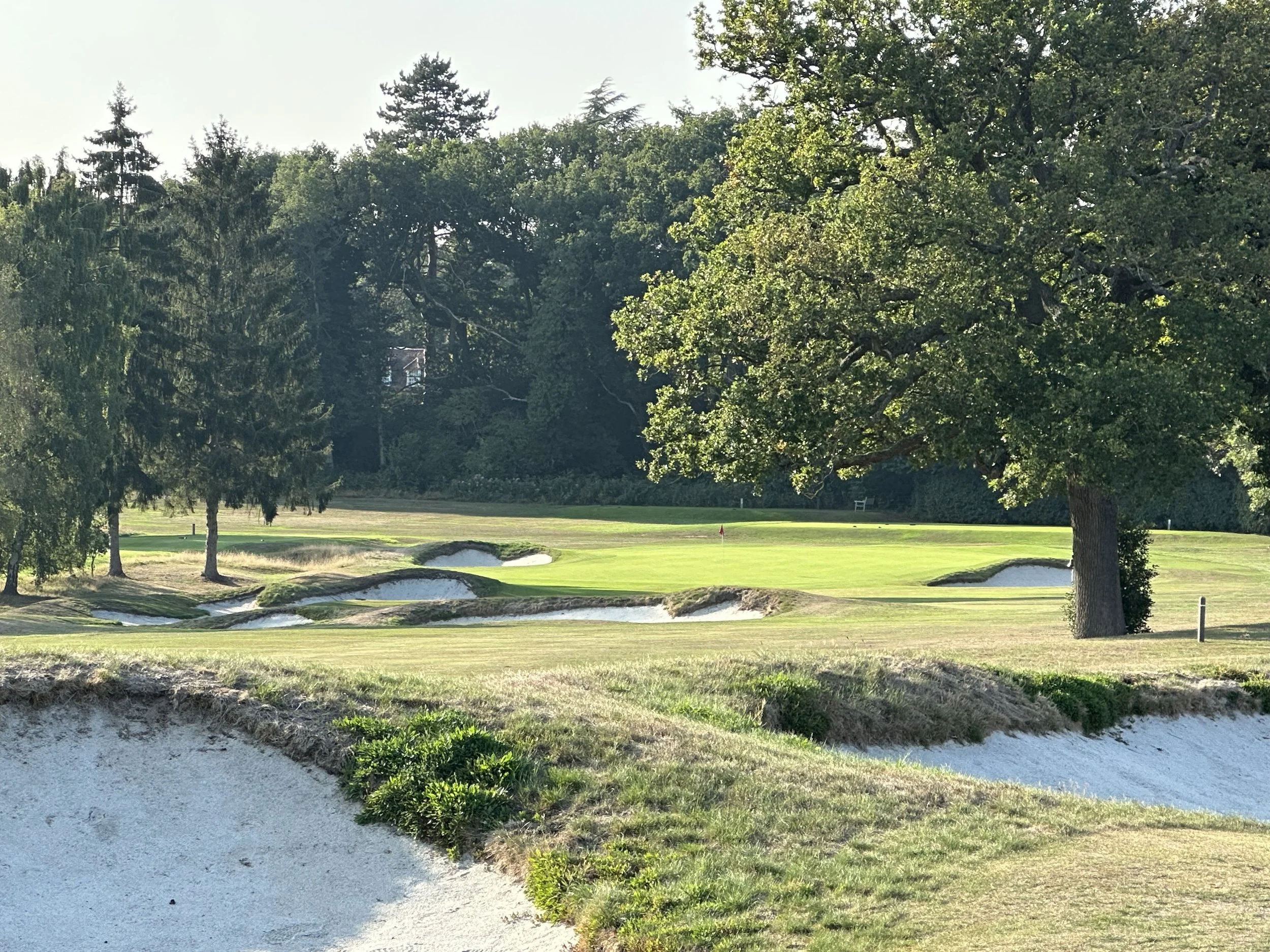
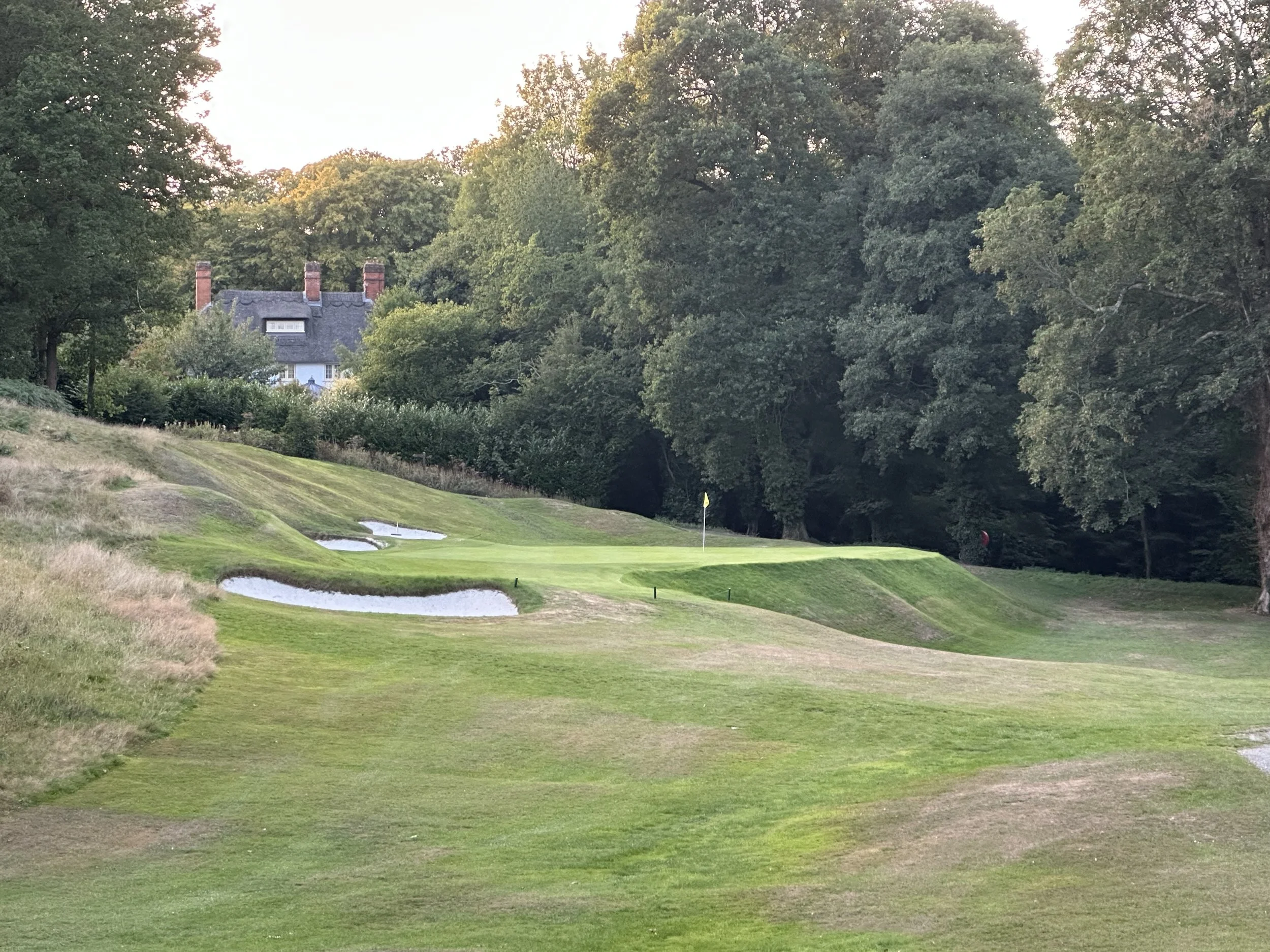
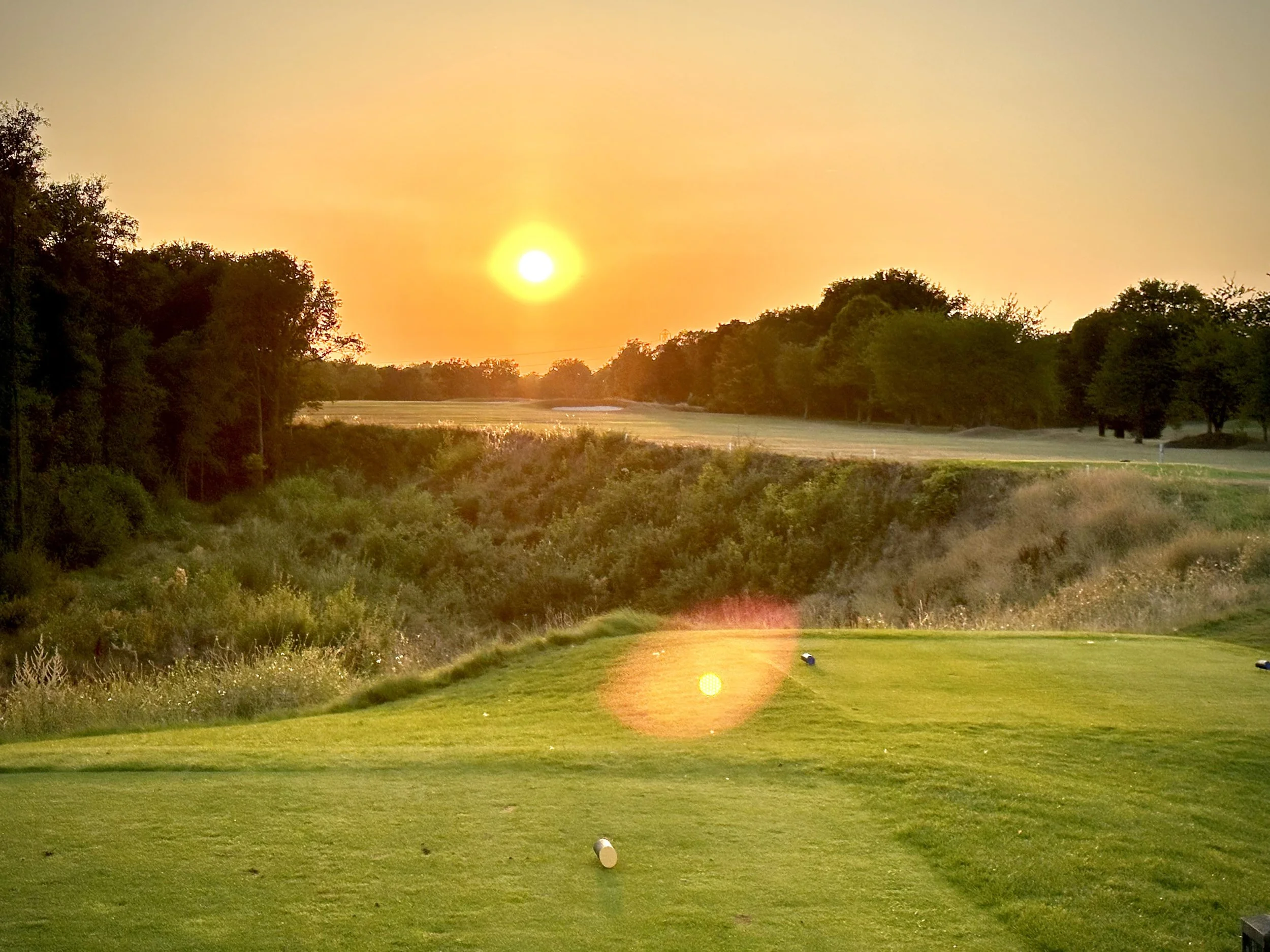
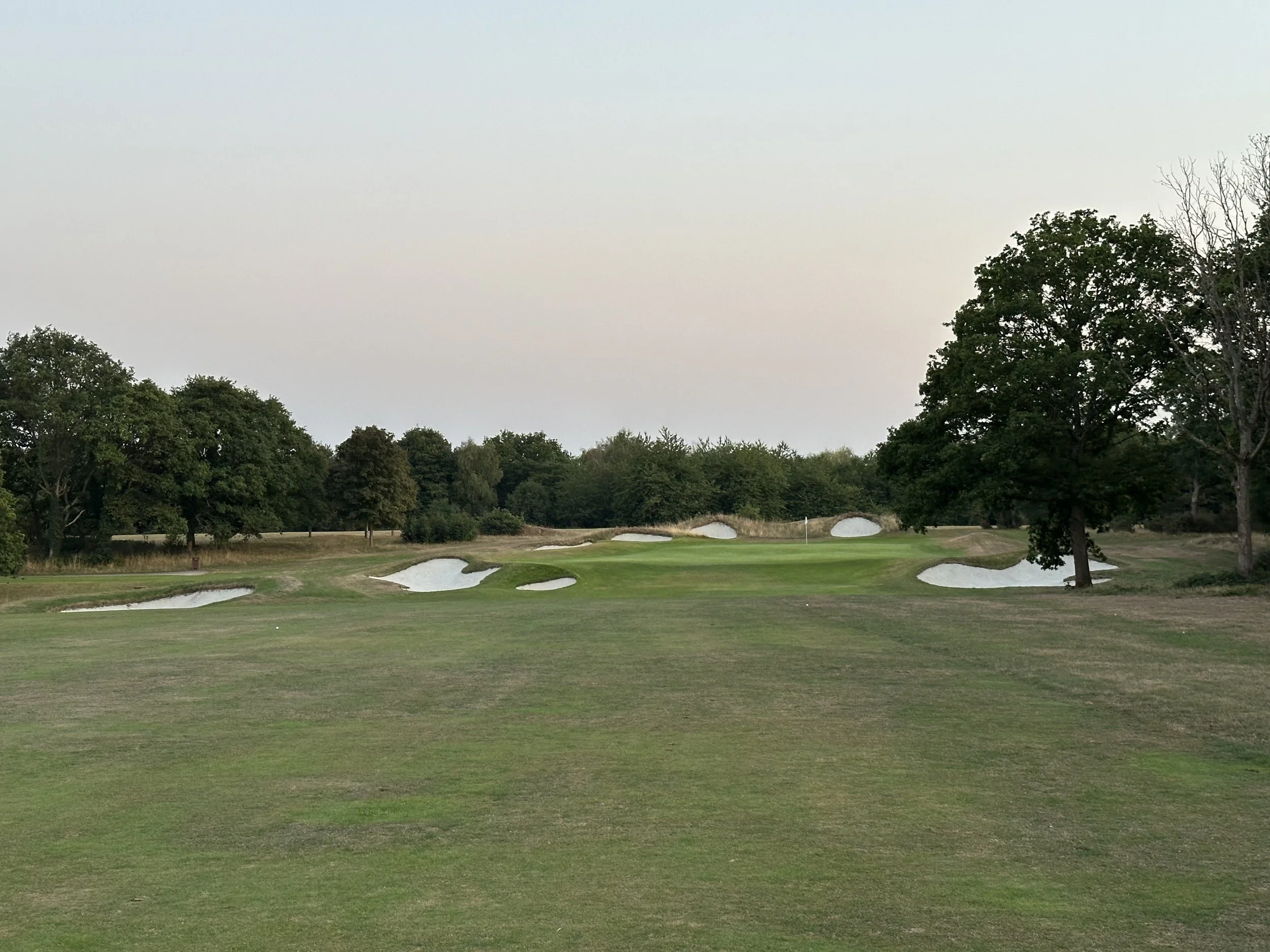
25. Berkhamsted [6] The Common, Berkhamsted, England. Original 9 by Willie Park expanded to 18 by Harry Colt, later revised by James Braid. If interested in early Golden Age shaping, this place should be near the top of your list to see. It is amazing, and it is almost nonstop throughout the round.
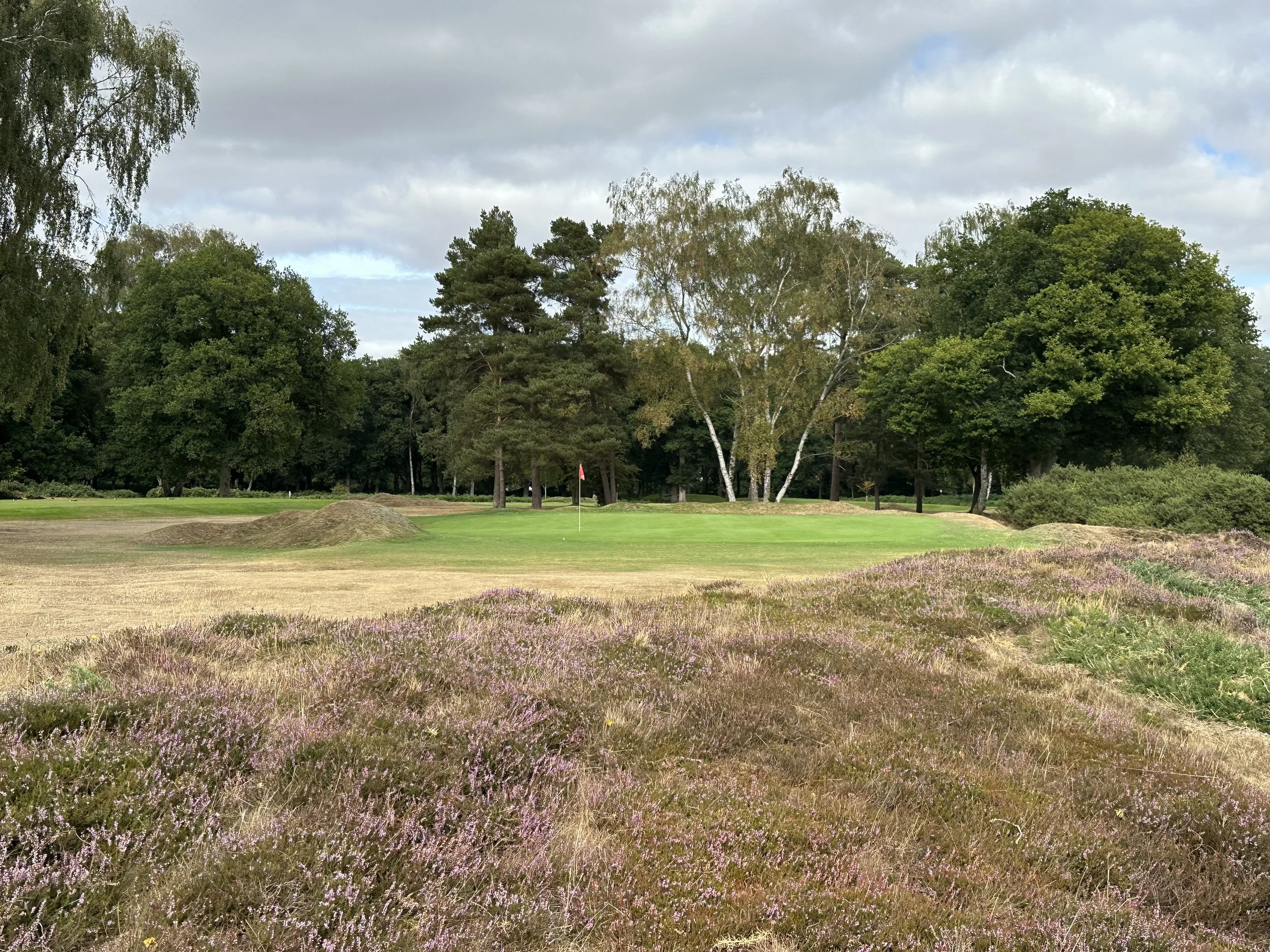
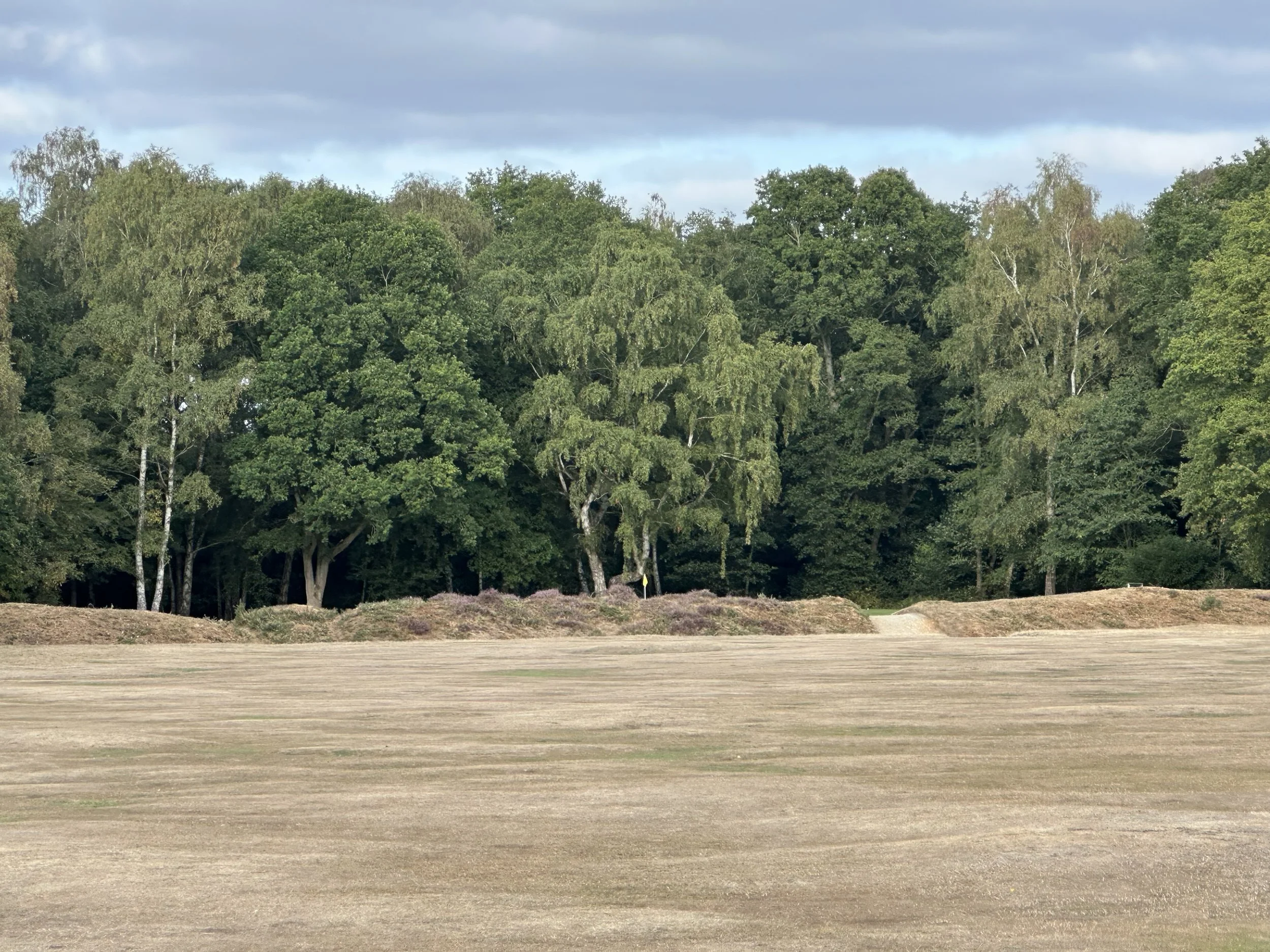
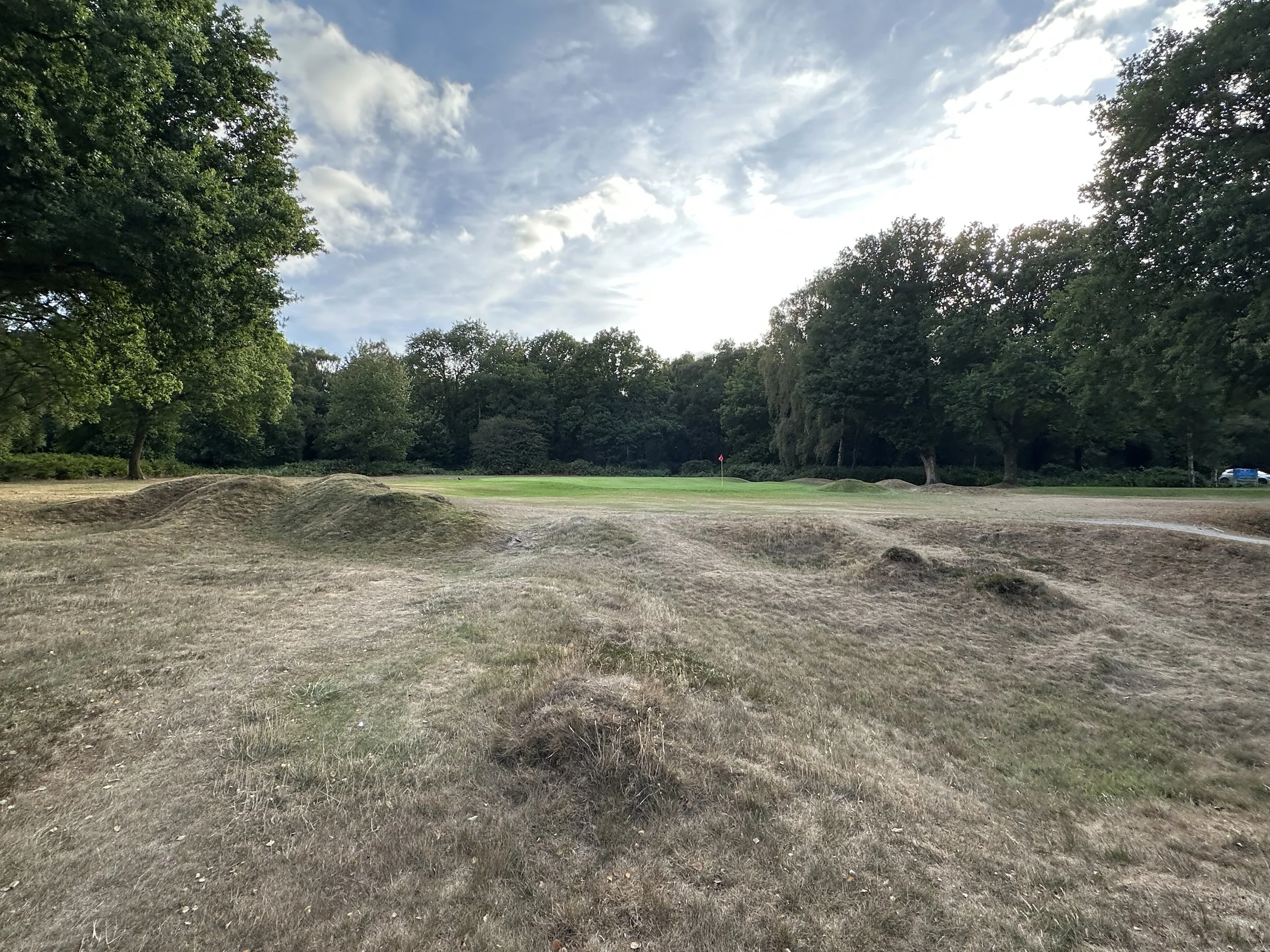
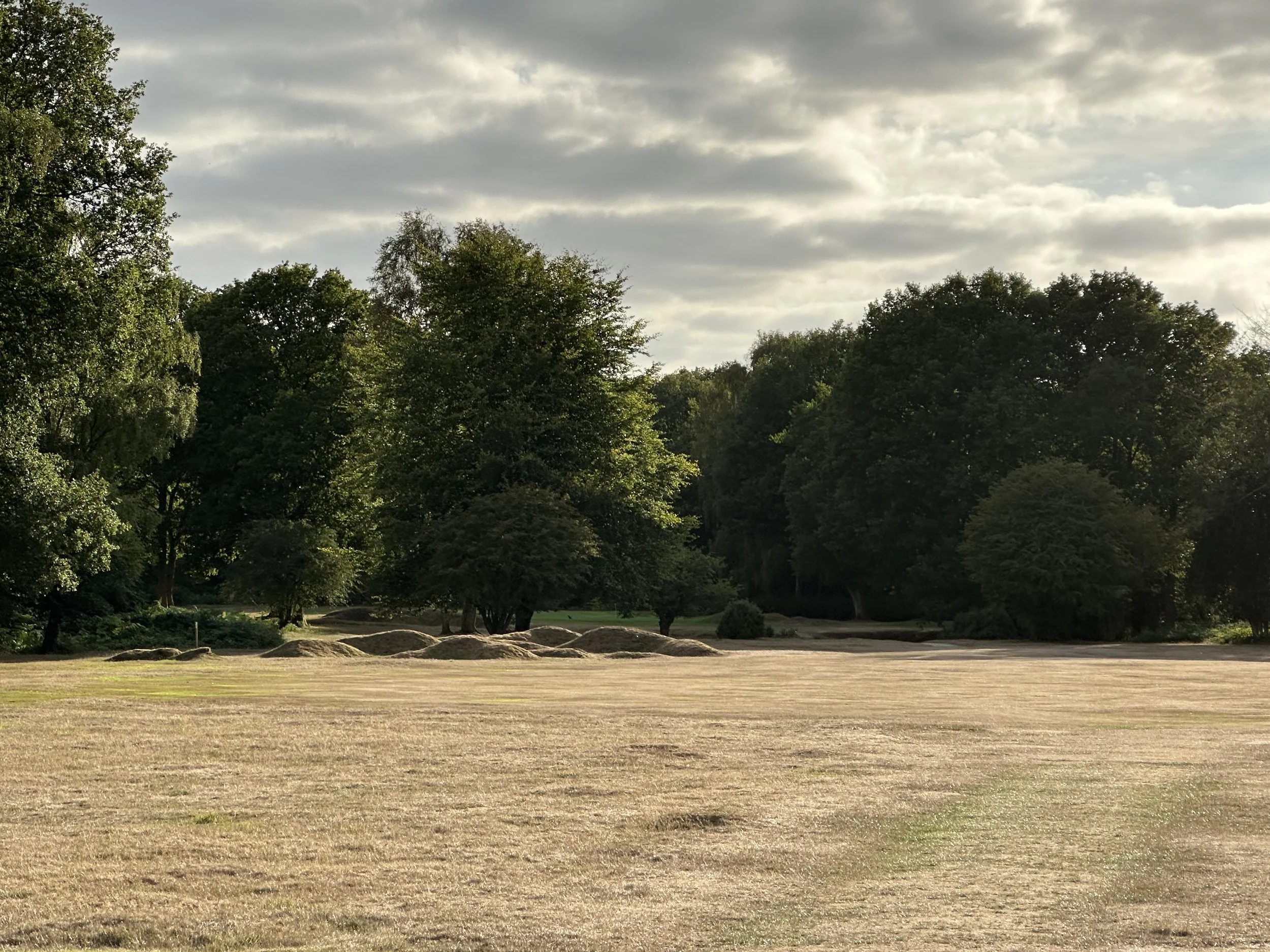
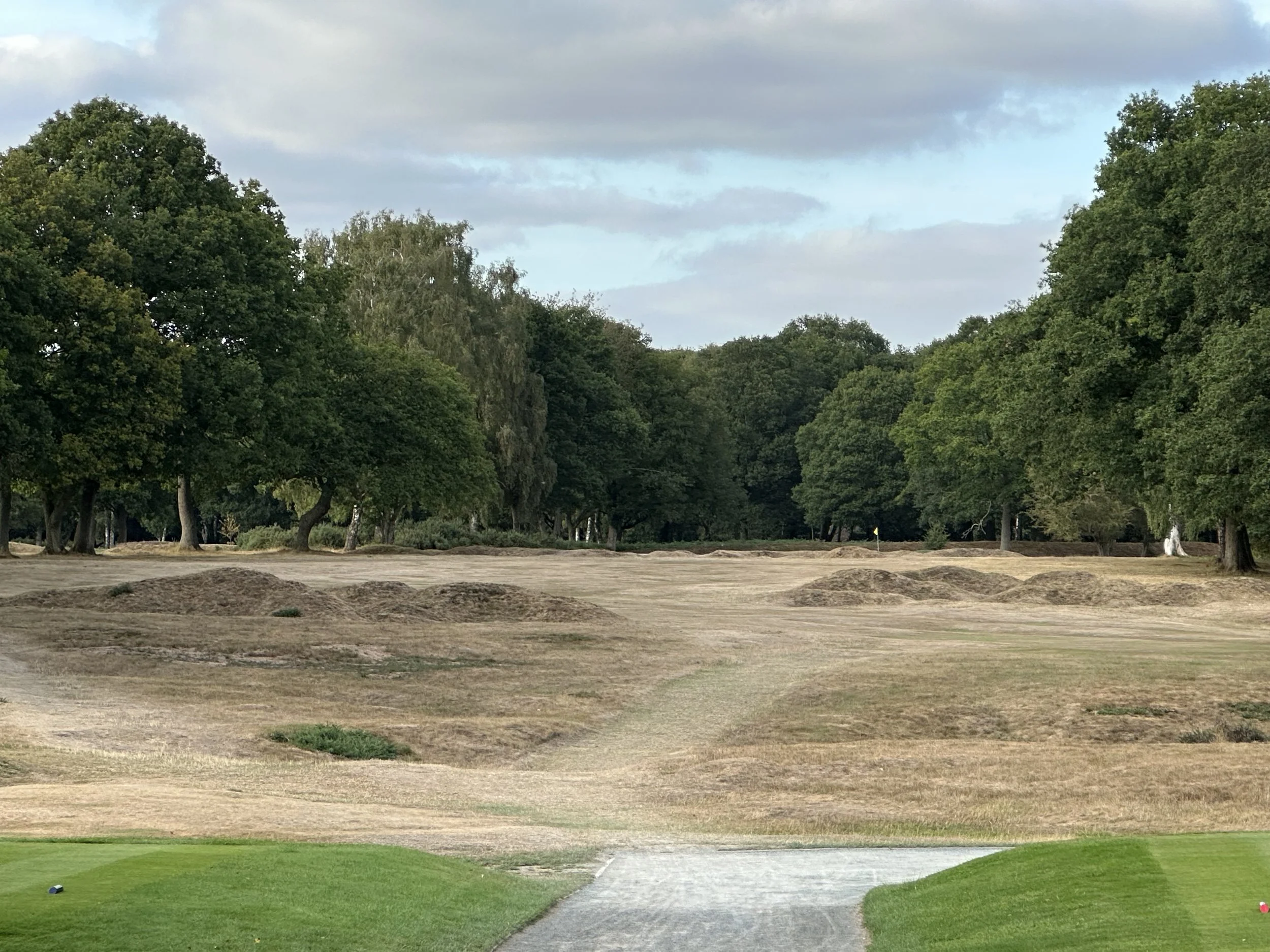
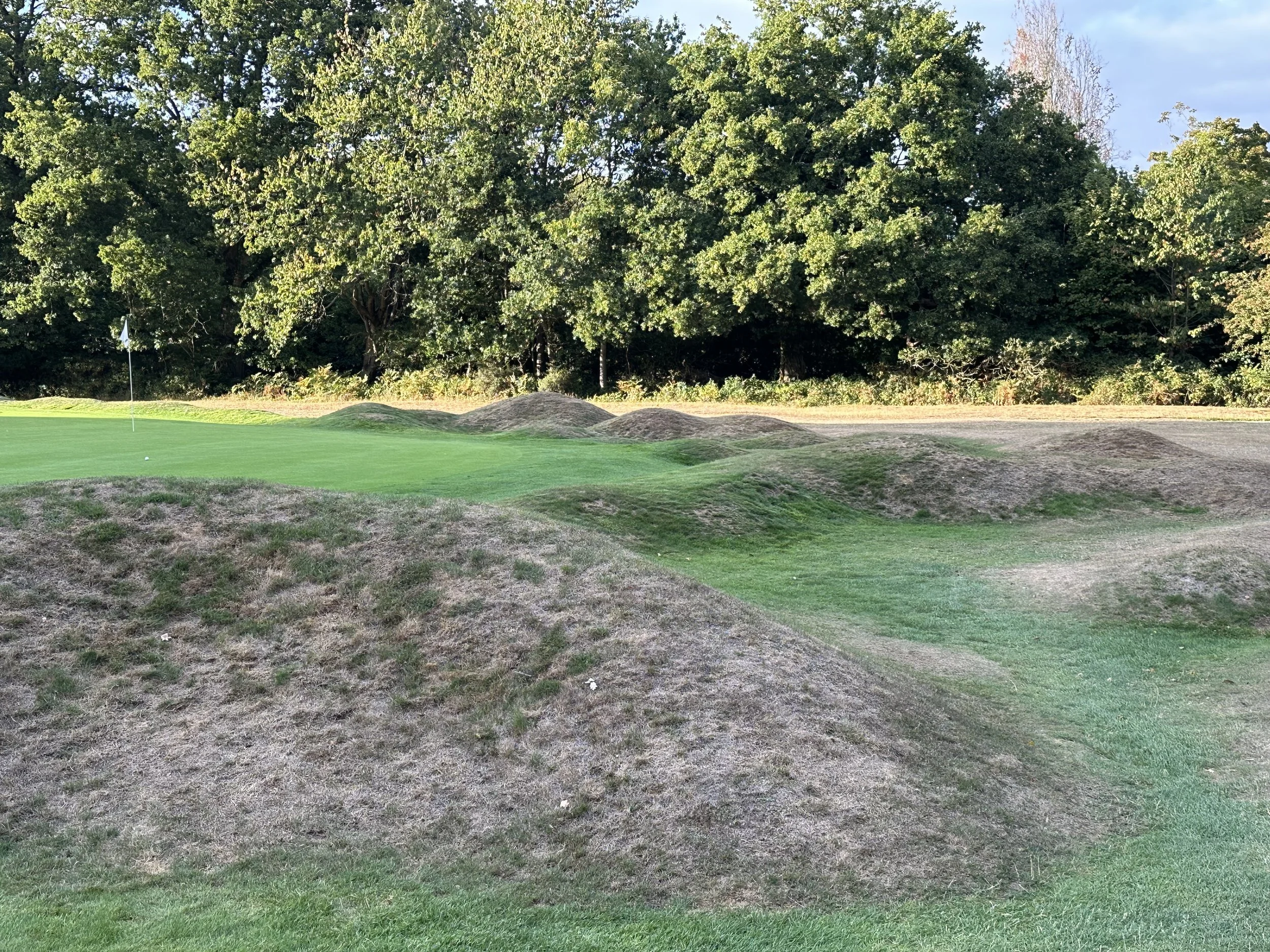
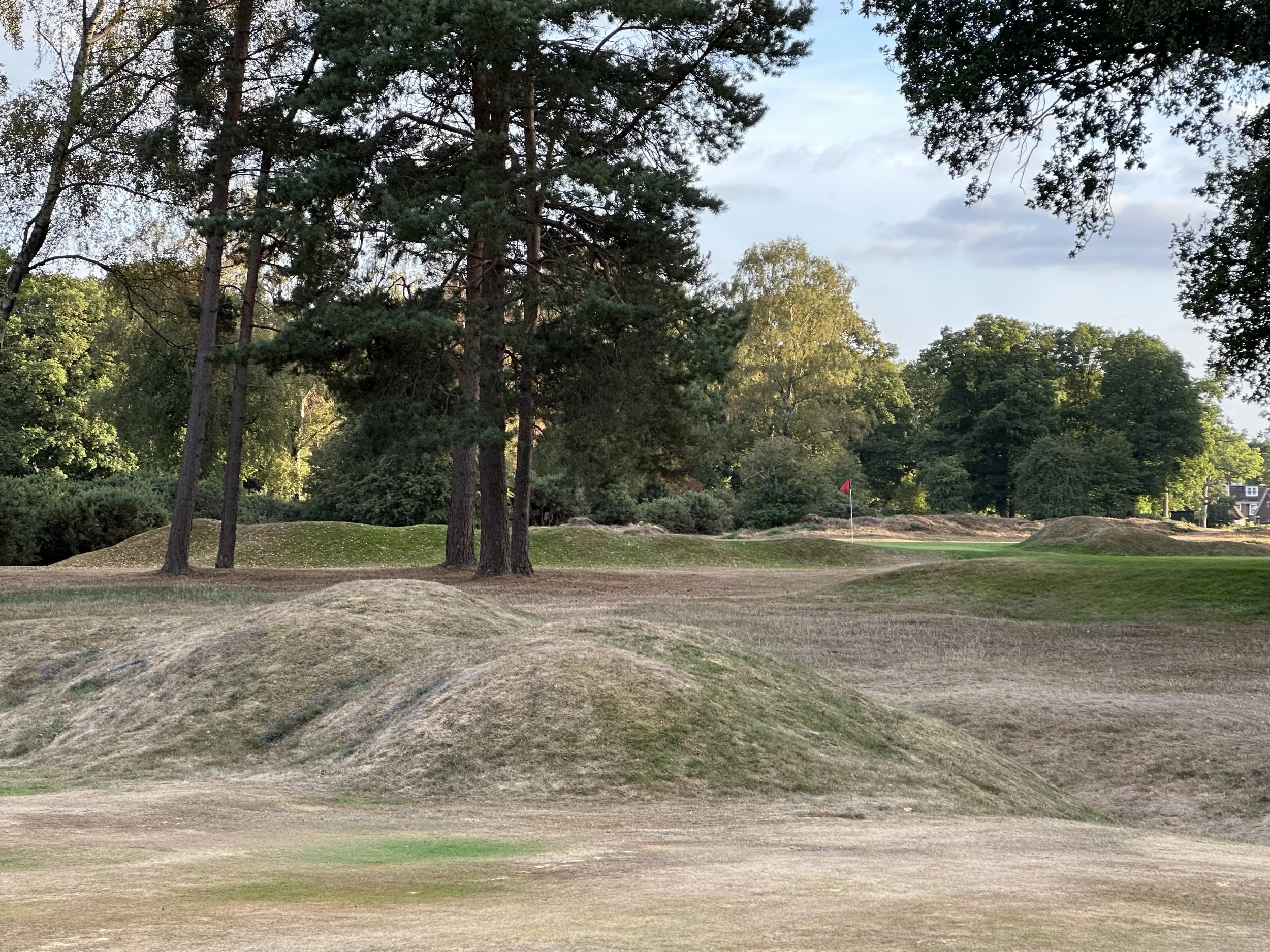
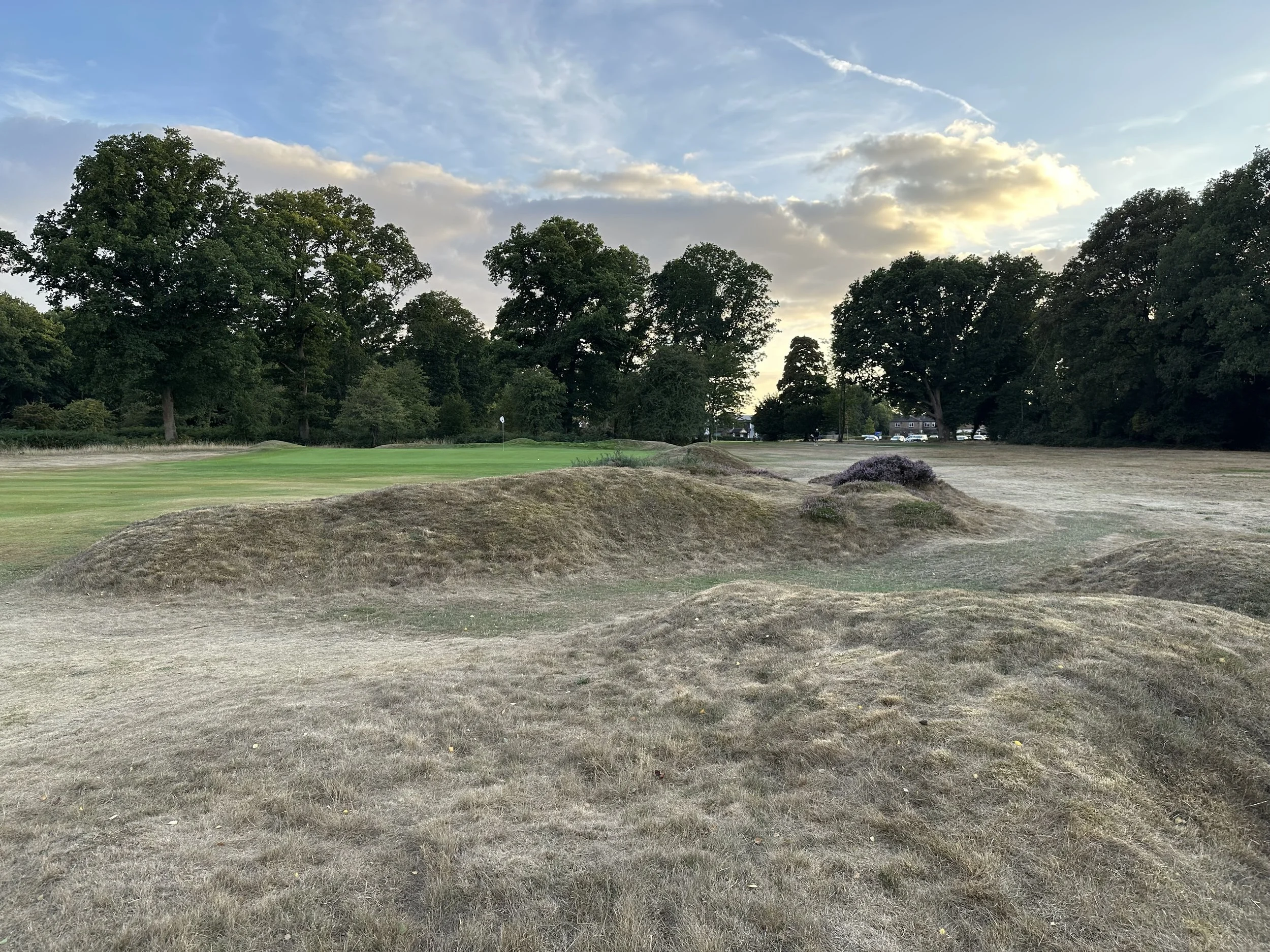
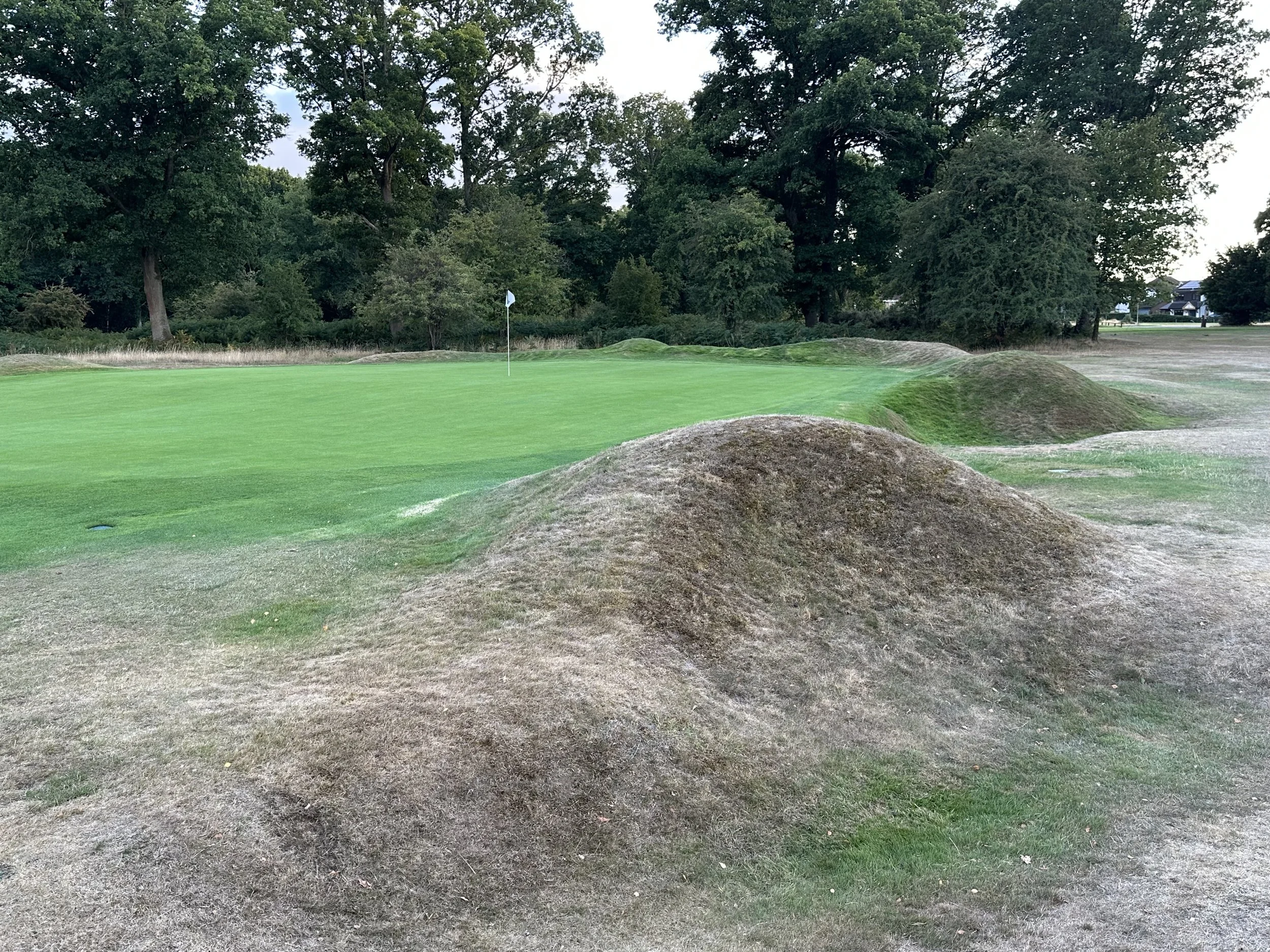
26. Hankley Common [6] Frensham, Surrey, England. James Braid. The wrap on Hankley is pretty accurate—a solid (if less interesting than its counterparts) course in a truly stunning setting. I feel it’s certainly gotten better in recent years though, thanks to work by Mackenzie & Ebert led by the talented shaping of Quinn Thompson and excellent hands-on efforts of greenkeeper Jonathan White, one of my favorite people to talk shop with in all the game. I was lucky to walk the first group of holes with Jon and talk over the work of the master plan, which is now nearly complete.
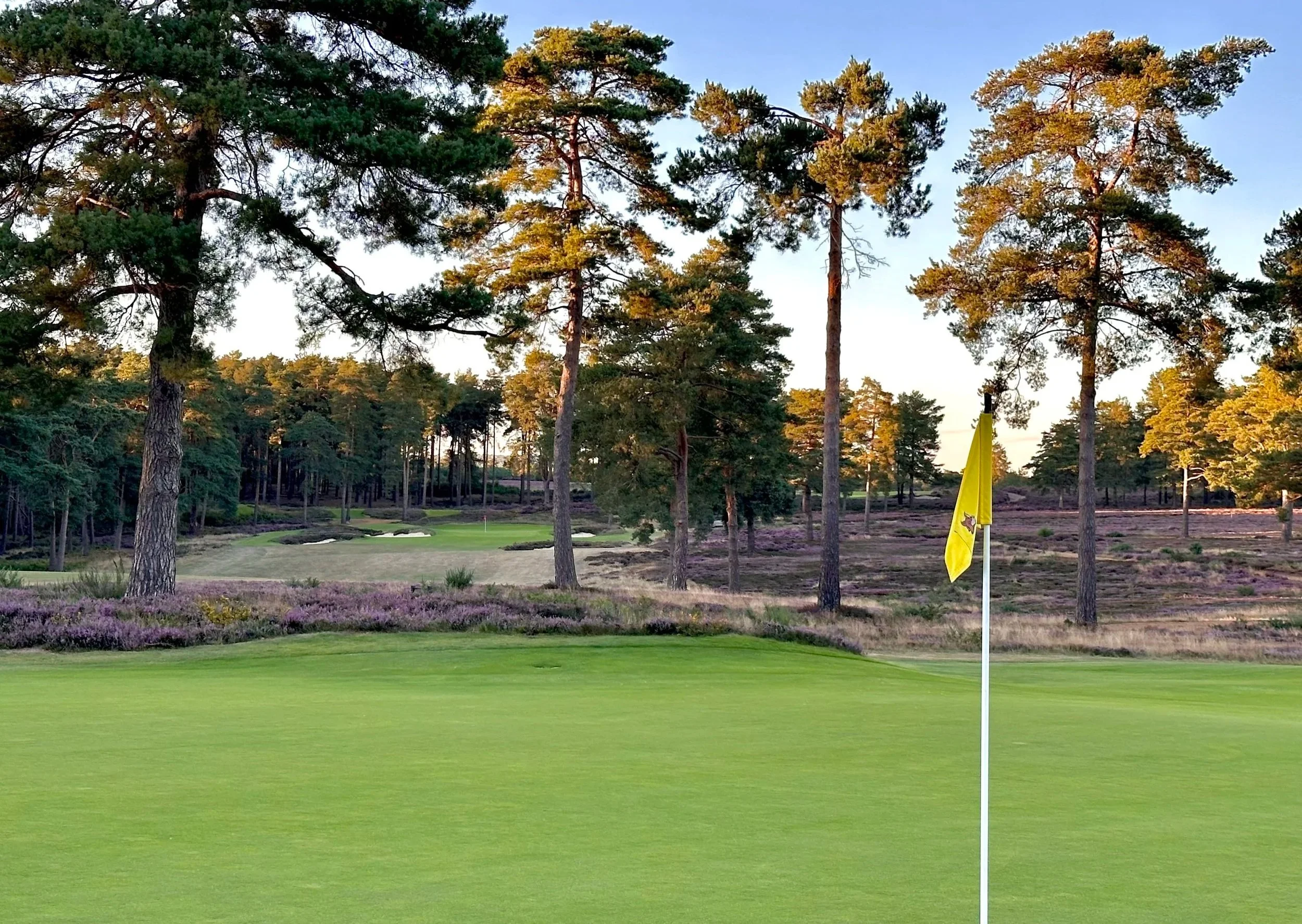
Hankley Common is a gorgeous spot to find yourself in late August
27. New Zealand [6] Addlestone, Surrey, England. Mure Ferguson, with revisions by Tom Simpson. New Zealand is as charming of a spot for golf as there is, a peaceful stroll through the heathland woods (especially on the frosty morning I encountered it). It’s rugged Simpson bunkering and understated greens make for a different feel than many of its area neighbors, which I think is a good thing, even if slightly less exciting in satisfying my recent kick for sharp above-ground features and trenches. Be sure to check out the locker room and its famous, angled slats with member names going all the way back to the club’s origin.
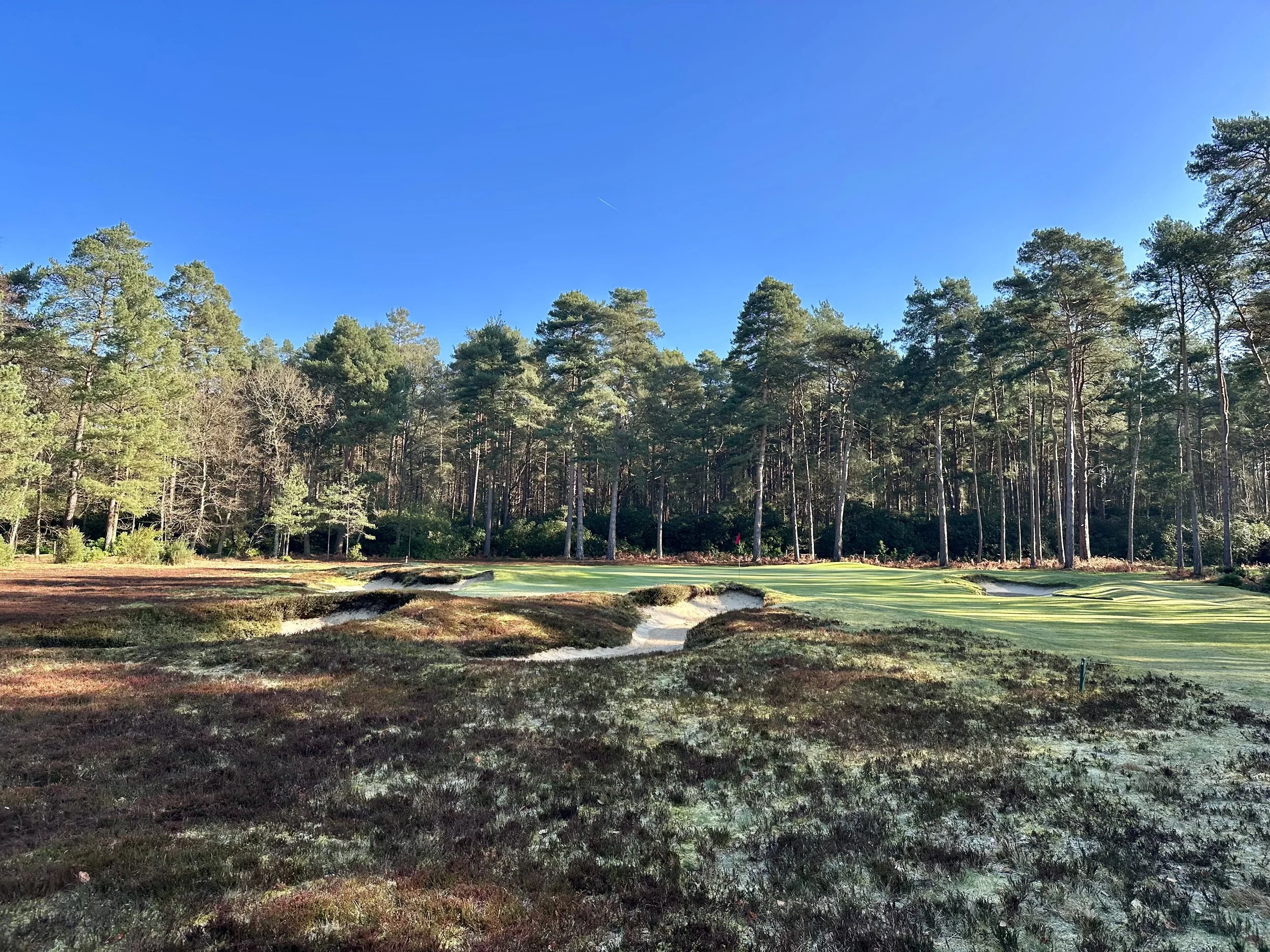
New Zealand carries a bit of simple magic
28. Reigate Heath [5] Reigate, Surrey, England. Tom Dunn. What an amazing setting and emminently charming 9 holes over what is some of the sandiest heathland you will encounter. The fun gets off to a quick start, the first two holes sharing a fairway down below the course’s iconic windmill. The only reason I don’t bump it higher (besides the stout company throughout the list) is because I found the greens to be a bit simplistic, with the hard-tilting 3rd a pleasant exception. Definitely try to play this place though, and be sure to go round twice and play the alternate set of markers the second time.
29. Poppy Hills [6] Pebble Beach, CA. Robert Trent Jones, II redesign. I felt like I should like this course more than I did, and maybe if I peg it up a set forward next time, I will, as I felt like I was getting beat up the whole time and unable to pull off the many draw shots it seemed to require from back there. I would’ve loved to see this course back when it boasted fine fescue turf—the approach shots and those from around the green definitely would’ve worked much better than they do at the moment.
30. Pyle and Kenfig [5] Pyle, Porthcawl, Wales. Harry Colt, with modifications by Philip Mackenzie Ross. A classic ‘tale of two nines,’ the front of this links course is fairly subdued and back playing out in some bonafide dunes. I really enjoyed the front though as well, which had some subtly-interesting Colt greens surrounded by short links turf (which made my many misses fun to play). The dunes holes on the back are incredible but a little dog-leggy, though I really like the dogleg right 13th, which has a green well-guarded by a smaller dune if you play too far past the bend in the dogleg as I did.
Honorable Mention (in no order): Ashridge [Inc.; feels like a 6] Little Gaddesden, Berkhamsted, Hertfordshire, England. Sir Guy Campbell, S.V. Hotchkin and C.K. Hutchison. — Copt Heath [4] Solihull, West Midlands, England. Harry Colt. — Wentworth (East) [5] Virginia Water, Surrey, England. Harry Colt. — Round Hill [5] Greenwich, CT. Walter Travis. — Tamarack [Inc.;walk around clubhouse only] Greenwich, CT. Charles Banks, restored by Brian Schneider. — Sand Moor [4] Leeds, Yorkshire, England. Alister MacKenzie, with numerous revisions over the years. — Healdsburg *9 hole [3] Healdsburg, CA. Unknown from early 1920s. — Monarch Dunes (Challenge *Par 3) [3] Nipomo, CA. Damien Pascuzzo. — West Monmouthshire [4] Ebbw Vale, Gwent, Wales. Ben Sayers. — Monarch Bay [4] San Leandro, CA. John Harbottle. — Campus Commons *Par 3 [3] Sacramento, CA. Damien Pascuzzo. — Clyne [Inc., but probably 5 or 6] Mayals, Swansea, Wales. Harry Colt.
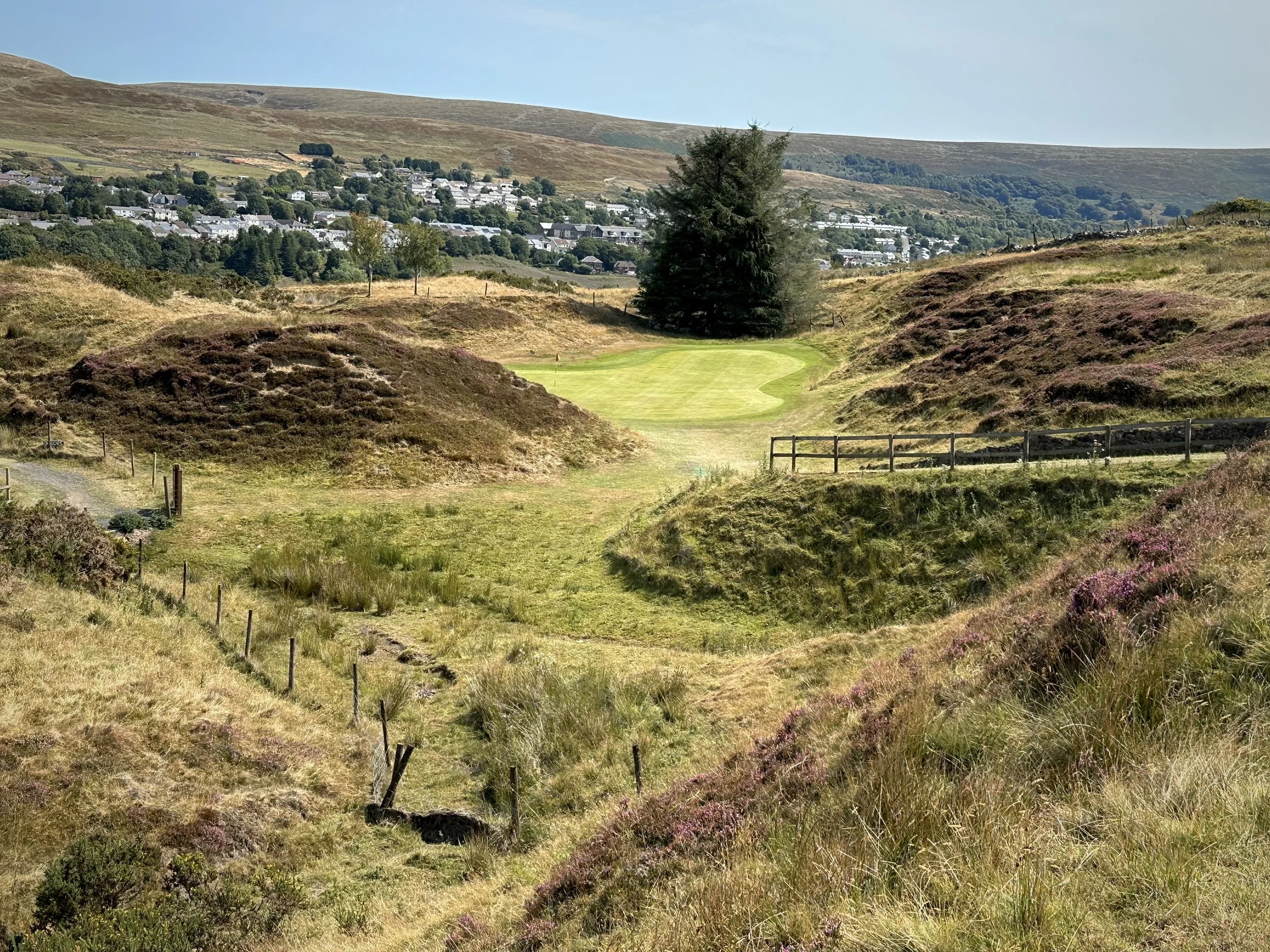
An awesome Dell hole at West Monmouthshire
A rare punchbowl ring green at Healdsburg
A flowing fallaway green at Ashridge
Special MacKenzie Mentions:
I note these because I popped in just to see a few specific holes with MacKenzie relic features, so I can’t comment on nor rate the courses as a whole. But, there was some cool stuff on each that I thought would be worth sharing.
Sitwell Park. The most (in)famous green(s) in golf history. I had always thought that the Sitwell greens, particularly the more wild 12th, had been completely wiped clean and never to be seen again. Effectively, that is the case, as flat shelves have been put in their places. So, I never thought to actually go there, but before I was to make my way out of Leeds toward Woodhall Spa, Clyde Johnson told me I should stop in to see the old greens at Sitwell Park. As always from Clyde, this was a good idea as, much to my surprise, a good amount of the remaining landforms from those greens are still sitting there, especially so on the more famous 12th, which has an obvious fill pad just kind of sitting on top of what might’ve been the second-to-back tier.
I think it would actually be possible to restore the green, and my guess would be that it would be easy to find the old contours after digging away the obvious fill. From there, you’d have to see what you are left with and how many alt-routes there are to get from one level to another, especially going downhill. If those don’t exist, you’d need to tweak some things to get it to work that way, definitely restoring the bottom bunker landform as a start to help hold in a runaway ball. I’ve worked around the 16th hole at Pasatiempo, and overall pitch here and elevation change are both stronger than that. It would be crazy, but crazy would also get someone to travel across the world to see and play the course.
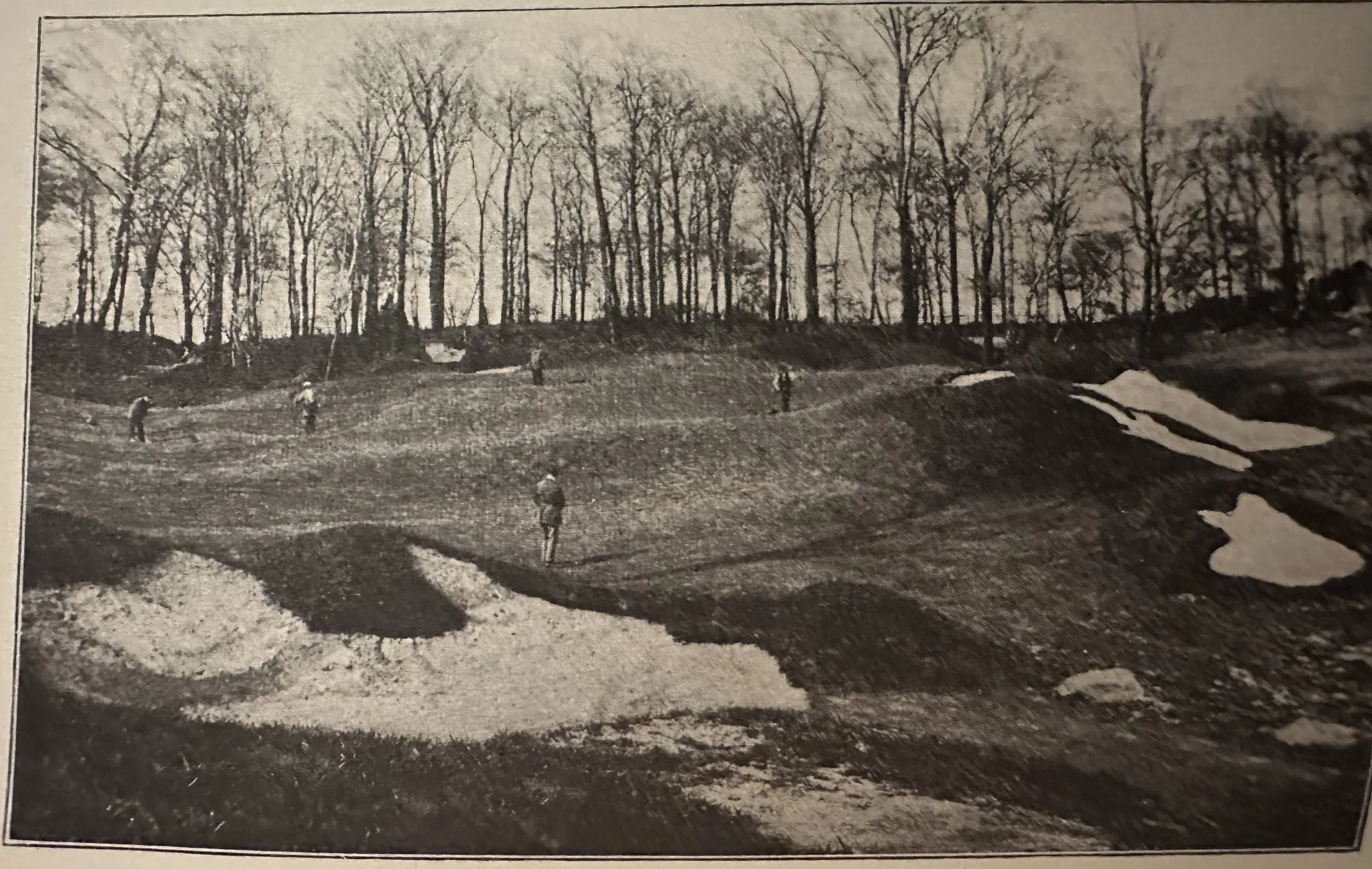
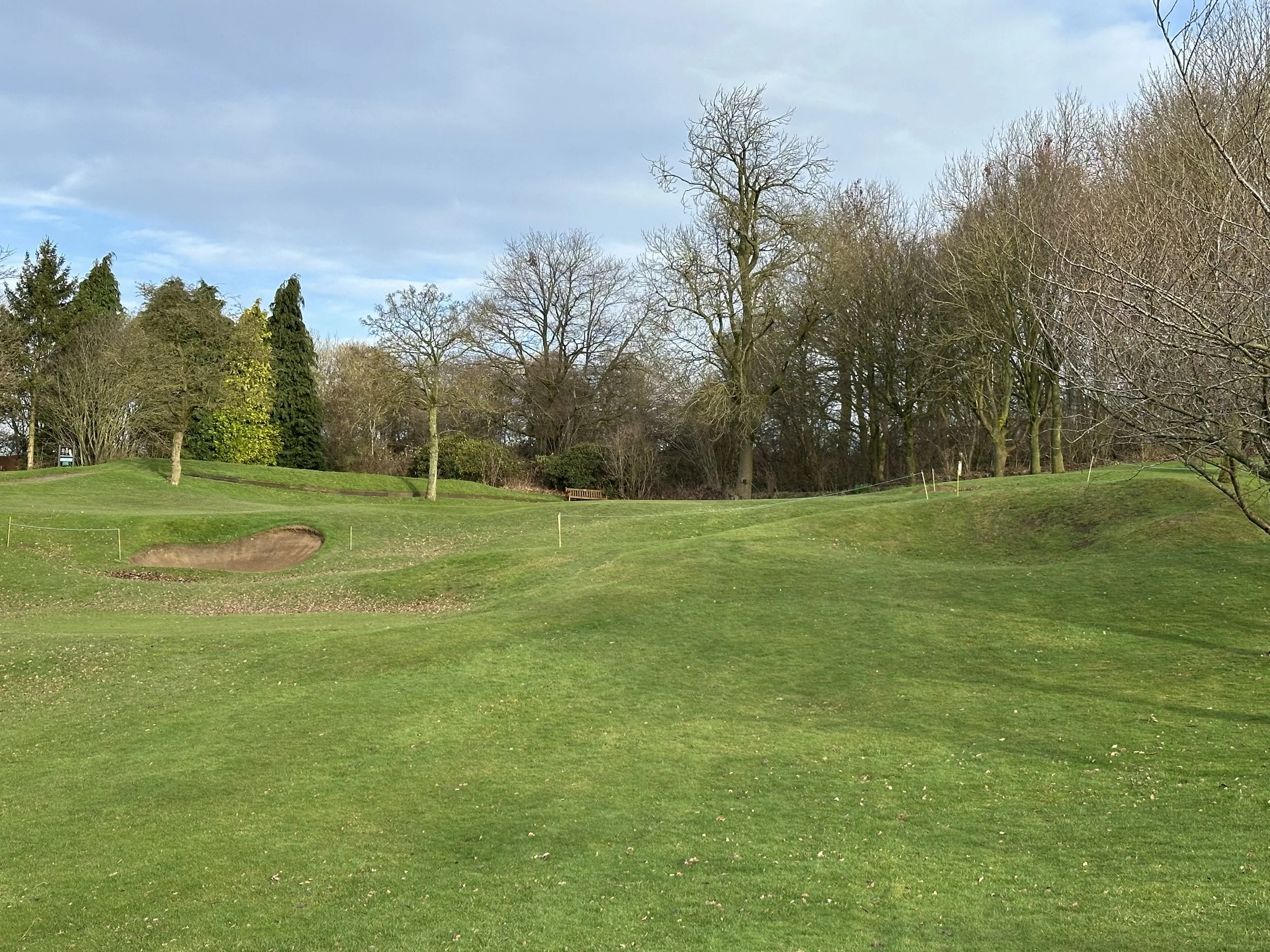
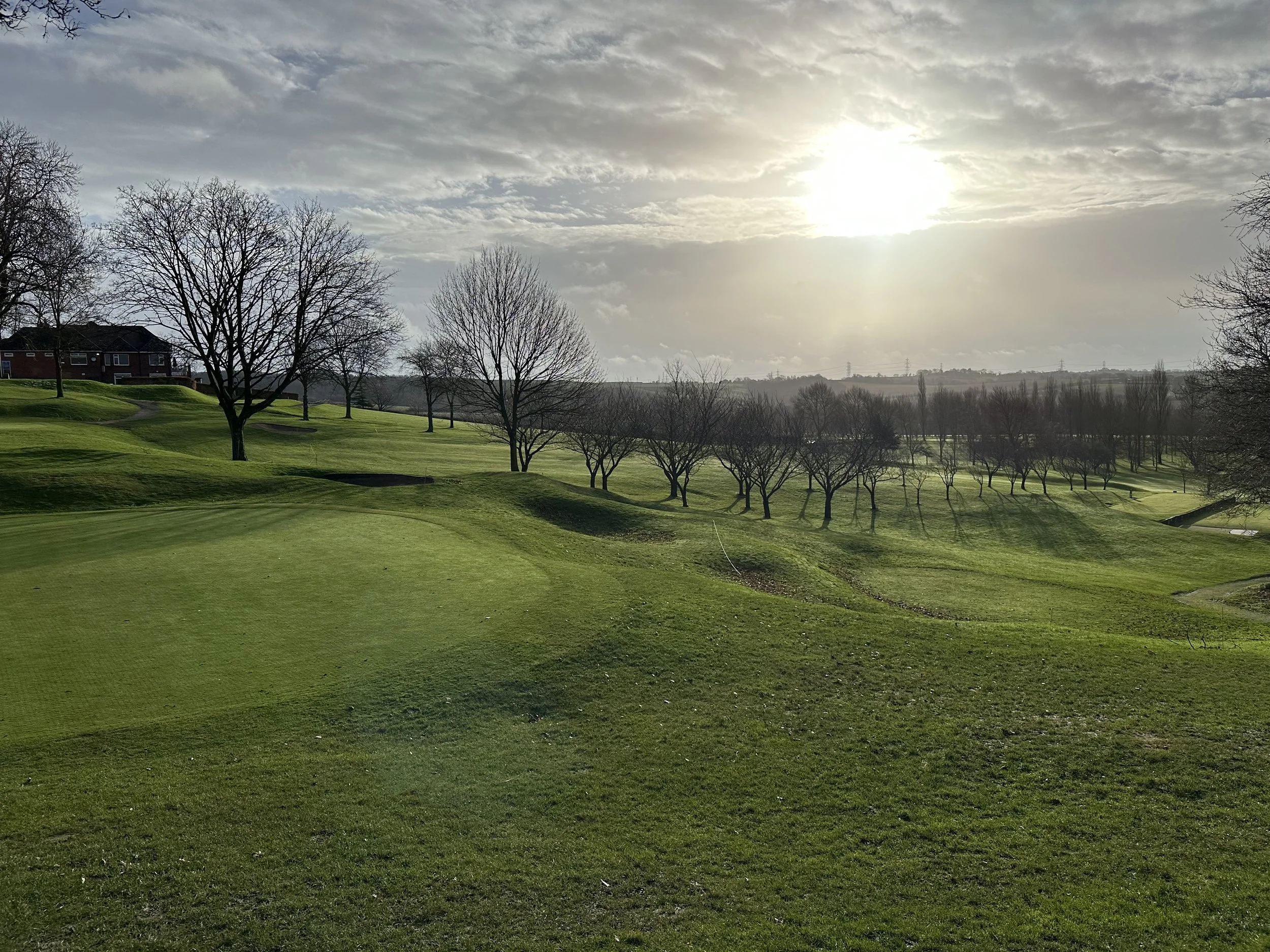
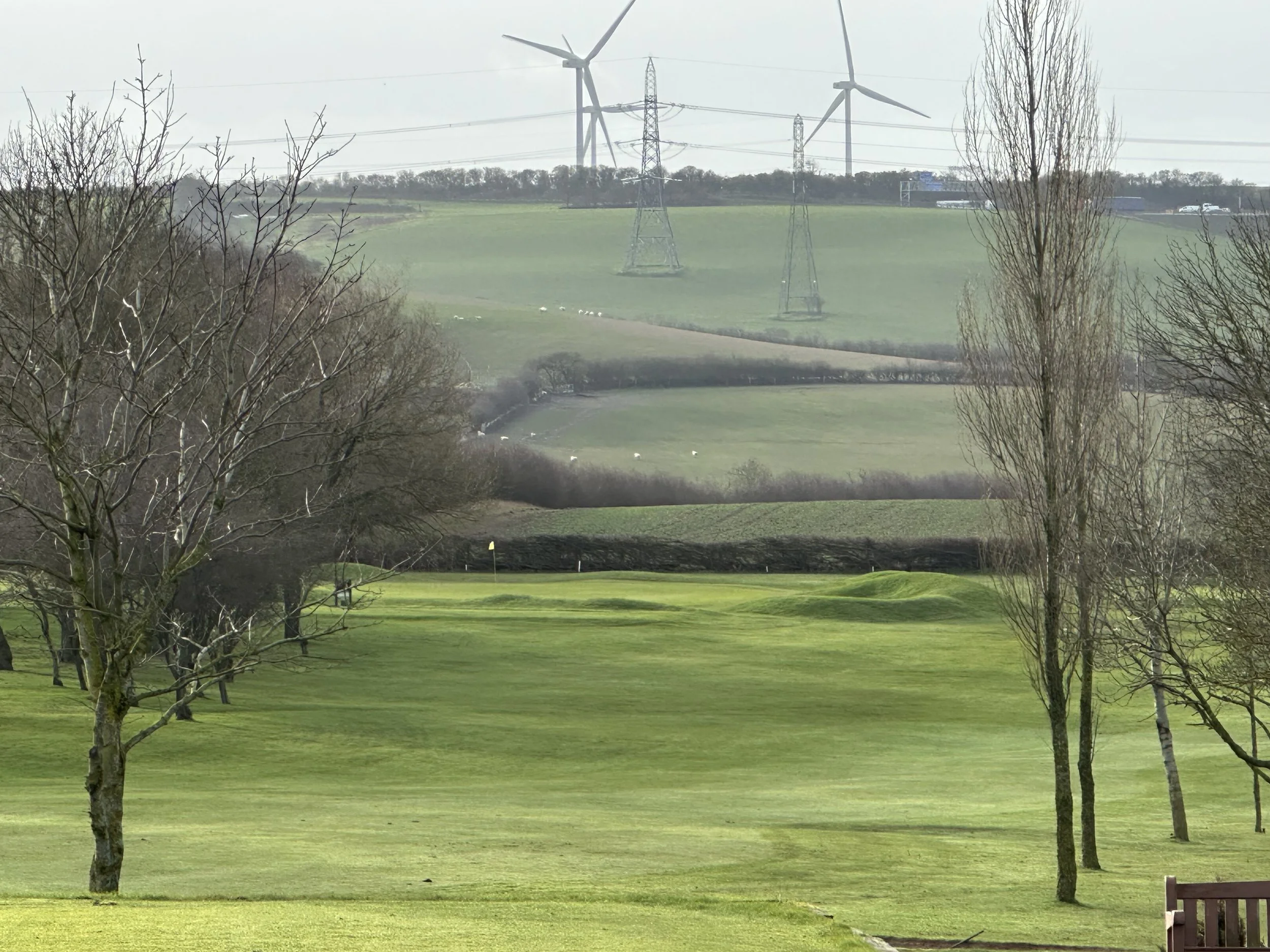
Above, clockwise from top left: Sitwell Park’s wild 12th originally, the same 12th today, a view down to what looks like some intriguing shaping on other parts of the course, and a view from up above the green pad showing some of the old pockets in front of the current surface
Headingley. I had to stop in here and see some of the MacKenzie holes as shown in old photos. The old 2nd, which is a very early version of MacKenzie shaping that Geoff Shackelford notes as “primitive,” no longer exists, unfortunately. However, you can see where it once was, off to the right of the current 2nd in the woods and heading impossibly up to the top of the hill. It’s way bigger a hill and steeper than the photo lets on, and I can see why the hole was abandoned. The 16th is the real highlight as well as the most preserved, with a lot of the shapes around the green still remaining. It, along with the reasonably intact 17th, would be fun ones to fully restore.
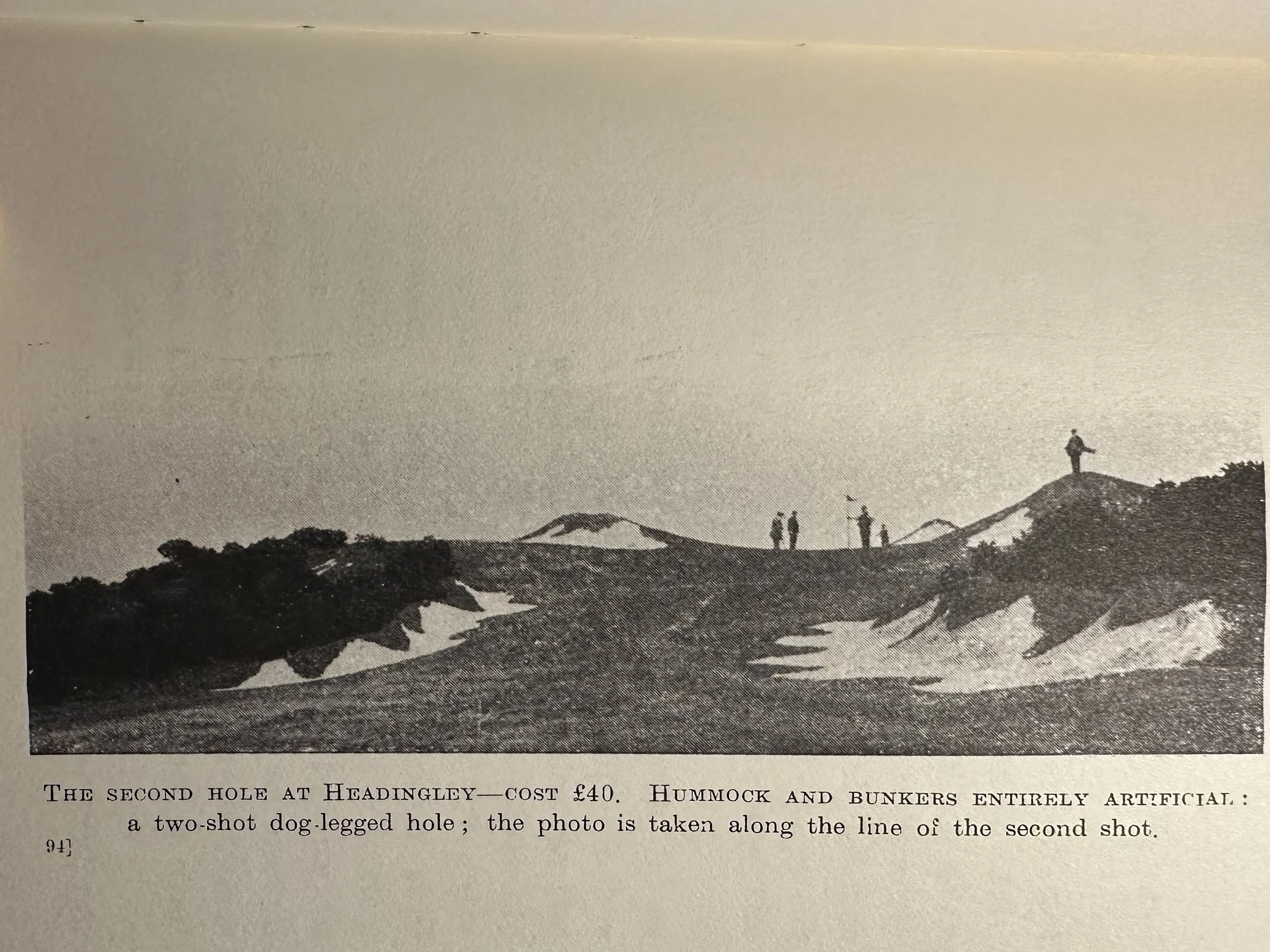
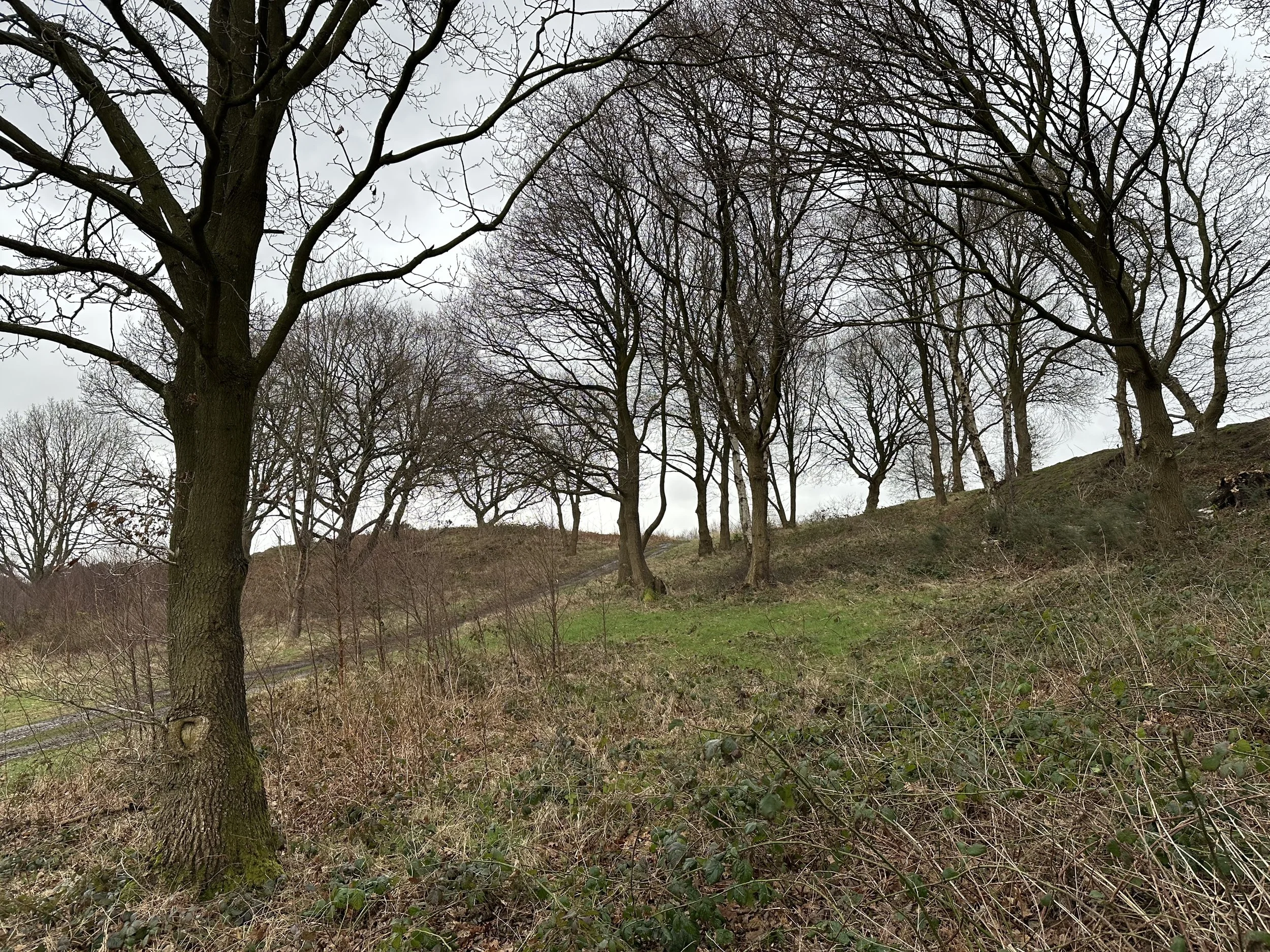
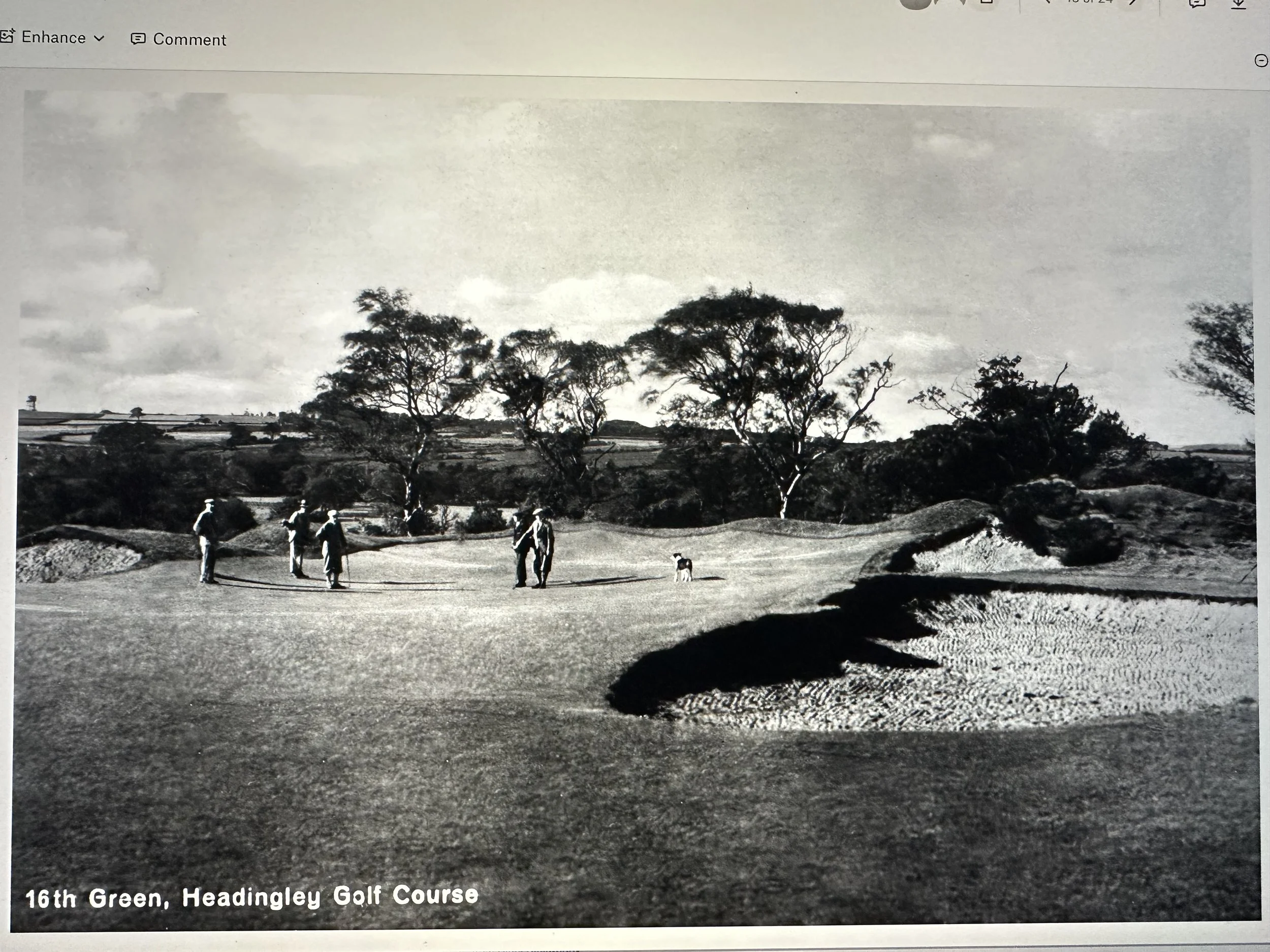
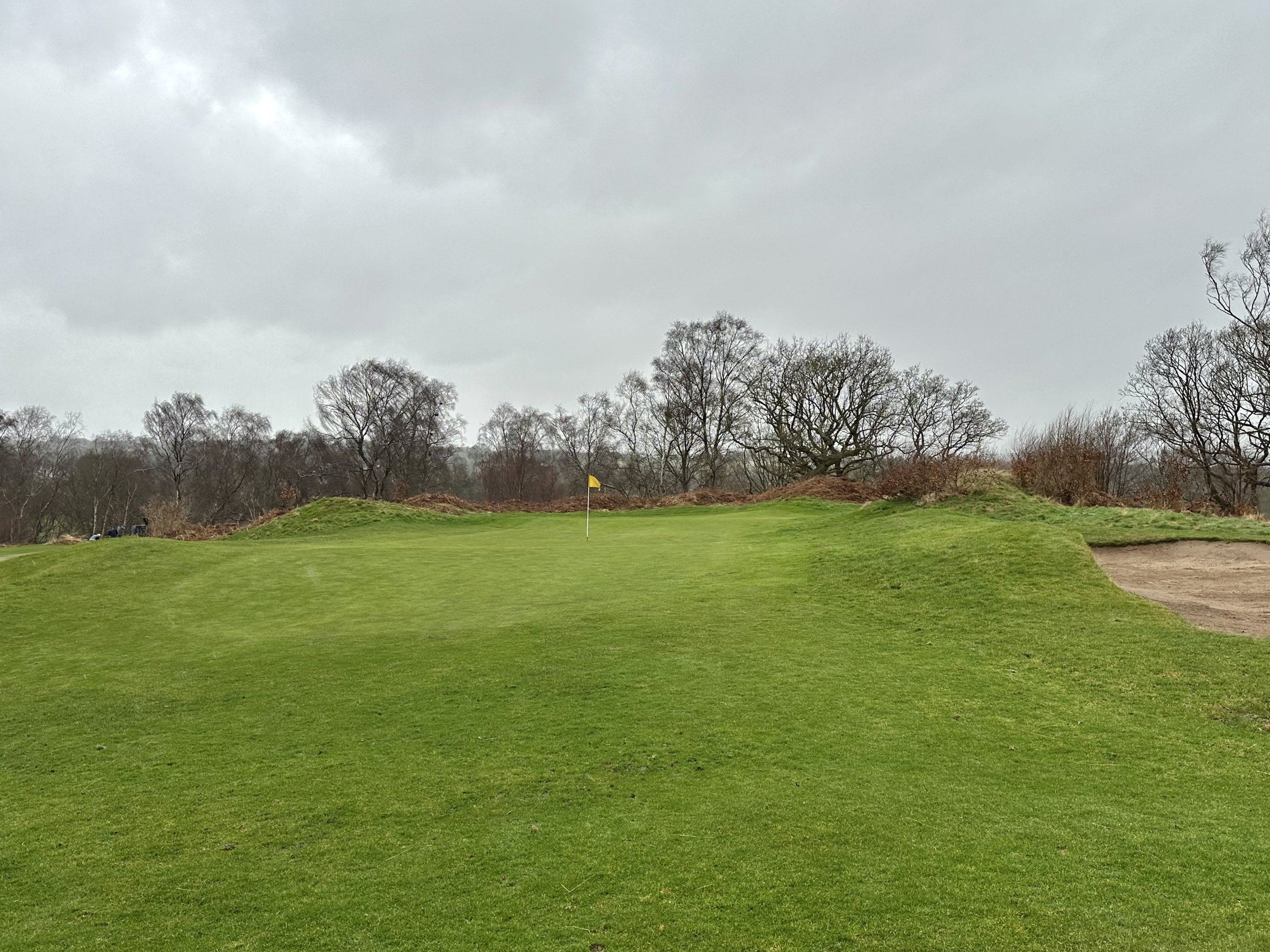
Above: pictures of original Headingley and what you see today
Harrogate. I made some time in my morning before Alwoodley to stop in at Harrogate and see a green built by MacKenzie that he thought enough of to include in his first book Golf Architecture. I too thought it to be most fascinating with its shelves of varying height and size and bizarre (in a good way) front left bunker guarding it. I hope to steal the idea and rebuild something like it somewhere.
The original, which is the current 17th hole, isn’t fully there, but it looked from the club website’s course tour that there were enough of the landforms in place that it warranted a visit, especially given it was only a short walk from the clubhouse.
It was cool to see some of the bones of this original still there and enough remnant clues to perform a faithful restoration. It was worth a stop for that alone. What I wasn’t expecting, however, was a plethora of other remnant MacKenzie (or at least I assume it to be from him) shaping teasing me through the trees on the rest of the course, shaping that was shockingly large in scale, especially given the time period and heavy clay soil of the property. Long, angled ridges crossed fairways and continued into the woods, indicating wider fairways from the course’s origin days. Big, funky greenside mounds guarded many surfaces, sometimes doing double duty for greens in tight proximity—a classic MacKenzie move. This place impressed me way more than I ever expected and could make some serious head-turning moves with proper tree management and restoration work.
What was supposed to be a quick 20 minutes turned into nearly two hours covering just about the entire property, arriving to one siren song of mounding only to be teased by yet another around the corner. On days like these, I am always sure to eat a big breakfast, knowing that these discoveries and cancellation of my lunch window is a strong possibility.
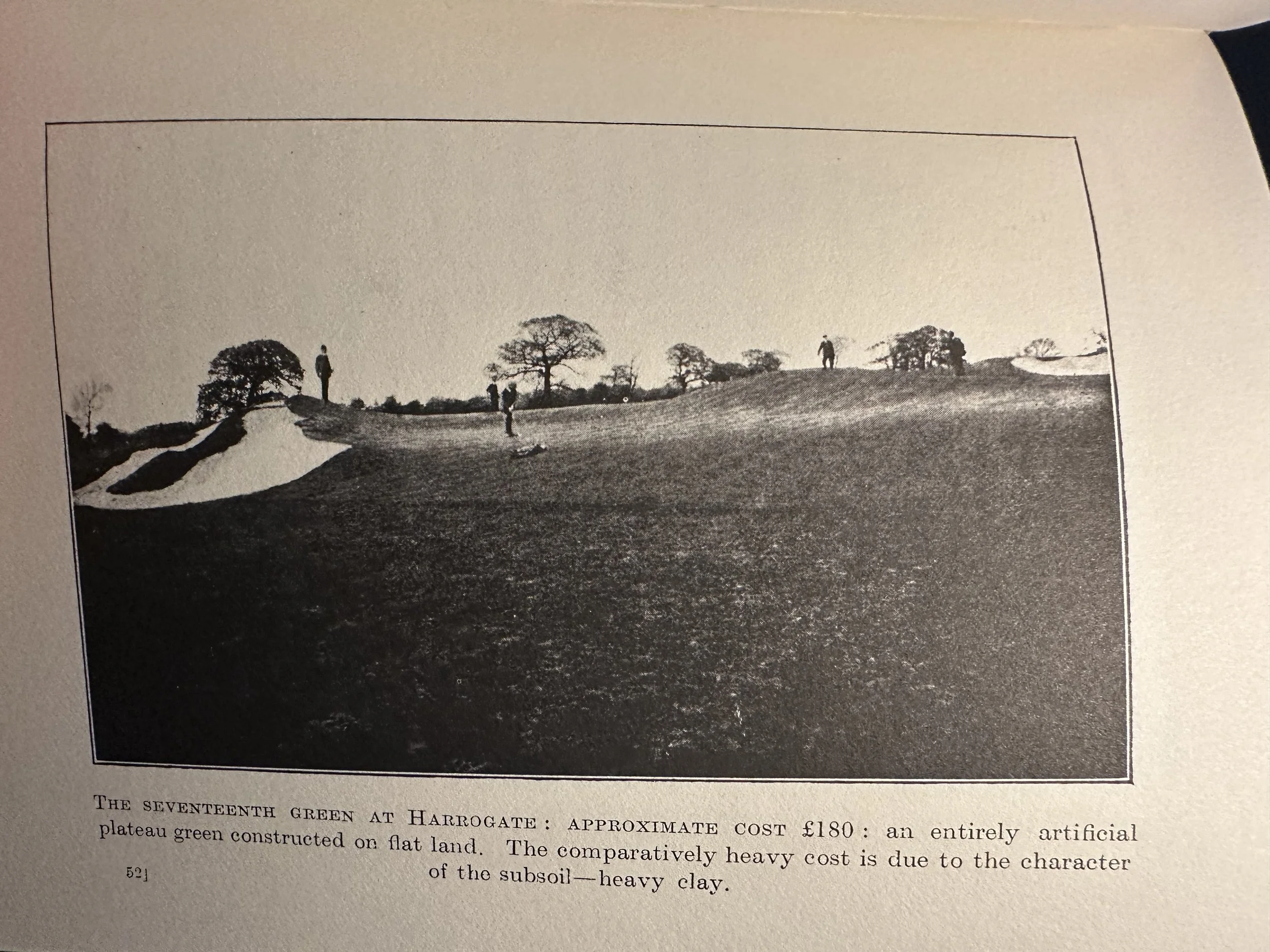
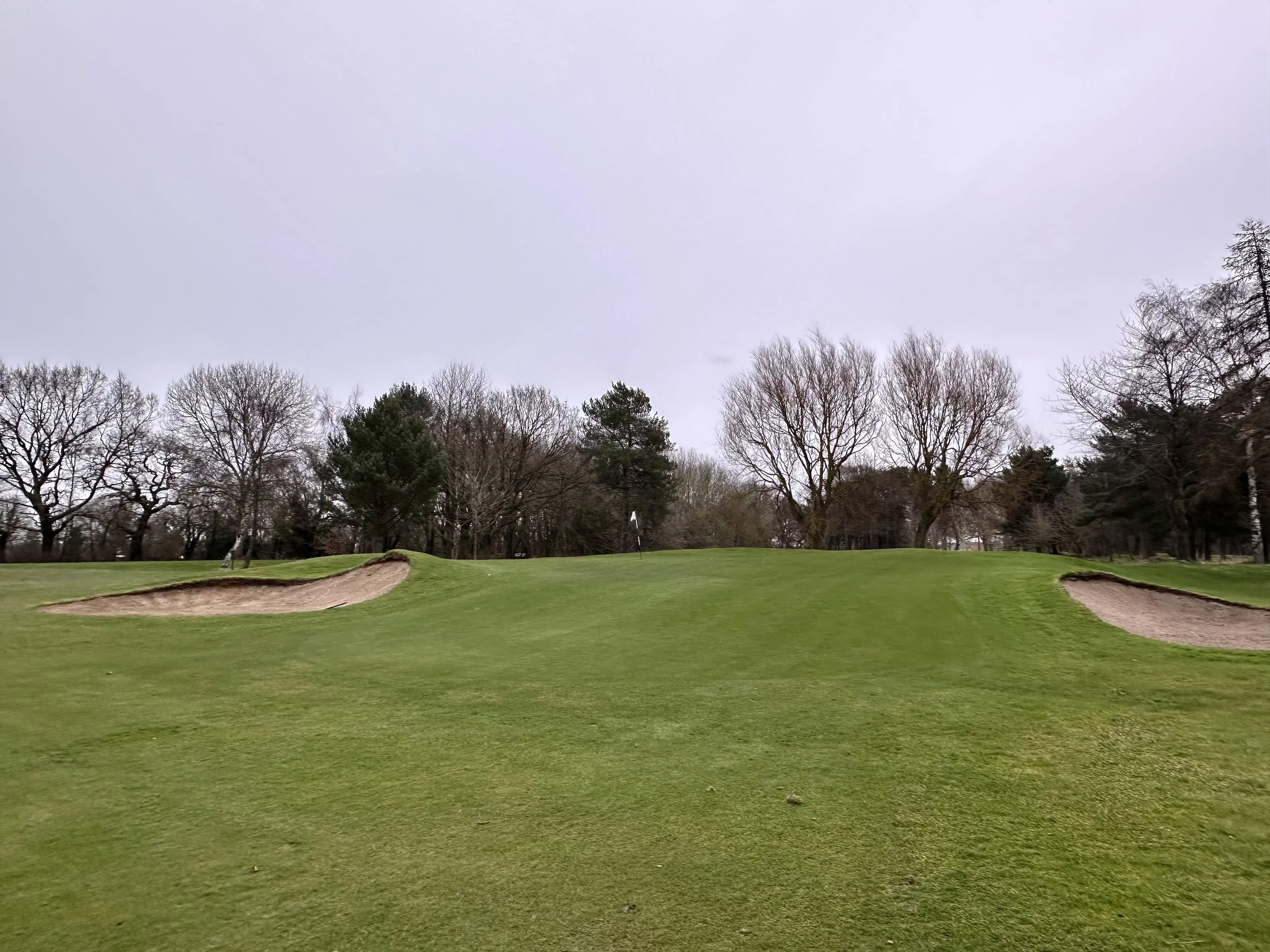
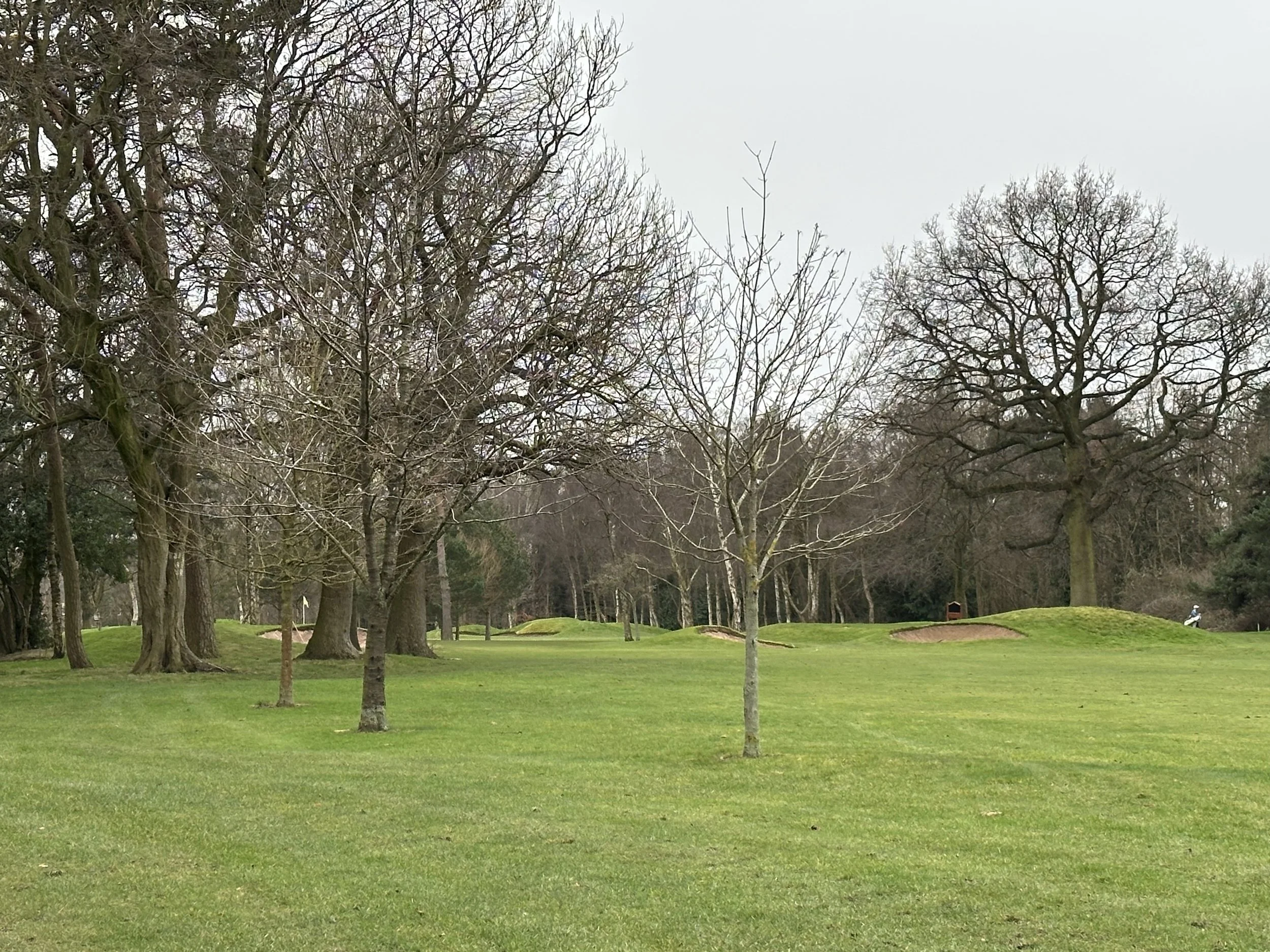
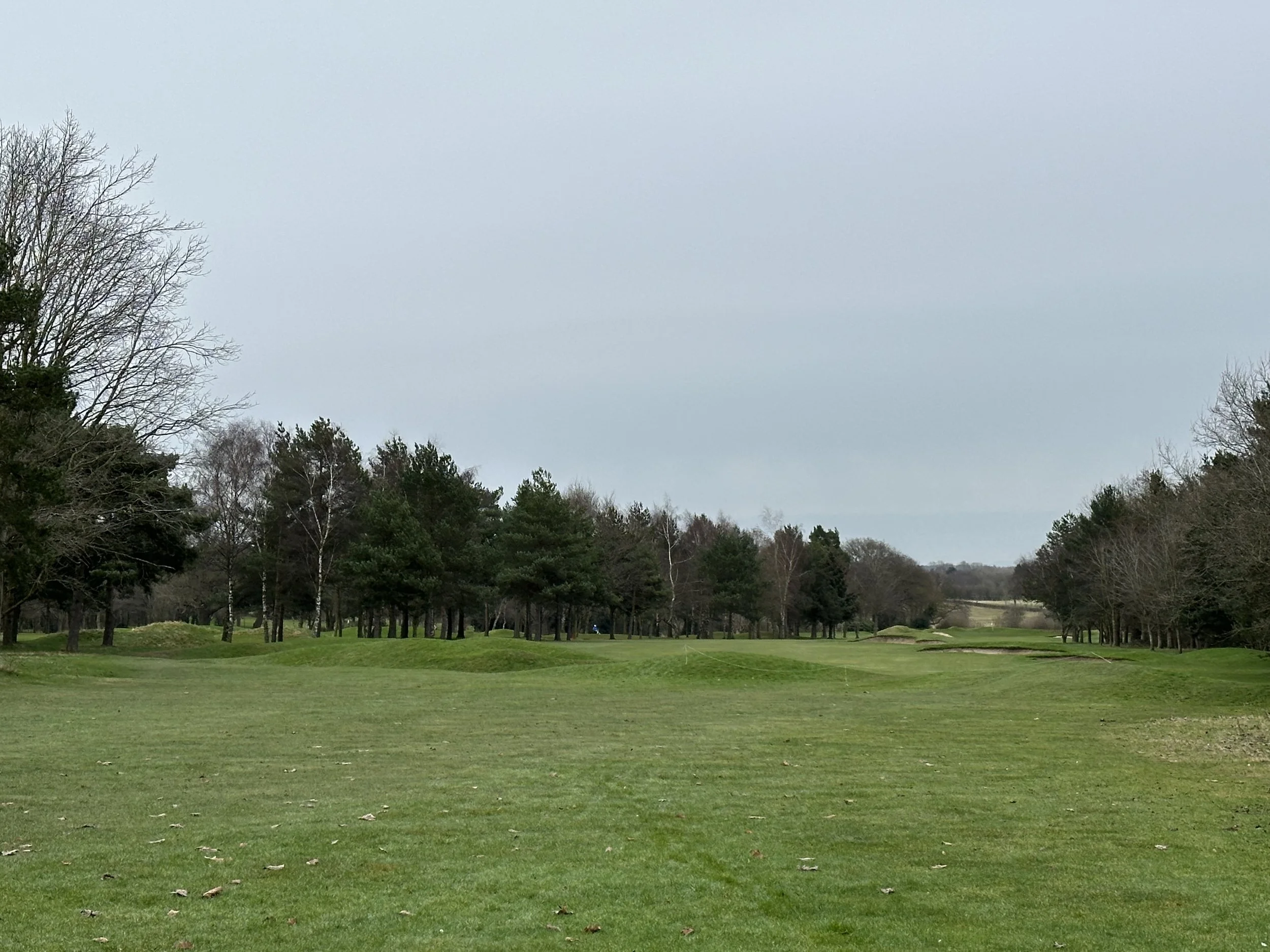
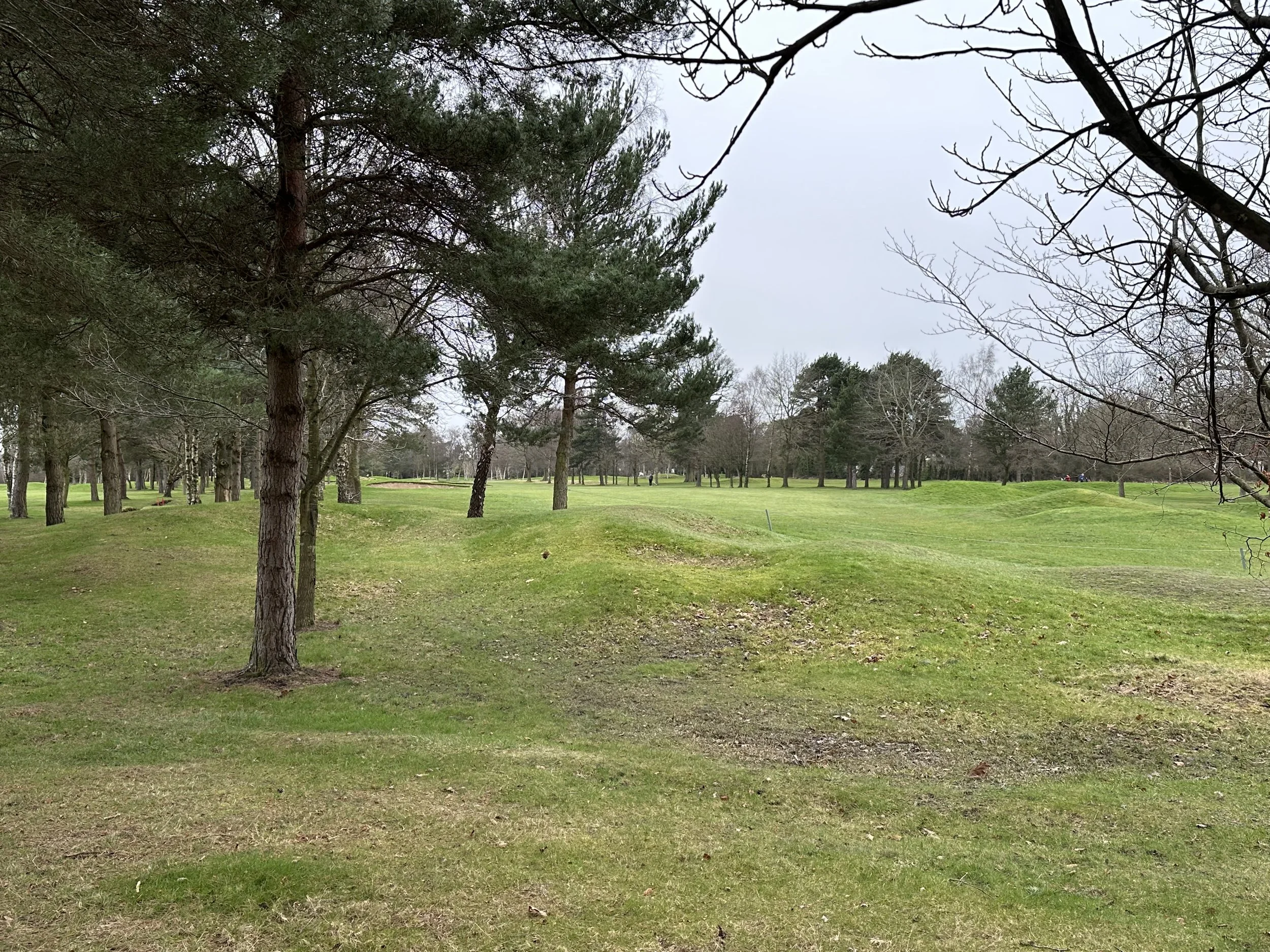
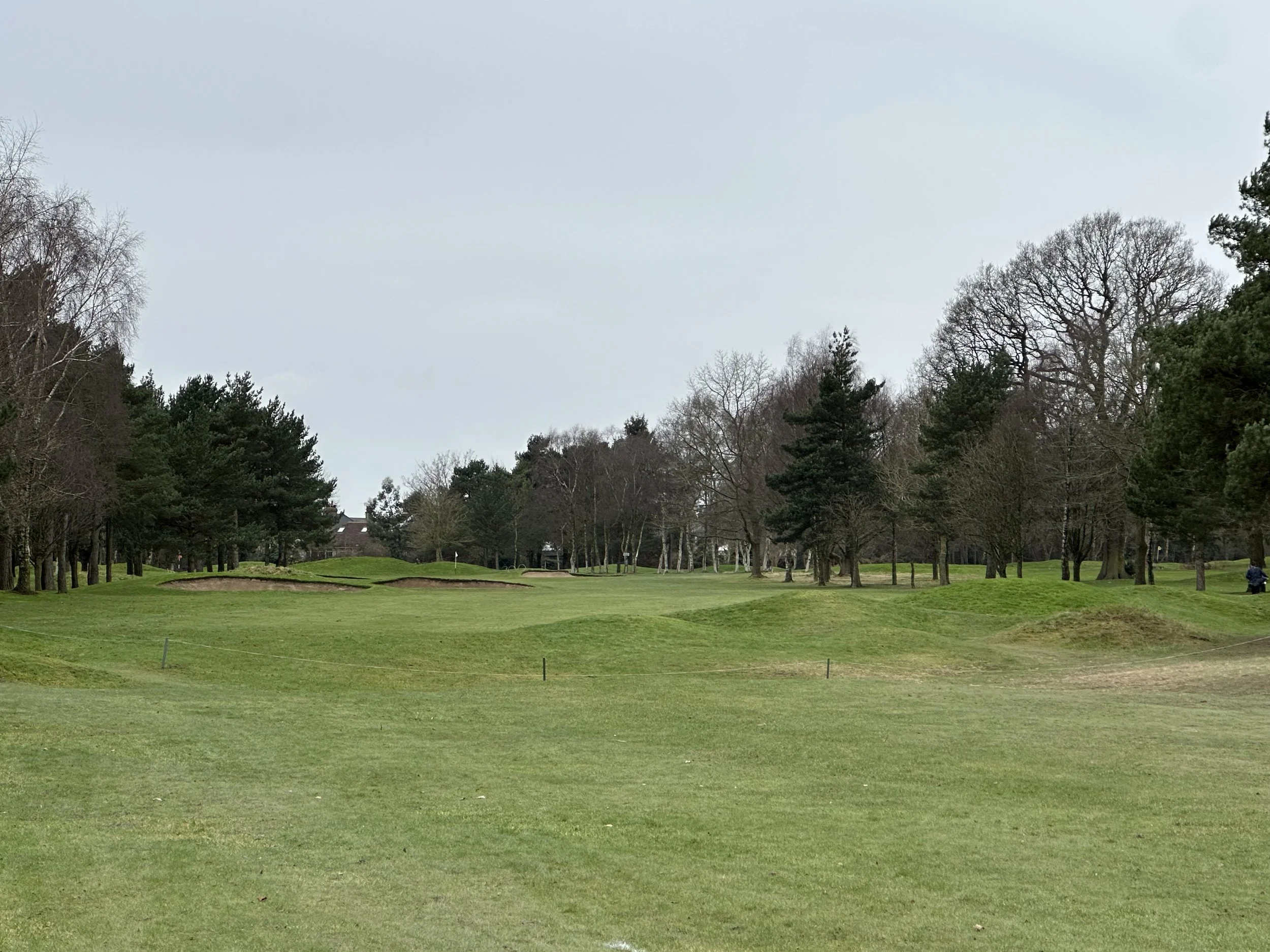
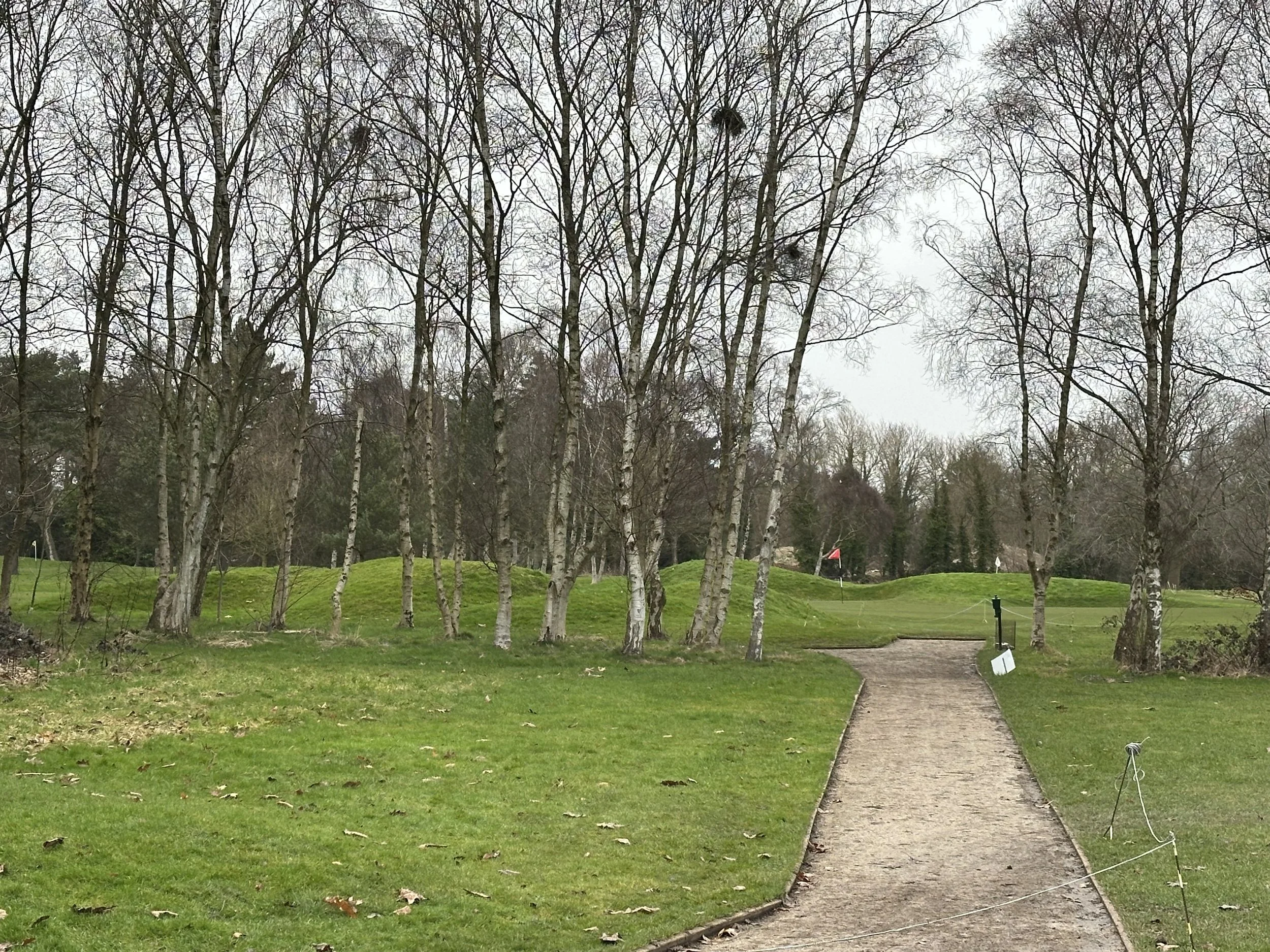
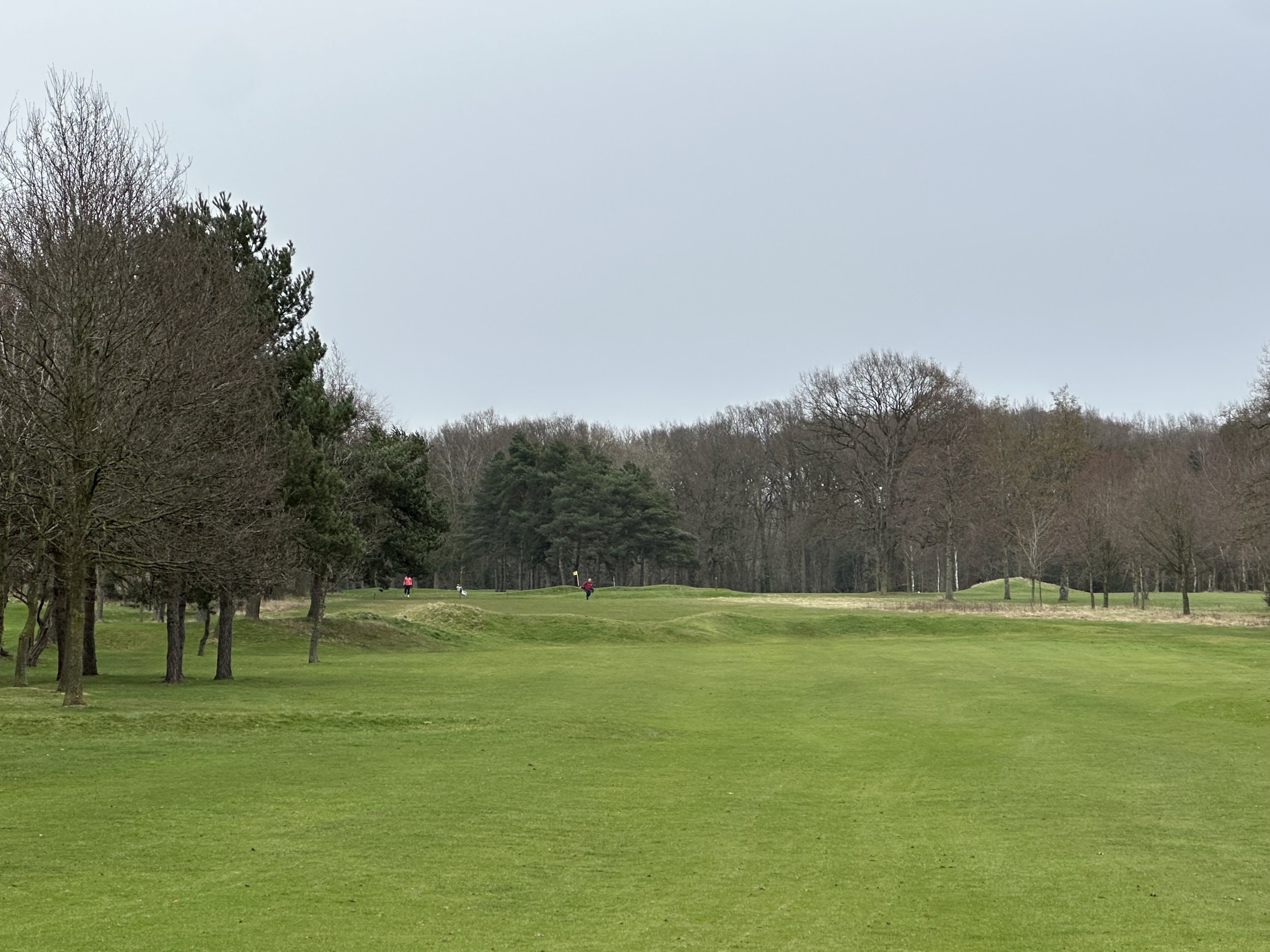
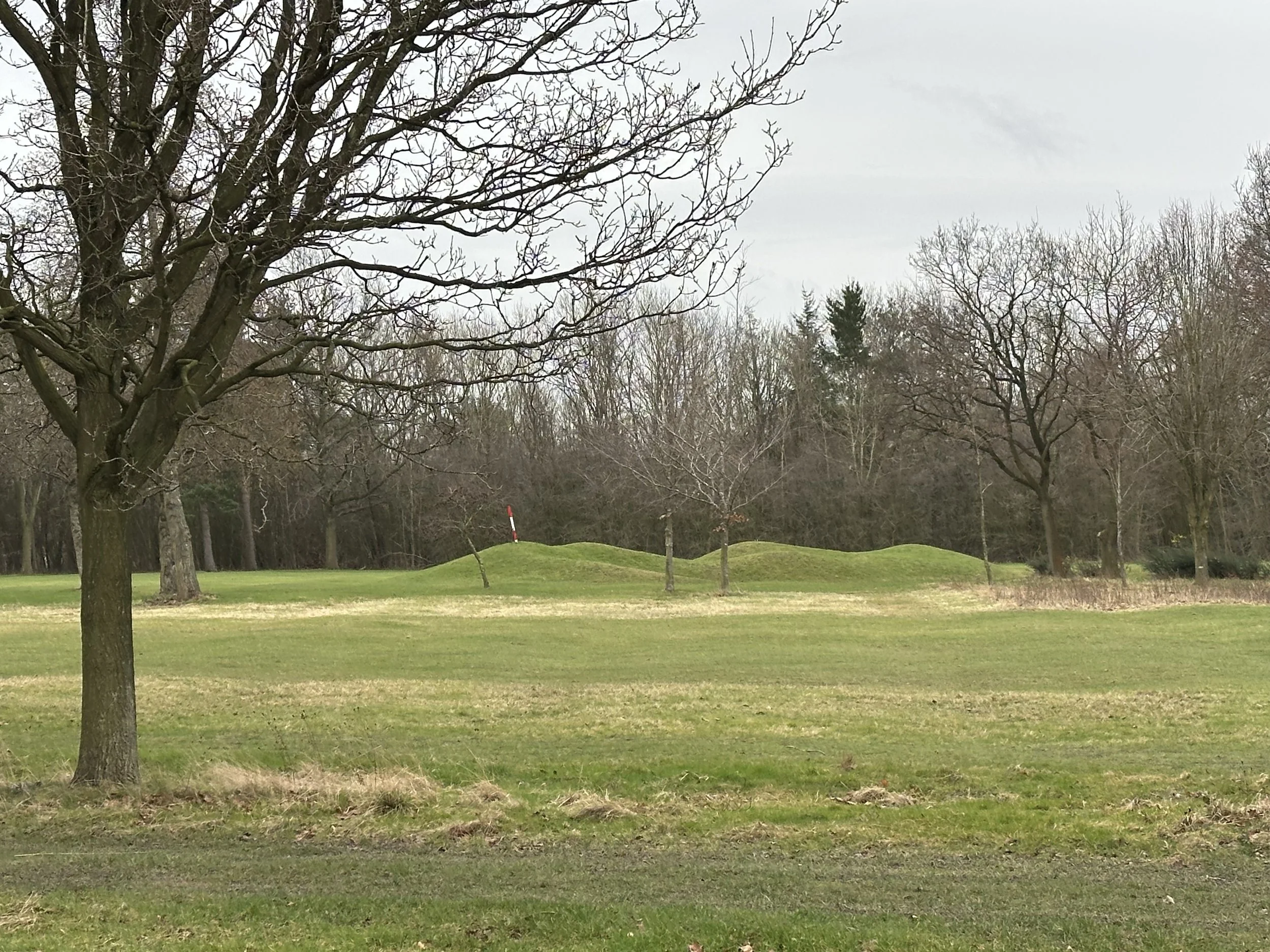
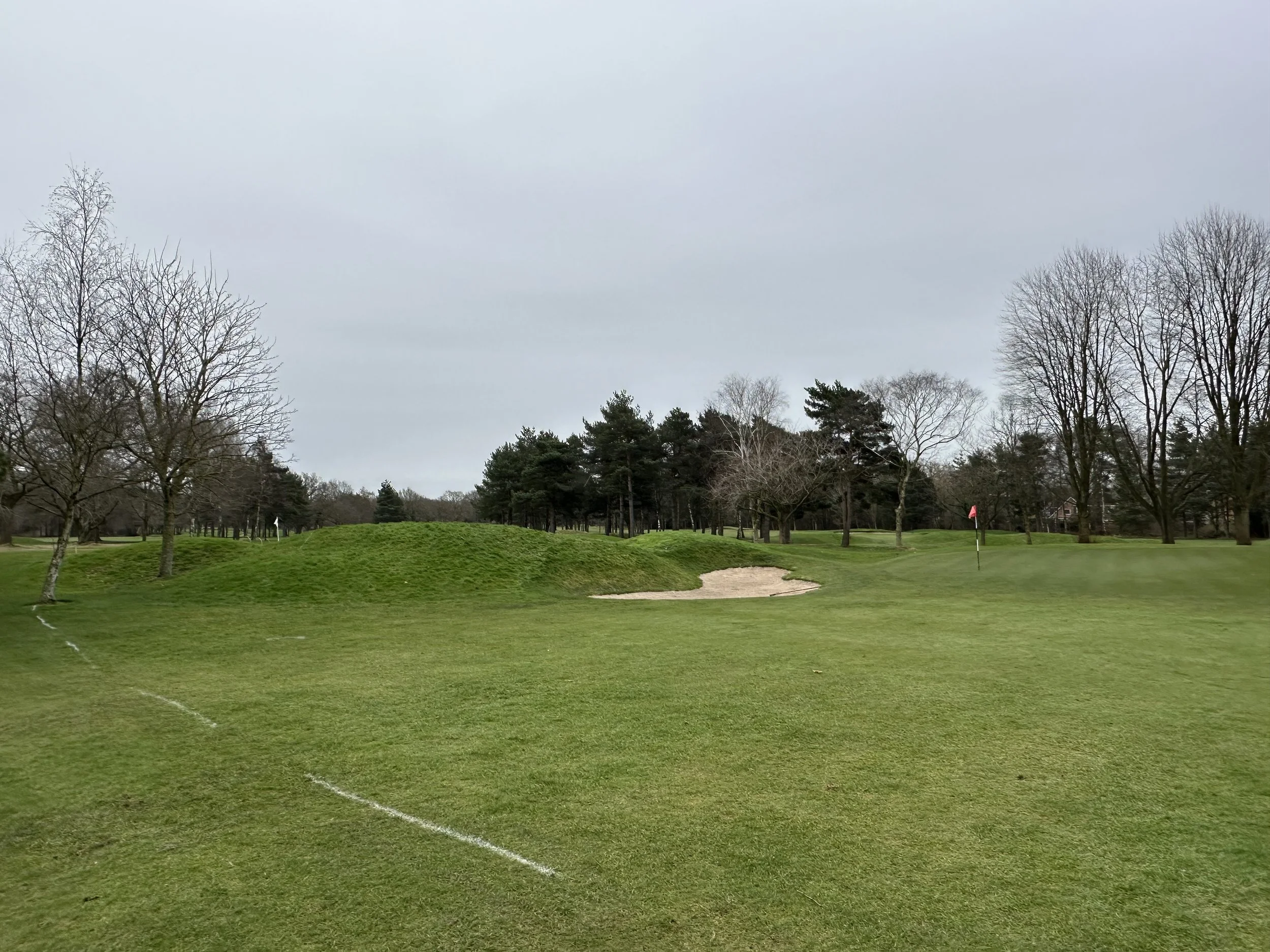
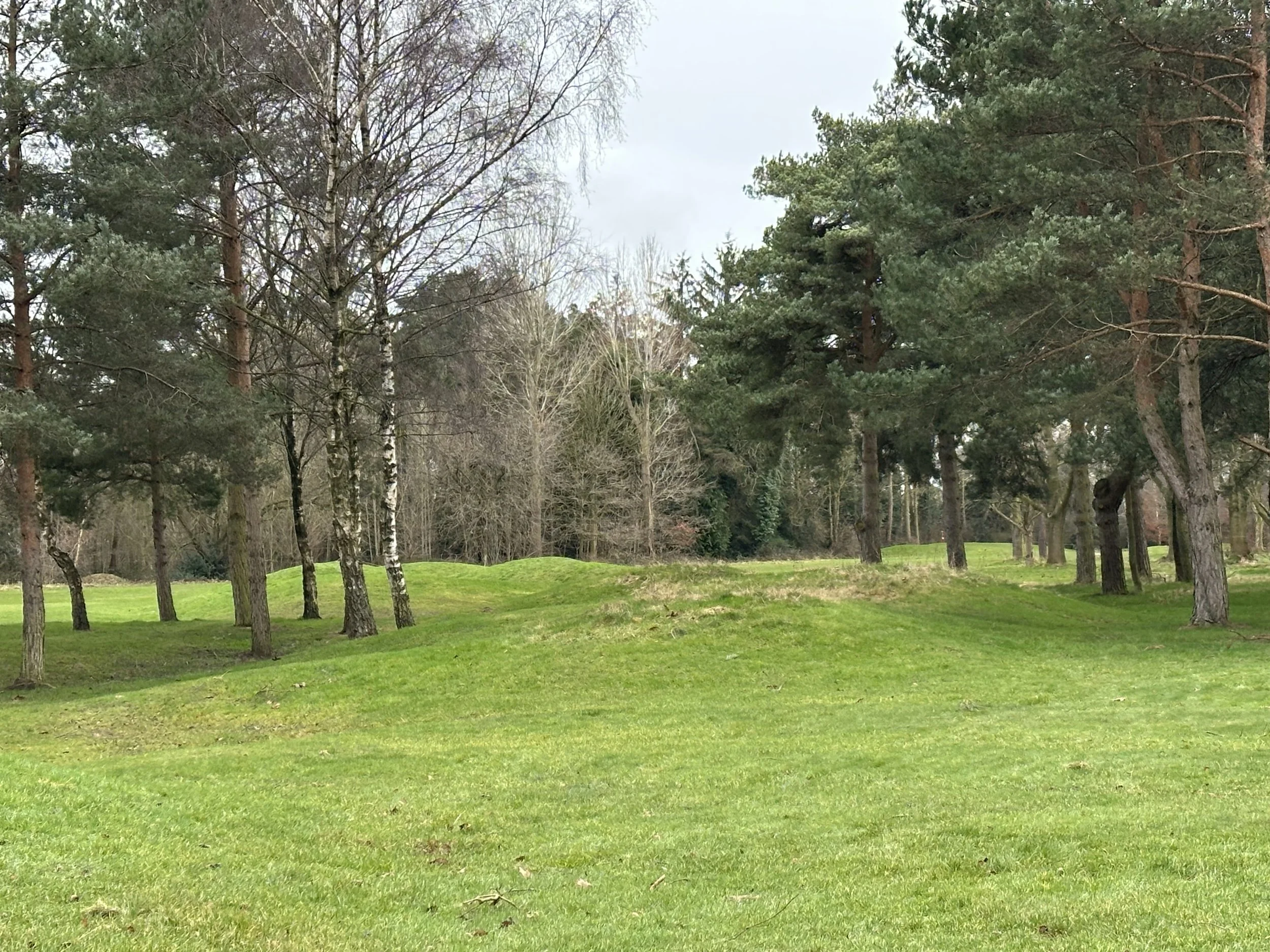
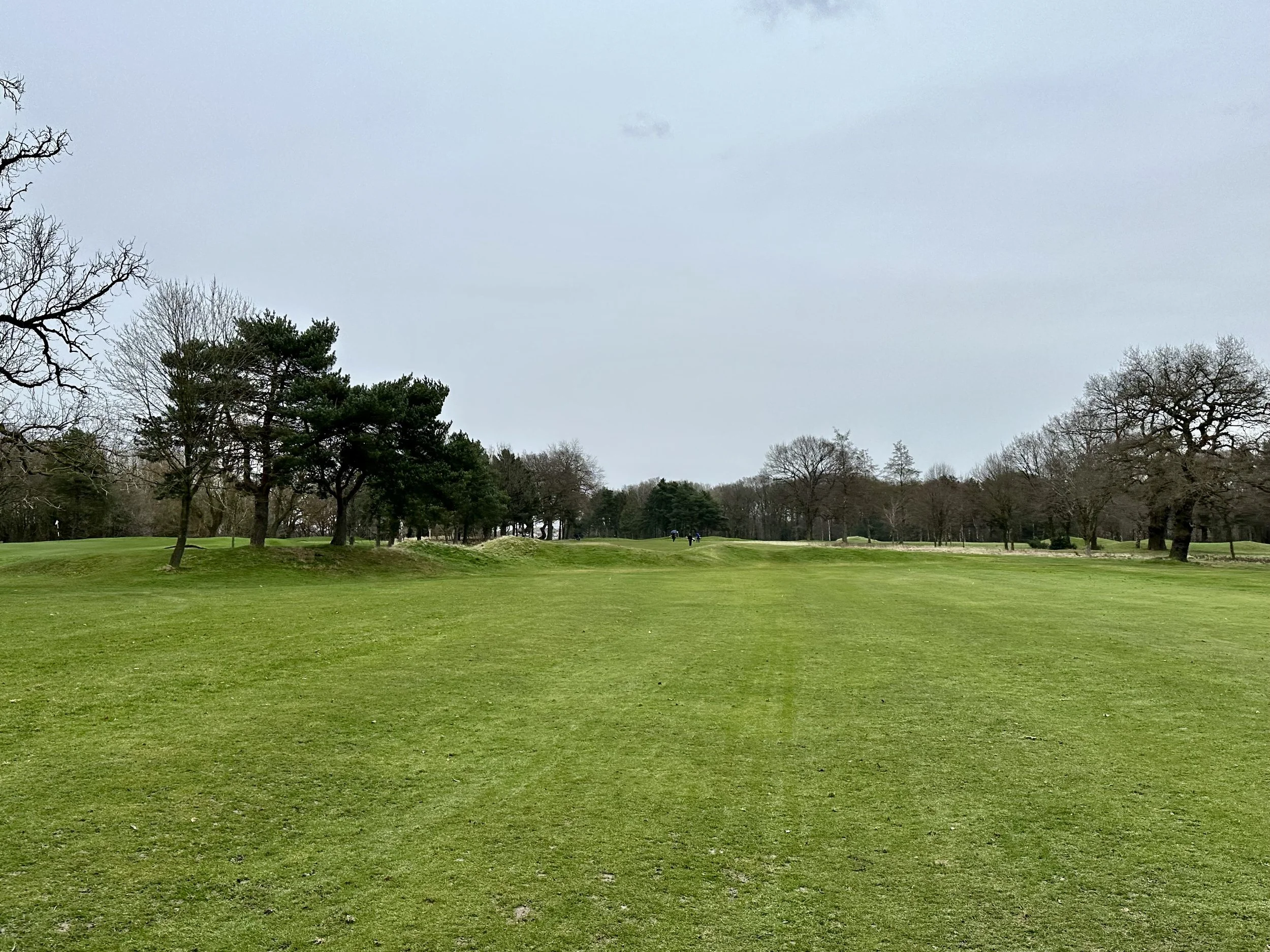
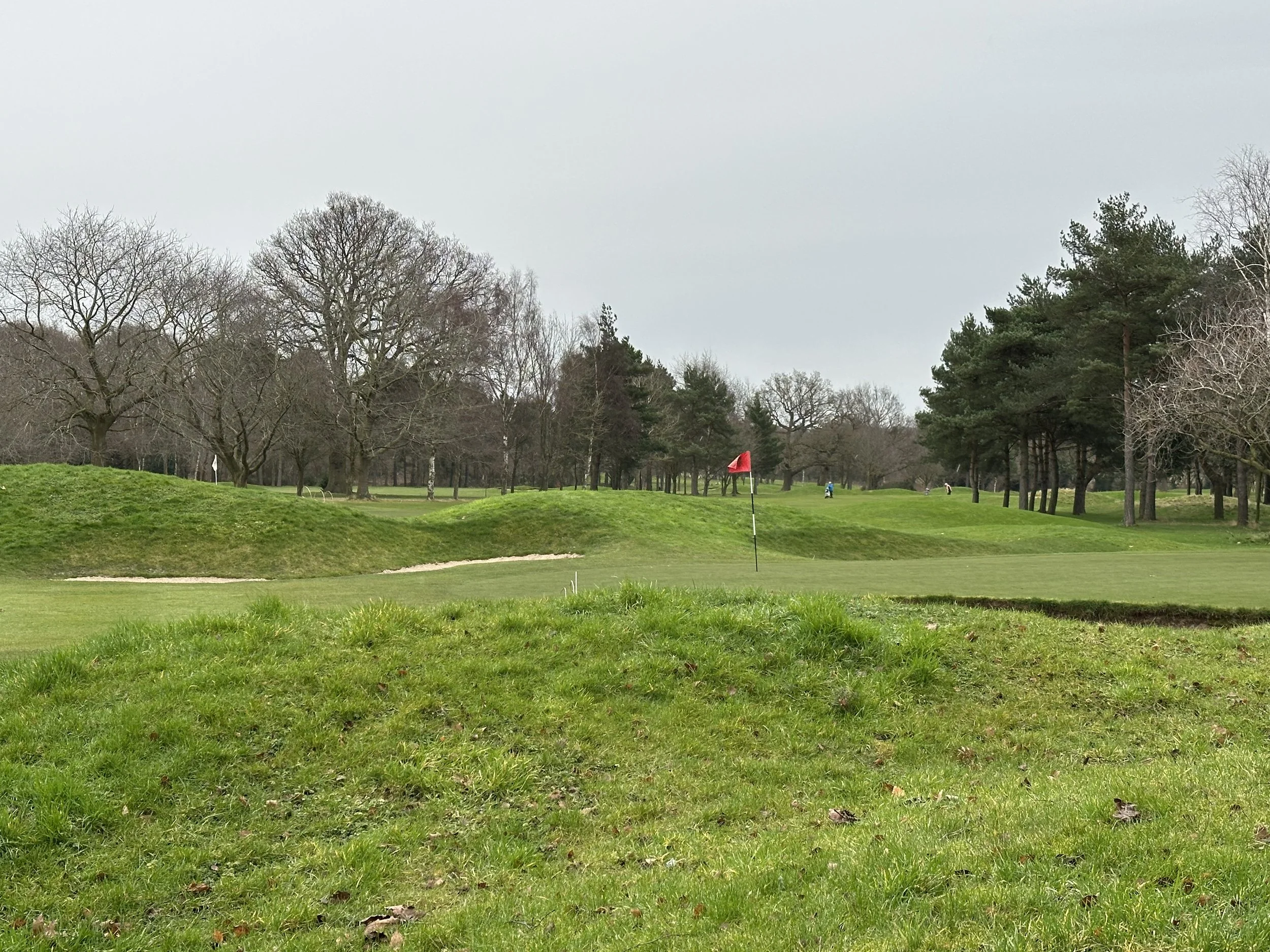
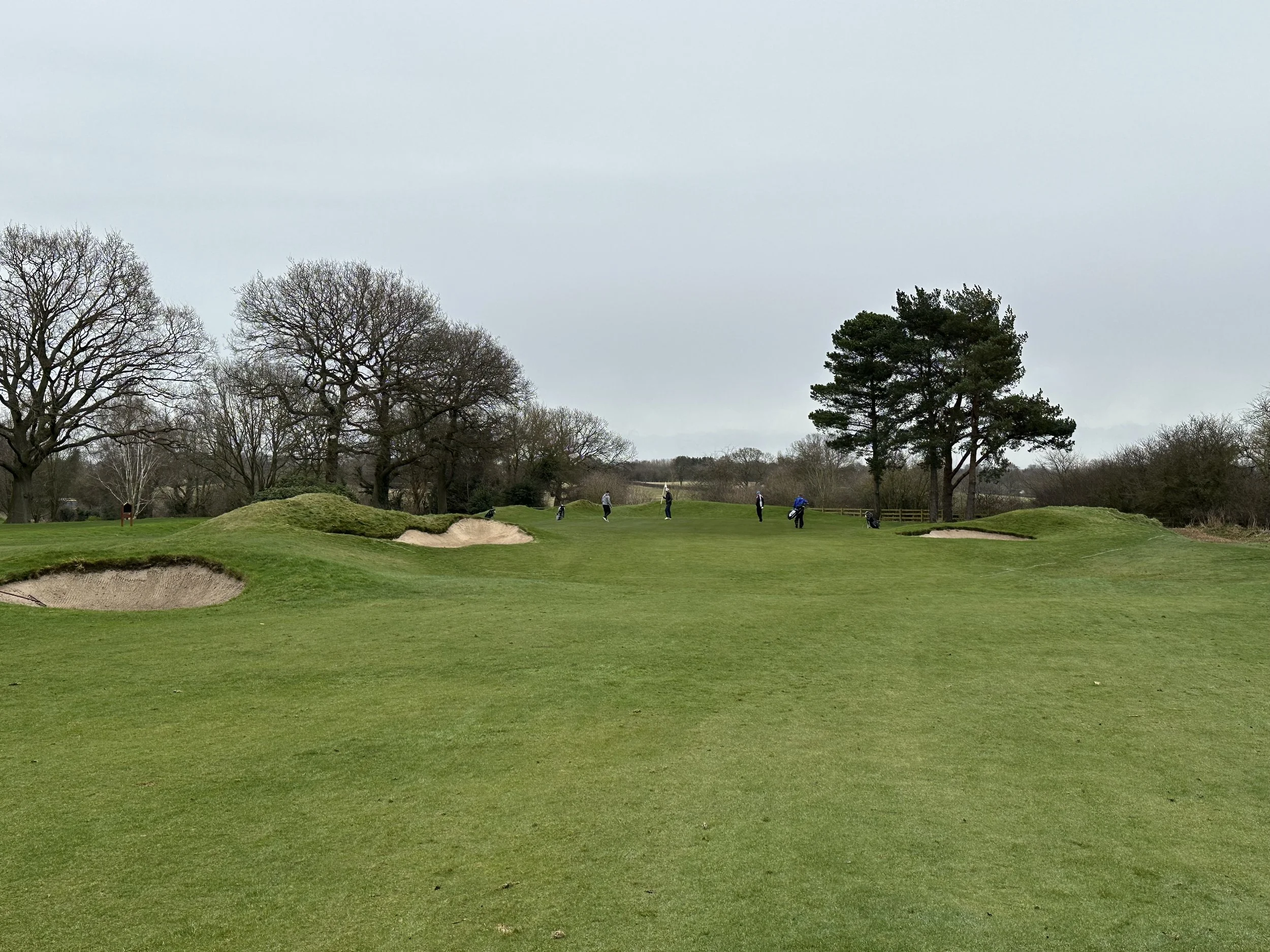
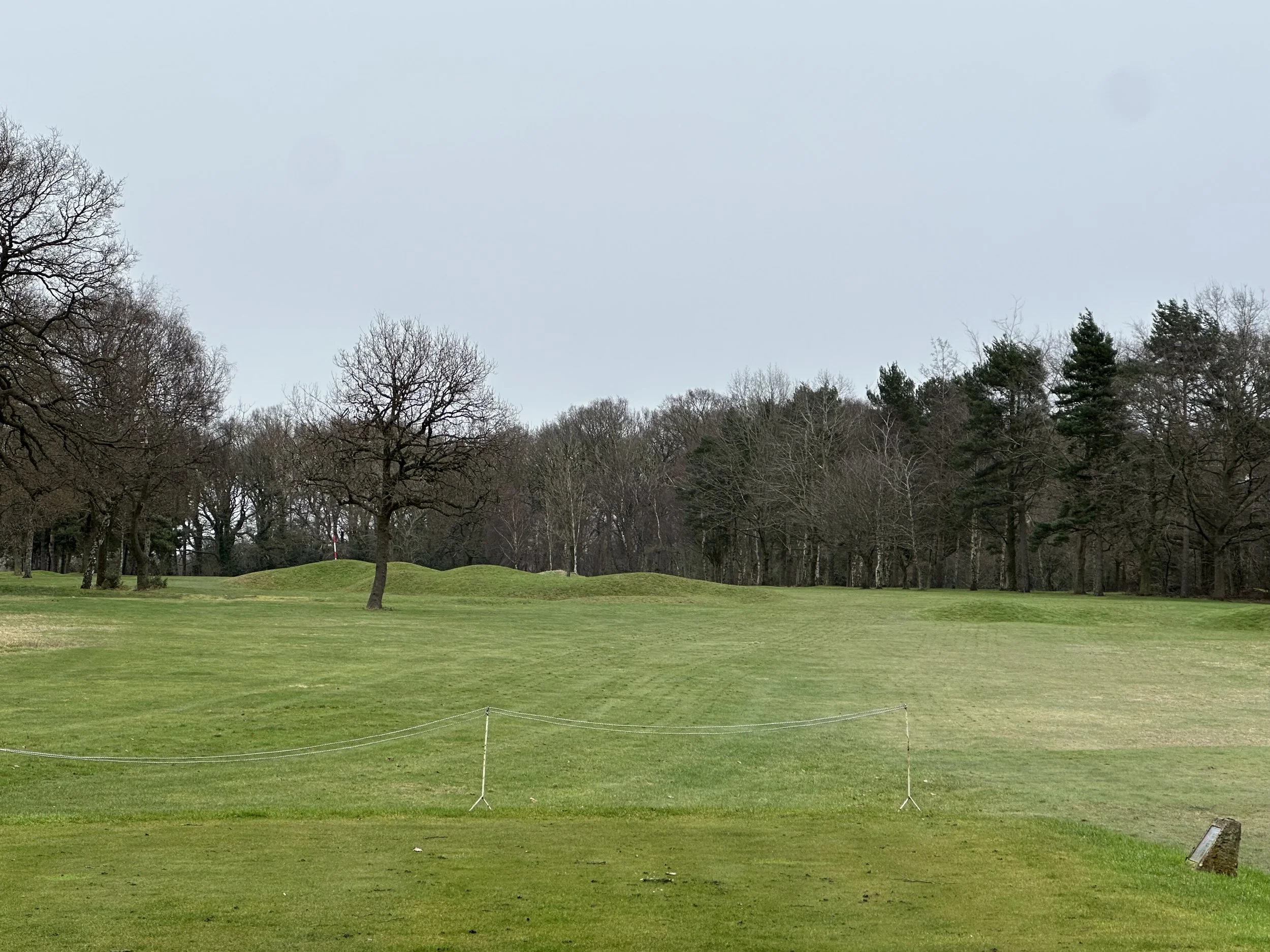
Above: a comparison of MacKenzie’s 17th at Harrogate and the current one, followed by an assortment of images of compelling mounds guarding greens and crossing holes at various angles
Other Highlights in Golf

All-time day.
Kington on a calm Saturday night with no one else around save the sheep. It was the driest and slipperiest course I’d ever played (Pennard the next night tied it), and as such I was bouncing multiple shots into every green. Joyful and thrilling. A top 5 all time golf experience and the very thing that most stirs my soul
Pebble Beach with my Dad. Saving this as a shared experience with the person who introduced me to the game was the way to go. I’ll never forget the chills I felt as he gave me a rare fist bump as we walked off the first tee. Also a top 5 all time golf experience.
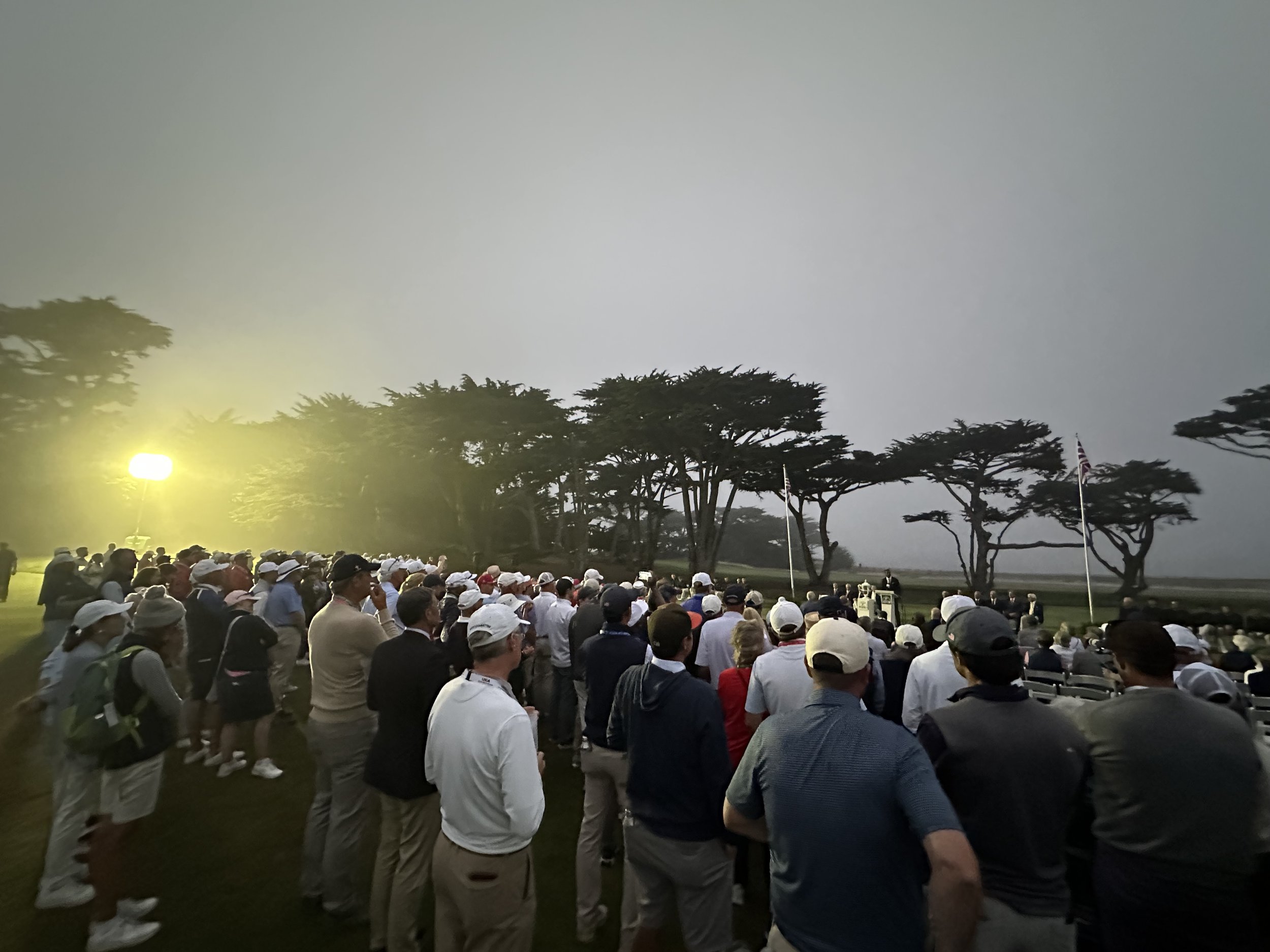
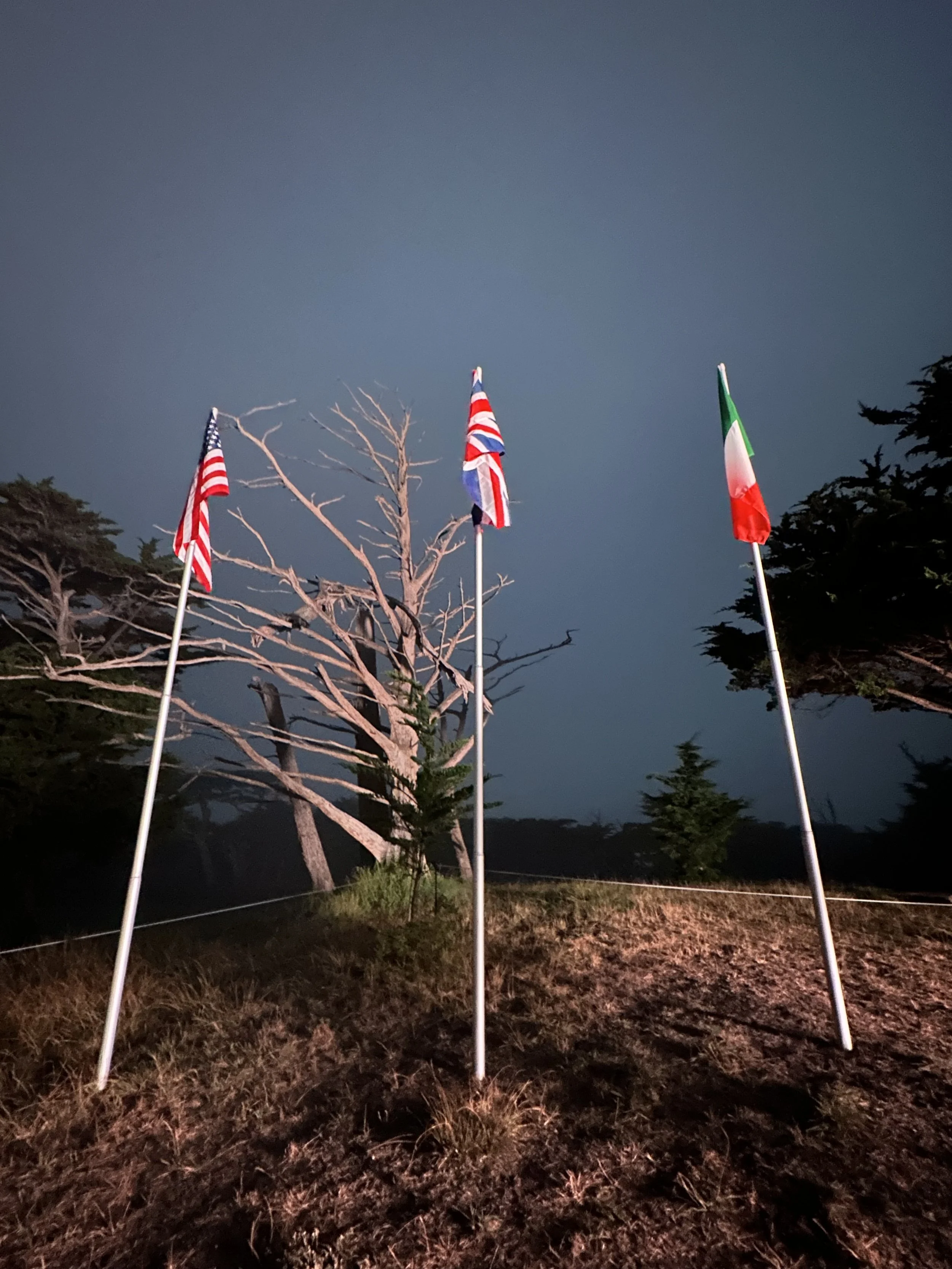
The Walker Cup. I can’t believe I was on the fence about attending for so long. Between the setting, seeing how such great players strategically approached the course, and all the great friends and colleagues also wandering the grounds, it was a top 10 all time golf experience, if not top 5.
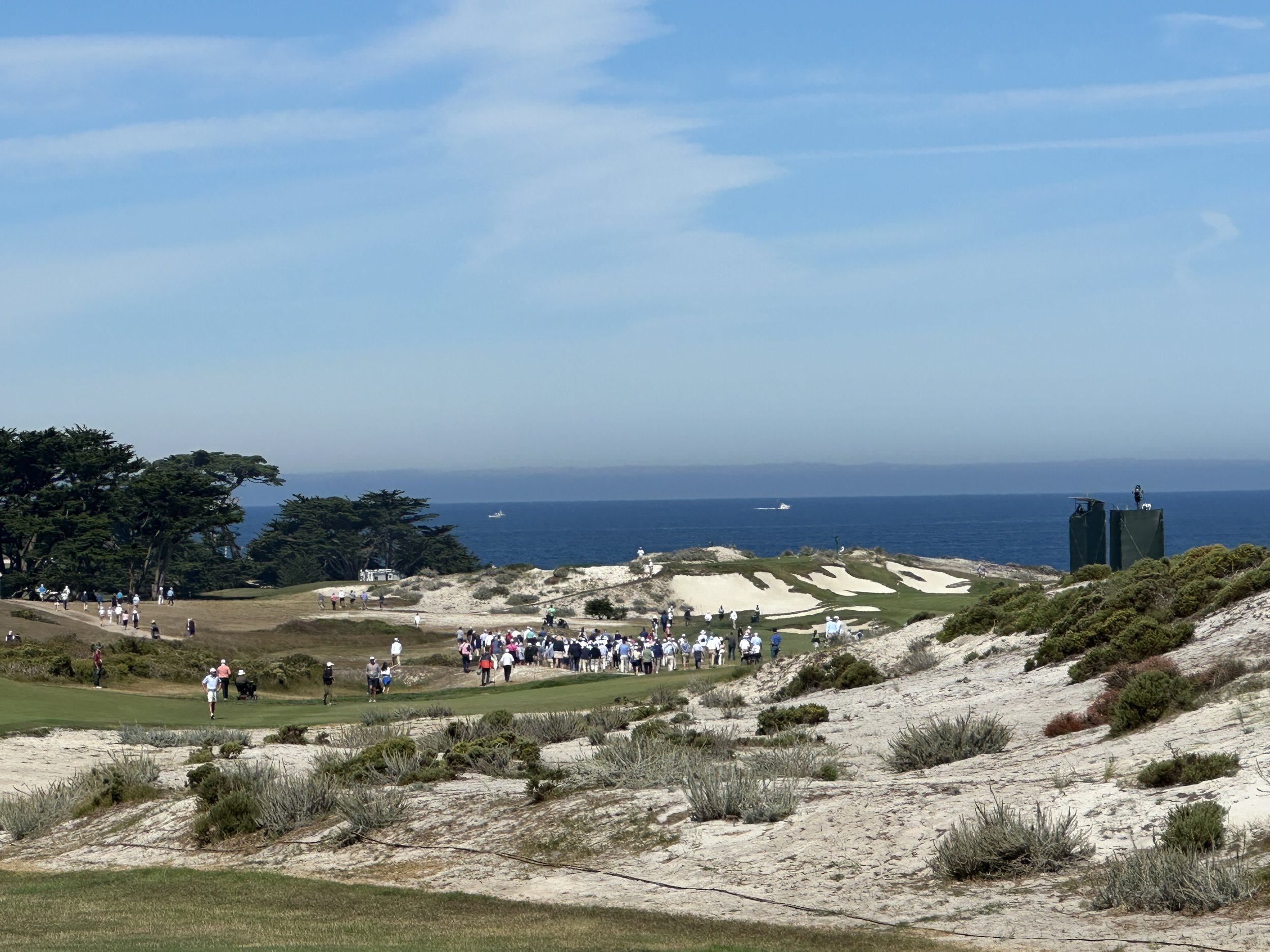
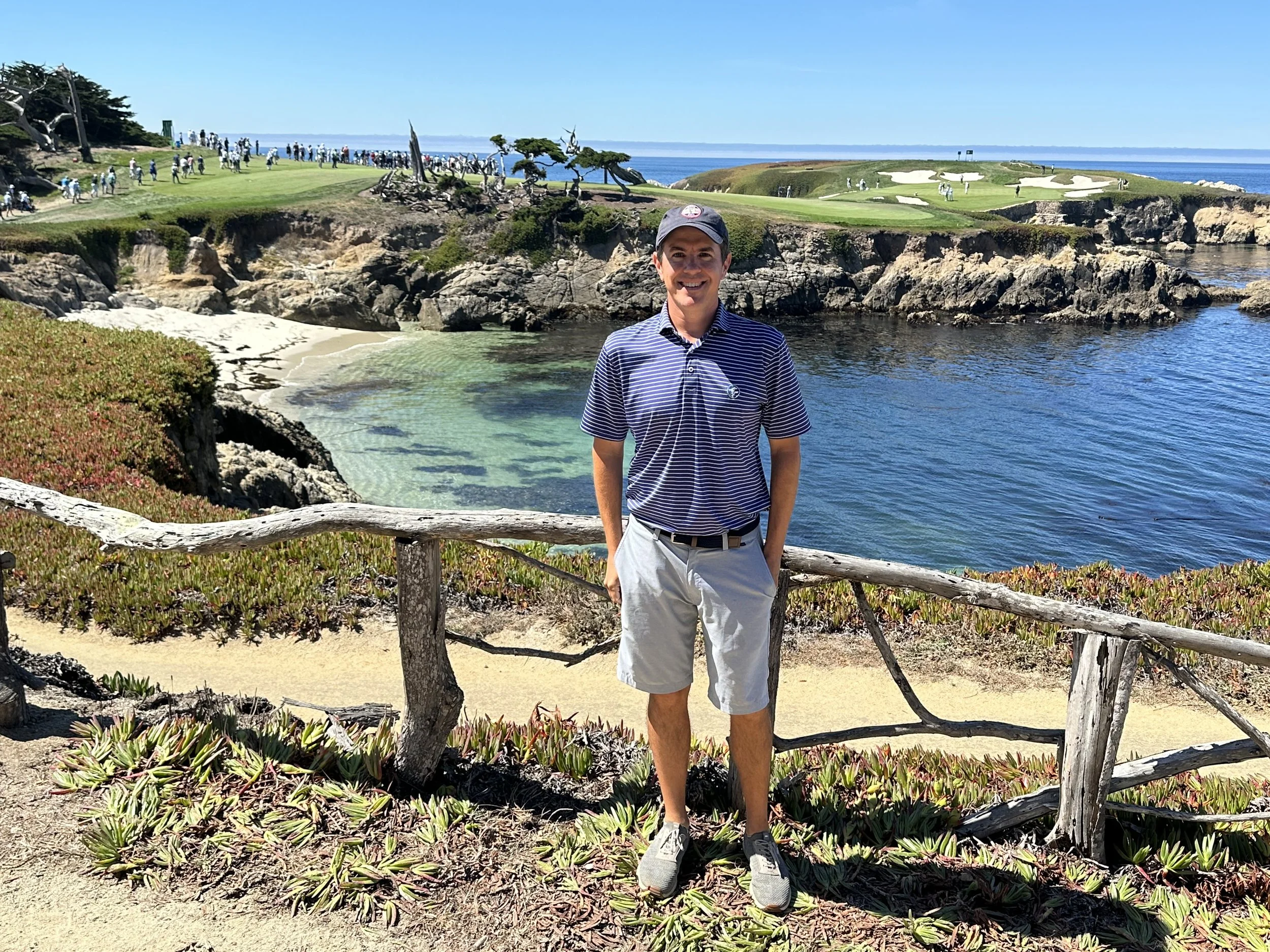
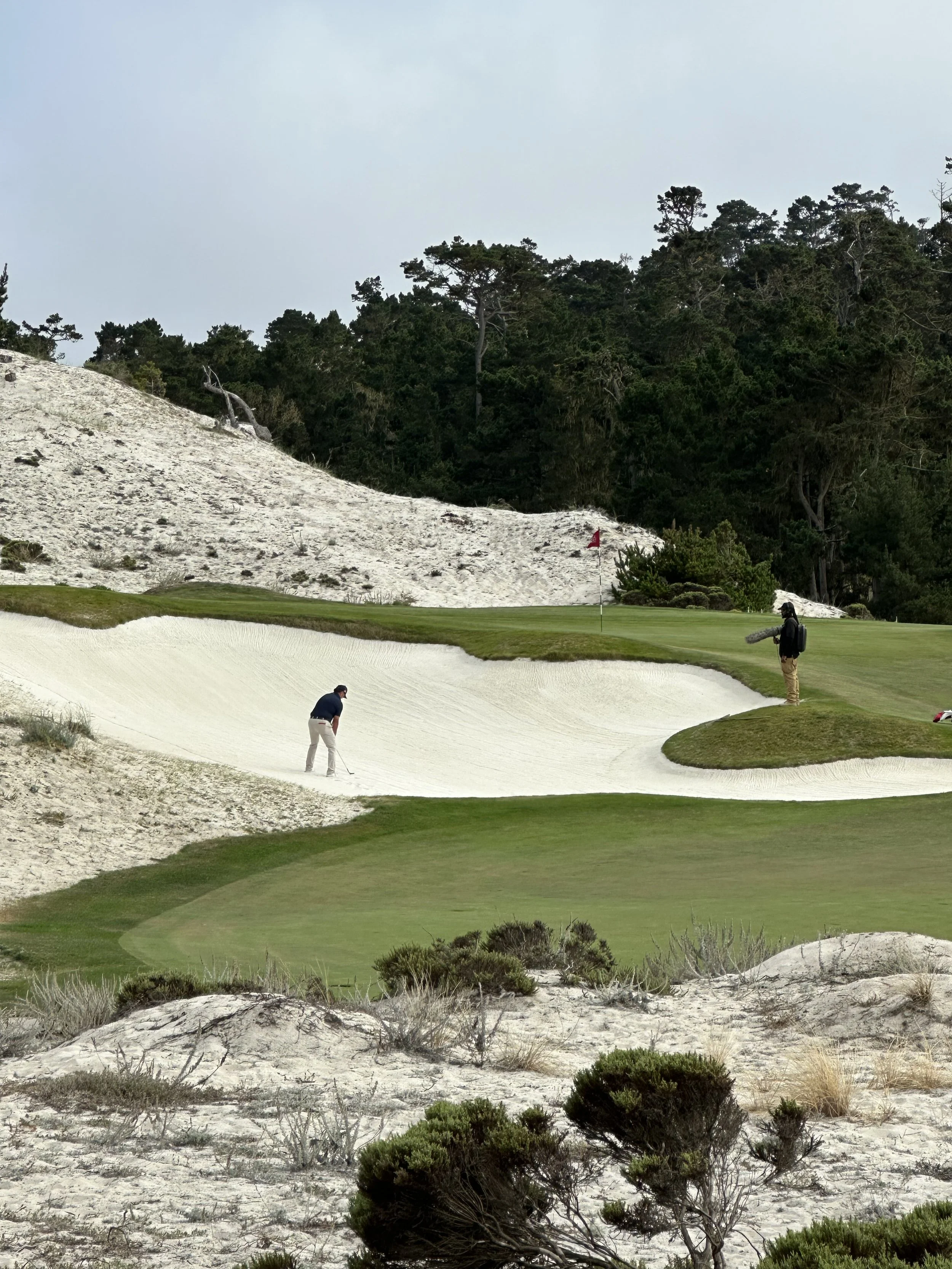
Having tea with Philip Truett and viewing what must be the world’s most impressive golf library. Philip’s house is, appropriately, just about on the Walton Heath property and all its deep history. I just got to scratch a small bit of the surface of his collection ranging from top club histories to various old architecture writings to the borderline surreal. In that latter category, I got to see the oldest known printing of the word ‘golf’ as well as Alan Robertson’s book that he owned, complete with his name written in it to indicate possession. This was a big deal for Robertson to own a book, as it was unusual for artisans such as he to own them (or much anything at all). I asked if I could hold it, and when I did, I was overcome with a number of emotions, feeling a tangible connection to a man who is arguably the oldest known golf legend of such lofty stature and the primary widener of the Old Course corridors. I’ll never forget those feelings.
A warm calm Sunday night with the last tee time at Pennard, a most surreal and heavenly setting. Almost as good as Kington the night before.
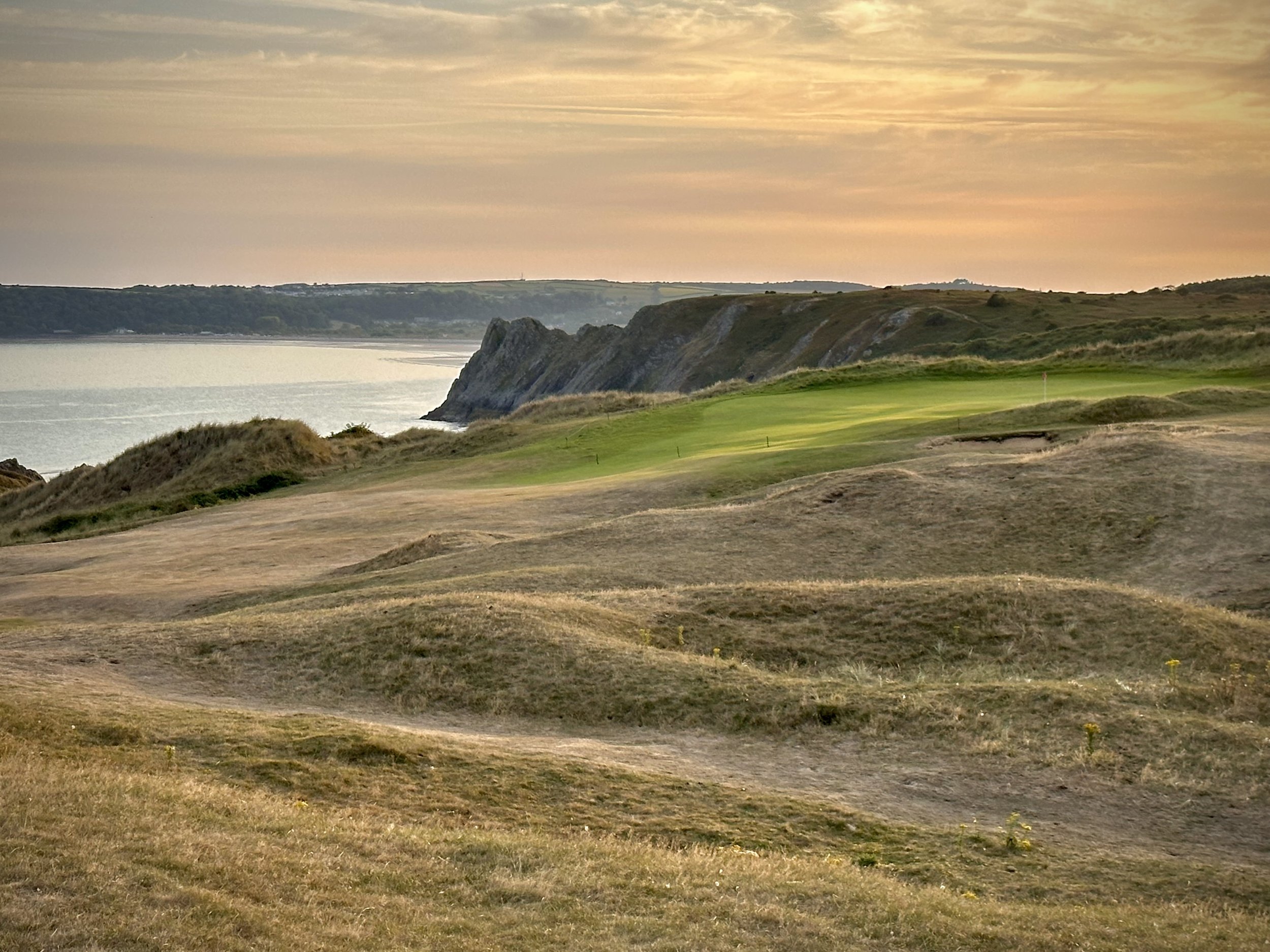
Pennard is as amazing as it looks and thensome.
Finally walking National for the first time, a quiet warm October day making it all the better.
Getting to know Robin Hiseman while touring around Wentworth East. There’s glimpses of Colt greatness still out there; they’re trying to bring back what they can at the moment.
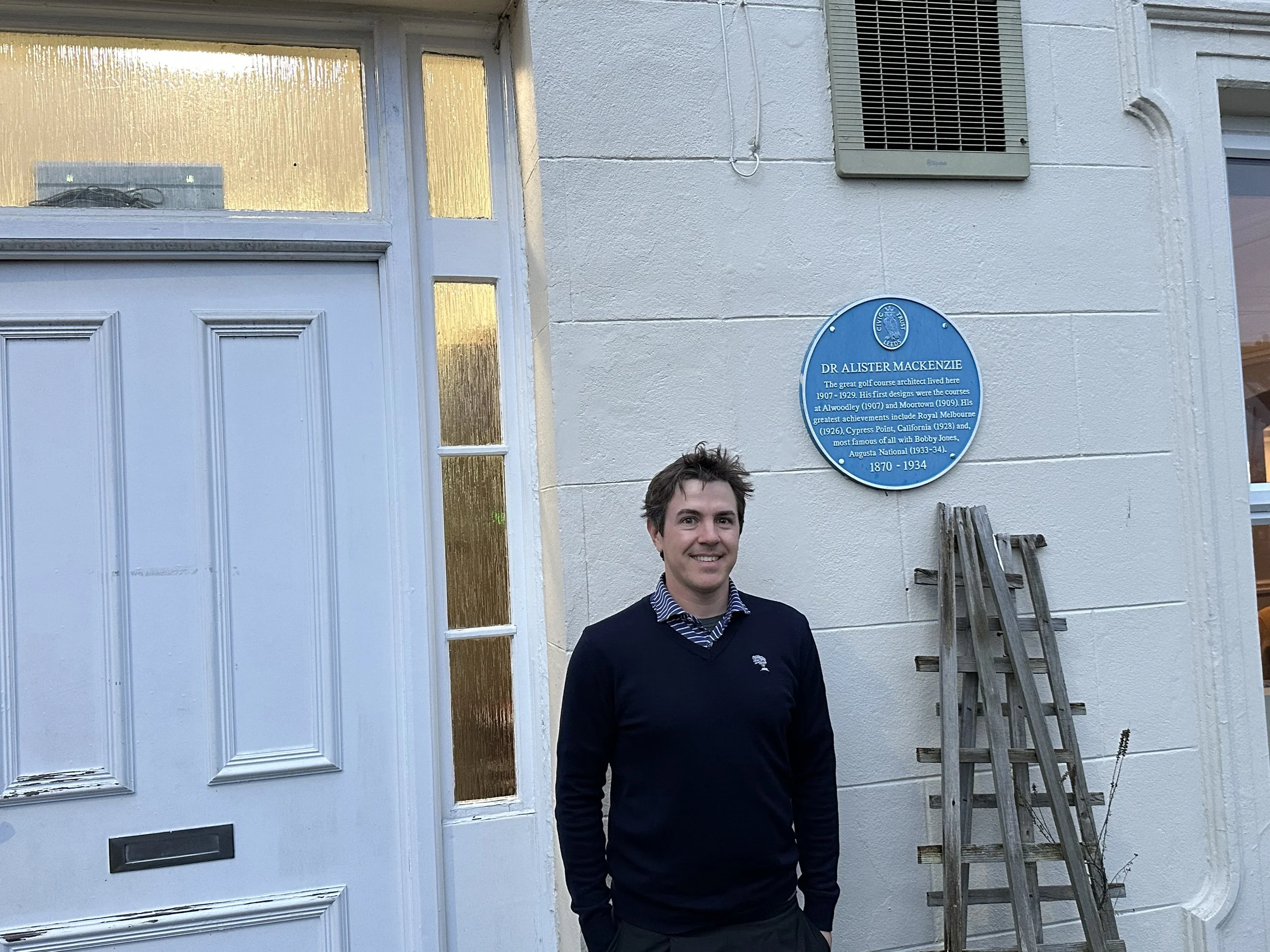
Don’t mind the hair—it was a wild one that day!
Visiting MacKenzie’s house in Leeds after a walk around Alwoodley. ‘Twas neat to come full circle on the Doctor’s lodgings after having worked in the shadows of his final home at Pasatiempo.
SF Golf Club with Jason Bruno. Totally happenstance after running into Jason and meeting him for the first time the night prior at the Walker Cup.
Lake Merced with Ryan Noades, Joel Stewart, and Martin Sheppey. I’d known Ryan for a bit from my London travels and talking about the details of his work at Addington, so it was cool to have him here in my hometown to talk about some of the details of my work pitching in with the Hanse team at Lake Merced.
The Sacred Nine with Philip Winter. Actually made it around twice this time. Still love this course, and Philip was great company talking about all the many things we value in golf.
First round playing Poppy Ridge with the architect himself Jay Blasi before anyone else could show up on a misty summer Sunday morning.
Witnessing the Welsh Ladies Team Championships at Clyne and a completely different standard of ‘acceptable.’ How many other nationally sanctioned events get interrupted by sheep and wild ponies crossing the 18th fairway?
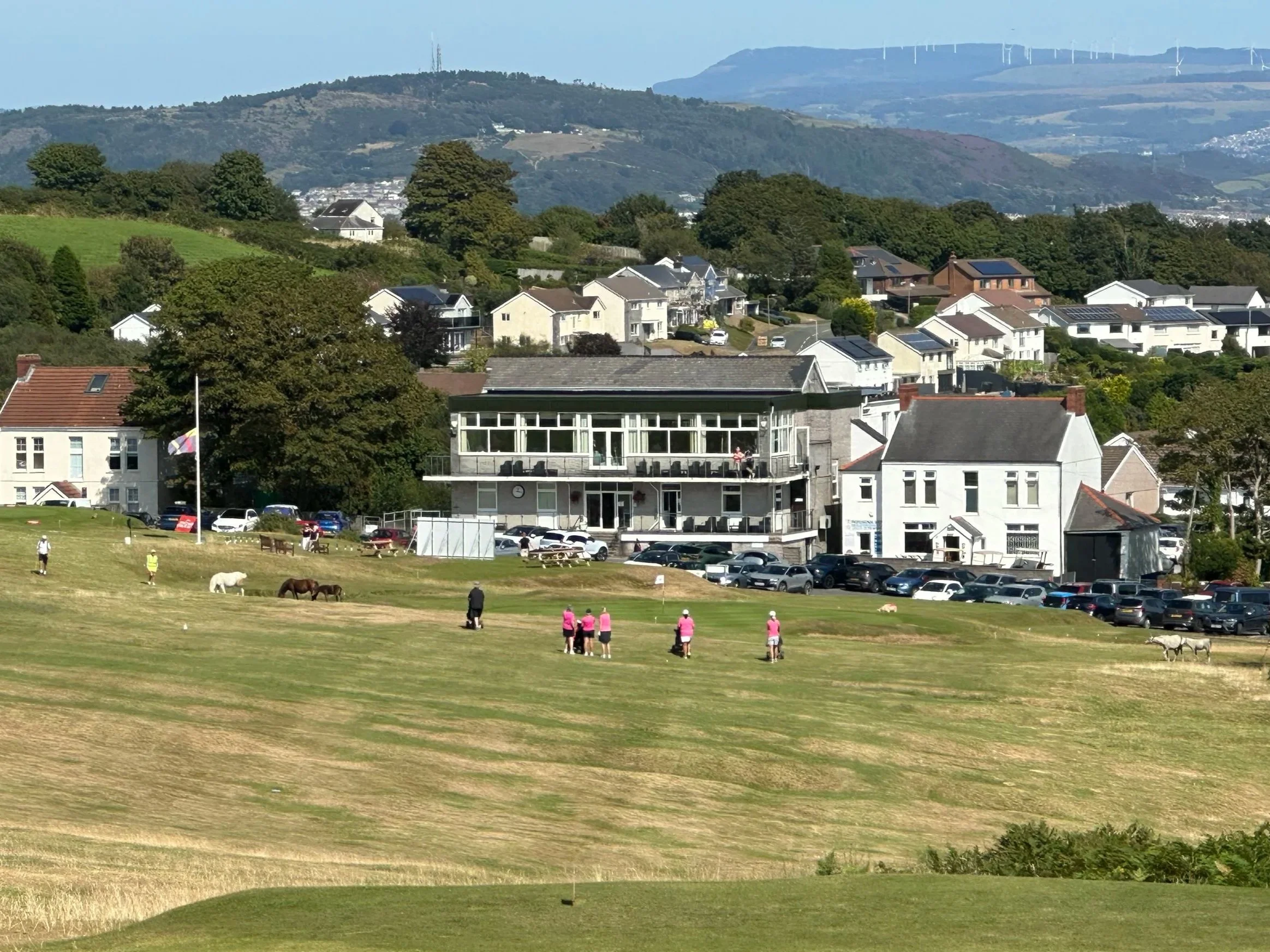
The ponies and sheep temporarily hold up play at the Welsh Ladies Team Championships. Can’t imagine American golfers’ tolerance for such.
Meadow Club with Mike and Sean Woods. Did my best to keep up with these pros (literally) on a perfect early fall day, and got to go into the clubhouse to look at old pictures and memorabilia, which I had (amazingly) not yet done before.
Northwood with Will Carlson and Trevor Schaap.
Pasatiempo (at different times) with Andrew Harvie, Joel Stewart, and Matt Murphy (and his crew)
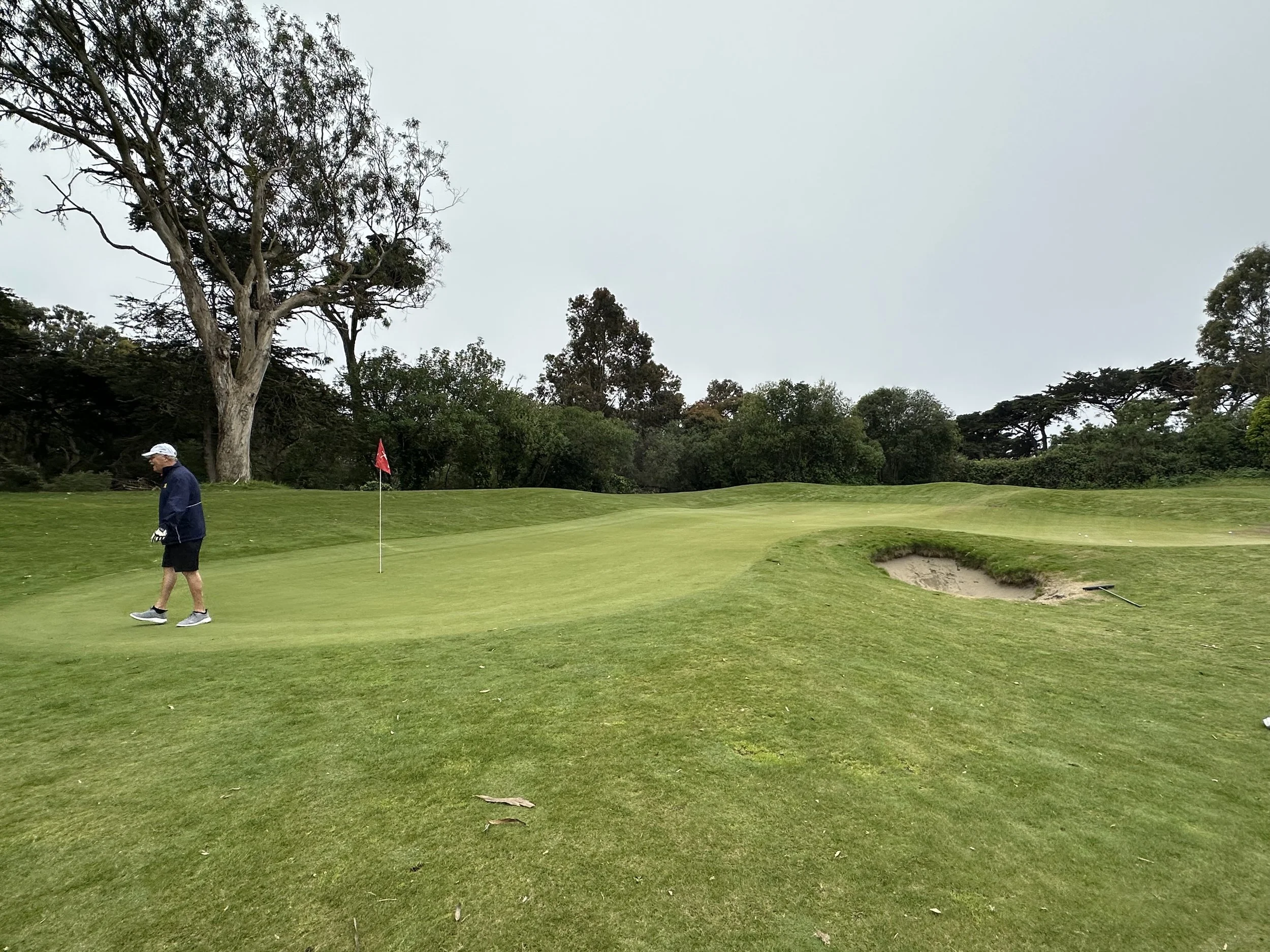
My dad having some fun on the boomerang 7th at Golden Gate Park
My dad getting to play some stuff that I shaped for the first time at Golden Gate Park and Orinda.
Quick evening rounds in the dark after work at Northwood. Not that much light in late October when trying to do a project in a week’s time, but still worth a 30 minute 5 hole blurry-vision loop at such a majestic setting.
Playing the MacKenzie Tournament at Sharp Park as part of the ‘Jay Blasi Memorial’ 9-some. Really fun group including area industry friends and some new ones I had yet to meet.
Getting my little dude on the golf course for the first time. It was even better sharing it with my dad, who first brought me onto the course at an age only a year older than my son’s.
Range sessions with the same little dude. He’s a grinder. Upon finishing the second large bucket: “We need to get more balls now.”
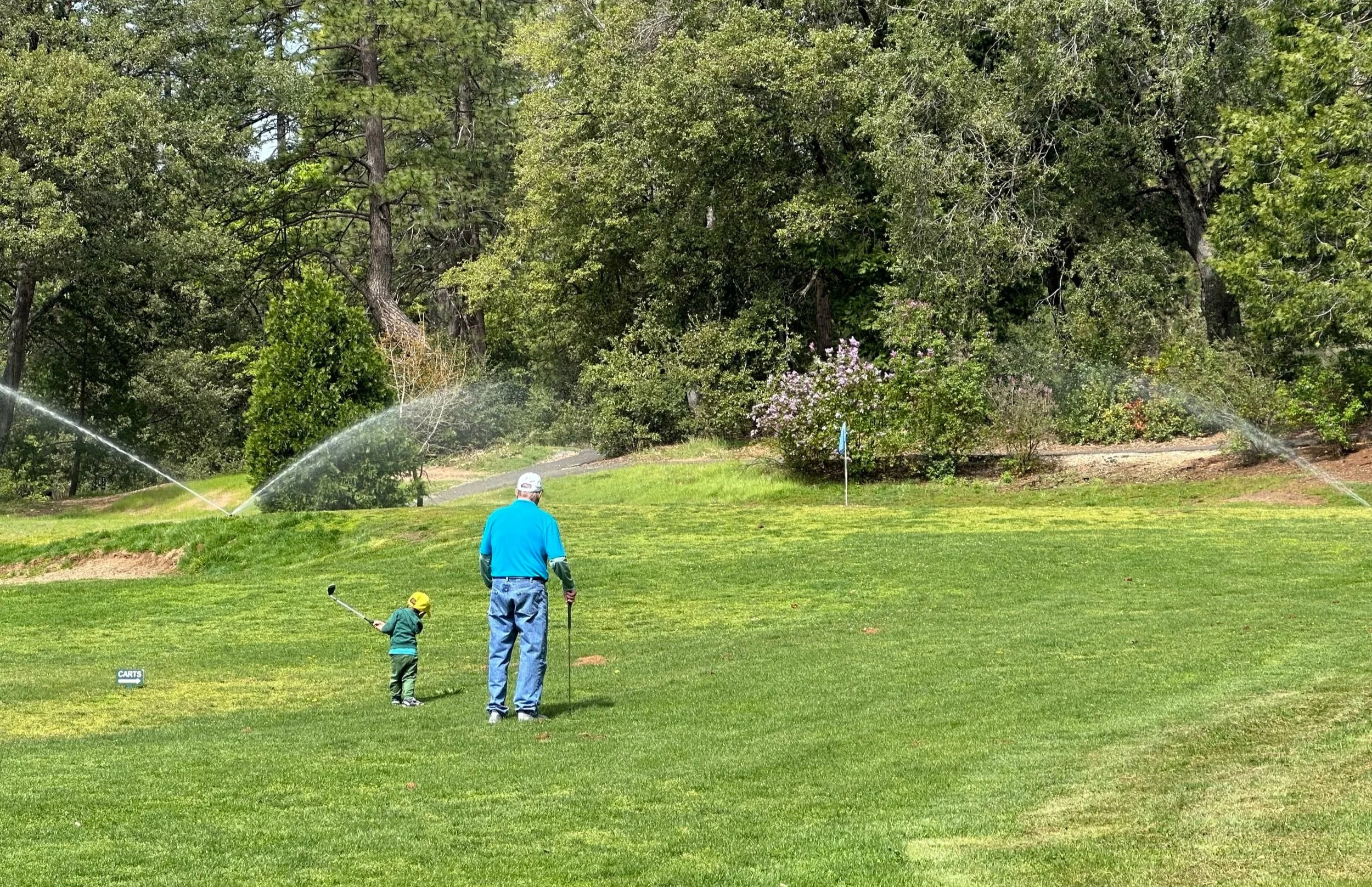
My adjacent generations, the younger with his first experiences on a real course
Who I listened to…
A good year with some new favorites discovered and solidifying a few favorites from recent years.
Albums

Big Besnard Lakes year…
1. “A Coliseum Complex Museum” —The Besnard Lakes
2. “Waiting for Something to Happen” —Veronica Falls
3. “The Besnard Lakes Are The Ghost Nation” —The Besnard Lakes
4. “I Quit” —HAIM
5. “Javelin” —Sufjan Stevens
6. “When Horses Would Run” —Being Dead.
7. “Natural Pleasure” —BRONCHO
8. “The Besnard Lakes Are The Dark Horse” (second half) —The Besnard Lakes
9. “From the Pyre” —The Last Dinner Party
10. “Circulatory System” —Circulatory System
11. “Veronica Falls” —Veronica Falls
12. “The Cosmic Selector” —Lord Huron
13. “Face to Face” —The Kinks
14. “Travel in Cycles” —Worries and Other Plants
15. “Science Faire” —The Apples in Stereo
16. “Thanks for That”—Steph Green
17. “Rides On” —The Nude Party
18. “Purple Mountains” —Purple Mountains
19. “Neon Grey Midnight Green” —Neko Case
20. “The Scholars” —Car Seat Headrest
H.M. “Bowerbirds and Blue Things” —Jetstream Pony, “Want” —Esther Rose
Other Bands and Songs
“Do You Miss Me Darlin?”—The Guess Who, “Two Characters in Search of a Country Song”—The Magnetic Fields, “Ballad of the Last Payphone”—The New Pornographers, “Bury Me Happy”—The Moles, “Changin Me”—Worries and Other Plants, “Guy Fawkes Tesco Disassociation”—jasmine.4.t, “You Can’t Break a Broken Heart”—The 6ths, “Venga Ese Sabor”—Grupo Kual, “80s Men”—Bummers, “Jennifer”—Faust, “Needles in the Camel’s Eye”—Brian Eno, “Harness Your Hopes”—Pavement; The Ladybug Transistor, The Proper Ornaments, Nation of Language
Other Highlights Not in Golf
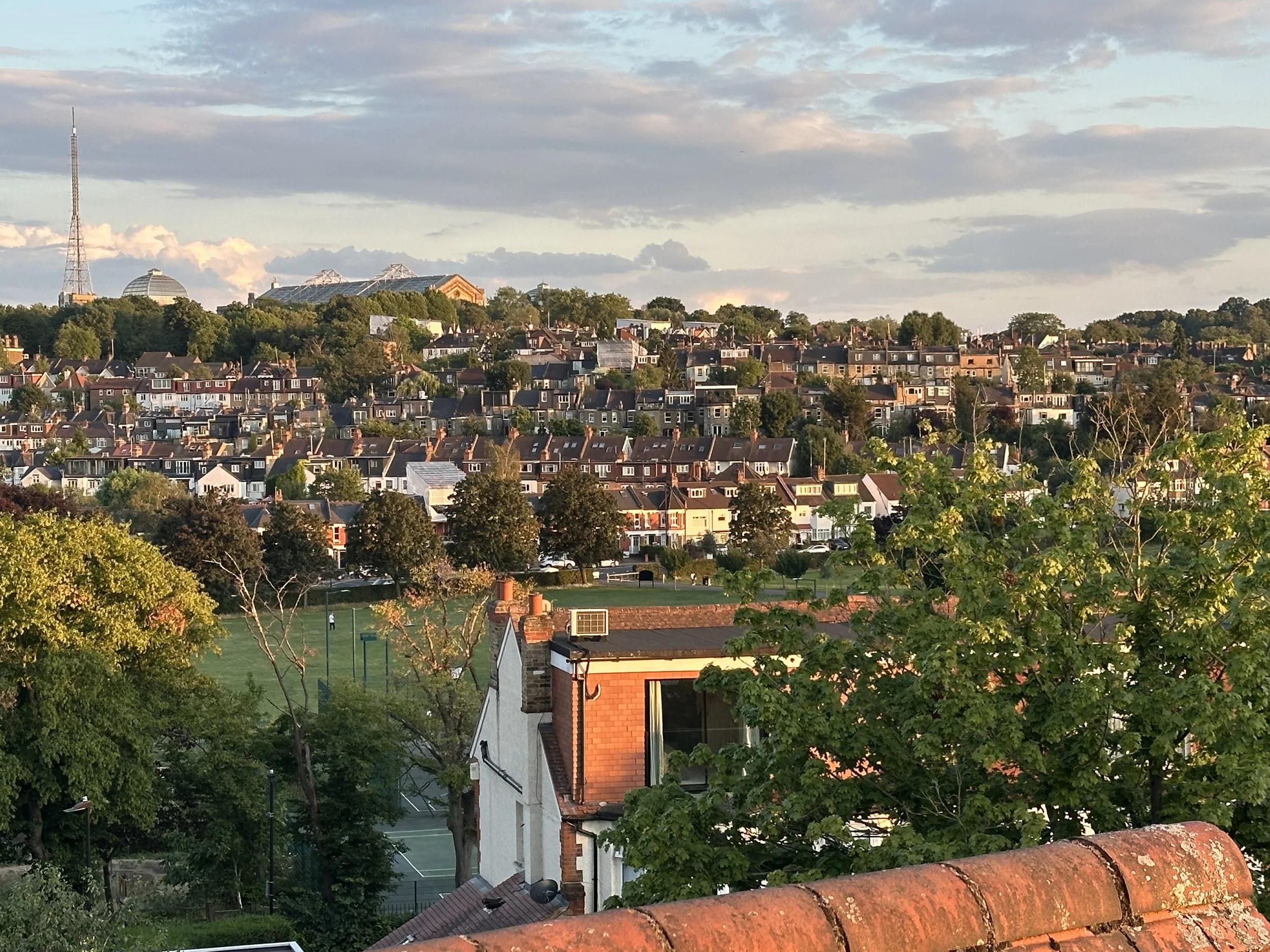
Lot of nice evening views our from our lodgings in Muswell Hill
In no particular order…
“Papa” coming to stay with us in London while working at Hadley Wood. Finally made it to Windsor Castle, and we also snuck away for dinner just the two of us one night to dine at the spot of The Kinks’ first live concert in Muswell Hill, complete with a room dedicated to them and local frontman Ray Davies.
Catching a game at Portman Road and exploring Ipswich before and after. My favorite overall EPL experience thus far. The stadium is intimate, packed, and constantly active in song, and the town has all the narrow winding streets and eclectic old architecture that I crave. It’s also amazing that this agrarian old town of around 100,000 people could field a team playing in one of the wealthiest and most popular professional sports leagues in the world. Promotion and relegation is cool.
Portman Road, home of Ipswich Town FC
Ipswich streets
Driving around the New York Metropolitan Area and soaking in the fall colors to moody tunes. I miss Real Fall.
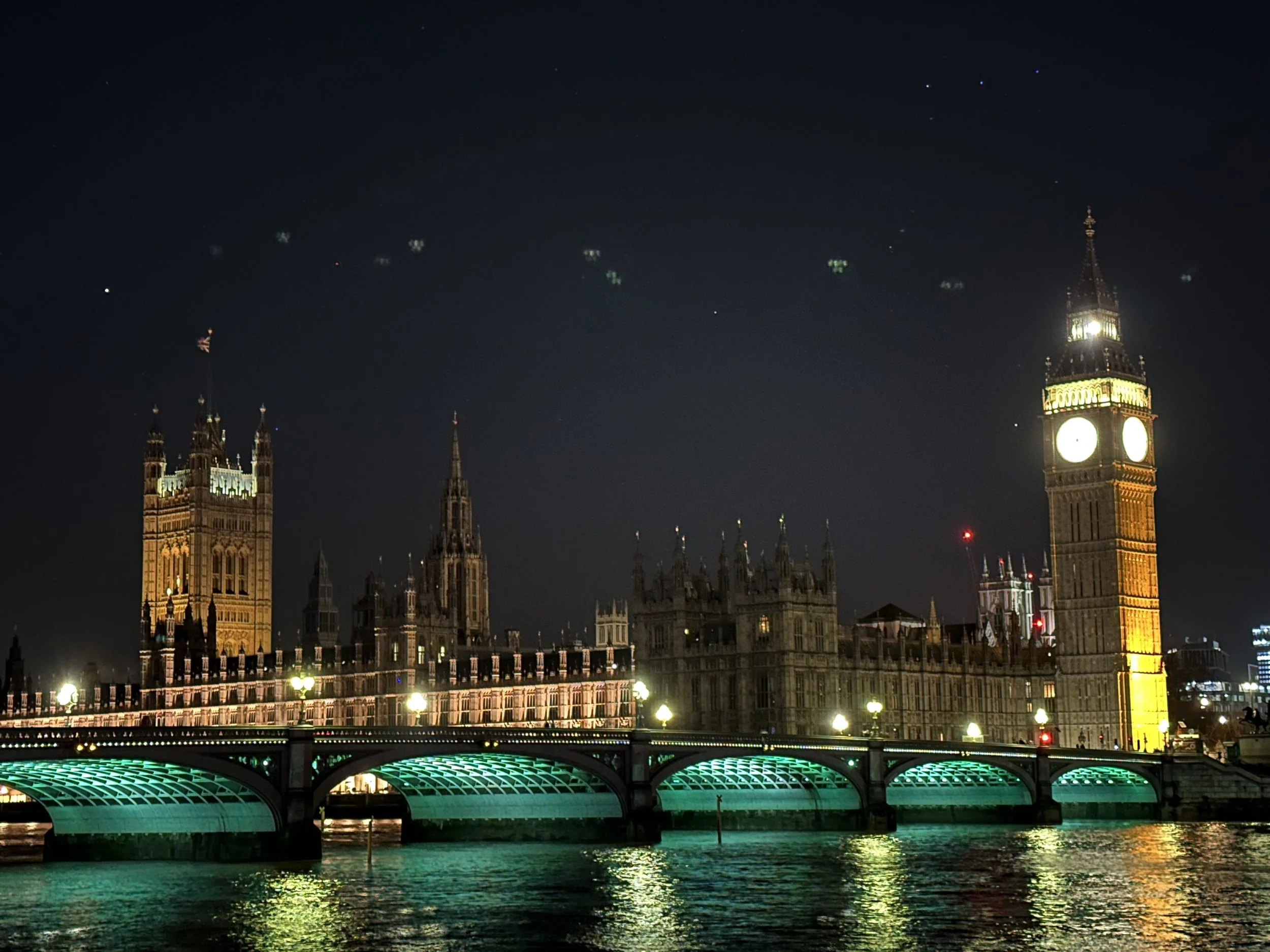
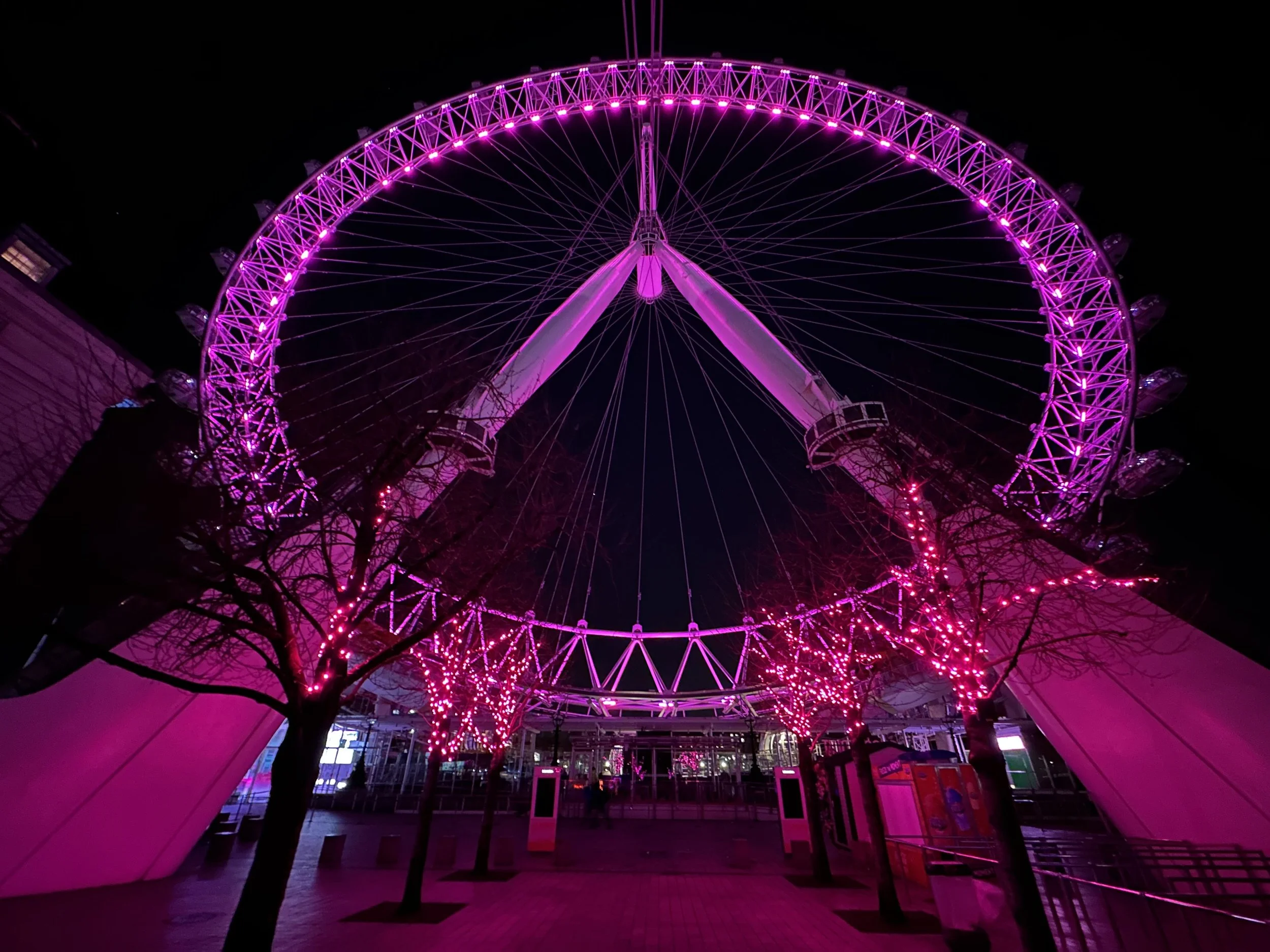
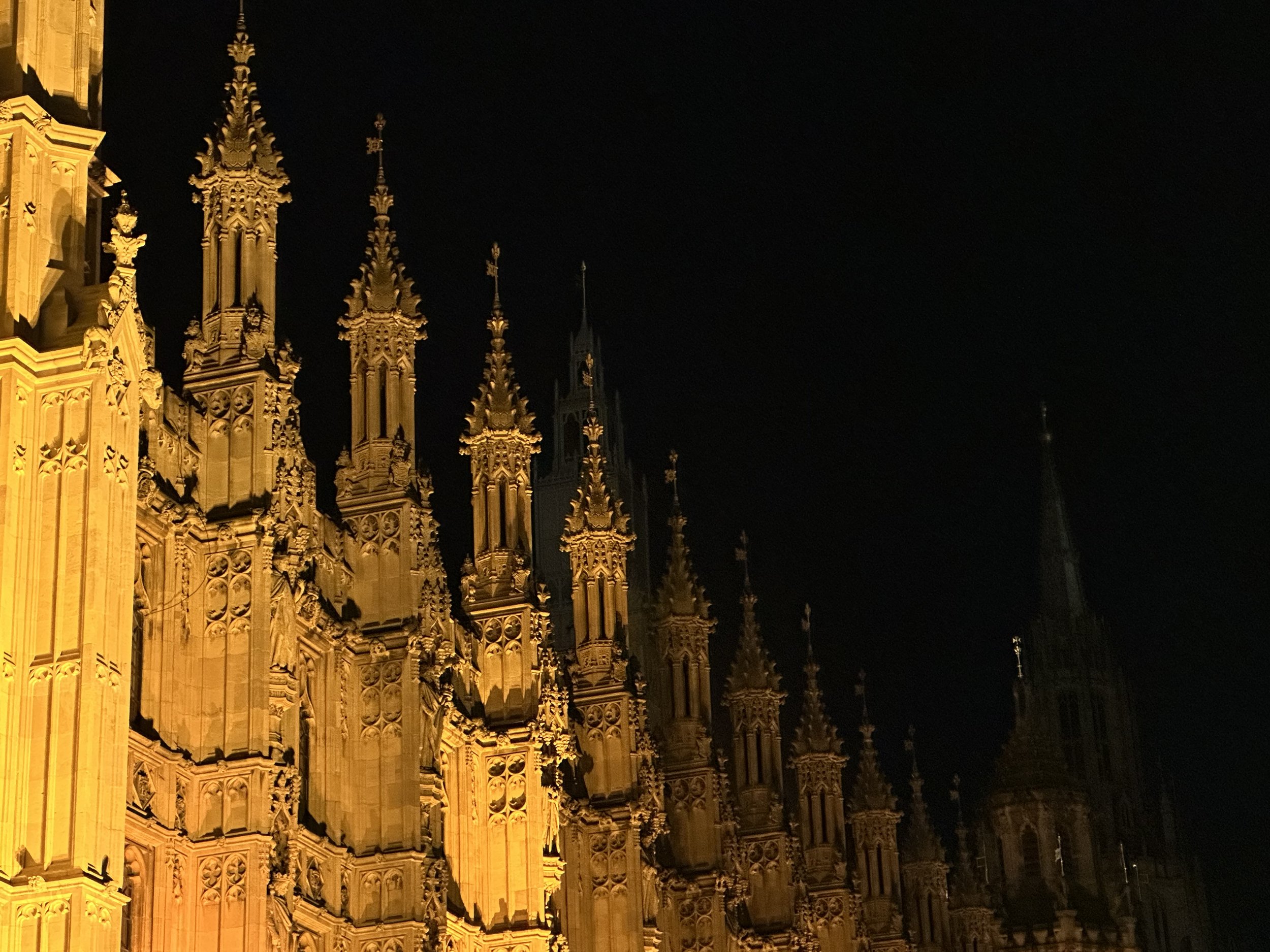
Solo wanders along the Thames in London, complete with dim sum and Korean BBQ. Did it once in the winter and once in the summer. Despite bleak cold, the one in the winter was more special, as there was nary a tourist out in the late cold hours.
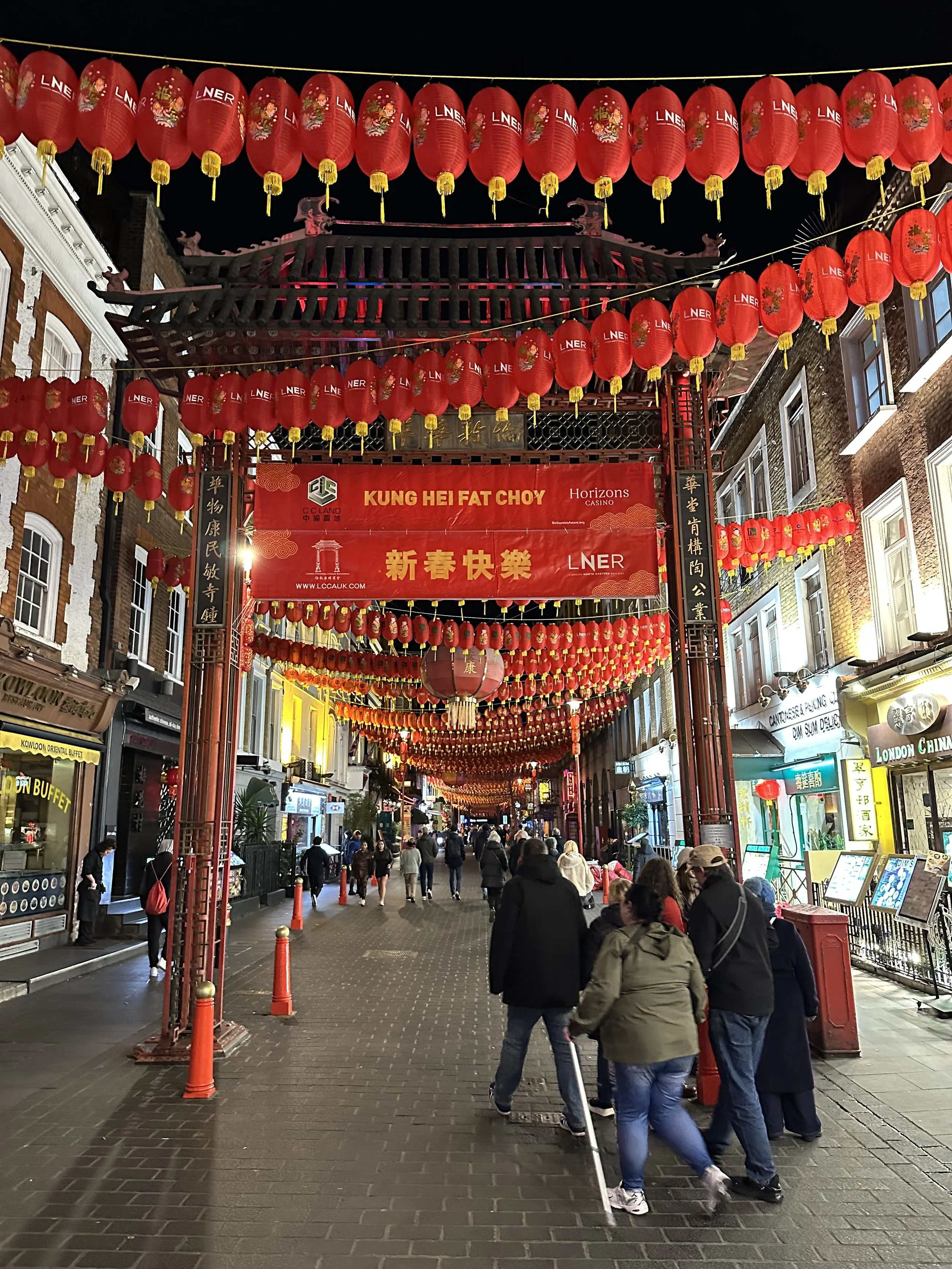
Kids first Red Wings game in San Jose. After a day at the beach, naturally. Cali life, amirite?
Stamford Bridge for “Monday Night Football” and a cross town Derby with West Ham. I’m not the biggest Chelsea fan by any means, but I’ve got to give props to their fans for their quick wits and songs flawlessly directed back at the visitors. Also, Stamford Bridge is a very cool and intimate venue for such a big club. Hope it stays that way, given what all the other big clubs have been doing with their stadia…
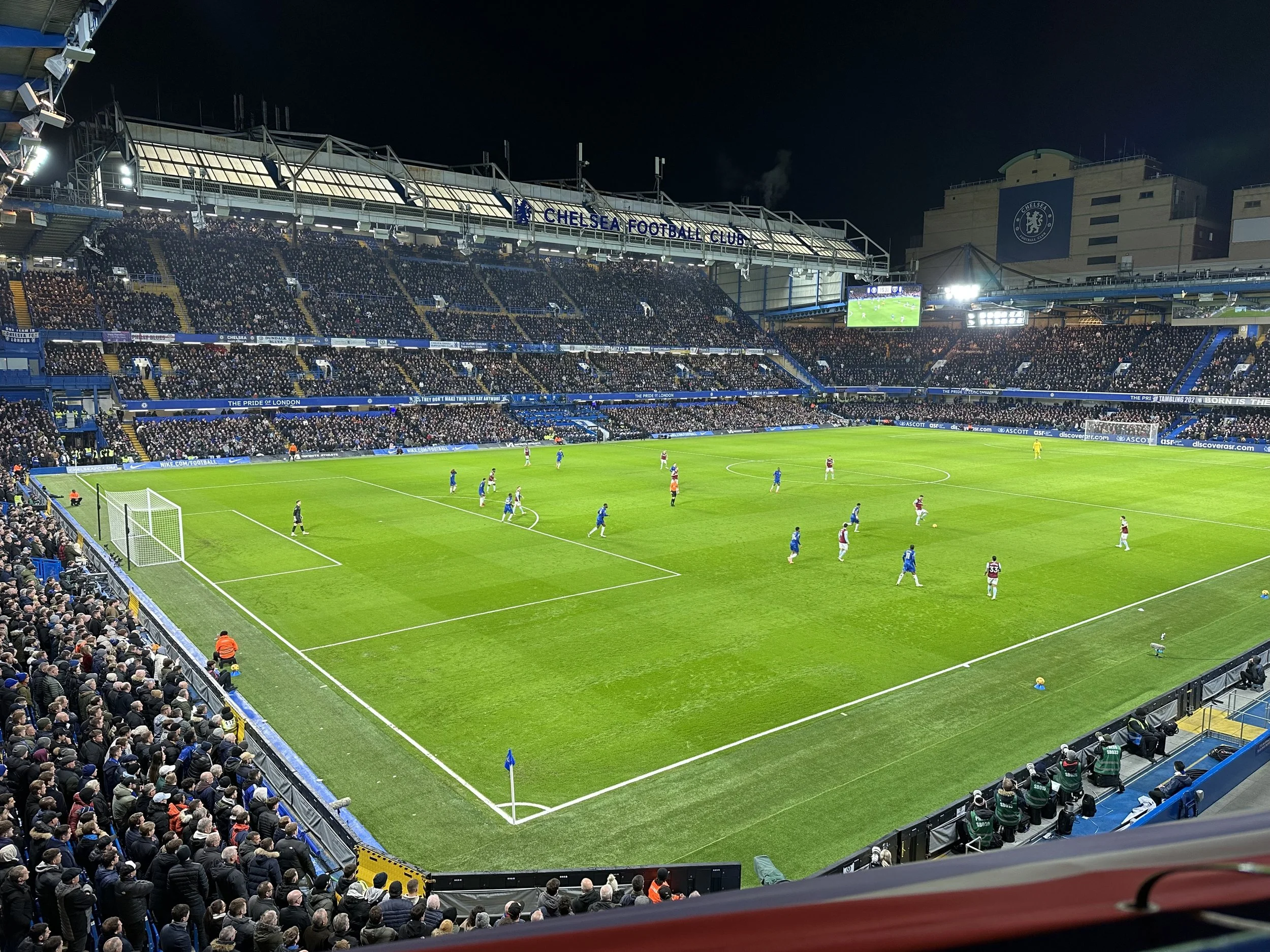
Few top end sporting clubs in the world where you can get a view of the pitch this close
Driving through rainbow squalls in and out of Lincolnshire cranking Veronica Falls. For being the flattest, plainest landscape in England, I sure remember a lot about this enjoyable drive and the evocative bits of architecture passed by.
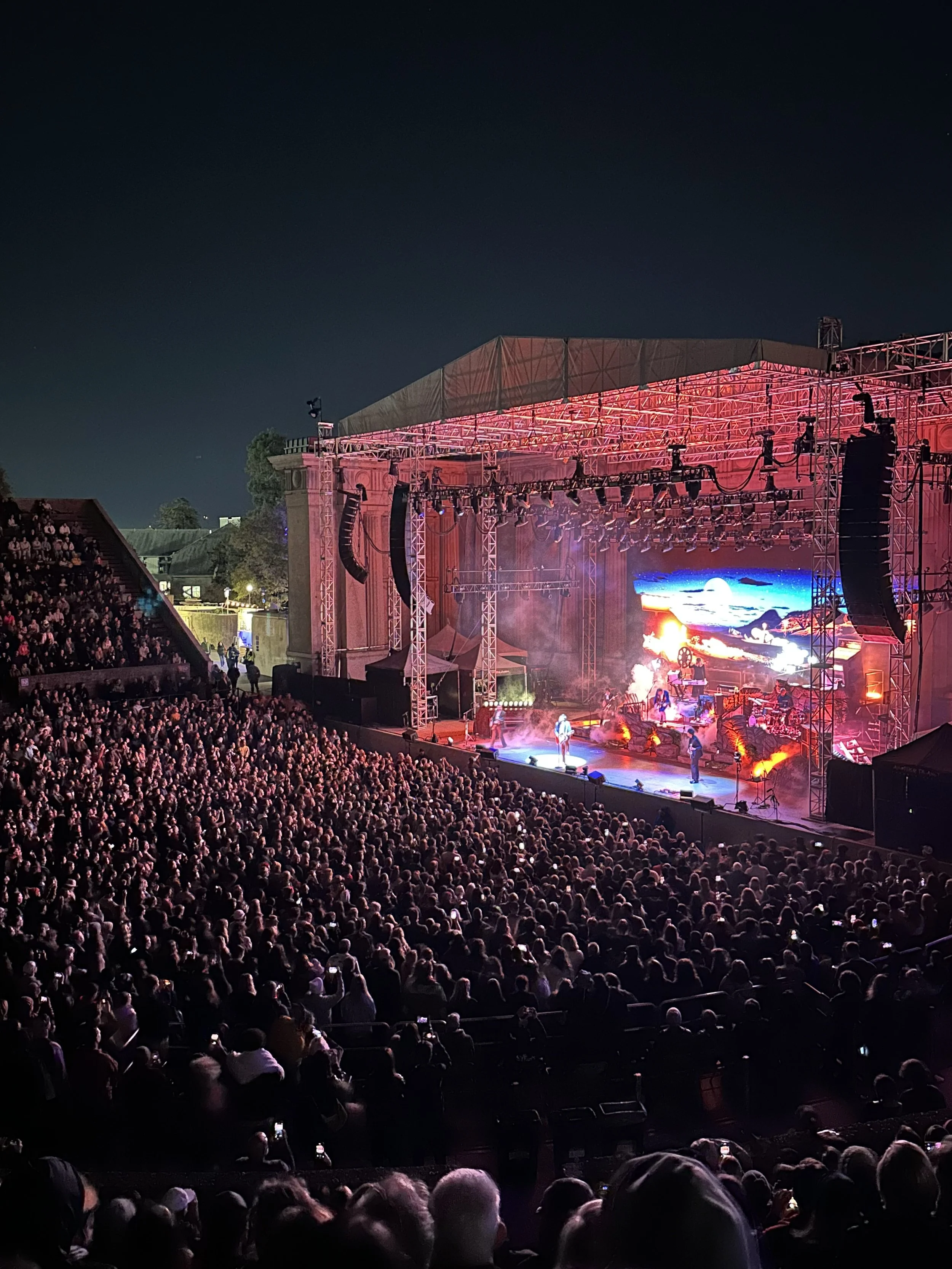
Cosmic Selection in Berkeley
Going to a rare concert with my bride and hearing our wedding song live—Lord Huron at The Greek Theatre. Part of the show was galactically themed for their latest album “The Cosmic Selector,” replete with mystical planets and shooting stars. At one point in the sky above the stage, we both saw a real shooting star, which took us a few moments of stunned questioning to confirm it was indeed real. Cosmic Selection, perhaps…
My kids with my cousins’ kids watching the fireworks on my Grandparents’ lake. It was like watching my own memories in real time.
Exploring Cambridge with the family. A town laden with eclectic old architecture and colorful fine details.
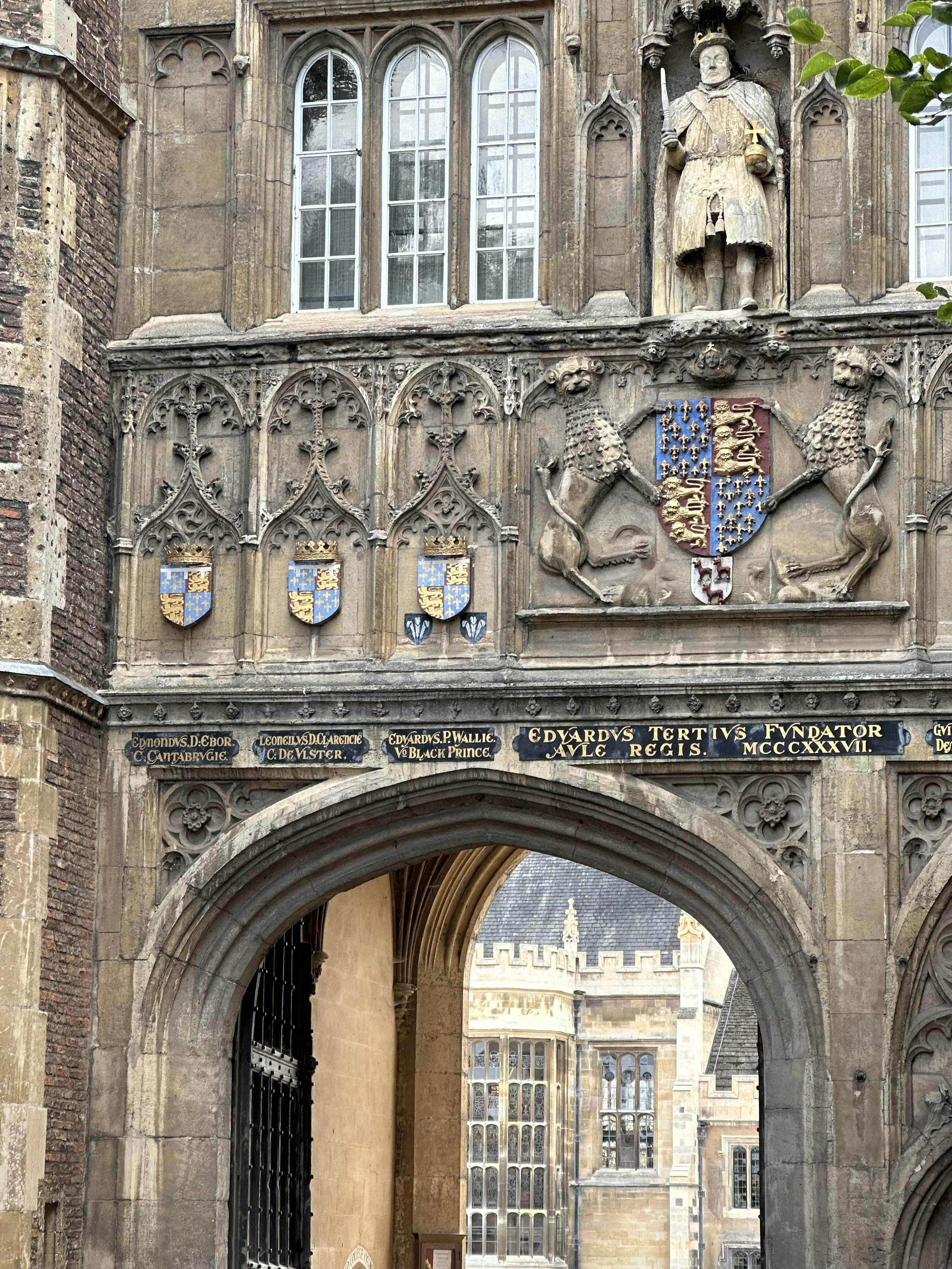
Cambridge and its world renown university—a collection of eclectic and colorful details.
Drives up and down U.S. 101 between Monterey and Paso Robles. That stretch of road is my happy place.
Having a leisurely walk around Horsham in Sussex before my afternoon round at Hankley Common. Courses were all full for the bank holiday, but no problem as that leaves time to explore old streets and architecture.
Popping into Villa Park for a Saturday match on the way west to Kington. It was a last minute decision, and I had to drive, so after finally getting parked I couldn’t quite make kickoff. However, this led to the sensation of hearing the crowd’s first chants and songs from just outside the stadium walls, which was an intense and chilling moment I’ll never forget. Seeing the colorful, ornate, gold-gilded facade of the old stand after the game was another highlight. They don’t make ‘em like that in our country! (nor theirs, anymore…)
The old original facade of one end at Villa Park
Villa Park actually feels like being in a park (because it is)
A word of thanks, and what to look forward to in 2026…
Thank you to all who helped on a project, let me join in on a project, welcomed me to your golf course, shared your time, teed it up with me, or entrusted me to begin a new design endeavor with you. The golf world is truly special and full of wonderful people.
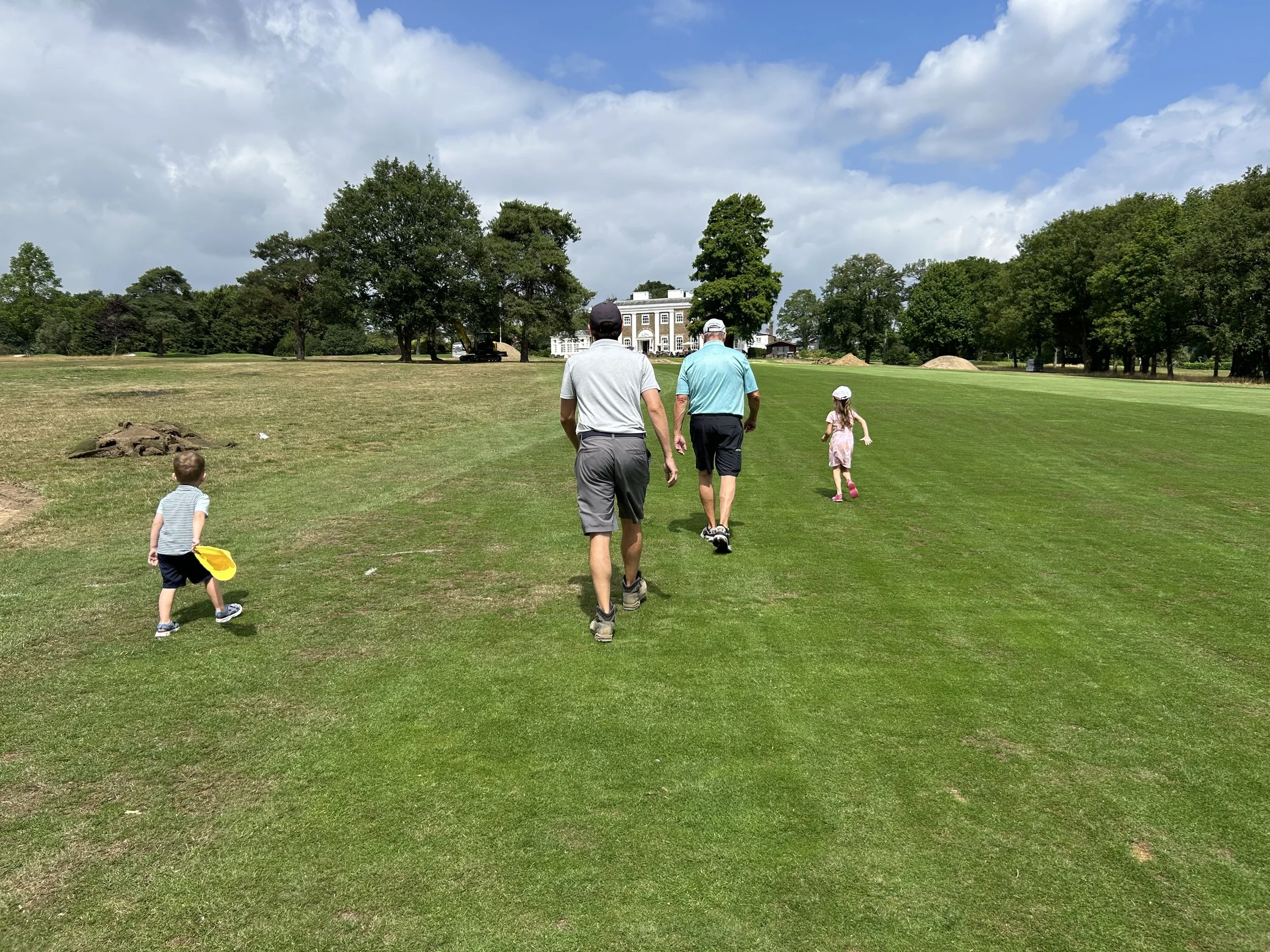
Onward from Hadley Wood toward 2026
Thanks again to the Mortons in Sacramento for continuing to work with me in finding the best ways to make Land Park and Haggin Oaks what they ought to be.
Thank you to shaper Lloyd Zastre and new superintendent Lonnie Dunn for your help executing a successful tee redesign project at Land Park.
Thank you to Gaylord and Trevor Schaap at Northwood for bringing me in to help out at one of the world’s great 9-holers, and thank you to Justin Schaap (as well as Trevor’s daily maintenance team!) for all your help on the tee project this fall .
Thank you to Santa Maria CC and Matt Murphy for bringing me in to look at your property and see what is possible there.
Thank you again to Clyde Johnson for letting me help realize your master plan at Hadley Wood. It was a lot of fun in a great place with great people. Thank you again to Peter Thompson for your constant help throughout. Thank you again to Warren Bolton and Profusion for keeping things moving along and keeping our work intact along the way. Thank you to Andy Appleby and the Finish Golf crew for your careful work in the difficult conditions during the winter phase. And thank you again to the Club, particularly GM David Jackson and Captain Paul Dackombe, for your wonderful support and welcome before, during, and after the project. It’s truly appreciated, and I can’t wait to get back someday soon.
And as always, thank you most of all to my family who deal with this unusual life and passion of mine, also sometimes dragging yourselves all the way across the world, as you did once again this year. It’s not easy, but it’s also a lot of fun. I appreciate every bit of it.
We are looking forward to what could and should be a great 2026, with more work on a Santa Maria vision, starting the first substantial phase of work at Land Park (the ‘Himalayas’ putting green), probably some more small projects at Northwood, and a more substantial return to the dozer/excavator seat helping out on Jay Blasi’s reimagining of nearby Sequoyah Country Club. We’re looking forward to all of it, as well as the other things that may soon come to reality.
Thanks everyone for reading (especially if you got through it all—I’ve got to somehow cut this down (or stop going to so many great places ;) )). I appreciate your shared interest in this great world we call golf. Please reach out with any thoughts or comments, and Happy New Year!
Cheers
-Brett