
Hadley Wood - Barnet, Hertfordshire, England (Alister MacKenzie; restoration/renovation by Clyde Johnson)
This was the first I had seen of Alister MacKenzie’s work in the UK, and while not as grand and bold as his earlier designs in the North, this London-area course immediately shows that you are not on a California MacKenzie anymore. The features and shapes—on the whole—are much smaller, sharper, and irregular in nature. This is probably partially due to the heavy clay soil and probably partially due to still being earlier than the boom of his career, the course being built in 1922. Either way, I really liked it. While maybe not as blended into the surrounding landscape, these features have personality and character that I had not yet seen on any MacKenzie course.
Alas, this is primarily a bunker project, implementing a master plan set forth by colleague and fellow former Tom Doak intern Clyde Johnson. With only a few early ground images, an aerial only as old as early as the late 1940s, and numerous large-scale changes to the course (some of which may have involved MacKenzie but many could not have), we were left guessing at what a lot of the bunkers really would have looked like in MacKenzie’s time. As such, this allowed a bit of creative freedom to implement a MacKenzie style as best we see fit from our various experiences seeing and working on his courses, which between the two of us probably encompasses over 80% of his global portfolio. Not quite Northern England, not quite Melbourne, and not quite California, it’s probably something in between. Which is appropriate, as every MacKenzie course, even those that seem most similar, has its own unique bunker personality.
The practical challenge for me on this project was getting used to the Blinder bunker liner system’s processes for construction. There are many steps to the liner installation process, some of which are highly invasive to the initial shaping (basically your shaped edge gets scraped right off). All of the following steps provide opportunities to either lose, preserve, or enhance details. If left to be, details will most likely either be lost or evolve away from initial intent. Therefore, being present throughout the process to make edits and paint out the exact thickness and steepness of the revet is critical to maintaining the character that was envisioned and initially shaped. It was a great learning experience, and we had excellent help and care from the contractor, Profusion, all along the way.
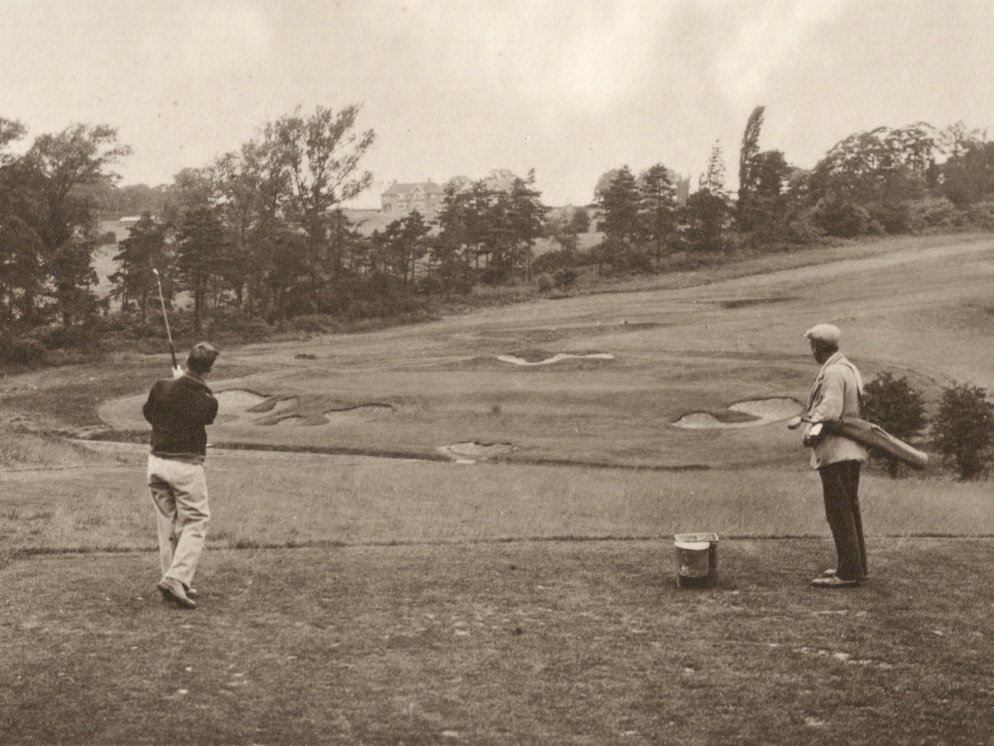
There were a few opportunities for more true restoration with the ground photos mentioned. Holes 13 and 17 both had great images of the approach to those greens, their bunker arrays nearly in full view. For those, we went with a restorative approach, with one exception. The back left bunker on 17 was clearly down on the bank of the brook, which also gave notice to the green being on the shelf just above it. Restoring the green down to this spot—about 5-6 feet below the current surface—would be just about impossible (or at best foolish) given modern green speeds. There was still a strong demand to get more pinnable area on the already sloping surface, so Clyde proposed a compromise expansion putting about half the green back there but at a higher elevation. This would also allow for a visually prominent bunker like the original but at an elevation safely above the brook’s flood level. The result is a neat, MacKenzie-like corner of a green at which a ball can be fed using the slope and/or a draw.
This type of edit work—along with tree clearing, drainage works, fairway expansions, a few other green expansions, and the bunker re-shaping—have left Hadley Wood in a much better place than when I first encountered it. Good on the club and its leadership for recognizing the value of such works and entrusting a talent like Clyde to carry it out. It was a creative treat to work alongside him once again, and I won’t ever forget the warm welcome and hospitality of the club (and its lunches!)
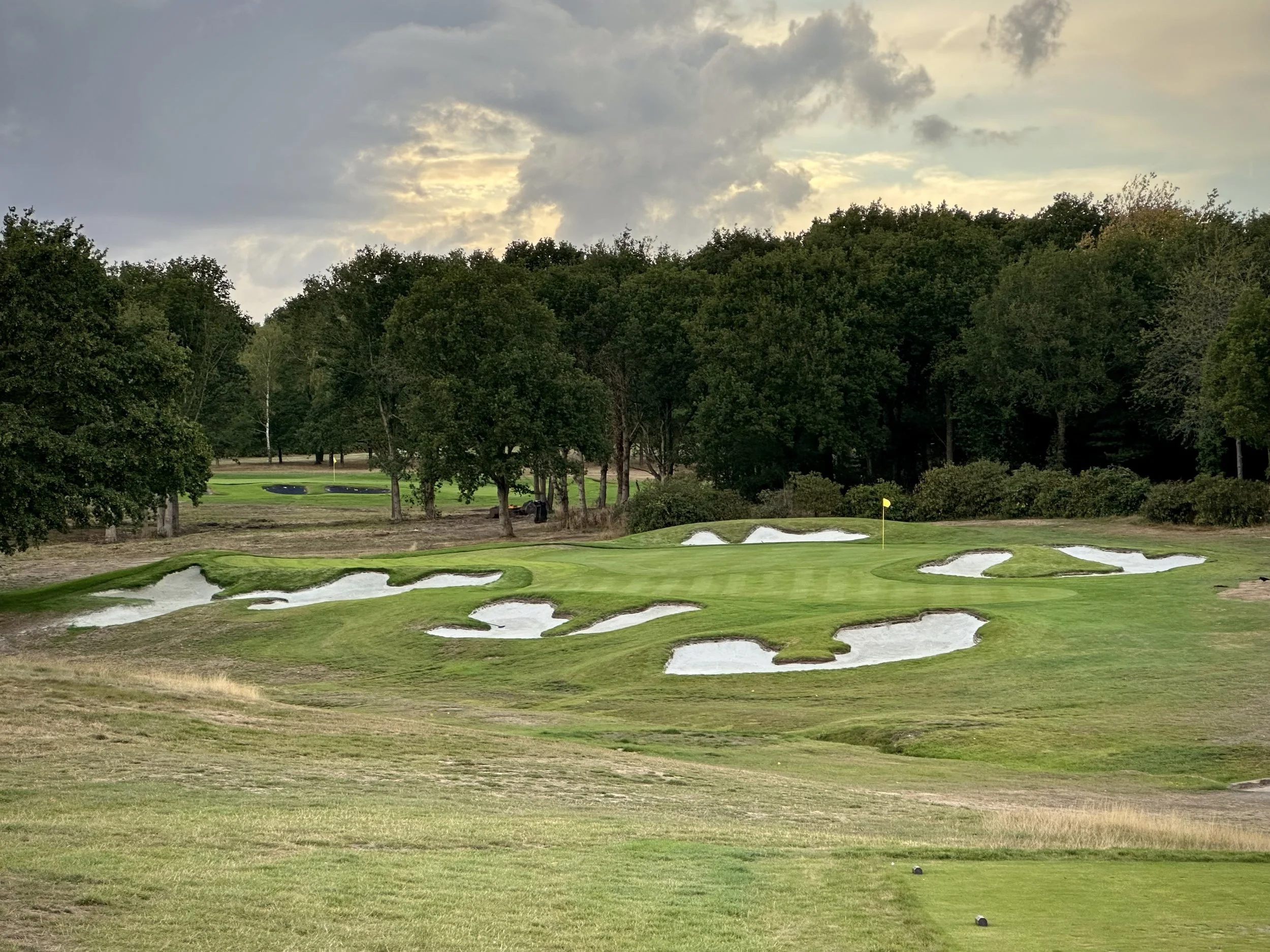
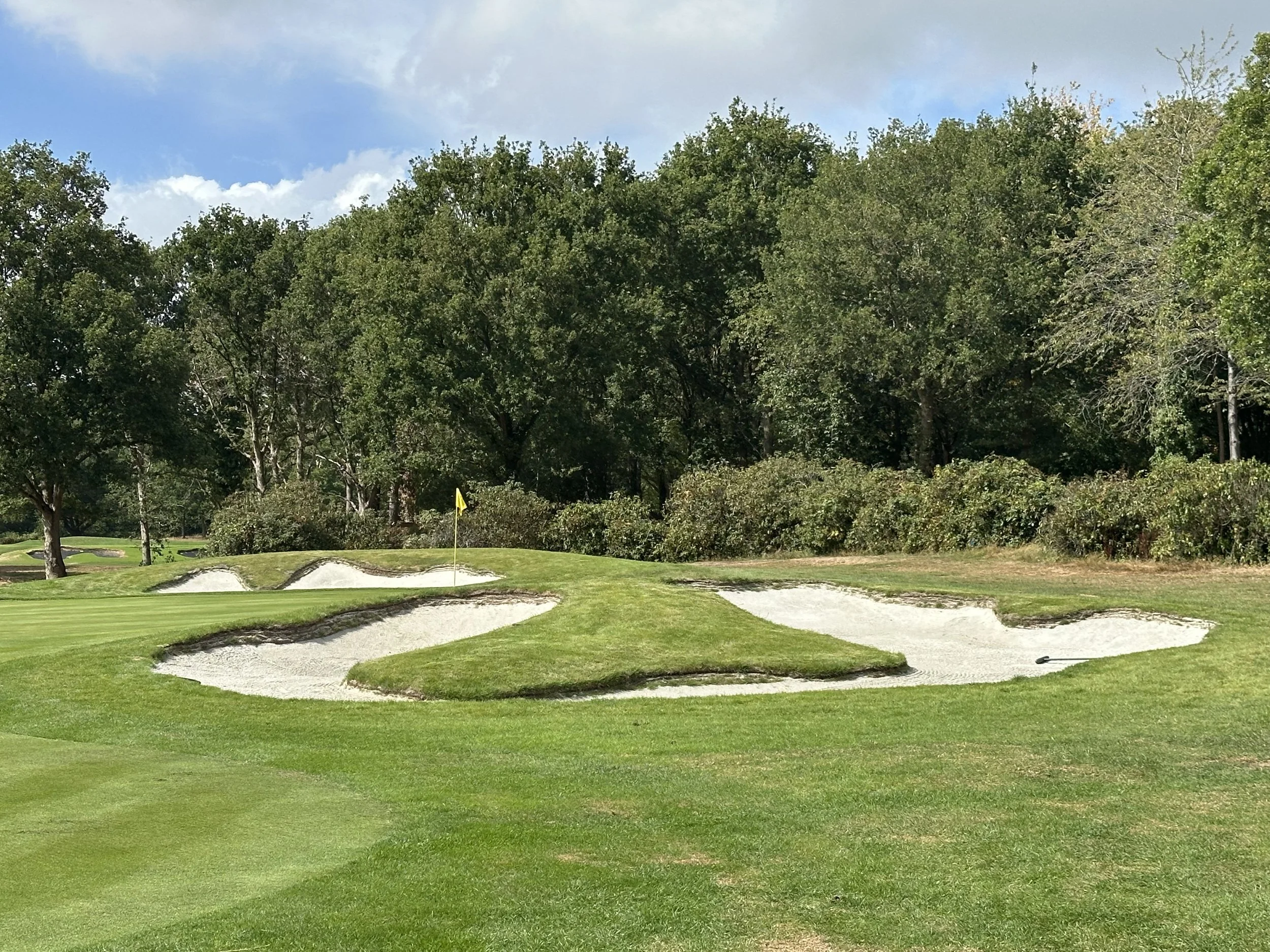
Hadley Wood’s (mostly) restored 17th in summer 2025, with the new left green expansion still growing in.
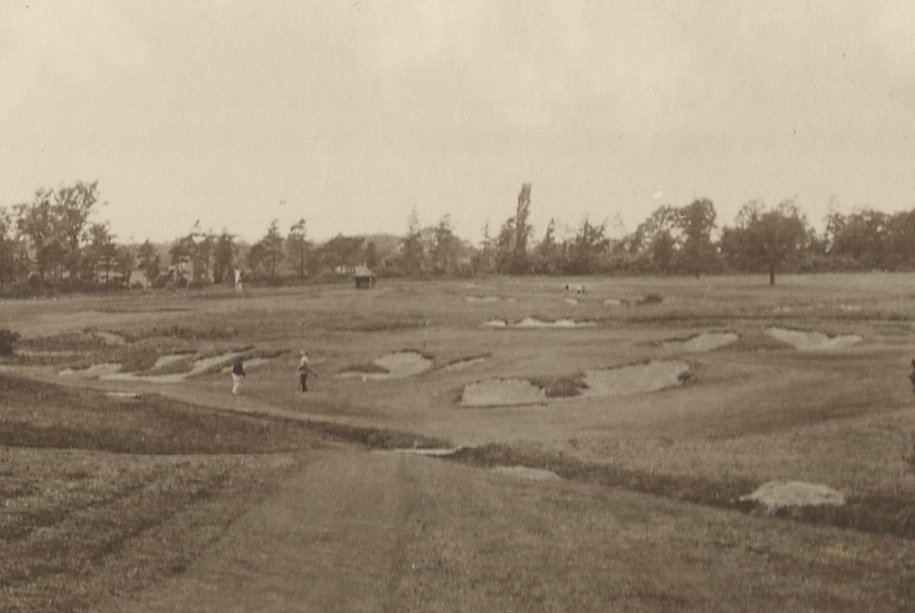
The old postcard of Hadley Wood’s 17th. The 4 right bunkers were shaped as closely as they could to the image, but the far left one had to be moved and built into the new landform for the reclaimed back left section of green.
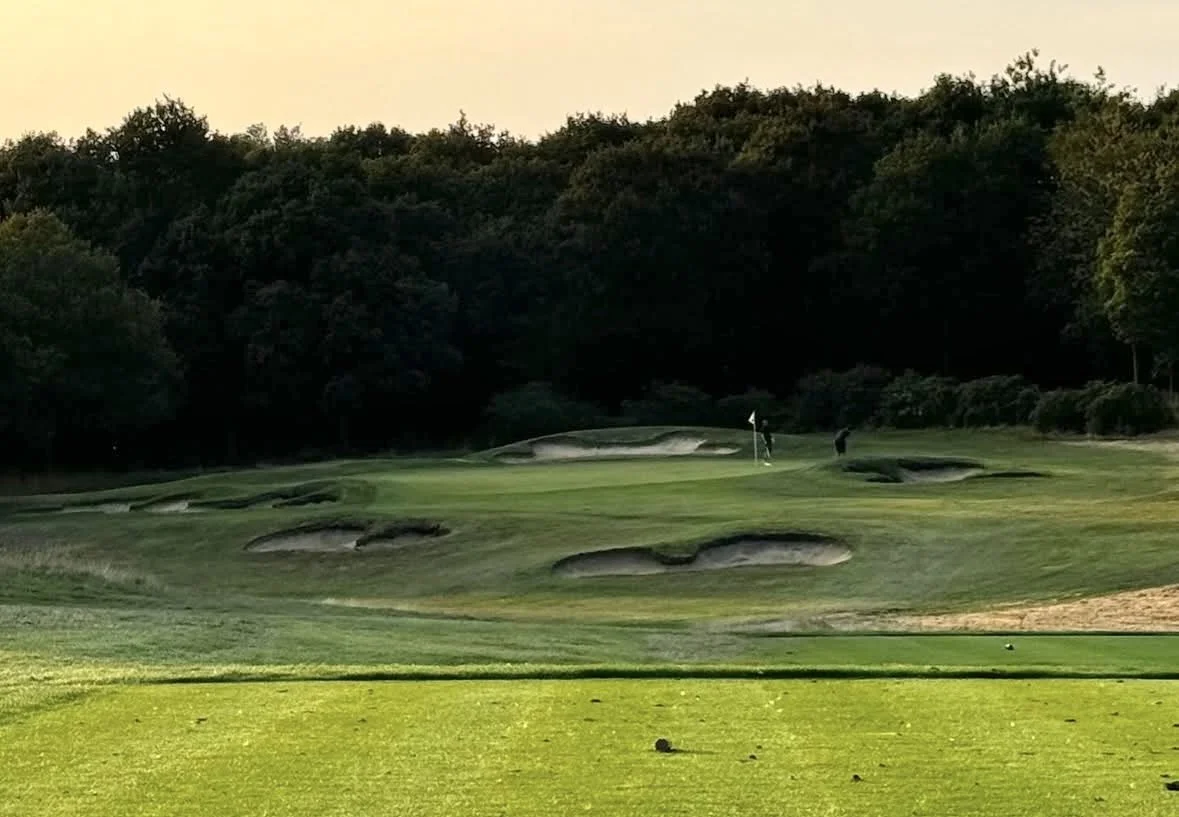
Hole 17 before the work was undertaken. Image credit Thomas Shackleton-Ross
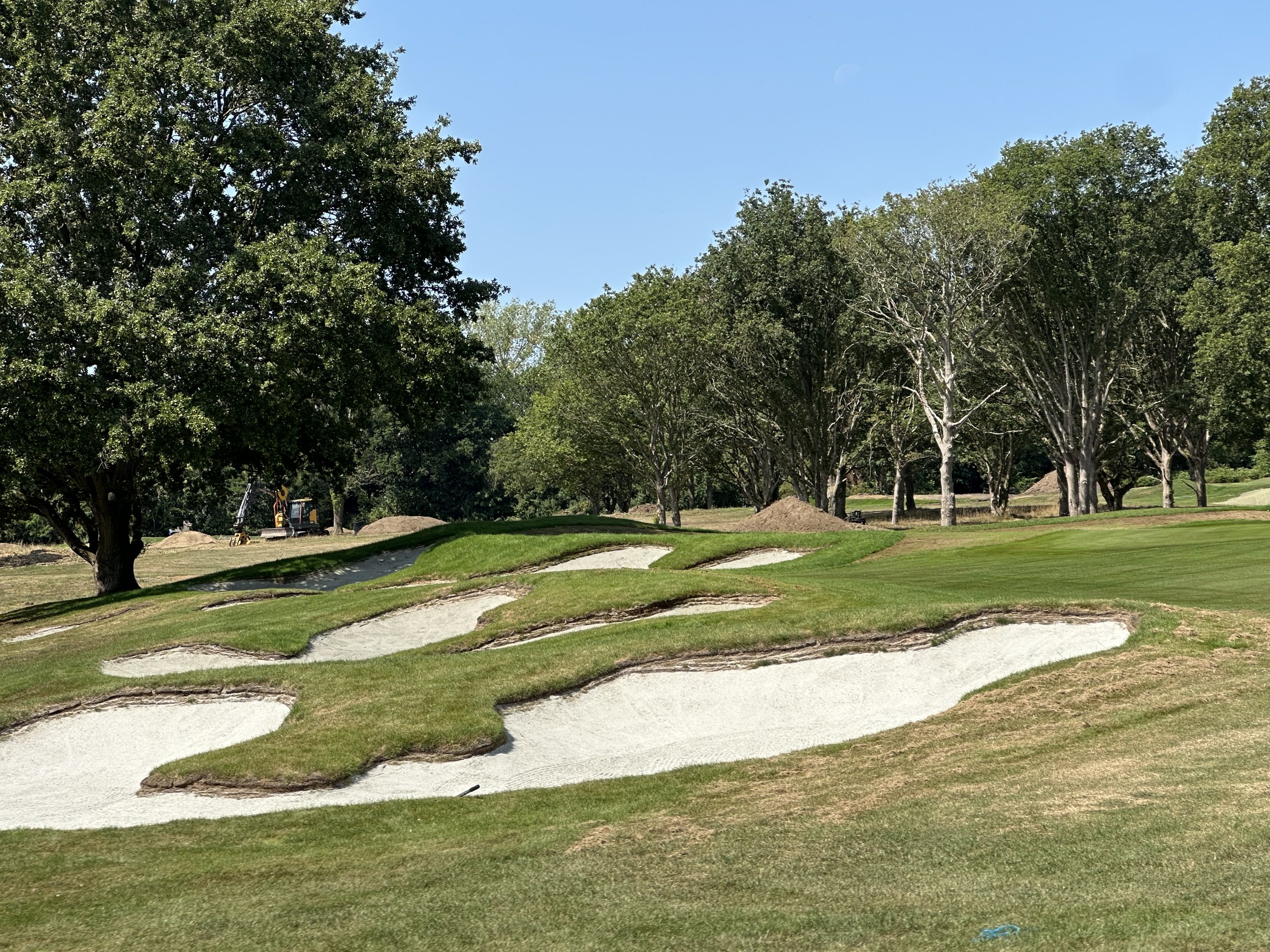
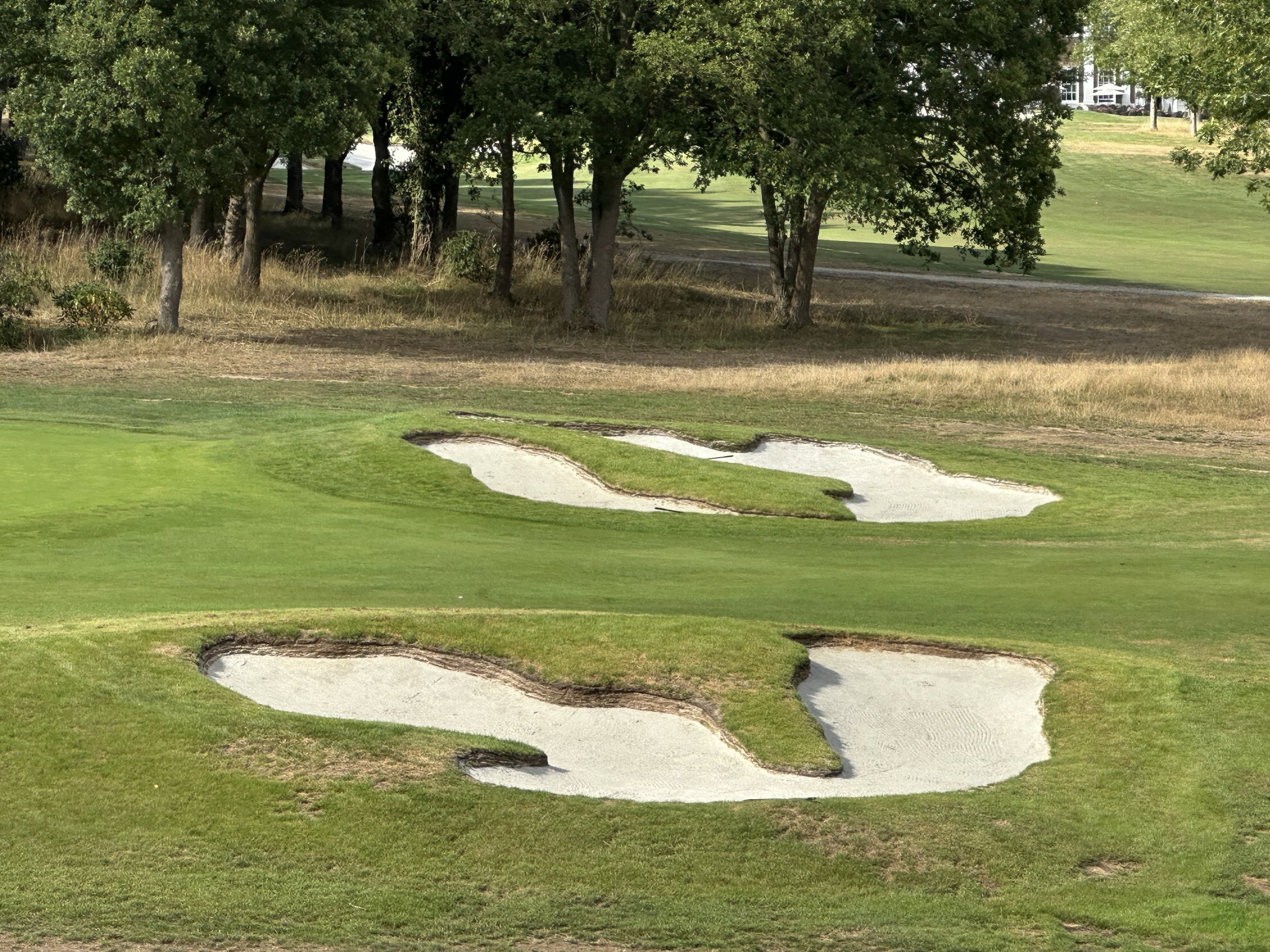
Above: an example of of the edge variation that can be achieved with customizing the revet edge
Hole 13 provided another opportunity for restoration. The skinny little back bunker’s landform was still there in basic form but without the bunker. We carved it back in and accentuated the eccentric landforms surrounding it.
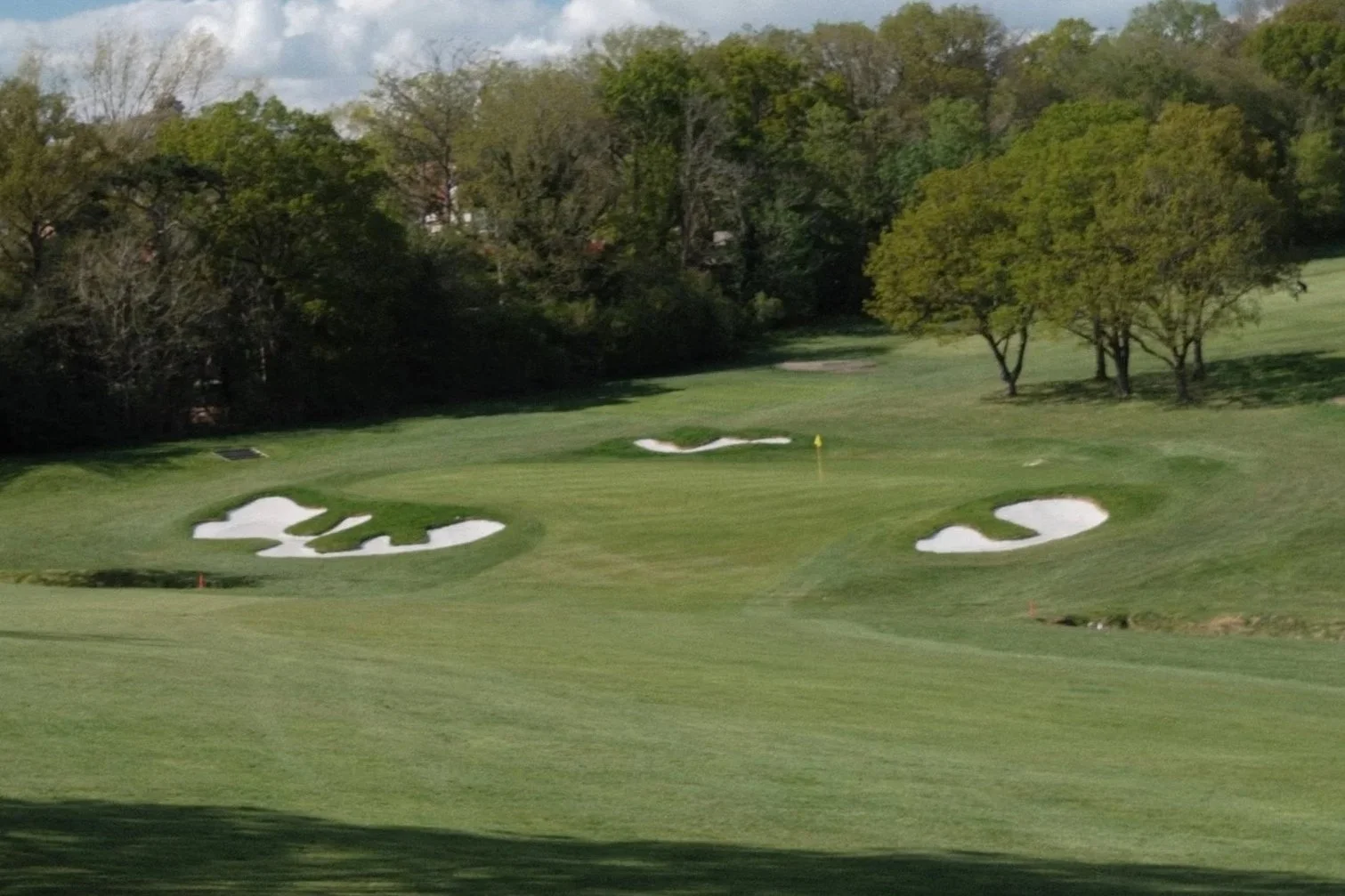
Hole 13 today. Image courtesy of Thomas Shackleton-Ross
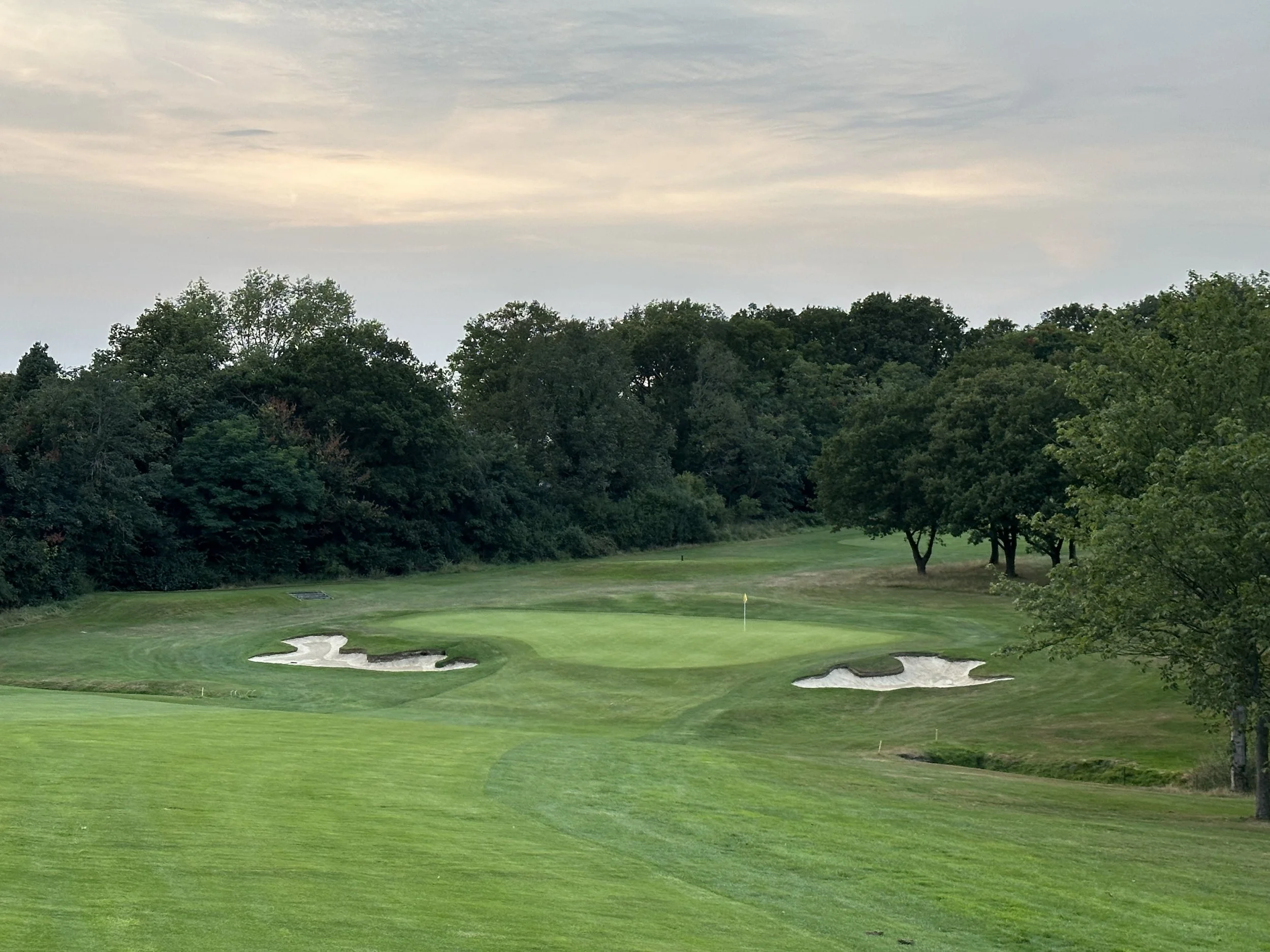
Hole 13 prior to the works

Hole 3 at Hadley Wood showing the end result of the Blinder liner process just after the revet edge was installed and the topsoil re-applied.
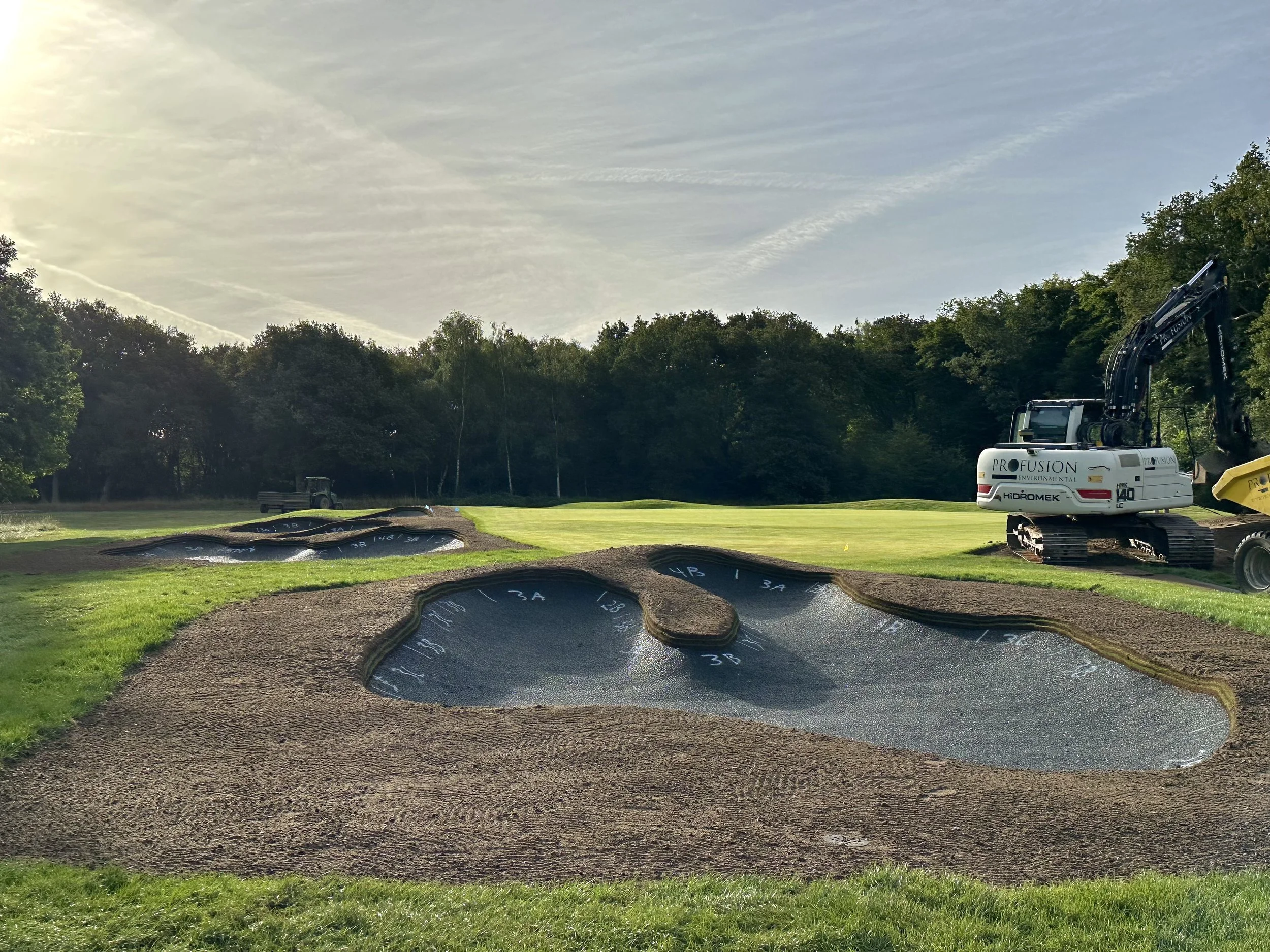
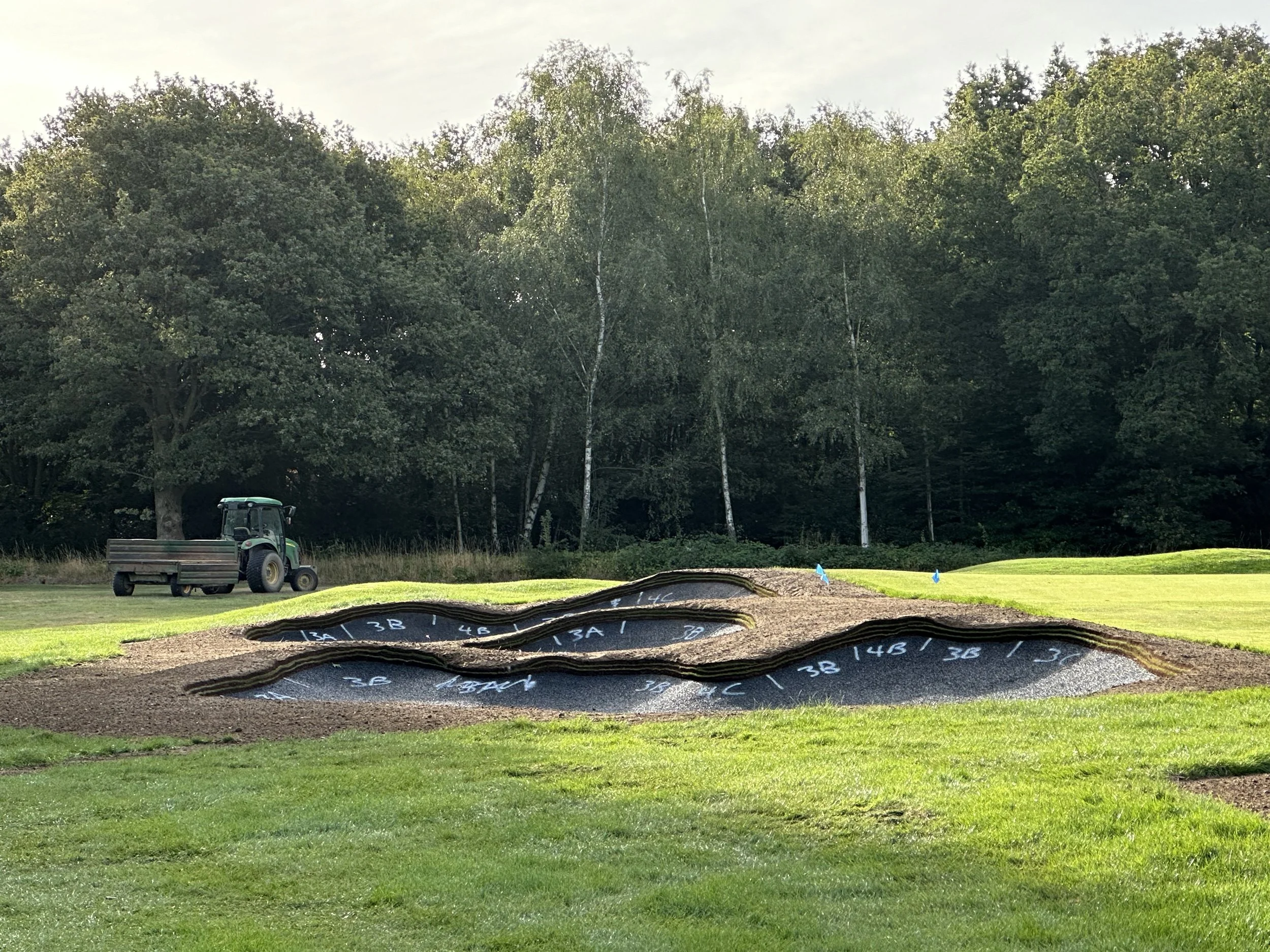
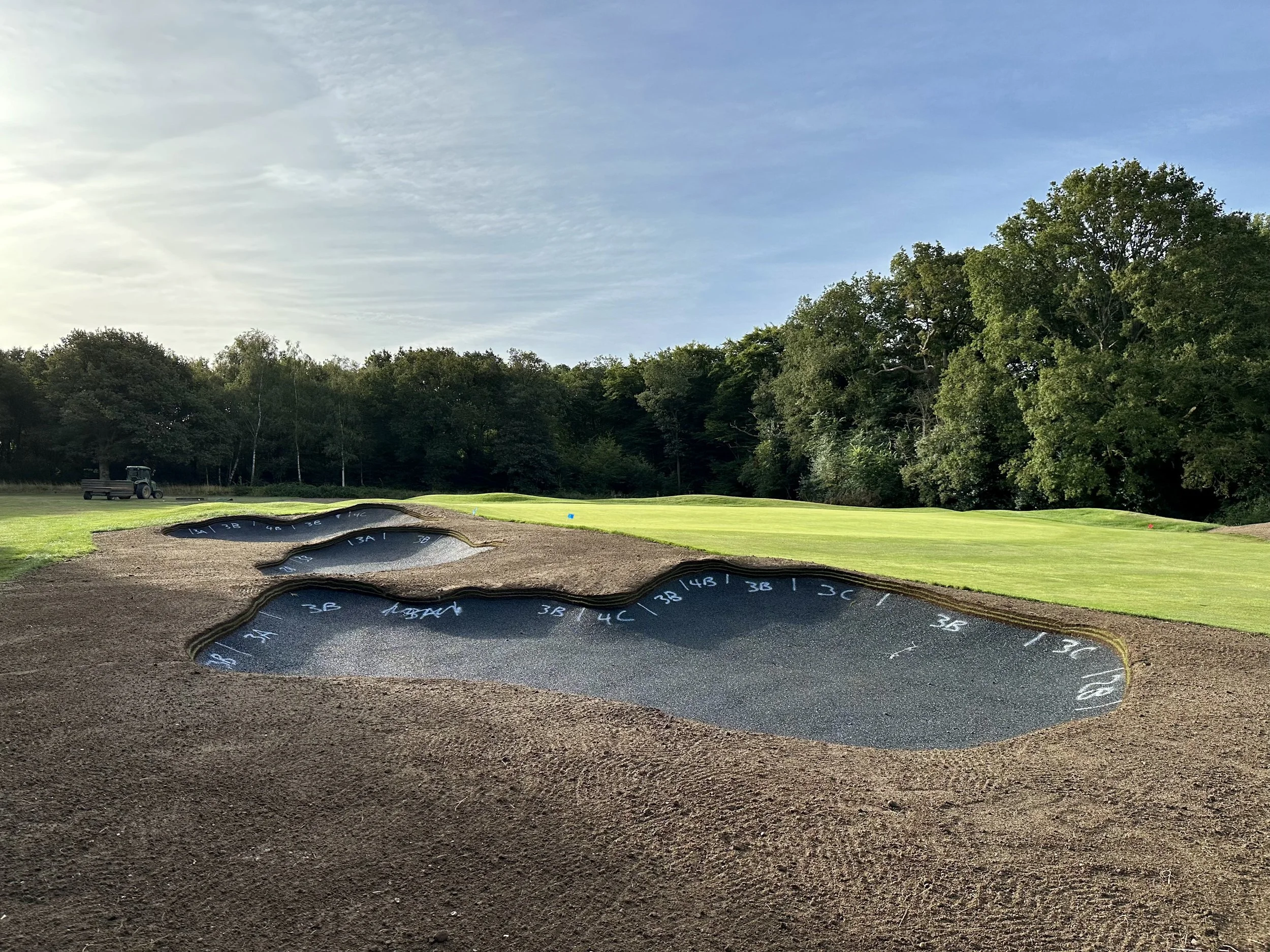
Above: Images of the 4th hole bunkers just prior to seeding. The prior version of the left bunkers were just a series of simple dishes. We in turn shifted size, orientation, and tilt to maximize variety and the way they look from different angles.
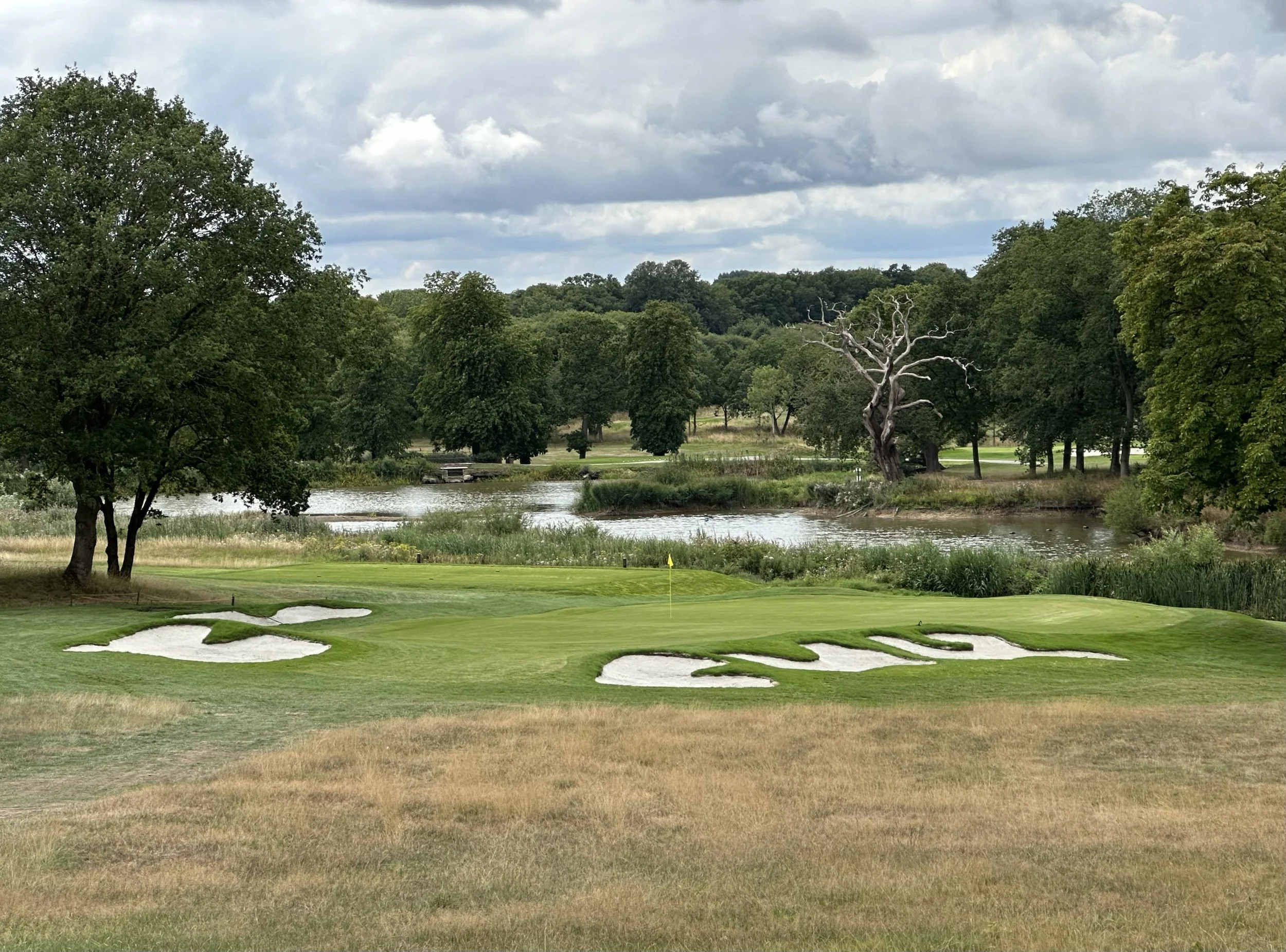
The cool downhill par three 7th with its green falling away (and a slightly wider approach that now makes bouncing the ball on more of a friendly option)
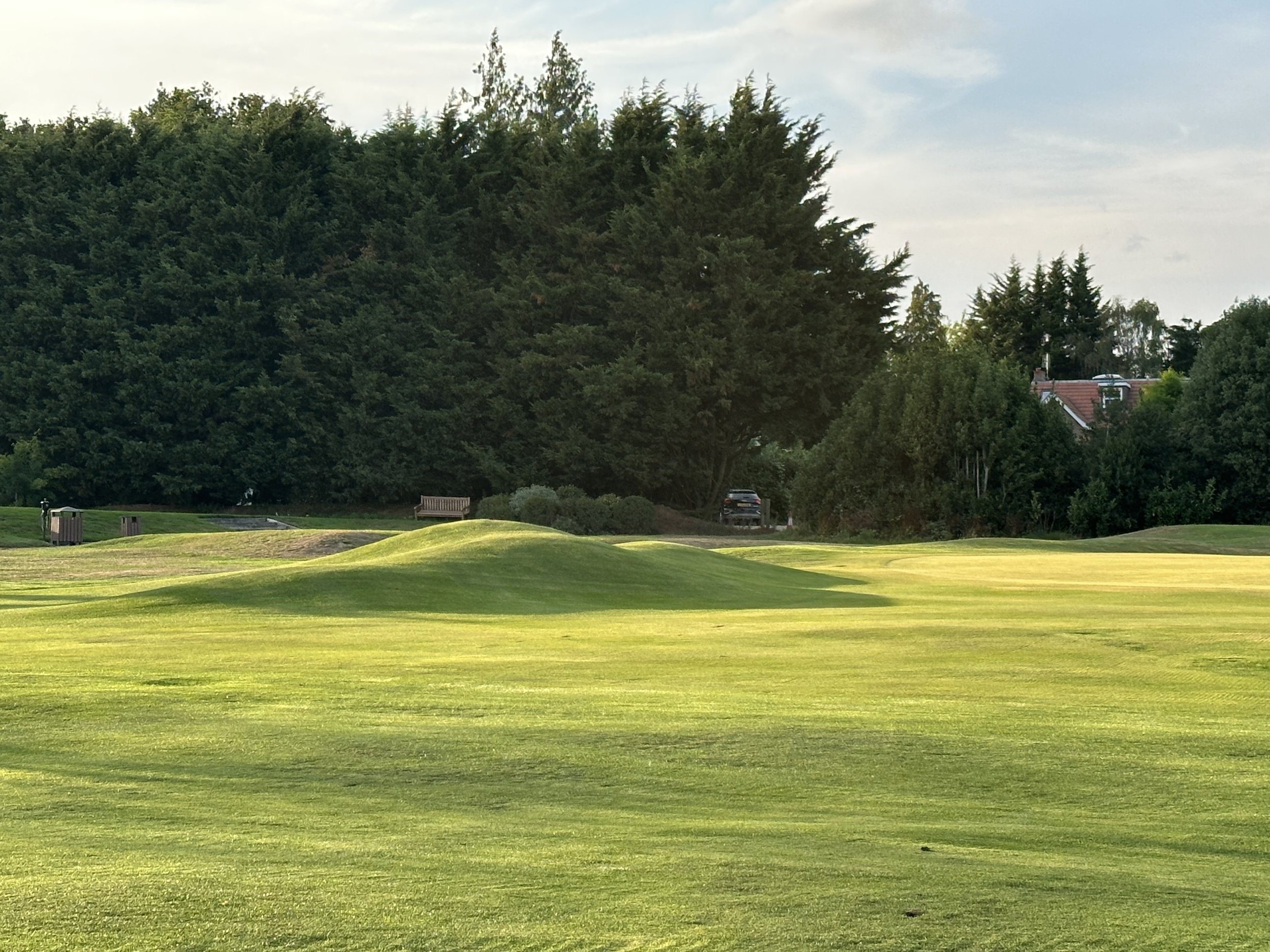
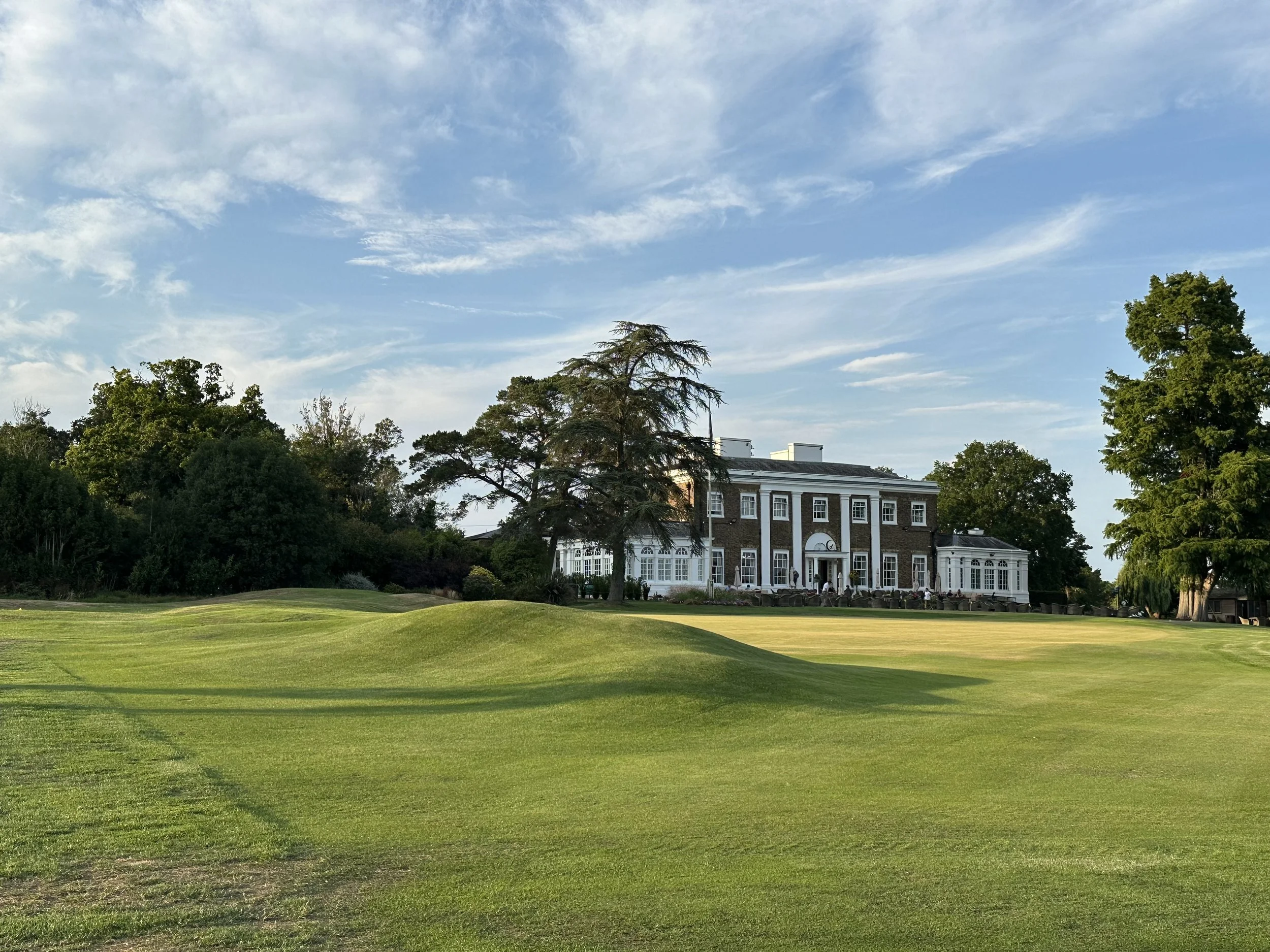
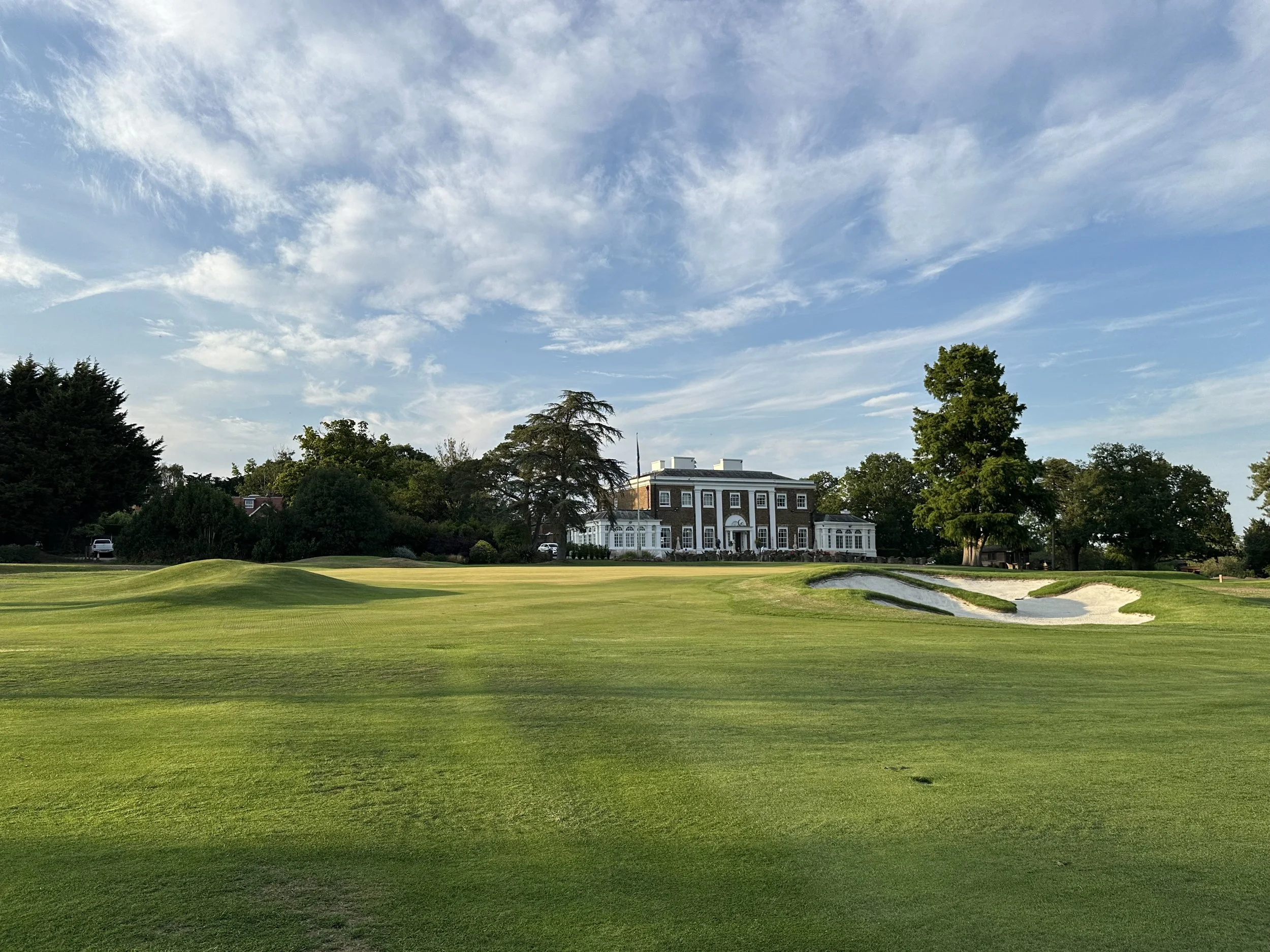
Above gallery: A greenside bunker on the 18th that Clyde had replaced by a short-grass mound, inspired by the 7th at Pasatiempo. This was shaped in the sharper Hadley style, and its form follows some details from what we thought to be some original shapes hidden below the previous bunker and discovered in the shaping process.
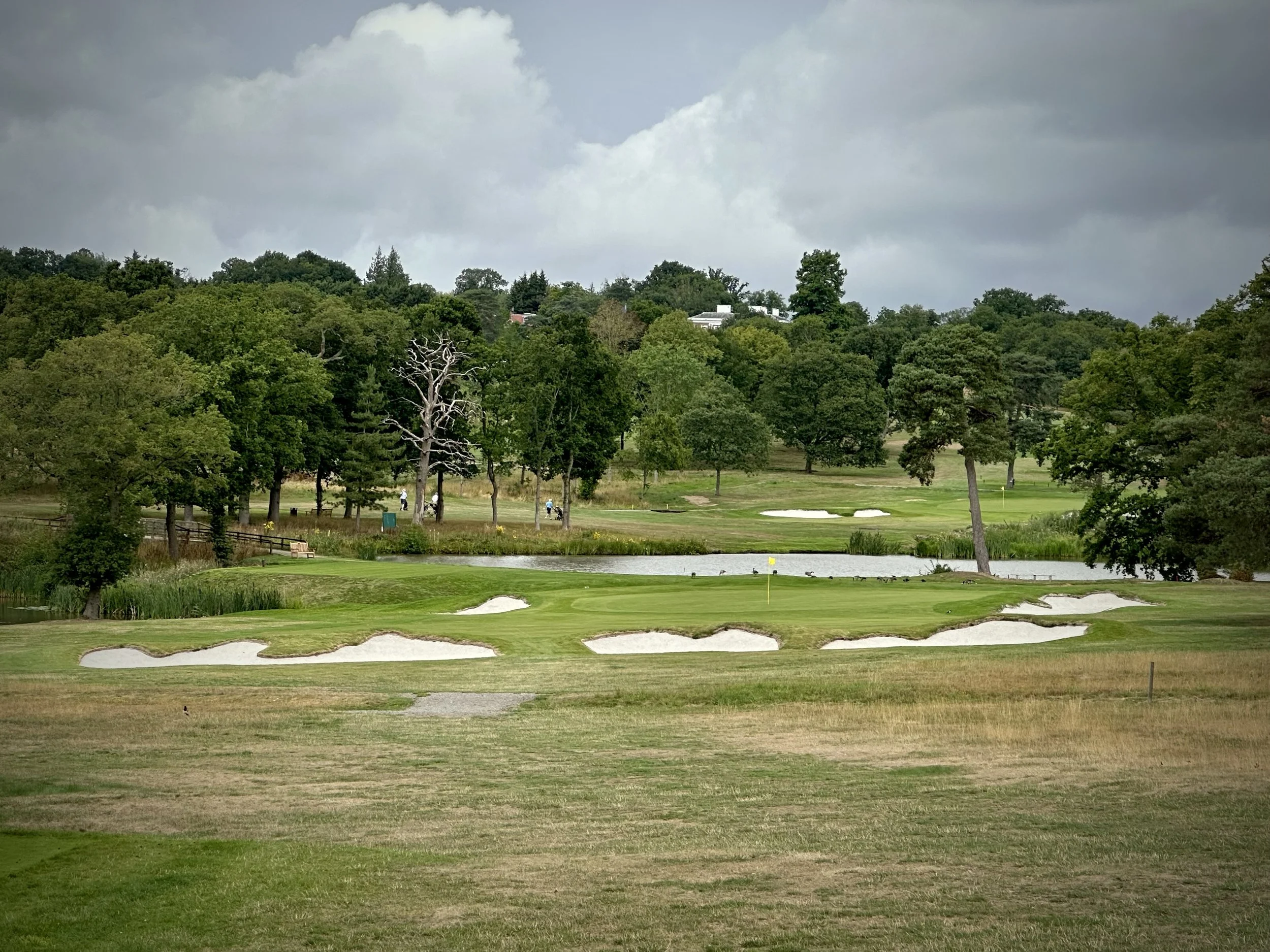
The first hole I had a chance to work on in 2024, the 3rd. The foreground cross bunkers layering up with the greenside bunker right can mess with depth perception. The short right bunker is 60 yards short of the green and the next bunker.